
Expat Living in Costa Rica: Everything You Need to Know Before Moving
Costa Rica is home to 5% of the world’s biodiversity, average temperatures between 70°F and 81°F year-round, and a literacy rate of 98.04%. Expat living in Costa Rica can be rewarding, but it requires you to understand residency and visa options, housing, cost of living, healthcare, culture, and daily logistics before you move. The country also has real bureaucracy, real costs, and real legal requirements that catch newcomers off guard. For retirees, digital nomads, remote workers, families, investors, and anyone considering life on the Gold Coast, this guide covers the major decisions you’ll face, including visas and residency, renting or buying property, banking and taxes, work, transportation, education, safety, and the practical pros and cons of daily life in Costa Rica.
Table of Contents
- Why Move to Costa Rica? The Big Picture for Future Expats
- Residency Options and Visas: How to Live in Costa Rica Legally
- Visa and Application Logistics: Documents, Costs, and Timelines
- Choosing Where to Live: Regions, Climate, and Expat Communities
- Housing, Renting, and Buying Property as an Expat
- Cost of Living in Costa Rica: Realistic Budgets
- Healthcare: Public Caja, Private Clinics, and Insurance
- Banking, Money, and Taxes for American Expats
- Working, Remote Income, and Local Job Opportunities
- Family Life, Education, and International Schools
- Driving, Transportation, and Getting Around
- Culture, Language, and Daily Life: Adapting to Pura Vida
- Safety, Practicalities, and Everyday Logistics
- Pros and Cons of Expat Living in Costa Rica
- FAQ: Expat Living in Costa Rica
Why Move to Costa Rica? The Big Picture for Future Expats
Costa Rica means “Rich Coast,” and the name delivers. This beautiful country in Central America sits between Nicaragua and Panama, offering lush rainforests, stunning beaches, and a stable democracy with no standing army. It is widely considered one of the safest countries in Latin America, and its pura vida lifestyle draws retirees, families, and remote workers from other countries every year.
The specific location you choose shapes everything. The pacific coast offers hot, dry beach towns. The central valley provides a pleasant climate and urban conveniences near the capital city of San José. The caribbean coast brings Afro-Caribbean culture and year-round rain. Each region attracts different types of people.
Who actually moves here? Retirees chasing affordable healthcare and warm weather. Digital nomads on the digital nomad visa seeking surf and fiber internet. Families looking for quality education at international schools. And investors eyeing coastal real estate as both a lifestyle upgrade and income source.
At Coastal Realty & Property Management, we’ve spent nearly two decades helping expats navigate Gold Coast property decisions. We know the excitement of arriving and the reality of staying. This country is not the “cheap paradise” many blogs promise. It is the most expensive country in Central America, and many expats find that living in Costa Rica often requires a higher budget than initially expected.
The sections below cover every angle so you can plan with open eyes.
Residency Options and Visas: How to Live in Costa Rica Legally
U.S. citizens entering as tourists typically receive up to 180 days. But the “perpetual tourist” strategy of doing border runs is increasingly risky. Costa Rican immigration authorities have cracked down on overstays, and relying on tourist status long-term can trigger fines or denial of re-entry.
Residents can choose between several types of legal residency statuses. The four main Costa Rican residency categories for foreigners are Pensionado (retirees), Rentista (passive income), Inversionista (investors), and the digital nomad visa (remote workers). Each has different income thresholds, restrictions, and benefits.
The key distinction is between temporary residency and permanent residency. Temporary status must be renewed, usually every two years, while maintaining the original income or investment requirements. Permanent residency can be applied for after three years of temporary status. Until you hold legal residency, working for a Costa Rican employer is generally not permitted.
Common pitfalls include working locally without a work permit, letting residency status lapse between renewals, and submitting outdated documents. We strongly recommend consulting an experienced Costa Rican immigration lawyer, especially if you’re bringing dependents, assets, or planning to invest in property.

Pensionado (Retiree) Program
The Pensionado program is the most popular path for American expats retiring abroad. Pensionado requires a monthly pension of at least $1,000 from a documented lifetime source such as Social Security, military retirement, or an institutional pension fund. The key word is “lifetime.” Savings or finite income streams don’t qualify.
Benefits include easier approval, the ability to include a spouse and minor children as dependents, and access to Costa Rica’s national health system. Many Pensionado holders also receive import tax reductions on household goods when first relocating.
Most Pensionado residents cannot work as employees for local companies, but they can own a business or invest in rental property. In fact, many retirees generate income through vacation rentals on the Gold Coast.
Many American expats on this program choose the central valley or central highlands for cooler weather and lower costs, though beach towns in Guanacaste remain a close second.
Rentista (Income-Based) Residency
Rentista requires a monthly income of at least $2,500 for two years from guaranteed passive sources. Alternatively, applicants have historically deposited US$60,000 into a Costa Rican bank account to be disbursed monthly, though recent regulations (2025–2026) appear to restrict this option in favor of verified income streams.
This category suits younger expats, entrepreneurs, and families without lifetime pensions but with stable remote or business income. Freelancers with predictable contracts, rental income, or investment yields are common applicants.
Limitations mirror the Pensionado program. Pensionado and Rentista residencies generally do not permit employment by a Costa Rican company. Careful financial planning is essential, especially around currency exchange and banking rules in a new country.
Inversionista (Investor) Residency
Under Law 9996, Inversionista requires a minimum investment of $150,000 in a qualifying Costa Rican asset. That can be real estate, a tourism project, or a local business that benefits the economy. The threshold dropped from US$200,000, making this path more accessible.
Coastal property along the Gold Coast – Tamarindo, Flamingo, Potrero, Playas del Coco – is popular for meeting this requirement. Many investors purchase rental villas or condos that double as vacation income sources. Browse current Gold Coast real estate listings to see what’s available at this price point.
Documentation includes proof of investment registration, property title, and evidence the investment benefits Costa Rica’s economy. Fiscal value (not just listing price) matters for qualification, so verify with your attorney.
Digital Nomad Visa
The digital nomad visa is technically a stay permit, not a full residency category. It allows remote workers earning from outside Costa Rica to live legally for up to 12 months, renewable for another 12 months.
The Digital Nomad Visa requires a monthly income of at least $3,000 for individuals, or US$4,000 if applying with dependents. Income must come from foreign employers or clients. The visa also carries tax perks: foreign-sourced income is exempt from local taxation.
Most expats work remotely under the Digital Nomad visa in beach towns with reliable fiber internet. Many digital nomads prefer the Gold Coast or San José suburbs. Before signing a lease at any specific location, verify internet speeds in person. Infrastructure varies wildly between neighboring streets in rural areas and coastal zones.
From Temporary Residency to Citizenship
Most expats first receive temporary residency, which must be renewed every two years. During this period, you must maintain the original income or investment requirements. Let your status lapse and you risk restarting the clock.
Here are the concrete timelines:
- Permanent residency: Eligible after approximately three continuous years of qualifying temporary residency
- Citizenship (general): Eligible after seven years of legal residency
- Citizenship (married to a Costa Rican citizen): Eligible after two years
- Citizenship (Ibero-American nationals): Eligible after five years
Costa Rica allows dual citizenship. American expats can usually retain U.S. citizenship while becoming a Costa Rican citizen, gaining voting rights, a CR passport, and a Costa Rican driver’s license without the constraints of a foreign license.
Time spent as a tourist or on the digital nomad visa does not count toward the residency period required for citizenship.
Visa and Application Logistics: Documents, Costs, and Timelines
Start preparing from your home country. Many documents must be apostilled, dated within six months, and translated into Spanish by an authorized translator in Costa Rica.
Key U.S. documents typically needed:
- Valid passport with sufficient remaining validity
- FBI Identity History Summary (background check)
- Birth certificate
- Marriage certificate (if applicable)
- Pension letters, bank statements, or investment proof
- Passport-sized photos
All foreign documents require apostille certification and certified Spanish translations. Bureaucracy in Costa Rica is known for being slow and may require patience to navigate administrative processes. Processing times for temporary residency approvals run anywhere from 3 to 12 months, depending on the category, documentation completeness, and whether you use a lawyer.
Budget roughly US$1,500–$4,000 per adult for government fees, translations, apostilles, and legal assistance. Families pay more. While your application is pending, maintain legal tourist status carefully. Avoid overstays and keep digital and physical copies of every submission organized.
Choosing Where to Live: Regions, Climate, and Expat Communities
Costa Rica packs extraordinary geographic diversity into a small footprint. The humid caribbean coast, hot pacific coast beaches, and cooler central highlands all sit within a few hours’ drive. Your choice of region determines your daily weather, access to services, and social circle.
Costa Rica has established, large expat communities primarily in the central valley and coastal areas. The strongest concentrations of other expats are around San José suburbs, Central Valley towns like Atenas and Grecia, the Guanacaste Gold Coast, the Central Pacific (Jacó, Manuel Antonio), and Caribbean towns like Puerto Viejo.
Newcomers should rent for at least 6–12 months before buying. Use that time to explore multiple regions during both dry and rainy season. The rainy season in Costa Rica typically lasts from May to November, bringing consistent afternoon rains, and it transforms some areas dramatically.
Central Valley and Central Highlands
Many long-term American expats pick the central valley for its cooler temperatures and proximity to San Jose. Towns like Escazú, Santa Ana, and Heredia offer a pleasant climate, modern amenities, and a slower pace than major U.S. cities while keeping major hospitals within an hour.
Concrete benefits include access to CIMA and Clínica Bíblica hospitals, multiple international schools, big-box shopping, and Juan Santamaría International Airport (SJO). Escazú’s real estate market caters heavily to expats and upper-class Costa Ricans alike.
Mountain villages and small town communities in the central highlands (Atenas, Grecia, San Ramón) offer even lower costs and cooler weather, though with fewer English-speaking services. Housing ranges from gated communities and condos to sprawling mountain fincas.
Pacific Gold Coast (Guanacaste) and Other Beach Areas
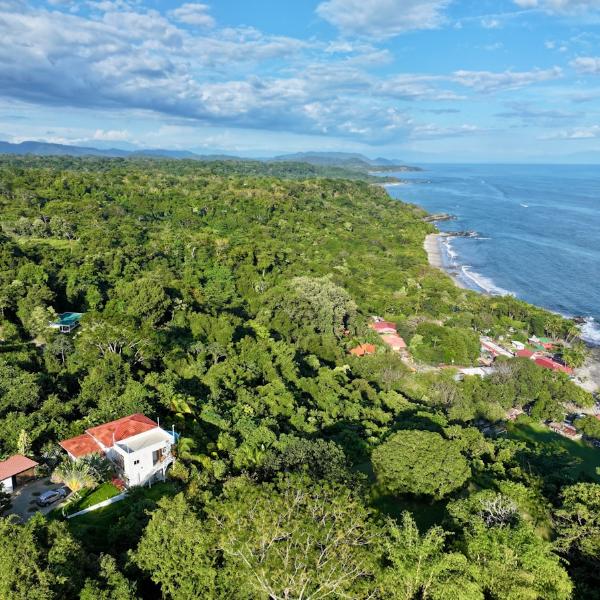
Guanacaste’s Gold Coast stretches from Playas del Coco south through Flamingo, Potrero, and Tamarindo to Langosta. It’s hot, dry from December through April, and very popular with surfers, families, and retirees seeking stunning natural beauty and walkable beach towns.
This region is ideal for those wanting strong expat communities, beautiful beaches with palm trees and stunning beaches, and investment properties managed by experienced firms like Coastal Realty & Property Management. Many expats here find expats from across North America and Europe at weekly farmers markets, surf breaks, and local restaurants.
Other Pacific areas include the Central Pacific (Jacó and Manuel Antonio) with more humidity and lower prices, and the Southern Zone (Dominical, Uvita, Ojochal) for those seeking quieter, more off-grid Costa Rican life surrounded by wildlife and fewer tourist areas.
Caribbean Coast and More Off-the-Beaten-Path Options
The caribbean coast – Puerto Viejo, Cahuita – has a distinct Afro-Caribbean vibe. It’s laid-back, culturally rich, and rainier year-round. Expat communities here are growing but remain smaller than Pacific counterparts. English and Patois are widely spoken alongside Spanish.
Pros include unique Costa Rican culture, lush rainforests, and less commercialized tourism. Cons are real: more humidity, infrastructure challenges, and longer travel to major hospitals and San José. This is a popular tourist destination for eco-travelers, but daily living requires more self-sufficiency.
For those prioritizing cool weather and quiet over convenience, rural central highlands or southern mountain villages offer a completely different pace, though with limited expat areas and fewer English speakers.
Housing, Renting, and Buying Property as an Expat
Renting is often the best choice for newcomers initially. A six-month rental lets you test a neighborhood through both dry and rainy seasons before committing capital. Expect to pay a one-month security deposit, and in beach towns, many units come furnished. Rent is often quoted in US dollars.
Foreigners can own property in Costa Rica with few restrictions. Outside the maritime zone, expats have the same ownership rights as local residents. The critical exception is properties in the maritime zone – the first 200 meters from the high-tide line. The first 50 meters are fully public. The next 150 meters can only be used under concession agreements, not outright ownership.
Property taxes in Costa Rica are approximately 0.25% of registered value annually. The property purchase process involves title registration and transfer taxes of about 1.5%. Buying property in Costa Rica requires navigating local legal regulations, so always use a reputable attorney and licensed notary for title checks and closing.
Beach towns along the Gold Coast often have HOAs or condominium regimes with monthly maintenance fees. Salt air, humidity, and tropical weather create ongoing maintenance costs that many buyers underestimate.
Working with Coastal Realty & Property Management
Coastal Realty & Property Management helps expats identify suitable homes or investment condos, explains beachfront and maritime zone concession rules, and coordinates inspections and surveys. We work on a first-name basis and prioritize honest guidance over quick sales.
For absentee owners, we handle property management in Tamarindo, Langosta, Flamingo, and surrounding areas – including bill payment, housekeeping, repairs, HOA representation, and vacation rental marketing to keep your asset cared for and profitable.
If you’re considering investor residency or a second home on the Gold Coast, contact us early to align property choices with your residency and income goals.
Cost of Living in Costa Rica: Realistic Budgets
Living in Costa Rica is not uniformly cheap. Costa Rica is the most expensive country in Central America, and maintaining a “North American” lifestyle with imported goods, air conditioning, and frequent dining out pushes costs higher. Imported goods, electronics, and cars tend to cost significantly more in Costa Rica due to high import taxes.
Housing costs vary significantly by location. A two-bedroom apartment in the central valley might rent for US$600–$1,000/month, while a comparable unit in a Gold Coast beach town runs US$1,200–$2,500. Utilities in hot coastal areas with full-time air conditioning can reach US$100–$250/month; in the cooler central valley, US$35–$80.
Groceries at local markets are reasonable. Shopping at imported-goods stores or specialty shops doubles the bill. Internet runs US$35–$60/month in well-served areas. Understanding real housing costs before committing is essential.
We encourage tracking expenses during an extended stay before committing to full relocation.
Sample Monthly Budgets
Here are three realistic scenarios based on 2025–2026 conditions:
Frugal single in a non-tourist town: US$1,500–$2,000/month. Single expats typically need this range. No car, local restaurants, basic rental, minimal imported food.
Comfortable couple in the Central Valley or quieter coast: US$2,000–$3,000/month. Most couples live comfortably in this range. Includes a modest rental, a used car, dining out a few times weekly, and local healthcare.
Family with kids in international schools: US$4,000+/month. Adds US$8,000–$15,000/year per child in tuition, a reliable 4×4, furnished home, and private health insurance.
Owning a home outright reduces monthly outflow but adds property management, HOA, and maintenance costs – especially in coastal areas.
Healthcare: Public Caja, Private Clinics, and Insurance
Costa Rica has universal public healthcare through Caja (Caja Costarricense de Seguro Social). It covers primary care, hospitalization, and many medications. For legal residents, enrollment is mandatory and based on declared income.
Private healthcare costs are 50–70% lower than in the US. A GP visit at a private clinic typically runs US$50–$80. Specialist consultations, dental work, and elective procedures are dramatically cheaper than stateside equivalents, making Costa Rica a destination for high quality healthcare at accessible prices.
Most expats use a hybrid approach: Caja for major procedures and hospitalizations, and private clinics for faster appointments and English-speaking specialists. Healthcare quality varies significantly by region in Costa Rica. The best hospitals and specialists concentrate in and around San José and main regional hubs like Liberia. Remote coastal and rural areas have more limited services.
Before moving, bring medical records, arrange prescription refills, and check whether your current international insurance covers Costa Rica.
How to Enroll in Caja and Private Insurance Options
Once you obtain your DIMEX (residency ID card), visit a local Caja office or EBAIS clinic with your residency approval, passport, and proof of income. Monthly contributions to Caja range from 7–11% of declared income and are typically debited from a Costa Rican bank account.
Enrolling in Caja requires residency status and a DIMEX card. Digital nomads and tourists without a legal resident status must rely on private insurance or cash payments.
Common private options include local Costa Rican health plans, international expat policies from global insurers, or simply paying cash for individual visits. Many expats carry a private policy alongside Caja enrollment for maximum flexibility.
Banking, Money, and Taxes for American Expats
Costa Rica’s currency is the colón (CRC), but US dollars are widely accepted in tourist and expat areas. Many expats maintain both CRC and USD accounts. Opening a bank account as a foreigner before obtaining residency is challenging due to strict know-your-customer rules, documentation requirements, and Spanish-language paperwork.
Established banks include Banco Nacional, Banco de Costa Rica, BAC, and Scotiabank. Having a Spanish-speaking ally or attorney accompany you simplifies the process significantly.
For American expats, U.S. tax obligations don’t disappear. Worldwide income must still be reported to the IRS. Key considerations include:
- Foreign Earned Income Exclusion (FEIE)
- Foreign Tax Credit
- FBAR/FinCEN reporting for foreign accounts exceeding US$10,000
Costa Rica operates a territorial tax system, generally taxing only Costa Rican-sourced income. This benefits retirees and remote workers whose earnings come from abroad. Work with a tax professional familiar with both U.S. and Costa Rican rules to avoid double taxation and missed filings.
Working, Remote Income, and Local Job Opportunities
Most expats legally working in Costa Rica fall into one of four categories: remote employees of foreign companies, online business owners, local business owners, or permanent residents with full work authorization.
Pensionado and Rentista residencies generally do not permit employment by a Costa Rican employer. However, owning a company or receiving foreign income is allowed. Permanent residents can work without a separate work permit.
The digital nomad visa fills the gap for freelancers, tech workers, and online entrepreneurs needing a medium-term stay without the complexity of full residency. Local job opportunities for foreigners are limited, as Costa Rican labor laws prioritize local workers unless a foreigner brings rare, in-demand skills. Expats often find jobs in real estate or tourism sectors where bilingual skills are valued. Job search resources include ExpatExchange.com and LinkedIn.
Investing in rental property on the Gold Coast, managed professionally, is a common way for expats to generate income while creating local jobs.
Family Life, Education, and International Schools
Costa Rica offers a child-friendly culture and an outdoor lifestyle that many families love. But schooling requires planning. The public school system is free and taught entirely in Spanish. Quality varies by district.
Most expat families choose private school or international schools. Key hubs include the western San José suburbs (Escazú, Santa Ana), Heredia, and coastal areas like the Gold Coast and Jacó. American-style, British, and IB-curriculum schools charge US$8,000–$15,000 per year per child, plus enrollment fees, transportation, and supplies.
Practical considerations: school calendars often differ from U.S. schedules, transportation logistics in rural areas can be complex, and non-Spanish-speaking children will need adjustment time. For detailed guidance on the best areas in Costa Rica for families, region-specific research is essential.
Costa Rica’s literacy rate of 98.04% reflects a country that values quality education at every level.
Raising Kids in Costa Rica Day to Day
Daily life for expat families often includes beach afternoons, outdoor sports, after-school Spanish or surfing lessons, and weekend trips to volcanoes and national parks. The outdoor lifestyle is the biggest draw.
Healthcare for children is accessible in major centers. Pediatric care, vaccinations, and dental services are available through both Caja and private clinics. Many families choose gated communities or condos for added security.
Expat communities in places like Tamarindo, Flamingo, Atenas, and Escazú provide social networks, sports leagues, parent groups, and playdate circles that help families settle in quickly.
Driving, Transportation, and Getting Around
Many expats find a car – often a 4×4 – essential outside the central valley. Pacific and caribbean coast roads can be unpaved, flood-prone during rainy season, and challenging after dark.
Tourists can usually drive with a valid foreign license while their entry stamp is active. After gaining residency, expats must obtain a Costa Rican driver’s license. Buying a used car comes with sticker shock: import taxes push prices well above U.S. equivalents. Always get a pre-purchase mechanical check and verify mandatory insurance and annual inspection (RITEVE/DEKRA).
Public transportation is affordable but slower. Buses connect most towns. Private shuttle companies run between major tourist areas. Ride-hailing apps like Uber and Didi operate in urban zones and some coastal areas.
Tips for safe driving: take extra caution during rainy season (May through November), avoid nighttime driving in rural areas where animals and pedestrians use roads, and never leave valuables visible in parked cars.
Culture, Language, and Daily Life: Adapting to Pura Vida
Pura vida is more than a slogan. It reflects a pura vida lifestyle built on a relaxed attitude toward time, relationships, and problem-solving. Costa Rica’s culture emphasizes a relaxed approach to time, which can delight or frustrate newcomers accustomed to rigid schedules. Public confrontations are rare in Costa Rican culture; many Costa Ricans prefer indirect communication and conflict avoidance.
Learning basic Spanish is essential for daily interactions, even if you live in an expat-heavy area where English is widely spoken. Being able to navigate a bank, a mechanic, or a government office in Spanish reduces stress dramatically. To learn Spanish, try local tutors, language schools, apps, or simply immersing yourself in everyday errands. Gift giving is common when invited to someone’s home – wine, flowers, or dessert are safe choices, and respecting local customs in everyday interactions and community traditions goes a long way.
Concrete ways to integrate into the local community include adapting to local customs, volunteering, joining sports clubs, attending church, and shopping at farmers’ markets (ferias) rather than only big-box stores. Many Costa Ricans in tourist areas speak English, but deeper relationships require effort.
Most expats mainly socialize with other foreigners at first. That’s natural. But long-term satisfaction – the real Costa Rican life – comes from building relationships with local residents and neighbors.
Safety, Practicalities, and Everyday Logistics
Costa Rica is considered one of the safer countries in Central America due to its stable democracy and lack of a standing army. However, petty theft is common in Costa Rica, and it is advisable to take precautions with personal belongings. Bag snatches, car break-ins, and opportunistic theft happen in cities and tourist areas.
Actionable safety tips:
- Don’t leave valuables in cars or visible through windows
- Use safes in rentals and homes
- Install basic home security (cameras, motion lights)
- Understand which neighborhoods to avoid at night
The emergency number is 911, with English support in many areas. The U.S. Embassy is in San José. Two international airports serve the country: SJO near san jose and LIR in Liberia (closest to the Gold Coast).
Costa Rica has variable infrastructure including power outages and internet reliability issues in rural regions. Surge protectors and backup water storage are smart investments for coastal homes. Natural disasters like earthquakes and floods are common in Costa Rica, so factor in insurance and structural resilience when choosing property.
Bringing pets requires health certificates, vaccinations, and airline-specific rules. Standard postal service is slower than in the U.S. – most expats use private courier services for important packages.
Pros and Cons of Expat Living in Costa Rica
Pros:
- Stable democracy with friendly Costa Ricans and a welcoming attitude toward foreigners
- Stunning natural beauty: lush rainforests, volcanoes, two coastlines, and incredible biodiversity
- Year-round outdoor lifestyle with a pleasant climate
- High quality healthcare at a fraction of U.S. costs
- Strong expat communities in the Central Valley, Gold Coast, and other expat areas
- Multiple residency pathways for retirees, investors, and remote workers
Cons:
- Higher cost of living than most of Central America, especially for imported goods
- Bureaucracy that tests patience at every turn
- Language barriers for those who don’t learn Spanish
- Inconsistent infrastructure in some rural and coastal zones
- Limited local job opportunities for foreigners
- Challenges that catch retirees off guard
Emotional factors matter too. Homesickness, feeling like a permanent outsider, and the mental adjustment of leaving convenience-driven North American culture are real. You’ll never fully “be a Tico.”
We encourage test-driving Costa Rica with an extended stay of 1–3 months in both dry and rainy seasons before selling everything. Choosing the right region, residency path, and housing – with support from local experts like Coastal Realty & Property Management – can tilt the balance toward a positive long-term experience in this beautiful country.
FAQ: Expat Living in Costa Rica
Below are the most common practical questions future expats ask before making the move. Answers reflect 2025–2026 rules and costs. Always verify current details, as laws can change.
How much money do I need to live comfortably in Costa Rica as an expat?
Single expats typically need $1,500–$2,000 monthly in non-tourist towns. Most couples live comfortably on $2,000–$3,000 monthly in the central valley or less touristy coasts. Families with children in international schools should budget $4,000+ per month.
Costs newcomers overlook include residency application fees, private health insurance premiums, a reliable car (especially outside the central valley), school tuition, and annual trips back to their home country. Living in costa rica on the Gold Coast specifically tends toward the higher end due to tourist-area premiums.
Is Costa Rica safe for American expats and families?
Costa Rica is considered one of the safest countries in Latin America, with a stable democracy and no standing army. Violent crime rates are lower than in many neighboring countries in central america.
That said, petty theft is the primary concern. Don’t leave bags unattended, use hotel safes, and install basic home security. For vacation homes, professional property management adds another layer of security through regular inspections and on-site presence. Most expats report feeling safe in their daily routines when taking standard precautions.
Can foreigners buy property in Costa Rica, especially near the beach?
Yes. Foreigners can own property in Costa Rica with few restrictions – the same rights as Costa Ricans in most cases. The exception is properties in the maritime zone, the first 200 meters from the high-tide line, where ownership restrictions for foreigners apply and concession agreements replace traditional titles.
Working with a specialized coastal real estate firm helps navigate concession rules, HOAs, property taxes, and due diligence. The property purchase process involves title registration and transfer taxes of approximately 1.5%.
Do I need to learn Spanish to live in Costa Rica?
In high-tourism and expat areas like Tamarindo, Flamingo, and parts of San José, English is widely spoken and you can manage daily life. But long-term satisfaction and lower stress come from at least conversational Spanish.
Practical tips: hire a local tutor, enroll in a language school, use apps daily, and immerse yourself in errands and local community events. Joining those events also helps you learn local customs faster. Even basic spanish opens doors that English alone cannot. Language barriers shrink dramatically with consistent effort over 3–6 months.
What is the healthcare like for expats in Costa Rica?
Costa Rica has universal public healthcare through Caja, covering legal residents for primary care, hospitalization, and medications. Private healthcare costs are 50–70% lower than in the US, with quality that rivals many developed nations – especially in and around San José.
Wait times in the public system can be long for specialists. Most expats carry both Caja and a private insurance policy. Digital nomads and those without residency status typically rely on international insurance or cash payments at private clinics.
Can I work remotely from Costa Rica on a US salary?
Yes. The digital nomad visa is designed specifically for this. It allows remote workers earning at least US$3,000/month from foreign sources to stay legally for up to two years. Foreign-sourced income is exempt from Costa Rican taxes under this visa.
Reliable internet is the key practical concern. Coastal hubs like Tamarindo and parts of the Gold Coast have solid fiber connections, but verify speeds at any specific location before committing. The time-zone alignment with U.S. business hours (Central or Eastern) makes Costa Rica one of the more practical low cost remote-work bases in Latin America.
How long does it take to get residency in Costa Rica?
From first document gathering to receiving your DIMEX card, expect 3–12 months depending on the category. Pensionado and Rentista cases often take 6–9 months. Investor applications can run similarly. The digital nomad visa processes faster, often within a few weeks to a couple of months.
While waiting, maintain valid tourist status carefully. Track your application status, avoid overstays, and keep all receipts and submission confirmations. Patience is essential – this is one area where the slower pace of pure life in Costa Rica applies directly to government offices.