
Retiring in Costa Rica: The Complete 2026 Guide for Americans
You can qualify to live here on a $1,000 monthly pension. You pay no local tax on that income. And you also join a healthcare system that ranks among the best in Latin America. That is not a sales pitch. That is the baseline for retiring in Costa Rica in 2026. And it is why so many of our neighbors on the Gold Coast started out as nervous first-time visitors.
Retiring in Costa Rica means qualifying for residency through the Pensionado visa with $1,000 per month in pension income. Plan on a budget of roughly $1,500 to $3,000 a month, enroll in the public Caja health system, and choose a region that fits your lifestyle. Americans pay no Costa Rican tax on foreign pensions.
This guide walks through every piece of that puzzle, from visas and healthcare to taxes and where you actually want to wake up each morning. We have helped owners and visitors settle in along Costa Rica’s Gold Coast since 2006. So a lot of what follows comes from watching real people make the move, not from a brochure.
Table of Contents:
Why Americans keep choosing Costa Rica for retirement
The visas that make retiring in Costa Rica realistic
What retiring in Costa Rica costs in 2026
Healthcare for retirees runs on two systems that work together
Taxes American retirees should plan for before the move
Choosing where to live, from the Central Valley to the Gold Coast
The Gold Coast is built for the kind of retirement many Americans picture
Buying or renting your retirement home on the Gold Coast
How Coastal Realty helps you settle in on a first-name basis
What to prepare for before you make the move
A realistic timeline for your first year on the Gold Coast
Common questions about retiring in Costa Rica
Why Americans keep choosing Costa Rica for retirement
The short answer is value, and the longer answer is quality of life. Costa Rica gives you a stable democracy with no standing army. It also pairs that with a territorial tax system that ignores your foreign income. And the public health network covers residents from head to toe. For a retiree on a fixed income, that combination is hard to beat.
Then there is the lifestyle. Life expectancy here sits around 80.3 years, which rivals the United States and Canada. A slower daily rhythm seems to be part of the reason. So you trade traffic and overscheduled calendars for morning swims, fresh fruit, and afternoons that do not feel rushed.
Costa Rica has also drawn Americans for decades, so you are not pioneering alone. Roughly 60% of American expats settle in the Central Valley around San Jose, while a growing share choose the beaches of Guanacaste. Indeed, the trend is more widespread than most people expect. Our deeper look at Americans retiring in Costa Rica: how many are doing it and why breaks down the numbers and the motivations.
Safety and stability round out the appeal. Costa Rica has been a peaceful democracy for over 70 years. It abolished its army in 1948. And it consistently ranks among the most stable countries in the region. The local phrase “Pura Vida,” which means “pure life,” is not just a tourist slogan either. It captures a genuine cultural habit of valuing time, family, and well-being over hustle. That mindset rubs off on newcomers faster than they expect. For retirees leaving behind decades of deadlines, that shift alone can feel worth the move.
The visas that make retiring in Costa Rica realistic
Costa Rica offers three main paths for retirees, and the right one depends on how your money arrives each month. The good news is that none of them require a job offer, and the Pensionado visa has no minimum age. So if you are 52 with a solid pension, you qualify just as easily as someone who is 70.
The Pensionado visa is the classic retiree route. You show $1,000 per month in lifetime pension income from a single source. For example, that income can come from Social Security or a private pension. But you cannot combine your pension with a spouse’s income to reach the threshold. Also, once you are approved, your spouse and children under 25 can come along under your application.
Rentista and Inversionista routes for non-pension income
The Rentista visa suits people whose income comes from savings or investments rather than a pension. You prove $2,500 per month for at least two years. For instance, a common shortcut is depositing two years of income (about $60,000) into a Costa Rican bank. The Inversionista visa, meanwhile, is for buyers who invest in property or a business. Its rules tighten in July 2026, so timing matters if that is your route.
Here is how the three compare at a glance.
| Visa | Income or investment | Best for | Path to permanent residency |
|---|---|---|---|
| Pensionado | $1,000/month lifetime pension | Retirees on Social Security or a pension | After 3 years |
| Rentista | $2,500/month for 2 years (or ~$60,000 deposit) | Early retirees living on savings or investments | After 3 years |
| Inversionista | Qualifying real estate or business investment | Buyers putting capital into property | After 3 years |
After three years as a temporary resident you can apply for permanent residency, and after seven years you become eligible for citizenship. Both the Pensionado and Rentista permits, along with your DIMEX residency card, renew every two years. Most newcomers hire a local immigration attorney, because the paperwork is in Spanish and small mistakes cause big delays. You can confirm current categories directly on Costa Rica’s official immigration site, the Dirección General de Migración y Extranjería.
What retiring in Costa Rica costs in 2026
Most couples live comfortably on $2,500 a month in popular expat areas, and frugal retirees inland manage on closer to $1,600. Premium beach towns run higher, especially when air conditioning and imported goods enter the picture. So your budget depends far more on where you live than on how you live.
Location arbitrage is real here, and it is something we point out to almost every buyer. A town ten minutes from a tourist beach charges tourist prices, while the same region twenty minutes inland can drop your rent by close to 40%. In fact, that single decision often moves your monthly number more than any lifestyle change you could make.
Here is a realistic monthly snapshot for a retired couple in 2026.
| Expense | Typical monthly range |
|---|---|
| Rent (1 to 2 bedrooms) | $700 to $1,800 |
| Groceries | $400 to $600 |
| Healthcare (Caja plus private) | $150 to $500 |
| Utilities and internet | $100 to $250 |
| Dining and entertainment | $200 to $500 |
| Transportation | $100 to $300 |
Dining out stays friendly to the wallet too. A traditional “soda” meal runs $6 to $9. A mid-range restaurant lands around $18 to $30 per person, and high-end dining starts near $45. Honestly, for the climate and the setting, that is a bargain, and it is one of the first things newcomers notice.
Healthcare for retirees runs on two systems that work together
Healthcare tends to be the number-one worry, and Costa Rica handles it well. The country runs a public system called the Caja Costarricense de Seguro Social, or Caja, and enrollment is mandatory for every legal resident. Contributions run 7% to 11% of your declared income. So for most retirees, that is roughly $70 to $220 a month. It covers doctor visits, hospital stays, surgeries, lab work, and prescriptions, with no deductibles or copays.
The Caja is excellent in emergencies and strong on routine care, though specialist wait times can stretch from three to six months. So most retirees layer private coverage on top. Private insurance runs about $100 to $400 a month. Direct-pay visits are cheap by American standards. For instance, a private doctor costs $50 to $80, and a specialist runs $80 to $150. A hip replacement that might cost $50,000 in the States lands closer to $12,000 to $18,000 here.
Private care and dental costs stay low
Top private hospitals like CIMA in Escazu and Clinica Biblica in San Jose are internationally accredited and staffed by English-speaking, often US-trained physicians. The Pacific coast is adding private facilities as well, which matters if the Gold Coast is on your shortlist. You can read coverage details and enrollment rules straight from the CCSS, the agency that runs the Caja. One important note: Medicare does not cover you outside the United States, so budget for local care from day one.
Dental care deserves its own mention, because it surprises almost everyone. A full cleaning costs $50 to $80, and a crown that runs $1,000 to $1,500 back home lands closer to $300 to $500 here. So many retirees simply handle all of their dental and routine specialist work locally. Some even time family visits to coincide with their own appointments.
Taxes American retirees should plan for before the move
Costa Rica uses a territorial tax system, which means it taxes income earned inside the country and leaves your foreign income alone. So your US Social Security, pension, dividends, and annuity payments are not taxed by Costa Rica. For non-US retirees that often means a fully tax-free pension. Current incentives through June 2026 also bring one-time duty-free importation of household goods and up to two vehicles.
US citizens, however, never escape the IRS. There is no US-Costa Rica tax treaty, so you still file a Form 1040 on worldwide income. You also file an FBAR if your Costa Rican bank accounts top $10,000. And FATCA Form 8938 applies if your foreign assets cross the reporting thresholds. The Foreign Earned Income Exclusion lets you exclude up to $132,900 of earned income in 2026, though that applies to work income rather than pensions.
The practical takeaway is simple. A passive retiree living on pensions and Social Security usually faces no double taxation. After all, Costa Rica does not tax that money anyway. Still, talk to a cross-border tax advisor before you move. This matters especially if you plan to keep working remotely, because remote income sits in a grey zone. A short planning call now saves a painful surprise later.
Choosing where to live, from the Central Valley to the Gold Coast
Costa Rica gives you two very different retirement personalities, and picking between them shapes everything else. The Central Valley around San Jose offers spring-like weather in the 65 to 80 degree range. It also has top hospitals minutes away, with costs starting near $1,720 a month, so newcomers feel at home quickly. That is why most American expats land there first.
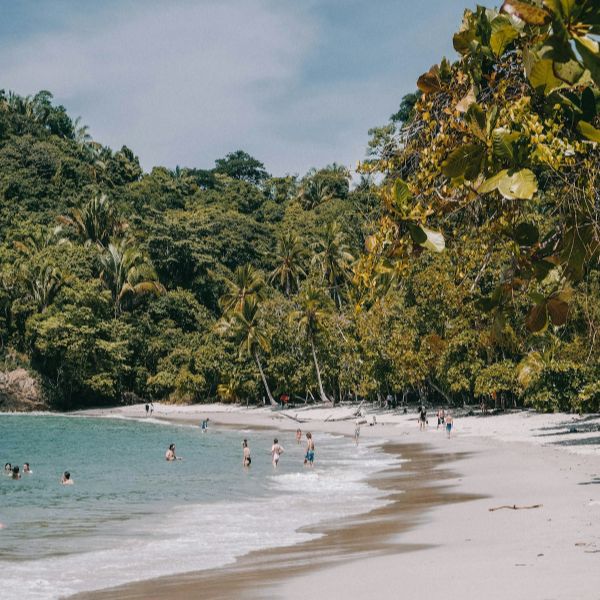
The Pacific side, and especially Guanacaste’s Gold Coast, trades cooler mountain air for sunshine, beaches, and an outdoor-first lifestyle. So days revolve around the water, the surf, and long sunsets rather than city errands. For many retirees, that is the whole point of the move, and it is the world we know best.
Neither choice is wrong. It comes down to one picture. Do you see your retirement in the hills with a sweater on a cool evening, or on the sand with your feet up? If the beach is calling, the Gold Coast deserves a close look. And that is exactly where our team lives and works.
The Gold Coast is built for the kind of retirement many Americans picture
Costa Rica’s Gold Coast runs along the northern Pacific in Guanacaste. It has quietly become a top stretch for retirees who want beach living with real infrastructure. Tamarindo anchors the area with restaurants, medical clinics, an international airport nearby in Liberia, and a long-established expat community. So you get the sand without giving up convenience.
Each town along the coast has its own character. Tamarindo is lively and walkable. Hacienda Pinilla is a gated resort community with golf and miles of private beach. And Playa Grande is quieter, greener, and known for nesting sea turtles. The table below gives a quick feel for the core towns we serve.
| Gold Coast town | Vibe | Good fit for |
|---|---|---|
| Tamarindo | Lively, walkable, full amenities | Retirees who want restaurants and an active social scene |
| Hacienda Pinilla | Gated resort, golf, private beach | Buyers seeking security, amenities and turnkey living |
| Playa Grande | Quiet, natural, low-key | Nature lovers who want calm and space |
| Langosta | Residential, close to Tamarindo | Couples wanting quiet near town |
| Playa Conchal | Upscale, white-sand beach | Higher-end buyers and vacation-home owners |
This is the corridor we have served since 2006, and it covers Avellanas, Brasilito, Hacienda Pinilla, Langosta, Playa Conchal, Playa Grande, Tamarindo and more. Weighing the move with clear eyes? Our honest breakdown of retiring in Costa Rica pros and cons lays out both sides without the rose-colored filter.
Buying or renting your retirement home on the Gold Coast
There is no shame in renting first, and we often suggest it. A few months in a Tamarindo vacation rental tells you more about a neighborhood than any listing photo ever could. You learn the rhythm of the rainy season, the morning surf, and whether you actually want to be in the middle of town or twenty minutes out.
When you are ready to buy, the process differs from the States in a few key ways. Costa Rica has no centralized MLS, so finding the right property depends on a local agency with real relationships and current inventory. Foreigners can own property outright with the same rights as citizens, which surprises a lot of first-time buyers. Then closing involves an attorney, an escrow account, and a notary.
That is where having a boutique team pays off. You can explore current options on our Costa Rica Gold Coast real estate pages. Compare Tamarindo condos for low-maintenance living, or look at Hacienda Pinilla condominiums if a gated resort appeals to you. And if you buy a place you will not live in year-round, our property management arm keeps it cared for. If you choose, it can earn income too.
Schedule a free 15-minute Gold Coast consult. Tell us your budget, your timeline, and the kind of retirement you picture. We will give you straight answers about Tamarindo, Hacienda Pinilla and Playa Grande real estate. No pressure, no scripts. Request help purchasing here.
How Coastal Realty helps you settle in on a first-name basis
We have never tried to be the biggest firm on the Gold Coast, just the best one for the people we work with. Some of the large competitors brag about managing hundreds of properties. But we get a quiet chuckle out of that. Their profit often comes from light-bulb changes billed at five times cost. Our culture is different: we know every owner by name, and we treat your home like it is ours.
That first-name approach runs through everything. On the sales side, we handle buyer representation, seller marketing, and the full closing process with attorneys, inspections and deadlines. On the management side, we keep properties in great shape for owners, their families, and guests. We also offer concierge support and an on-call number for renters who want to make Costa Rica memories.
Owners notice the difference. As David and Tina Hughes told us about their property at Casa Acuario:
“Coastal Property Management has been taking care of our property for years now. We want to let you know how extremely pleased we are with GM Liris Matarrita. She is intently customer-focused, both with our renters and with us. She works hard and solves problems intelligently and immediately. Her attitude is always positive, and she is professional, polite and gives service with a smile. We couldn’t be happier.”
You can read more of these stories on our owner testimonials page. And our property management keeps owners stress-free, whether they live here full time or visit twice a year. Before you commit, read the candid accounts in the truth about retiring in Costa Rica from people who have done it. Still, real stories beat glossy promises every time.
What to prepare for before you make the move
No move is perfect, and Costa Rica has its quirks. Bureaucracy is slow, and Spanish helps enormously. Also, coastal electricity bills climb with air conditioning, and specialist wait times in the Caja test your patience. None of these are dealbreakers, but they are easier to handle when you expect them.
If you are relocating with younger family members or grandchildren, schooling becomes part of the plan too. Guanacaste and the Central Valley both offer strong bilingual options. Our overview of international schools in Costa Rica for expat families is a useful starting point. And for a full rundown of the hurdles ahead, our guide to the problems of retiring in Costa Rica and the 10 challenges to prepare for is honest about the parts that trip people up.
Go in informed and the rest tends to fall into place. The retirees who thrive here arrived with a budget and a healthcare plan. They also came with a willingness to adapt to a slower pace.
A realistic timeline for your first year on the Gold Coast
Think of the move less like flipping a switch and more like learning to surf. After all, you do not paddle out on day one and ride the big wave. You watch the water, find your balance, and let each session build on the last. The retirees who try to rush the whole process often get knocked around. But the ones who take it in stages tend to love the result.
Here is the sequence we usually recommend, and it has held up well across hundreds of moves.
- Months 1 to 2: research and scout. Pick two or three towns, read honest accounts, and book a scouting trip that covers both the dry and green seasons if you can.
- Months 3 to 5: rent before you buy. Stay in a vacation rental in your top town, shop the markets, and test the daily rhythm before committing capital.
- Months 4 to 6: line up your visa. Hire a local immigration attorney, gather and apostille your documents, and start the Pensionado or Rentista application.
- Months 6 to 9: enroll in the Caja and open a bank account. Get your DIMEX card moving and arrange private insurance to cover the gap.
- Months 9 to 12: buy with a local agent. Once you know the neighborhood, work with a Gold Coast agency on the right home, escrow, and closing.
That pacing keeps the pressure low and the decisions sound. So rather than gambling on a place you saw for a weekend, you choose a home you already know fits your life. In my experience, the rent-first stretch is the single most valuable step on the list. Still, it is the one most people are tempted to skip.
Common questions about retiring in Costa Rica
How much money do I need to retire in Costa Rica in 2026?
Most retired couples live comfortably on $2,500 a month in popular expat areas. Frugal retirees inland manage closer to $1,600. The Pensionado visa requires just $1,000 a month in pension income to qualify. Your single biggest cost lever is location, since beach towns cost noticeably more than inland communities only a short drive away.
Can Americans get healthcare when retiring in Costa Rica?
Yes. Once you hold legal residency, you enroll in the public Caja system. It costs 7% to 11% of declared income, often $70 to $220 a month, with full coverage and no copays. Most retirees add private insurance for $100 to $400 a month to shorten wait times and access English-speaking doctors. Medicare does not cover you abroad.
Do American retirees pay tax in Costa Rica?
Costa Rica uses a territorial tax system and does not tax foreign income, so your Social Security and pensions stay untaxed locally. US citizens still file with the IRS on worldwide income, because no US-Costa Rica tax treaty exists. Passive retirees usually avoid double taxation, but a cross-border tax advisor is wise before you move.
Where is the best place to retire on Costa Rica’s Gold Coast?
It depends on your priorities. Tamarindo offers amenities and an active social scene. Hacienda Pinilla provides gated-resort security with golf, and Playa Grande suits nature lovers who want quiet. Renting in each for a few weeks is the smartest way to choose, and a local agency can match you to the right town and home.
Can foreigners own property when retiring in Costa Rica?
Yes, foreigners own property with the same rights as Costa Rican citizens. That includes titled homes and condos. Because there is no centralized MLS, working with a local agency gives you access to real inventory and trusted attorneys. Closings use an escrow account and a notary, and the process is straightforward with the right guidance.
Costa Rica rewards the people who plan ahead and then let the slower pace work its magic. And the Gold Coast is one of the best places on earth to do exactly that. When you are ready, talk to us about your goals, request help purchasing, or list a property you already own. Either way, you will deal with real people who know your name. That first-name service, backed by sales and management under one roof, is the whole reason Coastal Realty has served this coast since 2006.