
Why Escazu Stands Apart: Understanding the Market for Foreign Buyers
The “Beverly Hills of Central America” and What That Label Actually Means for Your Investment
The nickname is real estate shorthand, but it points to something concrete. Escazu is where Costa Rica’s wealthiest residents, its diplomatic corps, and a significant portion of its foreign business community have chosen to live for decades. That concentration of wealth and sustained demand creates a market with properties that hold their value, infrastructure that gets maintained, and a caliber of services, restaurants, medical facilities, and retail that you simply don’t find at the same density anywhere else in the country. Escazu costa rica real estate is one of the most searched topics among foreign buyers exploring this part of Central America.
For a foreign buyer, this matters beyond lifestyle. Markets anchored by genuine local demand are more resilient than those built primarily on expat optimism. Escazu Costa Rica real estate has attracted both, and that combination is precisely what makes it worth understanding in depth.
Human Development, Infrastructure, and Why Location Inside Costa Rica Matters
Costa Rica consistently ranks among Latin America’s highest performers on the Human Development Index, a composite measure of life expectancy, education, and income. Within Costa Rica, the Greater Metropolitan Area around San José, and Escazu specifically, sits at the top of that curve. That translates directly to infrastructure quality: reliable roads, consistent electricity, municipal water service, high-speed fiber internet in most residential areas, and a local government that enforces zoning and building codes with more rigor than many comparable Central American markets.
This matters when you are evaluating risk from thousands of miles away. Property in a municipality with functional infrastructure and enforceable codes is a fundamentally different asset than property in one without them, even when listing prices look similar.
The Expat Ecosystem: Healthcare, International Schools, and a Community Already Waiting
CIMA Hospital and Clinica Biblica’s satellite facilities are both located within or immediately adjacent to Escazu. These are Joint Commission-accredited institutions, the same standard used to evaluate hospitals in the United States, where English-speaking staff, specialist-level care, and procedures that would cost multiples more in North America are available at a fraction of the price.
For families and retirees, the school ecosystem matters equally. Country Day School, Blue Valley School, and several other internationally accredited campuses operate in Escazu and the immediately surrounding area, offering curricula ranging from U.S.-standard programs to International Baccalaureate. If you have school-age children or grandchildren who might visit for extended stays, this infrastructure changes your quality-of-life calculation significantly.
The expat community is already well established, too. The Escazu expat network, drawing North Americans, Europeans, and a growing number of digital nomads, is one of the most organized and welcoming in Central America. That soft infrastructure matters more than most buyers anticipate. Knowing who to call for a reliable plumber, which pharmacy has English-speaking staff, and where to find your preferred grocery brand is not trivial when you are new to a country.
Proximity to San José Without the Urban Trade-Offs
Escazu sits approximately 12 kilometers west of San José’s city center, close enough that the international airport, major government offices, and the country’s commercial core are accessible in under 30 minutes on most days. The municipality’s elevated position in the Central Valley also gives it a cooler, more temperate climate than San José proper, with daytime highs typically in the mid-70s Fahrenheit year-round and pleasantly cool evenings.
What Escazu avoids is the density, traffic noise, and urban congestion that characterizes San José’s interior neighborhoods. The municipality has managed its growth in a way that preserves residential character in most zones, which is why gated communities and low-density hillside neighborhoods coexist comfortably with high-quality retail corridors like Multiplaza Escazu.
What the Instagram Version Gets Right, and What It Leaves Out
The photos are accurate. The mountain views are real, the restaurants are excellent, and the quality of construction in the upper market segments is genuinely impressive. Social media does not lie about the lifestyle Escazu delivers.
What it leaves out is the operational texture: navigating a purchase as a foreign buyer in a civil law system, understanding which neighborhoods have HOA structures that function and which don’t, knowing how to evaluate whether a property’s registered value reflects reality, and figuring out what property management actually costs when you are not on-site. Those are the questions this guide answers, starting with the most consequential decision you will make before you look at a single listing: which neighborhood.
—
Mapping Escazu Costa Rica Real Estate Micro-Neighborhoods: Which Corner Fits Your Life?
Escazu is not a single neighborhood. The municipality spans several distinct zones, each with its own character, price tier, and suitability profile. Choosing the wrong sub-area for your lifestyle and investment goals is one of the most common and costly mistakes foreign buyers make. The right property in the wrong neighborhood will underperform your expectations on both counts.
Bello Horizonte: Elevated Living, Gated Privacy, and the Luxury Enclave Experience
Bello Horizonte sits at the higher elevations above central Escazu and is home to some of the most exclusive gated communities in the country. Properties here tend to be larger single-family homes and luxury villas set within HOA-governed communities with 24-hour security, shared amenities, and strict architectural standards. The trade-off is car dependency. At these elevations, walkability is limited and daily errands require a vehicle.
For buyers prioritizing privacy, security, and prestige property with strong resale appeal to the upper end of both the local and international market, Bello Horizonte is the natural landing point. It commands the highest price per square meter in the Escazu Costa Rica real estate market and has historically shown the most price stability during regional economic fluctuations.
San Antonio de Escazu: Village Character, Walkability, and a Different Kind of Prestige
San Antonio is the historic heart of the municipality and feels noticeably different from the newer luxury corridors. The streets narrow, the pace slows, and you can walk to the central church, local sodas, and small markets in a way that Bello Horizonte simply doesn’t allow. The architecture mixes traditional Costa Rican vernacular with carefully renovated colonial-style homes and newer boutique condominiums.
This sub-area appeals strongly to buyers who want a more authentic community experience alongside the Escazu premium. Property prices are generally lower than Bello Horizonte but still reflect the underlying demand for the municipality. For short-term rental investors, San Antonio’s walkability and neighborhood character translate well on platforms where travelers pay a premium for a local feel.
Santa Ana: The Adjacent Value Play and Its Real Trade-Offs
Santa Ana is technically a separate municipality, but it shares a border with Escazu and is often marketed as part of the same general market. Prices are measurably lower, and for buyers whose budget doesn’t reach Escazu’s core price points, Santa Ana is a legitimate consideration.
The trade-offs are real, though. Santa Ana lacks some of Escazu’s concentrated amenity density, and its infrastructure, while good by Costa Rican standards, doesn’t match the municipal investment Escazu has sustained over time. For buyers weighing budget against address, the honest question is whether the savings justify a slightly longer drive to the healthcare facilities, international schools, and commercial corridors that make the Escazu Costa Rica real estate market so compelling in the first place.
Retiree vs. Remote Worker vs. Short-Term Investor: An Honest Neighborhood Fit Assessment
No single Escazu sub-area is ideal for every buyer profile. The comparison below gives you a direct look at the dimensions that actually affect your decision.
—
Neighborhood Comparison
| Criteria | Bello Horizonte | San Antonio de Escazu | Santa Ana |
|---|---|---|---|
| Lifestyle Fit | Privacy-focused, luxury living, car-dependent | Walkable, community-oriented, authentic character | Quieter residential, slightly removed from core amenities |
| Best For | Retirees, executive buyers, full-time residents | Remote workers, couples, lifestyle-first buyers | Budget-conscious buyers, long-term residents |
| Price Tier | High ($400K-$1M+) | Mid-to-high ($250K-$600K) | Mid ($180K-$400K) |
| Short-Term Rental Feasibility | Moderate (premium nightly rate, lower volume) | Good (walkability and character attract travelers) | Lower (fewer amenity-adjacent drivers) |
| Absentee Owner Suitability | High (established HOA structures, security) | Moderate (varies by property type) | Moderate (requires strong local management partner) |
| Key Trade-Off | Car dependency, higher entry cost | Less privacy, mixed property quality | Distance from core Escazu infrastructure |
—
This comparison is a starting framework, not a final answer. Your specific property type, budget, intended use, and how often you plan to be on-site will shift these assessments in ways that require a real conversation rather than a generic ranking. What it makes clear is that the Escazu Costa Rica real estate market is not monolithic, and treating it as a single destination when selecting a property is the first mistake most buyers make.
—
What Does Escazu Costa Rica Real Estate Actually Cost? Price Ranges, Property Types, and What Your Budget Unlocks
The Property Type Landscape: Homes, Condos, Luxury Villas, and Land
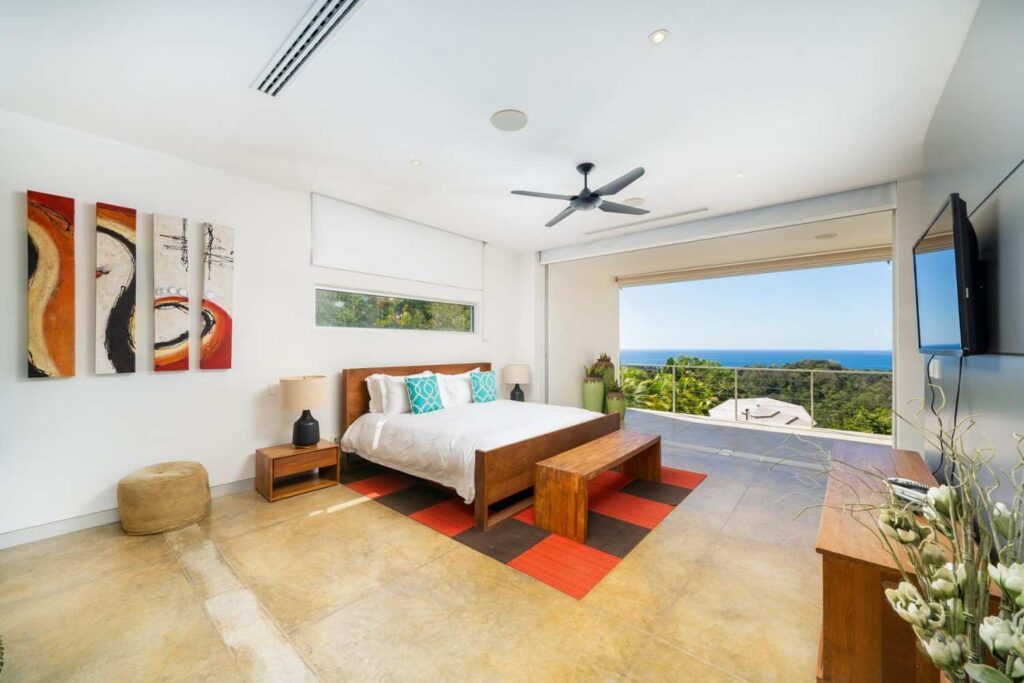
The Escazu Costa Rica real estate market offers more variety than most buyers expect. Single-family homes range from modest three-bedroom houses in established residential zones to architect-designed estate properties with infinity pools and panoramic valley views. Condominiums, many within gated complexes with gyms, pools, and 24-hour security, represent the most liquid segment of the market and are particularly popular with first-time foreign buyers and short-term rental investors. Luxury villas occupy the top tier, often custom-built on hillside lots with finishes that compete with comparable properties in Miami or Southern California.
Raw land is available in limited supply, particularly at higher elevations, and attracts buyers who want to build to specification. Commercial properties, including retail spaces, office units, and mixed-use buildings along the Escazu corridors, exist but require a different due diligence approach than residential acquisitions.
Realistic Price Ranges by Neighborhood and Property Type
Entry-level condominiums in the Santa Ana and outer Escazu zones start around $150,000 to $200,000 for a one- or two-bedroom unit in a maintained complex. Mid-range condos in San Antonio de Escazu, two or three bedrooms with updated finishes and shared amenities, typically run $250,000 to $450,000. At the upper end of the condo market in Bello Horizonte or prime Escazu addresses, $500,000 to $800,000 is realistic for a fully appointed three-bedroom unit with mountain views.
Single-family homes follow a similar tiered pattern. A three-bedroom home in a mid-tier gated community lands between $350,000 and $600,000. Luxury villas and larger estate properties in Bello Horizonte start around $700,000 and climb well past $2 million for the most prestigious addresses. Land parcels suitable for residential construction in the core Escazu zones typically range from $80 to $200 per square meter, depending on elevation, views, and proximity to services.
Can You Buy in Escazu for $50,000? An Honest Reality Check
No. A $50,000 budget does not buy real estate in the Escazu Costa Rica real estate market. It may buy a small rural lot far outside the municipality, but that outcome delivers neither the Escazu lifestyle nor the investment thesis that makes this market worth discussing.
The honest floor for a habitable property within Escazu proper is closer to $150,000 to $175,000, and that range delivers a modest apartment in an older building rather than the polished product most buyers envision. If your budget sits below $200,000 and you want a quality property in a maintained community, Santa Ana becomes a more realistic starting point. That is a legitimate choice, but it should be made with clear eyes rather than because a listing site implied Escazu was within reach at a price point where it simply is not.
Total Landed Cost: Purchase Price Is Only the Beginning
The listed price of a property covers the asset. It does not cover the cost of acquiring, holding, and operating it. Foreign buyers who plan only around the purchase price routinely underestimate their total outlay by 10 to 15 percent before they have spent a dollar on furnishings or maintenance.
Costa Rica Property Transfer Tax and Stamp Duties
Costa Rica charges a property transfer tax of 1.5 percent of the registered property value at closing. Stamp duties, a collection of smaller fiscal charges, add roughly another 0.5 percent. Combined, budget approximately 2 percent of the purchase price for transfer costs at closing. On a $400,000 property, that is $8,000 before anything else moves.
Annual Property Tax at 0.25 Percent of Registered Value
Costa Rica’s annual property tax is among the lowest in the Americas: 0.25 percent of the registered value as assessed by the municipality. On a $400,000 property with a registered value reflecting full market price, annual property tax runs approximately $1,000. Where buyers encounter surprises is when the registered value has not been updated to reflect current market value, a common situation with older properties, and a reassessment triggers a larger tax obligation than anticipated. Your attorney should flag this during due diligence.
The Luxury Home Tax: Thresholds and Obligations
Properties with a registered construction value exceeding approximately $258,000 USD (a threshold that adjusts annually for inflation) are subject to the Impuesto Solidario, or solidarity tax. This tax applies to the construction value specifically, not the total property value including land. Rates are progressive, starting at 0.25 percent and rising for higher construction values. If you are purchasing a luxury villa or high-end condo in Escazu, confirm the current threshold and your property’s assessed construction value with your attorney before closing.
Legal Fees, Closing Costs, and What to Budget
Legal fees in Costa Rica are regulated by the Colegio de Abogados and are calculated on a sliding scale based on the transaction value. For a purchase in the $300,000 to $500,000 range, total legal fees typically land between 1 and 1.5 percent of the purchase price. That fee covers the purchase agreement, title search, due diligence review, closing coordination, and registration of title at the Registro Nacional. It does not cover separate surveys, environmental reviews, or corporate structure costs if you choose to hold the property through an entity. Budget an additional $500 to $1,500 for those items, depending on complexity.
All-in, a realistic closing cost estimate for an Escazu property purchase is 3 to 4 percent above the purchase price.
—
The Foreign Buyer’s Legal and Financial Roadmap: Due Diligence, Financing, and Closing
Is It Actually Safe to Buy Property in Escazu Costa Rica as a Foreigner?
Costa Rica’s constitution grants foreign nationals the same property rights as Costa Rican citizens. There are no restrictions on foreign ownership of fee-simple real estate, no special licensing requirements, and no mandatory local partner structures for standard residential purchases. The legal protections available to you as a buyer are identical to those available to any Costa Rican national.
That constitutional clarity is one of the primary reasons experienced foreign investors choose Costa Rica over other Central American markets where ownership rights for non-nationals are more ambiguous or legally layered.
How the Registro Nacional Works and Why a Clean Title Search Is Non-Negotiable
Every titled property in Costa Rica is registered in the Registro Nacional, the national public registry. Ownership, liens, mortgages, easements, and any legal encumbrances on a property are recorded there and are publicly searchable. Your attorney will conduct a formal title search, called an estudio de registro, as part of due diligence to confirm that the seller holds clear title, that no outstanding mortgages or liens exist, and that the property boundaries match the recorded plano (survey map).
This step is not optional. Properties that have changed hands informally, inherited property with unresolved estate issues, and lots that have been subdivided without proper municipal approval can all appear clean on a listing but carry title problems that will surface in a registry search. The search takes a few days and costs a fraction of what a title problem costs to unwind.
The Due Diligence Checklist: What a Complete Review Covers
A thorough due diligence review covers several categories beyond the title search itself:
- Lien and mortgage search at the Registro Nacional
- Easement review for utility and right-of-way encumbrances that limit how you can use the land
- Municipal permit verification confirming that existing construction has proper permits and no open violations exist
- Utility account status confirming no outstanding balances with ICE (electricity) or AyA (water)
- HOA financial health review if the property sits within a condominium or gated community
- Use of soil certification from the municipality confirming the property is zoned for its intended purpose
Skipping any of these items to accelerate a closing is the most reliable way to inherit someone else’s problem.
Corporate Ownership Structures: When a SAFI Trust or S.A. Makes Sense
A SAFI (Sociedad Administradora de Fondos de Inversión) trust is a regulated investment trust structure used in Costa Rica for certain types of real estate ownership and investment funds. For most individual foreign buyers purchasing a home or condo for personal use or standard rental income, a SAFI structure is not necessary or appropriate.
Where a corporate ownership structure does make sense is when you are purchasing high-value property with estate planning considerations, when multiple buyers are co-investing, or when the property will generate rental income that benefits from a formalized entity structure. The most common approach for foreign buyers is holding property through a Costa Rican sociedad anónima (S.A.) or sociedad de responsabilidad limitada (S.R.L.), which provides liability separation and simplifies estate transfer. Your attorney and a Costa Rican accountant should align on the right structure for your specific situation before you sign a purchase agreement.
Financing Realities: What Most Listing Sites Won’t Tell You
Most foreign buyers purchase with cash or with financing arranged in their home country against existing assets. Costa Rica’s state bank, the Banco Nacional de Costa Rica (BNCR), does offer mortgage products to non-residents, but the process is document-intensive, loan-to-value ratios are conservative (typically 50 to 70 percent), interest rates are higher than U.S. or Canadian equivalents, and approval timelines can stretch the purchase process significantly.
Seller financing is more common in the Escazu Costa Rica real estate market than most buyers expect, particularly for higher-value properties where sellers have equity flexibility and buyers prefer not to repatriate capital. Terms are negotiated directly and vary considerably. If you are considering seller financing, your attorney must structure the promissory note and mortgage registration at the Registro Nacional correctly from the start.
The cleanest path for most buyers is cash with proof of funds from a verifiable source. Costa Rica’s anti-money laundering regulations require documentation of fund origins, and your attorney will need that paperwork at closing regardless of how you are financing the purchase.
The Purchase Timeline: From Offer to Recorded Title
A straightforward Escazu property purchase follows this sequence:
- Offer and negotiation, typically informal until a formal purchase agreement is drafted
- Promise to purchase agreement (Promesa de Compraventa) signed by both parties, with a deposit of 5 to 10 percent held in escrow
- Due diligence period covering title search, inspection, permit review, and HOA review (typically 2 to 4 weeks)
- Final purchase agreement drafted by the buyer’s attorney
- Closing before a Costa Rican notary public, with simultaneous fund transfer and deed signing
- Title registration at the Registro Nacional (typically 2 to 6 weeks post-closing)
Total timeline from accepted offer to recorded title: 45 to 90 days for a clean transaction. Complex transactions involving corporate structures, seller financing, or title issues take longer.
The Most Common Mistakes Foreign Buyers Make Before They Sign Anything
The errors that cost buyers the most are predictable and largely avoidable:
- Using the seller’s attorney or a dual-agent attorney instead of independent legal counsel
- Paying a deposit before a formal promise-to-purchase agreement is signed
- Skipping the municipal permit review and inheriting unpermitted construction
- Purchasing based on a registered value without verifying it reflects current market value
- Failing to review HOA financials and discovering an underfunded reserve or pending special assessment after closing
- Moving too quickly on a “competitive” deal and bypassing due diligence steps
The consistent thread is that these mistakes happen when buyers prioritize speed or savings over process. Escazu is a seller’s market in premium segments, and genuine inventory is limited. But no competitive pressure justifies skipping the steps that protect a six- or seven-figure acquisition.
—
From Purchase to Profit: Vacation Rental Income and Property Management in Escazu
Is Escazu the Right Market for Short-Term Rental Income?
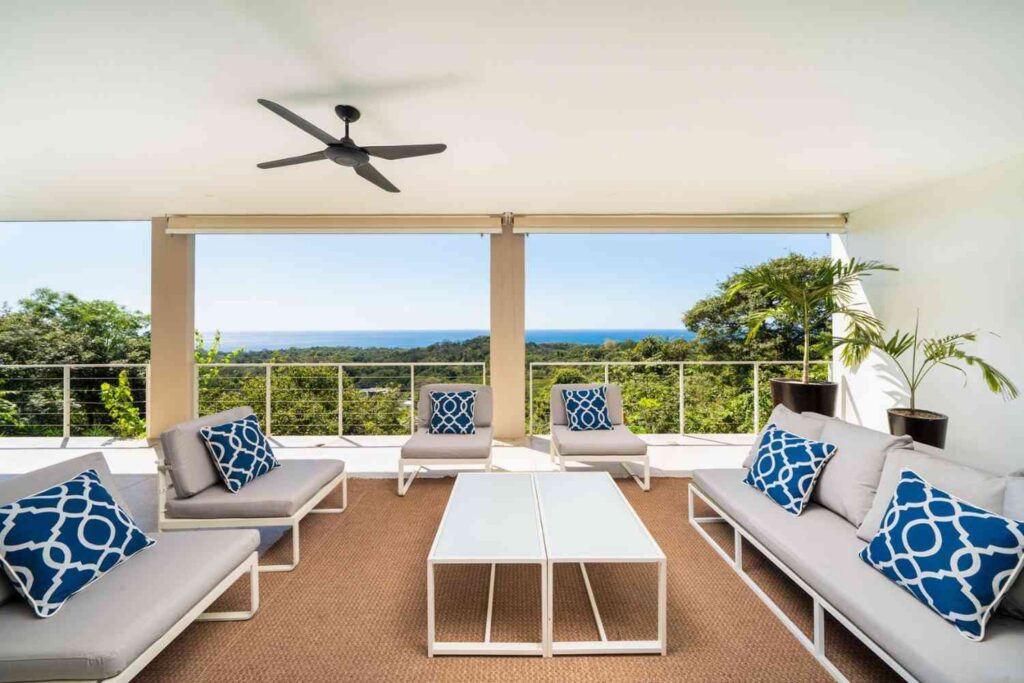
Escazu is not a beach market, and that distinction matters for rental yield expectations. It does not generate the seasonal volume of a Pacific Coast beach town where travelers book specifically for coastal access. What it offers is a different and, in many ways, more stable rental profile: business travelers, families visiting for medical care at CIMA Hospital, relocating executives evaluating long-term options, and international visitors who prefer a secure urban base.
The implication for yield is that Escazu performs better on occupancy consistency than on peak-season spikes. A well-positioned condo in San Antonio or a furnished executive unit in a quality Bello Horizonte complex can sustain strong annual occupancy at reliable nightly rates, while a beach property may hit peak figures in high season and drop sharply in the wet season. For absentee owners who want predictable income rather than boom-and-bust cycles, the Escazu profile is often the better fit.
What Vacation Rental Income Realistically Looks Like on the Gold Coast
A furnished two-bedroom condo in a quality San Antonio or central Escazu complex typically generates $80 to $140 per night on short-term rental platforms, depending on finish level, amenities, and how well the listing is optimized. At 65 percent annual occupancy, that produces gross rental income in the range of $19,000 to $33,000 per year.
After platform fees, property management fees, utilities, supplies, and maintenance, net income will be meaningfully lower, typically 50 to 60 percent of gross for a well-run operation. On a $300,000 property, that translates to a net yield in the range of 3 to 5 percent annually. That is not exceptional by pure yield standards, but it funds a meaningful portion of ownership costs on an asset that is simultaneously appreciating in a stable, high-demand market.
The Property Management Equation: What Professional Management Costs and What It Returns
Professional short-term rental management in Escazu typically charges 20 to 30 percent of gross rental revenue. That fee covers listing management across platforms, guest communication, check-in coordination, cleaning and turnover, basic maintenance oversight, and monthly reporting. It does not typically cover major repairs, HOA fee payment, or property tax administration, which are pass-through costs.
The math only works if the manager actively optimizes pricing and occupancy rather than simply listing the property and waiting. Ask any prospective management firm for their average occupancy rates and average nightly rates for comparable properties in their current portfolio. Those two numbers tell you far more than their marketing materials.
Should You Hire a Property Manager? What Absentee Owners in North America Need to Know
If you are not in Costa Rica, you need on-the-ground representation. The question is not whether to hire a property manager but which type. For rental income properties, a dedicated short-term rental management firm makes sense when the numbers support it. For personal-use properties or long-term rentals, a property caretaker or management service that handles maintenance coordination, bill payment, and periodic inspections is the appropriate structure.
The risk of managing remotely without local eyes is not dramatic in any single incident. It is cumulative. A small water leak that goes unaddressed becomes a mold problem. An HOA notice that goes unanswered becomes a fine. A maintenance vendor who knows no one is watching charges accordingly. Local oversight is not a luxury. It is what protects the asset you worked hard to acquire.
An Illustrative Scenario: How One Remote Owner Built a Self-Sustaining Investment
Consider a buyer who purchases a furnished two-bedroom condo in a San Antonio de Escazu complex for $295,000. Annual property tax on the registered value runs approximately $650. HOA fees for the complex are $280 per month, covering security, pool maintenance, and common area upkeep. She engages a local management firm at 25 percent of gross revenue.
In year one, the property generates $24,000 in gross rental income at roughly 62 percent occupancy. After the management fee ($6,000), platform fees ($720), utilities ($2,400), supplies and turnover costs ($1,800), property tax ($650), and HOA fees ($3,360), net income is approximately $9,070. That is not a retirement income, but it covers the carrying costs of the property and returns a modest yield while the asset appreciates in a market with demonstrated long-term demand.
By year three, with the listing optimized, a returning guest base established, and minor improvements made based on guest feedback, gross revenue has climbed meaningfully and net income crosses $12,000. The property is, in practical terms, self-sustaining, paying its own costs and generating cash flow while the owner uses it for several weeks per year.
That outcome is achievable. It is not guaranteed, and it does not happen without the right management partner and a property that was selected with rental performance in mind from the start. That is precisely the kind of decision that looks straightforward on a listing site and requires genuine local expertise to get right.
—
HOA and COA Management for Absentee Owners: What the Fine Print Reveals
Understanding Gated Community Structures and Your Obligations as a Foreign Owner
Most gated communities and condominium buildings in Escazu operate under one of two governance structures. A homeowners association (HOA) typically governs a community of individual homes sharing common infrastructure such as roads, guardhouses, pools, and landscaping. A condominium owners association (COA) governs a building or complex where ownership includes both a private unit and an undivided share of common elements. The legal obligations attached to each are similar: monthly dues, compliance with community regulations, and participation in collective decisions that affect the property.
As a foreign owner, your obligations are identical to those of a Costa Rican resident. The HOA or COA does not adjust its expectations based on your address. Dues are owed on schedule, rules apply to your tenants and guests, and decisions made at assembly meetings can affect your property costs whether or not you attend.
What HOA Due Diligence Looks Like Before You Close
Most buyers review the purchase price, the title, and the inspection report. The HOA financials get a cursory glance at best. That gap is where expensive surprises originate.
A complete HOA review before closing covers four specific areas:
- Current monthly dues and what they include
- The reserve fund balance and whether it meets the community’s projected maintenance needs
- Any pending or anticipated special assessments
- The history of dues increases over the past three to five years
Obtaining these documents requires asking the seller or HOA administrator directly. If the HOA cannot produce audited financials or a reserve study, treat that as a material red flag rather than an administrative inconvenience. A community that cannot demonstrate its financial health before you buy will not improve after you close.
Reserve Funds, Special Assessments, and the Costs That Surprise Absentee Owners
A reserve fund is the HOA’s savings account for major future expenses: roof replacement, elevator overhaul, perimeter wall repair, pool resurfacing. Communities that fund their reserves adequately absorb these costs smoothly. Communities that don’t issue a special assessment, a one-time charge to all owners, when the bill arrives.
Special assessments in Escazu communities are not rare. A well-maintained complex with aging infrastructure might levy a significant per-unit charge for a major capital project. For an absentee owner who was not tracking the HOA’s financial trajectory, that invoice arrives as a complete surprise. For an owner who reviewed the reserve study before closing and saw an underfunded reserve, it was entirely predictable.
Monthly HOA fees in Escazu vary considerably by community type and amenity level. A basic gated residential community might charge $150 to $250 per month. A full-amenity condominium complex with gym, pool, security, and concierge services can run $400 to $700 per month. Those are recurring costs that directly affect your net yield calculation and your cost of ownership whether the property is rented or vacant.
How a Local Partner Manages Your HOA Relationship When You Are 3,000 Miles Away
HOA notices arrive in Spanish. Assembly meetings are held in person. Payment deadlines do not pause because you are traveling. An absentee owner without a local representative managing these touchpoints will miss things, and missed HOA obligations can result in fines, loss of amenity access, or in extreme cases, liens filed against the property.
A local property manager or legal representative holding a power of attorney can receive notices on your behalf, attend or vote by proxy at assemblies, make monthly payments from a local account, and flag any community decisions that materially affect your property. Confirm explicitly that HOA administration is within scope before you engage any management firm. It does not happen automatically, and the assumption that it does is a costly one.
—
The Lifecycle Partner Difference: Why Boutique Expertise Outperforms a Transactional Brokerage for Overseas Investors
What a Transactional Broker Delivers, and Where the Relationship Ends
A transactional broker’s job is to close a sale. That is not a criticism. It is a description of the model. They show you listings, negotiate an offer, coordinate the closing, and collect a commission. In a market where you live and can manage ongoing relationships yourself, that scope is adequate.
In a foreign market where you cannot walk the neighborhood on a Tuesday afternoon, cannot sit in the HOA meeting, and cannot tell whether the property manager is actively optimizing your listing or simply posting it, a transactional broker’s contribution ends precisely at the moment your real operational needs begin.

The Lifecycle Partner Model: From First Conversation Through Long-Term Asset Management
A lifecycle partner model is built around a different premise: the purchase is the beginning of the relationship, not the conclusion. The advisor who helps you select a neighborhood and evaluate a property is the same team that monitors your HOA, flags regulatory changes, reviews your management company’s performance, and advises you when market conditions suggest it is time to sell or refinance.
For a foreign buyer in the Escazu Costa Rica real estate market, this continuity has concrete value at every stage. During the search, it means neighborhood guidance informed by current market reality rather than listing inventory. During due diligence, it means a team that knows which communities have reserve fund problems and which attorneys have a reputation for clean closings. After closing, it means someone on the ground whose interest is your long-term satisfaction rather than the next transaction.
Nearly Two Decades on the Ground: Why Local Knowledge Cannot Be Replicated by a National Platform
A national or international real estate platform can show you Escazu Costa Rica real estate listings. What it cannot tell you is that a particular gated community has been managing a recurring infrastructure problem for years, that a specific corridor floods during heavy September rains, or that a developer with a currently marketed project has a pattern of delivering below-specification finishes.
That kind of knowledge accumulates only through years of closed transactions, maintained relationships, and direct observation. A firm with nearly two decades of experience in the Escazu Costa Rica real estate market has seen multiple economic cycles, watched neighborhoods evolve, tracked which property management companies actually perform, and built the professional network of attorneys, engineers, HOA administrators, and municipal contacts that makes complex transactions resolvable rather than stalled.
No algorithm replicates that. No listing database carries it. It lives in the people who have been operating in a specific market, at street level, for a long time.
What Goes Wrong When the Advisor Disappears After Closing
Consider a buyer who closes on a two-bedroom condo in a Bello Horizonte community. The broker was responsive throughout the search and helpful at closing. Six months later, the buyer receives an email from the HOA administrator about a special assessment, payable within 90 days. The broker’s number goes to voicemail. The email bounces.
The buyer does not speak Spanish fluently. The HOA documents are in Spanish. She does not know whether the assessment is legitimate, whether it was disclosed during due diligence, or whether she has any recourse. She ends up paying a separate attorney to review the situation, discovers the reserve fund deficiency was visible in financials she was never prompted to review, and absorbs the full assessment with no ability to negotiate a payment plan because she missed the initial response window.
That scenario plays out in variations across the Escazu Costa Rica real estate market regularly. It is not caused by bad luck. It is caused by the absence of a local advocate after the transaction closes.
How to Evaluate Any Real Estate Firm Before You Trust Them With a Foreign Investment
The right questions reveal more than any marketing brochure. Before engaging any advisor for buying property in Escazu Costa Rica as a foreigner, ask these five questions:
- How long has your firm operated specifically in the Escazu Costa Rica real estate market, and how many transactions have you closed here in the past three years?
- What services do you provide after closing, and are they included or separate engagements?
- Can you provide references from foreign buyers who purchased two or more years ago and are still working with your firm?
- Who specifically handles HOA administration and property oversight for absentee clients, and what does that process look like day to day?
- If a legal or municipal issue arises after I close, who on your team manages that relationship, and what is your process for resolving it?
A firm that answers these questions with specifics and offers verifiable references has earned the right to further conversation. A firm that redirects to listings has told you what their model actually is.
—
Your Escazu Costa Rica Real Estate Journey Starts With One Honest Conversation
What You Now Know That Most Foreign Buyers Don’t
Most foreign buyers arrive at the Escazu Costa Rica real estate market with a clear image of what they want and a significant gap in understanding what the process actually requires. They know the lifestyle. They have seen the listings. What they have not seen is the full picture: the neighborhood trade-offs that affect both daily life and rental performance, the total cost of ownership that extends well beyond the purchase price, the due diligence steps that protect a major acquisition, and the operational layer of HOA management, property oversight, and tax compliance that determines whether ownership feels like an asset or a burden.
You now have that picture, and it changes the quality of every decision you make from this point forward.
The Gap Between the Dream and the Decision, and How to Close It With Confidence
The distance between wanting to own property in Escazu and actually owning it well is almost never a question of legal eligibility or market access. It is a question of having the right guidance at each stage of a process that is genuinely manageable when you understand it and genuinely costly when you don’t.
The buyers who navigate this well are not necessarily the most financially sophisticated or the most experienced in real estate. They are the ones who found a local partner who gave them honest answers early, helped them ask the right questions, and stayed present after the closing documents were signed. That combination of local expertise, transparent guidance, and a long-term relationship is what converts a good property into a sound investment.
Your Next Step: Begin Your Escazu Costa Rica Real Estate Journey With Coastal Realty
The most useful thing you can do right now is have a direct conversation about your specific situation. Not a listing search, not a newsletter signup — a real conversation about what you are trying to accomplish, what your timeline looks like, and what the Escazu market can realistically deliver for your budget and lifestyle goals.
Coastal Realty has guided foreign buyers through every stage of the Escazu Costa Rica real estate journey for nearly two decades. That experience means we can tell you which properties and neighborhoods align with your goals before you visit, what due diligence will reveal before you commit, and what ongoing ownership looks like once the keys are yours. Reach out and tell us where you are in the process. We will meet you there.
—
Frequently Asked Questions
What is the actual process and timeline for buying real estate in Costa Rica as a U.S. citizen or Canadian?
The process follows a clear sequence: informal offer and negotiation, a signed promise-to-purchase agreement with an escrow deposit of 5 to 10 percent, a due diligence period of 2 to 4 weeks covering title search and inspections, formal closing before a Costa Rican notary public, and registration of title at the Registro Nacional. For a clean transaction, most buyers move from accepted offer to recorded title in 45 to 90 days. Working with independent legal counsel from the start, rather than sharing an attorney with the seller, is the single most important step in protecting your interests throughout.
How much does it really cost to buy property in Escazu, including legal fees, taxes, and closing costs?
Beyond the purchase price, budget approximately 3 to 4 percent for total closing costs. This includes a property transfer tax of 1.5 percent, stamp duties of roughly 0.5 percent, and legal fees typically running 1 to 1.5 percent of the purchase price. Additional costs for surveys, corporate structure setup, or environmental reviews can add $500 to $1,500 depending on the transaction’s complexity. On a $400,000 property, expect to bring roughly $412,000 to $416,000 to the table before furnishings or initial maintenance.
Is it safe to buy real estate in Escazu as a foreigner, and how do I protect myself legally?
Costa Rica’s constitution grants foreign nationals the same property rights as Costa Rican citizens, with no restrictions on fee-simple ownership and no requirement for a local partner. The most effective protections are procedural: hire your own independent attorney rather than using the seller’s counsel, complete a full title search at the Registro Nacional, verify all municipal permits, and review HOA financials before closing. Buyers who follow a complete due diligence process encounter very few problems. Buyers who skip steps to move quickly are where the stories of costly mistakes come from.
What are the most common mistakes foreign buyers make when purchasing in Costa Rica?
The most frequent and expensive mistakes are using shared or seller-recommended legal counsel, paying a deposit before a formal promise-to-purchase agreement is in place, skipping the municipal permit review, and failing to review HOA reserve fund health before closing. Many buyers also underestimate total landed cost by focusing only on the purchase price and are surprised by transfer taxes, stamp duties, and legal fees at closing. Taking the time to follow each due diligence step, even when a deal feels urgent, is the most reliable way to avoid inheriting someone else’s problem.
Should I hire a property manager in Costa Rica, and what do they cost?
If you are not based in Costa Rica, local management is essential rather than optional. For short-term rental properties, professional management firms typically charge 20 to 30 percent of gross rental revenue and handle platform listings, guest communication, cleaning, and basic maintenance oversight. For personal-use or long-term rental properties, a caretaker or management service handling bill payments, maintenance coordination, and periodic inspections is the appropriate structure. The cumulative cost of unmanaged issues, from missed HOA notices to unaddressed maintenance, consistently exceeds management fees for absentee owners who try to handle things remotely.
What neighborhoods in or near Escazu are best for retirees versus short-term investors?
Retirees prioritizing privacy, security, and a full-service lifestyle tend to find the best fit in Bello Horizonte, where established gated communities with 24-hour security and shared amenities are the norm, though car dependency is a real trade-off. Short-term rental investors typically see better occupancy performance in San Antonio de Escazu, where walkability and neighborhood character attract both leisure travelers and business visitors. Santa Ana offers a more accessible price point for buyers whose budget doesn’t reach core Escazu levels, with the understanding that it sits slightly further from the healthcare facilities and commercial density that anchor the Escazu market’s appeal.
How much does it cost to live in Escazu, Costa Rica on a monthly basis?
Monthly living costs in Escazu vary significantly by lifestyle, but a comfortable expat budget for a couple typically falls in the range of $3,000 to $5,000 per month, covering housing, groceries, dining, transportation, utilities, and health insurance. If you own rather than rent, your housing cost becomes a fixed ownership expense rather than a monthly payment, which many retirees find simplifies budgeting considerably. Healthcare costs are a notable advantage: quality specialist care at CIMA Hospital and similar facilities runs a fraction of comparable North American costs, which meaningfully reduces one of retirement’s largest expense categories.