
Costa Rica Condo for Sale: A Buyer’s Guide to the Best Communities
Two buyers can pay the same price for the same square meters in Costa Rica and end up with completely different lives. The difference is rarely the unit. It’s the community around it: the gates, the neighbors, the management, and the culture of the place you’re buying into.
The best Costa Rica condo for sale is usually found by choosing the community first and the unit second. Top communities range from Guanacaste resorts like Reserva Conchal and Las Catalinas to Los Sueños on the Central Pacific and the Escazú towers. Prices in 2026 run from roughly $180,000 to over $2 million.
That community-first approach is what this guide teaches. We’ll sort the country’s condo communities into four clear types, then tour the standouts region by region. After that come the paperwork, fees, and questions that separate a brochure from a place you’ll love owning.
Table of Contents
- Community choice outranks unit choice for long-term happiness
- The best communities cluster into four types
- Prices track the community tier more than the town
- Guanacaste’s master-planned resorts set the national standard
- Los Sueños and the Central Pacific deliver the marina lifestyle
- Escazú and Santa Ana communities suit full-time living
- The southern zone rewards buyers who arrive early
- Resales inside proven communities often beat the sales office
- Ownership and title work the same inside every community
- The HOA is the community’s government, so audit it like one
- Amenities cost money whether you use them or not
- Rental performance differs sharply between community types
- Renting inside your target community pays for itself
- A community visit checklist separates brochure from reality
- A few community-level pitfalls deserve your attention
- Common buyer questions, answered
- Your next step toward the right community
Community choice outranks unit choice for long-term happiness
Ask owners who resold within three years what went wrong, and the answer is almost never the condo itself. The kitchen was fine. The view delivered. What failed was the fit between the buyer and the community. Think of a party tower for a quiet couple, or an isolated resort for social retirees. Or a car-dependent enclave for people who wanted to walk to dinner.
Units are interchangeable in a way communities are not. Within any good building, a two-bedroom is a two-bedroom, and cosmetic flaws are fixable for a few thousand dollars. The community’s culture, governance, and location are fixable by exactly one method: selling and starting over, at 6 to 8 percent transaction cost each way.
So flip the usual shopping order. Decide the type of community life you want, shortlist two or three developments that deliver it, and only then compare the units inside them. This guide is built around that sequence, because it’s the one that produces owners who stay.
The best communities cluster into four types
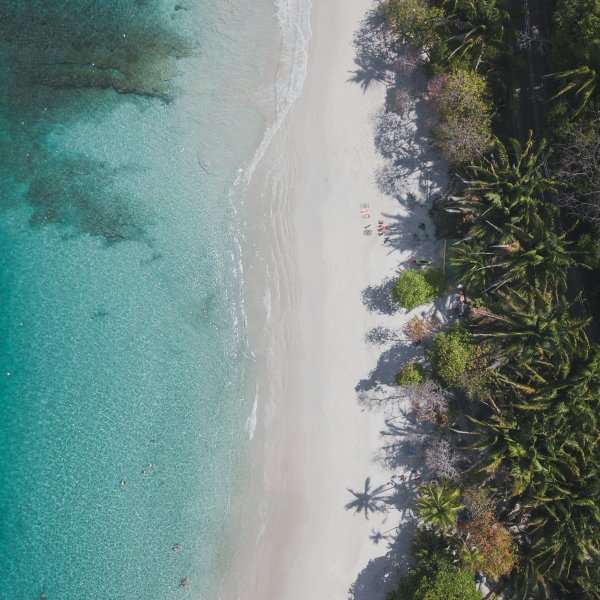
Costa Rica’s hundreds of condo developments sort neatly into four types. Knowing your type cuts the search by 80 percent before you view a single unit.
Master-planned resorts are the flagship category. Think gated grounds measured in hectares, a golf course or beach club, on-site restaurants, and professional management. They deliver turnkey resort living, priced accordingly, and they dominate Guanacaste.
Boutique beach buildings form the second type: 10 to 60 units near a town, with a pool, a gym, and little else. You trade amenities for lower fees and a real connection to local life. Third come the urban towers of Escazú, Santa Ana, and San José, built for full-time residents with corporate-grade management, parking, and security. The fourth type, the town-integrated community, blends into a walkable village. Las Catalinas pioneered this model on the Pacific, and smaller versions are appearing in the southern zone. Each type suits a different owner, and none is objectively best. The mismatch, not the type, is what creates regret.
Prices track the community tier more than the town
Location still matters, but within any region the community tier drives the price more than the postal code does. Here’s a realistic 2026 snapshot for two-bedroom units:
| Community type | Typical 2BR price | HOA (monthly) | Signature examples |
|---|---|---|---|
| Master-planned resort | $400,000 – $1.5M+ | $500 – $1,200 | Reserva Conchal, Hacienda Pinilla, Peninsula Papagayo |
| Town-integrated village | $450,000 – $1.2M | $400 – $900 | Las Catalinas |
| Marina resort | $350,000 – $2M+ | $500 – $1,500 | Los Sueños |
| Boutique beach building | $180,000 – $450,000 | $150 – $400 | Playa del Coco, Tamarindo, Jacó buildings |
| Urban tower | $180,000 – $500,000 | $150 – $400 | Escazú and Santa Ana corridor |
Two patterns jump out of that table. First, boutique buildings and urban towers overlap almost perfectly on price, so the beach-versus-city decision is about lifestyle, not budget. Second, the resort tier commands a premium of 50 to 100 percent over boutique buildings in the same province. You’re paying for the golf course, the gates, and the brand, and the next sections explain when that premium earns its keep.
Guanacaste’s master-planned resorts set the national standard
The Gold Coast is where Costa Rica’s community model reached maturity, and its flagship developments anchor the top of the market.
Reserva Conchal, beside the white-shell sands of Playa Conchal, pairs condos with a golf course, a beach club, and a Westin on the grounds. Hacienda Pinilla spreads across 1,800 hectares near Tamarindo with a JW Marriott, ranch scenery, and quieter beaches than its famous neighbor. Further north, the Peninsula Papagayo occupies the luxury summit, home to Four Seasons-adjacent residences where entry starts around half a million dollars and climbs quickly. Our Papagayo Costa Rica real estate guide tours that rarefied market in detail.
Las Catalinas deserves its own paragraph, because it’s unlike anything else in the country. The car-free town rises from the coast like a Mediterranean village, with condos above plazas and trails instead of parking lots. It has become the reference point for walkable community design in the region.
Value hunters aren’t locked out of Guanacaste either. Playa del Coco’s established boutique buildings, covered in our Playa del Coco real estate guide, deliver the same sunshine from $160,000. Some buyers would rather build inside a gated community than buy a finished unit. For them, our guide to land for sale in Guanacaste Costa Rica is the place to start, since several resorts sell home sites alongside condos.
Los Sueños and the Central Pacific deliver the marina lifestyle
Ninety minutes from San José sits Los Sueños Resort and Marina, the Central Pacific’s signature community. It grew around a world-class sportfishing marina, a golf course, and rainforest hillsides. For boaters, it’s simply the address in Costa Rica. Condos range from about $350,000 for older interior units to well past $2 million on the marina front. The rental program stays busy with fishing charters year-round.
The surrounding coast offers the affordable counterweight. Jacó’s tower district and Herradura’s smaller buildings put you ten minutes from the marina at a third of the price. Between them, they hold the deepest condo inventory in the country. Weekend demand from the capital keeps these buildings lively and rentable in every season.
South of Jacó, the coast turns boutique. Esterillos, Bejuco, and the Manuel Antonio hillsides favor small buildings with big views, where community means twenty neighbors rather than a resort directory. Micro-location decides everything on this stretch, so study it before you shortlist. Our Puntarenas Costa Rica real estate buyer’s guide maps these towns one by one, including which pockets flood the worst roads in October.
Escazú and Santa Ana communities suit full-time living
The valley’s condo communities answer a different question: not where to vacation, but where to actually live. The Escazú and Santa Ana corridor delivers the country’s most complete full-time infrastructure, and its residential towers are built for it.
Modern mixed-use developments around Avenida Escazú and Distrito Cuatro stack condos above restaurants, offices, cinemas, and medical suites, so daily life happens within one city block. Nearby standalone towers offer quieter alternatives with the same fundamentals: underground parking, 24-hour security, gyms, and managers who answer email the same day. Units run $180,000 to $500,000, with penthouses above that.
The community fabric here is international rather than expat. Your neighbors are Costa Rican professionals, embassy staff, and multinational families, which means the buildings stay occupied and maintained year-round instead of emptying each low season. Add the hospitals, the international schools, and the spring-like climate, and the corridor makes a strong case as the country’s most livable condo market. The full argument lives in our guide to Central Valley Costa Rica real estate.
The southern zone rewards buyers who arrive early
Every established community on this list was once a leap of faith, and the southern Pacific is where today’s leaps are happening. The Costa Ballena, from Dominical through Uvita to Ojochal, is graduating from houses-on-hillsides toward its first true condo communities.
The projects arriving here are small by Guanacaste standards: 12 to 40 units, low-rise, wrapped in jungle, priced from about $250,000 to $500,000. Scarcity does the appreciating. The terrain and zoning keep supply tight, while the region’s whale-watching, waterfalls, and national-park coastline keep pulling in exactly the buyers who want boutique over brand.
Early-community buying carries its own rules, though. Favor developers with a delivered project you can walk through. Confirm the water letter and permits before any deposit. And insist your stage payments sit in escrow, tied to construction milestones. The southern zone rewards that discipline more richly than anywhere else in the country right now, and it punishes its absence just as reliably.
Resales inside proven communities often beat the sales office
Every community offers two doors in: the developer’s sales office and the resale market. In established developments, the second door is frequently the better deal, and most first-time buyers never test it.
A resale carries information a new unit can’t. The HOA has a track record you can read, the grounds show a decade of real maintenance, and the unit itself often comes furnished with a documented rental history attached. Pricing works in your favor too. Individual sellers negotiate, while developer price sheets rarely move, and motivated sellers appear in every community each year for the usual life reasons.
New units answer back with warranties, current building standards, and the pick of finishes and floors. In a brand-new phase, that can justify the premium. But when you search listings for a Costa Rica condo for sale within a proven community, run the comparison deliberately. Ask your agent for the last six resale closings alongside the developer’s list prices. The gap is often 10 to 20 percent for near-identical space, and the resale comes with the one thing money can’t rush: proof of how the community actually ages.
Ownership and title work the same inside every community
Whatever community you choose, the legal foundation underneath is identical, and it favors you. Foreigners own condos in Costa Rica outright, with full fee-simple title in their own name or a local corporation. Law 7933 governs every registered condominium regime, defining your private unit, your share of the common areas, and the HOA’s authority.
One coastal nuance deserves attention when a Costa Rica condo for sale sits near the water. Land within 200 meters of the high-tide line falls in the Maritime Zone, where property is a renewable government concession rather than titled ground. The strongest beach communities were deliberately platted on titled land just behind that line. Verify which side of it your unit sits on in the National Registry, and treat concession property as a specialist deal needing extra legal work. Our roundup of beachfront property for sale in Costa Rica shows how the best oceanfront communities structure this.
The transaction itself is refreshingly standard. Closings run through an attorney-notary with escrow, costs total about 3.5 to 4.5 percent, and six to eight weeks from offer to keys is normal.
The HOA is the community’s government, so audit it like one
Here’s the least glamorous and most valuable idea in this guide. When you buy into a community, you’re buying shares in a small government, complete with a budget, elections, and politics. Its quality will shape your ownership more than any amenity.
A healthy HOA shows itself in documents, so request three sets through your attorney before offering. Get two years of financial statements, the reserve fund balance, and the minutes of recent owners’ meetings. Then read the minutes twice. They surface the leaking roofs, the delinquent owners, the lawsuits, and the looming assessments that no listing agent will volunteer.
Watch the power structure too. In newer communities, the developer often controls the HOA until most units sell. That can mean fees set artificially low to help sales, with reality arriving after handover. Ask when control transfers to owners and whether the budget survives independent review. Communities with owner-controlled boards, funded reserves, and boring minutes are the ones that quietly compound in value. Boring, in HOA terms, is the highest compliment available.
Amenities cost money whether you use them or not
The brochure’s amenity page is really a price list in disguise, and reading it that way saves buyers from a common trap. Every pool, gate, gym, golf course, and beach club appears twice in your ownership: once in the sales pitch and once, forever, in the monthly fee.
The math is straightforward. A boutique building with a pool and a guard runs $150 to $400 per month. A full resort community with golf, club staff, and grounds crews runs $500 to $1,200, and marina communities can exceed $1,500. Over a decade, the gap between those tiers is $50,000 to $120,000 in fees. That’s not an argument against resorts. It’s an argument for buying only the amenities you’ll genuinely use.
So audit yourself before you audit the communities. Golfers and boaters extract full value from resort fees, and rental guests will pay premiums for those same amenities. But maybe your actual life is beach walks, cooking, and a morning swim. The boutique tier delivers that for a quarter of the carry, and the difference funds a lot of flights home. Match the fee to the life, not to the brochure.
Rental performance differs sharply between community types
Most buyers plan to rent their unit at least part of the year, and community type predicts performance better than almost any other variable.
Resort and marina communities lead on nightly rates. Guests pay premiums for gates, beach clubs, and brand names, and on-site rental programs remove the management burden entirely. The trade-off is cost. Program commissions of 25 to 40 percent plus higher HOA fees eat into gross numbers that looked spectacular in the brochure. Boutique buildings in walkable towns like Tamarindo, Coco, and Jacó earn lower nightly rates but often net comparable returns. Fees stay light, and independent managers charge 20 to 30 percent.
Urban towers play a different game altogether. Escazú units rent long-term to corporate tenants at 6 to 8 percent gross, with no seasonality and minimal turnover. For income-first buyers weighing these paths against dedicated vacation properties, our roundup of Costa Rica vacation homes for sale ranks the current Gold Coast picks. Whichever route you model, confirm the community’s bylaws actually allow it, because several upscale developments restrict stays under 30 days and a few ban rentals outright.
Renting inside your target community pays for itself
One month of rent is the cheapest insurance available on a six-figure decision, and the tactic works best at community level. Nearly every development on this list has owners who rent monthly, and property managers field the try-before-you-buy request constantly.
A month inside the gates teaches what no tour can. You’ll learn whether the beach club is lively or deserted in your season, and how the HOA handles a maintenance request. You’ll also see which buildings catch the afternoon sun, and whether the community’s social rhythm matches yours. Resort sales offices sometimes convert your rent toward a purchase, so ask.
The renter’s toolkit is its own subject, from negotiating monthly rates to vetting internet and electricity terms. We’ve written the full playbook in our guide to condo rentals in Costa Rica by the month. Read it before you book the scouting stay. A well-run test month either confirms the community or redirects you cheaply, and both outcomes beat discovering the truth as an owner.
A community visit checklist separates brochure from reality
Tour days blur together, so bring a fixed list and run every community through it identically. These seven checks reveal the most:
- Visit at 7 a.m. and 9 p.m. Communities have different personalities at dawn, dusk, and Saturday night. See at least two of them.
- Count the lights. Evening occupancy tells you whether you’re buying into a neighborhood or a ghost tower between holidays.
- Talk to two owners without your agent. Ask what they’d change. Owners answer that question honestly and agents can’t.
- Test the commute to your real life. Time the drive to the beach, the supermarket, the airport, and the hospital, in daytime traffic.
- Walk the maintenance edges. Pool tiles, railings, and back stairwells show how the HOA actually spends, far better than the lobby does.
- Ask about the rental mix. The share of nightly rentals predicts noise, elevator wear, and the feel of the place in high season.
- Read the minutes before you leave town. Request them on tour day, so surprises surface while you can still walk away cheaply.
Choosing a community is like choosing a small town to move to, except the town has a budget you can read in advance. Very few decisions in life offer that courtesy. Take it.
A few community-level pitfalls deserve your attention
The community model concentrates benefits, and it concentrates a few risks too. Four repeat often enough to name.
The first is the developer-controlled HOA with honeymoon pricing, covered above, where fees jump 30 to 50 percent after handover. Next comes phase risk in growing communities. The rendering shows the finished village, but you’re buying next to years of construction if later phases stall or drag. Ask what’s funded, what’s permitted, and what’s merely drawn.
Third comes amenity oversupply. A 40-unit project promising golf, spa, and three restaurants has written checks its fee base may not cash, so amenities close and value follows. Finally, watch the single-buyer-profile community, where everyone bought the same two-bedroom for the same rental strategy. When the market shifts, all those identical units list at once and compete with yours. Communities with mixed unit types and mixed owner intentions resell far more gracefully. None of these risks is disqualifying. Each is simply a question to ask while asking is still free.
Common buyer questions, answered
Can foreigners buy a condo in Costa Rica’s gated communities?
Yes. Foreigners buy condos in every Costa Rican community with the same fee-simple ownership rights as citizens, titled personally or through a local corporation. No residency or local partner is required. Every registered community operates under Law 7933, and standard closings cost about 3.5 to 4.5 percent through an attorney-notary.
Which Costa Rica condo communities are considered the best?
In Guanacaste, the most established names are Reserva Conchal, Hacienda Pinilla, Las Catalinas, and Peninsula Papagayo. Los Sueños Resort and Marina leads the Central Pacific, while the Escazú and Santa Ana towers lead for full-time living. The best community for you depends on whether you prioritize resort amenities, walkability, boating, or year-round city convenience.
How much do condos cost in Costa Rica’s top communities?
Master-planned resort condos run $400,000 to over $1.5 million, and Los Sueños units range from $350,000 to $2 million. Las Catalinas homes sit between $450,000 and $1.2 million. Boutique beach buildings and Escazú towers offer quality two-bedrooms from $180,000, making them the value tier of 2026.
Are HOA fees higher in resort communities?
Substantially. Resort and marina communities charge $500 to $1,500 monthly to fund golf, security, clubs, and grounds, while boutique buildings and urban towers run $150 to $400. Over ten years the difference can exceed $100,000, so buyers should match the amenity tier to the amenities they’ll genuinely use.
Do condos in gated communities rent well?
Generally yes, with different profiles. Resort communities command the highest nightly rates but carry program commissions of 25 to 40 percent plus higher fees. Boutique town buildings net comparable returns at lower cost, and Escazú towers deliver steady 6 to 8 percent gross yields from long-term corporate tenants. Always verify the community’s rental bylaws first.
Your next step toward the right community
The country’s best communities aren’t hiding. They’re listed, toured, and reviewed, and their documents are one polite request away. What separates happy owners from the resale statistics is the order of operations. Type first, community second, unit last, with a scouting month and a careful read of the minutes in between. Follow that sequence, and the right Costa Rica condo for sale tends to identify itself. The gates, in the end, matter less than what’s growing inside them.