
Puntarenas Costa Rica Real Estate: A Complete Buyer’s Guide
This is your complete 2026 buyer’s guide to puntarenas costa rica real estate. Whether you’re a first-time international buyer eyeing a surf-town condo or a seasoned investor hunting for your next coastal property, this guide covers legal requirements, pricing, regional breakdowns, and the common pitfalls that trip people up.
Table of Contents
- Why Consider Puntarenas, Costa Rica for Your Next Property?
- Puntarenas 101: Province vs. City & Key Sub-Regions
- Can Foreigners Buy Property in Puntarenas, Costa Rica?
- Beachfront & Maritime Zone Rules in Puntarenas
- Types of Properties Available in Puntarenas Costa Rica
- Price Ranges & Market Snapshot for 2025–2026
- Best Areas to Buy Property in Puntarenas Province
- Jacó & Herradura: Accessible Pacific Hubs
- Manuel Antonio & Quepos: High-Demand Tourism Corridor
- Dominical, Uvita & Ojochal: The Southern Zone
- Osa Peninsula & Remote Puntarenas: For the True Adventurer
- Buying Property vs. Buying Land in Puntarenas
- Step-by-Step Buying Process in Puntarenas, Costa Rica
- Working With Local Real Estate Experts
- Legal Representation & The Role of the Notary
- Due Diligence: What You Must Check Before You Buy
- Property Inspections & Building Condition
- Financing Options, Taxes & Ongoing Costs
- Common Pitfalls When Buying in Puntarenas & How to Avoid Them
- Lifestyle Realities: Weather, Seasons & Daily Life
- Short-Term Rentals & Property Management in Puntarenas
- Comparing Puntarenas to Guanacaste’s Gold Coast
- How Coastal Realty & Property Management Can Help
- Next Steps: Turning Your Puntarenas Property Plan into Reality
- Frequently Asked Questions About Buying Real Estate in Puntarenas, Costa Rica
Why Consider Puntarenas, Costa Rica for Your Next Property?
Puntarenas province has quietly become one of the most compelling stretches of Pacific coastline in all of latin america. While Guanacaste’s Gold Coast gets the lion’s share of attention, Puntarenas offers something different: wilder beaches, thicker jungle, world-class surf, and in many areas, more affordable prices.
The 2025–2026 trends tell the story. Rising interest in surf towns like santa teresa, growing expat pockets in Jacó, Dominical, and Uvita, and limited inventory in sought-after eco zones are pushing demand steadily upward. Costa Rica’s property market offers significant capital gain opportunities, and Puntarenas is where many savvy buyers are placing their bets. Costa Rica has a stable government and low crime rates, which makes owning property here feel less risky than in many other countries in the region.
The lifestyle draws are hard to argue with. Pacific sunsets, whale watching in Marino Ballena National Park, national parks like Manuel Antonio and Corcovado, year-round warm weather, and a laid back lifestyle that actually delivers on the promise. Foreigners can buy property safely here with proper legal representation and due diligence, and the ownership rights are nearly identical to those of costa rican citizens.
Puntarenas 101: Province vs. City & Key Sub-Regions
First, let’s clear up a common confusion. Puntarenas city is a modest port town about an hour west of San José. Puntarenas province is something else entirely. It stretches from parts of the Nicoya Peninsula down through the Central Pacific, past the southern zone, and all the way to the Osa Peninsula. It is one of the largest provinces in costa rica.
Here are the coastal belts that most buyers care about:
- Central Pacific (Jacó, Herradura, Manuel Antonio/Quepos): Most accessible from San José and SJO Airport. Drive times are roughly 1.5–2 hours to Jacó and about 3 hours to Manuel Antonio.
- Southern Zone / Costa Ballena (Dominical, Uvita, Ojochal): Roughly 4–5 hours from SJO, depending on road conditions and season.
- Nicoya Peninsula (Santa Teresa / Malpaís): Technically in Puntarenas province but accessed via ferry or domestic flight. Remote and rugged.
- Osa Peninsula (Puerto Jiménez, Drake Bay): The wildest stretch. 6–8 hours by road or a short domestic flight.
Who fits where? Jacó and Herradura suit investors and families wanting infrastructure, schools, and a short drive to San José. Manuel Antonio attracts tourism investors and retirees. The southern zone appeals to eco-minded retirees, lifestyle investors, and digital nomads. Osa is for conservation-focused adventurers and eco-lodge developers.
Can Foreigners Buy Property in Puntarenas, Costa Rica?
Yes. Foreigners enjoy the same property ownership rights as citizens when purchasing titled land in costa rica. You do not need residency, citizenship, or even a visa beyond a tourist stamp to purchase property. This applies fully in 2025–2026 and has been the case for decades.
Costa Rica offers equal property rights to foreign buyers on fee simple (freehold) property. You can hold title in your personal name or through a local corporation. Residency is not required to own property in Costa Rica.
There are exceptions and nuances. The big one is the maritime zone, which covers the first 200 meters from the high tide line along all coasts. Within this zone, foreign ownership is restricted. Foreigners must use a Costa Rican corporation for maritime zone properties, and foreign individuals must have at least five years of continuous legal residency to hold a concession directly.
Use up and down arrow keys to resize the meta box pane.
Many foreign buyers use local corporations-either a Sociedad Anónima or SRL-to hold property. This can help with liability protection, estate planning, and meeting concession zone requirements. But for titled land outside the maritime zone, buying in your personal name is perfectly legal and common. For a deeper dive on ownership rules, see our guide on who can own property in Costa Rica.

Beachfront & Maritime Zone Rules in Puntarenas
Puntarenas has one of the longest coastlines in the country, and maritime zone regulations can complicate beachfront property purchases. Understanding this framework before you start your property search is essential.
Under Law No. 6043 (the Maritime-Terrestrial Zone Law), a 200-meter strip is measured inland from the ordinary high tide line. Maritime zone property cannot be owned fee simple within 200 meters of the high-tide line. This strip is divided into two parts:
Use up and down arrow keys to resize the meta box pane.
- Public zone (first 50 meters): The first 50 meters from the high-tide line are public land and cannot be privately owned. No permanent private structures are allowed, and public access must remain open.
- Restricted zone (50–200 meters): Concession properties require local municipality approval and have specific regulations. Concessions are time-limited (typically 5–20 years, renewable), require annual fees to the municipality, and have strict rules on foreign ownership percentages.
The distinction between titled property and concession property is critical. Some beachfront lots registered before 1977 carry full fee simple title. These are rare and command significant premiums. Most “beachfront” listings in Puntarenas are concession properties, even if marketed loosely as “titled.”
Work with a licensed attorney to confirm whether any Puntarenas beachfront lot is titled land, concession, or possession land before signing anything. The consequences of getting this wrong range from losing your deposit to losing the property entirely.
Types of Properties Available in Puntarenas Costa Rica
The diversity of property types in Puntarenas is one of its biggest draws. You’ll find everything from modern condos to raw jungle parcels, and the variety across sub-regions is dramatic.
Here is what you will typically encounter:
- Beachfront and ocean-view condos in Jacó and Herradura, often in the $200K–$350K range, with gated communities and HOA structures.
- Luxury villas and boutique hotels in Manuel Antonio, Santa Teresa, and Dominical, often exceeding $600K.
- Jungle and mountain estates above Uvita and Ojochal with panoramic ocean views and large land parcels.
- Raw land for building-both titled and concession-across the Central and Southern zones.
- Farms and finca properties inland, suited for agriculture, eco-projects, or large private estates. Private estates in Puntarenas can exceed $1M.
One thing to note: costa rica real estate in Puntarenas tends to be more spread out and less “master-planned” than Guanacaste’s gated communities. That means infrastructure quality-roads, water, internet, power-can vary sharply even within the same town. This affects both management complexity and rental income potential.
Price Ranges & Market Snapshot for 2025–2026
Here is a realistic snapshot of what you can expect to pay across the main Puntarenas sub-regions in 2025–2026. For broader pricing context, check out our article on how much a house costs in Costa Rica.
Region | Entry-Level | Mid-Range | Luxury / Premium |
|---|---|---|---|
Jacó / Herradura | Under $150K (condos) | $200K–$400K | $600K+ |
Manuel Antonio / Quepos | $350K | $350K–$800K | $1M+ |
Dominical / Uvita / Ojochal | ~$350K | $500K–$1M | $1M+ |
Osa Peninsula | Varies widely | – | Large eco-tracts |
Entry-level condos in Jacó start under $150K. The $200K–$350K range offers interesting property options across several communities. Land in the more remote southern zone and Osa Peninsula can still be relatively affordable per square meter, but infrastructure build-out (roads, water, septic, power) can add significantly to the total cost.
The market trend since 2020 has been clear: increased interest from North American and European buyers, steady appreciation in popular areas, rising construction costs, and tightening inventory in sought-after surf and eco zones. International buyers are particularly drawn to areas with strong rental income potential.
Best Areas to Buy Property in Puntarenas Province
Here is a buyer-friendly snapshot of the top Puntarenas communities, organized by lifestyle and investment potential.
- Jacó & Playa Herradura: Accessibility, marina lifestyle, nightlife, entry-level investment property. Best for: investors wanting short-term rental cash flow, weekenders from San José.
- Manuel Antonio & Quepos: National park proximity, strong tourism demand, boutique hotels. Best for: tourism investors, retirees wanting nature with services.
- Dominical & Uvita: Surf culture, whale watching, jungle-view homes. Best for: lifestyle buyers, eco-retirees, digital nomads.
- Ojochal: Culinary scene, quieter expat village vibe, mid-range pricing. Best for: retirees, couples wanting community.
- Santa Teresa / Malpaís: World-class surfing, wellness culture, higher prices and limited inventory. Santa Teresa properties are popular for short-term rentals. Best for: lifestyle investors, wellness entrepreneurs.
Each area has a different buyer profile. Understanding which one aligns with your goals-whether that’s living in a foreign country full time, generating rental income, or building an investment property portfolio-will sharpen your property search considerably.
Jacó & Herradura: Accessible Pacific Hubs
Jacó and Playa Herradura are the closest Pacific beach towns to San José. Most buyers flying into SJO can be at the beach within two hours, making this the most accessible coastal market in Puntarenas.
Property types here include high-rise and low-rise condos, gated communities around Los Sueños Marina, smaller villas, and townhomes. Many complexes have established HOA structures, which help remote property owners manage their units. Jacó condos under $150K can generate short-term rental income, particularly during weekends and holidays when San José residents flood the coast.
The rental market benefits from strong weekend demand, international tourists, and the growing digital nomad crowd. Well-run vacation rentals can produce meaningful yields, especially in peak season.
Pros: paved roads, medical clinics, schools, supermarkets, restaurants, reliable internet. Cons: a more urbanized feel than other Puntarenas towns, nightlife noise in the town center, and a beach that is decent for surfing but not the province’s most scenic.
Manuel Antonio & Quepos: High-Demand Tourism Corridor
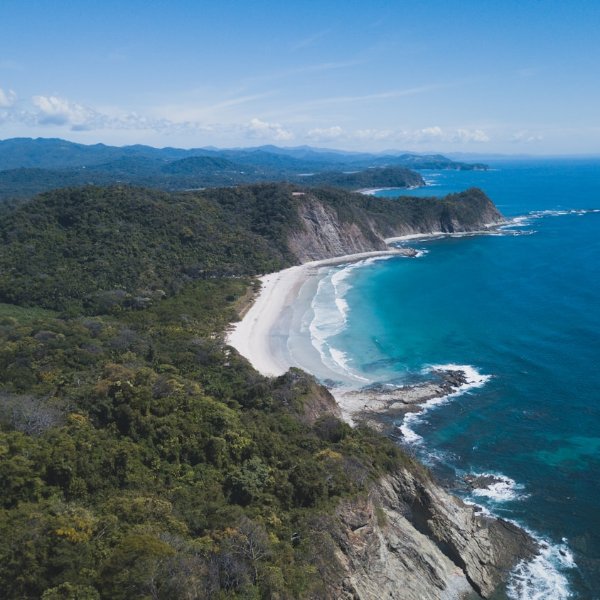
Manuel Antonio is one of Costa Rica’s most visited areas, and for good reason. The national park, lush hillsides, and stunning sea-view villas create a high-demand tourism corridor that drives strong rental income.
Common property types include luxury villas, boutique hotels and B&Bs, small condo complexes, and a limited number of walk-to-beach homes. Prices tend to be higher than Jacó, with quality homes typically ranging from $350K to $800K and premium ocean-view villas exceeding $1M.
The investment profile is compelling: year-round tourism, higher nightly rates, and consistent occupancy. But operating costs are also higher. Steep terrain means maintenance crews, hillside landscaping, and retaining walls are standard expenses.
If you are aiming at short-term rentals here, professional property management is not optional. Guest expectations are high, and the logistics of managing a hillside property from another country require dedicated support on the ground.
Dominical, Uvita & Ojochal: The Southern Zone
The southern zone-often called Costa Ballena-is where jungle, ocean, and a slower pace converge. Uvita is known for whale-watching and expat communities. Dominical draws surfers and outdoor enthusiasts. Ojochal has earned a reputation for its culinary scene and quiet village atmosphere.
Property options include ocean-view homes perched on ridgelines above the Costanera highway, off-grid jungle houses, small farms, and boutique hospitality projects. Turnkey ocean-view villas commonly fall in the $500K–$1M range, while jungle-view homes start around $350K.
A few practicalities: some homes require 4×4 access, especially in rainy season. Reliable water sources matter-verify whether a property connects to an ASADA community water system, a municipal line, or a private well concession. Proximity to clinics and supermarkets varies; Uvita now has decent services, but more remote hillside properties may be 20+ minutes from town.
The expat communities here are strong, the restaurants (especially in Ojochal) are surprisingly good, and the appeal to eco-minded retirees and lifestyle investors continues to grow.
Osa Peninsula & Remote Puntarenas: For the True Adventurer
The Osa Peninsula, bordering Corcovado National Park, is one of the most biodiverse places on earth. It is also one of the most challenging places to buy and build.
Buying land or homes here often involves larger parcels, eco-lodge developments, or off-grid projects. Environmental and zoning due diligence is critical. Protected forest areas, SINAC buffer zones, and mangrove setbacks impose strict limits on what you can build and where.
Infrastructure realities are stark: limited paved roads, intermittent services, higher logistics costs for transporting materials and labor, and seasonal river crossings. But for the right buyer, the tradeoff is rare biodiversity, extreme seclusion, and the chance to create something genuinely unique.
This region is best suited for buyers prioritizing conservation, privacy, and eco-tourism over convenience. If that is you, plan for a longer and more complex purchase process than you would face in Jacó or Manuel Antonio.
Buying Property vs. Buying Land in Puntarenas
There is a meaningful difference between purchasing an already-built home or condo and buying land for custom construction.
Turnkey properties offer immediate use and rental income, established utilities and access roads, and lower uncertainty about what you are getting. They are easier to finance through private lenders if needed, and your total cost is more predictable.
Buying land gives you design freedom, a lower entry price in some areas, and the potential to build your dream property from scratch. But land carries more risk: no utilities in place, possible lack of water rights, seasonal road access, environmental clearances, soil stability concerns, and higher logistics costs.
Land buyers must take extra steps that turnkey buyers can skip:
- Soil and geotechnical studies (especially on slopes)
- Water availability letters from ASADA or municipal authority
- Zoning confirmation (uso de suelo certificate)
- Environmental permits from SETENA
- Realistic build budgets that account for material transport and tropical climate construction standards
Investors must verify legal water availability when securing building permits in Costa Rica. Skipping this step can derail an entire project.
Step-by-Step Buying Process in Puntarenas, Costa Rica
The property buying process in costa rica involves a series of standardized steps, though they may feel unfamiliar if you have only purchased real estate in other countries. The buying process includes hiring a qualified attorney for title verification as one of the first priorities. For a comprehensive walkthrough, see our guide to buying property in Costa Rica.
Here are the main stages:
- Define your budget and goals. Are you buying for lifestyle, rental income, or long-term land banking?
- Engage a reputable real estate agent with local expertise in your target Puntarenas sub-region.
- Shortlist properties and visit in person. Photos and drone videos are useful, but nothing replaces walking the property and driving the access road.
- Make an offer via a Letter of Intent or Option to Purchase. A deposit of 5 to 10 percent is typical during the buying process.
- Enter the due diligence period. Your real estate attorney and surveyor verify title, survey, zoning, liens, environmental status, and water access.
- Sign the purchase agreement and close at the notary’s office. The transfer deed is drafted, signed, and submitted to the national registry.
The property buying process typically takes 30 to 60 days to complete, depending on complexity. Concession land, remote parcels, or properties requiring environmental review can stretch to 90+ days.
Working With Local Real Estate Experts
Why does local expertise matter so much in Puntarenas? Because no formal Multiple Listing Service exists for real estate in Costa Rica. Listings are scattered across agency websites, social media, and word-of-mouth networks. The quality and accuracy of listing information varies wildly.
A good buyer’s agent should pre-screen listings for legal viability, explain neighborhood-specific nuances, coordinate with attorneys, surveyors, and inspectors, and help you understand the local market dynamics of each micro-region.
At Coastal Realty & Property Management, we are based on Costa Rica’s Gold Coast in Guanacaste, but we regularly help clients compare Puntarenas vs. Guanacaste. We connect buyers with vetted Puntarenas attorneys, surveyors, and local agents when Puntarenas is the right fit.
Look for agents who work on a transparent commission basis, provide bilingual support, and can offer references from past foreign buyers. Market knowledge of your specific target area matters far more than a national brand name.
Legal Representation & The Role of the Notary
In Costa Rica, the closing attorney also functions as a notary public. This person is a central figure in the purchase process-not a passive witness.
The main legal tasks include:
- Confirming the seller’s identity and legal authority to sell
- Verifying title at the national registry and reviewing the full ownership chain
- Reviewing the survey map (plano catastrado) against physical boundaries
- Checking for liens, mortgages, annotations, or encumbrances
- Drafting and executing the transfer deed
All official documents must be in Spanish to avoid misunderstandings. If you do not speak Spanish, your attorney should provide certified translations of key documents and walk you through every clause before you sign.
Hire an attorney who represents you exclusively-not one shared with the seller or developer. This avoids conflicts of interest that can quietly cost you. All final property transfers must be signed in front of a Costa Rican notary and registered at the national registry to be legally effective. Registration fees are part of closing costs.
Due Diligence: What You Must Check Before You Buy
Thorough due diligence is the single most important step in purchasing real estate safely in Puntarenas. Neglecting due diligence can lead to costly mistakes that range from paying too much to losing the property entirely. Due diligence in property purchasing typically takes two to four weeks.
Here is your checklist:
- Title verification: Confirm clear title, full ownership chain, and absence of liens, mortgages, or annotations at the national registry.
- Survey confirmation: Ensure the plano catastrado matches on-the-ground boundaries and registry records. Confirming physical boundaries prevents disputes over squatters’ rights.
- Zoning and environmental review: Check uso de suelo, building setbacks, and environmental restrictions (SETENA, SINAC), especially near rivers, mangroves, or protected areas. Buying in Costa Rica often necessitates understanding local zoning restrictions.
- Water and utilities: Verify legal water access (ASADA, municipal, or well concession) and electricity connection or feasibility.
- Road access and easements: Investigate rights of way and easements to ensure year-round entry, particularly for hillside or remote properties.
If serious issues surface during your due diligence period under an Option to Purchase, you can typically withdraw and recover your deposit. For a detailed checklist, see our due diligence guide for Costa Rica buyers.
Property Inspections & Building Condition
While inspections are not legally mandatory in Costa Rica, they are highly recommended-especially in humid coastal climates like Puntarenas where salt air, moisture, and tropical storms take a toll.
A standard inspection should cover:
- Structural integrity (foundation, load-bearing walls, retaining walls)
- Roof condition and waterproofing
- Moisture infiltration and mold
- Drainage and slope stability
- Septic systems
- Electrical and plumbing safety
- Pool systems and equipment, if applicable
Many serious buyers hire licensed engineers or architects registered with CFIA to provide formal inspection reports. These reports become negotiation tools for price reductions or repair credits.
Budget for repairs and upgrades in older coastal homes. Corrosion on metal fixtures, wood rot, failing waterproofing, and aging air-conditioning systems are common issues. A reasonable maintenance budget for coastal properties is 1–2% of property value annually.
Financing Options, Taxes & Ongoing Costs
Cash purchases are common due to limited traditional financing for foreign buyers. Local bank mortgages for non-residents are difficult to obtain, typically requiring high down payments and extensive documentation.
Your financing options:
- Cash purchases funded via compliant international wire transfers
- Seller financing in select deals, with negotiated interest rates and terms
- Limited local bank lending for residents or well-documented foreigners-expect 50%+ down payment requirements. Opening a local bank account can help with ongoing tax payments and receiving rental income.
Here are the key taxes and costs every buyer should understand:
Cost Type | Amount |
|---|---|
Transfer tax | 1.5% of declared value |
Notary fees, legal fees, stamps | ~1.5–2.5% |
Total closing costs | ~3.5%–4% of purchase price |
Annual property taxes | 0.25% of registered value |
Luxury/solidarity tax | Progressive rates on high-value homes |
HOA fees (if applicable) | Varies by community |
Buyers should expect total closing costs to be around 3% to 4% of the property value. Property taxes in Costa Rica are low at 0.25% of property value-annual property taxes in Costa Rica are generally low compared to many other countries. This is one of the tangible advantages of owning property here versus purchasing real estate in North America or Europe.
Common Pitfalls When Buying in Puntarenas & How to Avoid Them
Many issues that burn buyers in Puntarenas are entirely preventable with planning and local guidance. For more on this topic, read our article on challenges and solutions for buying property in Costa Rica.
Confusing titled land with concession or possession property. A listing advertises “beachfront titled property” but it is actually in the maritime restricted zone and only holds a concession. The buyer closes, then discovers their ownership rights are limited and renewal is uncertain. Always verify title history at the national registry and confirm with the local municipality whether you are buying private property, a concession, or possession land.
Underestimating road access and infrastructure. A gorgeous ocean-view lot turns out to be accessible only via an unpaved road that washes out in rainy season. The seller shows photos from January; the buyer visits in October and cannot reach the property. Inspect during rainy season and physically drive all access routes.
Skipping due diligence or rushing a “hot deal.” A seller pressures a buyer to close quickly at a discount. The buyer skips the title search and later discovers an unpaid mortgage annotation. Never rush reviewing contracts or the diligence period. Every shortcut increases your risk.
Buying land without checking water rights or environmental constraints. A buyer purchases a hillside parcel to build their dream property, only to learn the lot has no legal water connection and sits partially within a SINAC buffer zone where building permits will not be issued. Verify water rights and environmental maps before you sign.
Ignoring squatter risks. Property owners should be aware of squatter risks on unsecured land in Costa Rica. Unoccupied parcels-especially remote ones-can attract occupants who may eventually claim possession rights. Relying on verbal agreements can lead to legal issues. Always formalize agreements in writing and secure your boundaries.
Lifestyle Realities: Weather, Seasons & Daily Life
Puntarenas has a tropical climate with a pronounced dry season (roughly December–April) and a green/rainy season (May–November). Both seasons have their appeal, but they affect property use and rental markets differently.
Peak tourism aligns with North American winter: Christmas, New Year, Easter, and January through March bring the highest occupancy and nightly rates. September and October are the quietest months, with heavier rain and lower visitor traffic.
Daily life varies dramatically by area. Jacó has supermarkets, clinics, banks, reliable internet, and paved roads. The southern zone is improving rapidly-Uvita now has solid services-but more remote hillside properties may be 20+ minutes from groceries or medical care. Osa is genuinely remote; plan accordingly.
We encourage buyers to visit in both dry and rainy seasons before committing. Road conditions, river crossings, humidity levels, and the general rhythm of life can look very different in July than in February. For a broader perspective on what to expect, our article on living in Costa Rica: pros and cons covers the daily realities honestly.
Short-Term Rentals & Property Management in Puntarenas
Many buyers in puntarenas costa rica real estate are drawn by vacation rental income. Demand for vacation rentals in Costa Rica is constantly rising, and beach vacation rentals in Costa Rica see rising demand annually. Costa Rica’s rental income potential is strong in tourist areas, especially near surf breaks, national parks, and eco-tourism hubs.
Platforms like Airbnb and VRBO dominate the short-term rental landscape. Municipal licensing and tax compliance obligations apply. Occupancy patterns vary by region: Manuel Antonio and Jacó have stronger year-round demand, while the southern zone sees more seasonal swings.
Rental income can be significant in Costa Rica’s coastal properties, but only with professional management. For absentee property owners, the logistics of guest communication, check-ins, cleaning, pool and garden maintenance, and emergency response require a reliable local team.
At Coastal Realty & Property Management, our property management services on the Gold Coast demonstrate the level of dedicated support that absentee owners need. Similar structures exist in key Puntarenas markets, and we can help connect you with vetted operators.
Comparing Puntarenas to Guanacaste’s Gold Coast
Many international buyers compare Puntarenas with Guanacaste before deciding where to buy property in costa rica. Both have strengths. The right choice depends on your priorities.
Factor | Guanacaste (Gold Coast) | Puntarenas |
|---|---|---|
Airport access | Liberia (LIR) – direct international flights | San José (SJO) – longer drives south |
Infrastructure | More master-planned gated communities, HOAs | More independent, spread-out properties |
Entry pricing | Higher in top areas (Tamarindo, Papagayo) | Lower in many zones; Santa Teresa rivals Gold Coast |
Surf culture | Good, but less intense | World-class (Santa Teresa, Dominical) |
Eco-tourism | Solid | Exceptional (Corcovado, Marino Ballena) |
Properties in Tamarindo have strong short-term rental markets and benefit from Guanacaste’s airport proximity. For buyers who want a Gold Coast investment with established infrastructure, Guanacaste is hard to beat. But if you want wilder coastline, bigger parcels, and in some cases lower land prices, Puntarenas deserves serious consideration.
How Coastal Realty & Property Management Can Help (Even Beyond Guanacaste)
We are a boutique real estate firm serving Costa Rica’s Gold Coast, and we have been guiding affluent foreign buyers and investors through coastal markets since 2006. Our core services include buyer representation, seller representation, selling property on behalf of clients, vacation rental marketing, individual property management, and HOA/COA management.
When it comes to Puntarenas specifically, we help clients with comparative market insight, realistic budget guidance, and introductions to vetted Puntarenas attorneys, surveyors, and local agents. We will not pretend to be Puntarenas specialists-but we know the questions to ask and the professionals who can answer them.
If you are weighing Puntarenas against Guanacaste or another region, schedule a consultation with us. We will help you figure out which coast fits your goals.
Next Steps: Turning Your Puntarenas Property Plan into Reality
Buying in Puntarenas can combine lifestyle, nature, and investment opportunities when done thoughtfully. The province offers something for nearly every type of buyer-from entry-level condos to remote eco-estates.
Here are your next five steps:
- Clarify your budget and financing approach (cash, seller financing, or exploring local lending).
- Decide on the region(s) within Puntarenas to focus your property search.
- Schedule an exploratory call with a trusted costa rica real estate professional.
- Plan an on-the-ground scouting trip-ideally visiting in both seasons.
- Engage a real estate attorney early for pre-purchase advice and legal requirements review.
Think in 5- to 10-year horizons. Consider how you will use the property, what rental income you might generate, and whether you may eventually want to live in the country full time or pursue residency. The buyers who do best here are the ones who plan ahead and build a strong local team before they sign anything.
Frequently Asked Questions About Buying Real Estate in Puntarenas, Costa Rica
Can foreigners buy property in Puntarenas Costa Rica without residency?
Yes. Foreigners can own property in Costa Rica with full rights on titled freehold land. Residency is not required. The only exception is concession property in the maritime zone, where foreign individuals need five years of legal residency or must own through a qualifying Costa Rican corporation with at least 51% local ownership.
How long does the buying process usually take in Costa Rica?
For standard titled property, expect roughly 30 to 60 days from accepted offer to closing. More complex transactions-concession land, remote parcels, or properties needing environmental review-can take 60 to 90+ days.
Is buying land in Puntarenas riskier than buying a finished home?
Generally, yes. Raw land carries higher uncertainty around zoning, water access, road conditions, environmental restrictions, and soil stability. You also face longer timelines and higher infrastructure costs before the property becomes usable or generates income.
What are the main annual costs of owning a coastal property in Puntarenas?
Property taxes in Costa Rica are 0.25 percent of the registered property value. Add HOA fees if applicable, utilities, insurance, and ongoing maintenance-particularly important for coastal properties exposed to salt air and humidity. High-value homes may also owe the progressive luxury/solidarity tax.
Can I get Costa Rican residency by buying property?
Purchasing property alone does not automatically grant residency. However, Costa Rica does offer investment-based residency categories (Inversionista, Rentista). The minimum investment and documentation requirements vary by program. Consult an immigration attorney to explore options.
How safe are areas like Jacó, Manuel Antonio, and Uvita for full-time living?
These are among the better-developed coastal zones in Costa Rica. Jacó has the most robust infrastructure-paved roads, clinics, schools, and services. Uvita is growing rapidly. Costa Rica overall is relatively safe for expats, though visitors and residents should take common-sense precautions against petty property crime.
What is the difference between titled property, concession property, and possession land?
Titled property (finca inscrita) is registered freehold ownership in the national registry with same ownership rights as any citizen. Concession property is a use-rights contract from the local municipality for restricted maritime zone land-time-limited, with renewal requirements. Possession land (derecho de posesión) is occupied without formal title, carries higher legal risk, and is harder to transfer or finance.
Do I need a Costa Rican bank account to pay taxes and receive rental income?
It is not strictly required to own property, but having a local bank account makes paying property taxes, receiving rental income, covering utilities, and maintaining corporate structures far more practical.
How is the rental market in Puntarenas compared to Guanacaste’s Gold Coast?
Both regions offer strong rental income potential in tourist areas. Guanacaste benefits from Liberia Airport proximity and more master-planned resort infrastructure. Puntarenas attracts a different traveler profile-surf-focused, eco-minded, and adventure-seeking-with growing demand and rising nightly rates in popular areas.
Where can I get personalized guidance on buying in Puntarenas vs. other Costa Rica coastal markets?
Contact Coastal Realty & Property Management. We specialize in Guanacaste’s Gold Coast and help clients evaluate whether their priorities align better with Puntarenas or Guanacaste. Reach out for a consultation and we will help you build a plan that fits your goals, timeline, and budget.