
Central Valley Costa Rica Real Estate: Why Expats Love It
Ask a hundred expats in Costa Rica where they actually live. Far more often than any beach town, you’ll hear the same answer: the Central Valley. The postcards sell the coast, but the moving trucks head inland.
Central Valley Costa Rica real estate attracts expats with spring weather all year, prices below the beach markets, and full property rights for foreign buyers. The region also holds the country’s best private hospitals and its main international airport. Towns such as Escazú, Atenas, Grecia, and Santa Ana offer homes from roughly $150,000 to well over $1 million.
That’s the short version. The longer version explains why this highland plateau beats the famous coastlines for so many people. Roughly two thirds of the country’s population lives here, along with a huge share of its foreign residents. So let’s walk through the reasons, the towns, the numbers, and the honest trade-offs.
Table of Contents:
- The Central Valley sits at the comfortable center of everything
- Spring weather all year remains the region’s biggest selling point
- Central Valley Costa Rica real estate costs less than you’d expect
- Each expat town attracts a different kind of buyer
- Community life makes settling in easier than you’d think
- Foreign buyers hold the same property rights as citizens
- Healthcare access decides the move for many retirees
- Daily infrastructure runs deeper here than on the coast
- Residency programs make a long-term move realistic
- Taxes and carrying costs stay low after you buy
- The buying process rewards patience and a good lawyer
- Microclimates reward buyers who shop by elevation
- A few trade-offs deserve honest mention
- The market outlook favors steady growth over speculation
- Common expat questions, answered
- Your next step toward a Central Valley home
The Central Valley sits at the comfortable center of everything
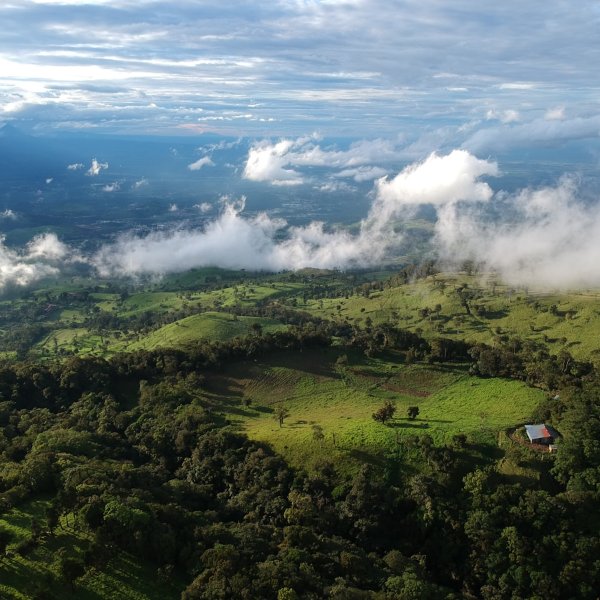
The Central Valley (Valle Central) is a highland plateau in the middle of Costa Rica, sitting between roughly 800 and 1,500 meters above sea level. It holds the capital, San José, along with the provincial hubs of Alajuela, Heredia, and Cartago. A ring of smaller towns spreads across the surrounding hillsides.
Because the region is compact, almost everything an expat needs sits within an hour’s drive. Juan Santamaría International Airport (SJO) lands you 20 minutes from most western suburbs. Major hospitals, international schools, shopping malls, and government offices all cluster here too. Meanwhile, the Pacific beaches at Jacó are about 90 minutes away, so a weekend at the ocean stays easy.
Compare that with the coastal hotspots. Tamarindo and the southern zone deliver stunning scenery. However, they also mean long drives for specialist doctors, pricey imported goods, and a rainy-season slog to the nearest city. The valley flips that equation. You trade the ocean view for convenience, and thousands of expats decide that trade is worth it.
Still weighing regions? If raw acreage on the Gold Coast tempts you instead, our guide to land for sale in Guanacaste Costa Rica shows what beach-province budgets actually buy.
Spring weather all year remains the region’s biggest selling point
Elevation is the secret. At 1,000 to 1,400 meters, daytime temperatures hover between 21°C and 27°C (70°F to 80°F) nearly every day of the year. Nights cool into light-sweater territory. As a result, most valley homes have neither heating nor air conditioning, because they simply don’t need either.
Atenas is a small town on the valley’s western rim. For decades, it has traded on a claim that it enjoys one of the best climates in the world. Marketing or not, the underlying point holds. The dry season (December through April) brings months of sunshine. Even the green season usually means sunny mornings with a dependable afternoon shower.
Contrast that with Guanacaste, where dry-season temperatures regularly push past 35°C (95°F), or the Caribbean side, where humidity rarely lets up. For retirees especially, the valley’s mild climate is more than a comfort issue. It also slashes electricity bills, since air conditioning is often the single largest utility cost in coastal homes.
Central Valley Costa Rica real estate costs less than you’d expect
Here’s the part that surprises many first-time buyers. Central Valley Costa Rica real estate is generally cheaper than comparable homes in the prime beach towns. Ocean proximity carries a steep premium in this country. Inland, your dollar stretches further, and the construction quality in established valley neighborhoods is often better too.
Prices vary widely by town, so a snapshot helps. These are realistic 2026 ranges for a comfortable three-bedroom home:
| Town | Typical 3BR home | Vibe | Best suited for |
|---|---|---|---|
| Escazú | $350,000 – $1M+ | Upscale, international | Executives, luxury buyers |
| Santa Ana | $300,000 – $900,000 | Modern, sunny, gated | Families, remote workers |
| Atenas | $200,000 – $500,000 | Small-town, expat-friendly | Retirees |
| Grecia | $150,000 – $400,000 | Authentic, coffee country | Value-focused retirees |
| San Ramón | $130,000 – $350,000 | Rural, cooler, quiet | Budget buyers, homesteaders |
| Heredia | $180,000 – $450,000 | University town, leafy | Professionals, academics |
Condos start lower. Building on a lot also remains popular, since quality construction typically runs $1,200 to $1,800 per square meter. To see how these numbers stack up against a popular beach market, compare them with our Playa del Coco real estate guide.
Each expat town attracts a different kind of buyer
The valley isn’t one market. It’s a collection of distinct towns, and picking the right one matters more than picking the right house.
Escazú and Santa Ana form the polished western corridor. Here you’ll find Costa Rica’s most international scene: embassies, multinational offices, and high-end malls like Avenida Escazú. Many restaurants here would hold their own in Miami. Prices reflect that, but so do rental yields, since corporate tenants compete for quality homes. Buyers shopping this bracket often cross-shop the coast’s premium resort corridor, which we cover in our Papagayo Costa Rica real estate guide.
Atenas and Grecia sit further west and feel entirely different. Coffee farms roll across the hills, and town squares still anchor daily life. Expat communities are large enough to be welcoming, yet small enough that Spanish still helps. Grecia in particular has become a favorite for buyers who want more land for less money.
San Ramón and the Heredia highlands round things out for buyers chasing cooler air, bigger lots, and quieter roads. For a typical retiree couple on a mid-range budget, I’d honestly pick Atenas or Grecia over the flashier western suburbs. You get 80 percent of the convenience at half the price, plus a community that actually knows your name.
Community life makes settling in easier than you’d think
Loneliness sinks more expat moves than money ever does, and this is another area where the valley quietly outperforms. Because foreign residents have settled here for decades, the social groundwork already exists. You’re not pioneering anything. You’re joining something.
Atenas and Grecia both host active expat associations that run weekly coffee mornings, charity projects, Spanish classes, and newcomer orientations. Escazú and Santa Ana lean more international than expat, with professional networks, business chambers, and social clubs built around the multinational workforce. Meanwhile, weekly farmers markets (ferias) in nearly every town double as social anchors. Most newcomers find their first friends between the mango stall and the coffee vendor.
Families get a further advantage. The western valley holds the country’s top international schools, including Country Day School, Lincoln School, Blue Valley, and the British School of Costa Rica. Most offer IB or US-accredited programs. For retirees, cultural life adds another layer. Think of the National Theater in San José, university lectures in Heredia, and live music that beach towns can’t match.
One more point matters for long-term happiness. Valley towns are real Costa Rican communities first and expat destinations second. So integration comes naturally if you make even a modest effort with Spanish. Ticos, as Costa Ricans call themselves, are famously welcoming. Neighbors who bring you homegrown limes in week one are not a cliché here. They’re a Tuesday.
Foreign buyers hold the same property rights as citizens
This is where Costa Rica stands apart from much of Latin America. Foreigners can own titled property outright, in their own name, with exactly the same fee-simple rights as Costa Rican citizens. No local partner, no special trust, and no restrictions in the Central Valley whatsoever.
The one legal caveat concerns the Maritime Zone, the first 200 meters from the high-tide line on the coasts. There, most land is concession rather than titled. Notice something? That restriction is a beach problem. Valley property is titled property, full stop, and every parcel is registered in the National Registry (Registro Nacional), which anyone can search online.
Good practice still applies, of course. A qualified real estate attorney should verify title, check for liens, and confirm boundaries against the cadastral survey (plano catastrado). They should also handle closing through escrow. Legal fees and closing costs typically total 3.5 to 4.5 percent of the sale price. Buyer and seller usually split or negotiate them.
Healthcare access decides the move for many retirees
Talk to retirees who chose the valley over the coast, and healthcare comes up within the first five minutes. The region holds the country’s best hospitals and specialists. That’s not a small thing when you’re planning the next few decades of your life.
Three major private hospitals serve the area: Hospital CIMA in Escazú, Clínica Bíblica in San José, and Hospital Metropolitano. All three cater to international patients, and many physicians trained in the United States or Europe. A private doctor visit often costs $60 to $100, a fraction of US prices. This is one reason Costa Rica has become a medical tourism hub in its own right.
Legal residents also join the Caja, Costa Rica’s universal public healthcare system, by paying a monthly contribution based on declared income. Expats commonly blend the two: Caja for prescriptions and routine care, private insurance or cash for speed and comfort. Living 20 minutes from a top hospital instead of three hours makes that whole strategy work.
Daily infrastructure runs deeper here than on the coast
Glossy listings rarely mention utilities, yet they shape daily life more than any ocean view. In the Central Valley, the basics simply work, and that reliability compounds over years of ownership.
Start with the internet. Fiber internet from providers like Kolbi, Tigo, and Liberty reaches most valley neighborhoods. Plans of 100 to 500 Mbps cost less than many North Americans pay. For remote workers, that alone can settle the coast-versus-valley debate, because rural beach areas still wrestle with patchy service during storms. Power reliability follows the same pattern, since the national grid was built outward from this region.
Water deserves special mention. Valley towns draw on established municipal and community systems (ASADAs), while some coastal zones face genuine seasonal shortages that can freeze new building permits. Then there’s everyday shopping. Between PriceSmart, Auto Mercado, EPA hardware stores, and the ferias, you can furnish, repair, and feed a household without paying the import markup that inflates coastal budgets.
Transport rounds out the picture. Buses connect nearly every valley town cheaply, and ride-hailing apps cover the metro area. From SJO, direct flights of two to six hours reach Miami, Houston, New York, Toronto, and Madrid. When family visits, or when you fly home for the holidays, that proximity stops being abstract. It becomes the reason you’re glad you bought where you did.
Residency programs make a long-term move realistic
Buying property and gaining the right to stay are separate questions, but Costa Rica links them neatly. The country offers several residency categories that suit property owners, governed by the immigration authority DGME. Here are the three that matter most:
- Pensionado (retiree). Requires proof of at least $1,000 per month in lifetime pension income, such as Social Security or a defined-benefit pension. It’s the most popular route for retirees.
- Rentista (fixed income). Requires $2,500 per month in stable non-salary income for two years, or a $60,000 deposit in a Costa Rican bank drawn down monthly.
- Inversionista (investor). Requires a qualifying investment of at least $150,000, and a Central Valley home purchase can satisfy it. One timing note: this reduced threshold comes from Law 9996 and is scheduled to sunset in mid-July 2026. After that date, the minimum may revert to $200,000 unless lawmakers renew it. Verify the current figure with an immigration attorney before you plan around it.
All three grant temporary residency, renewable every two years. After three years you can apply for permanent residency, which removes work restrictions. Since your home itself can anchor the investor route, plenty of buyers structure the deal and the paperwork together. Coastal properties can qualify too, and our roundup of Costa Rica vacation homes for sale highlights investment picks that clear the threshold.
Taxes and carrying costs stay low after you buy
Owning here is cheap by North American standards, and that changes the retirement math. The annual property tax is 0.25 percent of the registered value. On a $300,000 home, that’s $750 per year, less than many US owners pay per month.
Homes valued above roughly ₡145 million in construction value (about $280,000, adjusted annually) also pay the Solidarity Tax. This progressive luxury-home levy starts at 0.25 percent. Even with it, total carrying costs remain modest.
The bigger structural advantage is Costa Rica’s territorial tax system. The country taxes only Costa Rican-source income. So your foreign pension, US dividends, or overseas rental income face no Costa Rican income tax at all. Your home country’s rules still apply to you, naturally, and US citizens still file with the IRS. Yet for most expats, the local tax burden amounts to property tax, a modest municipal fee, and the Caja contribution. That’s it.
The buying process rewards patience and a good lawyer
The mechanics of buying differ from the US or Canada, but they’re straightforward once you know the sequence. Here’s how a typical Central Valley deal unfolds:
- Get pre-clear on funds. Most sales are cash, since local mortgage rates for foreigners are high. Plan to wire funds through a registered escrow company.
- Make a written offer. Once accepted, both sides sign a purchase agreement and the buyer deposits earnest money, commonly 10 percent, into escrow.
- Run due diligence. Your attorney checks title, liens, taxes, water availability, and zoning over two to four weeks. Never skip the water letter (carta de agua); a lot without registered water rights can’t be built on.
- Close before a notary. In Costa Rica, a notary public is a specialized attorney who drafts and registers the transfer deed in the National Registry.
- Register and switch utilities. Registration finalizes within a few weeks. Then the property is yours, titled in your name or a Costa Rican corporation if you prefer.
From accepted offer to keys, six to eight weeks is normal. Compared with coastal concession property, valley transactions are refreshingly clean. To see how the process differs near the ocean, read our Puntarenas Costa Rica real estate buyer’s guide.
Microclimates reward buyers who shop by elevation
Here’s an insider detail that separates informed buyers from tourists with a checkbook. The valley’s climate changes noticeably every 200 meters of elevation, so choosing your altitude matters as much as your town.
Below about 900 meters, on the western edges near Atenas and La Garita, afternoons run warm and ceiling fans earn their keep. The sweet spot for most people sits between 1,000 and 1,300 meters, where Santa Ana, Escazú, and Grecia deliver the classic eternal-spring profile. Above 1,400 meters, in the Heredia highlands or San Ramón’s upper reaches, expect cool misty evenings and occasional fog. Mornings there genuinely call for a jacket. None of these is wrong. But each suits a different body and budget, since heating and cooling needs shift with the thermometer.
A few practical rules follow from this. First, visit any property you’re serious about at three different times of day, because a lot that’s sunny at 9 a.m. can sit under cloud by 3 p.m. on certain ridgelines. Second, inspect during the green season if you can, since drainage problems, road washouts, and roof leaks only reveal themselves in the rain. Third, ask neighbors about wind. The Christmas trade winds rattle exposed hillsides from December through February, and long-time residents know exactly which slopes catch them.
Local agents who actually live in their farming area know these patterns street by street. That’s a strong argument for working with someone established in your target town rather than a generalist covering the whole country.
A few trade-offs deserve honest mention
No region is perfect, and pretending otherwise helps nobody. Plenty of glossy relocation articles skip this part, which is exactly why so many expats end up selling within three years. So here’s the other side of the ledger, from people who’ve lived it.
Traffic around San José is genuinely bad at rush hour, and the road network hasn’t kept pace with car ownership. If you settle in Escazú or Santa Ana, you’ll plan your days around it. Smaller towns like Atenas escape the worst of it, but then you drive further for big-city errands.
There’s also no ocean, obviously. Some people believe they want mountain living, then discover after a year that they miss the beach more than expected. Before you commit, it’s worth browsing beachfront property for sale in Costa Rica so you know exactly what you’re trading away. Renting for six months before buying also solves that cheaply, and it’s the single best piece of advice in this entire article. Finally, bureaucracy moves slowly. Bank accounts, residency approvals, and even utility hookups test your patience, which is exactly why experienced local professionals earn their fees.
Think of choosing the valley over the coast like choosing a leafy suburb over a boardwalk condo. The condo wins every photo contest. Meanwhile, the suburb wins every ordinary Tuesday, when you need a cardiologist, a hardware store, and a decent flat white before 8 a.m.
The market outlook favors steady growth over speculation
The Central Valley market behaves differently from the boom-and-bust beach towns. Demand rests on a wide base: local professionals, multinational employees, returning Costa Ricans, and a steady stream of foreign retirees and remote workers. Because of that, prices have climbed gradually rather than spiking, with well-located homes in the western suburbs appreciating steadily through the 2020s.
Remote work has widened the buyer pool too. Since 2022, Costa Rica’s digital nomad visa and the valley’s fiber internet have pulled in younger buyers who once defaulted to Mexico or Portugal. Many start as renters in Santa Ana or Escazú, then buy within two years. That pipeline keeps quality inventory moving.
Rental demand adds a second engine. Escazú and Santa Ana serve a deep corporate tenant pool, while Heredia benefits from universities and tech employers in the free-trade zones. Long-term rentals of quality homes commonly gross 6 to 8 percent annually, and furnished executive rentals can do better.
For buyers, the practical takeaway is simple. You’re not gambling on tourism cycles here. You’re buying into the economic core of a stable democracy. Costa Rica has enjoyed 75 years of unbroken constitutional government, no standing army, and a growing services economy. That foundation is what keeps Central Valley Costa Rica real estate liquid when coastal markets go quiet.
Common expat questions, answered
Can foreigners buy real estate in Costa Rica’s Central Valley?
Yes. Foreigners can buy titled Central Valley property in their own name with the same fee-simple ownership rights as Costa Rican citizens. You need no residency, local partner, or special permit to buy. Standard due diligence through a real estate attorney is smart, and closing costs typically run about 3.5 to 4.5 percent of the price.
How much does a house in the Central Valley of Costa Rica cost?
Expect roughly $150,000 to $400,000 for a comfortable three-bedroom home in towns like Grecia, Atenas, or San Ramón. In upscale Escazú or Santa Ana, plan on $300,000 to over $1 million. Condos start around $120,000. Building costs about $1,200 to $1,800 per square meter for quality construction.
Does buying property in Costa Rica qualify you for residency?
It can. A property investment of at least $150,000 currently qualifies for the Inversionista residency category under Law 9996. That reduced threshold is scheduled to sunset in mid-2026 and may return to $200,000. Approval grants renewable temporary residency, with permanent residency available after three years. Confirm current rules with an immigration attorney.
Is the Central Valley better than the beach for expats?
It depends on your priorities. The valley wins on climate, healthcare access, home prices, a close airport, and year-round comfort. By contrast, the coast wins on scenery and the classic tropical lifestyle. Many expats rent in both regions before buying, and most ultimately settle inland while keeping the beach as a weekend trip.
Are property taxes high in Costa Rica?
No. The annual property tax is 0.25 percent of registered value, so a $300,000 home pays about $750 per year. Higher-value homes also pay a progressive Solidarity (luxury) Tax. Costa Rica’s territorial system means foreign pensions and overseas income face no Costa Rican income tax.
Your next step toward a Central Valley home
The pattern behind all of this is consistency. The weather is consistent, the legal framework is consistent, and the demand base is consistent. That’s precisely what you want underneath the biggest purchase of your expat life. Start by renting for a season in two or three towns. Hire an independent attorney before you fall in love with a listing, and then let the valley make its own quiet case. It usually does.