
International Schools in Costa Rica: Best Options for Expat Families
Here’s something most relocation guides skip: the hardest part of moving your family to Costa Rica usually isn’t the visa, the residency paperwork, or even the house hunt. It’s picking the right school.
The best international schools in Costa Rica for expat families include CRIA and La Paz Community School in Guanacaste, Journey School and Educarte near Tamarindo, and Country Day School and Lincoln School in the Central Valley. Most offer bilingual, U.S.-accredited programs from preschool through grade 12.
This guide walks you through each option, what tuition really looks like, and how to match a school to your family’s plans. Because we work in Tamarindo, Hacienda Pinilla, and Playa Grande every day, we’ll also cover the practical side that other lists ignore: where to live so the school run doesn’t eat your morning.
Table of Contents:
Why Expat Families Keep Choosing Costa Rica
A Quick Comparison of International Schools in Costa Rica
The Best International Schools on Costa Rica’s Gold Coast
International School Options in the Central Valley
What Tuition Really Costs at International Schools in Costa Rica
How to Choose the Right School for Your Family
Where to Live Near the Gold Coast’s Best Schools
Frequently Asked Questions About International Schools in Costa Rica
Why Expat Families Keep Choosing Costa Rica
Costa Rica has quietly become one of the easiest places in Latin America to raise school-age kids as a foreigner. The country abolished its army in 1948 and has invested in education ever since. As a result, literacy rates are among the highest in the region, and private bilingual schools are well established.
For families from the U.S. and Canada, the appeal is simple. Your kids learn Spanish through daily life, not flashcards. Class sizes at most international schools stay small, often around 15 to 20 students. Also, the school calendar at several Gold Coast schools follows the U.S. model (roughly September through June), which makes a trial year far less disruptive.
There’s a real estate angle here too. School quality is one of the main reasons why savvy foreign buyers are choosing Guanacaste over other markets in 2026. Families want surf, sun, and a diploma that colleges back home will recognize. The Gold Coast delivers all three.
A Quick Comparison of International Schools in Costa Rica
Before we go school by school, here’s the short version. Distances are drive times from central Tamarindo.
| School | Location | Grades | Curriculum Style | Drive from Tamarindo |
|---|---|---|---|---|
| CRIA | Brasilito / Huacas | Pre-K to 12 | U.S.-accredited, college prep, AP | ~25 min |
| La Paz Community School | Flamingo / Brasilito | Pre-K to 12 | IB World School, dual-immersion bilingual | ~25 min |
| Journey School | Tamarindo / Playa Grande | K to 12 | Project-based, personalized | ~10 min |
| Educarte | Villarreal (Tamarindo) | Preschool to high school | Bilingual, MEP-aligned | ~10 min |
| TIDE Academy | Tamarindo | K to 12 | Flexible, 4-day week | In town |
| Guanacaste Waldorf | Near Hacienda Pinilla | Preschool to 8 | Waldorf, nature-based | ~20 min |
| Country Day School | Escazú (Central Valley) | Pre-K to 12 | U.S. curriculum | 4+ hours |
| Lincoln School | San José area | Pre-K to 12 | U.S. / IB options | 4+ hours |
Now let’s look at what actually sets each one apart.
The Best International Schools on Costa Rica’s Gold Coast
Most expat families who work with us settle between Tamarindo and Flamingo. Conveniently, that corridor holds the strongest cluster of international schools in Costa Rica outside the capital.
CRIA in Brasilito Sets the Standard for College Prep
Costa Rica International Academy (CRIA) has spent 25 years providing bilingual, U.S.-accredited education on the Gold Coast of Guanacaste. It’s a private, coeducational, college-preparatory school serving Pre-K through grade 12, and it offers Advanced Placement (AP) and Dual Enrollment programs for older students.
If your priority is a smooth path back into U.S. or Canadian universities, CRIA is the safest bet in the region. The school follows the U.S. academic calendar from September to June and holds accreditation from Costa Rica’s Ministry of Public Education (MEP). Teachers hold certifications from the U.S., Canada, or Costa Rica. You can review current admissions details on the official CRIA website.
La Paz Community School Leads on Bilingual Immersion
La Paz is the only school in the Tamarindo area offering the International Baccalaureate (IB) program, and it runs a Two-Way Dual Immersion model that splits the curriculum roughly 50/50 between English and Spanish. The student body mixes expat and Costa Rican families, which many parents see as the whole point of moving abroad.
Tuition is based on grade level and family income, and the school offers need-based financial aid to qualifying families. So if budget is a concern, La Paz deserves a serious look. The campus sits in the Flamingo/Brasilito area, an easy commute from Potrero, Conchal, or Surfside.
Journey School Offers Project-Based Learning in Two Towns
Journey operates campuses in Tamarindo and Playa Grande, serving kindergarten through grade 12 with personalized and group lesson plans built around project-based learning. Kids learn by doing, and the schedule leaves room for surf, art, and travel.
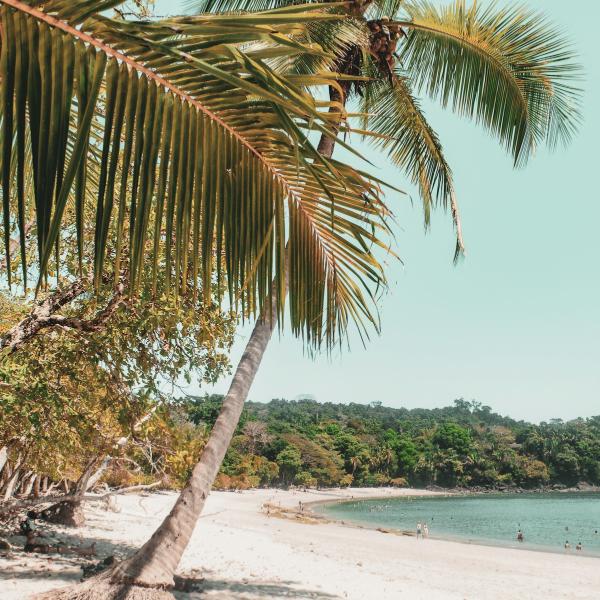
Journey is also one of the few schools with a Playa Grande presence. For families eyeing homes north of the estuary, that’s a meaningful logistics win. Playa Grande real estate pairs a national-park beach with a ten-minute school run, which is a rare combination anywhere.
Educarte Anchors Bilingual Education in Tamarindo Itself
Educarte, located in Villarreal just outside Tamarindo, runs a bilingual program aligned with the Costa Rican MEP system. It’s a strong fit for families planning a longer stay who want their kids fully fluent and comfortable in the local system, not just visiting it.
The location is the practical advantage. If you live in central Tamarindo or Langosta, Educarte means no highway commute at all.
TIDE Academy Works for Traveling and Athletic Families
TIDE Academy, established in 2011 in Tamarindo, teaches four days a week and targets families who travel often or have young athletes, including plenty of surfers. The flexible model isn’t for everyone, but for digital-nomad families or competitive junior surfers, it solves a real scheduling problem.
Guanacaste Waldorf Brings Nature-Based Learning Near Hacienda Pinilla
Guanacaste Waldorf School is a bilingual, international K-8 school near Hacienda Pinilla with a natural, nurturing setting based on Waldorf education principles. Days include outdoor time, art, and hands-on work. For younger children especially, it’s a gentle landing in a new country.
Families at this school often look at Hacienda Pinilla real estate or homes around Avellanas, since both keep the commute short and the lifestyle quiet.
International School Options in the Central Valley
Not every expat family lands on the beach. The Central Valley around San José and Escazú hosts the country’s oldest and largest international schools. Country Day School and Lincoln School both run full Pre-K-to-12 programs with U.S.-style curricula, while Blue Valley School and the American International School add further choice. United World College Costa Rica offers the IB diploma to older students from around the world.
Academically, these schools compete with good private schools in any U.S. metro. The trade-off is lifestyle. You’ll get city amenities, international airports, and top hospitals, but the beach becomes a weekend trip instead of a backdrop. Most of the families we work with decide the Gold Coast balance suits them better, though we always suggest visiting both regions before committing.
What Tuition Really Costs at International Schools in Costa Rica
Tuition varies widely, so treat published lists as a starting point and confirm directly with each school. As a general guide, Gold Coast schools tend to run from a few thousand dollars per year at smaller bilingual programs to the low-to-mid five figures at the U.S.-accredited college-prep schools. Central Valley flagship schools usually sit at the top of that range.
Beyond tuition, budget for enrollment fees, uniforms where required, transportation, and lunches. Several schools, including La Paz, offer income-based aid. Because policies change each school year, ask for the current fee schedule during your visit rather than relying on older blog posts, ours included.
Housing is the other half of the family budget. For current numbers on homes and condos near these schools, see our breakdown of Costa Rica real estate prices in 2026 and what you’ll really pay on the Gold Coast.
How to Choose the Right School for Your Family
After two decades of helping families settle here, we’ve noticed the happiest ones make the school decision before the housing decision, not after. Here’s the process we recommend.
- Define your timeline first. A one-year adventure points toward flexible programs like TIDE or Journey. A permanent move favors accredited, college-prep tracks like CRIA or the IB program at La Paz.
- Decide how bilingual you want to go. Dual-immersion at La Paz produces genuinely bilingual kids. U.S.-curriculum schools teach Spanish as a subject, which is gentler for older children.
- Visit in person during the school year. Watch a normal day, talk to current parents, and check class sizes. A campus tour in July tells you very little.
- Test the commute at school-run hours. Roads here are fine, but a 25-minute drive can stretch in rainy season. Do the drive at 7 a.m. before you sign anything.
- Choose your home base last. Once the school is set, draw a 20-minute circle around it and house-hunt inside that circle.
Honestly, if you ask for our personal take: families with high-schoolers heading to U.S. universities should start with CRIA, and families with younger kids who want full immersion should start with La Paz. Everything else flows from your child’s age and your timeline.
Where to Live Near the Gold Coast’s Best Schools
Think of the school as the anchor of an anchor-and-chain setup. The school stays fixed, and your home can sit anywhere along the chain, as long as the chain stays short. In practice, that gives Gold Coast families four main zones.
Tamarindo and Langosta put you in town, near Educarte, TIDE, and Journey, with restaurants and surf at your doorstep. Hacienda Pinilla and Avellanas offer gated calm near Guanacaste Waldorf, with quick access south. Playa Grande suits Journey families who want a quieter beach. Meanwhile, the Flamingo, Potrero, Brasilito, and Conchal corridor is the natural base for CRIA and La Paz families.
Further north, Playas del Coco has its own growing family scene and easier airport access. Our Playas del Coco real estate guide covers that market in detail. And if you’re researching listings from abroad, read our guide to searching, comparing, and buying Costa Rica homes for sale on “Zillow”-style platforms first. Costa Rica has no MLS, so the portals you know from home work very differently here.
One more thing on timing. Family demand around the established schools has steadily supported property values in these corridors, a trend the headlines often miss. Our post on Costa Rica real estate news for 2026 and what the market data isn’t telling foreign buyers digs into those numbers.
Frequently Asked Questions About International Schools in Costa Rica
Are international schools in Costa Rica accredited for U.S. college admission?
Yes, several are. CRIA holds U.S. accreditation and offers AP and dual-enrollment courses, while La Paz is an accredited IB World School. Graduates from both routinely enter universities in the U.S., Canada, and Europe. Always confirm a school’s current accreditation status directly, since recognitions can change between school years.
Do my kids need to speak Spanish before enrolling?
No. Most international schools in Costa Rica teach primarily or partly in English and support newcomers with Spanish-language instruction. Younger children typically pick up conversational Spanish within their first year. Dual-immersion programs like La Paz move faster on fluency, while U.S.-curriculum schools ease kids in more gradually.
How much does private international school cost in Costa Rica?
Plan for anywhere from a few thousand dollars to the low five figures per child per year, depending on the school and grade level. Gold Coast schools generally cost less than the flagship Central Valley schools. Some, including La Paz, offer need-based financial aid, so ask each admissions office for the current fee schedule.
Which Costa Rica towns are best for expat families with school-age kids?
On the Gold Coast, the Tamarindo-to-Flamingo corridor is the clear leader because it holds six international schools within a 25-minute drive. Tamarindo, Langosta, Hacienda Pinilla, Playa Grande, Brasilito, and Flamingo all work well. Your ideal town depends mainly on which school you choose and how short you want the commute.