
Real Estate In Costa Rica For Sale: A Buyer’s Roadmap for 2026
Real estate in Costa Rica for sale draws serious buyer interest from across North America, Europe, and increasingly from within Latin America itself. The reasons are well-documented: constitutional protections for foreign ownership, a legal title registry that is publicly searchable, no capital gains tax on primary residences, and a Pacific coastline that delivers the lifestyle promise at a cost structure that comparable Caribbean or Mediterranean destinations cannot match. By 2026, the post-pandemic price correction that reset much of the Guanacaste market has produced conditions that reward buyers who are prepared. Inventory is available, sellers are realistic, and buyers who understand the process are transacting at prices unavailable during the boom years.
This guide is a buyer’s roadmap — a structured walkthrough of everything required to evaluate, select, and close on real estate in Costa Rica with confidence. It covers the legal framework, the primary market zones, property types and price ranges, due diligence requirements, financing options, and the common mistakes that cost buyers time, money, and peace of mind. It comes from Coastal Realty & Property Management, based in Playas del Coco, Guanacaste, where we work the Gold Coast corridor daily.
The Legal Foundation: What Foreign Buyers Must Understand First
Constitutional Ownership Rights for Foreigners
Costa Rica’s constitution guarantees foreign nationals the same fee-simple property ownership rights as Costa Rican citizens. Notably, there are no residency requirements to purchase real estate. A buyer from the United States, Canada, Germany, or anywhere else holds the same title protections as a Costa Rican national once a property is registered in their name. This constitutional protection is not a policy subject to change by a new government — it is embedded in the legal framework at the highest level. As a result, Costa Rica’s ownership security for foreign buyers is among the strongest in the region.
The National Property Registry
The National Property Registry (Registro Nacional) is Costa Rica’s public title database. Every fee-simple titled property in the country is registered here, and the records are publicly searchable. A full title search through the Registry confirms the registered owner, verifies that the title is free of liens, mortgages, or encumbrances, and confirms that the property’s legal boundaries match the physical site. This search is the foundation of due diligence in any Costa Rica real estate transaction. Furthermore, it must be conducted by a qualified Costa Rican attorney — one with no relationship to the seller — before any offer is finalized.
Maritime Zone Law: The Critical Coastal Exception
Maritime Zone Law (Ley de la Zona Marítimo Terrestre) is the most important legal concept for beach property buyers to understand. It governs all land within 200 meters of the mean high-tide line on both the Pacific and Caribbean coasts. The first 50 meters from the tide line — the public zone — cannot be privately owned by anyone. The next 150 meters — the restricted zone — can be occupied only under a government concession, not fee-simple title. Concession properties have different ownership structures, renewal terms, transfer conditions, and financing availability than titled properties. Although most properties in established Guanacaste markets like Playa del Coco and Las Catalinas are outside the maritime zone, buyers must confirm this explicitly through the title search process rather than assume it.
Taxes and Closing Costs
The total cost of acquiring real estate in Costa Rica for sale is lower than in most comparable markets. Annual property tax is 0.25% of the registered value — one of the lowest effective rates in the Americas. There is no capital gains tax on the sale of a primary residence. A luxury tax applies to properties above the applicable threshold at graduated rates. Closing costs typically run 3% to 4% of the purchase price, covering transfer tax (1.5% of registered value), notary and legal fees (1% to 1.5%), and miscellaneous registry stamps. Additionally, rental income earned by non-residents is subject to a 13% gross income tax, collected at source by the property management company.
The 2026 Market: Where Costa Rica Real Estate Stands Today
The Post-Pandemic Correction and What It Created
The Guanacaste real estate market peaked during the pandemic-era demand surge of 2021 and 2022, when limited inventory and exceptional buyer demand pushed valuations to levels that were not sustainable. Subsequently, the market adjusted approximately 30% from those peaks through 2024 and into 2025. That correction eliminated speculative pricing and returned the market to fundamentals-based valuations. By early 2026, stabilization is evident in established sub-markets. Premium positions — oceanfront properties, master-planned communities with documented appreciation records, and established town centers with genuine supply constraints — have held value and are showing renewed upward pressure.
Where the Opportunity Is Concentrated in 2026
Market analysis from early 2026 identifies several sub-markets as the strongest performers. Las Catalinas and prime Nosara are flagged as the highest-appreciating communities in Guanacaste over the prior two to three years. The Potrero-to-Las Catalinas corridor is identified as likely to see above-asking activity for well-positioned inventory. Playa del Coco’s town center and the Ocotal headland sub-market show renewed buyer interest after a period of inventory accumulation. In contrast, speculative or poorly located inventory in markets without genuine supply constraints continues to trade at or below asking. Buyers who understand this differentiation are positioned to transact at maximum value.
Who Is Buying in 2026
The buyer profile for Costa Rica real estate has diversified significantly. North American buyers — primarily from the United States and Canada — remain the dominant cohort, but the demographic has shifted younger. Remote workers, digital entrepreneurs, and second-home buyers in their 40s now represent a meaningful share of transactions alongside the traditional retirement market. European buyers, particularly from the UK, Germany, and the Netherlands, have increased their presence following the expansion of direct routes through Liberia International Airport. Wealthy Costa Rican nationals are also active buyers in premium tiers. Together, this diversification of the buyer pool strengthens resale liquidity and reduces dependency on any single demographic trend.
Primary Market Zones for Real Estate in Costa Rica
The Gold Coast: Guanacaste’s Northern Pacific Corridor
The Gold Coast accounts for the majority of international real estate transactions in Costa Rica. Its dominance is structural: Liberia International Airport provides direct year-round access from major North American and European cities, placing most Gold Coast communities within 35 to 60 minutes of the terminal. The dry season climate aligns with Northern Hemisphere winter, driving peak rental demand when buyers from Canada and the US are most motivated. Furthermore, infrastructure along the corridor has matured enough to support full-time residency — a threshold most competing coastal destinations in Central America have not yet reached.
Playa del Coco and the Central Gold Coast
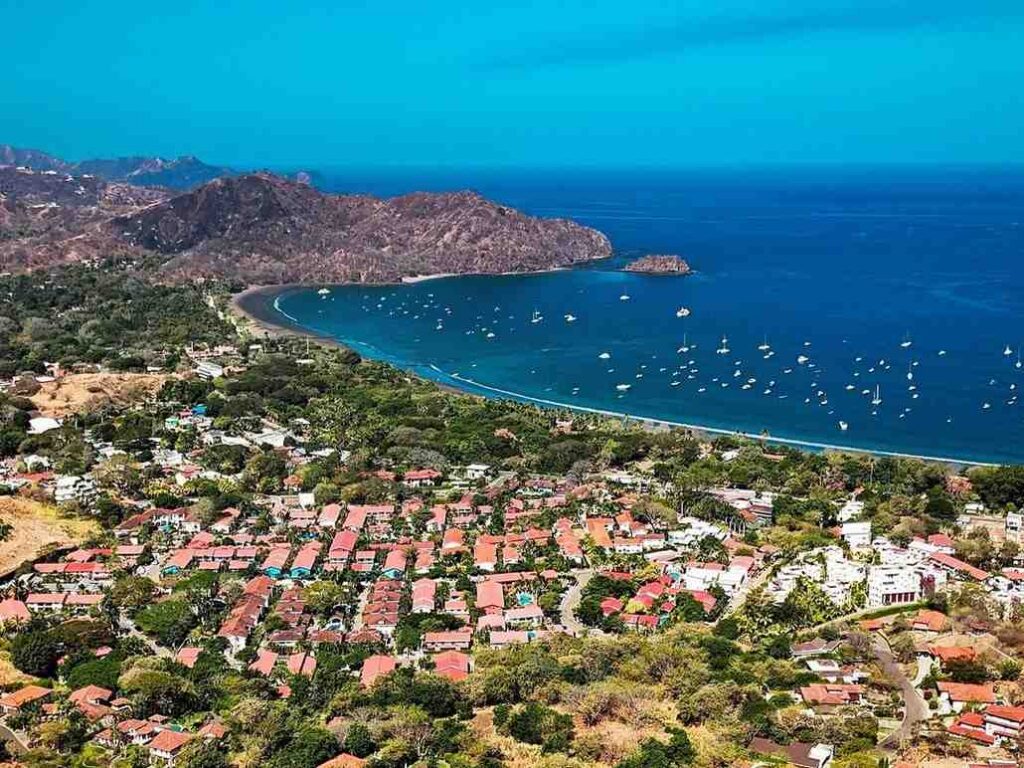
Playa del Coco is the Gold Coast’s most established year-round community. It offers the corridor’s most complete service infrastructure: medical facilities, supermarkets, hardware stores, legal services, and an active marina and sportfishing economy. Properties range from studio condos at $150,000 to oceanfront villas above $2M. The Playa Ocotal sub-market — 3 kilometers south on a protected cove — holds some of the most supply-constrained premium inventory on the corridor. Liberia Airport is 35 kilometers east, making Coco one of the fastest Gold Coast destinations to reach from North American hubs.
Las Catalinas and the Northern Gold Coast
Las Catalinas is Costa Rica’s only car-free, fully walkable beach town, built on New Urbanist principles with Mediterranean architecture, a Beach Club, two award-winning hotels, and 35 kilometers of mountain biking trails through a 1,000-acre protected forest. The master plan permanently controls density and architectural standards, creating a structural supply constraint that has supported appreciation even during the broader market correction. Entry price starts around $425,000 for a studio condo, while hillside villas reach $3M and above. For buyers focused on long-term capital appreciation, Las Catalinas has the strongest documented record on the Gold Coast.
Tamarindo and the Southern Gold Coast
Tamarindo is the Gold Coast’s most internationally recognized address and largest tourist town. Its surf breaks, active nightlife, and established visitor economy generate year-round rental demand that more residential communities cannot match. However, the trade-off is density and a commercial character that suits some buyers and deters others. Condos start below $200,000, while beachfront positions command significant premiums. For buyers whose primary objective is short-term rental occupancy and visitor volume, Tamarindo remains the strongest performer on the corridor.
Nosara and the Southern Nicoya Peninsula
Nosara has emerged as one of Costa Rica’s strongest-appreciating beach markets, driven by the yoga and wellness community, a high-net-worth international buyer profile, and a development philosophy that has resisted commercialization. In contrast to the northern Gold Coast, road access is more complex — the final stretch from Liberia is partially unpaved — which limits the addressable rental market. Nevertheless, for buyers seeking Nosara’s specific lifestyle and willing to accept reduced access convenience, the appreciation record and buyer pool quality have been exceptional. Entry prices for condos start above $300,000 and move quickly into the $1M+ range for villas.
Property Types and 2026 Price Ranges
Condos and Lock-and-Leave Units — $150,000 to $600,000
Condos represent the most accessible entry point for real estate in Costa Rica for sale. Gated communities with pools, security, and HOA maintenance structures appeal to buyers who want a manageable footprint, strong rental income during personal absence, and no day-to-day operational complexity. Well-located units in established communities achieve 5% to 8% gross yield with professional management. Additionally, this tier offers the broadest inventory selection and the fastest transaction timelines in the market, making it the most efficient starting point for first-time Costa Rica buyers.
Single-Family Homes and Villas — $300,000 to $1.5M
This range drives the market’s highest transaction volume. Private pools are the single feature most correlated with rental premium — homes with pools consistently outperform equivalent units on both nightly rate and occupancy. Ocean view orientation adds a second significant premium layer. Buyers in this category should evaluate construction quality rigorously, as the range from well-built international-standard homes to properties with significant maintenance liabilities is wide. Importantly, that difference is not always visible at first inspection, making an independent professional assessment non-negotiable.
Oceanfront and Premium View Properties — $750,000 to $3M+
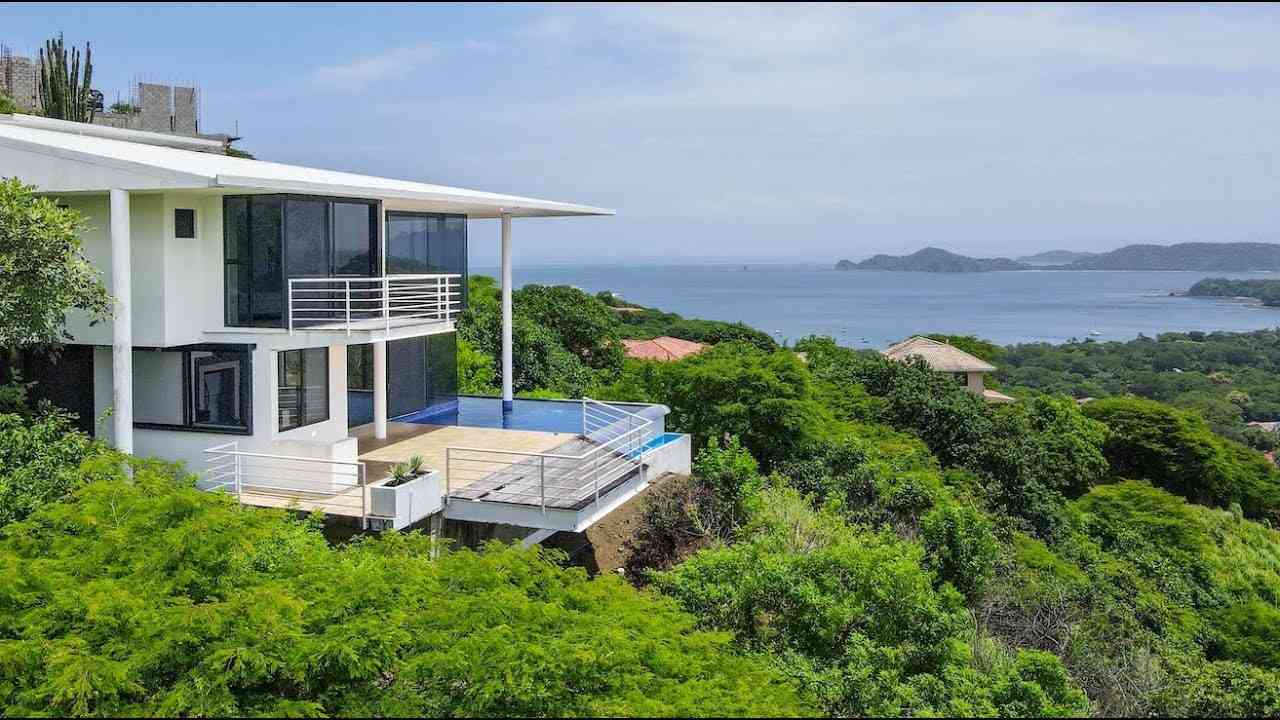
Direct oceanfront and elevated panoramic-view properties represent the most supply-constrained tier in Costa Rica’s coastal market. Geography limits the number of qualifying positions permanently, so appreciation at this level has been more durable through the 2024–2025 correction than the broader market. High-net-worth buyers from North America, Europe, and within Costa Rica compete for limited inventory. Consequently, well-maintained properties in this tier with professional management attract serious buyers quickly when priced to current conditions.
Titled Lots and Build Opportunities — From $80,000
Titled residential lots remain available across multiple Gold Coast markets, allowing buyers to develop custom homes without entering the premium tier. Land selection, however, requires rigorous evaluation: title status through the National Registry, utility access confirmation, road access quality, drainage characteristics, view line verification, and municipal zoning compliance all matter significantly. As the corridor continues to attract international buyers, available lots within range of established services will become progressively scarcer. A qualified Costa Rican attorney and an experienced local builder are non-negotiable participants in any land acquisition.
The Buyer’s Roadmap: Step-by-Step Process
Step 1: Define Your Brief Before Searching Listings
The most common mistake buyers make is browsing listings before defining their actual purchase criteria. A clear brief should cover the primary use case — investment, vacation home, relocation, or a combination — along with a realistic capital budget including closing costs and initial maintenance, a target market based on lifestyle requirements and infrastructure needs, and a minimum acceptable rental yield if income generation is part of the plan. Buyers who invest time in this definition phase make faster and better decisions when they reach the property evaluation stage. Those who skip it are more vulnerable to being guided by listing aesthetics rather than strategic fit.
Step 2: Engage a Qualified Local Agent
Because Costa Rica has no mandatory real estate licensing requirement, agent quality varies enormously. A qualified agent for your target market should demonstrate verifiable transaction history in that specific corridor, the ability to provide buyer references from recent closed deals, and transparent disclosure of any relationship to the sellers of properties under consideration. Furthermore, buyers should confirm from the outset whether the agent represents them or the seller — a distinction with significant implications for negotiation and disclosure obligations throughout the transaction.
Step 3: Retain Independent Legal Counsel
A qualified Costa Rican attorney — independent of the seller and the seller’s brokerage — is required for every real estate transaction without exception. The attorney conducts the National Registry title search, verifies that the property is free of liens and encumbrances, confirms Maritime Zone compliance, reviews the purchase agreement, and structures the closing in the buyer’s interest. Legal fees typically run 1% to 1.5% of the purchase price. This cost is not an area to economize; the cost of resolving a title problem after closing is far higher than the cost of proper legal representation at the outset.
Step 4: Conduct Independent Property Inspection
An independent property inspection by a qualified professional — not one recommended by the seller or listing agent — is essential before making any offer on an existing structure. Construction standards in Costa Rica span a wide range, and significant structural, waterproofing, electrical, or drainage deficiencies are not always visible to an untrained observer. In a coastal tropical environment, the priority inspection areas are roof integrity, plumbing condition, electrical systems, foundation drainage, and pool equipment condition. The inspection cost is negligible compared to the cost of discovering problems post-closing.
Step 5: Evaluate the HOA and Community Governance
For any condominium or gated community property, the HOA’s financial health is as important as the physical condition of the individual unit. Before proceeding to offer, review the HOA financial statements, reserve fund status, maintenance records, and meeting minutes from the past two years. A well-funded HOA with professional management protects property values and prevents the deferred maintenance that erodes returns in under-governed developments. In contrast, an underfunded HOA surfaces as special assessments, declining common areas, and difficult resales. This is one of the most underestimated risk factors in Costa Rica real estate purchases.
Step 6: Structure and Negotiate the Offer
An effective offer in Costa Rica real estate should be anchored to comparable sales data rather than the listing price. In the post-correction 2026 market, buyers in most segments have meaningful negotiating room. A qualified buyer’s agent should present a market-supported offer rationale, manage seller counteroffers with a clear strategy, and advise on the realistic range of outcomes given current supply and demand conditions. Additionally, the purchase agreement should include due diligence contingencies that allow the buyer to withdraw if the title search or inspection reveals material problems.
Step 7: Close Through a Qualified Notary
In Costa Rica, real estate closings are executed through a licensed notary public who is also a qualified attorney. The closing process involves signing the transfer deed (escritura), paying the applicable transfer tax and registry fees, and registering the new ownership in the National Property Registry. The registration process typically takes two to four weeks after closing. During that period, the new owner’s rights are protected by the signed deed even before the Registry update is complete. Total closing costs, including all taxes, legal fees, and registry stamps, should run between 3% and 4% of the purchase price.

Financing Real Estate in Costa Rica: What Buyers Need to Know
Cash Purchases Are the Market Standard
The majority of international real estate purchases in Costa Rica are cash transactions. This is not a requirement — it is a reflection of the financing landscape. Costa Rican banks do lend to foreign buyers, but the process is lengthy, documentation requirements are extensive, and interest rates are significantly higher than buyers are accustomed to in North American or European markets. As a result, buyers who can transact in cash hold a meaningful competitive advantage, particularly when negotiating price and timeline with motivated sellers.
Costa Rican Bank Financing
Foreign buyers can obtain mortgage financing from Costa Rican banks, though the process requires patience and thorough documentation. Typical requirements include proof of income, tax returns, credit history documentation, a property appraisal by a bank-approved valuator, and evidence of legal residency or substantial economic ties to Costa Rica. Interest rates for foreign buyers typically range from 7% to 10% in USD-denominated loans. Loan-to-value ratios generally do not exceed 70% of the appraised value. For buyers who require financing, beginning the pre-approval process well before identifying a specific property is strongly advisable.
Seller Financing
Seller financing — where the property seller acts as the lender and the buyer makes payments directly to them — is available in a portion of Costa Rica real estate transactions. Terms vary considerably and must be negotiated individually. Seller financing typically requires a meaningful down payment (30% to 40%), a shorter loan term (three to seven years), and an interest rate negotiated between parties. While this structure can be beneficial when bank financing is unavailable, buyers should ensure the terms are formally documented in a notarized agreement and that the seller’s attorney does not draft the contract unilaterally.
Common Mistakes Buyers Make in Costa Rica Real Estate
Skipping Independent Legal Counsel
The most expensive mistake in Costa Rica real estate is proceeding without independent legal representation. Using the seller’s attorney, using a friend who “knows someone,” or attempting to navigate the title search process without professional guidance creates title risk that can be extremely costly and sometimes irreversible after closing. Independent legal counsel is the single highest-return investment in any Costa Rica transaction, regardless of purchase price.
Overpaying Based on Asking Price Rather Than Market Data
Listing prices in Costa Rica real estate are often set by sellers’ aspirations rather than by market comparables. In the post-correction 2026 market, many properties remain listed at pandemic-era prices that are not supported by current transaction data. Buyers who treat the asking price as the anchor for negotiation rather than a starting reference point frequently overpay. A qualified buyer’s agent with access to actual closed transaction data in the target market is essential for anchoring offer strategy to reality rather than to seller expectations.
Underestimating the Total Cost of Ownership
Beyond the purchase price and closing costs, buyers must budget for ongoing ownership expenses. These typically include annual property tax (0.25% of registered value), HOA fees (variable by community), property management fees (20% to 25% of rental revenues for managed properties), insurance, utility costs, and a maintenance reserve for tropical coastal environments where corrosion, moisture, and general wear require more frequent attention than in temperate climates. Buyers who model only the purchase price and closing costs are consistently surprised by the ongoing cost structure, which affects net investment returns materially.
Buying Remotely Without a Site Visit
Remote purchasing — acquiring Costa Rica real estate based on photographs, virtual tours, and agent descriptions without a physical site visit — is a significant risk. Photographs do not capture access road conditions, neighborhood context, noise sources, construction quality issues, or the actual water view as experienced from the property. Moreover, the micro-geography of beach markets means that two properties a few hundred meters apart can have dramatically different access, view quality, and community character. A site visit before any binding commitment is strongly advisable and, in most cases, fundamentally changes the buyer’s shortlist.
More Resources from Coastal Realty
For buyers evaluating specific Gold Coast markets, these guides provide detailed context on each community and property type.
→ Homes For Sale In Limon Costa Rica: Caribbean Coast Listings
→ Property For Sale In Guanacaste Costa Rica: Best Picks for 2026
→ Homes For Sale In Playa Del Coco Costa Rica: Top Listings for 2026
→ Costa Rica Beach Property For Sale: Best Coastal Listings for 2026
→ Costa Rica Real Estate Service: How to Choose the Right Agent
Frequently Asked Questions
Can foreigners own real estate in Costa Rica?
Yes. Costa Rica’s constitution guarantees foreign nationals the same fee-simple property ownership rights as Costa Rican citizens, with no residency requirements. The exception is Maritime Zone property — the first 50 meters from the mean high-tide line cannot be privately owned by anyone, and the 50 to 200 meter zone requires a government concession rather than fee-simple title. For most titled beach properties in established Gold Coast markets, full foreign ownership is straightforward. However, a National Registry title search conducted by an independent Costa Rican attorney is required to confirm title status before any purchase proceeds.
What are the steps to buying real estate in Costa Rica?
The core steps are: define your purchase brief and budget, engage a qualified local agent with verified experience in your target market, retain an independent Costa Rican attorney, conduct a National Registry title search, commission an independent property inspection, review HOA documentation if applicable, structure and negotiate the offer with due diligence contingencies, and close through a licensed notary. Total closing costs run 3% to 4% of the purchase price. The full process from offer acceptance to title registration typically takes four to eight weeks for a clean transaction.
What is the best area to buy real estate in Costa Rica in 2026?
The right area depends on the buyer’s primary objective. For year-round livability and infrastructure, Playa del Coco leads the Gold Coast. For capital appreciation and resale liquidity, Las Catalinas has the strongest documented record. For maximum rental occupancy, Tamarindo’s visitor volume is unmatched. For premium lifestyle and nature access, Nosara is the clear answer. Each market has a distinct performance profile. The right match is the one aligned with the buyer’s specific use case rather than marketing visibility or anecdotal recommendations.
How much does real estate cost in Costa Rica?
Entry-level condos in established Gold Coast markets start from approximately $150,000. Single-family homes and villas range from $300,000 to $1.5M depending on location, size, and amenities. Premium oceanfront and elevated view properties range from $750,000 to $3M and above. Titled residential lots start from approximately $80,000. Closing costs add 3% to 4% to the purchase price. Annual property tax is 0.25% of registered value. These figures represent meaningful value relative to comparable coastal markets in Mexico, the Caribbean, or southern Europe.
What taxes apply to Costa Rica real estate?
Annual property tax is 0.25% of the registered value — among the lowest effective rates in the region. There is no capital gains tax on the sale of a primary residence. A luxury tax applies to properties above the applicable threshold at graduated rates. Transfer tax at closing is 1.5% of the registered value. Rental income earned by non-residents is subject to a 13% gross income tax, collected at source. Overall, the Costa Rica tax structure for real estate ownership is significantly more favorable than in most comparable markets, which is one of the primary drivers of long-term international buyer interest.
The Roadmap Exists — The Outcome Depends on How You Follow It
Real estate in Costa Rica for sale in 2026 offers a genuinely compelling combination of legal security, favorable tax structure, lifestyle quality, and investment performance. The post-pandemic correction has created buying conditions that reward preparation and penalize impulsiveness. Buyers who follow the roadmap — define their brief, engage qualified local expertise, conduct thorough due diligence, and anchor their offer to market data — consistently arrive at outcomes that justify the decision. Those who skip steps consistently encounter the problems that the roadmap is designed to prevent.
At Coastal Realty, we guide buyers through every step of this process across the Gold Coast corridor. Our role is to provide the local expertise, honest market context, and transaction support that produces confident, well-informed buyers — and closings that hold up over time.