
Costa Rica Rentista Visa: Requirements & Residency Guide
If you are planning to live, invest, or spend more than a short tourist stay in Costa Rica, the Costa Rica rentista visa is one of the most practical residency routes to understand. This guide explains the requirements, application process, renewal rules, and how rentista residency connects with buying or renting property on Costa Rica’s Gold Coast.
What Is the Costa Rica Rentista Visa?
The Costa Rica Rentista Visa is a temporary residency permit for foreign nationals who can prove stable passive income of at least USD 2,500 per month from sources outside Costa Rica. Issued by the Direccion General de Migracion y Extranjeria (DGME), it grants two-year renewable residency with a path to permanent residency after three years.
Quick facts:
- Minimum monthly income: USD 2,500 (individual) or USD 60,000 lump deposit for 24 months
- Residency term: 2 years, renewable
- Minimum time in country: 4 months per year
- Path to permanent residency: after 3 consecutive years
- Work restriction: cannot work as a salaried employee for a Costa Rican company
The Rentista Visa allows individuals to live in Costa Rica without the need to work for a local employer, providing the freedom to manage their own business or investments. However, it does not initially grant unrestricted work rights for Costa Rican employers. Some applicants also compare this residency pathway with the Costa Rica investment visa, which is based on qualifying investments rather than demonstrating recurring passive income.
Coastal Realty & Property Management is a boutique real estate and property management firm based on Costa Rica’s Gold Coast. We work daily with clients who hold or are pursuing Rentista status, and we help them find, purchase, and manage coastal properties in Tamarindo, Playa Flamingo, and Playa Potrero. At Coastal Realty & Property Management, we help rentista residents find, purchase, rent, and manage homes in Tamarindo, Flamingo, Potrero, Playa Conchal, and nearby Gold Coast communities.
Key Benefits of the Costa Rica Rentista Visa
Rentista residency gives you legal residence beyond the tourist limit, a clearer path to local services, and a long-term base in one of the most attractive countries in latin america. It is not just a visa; it is a framework for building life in Costa Rica.
Key benefits include:
Legal temporary residency in Costa Rica, instead of relying on repeated tourist entries after entering Costa Rica.
A DIMEX resident ID, which helps with a bank account, leases, utilities, insurance, and local paperwork.
The ability for the main applicant to include a spouse and dependents under the same rentista residency application.
A route to permanent residency after three years of maintaining temporary residency.
Access to social security and healthcare once registered with the Caja Costarricense de Seguro Social.
Easier property purchases, vehicle registration, utility contracts, and dealings with local institutions.
Holders of the Rentista Visa can apply for permanent residency after three years of maintaining their temporary residency status, which allows for greater stability in living arrangements. Permanent residence also removes most work restrictions. Buyers who are already planning a property purchase may find the Costa Rica Golden Visa a more direct fit, since it ties residency directly to a real estate or business investment.
Costa Rica Rentista Visa Financial Requirements
| Requirement | Details |
|---|---|
| Monthly income | $2,500/month (stable, verifiable) |
| Income source | Investments, rental income, business revenue |
| Deposit alternative | $60,000 in Costa Rica bank (2-yr deposit) |
| Background check | FBI check, apostilled and translated |
| Health insurance | CAJA enrollment required after approval |
| Duration | 2 years, renewable |
| Path to PR | After 3 years of temporary residency |
Immigration focuses heavily on whether applicants have stable income and will not burden the Costa Rican economy. The financial requirements are therefore the center of the process.
To qualify for the Costa Rica Rentista Visa, applicants must demonstrate stable passive income of at least USD 2,500 per month from a foreign source, covering a minimum of 24 months — equivalent to USD 60,000 in total guaranteed support.
Applicants can satisfy the financial requirement for the Rentista Visa by depositing USD 60,000 into a Costa Rican bank account or by providing a certified letter from a foreign bank confirming the availability of funds and the commitment to make monthly transfers. Applicants can meet the financial requirement for the Rentista Visa by depositing USD 60,000 into a Costa Rican bank account, which can then be used to generate the required monthly income.
The Rentista Visa requires proof of income through a certified letter from a financial institution, confirming the ability to receive at least USD 2,500 monthly in a stable manner. Funds may come from annuities, dividends, trusts, rental income, royalties, or other passive sources.
Costa Rica operates on a territorial tax system, meaning foreign-sourced income is not taxed locally. Still, tax treatment depends on your home country, so American citizens and other applicants should get advice before they invest or move assets abroad. US citizens who open a Costa Rican bank account or hold foreign financial assets should also review IRS FBAR reporting requirements, which apply to foreign accounts exceeding certain thresholds.
Coastal Realty & Property Management does not provide immigration, tax, or banking services directly, but we can refer clients to trusted professionals in Guanacaste when applicable.
Option A – Local Costa Rican Bank Letter
One route is to obtain an official letter from a Costa Rican bank within the National Banking System confirming US$2,500+ in monthly income. The document must follow Dirección General de Migración y Extranjería standards and show funds are guaranteed for at least 24 months.
Banks now scrutinize deposits closely. Some prefer structured products or interest-based income rather than mixed capital withdrawals. This option suits applicants with larger balances who are comfortable opening a Costa Rican account and working within the Costa Rican banking system.
Option B – Investment Income From a Foreign Bank
Many expats prefer to leave capital in a foreign bank. In that case, the bank must certify in writing that the person receives at least US$2,500 per month from investments, interest, dividends, or long-term instruments.
The foreign bank letter must be notarized, apostilled, and translated into Spanish by an official translator if it is not already in Spanish. This route can work well for applicants with organized portfolios in the U.S., Canada, or Europe.
Option C – Certified Income by a Costa Rican CPA
A Costa Rican Certified Public Accountant registered with the Colegio de Contadores Publicos de Costa Rica, the country’s official accounting regulatory body, may certify monthly passive income of at least USD 2,500.
Qualifying income in this category can include long-term rental properties, royalties, trusts, dividends, or business profits from sources outside Costa Rica. The CPA verifies leases, tax returns, statements, and supporting records. This option is flexible for business owners and real estate investors with diversified global income.
Who Qualifies for the Costa Rica Rentista Visa?

Eligibility is based on income stability, security, background checks, and complete documentation, not age alone. There is no strict upper age limit, which makes the temporary residency visa popular with younger professionals, families, and pre-retirees.
To qualify, applicants usually need:
A valid passport with sufficient remaining validity.
A clean police clearance certificate from your home country, issued within 6 months.
A birth certificate.
A marriage certificate or divorce document where applicable.
Proof of income or deposit.
Other necessary documents requested under immigration law.
To qualify for the Rentista Visa, a clean police clearance certificate from your home country is required, issued within 6 months. Rentista applicants must not rely on local employment as their main income source.
The program is particularly attractive for people who want residency in Costa Rica while working remotely for foreign clients, managing investments, or buying coastal property.
Costa Rica Rentista Visa Application Process: Step by Step
Think of the application process as a chronological checklist, beginning in your home country and ending with approval in Costa Rica. If you are still planning your first visit and want to confirm entry rules before filing, our guide covering do US citizens need a visa for Costa Rica explains tourist stay limits, document requirements, and what to expect at the border.
Research & planning
Decide whether Rentista is better than Pensionado or Inversionista. Pensionado may suit retirees receiving a guaranteed pension, while Rentista is often better for investors and entrepreneurs. Consider your plans for permanent residency in Costa Rica.Gather civil documents
Obtain recent official documents, usually issued within 6 months, including birth certificate, marriage certificate, police clearance, and passport copies.Apostille & legalization
All foreign documents required for the Rentista Visa must be issued within 6 months of submission, apostilled in your home country, and translated into Spanish by an official Costa Rican translator.Financial proof
Coordinate with your bank, investment manager, or CPA to prepare proof that meets Costa Rican immigration standards. The application for the Rentista Visa demands highly specific paperwork, including background checks, and all documents must be apostilled and translated.Spanish translations
Use an official Costa Rican translator when required. Incomplete translations can delay approval for several months.Online application
Files are submitted to the Dirección General de Migración y Extranjería or through a Costa Rican attorney. When using the official Tramite Ya portal, the site may display a security check before loading. Complete the verification step and proceed to the application form. If the portal does not load, note any error reference shown on screen and contact DGME support.In-country appointment
Applicants may need fingerprints, photos, and original-document review at Migration in san josé, another office, or a consulate.Resolution & DIMEX
Once approved, the costa rican government issues a temporary residency resolution. The DIMEX card is then processed through Banco de Costa Rica, Correos de Costa Rica, or the applicable channel.
The application process for the Rentista Visa involves compiling a comprehensive dossier of required documents, including proof of income, background checks, and apostilled documents. Once the required documents are prepared, they must be submitted to the Costa Rican Department of Immigration, and it is advisable to seek assistance from an immigration specialist to navigate the process effectively.
Many Coastal Realty & Property Management clients coordinate the process with their property search, closing date, or move-in schedule on the Gold Coast.
Typical Timelines and Costs
The processing time for the Rentista Visa normally takes between 3 and 12 months. Complete files often move faster, while missing apostilles, unclear bank letters, or translation issues can create delays.
Budget for:
Government filing and change-of-status fees.
Fingerprinting and DIMEX issuance charges.
Legal, CPA, and translator fees.
Courier, document procurement, and consular certification costs.
Bank setup or account maintenance fees.
Professional fees are separate from the US$60,000 deposit or income requirement.
Common Mistakes to Avoid
Avoid these common issues:
Submitting foreign documents older than 6 months.
Using bank letters that do not state the monthly amount clearly.
Missing official signatures, stamps, or apostilles.
Using non-certified translators for official documents.
Failing to keep copies of every document.
Losing the expediente file number needed for follow-ups.
Obligations After Approval: Social Security, Renewals, and Work Limits
Rentista residency brings ongoing responsibilities. The most important are social security registration, income compliance, and timely renewal.
Once approved for the Rentista Visa, you are required to contribute to the Caja Costarricense de Seguro Social (CCSS), Costa Rica’s public healthcare system. All temporary residents must register with CCSS and pay monthly contributions based on declared income. For a full breakdown of coverage, wait times, and what enrollment means in practice, see our guide on whether does Costa Rica have universal healthcare. On a US$2,500 declared income, a rough monthly Caja contribution might be around US$150, but rates can change.
Rentista holders cannot work as employees for Costa Rican companies but can own a local business and receive dividends. You can manage investments, collect foreign income, own property, and receive business distributions, but salaried local employment is restricted until permanent residence.
The Rentista Visa is a temporary residency permit that is valid for two years and can be renewed, provided the applicant continues to meet the financial requirements and has lived in Costa Rica for at least four months per year. For renewal of the Rentista Visa, applicants must prove that they have deposited USD 30,000 into a Costa Rican bank account during the first two years of residency.
Mark renewal deadlines early. A missed deadline can create penalties or problems maintaining residence.
Path From the Costa Rica Rentista Visa to Permanent Residency
Rentista is a temporary category, but it can lead to permanent residency. The standard route is maintaining Rentista status for three consecutive years, then applying for residente permanente.
Permanent residency allows broader work rights, including local employment, and reduces the need to keep proving the same fixed income structure. A separate route may exist if you have a first-degree relationship with a Costa Rican, such as being the parent of a Costa Rican citizen.
Permanent residency is not the same as becoming a Costa Rican citizen, getting a Costa Rican passport, or obtaining dual citizenship. Those require separate naturalization rules and a longer minimum period.
Costa Rica Rentista Visa and Real Estate on the Gold Coast
Rentista residents often use their status to buy or rent coastal property in Tamarindo, Playa Flamingo, Potrero, and Playa Conchal. Having residency simplifies opening local bank accounts, paying utilities, signing long-term leases, and working with service providers. Buyers actively searching the market can browse homes for sale in Guanacaste to get a current picture of prices, property types, and available inventory across the Gold Coast.
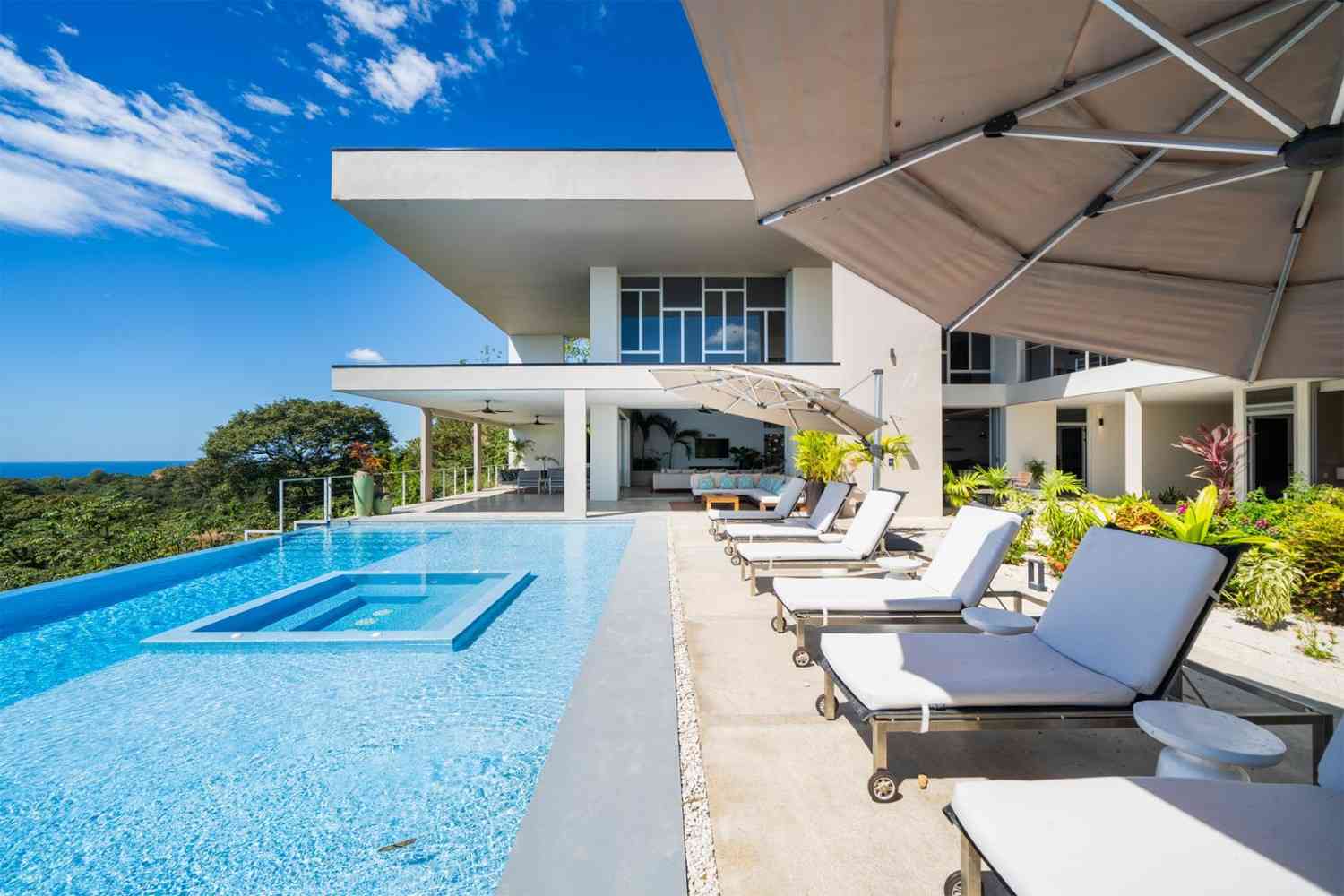
Foreigners can generally buy titled property in Costa Rica with similar rights to Costa Ricans. The major exception is beachfront concession property, where extra due diligence is essential under law.
Typical rentista clients include:
Remote workers buying condos in Tamarindo.
Families renting long-term villas in Flamingo.
Investors purchasing homes for future vacation rental income.
Entrepreneurs using foreign income to support a Gold Coast lifestyle.
Coastal Realty & Property Management helps clients compare purchase and rental options based on timing, budget, and lifestyle.
How Coastal Realty & Property Management Supports Rentista Visa Clients
Immigration lawyers handle the legal residency process. Our role is real estate, local guidance, and property care.
We support rentista clients with:
Buyer representation for homes, condos, and land.
Long-term rental scouting for Gold Coast stays.
HOA and COA guidance for gated communities.
Vacation rental management for income-producing homes.
Individual property management for owners living abroad.
Explore our property management services or Gold Coast property listings if your residency and housing plans are moving forward together.
Practical Tips for Planning Your Move as a Rentista
Plan the legal process and the lifestyle move at the same time. A rentista approval is valuable, but your daily quality of life depends on choosing the right town, home, and community.
Before committing:
Visit Costa Rica for several weeks to compare the coast, Central Valley, and climate differences. Before committing to a move, it is also worth reading about the common problems retiring in Costa Rica so your budget and lifestyle expectations are grounded in real numbers.
Decide whether to rent first or purchase while awaiting approval.
Keep a secure digital archive of every receipt, application, and official document.
Join local expat groups and community organizations in Guanacaste.
Confirm internet quality if you work remotely.
Track your visa, banking, and housing timelines in one shared account or folder.
When to Involve Professionals and Next Steps
Immigration lawyers, CPAs, and official translators are strongly recommended for a smoother rentista application process. The rules are technical, and small errors can slow approval.
Coastal Realty & Property Management collaborates with trusted legal and financial partners, while staying focused on real estate, rentals, and property management. If you plan to live or invest on Costa Rica’s Gold Coast, contact us before or soon after filing your rentista visa so your housing search, closing date, and move-in plan are realistically coordinated.
Start with the right residency strategy, then match it with the right coastal property. That is how a long-term move to Costa Rica becomes practical instead of stressful.
Costa Rica Rentista Visa FAQ
What is the income requirement for the Costa Rica Rentista Visa?
You need to prove a stable monthly income of at least USD $2,500 from foreign sources for 24 months, totaling $60,000 in guaranteed support.
What types of income qualify for the Rentista Visa?
Qualifying income includes investment returns, rental income, business revenue, annuities, dividends, trusts, and royalties — as long as it comes from outside Costa Rica.
How long does it take to process a Rentista Visa application?
Processing typically takes between 3 and 12 months, with complete and properly apostilled files moving through faster.
Can I work in Costa Rica with a Rentista Visa?
You cannot work as an employee for a Costa Rican company, but you can own a local business, receive dividends, manage investments, and collect foreign income.
How long is Rentista Visa residency valid?
Temporary residency lasts 2 years, and you must live in Costa Rica for at least 4 months per year to maintain your status.
Can I get permanent residency through the Rentista Visa?
Yes, after maintaining temporary Rentista status for 3 consecutive years, you can apply for permanent residency, which also opens up local employment rights.
What documents do I need for the Rentista Visa application?
You need a valid passport, a police clearance certificate issued within 6 months, a birth certificate, proof of income, and any applicable marriage or divorce documents — all apostilled and translated into Spanish.
Do I have to enroll in Costa Rica’s healthcare system?
Yes, registration with the Caja Costarricense de Seguro Social (CAJA) is mandatory after approval, with contributions running approximately USD $150 per month.
Can foreigners buy property in Costa Rica with a Rentista Visa?
Foreigners can purchase titled property with nearly the same rights as Costa Rican citizens, though beachfront concession properties require additional due diligence.
What are the most common Rentista Visa application mistakes?
The biggest pitfalls include submitting documents older than 6 months, bank letters that lack clear monthly amounts, missing apostilles, and using non-certified translators.
Is foreign income taxed in Costa Rica as a Rentista?
No, Costa Rica uses a territorial tax system, so foreign-sourced income is generally not taxed locally.
What is the DIMEX card and why does it matter?
The DIMEX is your resident ID card — it lets you open bank accounts, sign leases, set up utilities, and access insurance, effectively integrating you into daily life in Costa Rica.