
Costa rica real estate tamarindo: Why Tamarindo Is the Gold Standard of Costa Rica Real Estate
Tamarindo has earned its reputation not through marketing hype but through a rare convergence of factors that serious buyers keep discovering: stable legal protections for foreign nationals, a mature tourism economy, world-class surf, and a community that has welcomed international residents for decades. If you are researching costa rica real estate tamarindo as a place to invest or put down roots, you are looking at the market that consistently outperforms the alternatives. And if you are wondering whether the process is truly navigable from abroad, the honest answer is yes — but only if you choose the right partner to walk it with you.
The Guanacaste Gold Coast Advantage: Location, Lifestyle, and Livability
Proximity to Liberia International Airport and Infrastructure Maturity
Liberia’s Daniel Oduber Quirós International Airport sits roughly 75 kilometers from Tamarindo, about an hour’s drive on a well-maintained highway. Non-stop flights from major North American cities land and put you at your front door the same afternoon. No red-eye connection through San José, no grinding four-hour mountain road. For rental income, the short transfer time matters: guests arrive relaxed, and owners can make the trip without losing a full day to travel.
Tamarindo also benefits from the infrastructure that two decades of sustained demand have produced, including reliable fiber internet, a robust medical services network in nearby Liberia, and established utility connections that newer Gold Coast destinations still lack.
The Surf Town Soul: What Daily Life in Tamarindo Actually Feels Like
Mornings here start with surfers paddling out at dawn and end with long dinners at restaurants that would hold their own in any major city. The town is small enough to walk almost everywhere but large enough to meet every daily need, from well-stocked supermarkets to pharmacies to international schools within a short drive. English is widely spoken, the expat community is established and inclusive, and the pace of life genuinely reflects the pura vida that drew you here in the first place. This is not a resort bubble. It is a living, functioning town where full-time residents and part-time owners both thrive. This dynamic makes costa rica real estate tamarindo one of the most exciting opportunities in Central America.
A Market Built to Welcome Foreign Buyers
Costa Rica’s constitution grants foreign nationals the same property ownership rights as citizens. You do not need residency to purchase, you do not need a local partner to hold title on your behalf, and properties transfer through a transparent public registry that any attorney can search on your behalf. The legal architecture was deliberately built this way, and the result is a market where international buyers represent a substantial share of transactions every year.
That sustained foreign participation has created a professional ecosystem of bilingual attorneys, licensed real estate agents, and international escrow services who handle cross-border purchases routinely. The process is structured, not improvised.
Why Tamarindo Outperforms Other Costa Rica Destinations for Long-Term Ownership Value
Newer markets along the Gold Coast offer lower entry prices, but Tamarindo’s maturity is a feature, not a limitation. A deep inventory of comparable sales means pricing is transparent and defensible. A proven rental market means income projections are grounded in real occupancy data. An established expat infrastructure means resale is easier because the buyer pool is larger. Communities that opened to foreign investment more recently are still proving themselves. Tamarindo has already proven itself across multiple economic cycles, and values have consistently recovered and grown. For buyers focused on costa rica real estate tamarindo, this point deserves careful attention.
Property Types, Neighborhoods, and Price Ranges in Tamarindo
The range of property available in Tamarindo is genuinely one of its strongest advantages. Whether you are looking for a lock-and-leave condo that earns rental income while you are stateside, a private beachfront villa for your family, or a raw lot to build your custom vision from the ground up, the market has inventory that fits.
Beachfront Villas, Ocean-View Condos, Gated Communities, and Lots
Beachfront and Oceanfront Properties Along Playa Tamarindo and Langosta
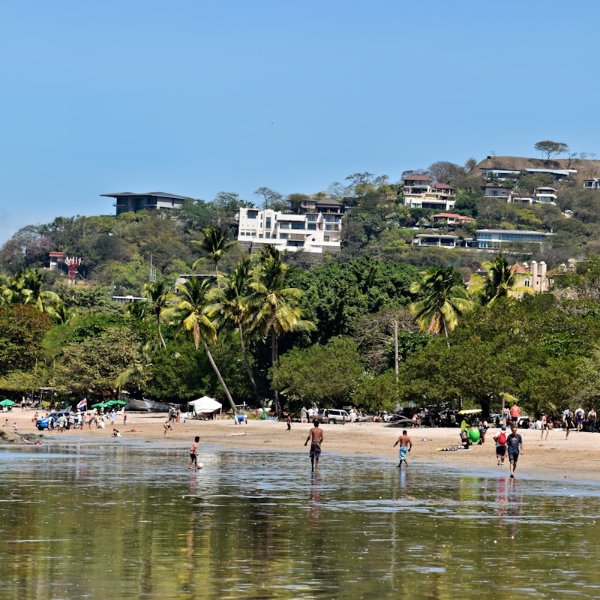
Direct beachfront properties on Playa Tamarindo and neighboring Playa Langosta represent the top tier of the market, both in price and in rental demand. These homes command premium nightly rates and typically achieve the highest occupancy in the Tamarindo area. Buyers should understand that many beachfront parcels in Costa Rica sit on concession land rather than titled land, a distinction that meaningfully affects ownership rights and financing options. We cover this fully in the legal section below. This is a critical factor when evaluating costa rica real estate tamarindo options.
Luxury Condos and Penthouse Units in the Town Core
The town core offers a strong selection of condominium developments, from modest studios suited for first-time buyers to full-floor penthouses with panoramic Pacific views. These properties tend to generate the most consistent rental income because of their walkability: guests can reach the beach, restaurants, and surf shops on foot without a rental car. For buyers who want income-producing property without the maintenance burden of a standalone home, a well-managed condo building is often the right starting point.
Gated Community Estates: Hacienda Pinilla and Beyond
Hacienda Pinilla anchors the gated community segment of the Tamarindo market. The development encompasses thousands of acres of private land with access to multiple beaches, a beach club, equestrian facilities, and hotel amenities. Homes and lots here attract buyers who prioritize security, space, and a resort-caliber setting. Similar master-planned communities have developed along the nearby Avellanas coastline, offering comparable privacy at slightly different price points.
Raw Land and Build-Your-Own Opportunities
For buyers with a specific vision, titled lots in established neighborhoods and on elevated ridgelines with ocean views offer the chance to build exactly what you want. Construction costs in Guanacaste are meaningfully lower than comparable builds in the United States, and an experienced local team can guide you from site selection through architect coordination and permitting. Savvy investors in costa rica real estate tamarindo often cite this as a decisive advantage.
The Best Neighborhoods in Tamarindo for Foreign Buyers
Tamarindo Town Center: Walkability and Rental Demand
The town center generates the highest short-term rental yields in the area. Properties here are steps from the beach, surrounded by restaurants and a lively social scene, and appeal to the broadest guest demographic. Prices reflect the demand, and inventory turns quickly when priced correctly.
Langosta: Quiet Luxury Steps from the Beach
Langosta sits just south of Tamarindo proper and delivers something the town center cannot: genuine quiet and a residential feel, without sacrificing beach access. The neighborhood attracts buyers who want a home first and an investment vehicle second, though well-appointed Langosta properties earn strong rental income during high season.
Hacienda Pinilla and Avellanas: Resort-Style Living with Capital Upside
Both areas offer the most land per dollar of any neighborhood in the greater Tamarindo market. Buyers willing to be ten to fifteen minutes from the town center gain significant space, community amenities, and properties that have appreciated steadily as the Gold Coast’s reputation has grown. This is why demand for costa rica real estate tamarindo continues to grow year on year.
How Much Does Property Cost in Tamarindo?
Current market conditions across property types generally look like this:
- Studio and one-bedroom condos in the town core: $150,000 to $280,000
- Two-to-three-bedroom ocean-view homes: $350,000 to $700,000
- Luxury villas and beachfront properties: $800,000 and above
- Titled lots in established communities: $80,000 to $400,000, depending on location and views
These ranges shift based on finishes, community amenities, and proximity to the beach. They are starting points for conversation, not fixed brackets.
What Drives Price Differences Between Neighborhoods and Property Types
Three variables move prices more than any others: ocean proximity, titled versus concession status, and walkability to the town center. A concession-land beachfront property may list at a similar price to a titled ocean-view home set further back, but the ownership structure, financing options, and resale dynamics differ significantly. Understanding those differences before you fall in love with a listing is exactly the kind of guidance a knowledgeable local partner provides from your very first conversation. Anyone serious about costa rica real estate tamarindo should factor this into their decision.
Typical Closing Costs in Costa Rica: What to Budget Beyond the Purchase Price
Buyers should plan for closing costs of approximately 3.5 to 4 percent of the purchase price. That covers the property transfer tax (1.5 percent), public registry fees, attorney fees, and document stamps. These costs are standard, regulated, and paid at closing through the escrow process. There are no hidden fees in a properly structured transaction.
Matching Your Goals to the Right Tamarindo Investment Category
Not sure which property type fits your situation? Here is a straightforward way to think about it.
Your primary goal is rental income and hands-off management. Choose a condo or townhome in a professionally managed building in or near the Tamarindo town center. These properties attract the widest guest base, benefit from on-site management, and generate consistent year-round bookings. Aim for two bedrooms or more to maximize nightly rate.
Your primary goal is personal use with occasional rental income. A Langosta home or Hacienda Pinilla villa delivers the lifestyle quality you want while earning meaningful income during the months you are not in residence. Expect strong high-season occupancy and a quieter low season, and budget for property management support.
Your primary goal is capital appreciation over five to ten years. Titled lots and early-stage homes in emerging neighborhoods near Avellanas offer the steepest appreciation potential. These require more patience and a longer runway but have historically rewarded buyers who enter before full infrastructure buildout.
Your primary goal is a full-time residence or retirement home. Langosta and Hacienda Pinilla suit full-time living best. Both offer residential scale, security, and neighbors who are also building a life here rather than passing through. Proximity to Liberia’s medical services matters more as a long-term resident than as a part-time visitor.
You have not decided yet. That is the most common starting point, and a perfectly good one. Start with a conversation focused on your timeline, budget, and lifestyle vision. The right property type will follow naturally from there.
Is It Safe to Buy Property in Tamarindo? Understanding the Legal Framework for Foreign Buyers
The short answer is yes, and the legal foundation that makes it safe is more robust than most buyers expect when they first start researching.
What Legal Protections Do Foreign Buyers Have in Costa Rica?
Equal Ownership Rights Under the Costa Rican Constitution
Costa Rica’s constitution grants foreign nationals the same property rights as citizens. You can hold title in your own name, sell whenever you choose, pass property to heirs, and take legal action to defend your ownership, all without a local co-owner or corporate workaround. This is not a courtesy extended to foreigners. It is a constitutional guarantee, and it has attracted international buyers to the country for generations.
The Public Registry System: Your Transparent Chain of Title
Every titled property in Costa Rica is registered in the National Registry, a government database that records ownership, liens, mortgages, easements, and encumbrances. Any licensed attorney can pull the complete ownership history of a property using its folio real number. Before you commit to a purchase, you will know exactly who owns the property, whether any debt is secured against it, and whether any legal claims exist. That transparency is a genuine structural advantage over many markets.
Titled Property vs. Concession Land: The Single Most Important Distinction
This is the one legal concept that every buyer of costa rica real estate tamarindo must understand before reviewing listings. Titled property is privately owned and registered in the National Registry. Concession land sits within the Maritime Zone, a 200-meter strip measured from the high-tide line, and is governed by a separate permit system administered by the local municipality.
You can have stable, long-term rights to concession land, but the ownership structure, permit renewal requirements, and financing options differ meaningfully from titled property. Many of Tamarindo’s most desirable beachfront properties sit on concession land. That is not a disqualifier, but it does require a different level of due diligence. Your attorney should review the concession permit’s expiration date, the municipality’s renewal history, and any third-party rights attached to the parcel.
How the Purchase Process Actually Works, Step by Step
Engaging a Qualified Closing Attorney: Why This Step Is Non-Negotiable
In Costa Rica, only a licensed notary attorney (notario público) can legally transfer real property. Your attorney drafts the purchase agreement, conducts the title search, manages the escrow account, and executes the transfer deed. Choose your attorney independently and do not use a lawyer recommended exclusively by the seller.
Due Diligence, Title Search, and the Role of Escrow
Once you sign a purchase agreement and pay the deposit (typically 10 percent), your attorney runs a full title search through the National Registry and the Municipal Registry. This process confirms clean title, absence of liens, and proper concession status if applicable. Your deposit and subsequent funds are held in a neutral escrow account during this period, not released to the seller until all conditions are satisfied. Escrow is standard practice in properly structured transactions, and it gives you a clean exit if due diligence reveals a problem.
Signing, Transfer Tax, and Registration: From Offer to Keys in Your Hand
When due diligence clears, both parties sign the transfer deed before a notary. The transfer tax of 1.5 percent of the registered property value is paid at that time, along with registry fees and stamps. The deed is then submitted to the National Registry for recording. You are the legal owner from the moment of signing, and the registered title follows within a few weeks.
How Long Does the Purchase Process Take?
From signed offer to registered title, plan for 30 to 60 days on a straightforward transaction. More complex purchases, including those involving concession land or corporate title structures, may run longer. The timeline is driven primarily by due diligence depth and registry processing, both of which your attorney manages.
How to Avoid Scams and Fraud When Buying Costa Rica Real Estate as a Foreigner
Fraud exists in every real estate market. In Costa Rica, it tends to take specific forms that remote buyers are most vulnerable to.
Red Flags Every Remote Buyer Should Recognize
- A seller or agent who discourages you from hiring your own independent attorney
- Pressure to wire funds directly to a seller rather than into escrow
- Properties marketed with guaranteed rental income figures that no comparable property actually achieves
- Listings that cannot produce a current folio real number for title verification
- Verbal assurances about concession permits without documentation to review
If any of these appear in your process, stop and get a second opinion before proceeding.
Why a Local, Accountable Agent Is Your Most Effective Protection
A licensed, locally established agent with a verifiable track record in Tamarindo does more than find you listings. They know which sellers have clean histories, which developments have delivered on their promises, and which listings have been recycled through multiple agencies for reasons that rarely appear in the marketing copy. Their accountability to the local community is what makes them effective. An agent who plans to be in Tamarindo for the next decade cannot afford to put a client into a bad transaction. That reputational stake is something a remote listing platform or a fly-by-night broker simply cannot offer.
Tax Implications of Owning Property in Costa Rica as a US Citizen
Annual Property Tax, Luxury Home Tax, and Rental Income Reporting
Costa Rica levies an annual property tax of 0.25 percent of the registered property value, paid to the local municipality. For higher-value properties, a separate luxury home tax (Impuesto Solidario) applies on a progressive scale. These are predictable, moderate costs that most buyers can budget easily.
If you earn rental income, Costa Rica taxes that income with withholding applied at source. As a US citizen, you must also report foreign rental income to the IRS, though tax treaties and foreign tax credits often reduce double-taxation exposure. A cross-border tax advisor familiar with both systems is worth consulting before your first rental booking.
A Note on SUGEF Compliance and Banking for Foreign Buyers
Costa Rica’s banking regulator (SUGEF) requires financial institutions to verify the source of funds for significant transactions. If you are wiring a large sum from a US bank to fund a purchase, be prepared to document the origin of those funds, whether from the sale of a prior property, an investment account withdrawal, or similar. This is standard anti-money-laundering compliance, not a barrier to buying. Your attorney will walk you through exactly what documentation to prepare.
The Investment Case: Vacation Rental Income and Long-Term Capital Appreciation
Owning property in Tamarindo is not just a lifestyle decision. For many buyers, it is a performing asset from day one.
What Can Your Tamarindo Property Actually Earn as a Vacation Rental?
Understanding Tamarindo’s Rental Season and Occupancy Drivers
Tamarindo’s high season runs from mid-November through April, corresponding to North America’s winter and spring break. This is when flights fill up, surf conditions peak, and nightly rates command a meaningful premium. A secondary shoulder season around July and August, driven by US summer travel and European visitors, provides a second occupancy boost. The true low season runs through parts of May, June, September, and October, when properties see lighter bookings and rates soften. Smart pricing and professional platform management can meaningfully extend your effective rental season.

An Illustrative Rental Income Model
The figures below reflect a two-bedroom, well-appointed condo in or near the Tamarindo town center, priced around $350,000.
- Conservative: 90 nights booked annually at an average of $175 per night, approximately $15,750 in gross rental revenue
- Moderate: 130 nights at $200 per night, approximately $26,000 in gross rental revenue
- Optimistic: 170 nights at $225 per night, approximately $38,250 in gross rental revenue
After management fees (typically 20 to 25 percent of gross), property tax, HOA fees, and maintenance reserves, net returns in the moderate scenario land in the 5 to 7 percent range on purchase price. Beachfront and ocean-view properties with premium positioning earn higher nightly rates and often outperform these figures in high season.
These are illustrations, not guarantees. Actual performance depends on property quality, management execution, and pricing strategy, all things a capable local management team directly influences.
Can You Manage a Tamarindo Rental Property Remotely?
You can, and many owners do exactly that. The key is understanding what you are managing versus what you are delegating.
What a Full-Service Vacation Rental Management Program Covers
A full-service management program handles the entire guest lifecycle: listing creation and optimization across booking platforms, inquiry response, booking confirmation, key handoff, mid-stay support, checkout inspection, and cleaning coordination. Beyond guests, it covers routine maintenance scheduling, vendor coordination for repairs, monthly financial reporting, and proactive owner communication. For an owner based in the US or Canada, this means your property earns income without requiring your daily attention.
The Difference Between a Listing Platform and a True Management Partner
A listing platform posts your property and collects a booking fee. When the hot water heater fails the night before guests arrive, the platform sends you an email. A true management partner has a plumber on speed dial, resolves the issue before guests notice, and sends you a report after the fact. That distinction matters enormously when you are managing from a time zone away. The platform optimizes for its own booking volume. The management partner optimizes for your property’s reputation and your peace of mind.
Residency and Visa Pathways for Foreign Property Owners
Property ownership alone does not grant residency, but it supports residency applications in ways that matter for buyers planning a longer-term move.
Rentista and Investor Residency Pathways: A Plain-Language Overview
Costa Rica offers two residency categories most relevant to foreign buyers. The Rentista category requires proof of a guaranteed monthly income of $2,500 from a foreign source, such as a pension or investment account distribution. The Investor category requires a qualifying investment of $150,000 or more in Costa Rican assets, which property ownership can satisfy directly. Both categories grant temporary residency renewable every two years, with a path to permanent residency after three years and eventual citizenship eligibility after seven.
An immigration attorney handles the application, which requires authenticated documents from your home country. A firm with established relationships in both real estate and immigration law can coordinate that process seamlessly on your behalf.
How Property Ownership Fits Into a Broader Costa Rica Life Plan
For buyers in the pre-retirement stage, purchasing property now and beginning the residency process creates genuine optionality. You have a rental asset generating income today and a legal pathway to extended stays or full relocation when your timeline shifts. The two decisions reinforce each other rather than requiring separate planning tracks.
Life After the Purchase: Full-Lifecycle Ownership Support
Why Most Real Estate Firms Stop Serving You at Closing
The transaction model that most real estate agencies operate on ends at the closing table. The commission clears, the paperwork files, and the relationship effectively ends. For a buyer in Tamarindo, that is exactly when the real questions begin. Who handles the HOA dispute? Who vets the contractor when the roof needs work? Who monitors the rental calendar when your property manager goes quiet?
The gap between closing-day service and long-term ownership support is where most foreign buyers’ frustrations originate, and it is not in the purchase process itself. It is in everything that comes after.
Property Management for the Absentee Owner: Protecting Your Asset Year-Round
HOA and COA Management: Navigating Community Governance From Abroad
If your property sits within a condominium or gated community, you have obligations to the homeowners association or condominium association, including monthly fees, compliance with community rules, and participation in decisions that affect your investment. From overseas, those obligations are easy to neglect and costly to ignore. A property management team that attends HOA meetings on your behalf, reviews assessments before they become delinquencies, and flags bylaw changes that affect your rental rights is not a luxury. It is how absentee owners protect the value of what they purchased.
Maintenance Coordination, Vendor Relationships, and Peace-of-Mind Reporting
Tropical climates accelerate wear on properties. Salt air, humidity, and the wet season create maintenance demands that differ in kind from a rental property in the American Southwest. The value of an established local management team is not just logistics. It is relationships. A team that has worked with the same electrician, plumber, and landscaper for years gets faster response, better pricing, and more accountable work than any owner could negotiate on a first call from abroad. Monthly reporting with photos closes the information gap and gives you confidence that your asset is genuinely well cared for.
What 18-Plus Years on the Gold Coast Actually Means for You
Market-Cycle Wisdom No Newer Entrant Can Match
Tamarindo has been through the 2008 global downturn, the COVID-19 travel shutdown, and the surges of demand that followed each. A team that weathered those cycles alongside their clients carries institutional knowledge that no market analysis can replicate. They know which neighborhoods held value, which developments delivered on their promises, and which corners of the market softened first. That experience shapes every recommendation, from the initial property shortlist through the timing of a future sale.
From First Inquiry to Year Ten of Ownership
Year one looks like a property search, legal coordination, and your first rental season under management. Year three might bring a conversation about the Investor residency pathway as your rental income history strengthens your application file. Year five could involve a portfolio review, whether to hold, upgrade, or redeploy equity into a neighborhood that has matured since you first arrived. Year ten is when clients tell us they wish they had bought sooner.
That is the arc we are committed to. Not a transaction. A relationship.
Which Ownership Support Track Is Right for You?
You visit for a few weeks each year and want income the rest of the time. Full-service vacation rental management is your track. Delegate everything: bookings, guests, maintenance, reporting. Your property works while you are away.
You plan to spend three to six months per year in residence. A hybrid model fits best. Active rental management during your off-months, with a clear owner-block system that holds your dates. Your manager handles the shoulder season while you enjoy the peak.
You are moving toward full-time residency. Shift from rental management to property stewardship: routine maintenance oversight, HOA representation, and concierge support as you settle in. The infrastructure stays in place even as your role changes.
Why Your Choice of Partner Is the Most Important Decision You Will Make
The Self-Directed vs. Agent-Guided Buying Decision for Remote Buyers
Most buyers who research costa rica real estate tamarindo independently discover the same thing: the information is out there, but the judgment is not. You can find a listing, read a blog post about concession land, and download a checklist of closing costs. What you cannot find online is whether the specific seller on a specific property has a clean title history, whether the HOA for a particular condo development has been managing its reserves responsibly, or whether a neighborhood that looks promising on a map has a drainage problem every wet season.
That local, accumulated, relationship-based knowledge is exactly what separates a guided purchase from a self-directed one. Remote buyers who go it alone take on not just logistical risk but interpretive risk. They know enough to find properties but not always enough to evaluate them accurately. The buyers who thrive in this market are almost universally those who found a partner first and built the property search around that relationship, not the other way around.
What to Look for in a Full-Service Tamarindo Real Estate Partner
Not every local agency offers the same depth of service. The right questions to ask before committing to work with anyone are about longevity, legal coordination, and what happens after closing.
Local Longevity and Market-Cycle Experience
A Tamarindo real estate firm that opened after 2020 has never managed a client through a market downturn. They have only operated in a rising market, which tells you very little about their judgment when conditions shift. Look for a team that can speak specifically to how properties performed during 2008 to 2011, during the COVID travel shutdowns, and during the post-pandemic surge. What they recommend, and why, should be shaped by what they witnessed through each of those cycles, not just by current listing inventory.
Longevity also means a vendor network that has been stress-tested. An attorney referral from a firm with 18 years of local relationships is categorically different from a name pulled from a website. The same applies to property inspectors, title search specialists, and property managers. These relationships accumulate over time and work directly in your favor.
Legal Coordination Capability and a Vetted Professional Network
Your real estate agent is not your attorney, and they should never pretend to be. But the best agents in Tamarindo work closely enough with qualified notary attorneys that the handoff between property search and legal process is seamless. They know which attorneys are responsive, which have handled concession-land due diligence reliably, and which are experienced with cross-border escrow structures for US and Canadian buyers.
The same principle applies to immigration attorneys if you are pursuing the Investor residency pathway, to accountants familiar with SUGEF compliance requirements, and to licensed property appraisers when financing is involved. A full-service firm does not offer all of these services in-house, but they have done the vetting so you do not have to build your professional team from scratch in an unfamiliar country.
Post-Purchase Management Services Under One Roof
This is the criterion most buyers fail to ask about during initial conversations, and it is the one that matters most over the life of the investment. A firm that hands you a set of keys and a congratulations is not a partner. A firm that manages your rental calendar, coordinates your maintenance vendors, represents your interests at HOA meetings, and calls you proactively when something needs your attention, that is a partner.
A practical test: ask any firm you are evaluating what their relationship with a client looks like in year three. If the answer is vague, the relationship effectively ended at closing.
Your Tamarindo Ownership Journey Starts Here
The Dream Is Real — and More Navigable Than You Think
The version of this purchase that feels intimidating is the one where you are navigating it alone, from a distance, in a legal system you do not know, with no one whose interests are fully aligned with yours. That version is real, and it is why some buyers hesitate for years before acting.
The version where you have a knowledgeable, accountable local team handling legal coordination, due diligence, and post-purchase management looks entirely different. The process has a clear sequence. The costs are predictable. The risks are manageable because they are identified early, not discovered after closing. Many foreign buyers have moved through this exact process successfully, and the ones who found it straightforward all share one common factor: they chose their partner before they chose their property.
What Working with a Lifetime Partner Looks Like from Day One
The first conversation is not about listings. It is about your goals, your timeline, and your vision for what ownership in Tamarindo looks like in practice. From that foundation, a good partner builds a shortlist tailored to your situation, your income expectations, your budget for management, your preferred balance of personal use and rental income.
From there, the process moves through property selection, attorney engagement, due diligence, and closing with the kind of coordination that keeps you informed without overwhelming you. Your attorney handles the legal mechanics. Your agent handles the negotiation and logistics. You make decisions, not phone calls to strangers in a second language.
After closing, the relationship continues. Rental management, maintenance coordination, HOA oversight, and annual reviews of your property’s performance, all of it handled by the same team that helped you find the property. You are not starting over with a new vendor every time something comes up. You are calling people who know your property and your preferences.
Your Next Step: A Personalized Consultation
The best time to start this conversation is before you have a specific property in mind. A consultation with our team begins with your vision and works forward from there. No pressure to commit to a listing, no generic pitch about the Tamarindo market you have already read.
Reach out to schedule a call. Bring your questions, your timeline, and whatever version of the dream you have been carrying. We will tell you honestly what is realistic, what the right property category looks like for your goals, and what the path from first inquiry to first rental season actually involves. We have walked it with buyers at every stage of readiness, and we are ready to walk it with you.
Frequently Asked Questions
Is it safe to buy property in Tamarindo as a foreigner?
Yes, and the legal foundation that makes it safe is more robust than most buyers expect. Costa Rica’s constitution grants foreign nationals the same property ownership rights as citizens, and every titled property is registered in a transparent National Registry that any attorney can search on your behalf. Working with a licensed local agent and an independent notary attorney gives you the verification and protection that makes a safe purchase straightforward.
What legal protections do foreign buyers have when purchasing property in Costa Rica?
Foreign nationals are constitutionally guaranteed the same property rights as Costa Rican citizens. You can hold title in your own name, sell at will, pass property to heirs, and pursue legal remedies to defend your ownership without a local co-owner. The National Registry provides a fully searchable, public record of title, liens, and encumbrances on every registered property, giving buyers complete visibility before committing.
How much does it cost to buy property in Tamarindo, and what are typical closing costs?
Property prices range from around $150,000 for entry-level condos to several million dollars for luxury beachfront villas and oceanfront estates in areas like Hacienda Pinilla. Beyond the purchase price, buyers should budget approximately 3.5 to 4 percent of the sale price for closing costs, which include the property transfer tax, public registry fees, attorney fees, and document stamps. These costs are regulated and consistent across properly structured transactions.
How do I avoid scams and fraud when buying Costa Rica real estate as a foreigner?
The most important step is hiring your own independent notary attorney, not one recommended solely by the seller. Always insist on escrow for all funds rather than wiring money directly to a seller, and ask for a verified folio real number to confirm title status before advancing any transaction. Working with a locally established, licensed agent who has an accountable reputation in the Tamarindo community adds a critical layer of protection, because they know which sellers and developments have clean histories.
Can I manage my Tamarindo rental property remotely, and what support is available?
Many owners manage their Tamarindo properties entirely from the US or Canada through full-service vacation rental management programs. These programs handle listing creation, guest communication, key handoff, cleaning coordination, maintenance scheduling, and monthly financial reporting. The key distinction is choosing a true local management partner rather than just a booking platform: when something goes wrong at the property, a local partner resolves it before guests are affected and keeps you informed throughout.
What is the process for foreign buyers to obtain residency through property ownership in Costa Rica?
Property ownership supports but does not automatically grant residency. The Investor residency category allows foreign buyers who make a qualifying investment of $150,000 or more in Costa Rican assets, including real estate, to apply for temporary residency, renewable every two years. After three years of temporary residency, permanent residency becomes available, with a path to citizenship eligibility after seven years. An immigration attorney manages the application process, and a real estate firm with established referral relationships in both legal disciplines can help coordinate the two processes in parallel.
What are the tax implications of owning property in Costa Rica as a US citizen?
Costa Rica charges an annual property tax of 0.25 percent of the registered property value, paid to the local municipality, along with a progressive luxury home tax for higher-value properties. Rental income is subject to Costa Rican withholding tax, and US citizens are also required to report foreign rental income to the IRS, though foreign tax credits often reduce double-taxation exposure. Consulting a cross-border tax advisor before your first rental season helps ensure you are structured correctly from the start.