
Why the Gold Coast Is One of the World’s Most Compelling Foreign Investment Markets Right Now
Most foreign investment destinations force you to choose between yield and security. Costa Rica’s Gold Coast, the Pacific coastline of Guanacaste province stretching from the Papagayo Peninsula south through Tamarindo, is one of the few places in the world where you don’t have to make that trade-off.
The Structural Advantages That Set Costa Rica Apart
Costa Rica has been receiving and protecting foreign capital for decades, and the legal infrastructure shows it. Foreigners hold the same property ownership rights as citizens. The Public Registry records every titled transaction transparently. There is no foreign land ownership prohibition, no requirement to form a local partnership, and no government approval needed to purchase. That is not the norm across Latin America, and it matters enormously to how you should think about capital security.
Pair that with a stable democratic government that hasn’t maintained a military since 1948, a highly educated workforce, and a tourism economy that has grown consistently for thirty years, and you have structural conditions that most emerging markets simply cannot match.
Political Stability, Dollar-Denominated Transactions, and What They Mean for Your Capital
Costa Rica uses the colón as its official currency, but the real estate market operates almost entirely in US dollars. Purchase contracts are written in dollars. Rental rates are quoted in dollars. Your investment return is measured in dollars. That eliminates the currency erosion risk that quietly destroys returns in markets like Mexico, Panama, or Southeast Asia, where local currency volatility can wipe out several years of rental income in a single bad quarter.
The political stability reinforces this. There are no capital controls, no restrictions on repatriating rental income, and no history of property nationalization. For a foreign investor placing $300,000 to $700,000 outside their home country, that baseline security is worth more than an extra percentage point of yield from a riskier destination.
Why Guanacaste and the Gold Coast Outperform National Averages
The national numbers for Costa Rica are solid. The Gold Coast numbers are better. Guanacaste is Costa Rica’s fastest-growing province by tourism arrivals, driven largely by the Daniel Oduber Quirós International Airport in Liberia, which now receives direct flights from dozens of US and Canadian cities year-round. That direct access is the single most important driver of rental demand on the coast, and it has only expanded over the past decade.
Communities like Playas del Coco, Hermosa, and the Tamarindo corridor have seen sustained demand from both short-term vacation renters and long-term residential tenants, including expats, retirees, and remote workers who have made Guanacaste a permanent base. That dual demand pool insulates Gold Coast properties from the pure seasonality that affects more remote markets.
Property Appreciation Trends and What Drives Long-Term Value
Appreciation on the Gold Coast is driven by three compounding factors: constrained land supply, rising infrastructure investment, and sustained demand growth. Beachfront and ocean-view land is finite by definition. The government has continued investing in road improvements, utility infrastructure, and the Liberia airport. Year-over-year tourist arrivals to Guanacaste have climbed consistently, pulling rental rates and property valuations upward with them.
Properties in well-located Playas del Coco and the Tamarindo corridor have historically appreciated at meaningful rates over sustained periods, though specific returns depend heavily on location, property condition, and management quality. That appreciation on top of rental income is what makes investing in Costa Rica real estate genuinely compelling, not as a speculative play, but as a fundamentals-driven long-term hold.
Gold Coast vs. Competing International Destinations
A structured comparison across five dimensions that foreign investors consistently prioritize.
| Criteria | Costa Rica Gold Coast | Mexico (Riviera Maya) | Panama (Pacific Coast) |
|---|---|---|---|
| Foreign Ownership Rights | Full fee simple title, same rights as citizens, no restrictions | Full ownership allowed but ejido land risk in some areas requires careful vetting | Full ownership allowed, generally straightforward |
| Rental Yield Range (Gross) | 8–12% in prime coastal markets | 6–10% in established corridors | 5–8% across most coastal zones |
| Legal Transparency | High. Public Registry records all titled transactions | Moderate. Ejido land and fideicomiso structures add complexity | Moderate to high. Registry system reliable but less mature |
| Management Infrastructure | Mature in Gold Coast hubs with integrated operators available | Mature in high-tourism zones, fragmented in secondary markets | Developing, with fewer full-service operators outside Panama City |
| Currency Risk | Minimal. Transactions and rents in USD | Low to moderate. Peso-denominated leases expose some investors | Minimal. Panama uses USD |
| Political Stability | Very high. Continuous democracy since 1949, no military | Moderate. Regional security variance significantly affects rental demand | Moderate to high. Stable but with periodic policy uncertainty |
| Entry Price Range (coastal) | $200K–$800K for investment-grade units | $150K–$700K with wide variance by zone | $180K–$600K |
The Gold Coast’s combination of full foreign ownership, dollar-denominated transactions, and a mature local management ecosystem puts it ahead of most regional competitors, particularly for investors whose primary concern is capital protection alongside yield. Mexico’s ejido land risk and Panama’s thinner management infrastructure are genuine operational friction points that Costa Rica largely avoids.
What Foreign Buyers Actually Own: Legal Rights, Titled Land, and the Protections You Need to Know
Can Foreigners Buy Property in Costa Rica?
Yes, fully and without restriction. A US or Canadian citizen can purchase titled property in Costa Rica under their own name, hold it outright, rent it, sell it, or pass it to heirs, exactly as a Costa Rican citizen would. No special visa, residency status, or government approval is required. That directness is one of Costa Rica’s most investor-friendly characteristics, and it distinguishes the country from several regional competitors where foreign ownership involves trusts, restrictions, or approval processes.
Fee Simple Title and the Public Registry
Fee simple title in Costa Rica means what it means in the United States or Canada: you own the property outright, with no underlying obligation to a landlord or government entity. Title is recorded in the National Public Registry (Registro Nacional), a centralized and searchable database of all property ownership, liens, encumbrances, and easements in the country.
Before any purchase closes, your attorney runs a title study against this registry. The study confirms the seller’s ownership, checks for mortgages or liens, verifies property boundaries, and establishes a clean chain of title. This is not a formality. It is the legal foundation of your ownership, and skipping or shortcutting it is how buyers get into trouble.
Understanding the Maritime Zone Law
Costa Rica’s Maritime Zone Law (Ley de la Zona Marítimo Terrestre) is the most misunderstood aspect of coastal property ownership, and it is the area where even experienced foreign buyers can make expensive mistakes. The law reserves a 200-meter strip of land measured from the high tide line as public coastal zone. The first 50 meters closest to the water is public property that cannot be privately owned by anyone. The remaining 150 meters is classified as the “restricted zone,” which can only be held through a concession granted by the municipal government, not through private fee simple title.
Concession Land vs. Titled Land: The Critical Distinction
A concession is not ownership. It is a time-limited, renewable permit to occupy and use a defined parcel within the restricted maritime zone. Concessions can be bought, sold, and transferred, but they must be held by a Costa Rican corporation in which foreigners can only hold a minority interest unless the individual has held legal residency for at least five years.
Fee simple titled land begins beyond the 200-meter maritime zone. Properties described as “beachfront” in marketing materials may be concession-held land, titled land set back from the beach, or a mix of both. These categories have fundamentally different legal profiles, different financing options, and different risk considerations. Understanding which category a property falls into is not optional. It is the first question your attorney should answer.
Assessing Maritime Zone Risk in Playas del Coco, Tamarindo, and Nearby Communities
In practice, the risk profile varies considerably by community. Playas del Coco has a relatively high proportion of titled land due to how the town developed in relation to the beach, with many properties sitting outside the strict maritime zone. Tamarindo has a more complex mix, with some communities and resort developments sitting on concession land that has been properly permitted and maintained for years.
The key question is not just whether a property is concession-held, but whether that concession is current, properly registered with the municipality, and held by an entity structure that legally allows your level of ownership. An experienced local attorney can resolve these questions definitively before you commit.
Legal Protections for Foreign Property Buyers in Costa Rica
Costa Rica’s constitution and civil code treat foreign property owners the same as citizens for purposes of ownership rights, contract enforcement, and dispute resolution. The court system is independent and generally functional, though litigation is slow by North American standards. Costa Rica has signed bilateral investment treaties with the United States and several other countries that provide additional protections against expropriation.
Practically speaking, the most effective protection for a foreign buyer is a clean title obtained through proper due diligence, not the courts. Prevention is structurally faster and cheaper than litigation in any jurisdiction.
The Role of a Costa Rican Attorney
Your attorney is not a formality or a cost item to minimize. In a Costa Rican purchase, the attorney conducts the title study, drafts the purchase agreement, manages the escrow process, and handles the formal closing (escritura) before a notary public. The closing document is then submitted for registration in the Public Registry, which is what legally transfers ownership.
Buyers who use an agent’s preferred attorney without independent vetting, or who attempt to cut corners on legal fees, are the ones who surface problems after the fact: undisclosed liens, concession irregularities, boundary disputes. Budget 1–1.5% of the purchase price for qualified independent legal representation. It is the most important line item in your closing costs.
Decoding the Gold Coast Micro-Markets: Where to Invest and Why It Matters
Choosing “the Gold Coast” is not a decision. It is the beginning of one. The corridor from Papagayo to Nosara spans dramatically different price points, rental demand profiles, and investor risk levels. Treating it as a single market is like treating all of Florida’s coastline as interchangeable. The micro-market you choose shapes your yield, your vacancy rate, your management complexity, and your exit options.
Playas del Coco: Infrastructure, Rental Demand, and the Case for This Market
Playas del Coco is the most infrastructure-complete community on the northern Gold Coast. It has a full commercial center with supermarkets, medical facilities, restaurants, and service businesses. Internet and utility reliability are among the best in the region. The town is 35 minutes from Liberia airport on paved road, which puts arriving guests in their rental unit faster than almost any other coastal destination.
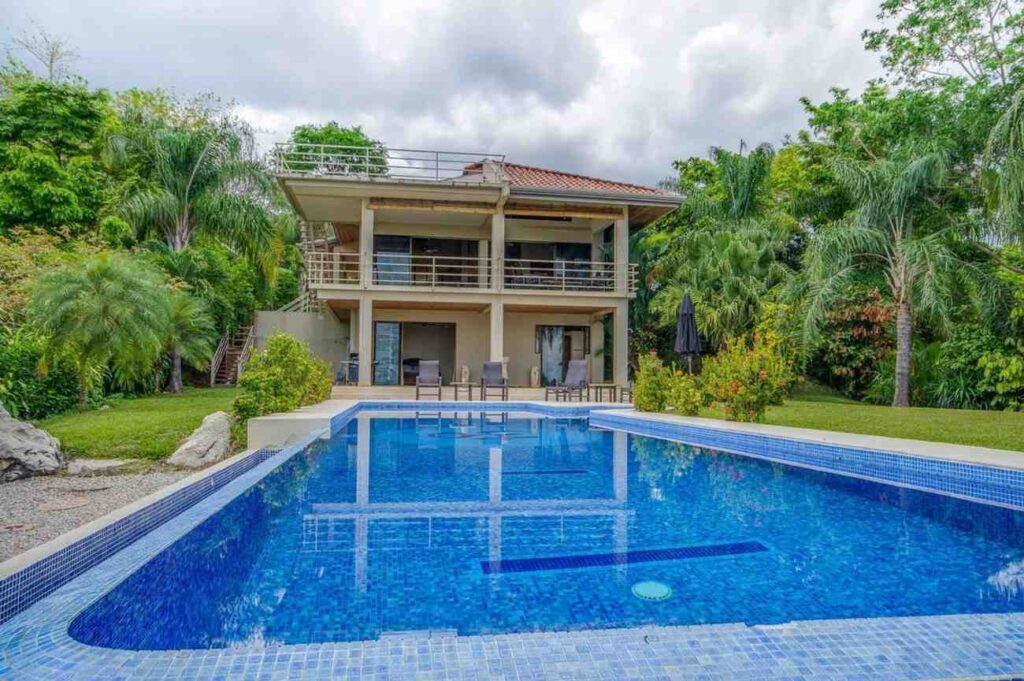
Rental demand in Coco draws from three distinct groups: short-term vacation renters from the US and Canada during high season (December through April), European visitors who extend the mid-season shoulder, and a substantial long-term rental market driven by expat residents and workers connected to regional businesses and Papagayo resort operations. That three-segment demand structure produces more stable occupancy than purely seasonal tourist markets. Entry prices for quality investment condos currently range from approximately $200,000 to $450,000, with gross rental yields in the 8–11% range for well-managed properties.
Tamarindo and the Southern Corridor: Tourism Volume, Price Points, and Yield Profile
Tamarindo is the Gold Coast’s highest-volume tourism destination, with name recognition that drives direct booking demand independent of the platforms. The town draws surf travelers, young couples, and families, and its international profile keeps occupancy rates competitive even in shoulder months. That volume comes at a price. Entry costs are higher, with quality investment properties typically starting at $350,000 and ranging well above $700,000 for premium ocean-view units.
The southern corridor communities, including Langosta, Avellanas, and Nosara, offer a quieter demographic and a strong long-term appreciation story, but the management infrastructure is less mature and the short-term rental market is thinner. These markets reward patient investors with longer time horizons. They are not the right fit for buyers who need immediate cash flow to service carrying costs.
Emerging Communities Worth Watching on the Gold Coast
Playa Hermosa, immediately south of Coco, is the market our team watches most closely right now. It has Coco’s proximity to the airport and utility infrastructure, but lower entry prices and a calmer beach profile that appeals to a growing segment of longer-stay visitors. The infrastructure gap between Hermosa and Coco has narrowed significantly in the past five years, and properties there are currently priced at a discount relative to their actual rental potential — a gap that tends to close as word spreads.
Playa Ocotal and the hillsides above Coco offer ocean-view properties at entry prices that would be impossible in comparable positions above Tamarindo. The trade-off is thinner immediate demand, which requires a competent rental management operator to fill with qualified guests from outside the walk-in tourist pool.
Matching Your Investment Goals to the Right Micro-Market
The single most useful question to ask before choosing a micro-market is this: what does your investment need to do in year one versus year five? If you need cash flow coverage from the start, Playas del Coco and Tamarindo offer the deepest rental demand pools to support that. If you are holding for appreciation with modest short-term income, Hermosa and the southern corridor offer better upside at lower entry costs.
What Regional ROI Variation Actually Looks Like
Consider two comparable $400,000 condo investments, one in a well-located Playas del Coco community and one in a secondary Tamarindo corridor building. The Coco property, managed actively, generates approximately 26 weeks of paid occupancy annually at an average nightly rate of $175, producing gross rental revenue around $31,850. After management fees (typically 20–25%), HOA, utilities, and routine maintenance, net cash flow lands in the range of $18,000–$22,000 annually, a net yield of roughly 4.5–5.5%.
The Tamarindo property commands higher nightly rates but runs against more competition for the same high-season weeks, and the off-season drop is steeper. A comparable occupancy level at higher rates produces similar gross revenue, but operating costs in Tamarindo tend to run higher as well. Neither is a wrong choice, but the dynamics are genuinely different, and modeling them accurately requires local data, not national averages.
How Seasonal Demand Patterns Affect Cash Flow Across the Gold Coast
High season on the Gold Coast runs December through April, driven by North American and European winter escapes and Costa Rica’s dry season. Shoulder season in May, June, and November is manageable in well-marketed properties. The low-season rainy months of July through October require a proactive rental strategy: dynamic pricing, longer-stay promotions, and access to regional demand sources like Costa Rican domestic tourism and the growing remote-worker segment.
Communities with stronger long-term rental markets, Coco being the clearest example, weather the low season better because a portion of their occupancy comes from monthly renters who are indifferent to the weather. Purely vacation-dependent markets in the southern corridor see more pronounced cash flow seasonality, which investors need to factor into their annual financial model rather than annualizing their best-month numbers.
Rental Yields, Cash Flow, and What a Realistic Return Looks Like
The yield numbers you see in Costa Rica real estate marketing are almost always gross figures, and gross yield is the number that gets deals done, not the number that runs your portfolio. Here is what the full picture actually looks like.
Average Rental Yield on Costa Rica Property by Region
National averages for Costa Rica tend to land in the 6–9% gross yield range, which is competitive but not specific enough to be useful. The Gold Coast consistently outperforms those figures. In Playas del Coco and the immediate Papagayo corridor, well-located and actively managed properties produce gross yields of 8–12%. Tamarindo runs similarly on the gross side, though with higher entry costs and more pronounced seasonality. Emerging communities like Playa Hermosa currently yield in the 7–9% gross range, with the gap expected to narrow as demand matures.
The regional variation matters because it reflects demand depth, not just rate potential. A market that produces strong gross yields in high season but drops sharply in low season is a fundamentally different asset than one producing more distributed income across the calendar year.
Gross Yield vs. Net Yield: The Number That Actually Matters
Gross yield is the annual rental revenue divided by purchase price. Net yield is what remains after you subtract every operating cost. For Gold Coast properties, the gap between those two numbers is typically 4–6 percentage points, and investors who underestimate it are the ones who call us frustrated in year two.
The standard operating cost stack for a vacation rental condo on the Gold Coast looks roughly like this:
- Property management fees: 20–25% of gross rental revenue
- HOA or COA fees: $300–$700 per month depending on community
- Utilities (when not passed to guests): $150–$350 per month
- Routine maintenance and repairs: 1–1.5% of property value annually
- Property tax and luxury tax (if applicable): variable, addressed in the tax section below
- Rental platform fees: 3–5% of bookings through major channels
On a $400,000 property grossing $32,000 annually, a realistic net yield lands between 4.5% and 6% after the full cost stack. That is still a strong return relative to comparable US coastal markets, but it is not the double-digit figure that looks attractive in a brochure.
Vacancy Rates, Seasonal Swings, and How to Model Honest Cash Flow Projections
A Gold Coast property in a well-managed community should target 65–75% annual occupancy across a full year, translating to roughly 24–27 booked weeks. High-season weeks fill first and command the strongest rates. May, June, and November are workable with proper marketing. July through October requires active management: dynamic pricing, minimum-stay adjustments, and promotion to domestic Costa Rican visitors and longer-stay guests.
The mistake most investors make is modeling cash flow from their best-case high-season weeks and multiplying out. Build your projection from the low season up instead. If your property can carry its costs through eight slow weeks on modest occupancy, it will perform well in the aggregate. If it can only pencil out at near-full occupancy, you are underwriting a problem.
How Long Does It Take to See a Return on Investment?
For a cash purchase at a realistic net yield of 5%, a rental-income-only payback period runs 17–20 years. That framing is technically correct and almost entirely beside the point, because it ignores appreciation. Investors who have held Gold Coast properties for 7–10 years and sold have frequently seen total returns, rental income plus appreciation combined, that compress the effective payback considerably.
The more practical question for most buyers is when the property becomes cash-flow positive after all operating costs. For a financed purchase, that depends heavily on your debt service. For a cash buyer, positive net cash flow begins in year one, assuming competent management and realistic occupancy.
How Currency Fluctuations Affect Rental Income for US and Canadian Investors
For US investors, the currency picture is straightforward. Your rental income is earned in dollars and your purchase price is in dollars, so there is no conversion exposure. Canadian investors face a layer of currency risk at the CAD/USD exchange level, but because the Gold Coast real estate market is dollar-denominated throughout, the exposure is limited to the home-currency conversion, not to Costa Rican colón volatility.
The colón has depreciated gradually against the dollar over the past decade, which has had a modest beneficial effect on local operating costs denominated in colones, including some utilities, labor, and local services. It is not a material driver of investment returns, but it is a small structural tailwind for operating cost management.
Property Types and Investment Categories: Matching the Asset to Your Strategy
The Gold Coast offers a wider range of investable property types than most foreign markets this size, and the right choice depends almost entirely on what you need the asset to do.
Vacation Rental Condos and Beachfront Units: High Yield, High Involvement
Vacation rental condos are the most common entry point for foreign investors in Guanacaste, and for good reason. They produce the highest gross yields, they are the easiest to finance when financing is available, and they sit in communities with existing management infrastructure. The trade-off is management intensity. Short-term rental units require active pricing strategy, guest communication, housekeeping coordination, and maintenance response. A well-run vacation rental is not passive ownership. It is a business that happens to be housed in a property you own. The investors who succeed with this category are those who pair a good unit with a professional local operator and treat the management fee as a cost of the return, not a drain on it.
Single-Family Homes and Residential Rentals: Stability Over Peak Returns
Single-family homes rented on annual or long-term leases trade yield for predictability. A well-priced home in Coco or Hermosa can command $1,800–$3,500 per month from expat families, remote workers, or professionals on regional contracts. That monthly income is stable, carries low turnover costs relative to vacation rentals, and requires significantly less operational involvement. The gross yield on a long-term residential rental typically runs 5–7%, below vacation rental potential, but the net yield often lands in a similar range once you strip out the management and platform costs that vacation rentals carry.
Pre-Construction and Development Opportunities: Upside, Risk, and Due Diligence
Pre-construction purchases offer the most compelling appreciation potential on the Gold Coast, along with the most due diligence requirements. Buying into a development at early pricing, typically 15–25% below projected completion value, can deliver equity gains before the first rental guest checks in. The risks are real: developer execution, permitting delays, and construction quality all sit outside your control. The due diligence checklist for pre-construction is longer than for a resale property.
Key items to verify include:
- The developer’s completed project history in Costa Rica specifically
- Confirmation that permits are current and the project is registered with the Public Registry
- The escrow structure, to ensure funds are protected and staged against milestones
- Your recourse if the developer misses the completion timeline
We have seen pre-construction deals deliver exactly as promised and we have seen them stall badly. The difference almost always traces to the developer’s track record and capitalization, not to the broader market.
Commercial and Mixed-Use Assets: A Different Risk-Return Profile
Commercial property on the Gold Coast, including retail space, restaurant buildings, and mixed-use developments, attracts a different type of investor and carries a different risk profile. Lease structures are typically longer and denominated in dollars, which creates more stable income. The tenant base is correlated to regional economic activity, not just tourism, which can be a diversification advantage. Entry prices and management complexity are higher, and the buyer pool at exit is narrower. This category is best suited to investors with direct experience in commercial real estate and a longer hold horizon.
Which Property Type Aligns With a Truly Hands-Off Ownership Goal
If genuine passive ownership is your goal, the best-fit category is a vacation rental condo in a professionally managed community, but only when paired with a full-service local operator who handles every function from guest booking to maintenance coordination. A standalone single-family vacation rental without on-site community management is the hardest property type to operate remotely and the most likely to underperform expectations.
The asset itself is only half the equation. The property type that enables hands-off ownership is the one that matches a management infrastructure capable of running it without you.
Closing Costs, the Purchase Process, and What Happens Between Offer and Keys
Foreign buyers consistently underestimate total acquisition costs in Costa Rica, not because the system is opaque, but because it is unfamiliar. The full cost stack is predictable once you know where to look.
A Plain-English Breakdown of Closing Costs in Costa Rica
Transfer Tax, Legal Fees, and Registration Costs
Total closing costs in Costa Rica typically run 3.5–4.5% of the purchase price, split across a handful of line items:
- Transfer tax (Impuesto de Traspaso): 1.5% of the registered property value
- Documentary stamp taxes: approximately 0.5% combined across national registry and municipal stamps
- Notary and attorney fees: 1–1.5%, covering both the drafting of the closing document and title study
- National Registry recording fee: minor, typically under $200
- Escrow fee: usually $500–$1,000 depending on transaction complexity
On a $400,000 purchase, budget $14,000–$18,000 in closing costs. These are typically split equally between buyer and seller by local convention, though this is negotiable and should be specified in your offer letter.
Ongoing Expenses of Owning Property in Costa Rica
The costs that surprise new owners are not closing-related. They are ongoing. Internet and utilities run $300–$600 per month depending on property size. HOA fees in gated communities cover shared amenities, security, and common area maintenance, averaging $400–$700 monthly for quality investment-grade communities. Annual property taxes are low by North American standards (detailed in the tax section below), but the cumulative operating cost picture adds up quickly if you haven’t modeled it before purchase.
Pest control, pool service, landscaping, and periodic appliance replacement are the operational line items that investors rarely budget for explicitly. A reasonable annual maintenance reserve is 1–1.5% of property value, set aside separately from operating income.
The Purchase Process Step by Step: From Offer to Recorded Title
The Costa Rica purchase process follows a clear sequence once you understand it:
- Signed offer letter with deposit (typically 1–5% held in escrow)
- Attorney conducts title study against the Public Registry
- Purchase-sale agreement (promesa de compraventa) executed by both parties
- Due diligence period covering inspections, permit verifications, and survey confirmation
- Closing: notary-drafted escritura signed by both parties before a Costa Rican notary public
- Escritura submitted to the National Public Registry for recordation
- Title transfers officially upon registry confirmation, typically 2–4 weeks post-signing
Steps one through five happen in sequence and are where most delays occur, usually around due diligence findings or financing conditions. Steps six and seven are administrative and largely out of both parties’ hands.
Financing Options for Foreign Buyers: Owner Financing, Local Banks, and Offshore Lending
Financing as a foreign buyer in Costa Rica is more limited than in North American markets but not unavailable. Local Costa Rican banks will lend to foreigners, typically at 50–60% loan-to-value on titled property, with interest rates currently in the 7–9% range in USD. The qualification process is document-intensive and slower than buyers from the US are accustomed to.
Owner financing, where the seller carries a portion of the purchase price, is common on the Gold Coast and often more flexible than institutional lending. Terms are fully negotiable, and many sellers prefer it as a way to spread taxable gain and earn a secured return. Rates and terms vary widely, but 6–8% over 5–10 years is a typical range for seller-financed transactions.
Offshore lending through US-based private lenders or home-equity instruments remains an option for buyers with equity in their home country. Using a HELOC or private portfolio loan against a US asset to fund a Costa Rica purchase sidesteps local lending complexity entirely, and many of our clients have used this approach successfully.
Realistic Timelines for the Closing Process
A straightforward cash purchase on titled land with clean due diligence typically closes in 30–60 days from signed offer to recorded title. Transactions involving financing add time on both ends: qualification and approval on the front end, and sometimes additional registry processing on the back.
The variables that extend timelines most predictably are title issues requiring resolution before closing, permitting questions on concession or construction, and financing conditions requiring additional documentation. Buyers who have their legal team engaged early and their documents prepared move faster than those who treat due diligence as a formality. Budget 45–75 days as a realistic window for most Gold Coast purchases.
Tax Considerations Every Foreign Investor Must Understand
Costa Rica’s tax environment for foreign property owners is genuinely favorable, with lower property taxes than almost any North American market, no capital gains tax on real estate held properly, and a predictable annual cost structure. The complexity sits at the compliance layer, not the tax rate.
Tax Implications for Foreign Property Owners in Costa Rica
The key tax categories for foreign investors are annual property tax, luxury tax (if applicable), and rental income tax. Costa Rica does not impose a capital gains tax on real property transfers for individuals, though corporate-owned properties are treated differently, making this a nuanced area worth discussing with your attorney. There is no inheritance or estate tax on Costa Rican real estate. Foreign investors are not subject to Costa Rican income tax on income earned outside the country, only on Costa Rican-source income, which for most investors means their rental income.
Investors must also satisfy their home country’s reporting obligations. US citizens must report foreign property holdings above certain thresholds, report rental income on their US return, and may need to file FBAR or FATCA disclosures if holding property through a Costa Rican corporation with associated bank accounts. This is where a US-based CPA with international experience is worth the engagement.
Costa Rica Property Tax: What You Actually Pay
Annual property tax (impuesto sobre bienes inmuebles) is levied at 0.25% of the declared property value, collected by the municipal government. On a $400,000 property with a declared value of $350,000, annual property tax is approximately $875. Costa Rican property tax is among the lowest in the Western Hemisphere, and it is one of the structural advantages that makes long-term holding cost very manageable.
The declared value is self-reported through a periodic property declaration filed with the municipality. Municipalities have the right to reassess, but in practice, declared values often run below market value in coastal communities. Using a qualified local accountant to manage your annual declaration is advisable.
Luxury Tax Thresholds and How to Assess Whether Your Property Qualifies
The luxury tax (impuesto solidario) applies to residential properties whose declared construction value exceeds a threshold set annually by the government, currently in the range of approximately 133 million colones (roughly $260,000 USD at current rates) for the base exemption. Properties above this threshold pay a graduated rate ranging from 0.25% to 0.55% of the construction value above the threshold.
For most investment condos in the $200,000–$400,000 range, luxury tax either does not apply or applies on a modest portion of the declared value. For high-end beachfront homes and resort units above $600,000, it becomes a meaningful line item. Your attorney or accountant can calculate the precise exposure based on the property’s current declaration.
Rental Income Reporting and Withholding Obligations for Non-Residents
Non-resident property owners who earn rental income from Costa Rican properties are subject to a 15% withholding tax on gross rental income, administered through the property manager or tenant. A Costa Rican resident-entity structure, typically a Sociedad Anónima (SA) or Sociedad de Responsabilidad Limitada (SRL), can change how income is classified and taxed, often more favorably.
Rental income earned through a Costa Rican corporation is subject to corporate income tax at graduated rates, with deductible operating expenses reducing taxable income. Many investors hold their Gold Coast properties in a Costa Rican corporation specifically to access this structure. The trade-off is annual corporate maintenance costs, including filing fees, accountant fees, and a modest corporate tax, that need to be weighed against the tax efficiency.
Estate Planning, Corporate Ownership Structures, and Long-Term Asset Protection
Holding Gold Coast property in a Costa Rican corporation offers several advantages beyond tax treatment. It simplifies succession, since shares transfer rather than requiring a property deed transfer. It can provide some liability insulation, and it makes future sale easier by allowing share transfers rather than full registry transactions. The standard vehicle is a Sociedad Anónima (SA), which is familiar to Costa Rican attorneys and easily maintained.
The cost of corporate maintenance runs approximately $500–$1,500 annually, covering government filings, beneficial ownership registry requirements introduced for anti-money-laundering compliance, and accountant fees. For a property earning $20,000 or more annually, this is a minor cost against the structural and succession benefits.
Foreign investors with substantial estate planning goals, including multiple properties, multi-generational transfer, or complex family structures, should work with an attorney who operates across both Costa Rican and home-country law. The structures are compatible. They just require coordinated planning from the start.
The Operational Reality of Remote Ownership: Why DIY Management Fails
Can You Manage a Costa Rica Rental Property Remotely?
The honest answer is that remote self-management of a Costa Rica vacation rental is theoretically possible and practically disastrous for most investors. The distance is not the core problem. The operational density is. A rental property in Playas del Coco requires real-time pricing decisions, guest communication across time zones, vendor coordination in Spanish, and physical presence for inspections, turnover, and repairs. None of that happens reliably from a laptop in Toronto or Phoenix.
Investors who attempt it typically start strong, burn out by month six, and either under-respond to maintenance issues or over-rely on a single local contact who lacks accountability. The property suffers, reviews decline, occupancy drops, and the investment that looked compelling on a spreadsheet starts generating stress instead of income.
What Goes Wrong Without a Trusted Local Operator
Consider a common pattern we see on the Gold Coast. A buyer purchases a well-located condo in Coco, sets it up on two rental platforms, and arranges for a neighbor or informal contact to handle key handoffs. The first high season goes reasonably well. Then the air conditioning unit fails in February, the peak of high season, and the informal contact cannot source a technician quickly. The guest leaves a two-star review. Platform rankings drop. The shoulder season that follows is thin, and by the following high season, the property has lost its search position.
Recoverable? Yes. But the path back takes six to nine months of active management attention, and the lost revenue during that window often exceeds what a full year of professional management fees would have cost.
Vacation Rental Marketing, Pricing Strategy, and the Platforms That Drive Occupancy
Occupancy on the Gold Coast does not happen by listing a property and waiting. The platforms that drive the most bookings, Airbnb, VRBO, and Booking.com, reward properties with consistent five-star reviews, complete listings, rapid response times, and dynamic pricing that adjusts to local demand signals. None of that is set-and-forget.
A competent local operator actively manages nightly rates based on real-time market data, competitor pricing, and the Gold Coast’s distinct demand calendar. They know that a long weekend in February commands a significant premium above baseline, that the two weeks around Semana Santa are premium inventory, and that July rates need to drop substantially to stay competitive. They also maintain professional photography, updated listing copy, and a review response strategy that protects your public rating. These are not administrative tasks. They are revenue decisions made dozens of times per month.
Maintenance, Vendor Relationships, and the Day-to-Day Complexity You Cannot See From Abroad
A Gold Coast rental property generates a continuous stream of small-to-medium maintenance needs: pool pumps, AC filters, plumbing, appliance failures, pest control, touch-up painting between guests. Individually, each is minor. Collectively, they require a reliable vendor network and someone on the ground to supervise the work and verify it was completed correctly.
Building that vendor network takes years. An established local operator arrives with pre-negotiated rates, known-quality tradespeople, and the credibility to get service calls prioritized. A foreign owner calling from abroad gets none of that leverage. They get whoever answers the phone, at whatever rate is quoted, with no accountability for quality or timing.
The investors who absorb this lesson early, and price the management fee as a revenue-enabler rather than a cost, consistently outperform those who try to manage it piecemeal.
HOA and COA Governance: The Overlooked Responsibility That Catches Foreign Owners Off Guard
HOA obligations are the operational blind spot that surprises more foreign investors than any other single factor. Most buyers focus on the monthly fee. The governance responsibilities that come with it rarely come up in the purchase conversation.
What HOA Obligations Actually Require of Absentee Foreign Owners
In most Gold Coast communities, HOA membership is not optional and the obligations run beyond writing a monthly check. Owners are expected to comply with community rental rules, which may include restrictions on minimum stay length, guest registration, or platform eligibility. Properties must be maintained to defined standards, and owners are expected to respond to HOA communications within specified timeframes. Rules about exterior modifications, signage, and parking enforcement apply to your guests as much as to you.
An absentee owner who is not actively monitoring community communications can unknowingly accumulate violations. In some communities, unresolved violations result in fines that compound monthly. A rental unit that falls out of good standing with the HOA can be removed from the community’s approved short-term rental list, a direct hit to your occupancy.
How HOA Disputes Escalate and Why Local Representation Prevents Costly Outcomes
HOA disputes on the Gold Coast almost always begin with a communication breakdown, not a legal disagreement. A neighbor complaint about a guest, a missed compliance notice, or a misunderstood rule gets no response from an absentee owner. The community board follows its escalation protocol. By the time the owner receives a forwarded email weeks later, they are already in formal violation proceedings.
A local property manager who attends or monitors HOA meetings, maintains a relationship with board members, and responds to community communications in real time prevents these cascades entirely. The cost of that representation is trivially small compared to the cost of a sustained HOA dispute, which can involve legal fees, fines, and rental restrictions that persist for months.
How to Find a Trustworthy Real Estate Partner on the Gold Coast
Finding a Trustworthy Real Estate Agent or Property Manager in Costa Rica
Costa Rica’s real estate industry has no mandatory licensing requirement. Anyone can call themselves a real estate agent or property manager. That is not a reason to avoid the market. It is a reason to vet systematically rather than relying on referrals alone or trusting the first confident voice you encounter.
The Gold Coast’s most reliable operators are visible through their track record: documented transactions, managed properties with verifiable reviews, client references willing to speak on the record, and a physical presence in the specific community where you are buying. National brand affiliation is less meaningful than it sounds on the coast. Local depth matters more.
The Questions That Separate a Long-Term Partner From a Transactional Broker
A transactional broker wants to close your purchase. A long-term partner wants your investment to perform over a decade. The questions that reveal the difference are not about credentials. They are about incentives and operational reality.
- How many properties do you currently manage in this specific community?
- Can you provide occupancy and net yield data from comparable managed units over the past 24 months?
- Who handles maintenance coordination when a guest reports a problem at 10pm on a Saturday?
- What is your policy if a managed property underperforms projections?
- Can I speak directly with two or three current owners whose properties you manage?
An operator who hesitates on any of these questions is telling you something important.
What a Fully Integrated Service Model Looks Like and Why It Eliminates the Core Risk
The operational risk of investing in Costa Rica real estate from abroad is not any single problem. It is the gap between problems. An agent who sells you the property, a separate property manager who handles rentals, and an independent attorney handling legal matters each have partial accountability and no incentive to coordinate. When something falls into the gap between those functions, no one owns the resolution.
An integrated model eliminates that gap. A single team that guides acquisition, manages legal coordination, handles rental marketing and guest services, supervises maintenance, and monitors HOA compliance gives you one point of contact and one accountable party across the full lifecycle of ownership. That is not a convenience. It is the structural difference between a profitable passive investment and a remote management problem.
Track Record, Transparency, and the Signals That Build Confidence
Track record in a specific coastal market is verifiable. Ask for a portfolio review: how many properties, in which communities, managed for how long, with what occupancy outcomes. Request financial reporting samples. Look at what a monthly owner statement includes and confirm it clearly breaks out gross revenue, platform fees, management fees, and maintenance charges.
Transparency in fee structures is the other reliable signal. An operator with nothing to hide presents a clean, itemized fee schedule and explains every line item without prompting. Operators who bundle fees, obscure platform commissions, or resist direct questions about their cost structure are waving a flag you should not ignore.
Why Local Longevity Matters More Than National Brand Recognition
A firm with fifteen years of operations in Playas del Coco has something a national brand with a regional office does not: a decade and a half of vendor relationships, community trust, micro-market data, and lessons learned from every operational challenge the Gold Coast throws at a rental portfolio. They know which buildings have HOA boards that enforce rules aggressively. They know which contractors deliver on time and which overpromise. They know the demand patterns that do not show up in any published dataset.
That embedded local knowledge is not replicable by a new entrant regardless of brand, and it is one of the most durable competitive advantages an established Gold Coast operator holds for the investors they serve.
Partner Readiness Checklist: Five Non-Negotiable Criteria for Evaluating Any Gold Coast Real Estate Partner
Before you commit to any real estate partner on the Gold Coast, confirm they can satisfy all five of these criteria:
- Demonstrated local tenure. A minimum of ten years of active operations in the specific coastal community where you are buying, not in Costa Rica generally.
- Verifiable managed portfolio. Current management of multiple properties in your target community, with occupancy data available on request.
- Integrated service scope. Acquisition support, property management, rental marketing, maintenance coordination, and HOA oversight handled by one team, not outsourced to separate vendors.
- Transparent financial reporting. Monthly owner statements that clearly separate gross revenue, platform fees, management fees, and maintenance charges without bundling.
- Reachable client references. At least two current clients willing to take a direct call and speak candidly about operational performance, not just the purchase experience.
Your Gold Coast Investment Starts With the Right Conversation
Why the Partner Is the Investment
Every section of this guide has arrived at the same conclusion from a different direction. The legal framework favors foreign buyers. The Gold Coast’s fundamentals, including airport access, constrained land supply, and dual rental demand, are as solid as they come in any foreign market. The yield numbers, modeled honestly, are competitive. None of that matters if the operator running your investment on the ground is inconsistent, unavailable, or structurally incentivized to move to the next transaction rather than optimize yours.
The partner you choose is not a support function around the investment. For a foreign buyer thousands of miles away, the partner is the investment.
The Coastal Realty Integrated Model: From First Inquiry Through Long-Term Management
Coastal Realty was built around the problem this article describes. Our team has operated on the Gold Coast for nearly two decades, and we have seen every variation of what happens when the acquisition-to-management handoff is fragmented, delayed, or handled by operators without genuine local depth. Our integrated model exists specifically because we kept watching excellent properties underperform for entirely preventable reasons.
We guide buyers through property identification and market analysis, coordinate due diligence and legal support, manage vacation rental marketing and dynamic pricing across all major platforms, supervise maintenance through a vetted local vendor network, and represent our owners in HOA governance. One team, one point of accountability, one financial reporting structure that shows you exactly what your property is earning and what it is costing, every month.
Your Next Step: A No-Pressure Conversation With the Gold Coast’s Most Experienced Team
If you are seriously evaluating investing in Costa Rica real estate, the most useful next step is a direct conversation, not another round of general research. The questions that matter most at this stage are specific to your budget, your timeline, your income goals, and the communities that fit your investment profile.
Our team is available to walk through any of those questions without a sales agenda. We work with a limited number of new clients each year and only take on properties we believe we can manage to the standard our existing owners expect. That selectivity is not a pitch. It is how we protect the track record we have spent twenty years building.
Reach out through our website or call our Playas del Coco office directly. The conversation costs nothing, and the clarity it produces is worth considerably more than another hour of reading.
Frequently Asked Questions
What is the average ROI on rental property in Costa Rica by region?
National gross yield averages for Costa Rica tend to fall in the 6–9% range, but the Gold Coast consistently outperforms those figures. In Playas del Coco and the Papagayo corridor, well-located and actively managed properties can produce gross yields of 8–12%, while emerging markets like Playa Hermosa currently run in the 7–9% gross range. Net yields, after management fees, HOA, utilities, and maintenance, typically land between 4.5% and 6%, which remains competitive when compared to similar US coastal markets.
What are the hidden costs and ongoing expenses of owning property in Costa Rica as a foreigner?
Beyond closing costs, the ongoing expenses that most often catch new owners off guard include HOA or COA fees ($300–$700 per month in quality communities), utilities ($300–$600 per month depending on property size), and routine maintenance reserves of 1–1.5% of property value annually. Add pool service, pest control, landscaping, and periodic appliance replacement, and the cumulative picture is meaningful. Modeling these costs accurately before purchase, rather than discovering them in year one, is one of the most important things a good local advisor will help you do.
Can I manage a Costa Rica rental property remotely, or do I need someone on the ground?
You need someone on the ground, and not just anyone. A rental property in Playas del Coco or Tamarindo requires real-time pricing decisions, guest communication across time zones, vendor coordination in Spanish, and physical oversight for turnover and repairs. Investors who attempt full remote self-management typically perform well in the first high season and then see reviews, occupancy, and income decline as maintenance issues go unresolved and platform rankings slip. A professional local operator handling the full management scope is not an optional expense. It is what makes the investment function as intended.
What are the tax implications for foreign property owners in Costa Rica?
Foreign property owners pay annual property tax at 0.25% of declared value, one of the lowest rates in the Western Hemisphere. A luxury tax (impuesto solidario) applies to higher-value properties above a government-set construction value threshold. Non-residents earning rental income are subject to a 15% withholding tax on gross rental income, though holding the property through a Costa Rican corporation can change how income is classified and often reduces the effective tax burden. Costa Rica does not impose capital gains tax on real property transfers for individuals. Investors must also meet their home country’s reporting requirements, including FBAR and FATCA filings for US citizens holding property through a local corporate structure.
What legal protections exist for foreign property buyers in Costa Rica?
Costa Rica’s constitution and civil code treat foreign property owners identically to citizens for purposes of ownership rights, contract enforcement, and dispute resolution. The National Public Registry provides a transparent, searchable record of all titled transactions, liens, and encumbrances. Costa Rica has also signed bilateral investment treaties with the United States and other countries that offer protections against expropriation. In practice, the most effective protection is a clean title obtained through thorough due diligence before closing, which is far faster and less costly than any legal remedy after the fact.
How do currency fluctuations affect rental income and property values for US and Canadian investors?
For US investors, currency exposure is minimal. The Gold Coast real estate market is dollar-denominated throughout, from purchase price to rental income, so there is no conversion exposure at the investment level. Canadian investors face currency risk at the CAD/USD exchange level when converting returns home, but this is limited to that single conversion and does not involve Costa Rican colón volatility. The gradual depreciation of the colón against the dollar over the past decade has had a modest positive effect on colón-denominated operating costs such as local labor, utilities, and services, providing a small structural tailwind for operating cost management.