
Why Uvita Costa Rica Real Estate Is Capturing Serious Foreign Buyer Attention Right Now
The Gold Coast Convergence: What Makes This 30-Mile Stretch Different
The Southern Pacific coastline between Dominical and Ojochal, locally called the Gold Coast, has a concentration of advantages that no single coastal market in Costa Rica fully replicates. You get reliable infrastructure without the overdevelopment that has pressured northern markets like Tamarindo. You get ocean and jungle in genuine proximity, not marketing proximity. And you get a buyer demographic that skews toward people making permanent or semi-permanent life decisions, which stabilizes property values rather than inflating them on speculation. Uvita costa rica real estate is one of the most searched topics among foreign buyers exploring this part of Central America.
Uvita sits at the center of this stretch. It is large enough to have daily services, hardware stores, international grocery options, and reliable internet, but it has not yet hit the density where traffic, noise, and tourism saturation become real quality-of-life concerns. That balance is rare on the Costa Rican coast, and buyers who have looked at multiple markets recognize it quickly. This is a key dynamic shaping the uvita costa rica real estate market in 2026.
Marino Ballena National Park, the Whale’s Tail, and the Lifestyle Infrastructure Behind the Scenery
Marino Ballena National Park anchors Uvita’s identity, and the Whale’s Tail, a natural sandbar formation visible at low tide, is the image most buyers recognize before they ever book a flight. But the park is not just a marketing asset. It regulates development density along the coastline, which means the view you buy today is structurally protected from the construction you would otherwise worry about. Buyers researching uvita costa rica real estate will find this pattern consistent across the region.
The lifestyle infrastructure behind that scenery is what converts visitors into buyers. Within 20 minutes of Playa Uvita, you can access a hospital in Cortés, a growing network of bilingual schools, multiple veterinary clinics, yoga studios, and restaurants serving food that would compete in any mid-size American city. The scenery brings people. The infrastructure makes them stay. It is one of the factors that distinguishes uvita costa rica real estate from comparable markets.
Why Pre-Retirees and Remote Professionals Are Arriving With Intent, Not Just Curiosity
The buyer profile in Uvita has shifted meaningfully over the past several years. Where the early wave of foreign buyers often arrived as lifestyle explorers willing to trade convenience for cost savings, today’s buyers arrive with a different calculus. Many are 50 to 65 years old, still earning remotely or winding down a business, and specifically choosing Uvita because the quality of life is additive to their current life, not a sacrifice. They want fiber internet, they want to fly home for holidays without a routing nightmare, and they want a community of people who made similar decisions. This context is essential for anyone seriously researching uvita costa rica real estate.
Costa Rica’s Remote Worker Visa, introduced in 2021, has formalized what was already happening informally. Remote professionals can now live legally in Costa Rica while maintaining foreign employment income, and Uvita’s infrastructure, including multiple coworking-adjacent setups, reliable high-speed internet, and a growing expat community with professional backgrounds, makes it a practical choice rather than just an aspirational one. The uvita costa rica real estate sector has been defined by exactly these dynamics over recent years.
The Honest Caveat: Why Excitement Without a Framework Can Be Costly
Uvita is a genuinely compelling market, and that is exactly why it rewards buyers who arrive prepared and penalizes those who arrive only excited. The legal system is functional and protective of foreign buyers, but it requires navigating a public registry, understanding the distinction between fee simple title and concession land, and knowing how to structure due diligence before funds move. Buyers who skip steps because a listing looks perfect or a timeline feels urgent are the ones who end up with unresolved liens, boundary disputes, or properties they cannot legally rent. For those active in uvita costa rica real estate, this distinction is well understood.
The goal of this guide is to close that gap. Every section ahead addresses something listing sites leave out, because what you do not know about Uvita Costa Rica real estate is more costly than what you do.
—
Decoding Uvita’s Micro-Markets: Which Neighborhood Actually Fits Your Life?
Playa Uvita: The Social Hub With Services, Surf, and a Growing Expat Pulse
Playa Uvita is the commercial and social core of the region. You can walk to the farmers market on Saturdays, reach a pharmacy without a car, and find a neighbor who moved from Portland three years ago and already knows every contractor worth calling. For buyers who want to feel embedded in a community quickly, this is the neighborhood that delivers fastest. This is central to understanding what uvita costa rica real estate offers right now.
The trade-off is density. Playa Uvita is not crowded by most standards, but it is the most active part of the corridor. Property prices reflect the convenience premium, with entry-level homes starting around $250,000 and climbing steeply for ocean view parcels. Rental demand is consistent here, driven by proximity to the park and amenities. Anyone navigating uvita costa rica real estate should keep this consideration in mind.
Playa Ballena: Quieter Shoreline, Longer Stays, and a Different Kind of Buyer
Playa Ballena runs south of Uvita proper and attracts buyers who want visual drama without social noise. The beach here is longer, less trafficked, and framed by forested hillsides that make ocean view properties especially striking. Buyers in Playa Ballena tend to be more deliberate in how they want to live. They are not avoiding community so much as choosing pace. This is a key dynamic shaping the uvita costa rica real estate market in 2026.
Rental performance in Playa Ballena skews toward longer-stay guests, typically one to three weeks, which produces fewer turnovers and lower management overhead than high-rotation vacation rentals. For buyers who want passive income with minimal friction, this is often the neighborhood the numbers point toward.
Ojochal: The Village for People Who Want Community, Cuisine, and Deep Quiet
Ojochal sits about 15 minutes south of Uvita and operates almost as a separate ecosystem. Its reputation for diverse, high-quality restaurants in a village of a few hundred residents is not accidental. The expat community that settled here decades ago built the kind of neighborhood where people know each other, look after each other’s properties, and have strong opinions about which landscaper to trust. Buyers researching uvita costa rica real estate will find this pattern consistent across the region.
For retirees not primarily interested in rental income, Ojochal offers exceptional lifestyle value at slightly lower price points than Playa Uvita. A car is non-negotiable given the thinner infrastructure, but the trade for quiet, community depth, and proximity to nature is one many buyers make with zero regret. It is one of the factors that distinguishes uvita costa rica real estate from comparable markets.
Dominical: Bohemian Character, Surf Culture, and the Trade-Offs That Come With It
Dominical is north of Uvita and carries a distinct identity: surf town, creative community, younger demographic, and a tolerance for imperfection that is either charming or frustrating depending on who you are. The beach is powerful and not well-suited for casual swimmers, which shapes the kind of traveler and tenant the town attracts.
For buyers who want character and lower entry prices, Dominical delivers both. For buyers who prioritize reliability, services, and a quieter pace, it tends to be a first look rather than a final choice.
Bahia: Emerging Value, Lower Entry Points, and What That Actually Signals
Bahia sits inland and uphill from the coast, offering valley and ocean views at prices that reflect its earlier stage of development. Infrastructure is improving, and a handful of expat families have already put down roots. The lower entry point is real, with parcels and homes here running noticeably below comparable Playa Uvita Costa Rica real estate properties, but the lower price reflects lower demand rather than hidden gems.
Bahia rewards patient buyers who plan to hold long-term and who do not depend on immediate rental income. For buyers who need yield from year one, it is the wrong starting point.
—
Which Uvita Micro-Market Fits Your Priorities?
Use this matrix to match your priorities to the right neighborhood before you fall in love with a listing in the wrong one.
| Playa Uvita | Playa Ballena | Ojochal | Dominical | Bahia | |
|---|---|---|---|---|---|
| Lifestyle Fit | Social, walkable, active expat scene | Peaceful, scenic, unhurried | Deep community, culinary, quiet | Surf culture, creative, casual | Rural, nature-forward, patient buyers |
| Entry Price | $250K+ | $300K+ | $200K+ | $180K+ | $150K+ |
| Rental Demand | High, consistent | Moderate-high, longer stays | Low-moderate | Moderate, seasonal | Low |
| Services/Infrastructure | Strong | Moderate | Moderate | Basic | Limited |
| Remote-Work Score | 4/5 | 3/5 | 3/5 | 2/5 | 2/5 |
Playa Uvita suits buyers who want services and community now. Playa Ballena suits buyers who want natural beauty and manageable rental income. Ojochal suits retirees who want to belong somewhere specific. Dominical suits buyers on a tighter budget who connect with surf culture. Bahia suits long-horizon investors comfortable with a thinner service layer. No neighborhood is wrong, only mismatched.
What Neighborhoods in Uvita Are Best for Retirees and Expats?
Ojochal consistently tops the list for full-time retirees because the community is established, the pace is gentle, and the cost of daily living runs lower than in Playa Uvita. For expats who want social activity alongside nature access, Playa Uvita is the stronger fit. Playa Ballena serves buyers who split time between Costa Rica and home, because it performs well as a rental when they are away and feels genuinely restorative when they return. Healthcare proximity matters more as buyers age, and all three neighborhoods sit within 30 minutes of hospital services in Cortés or Quepos depending on direction.
—
What Uvita Costa Rica Real Estate Is Available and What Does It Cost?
Ocean View Homes and Villas: Price Tiers, What They Buy You, and What to Watch For
Ocean view properties in Uvita span a wider range than most buyers expect. At the $300,000 to $500,000 level, you typically find three-bedroom homes with partial ocean views, established gardens, and functional construction that may need cosmetic updating. From $500,000 to $900,000, the inventory shifts toward purpose-built villas with pools, strong rental histories, and panoramic views designed into the architecture. Above $1 million, you enter properties where the view, the land, and the finish level all perform at a tier that justifies premium positioning.
The caveat at every level: “ocean view” in a listing description requires verification. A glimpse of water between treetops and a 180-degree panorama both qualify as ocean views. Your agent should be able to show you exactly what you are buying before you are emotionally committed to the property.
Jungle View Properties, Eco-Builds, and the Trade-Offs of Remote Terrain
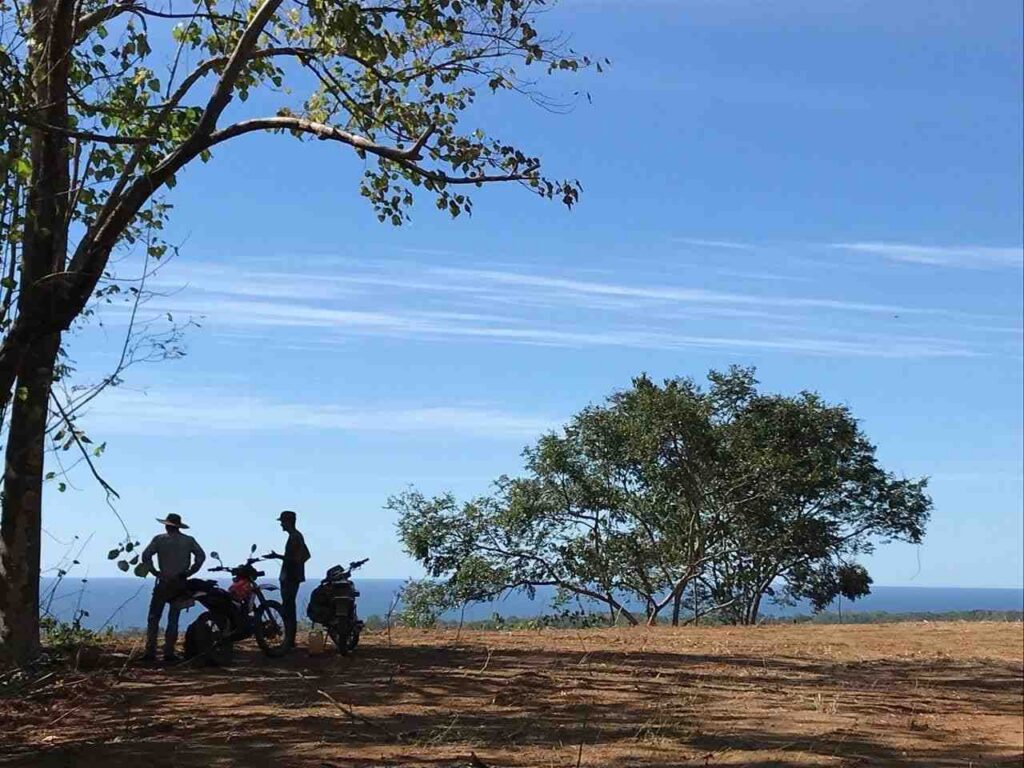
Jungle view properties sit at higher elevations or further from the coast and offer dramatic green canopy views, significant privacy, and substantially lower price points. Eco-builds, constructed with natural materials, solar systems, and minimal footprint, are a distinct subset of this category that attracts buyers who value sustainability alongside lifestyle.
The practical trade-off is access. A property 20 minutes up a mountain road sounds romantic until the road washes out in October. Buyers considering remote terrain should inspect road conditions in rainy season, not dry season, and should budget for 4×4 vehicles as a non-optional ownership cost.
Beachfront and Near-Beach: Understanding Concession Land vs. Fee Simple Title Before You Fall in Love
This is the most important legal distinction in coastal Costa Rican real estate, and it catches foreign buyers off guard more than any other issue. Costa Rican law establishes a Maritime Zone extending 200 meters from the high-tide line. The first 50 meters are public and cannot be privately owned by anyone. The next 150 meters, called the restricted zone, can be occupied through a government concession, not outright ownership.
A concession is a renewable permit, not a deed. It can be revoked, it has specific use restrictions, and foreigners cannot hold a concession unless they have been legal residents for at least five years. This does not mean beachfront property is unavailable to foreign buyers. It means the legal structure around it requires careful navigation, often through a properly structured Costa Rican corporation.
Properties described as “beachfront” or “steps from the beach” may sit in the restricted zone, outside it, or straddle both. Your attorney’s due diligence on the title and zone classification is non-negotiable before any offer becomes binding.
Raw Land and Development Parcels: Opportunity and Complexity for the Prepared Buyer
Raw land purchases in Uvita attract two buyer types: those who want to build a custom home over time, and those who see development potential in a parcel that could be subdivided or improved for resale. Both paths are viable, and both carry complexity that does not show up in a listing price.
Zoning, water rights, SETENA environmental permits, and road access each require independent verification. A parcel can be titled, affordable, and beautifully located and still take two to three years and significant additional capital before a building permit is issued. Buyers who understand that going in can find real opportunity. Buyers who discover it afterward tend to feel deceived, even when no deception occurred.
Condos and Turnkey Residences: Lower Maintenance Entry Into the Market
For buyers who want to own in Uvita without managing a property independently, condos and turnkey homes within managed developments offer a different value proposition. HOA fees handle landscaping, pool maintenance, and common area upkeep. Some developments include rental management programs built into the ownership structure.
Entry prices in established condo developments start around $180,000 and range to $500,000 for penthouse or premium units with full ocean exposure. The trade-off compared to a standalone home is less privacy and less customization, but the ownership experience, especially for absentee owners, is considerably more predictable.
How Much Does It Cost to Buy Real Estate in Uvita and What Are the Hidden Expenses?
The purchase price is the most visible number in any transaction, and reliably the least complete picture of what ownership actually costs.
Closing Costs Broken Down: Transfer Tax, Legal Fees, and Registry Stamps
Costa Rica charges a transfer tax of 1.5 percent of the registered property value at closing. Registry stamps and other governmental fees add roughly 0.5 percent. Legal fees for a qualified real estate attorney typically run between 1 and 1.5 percent of the purchase price, occasionally higher for complex transactions involving corporations or concession properties. Total closing costs generally land between 3 and 4 percent of the purchase price, lower than U.S. closings in most cases, but real money that should be budgeted explicitly before you make an offer.
Ongoing Ownership Costs: Property Tax, the Luxury Tax, HOA and COA Fees
Costa Rica’s annual property tax runs 0.25 percent of the registered value, among the lowest in the hemisphere. The Impuesto Solidario, or luxury tax, applies to properties with a construction value above a periodically adjusted threshold and is calculated on a tiered scale. HOA or COA fees in managed communities typically run $200 to $600 per month depending on amenities and scale.
Tropical Climate Maintenance: The Budget Line Most Foreign Buyers Underestimate
Humidity, salt air, and the six-month rainy season accelerate wear on every surface and system in a way that buyers from temperate climates routinely underestimate. Paint requires refreshing every two to three years. Roof inspections should be annual. Air conditioning units need quarterly filter cleaning and periodic refrigerant checks. Wooden elements exposed to the elements can deteriorate within a single rainy season if left untreated.
A realistic maintenance reserve for a mid-range Uvita Costa Rica real estate property runs several thousand dollars per year for a buyer actively managing upkeep. Deferred maintenance compounds quickly in a tropical environment, so buyers who plan to be absentee need a local property manager or a trusted local contact who will not wait until a problem is urgent to report it. That is not a luxury. It is a baseline requirement of sustainable ownership in this climate.
—
The Legal Roadmap: How Foreigners Actually Buy Property in Costa Rica
What Foreign Buyers Need to Know First: Fee Simple Title and Equal Ownership Rights
Costa Rica gives foreign nationals the same property ownership rights as citizens. You do not need residency, a local partner, or a special permit to purchase fee simple titled property. A passport is sufficient. This legal equality is genuine, not a technicality, and it is one of the primary reasons Costa Rica has attracted consistent foreign investment for decades.
Fee simple title means you own the land and any structures on it outright, with the right to sell, lease, or transfer the property as you choose. It is registered in the Costa Rica Public Registry under your name or a corporate entity you control. That registration is the foundation of your legal protection, and every serious step in a Uvita Costa Rica real estate purchase flows from it.
How to Avoid Real Estate Scams When Buying Property in Costa Rica as a Foreigner
The legal system protects foreign buyers well, but only if you use it correctly. Most problems foreign buyers encounter are not sophisticated fraud. They are preventable gaps in due diligence that a motivated seller or an inexperienced agent failed to flag.
Title Verification Through the Costa Rica Public Registry
The National Registry (Registro Nacional) is a public database where every titled property in Costa Rica is recorded. A qualified attorney can pull a full registry report on any parcel within hours. That report will show the registered owner, any liens or encumbrances, recorded mortgages, legal annotations, and boundary descriptions. If the property you are considering does not appear there as clean and unencumbered, you do not proceed until the discrepancy is resolved. No exception.
This is not a bureaucratic formality. Buyers who skip it have discovered after closing that a property carried an unpaid construction loan, a boundary dispute, or an annotation from a prior legal proceeding. None of those problems are disclosed on a listing. All of them are visible in the registry.
Red Flags That Protect You: Unregistered Sellers, Missing Surveys, and Pressure Timelines
Three patterns appear consistently in problematic transactions. A seller who cannot produce a current survey (plano catastrado) registered with the property. A listed owner whose name does not match the registry record. Any urgency framing that discourages waiting for attorney review or due diligence results.
Legitimate sellers do not pressure timelines. A property that requires a fast decision before your attorney has reviewed the title is a property you should walk away from. Good deals in Uvita do not disappear in 48 hours.
How to Vet a Trustworthy Real Estate Attorney
Your attorney represents you, not the transaction. The moment your agent selects your attorney without input from you, you have a potential conflict of interest, even when everyone’s intentions are good. Ask your agent for two or three referrals, then independently verify each candidate through the Costa Rica Bar Association (Colegio de Abogados), check their registration status, and speak directly with a prior foreign client if possible. An attorney experienced in real estate transactions for foreign buyers will understand concession land, corporate ownership structures, and registry due diligence without needing to be walked through it.
Legal fees in Costa Rica are regulated and reasonable. Paying for independent legal representation is not a cost to minimize.
Do I Need a Lawyer to Buy Property in Costa Rica?
Yes, and there is no practical alternative. The closing deed (escritura) must be executed before a Costa Rican notary-attorney. An attorney also reviews title, manages the escrow transfer process, handles registry inscription, and ensures taxes and fees are properly paid. The practical question is not whether to hire one but how to choose correctly.
Beyond the Bar Association verification, look for an attorney who communicates fluently in your language, responds promptly to questions, and explains what they are reviewing rather than just telling you everything is fine. A good real estate attorney welcomes your questions. One who discourages them is not the right fit for a foreign buyer navigating an unfamiliar system.
Corporation vs. Individual Ownership in Costa Rica: What Is the Difference?
Both options are legal and used regularly by foreign buyers. Individual ownership is simpler and carries lower ongoing administrative costs. Corporate ownership, typically through a Sociedad Anónima (S.A.) or Sociedad de Responsabilidad Limitada (S.R.L.), adds a layer of liability protection and can simplify future transfers by selling corporate shares rather than re-inscribing the property.
Corporations also matter for beachfront properties in the restricted zone, where a foreign buyer needs legal residency to hold a concession directly but can participate through a properly structured corporation. The right choice depends on your specific situation, intended use, and long-term plans. Your attorney should walk through both options before you decide rather than defaulting to one.
The Escrow Process in Plain English: How Your Funds Are Protected From Offer to Close
Escrow in Costa Rica works similarly to the U.S. model. A neutral third party holds your deposit and purchase funds until all conditions of the sale are satisfied. When the title is clean, the deed is signed, and the transfer is registered, funds are released to the seller. If due diligence reveals a disqualifying problem, your deposit is returned under the terms of your purchase agreement.
Use a licensed escrow company or a reputable attorney escrow account, and never wire funds directly to a seller or an agent. Verify the escrow holder’s credentials independently. This is the structural protection that sits between your money and a failed transaction.
Title Insurance in Costa Rica: When It Matters and How to Get It
Title insurance is available in Costa Rica through international providers and is increasingly standard practice for foreign buyers. It protects against undiscovered claims on the title that were not apparent during due diligence, including fraudulent prior transfers or registry errors. For higher-value purchases or properties with complex histories, it provides a backstop that attorney review alone cannot fully replicate. The cost is a one-time premium and is worth including in your closing budget, particularly on transactions above $300,000.
What Is the Process for Purchasing Property in Uvita Remotely?
Most foreign buyers complete a significant portion of their purchase process from home. The infrastructure to do this legally and safely exists. The key is knowing which steps require your physical presence and which do not.
The Power of Attorney: How to Sign Documents Legally From Abroad
A Special Power of Attorney (Poder Especial) lets a designated representative, typically your Costa Rican attorney, sign closing documents on your behalf when you cannot be present. The document must be notarized in your home country and either apostilled (if your country is party to the Hague Convention) or authenticated through the Costa Rican consulate. This is a routine process and not a workaround. Many foreign buyers close transactions this way every year.
Timeline Benchmarks: What a Typical Close Looks Like From First Contact to Keys
A straightforward purchase with clean title, a motivated seller, and no financing complications typically closes in 30 to 60 days from accepted offer. The general breakdown looks like this:
- 1 to 2 weeks for initial due diligence and registry review
- 1 to 2 weeks for drafting and reviewing the purchase-sale agreement
- 1 to 2 weeks for closing preparation, funds transfer, and deed execution
- 5 to 10 business days for registry inscription after signing
Complex transactions, concession properties, or purchases involving corporate restructuring can extend to 90 days or more. Build buffer into your planning, and do not book a relocation timeline around an optimistic close date.
Due Diligence Milestones: The Checklist That Separates Informed Buyers From Exposed Ones
Before you sign anything binding, your attorney should confirm the following:
- Registry title is clean with no liens, annotations, or pending claims
- The survey matches the physical boundaries and is registered
- Zoning permits your intended use (residential, commercial, rental)
- Water rights are documented and in good standing
- Any corporate structure holding the property is properly maintained with annual filings current
- For concession properties: concession status, renewal date, and municipal standing
Legal Requirements for a Foreign Buyer Purchasing Property in Uvita, Costa Rica
A valid passport is the baseline requirement. You do not need residency or special authorization for fee simple titled property. You need a qualified notary-attorney to execute the deed, a transfer tax payment of 1.5 percent of the registered value, and proper registry inscription to establish legal ownership. If purchasing through a corporation, that entity must be in good standing with annual corporate taxes paid. These requirements are consistent across Costa Rica, and the process in Uvita follows the same national legal framework applied everywhere in the country.
—
Financing Your Uvita Purchase: What Foreign Buyers Can Realistically Access
Why Traditional U.S. or Canadian Mortgages Don’t Cross the Border
No U.S. or Canadian lender will issue a mortgage secured by Costa Rican real estate. The legal systems do not interconnect, the collateral cannot be enforced across jurisdictions, and no secondary market exists for foreign-secured loans. This is a structural reality, not a temporary gap. Foreign buyers who arrive expecting to finance their purchase through a home equity line or a foreign lender should budget for cash, local financing, or seller terms before they start viewing properties.
SUGEF-Regulated Local Financing: Eligibility, Rates, and the Documentation Reality
Costa Rican banks regulated by SUGEF do lend to foreign nationals, but the process is demanding. You will need to document income sources, provide notarized and apostilled financial records, demonstrate legal residence or strong ties to Costa Rica, and pass a credit review conducted under Costa Rican banking standards. Interest rates on local mortgages currently run between 8 and 12 percent in dollars, significantly higher than U.S. market rates, with loan terms typically maxing out at 15 to 20 years and loan-to-value ratios of 50 to 70 percent.
For some buyers, local financing makes sense as a bridge or a leveraging tool. For most foreign buyers purchasing at the $300,000 to $700,000 tier, the documentation burden and rate premium make cash or seller financing the more practical path.
Seller Financing in Costa Rica: How It Works and When to Negotiate It
Seller financing is more common in the Costa Rican market than most buyers expect. A seller who does not need immediate full liquidity may accept a structured note where the buyer pays a deposit at closing, with the remaining balance paid over an agreed term at a negotiated rate, typically 6 to 9 percent. The seller retains a first mortgage (hipoteca) on the property until the note is paid in full.
This arrangement benefits both parties when structured correctly. The buyer accesses purchase financing without a bank, and the seller earns interest income on a property they already own free and clear. Your attorney drafts the mortgage terms, and the hipoteca is registered in the Public Registry alongside the title transfer. It is a legally sound mechanism, not an informal handshake.
Cash Purchase Strategy: Structuring Offers to Compete and Protect Yourself Simultaneously
Cash offers carry real leverage in the Uvita Costa Rica real estate market. Sellers respond to certainty of close, and a cash buyer eliminates financing contingencies that complicate timelines. To use that leverage well, structure your offer with a modest initial deposit (typically 5 to 10 percent) held in escrow, a defined due diligence period of 15 to 30 days during which your deposit is fully refundable if inspections or title review fail, and a closing timeline that is specific rather than open-ended.
The due diligence window is your protection. Do not waive it to make your offer look cleaner. A clean title and solid inspection protect your cash as much as your eventual enjoyment of the property.
Residency, Visas, and Your Ownership Rights
Property ownership and legal residency are entirely separate in Costa Rica. You can own property for decades without ever applying for residency, and many foreign buyers do exactly that, entering on a tourist visa and renewing every 90 days through a border run or cycling in and out from home.
Residency becomes more relevant if you plan to live in Costa Rica continuously, want to access the public healthcare system (CCSS), or need to hold a concession directly. The pensionado visa requires documented pension income of at least $1,000 per month. The Remote Worker Visa requires demonstrated income of at least $3,000 per month from foreign sources. Neither visa grants Costa Rican citizenship automatically, but both allow multi-year legal residency with renewal rights.
Neither residency status affects your right to own fee simple titled property. The decision to pursue residency is a lifestyle and tax planning question, not a property ownership prerequisite.
—
From Purchase to Passive Income: The Full Ownership Lifecycle Foreign Buyers Don’t See on Listing Sites
How Much Can You Realistically Earn Renting Out a Property in Uvita?
Rental income in Uvita is real, but the numbers vary enough by property type, location, and management quality that any single figure misleads more than it informs. What buyers consistently underestimate is that Uvita’s rental market rewards properties that are positioned correctly from the start, not just ones that happen to be available.
Seasonal Demand Patterns on the Gold Coast: High Season, Shoulder Season, and Occupancy Benchmarks
High season runs from mid-December through April, driven by North American and European winter escapes. This period consistently produces the highest nightly rates and strongest occupancy, often in the 80 to 95 percent range for well-managed properties. Shoulder season in May and November sees reduced rates but still generates meaningful bookings, particularly from longer-stay guests. The core rainy season from June through October is the softer window, though the Gold Coast’s pattern of morning sun and afternoon rain makes it more livable and rentable than inland rainy season destinations.

Annual occupancy for a professionally managed vacation rental in Playa Ballena or Playa Uvita typically runs 50 to 65 percent across all 12 months. Properties with strong views, a pool, and reliable internet consistently outperform the average.
Illustrative Rental Income Model: A Three-Bedroom Ocean View Villa in Playa Ballena
Consider a three-bedroom villa in Playa Ballena with a private pool and panoramic ocean view, purchased at $550,000 and managed by a full-service property manager.
- High season (December to April): $350 to $500 per night, roughly 18 to 20 weeks of bookings
- Shoulder season (May, November): $250 to $320 per night, roughly 6 to 8 weeks of bookings
- Rainy season (June to October): $180 to $250 per night, roughly 10 to 12 weeks of bookings
At average annual occupancy of around 55 percent, gross rental revenue for this property could realistically run $60,000 to $85,000 per year. After property management fees (typically 20 to 30 percent of gross), maintenance reserve, property taxes, and utilities, net income could land in the $35,000 to $55,000 range. These are illustrative figures, not guarantees. Your actual performance depends on your specific property, management quality, and pricing strategy.
Long-Term Rental vs. Vacation Rental: Which Strategy Fits Your Property and Your Personality?
Long-term rentals (six months or more) offer predictability and minimal management overhead. Monthly rates for a three-bedroom home in Uvita run $1,200 to $2,500 depending on location and finish, significantly below vacation rental gross but with near-zero management friction. For buyers who want steady income without the logistics of frequent turnovers, long-term rental is often the correct choice.
Vacation rental maximizes gross revenue but requires active management, a consistent guest experience, and ongoing marketing. If you plan to use the property personally for several weeks per year, vacation rental also gives you scheduling flexibility that a long-term lease does not. The right answer depends as much on how involved you want to be as on the numbers themselves.
How Property Management and Vacation Rental Services Work in Uvita for Absentee Owners
For buyers who are not in Costa Rica full-time, the property management relationship is not optional. It is the difference between a functioning investment and a deteriorating one.
What Full-Service Property Management Actually Covers
A full-service property manager handles guest communications, check-in and check-out logistics, housekeeping coordination, minor maintenance oversight, and monthly owner reporting. They typically list your property on major booking platforms, manage pricing strategy, and handle local taxes on rental income.
What they do not cover: major repairs, capital improvements, insurance claims, or anything requiring owner authorization above an agreed threshold, typically $200 to $500 per incident. You need a reserve account and a clear agreement on spending authority before you hand over the keys.
HOA and COA Management: Who Handles It When You’re Not There
If your property sits within a managed development, your property manager should act as your local representative to the HOA or COA, attending meetings, submitting maintenance requests, and ensuring your fees are paid on time. Confirm this is explicitly part of your management agreement. Some property managers treat HOA liaison as outside their scope, which creates gaps in oversight when you are thousands of miles away.
The Tropical Maintenance Reality: Preventive Care vs. Emergency Repair Cycles
Preventive maintenance in a tropical climate is cost management, not a recommendation. A property manager who conducts regular inspections and addresses small issues before rainy season will consistently outperform one who responds only to tenant complaints. Ask specifically how your prospective manager handles pre-season inspections, roof checks, and pest control scheduling. The answer tells you whether they think like an asset manager or a reservation desk.
Choosing a Property Manager: Questions to Ask and Standards to Hold
Before signing a management agreement, ask:
- How many properties do you currently manage, and what is your average occupancy rate?
- How do you handle owner communication, and what does a monthly report include?
- What is your maintenance response protocol for after-hours issues?
- Who are your preferred contractors, and are you compensated for referring them?
- Can I speak with two current owners whose properties you manage?
A manager who resists these questions is not ready to manage your asset. One who answers them specifically is demonstrating the operational discipline your investment requires.
Why the Partner You Choose at Purchase Should Be the Same Team Managing Your Asset After
The case for continuity is practical, not sentimental. An agent who helped you buy your property understands its systems, its quirks, its rental positioning history, and the local contractor relationships needed to maintain it. When the team that guided your purchase also manages the property afterward, there is no translation loss between what you bought and how it is operated.
Fragmented ownership experience, where one firm sold you the property and a separate manager handles it, creates accountability gaps that compound over time. Nobody owns the full picture. In a market like Uvita, where tropical maintenance, rental seasonality, and legal compliance all intersect, having one partner accountable for your complete ownership experience is the model that actually works.
—
Is Uvita Costa Rica Real Estate a Stronger Investment Than Other Coastal Markets?
Uvita vs. Dominical: Lifestyle Overlap, Price Divergence, and Who Each Market Is Really For
Dominical and Uvita share geography and partial lifestyle overlap, but they serve meaningfully different buyers. Dominical carries lower entry prices, a stronger surf identity, and a younger demographic. For buyers who want maximum energy and minimum cost, it delivers both. For buyers who want services, rental reliability, and a more established expat community, Uvita is the stronger fit at a modest premium.
From a pure investment standpoint, Uvita’s more developed infrastructure and stronger vacation rental demand produce more consistent income. Dominical’s lower prices reflect its earlier stage of development, which creates upside for patient buyers but does not yet offer the yield certainty of the Uvita corridor.
Uvita vs. Ojochal: Quiet Investment, Community Depth, and the Long-Hold Case
Ojochal offers lower entry prices than Playa Uvita and exceptional lifestyle quality for full-time residents. What it does not offer is strong vacation rental demand. The buyers who win in Ojochal are those who intend to live there, or who purchase with a long hold horizon and value community over cash flow.
If your primary goal is rental income, Uvita is the stronger choice. If your primary goal is quality of life at a reasonable cost, with an investment case built on appreciation over time rather than annual yield, Ojochal is undervalued and unlikely to stay that way.
Uvita vs. Guanacaste and the Pacific North: Infrastructure, Accessibility, and Buyer Profile Differences
Guanacaste, anchored by Tamarindo, Nosara, and the Papagayo Peninsula, has deeper infrastructure, a major international airport in Liberia, and a longer track record as a foreign buyer market. It also has higher prices, more development pressure, and a buyer profile increasingly dominated by speculative investors and luxury resort products.
Uvita buyers typically seek something the northern markets have partially traded away: authentic community, managed density, and a relationship with nature that is not curated for tourism. The flight access equation matters, and Guanacaste wins on convenience for buyers who prioritize easy North American routing. But buyers doing serious long-term analysis increasingly recognize that Guanacaste’s growth story is more mature, which means the appreciation runway is shorter.
What the Gold Coast Trajectory Signals for Long-Term Appreciation
The drivers behind Gold Coast appreciation are structural, not speculative. Road improvements on the Costanera Sur have been consistent. Tourism infrastructure has expanded without degrading the coastal character that created value in the first place. Foreign buyer interest has grown steadily rather than spiking, which is the pattern associated with durable appreciation rather than boom-bust cycles.
Properties purchased in Playa Ballena and Playa Uvita over the past several years have seen meaningful appreciation in many cases, with the strongest gains concentrated in ocean view properties with clear title and strong rental histories. The underlying demand drivers remain intact: proximity to protected land, improving access, a growing expat community, and limited developable supply.
Buying Property in Uvita Costa Rica as a Foreigner: Investment Lens vs. Lifestyle Lens
The buyers who leave Uvita most satisfied, years after their purchase, are consistently those who weighted both lenses equally rather than optimizing for one at the expense of the other. Pure investors who ignored lifestyle often end up with properties they never visit and management relationships they never fully trust. Pure lifestyle buyers who ignored investment fundamentals sometimes overpaid for emotion and underinvested in due diligence.
The sweet spot is a property that you genuinely want to spend time in, located in a neighborhood that matches your actual life priorities, purchased with clean title, an appropriate legal structure, and realistic income projections you verified before committing. That combination is achievable in Uvita. It is not the default outcome of a listing search. It is the outcome of working with people who have done this before and will stay with you after the closing documents are signed.
—
What the Foreign Buyer Journey Looks Like From the Inside: An Illustrative Scenario
The Buyer: A Pre-Retiree Couple Researching Remotely From the Pacific Northwest
Mark and Sandra, both in their late 50s, had spent two years researching coastal retirement markets from their home outside Seattle. Mark was winding down a consulting practice that had gone fully remote. Sandra had taken early retirement from a healthcare administration role. They were not in a hurry, but they were serious, with a clear budget ceiling of $600,000.
They arrived at the Uvita research phase after eliminating Panama (political uncertainty), Mexico’s Pacific coast (overdevelopment concerns), and Belize (limited healthcare infrastructure). Costa Rica kept appearing in their research not because it was exotic but because it kept checking boxes that others could not.
Search Phase: How They Narrowed From Four Markets to One Neighborhood
Their initial shortlist inside Costa Rica included Tamarindo, Nosara, the Arenal region, and the Gold Coast. Tamarindo came off the list first. Property prices were high relative to what they could buy, traffic had worsened, and the buyer demographic felt speculative rather than settled. Nosara attracted them on lifestyle but priced them out of ocean view inventory within their budget. Arenal was beautiful and underpriced but lacked the coastal identity they wanted.
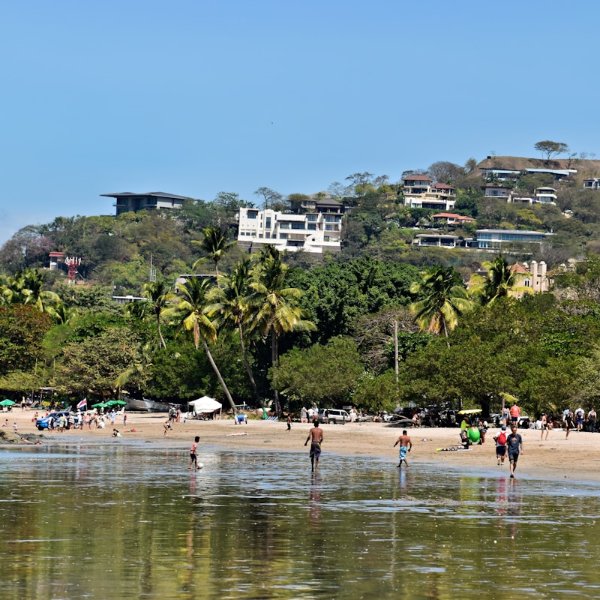
The Gold Coast, specifically the Playa Uvita and Playa Ballena corridor, cleared every filter. The Marino Ballena National Park boundary gave them confidence that the view they bought would not be obscured by future construction. The services available in Uvita proper meant Sandra would not feel isolated. Fiber internet options meant Mark could continue working without disruption.
They contacted Coastal Realty after reading enough conflicting listing-site information to know they needed someone who could translate, not just show. Their first call lasted 90 minutes. By the end of it, they had a clearer picture of Playa Ballena’s rental potential and Ojochal’s lifestyle appeal than they had built from weeks of self-directed research.
They visited for ten days, viewed eight properties, and returned home without making an offer. That deliberate pause turned out to be one of their best decisions.
Purchase Phase: The Legal Steps, the Delays, and the Decisions That Protected Them
Three weeks after returning home, they made an offer on a three-bedroom ocean view home in Playa Ballena at $520,000. The offer included a 30-day due diligence window with a fully refundable deposit held in escrow.
Two weeks into due diligence, their attorney pulled the registry report and found an annotation from a prior boundary dispute that had never been formally resolved. The seller had not disclosed it. The annotation did not invalidate the title, but it required a resolution agreement between adjacent property owners before the title could be conveyed cleanly.
Mark and Sandra had a choice: walk away or wait for resolution. Their attorney advised that the underlying dispute was minor and resolvable but would require an extension. The seller agreed to a 45-day extension, covered the legal costs of the resolution, and provided written documentation of the corrected boundary before closing was rescheduled.
They closed 78 days after the original accepted offer, using a Special Power of Attorney that allowed their Costa Rican attorney to sign the closing deed while they remained in Seattle. Total closing costs came in at just under $22,000, including transfer tax, legal fees, registry stamps, and title insurance.
The delay frustrated them in the moment. Looking back, Sandra described it as the week that proved their team knew what it was doing.
First Year of Ownership: Management Setup, First Rental Season, and Real Income Realized
Keys transferred in early November, two weeks before they arrived in Costa Rica for the first time as homeowners. They spent three weeks doing setup: furnishing the property for vacation rental, photographing it professionally, and onboarding with a full-service property manager recommended by their Coastal Realty agent.
High season ran from mid-December through April. During those five months, the property was booked for 14 of 21 weeks at nightly rates between $325 and $420. Shoulder season produced bookings for five additional weeks. Their first full year of ownership generated approximately $68,000 in gross rental revenue.
After property management fees, maintenance reserve contributions, utilities, and property taxes, net income for year one landed at approximately $42,000. They had projected $35,000 in their original financial model. The outperformance came from strong high-season occupancy and a pricing strategy their property manager had refined based on comparable properties in the neighborhood.
Mark and Sandra used the property personally for six weeks across two visits. They paid nothing during those weeks, and the property paid for itself the rest of the year.
What They Would Tell Another First-Time Foreign Buyer Today
Three things, consistently. First: take the due diligence period seriously and never waive it to compete. The title annotation they caught would not have surfaced until they tried to sell, and by then it would have been their problem, not the seller’s. Second: trust the team that knows the market, not the listing site that aggregates it. They spent weeks reading conflicting information online that one local expert resolved in a single conversation. Third: the property that works for your life and your income is almost never the one you fall in love with on a website. It is the one your agent knows fits your actual criteria.
—
> Is Uvita Right for You? Quick-Pick by Buyer Profile
> Retiree planning to live full-time: Start with a neighborhood conversation. Ojochal and Playa Ballena each serve retirees differently, and the right fit depends on how social you want your daily life to be. Ask Coastal Realty to walk you through both before you view a single listing.
> Investor prioritizing rental yield: Request a rental income analysis on specific properties before your first visit. Coastal Realty can model realistic occupancy and net return by neighborhood based on current market data.
> Remote worker splitting time between home and Costa Rica: Infrastructure is your first filter. Ask specifically about internet reliability and property management options so the property runs smoothly when you are not there.
> Part-time resident using the property personally and occasionally renting: Playa Ballena typically offers the best balance of personal enjoyment and manageable rental income. Start there.
—
Your Honest Next Step Toward Owning in Uvita
What You Now Know That Listing Sites Won’t Tell You
You now have a framework that no listing aggregator provides: the legal structure that protects foreign buyers and the gaps that expose them, the neighborhood distinctions that determine whether a property fits your life or just photographs well, the real cost of ownership beyond the purchase price, and the management realities that separate a functioning investment from a deteriorating one. That framework did not come from a search engine. It comes from years of walking buyers through this market and learning what the searches leave out.
The Case for a Single, Experienced On-the-Ground Partner
The transactional search model, where you find a listing online, contact whoever listed it, and move toward close, creates a fundamental misalignment. The listing agent represents the seller. The platform represents itself. Nobody in that structure is accountable to your outcome after the deed is signed.
A local partner who guides your search, represents your interests through due diligence and closing, and then manages your property after ownership transfers is a structurally different relationship. Accountability does not end at closing. The knowledge built during your purchase, the quirks of the property, the contractor relationships, the neighborhood context, remains useful for years and is not transferable to a separate management firm that had no role in what you bought.
How Coastal Realty’s Experience on the Gold Coast Translates Into Protection, Not Just Properties
More than 18 years in a market this specific means Coastal Realty has watched the Gold Coast develop in real time, including the road improvements, the infrastructure additions, the property disputes that got quietly resolved, and the projects that never materialized. That institutional knowledge is not available on a website. It surfaces when a registry annotation needs context, when a neighborhood is trending before prices reflect it, or when a buyer needs to understand whether a property’s rental history is genuine or selectively presented.
The buyers who have worked with Coastal Realty through complete ownership cycles, from first inquiry through purchase, rental setup, and eventual resale, consistently describe the value of that continuity in terms that go beyond transaction quality. They describe it as having someone in their corner who actually knows what their corner looks like.
Beginning the Conversation: What Working With a Trusted Local Team Actually Looks Like
The first conversation with Coastal Realty is not a sales call. It is a listening session. The team wants to understand your timeline, your budget reality, your lifestyle priorities, and your income expectations before matching you with a single property. That conversation shapes everything that follows, including which neighborhoods make sense, which property types fit your use case, and what due diligence will require attention in your specific situation.
If you are early in your research, that conversation clarifies what to look for. If you are further along and have specific properties in mind, it stress-tests your assumptions against local knowledge. Either way, you leave knowing more than you arrived with.
The Uvita Costa Rica real estate market rewards buyers who are informed and penalizes those who are only excited. The goal of this guide, and of every conversation Coastal Realty has with prospective buyers, is to make sure you arrive at any decision point fully equipped to make it well.
—
Frequently Asked Questions
What are the legal requirements for a foreign buyer purchasing property in Uvita, Costa Rica?
A valid passport is all you need to purchase fee simple titled property in Costa Rica. There is no residency requirement and no special foreign buyer permit. You will need a qualified Costa Rican notary-attorney to execute the closing deed, and you must pay a transfer tax of 1.5 percent of the registered property value plus registry stamps at closing. If you purchase through a corporation, that entity must be in good standing with annual filings current.
How much does it cost to buy real estate in Uvita and what are the hidden expenses?
Beyond the purchase price, plan for total closing costs of roughly 3 to 4 percent, covering the transfer tax, registry stamps, and legal fees. Ongoing costs include an annual property tax of 0.25 percent of the registered value, the Impuesto Solidario (luxury tax) on higher-value constructions, HOA or COA fees in managed communities, and a realistic maintenance reserve to account for the accelerated wear that humidity, salt air, and the rainy season place on every surface and system. Buyers who budget only for the purchase price are regularly surprised by what responsible ownership in a tropical climate actually costs.
How do I avoid real estate scams when buying property in Costa Rica as a foreigner?
The most reliable protection is using the Costa Rica Public Registry before any money moves. A qualified attorney can pull a full registry report on any parcel within hours, revealing the registered owner, any liens, encumbrances, or legal annotations that do not appear on a listing. Beyond that, never wire funds directly to a seller or agent, always use a licensed escrow account, and treat any pressure to skip or shorten your due diligence period as a serious warning sign. Legitimate sellers welcome a thorough review. The deals that require urgency are almost never the deals worth making.
Do I need a lawyer to buy property in Costa Rica, and how do I find a trustworthy one?
Yes. The closing deed must be executed before a Costa Rican notary-attorney, and independent legal representation is the single most important protection a foreign buyer can have. To find a trustworthy attorney, ask your agent for two or three referrals, then verify each candidate through the Costa Rica Bar Association (Colegio de Abogados) and speak directly with at least one prior foreign buyer client. Look for someone who communicates clearly in your language, explains what they are reviewing, and welcomes your questions rather than simply telling you everything is fine.
What is the difference between owning property through a corporation vs. individually in Costa Rica?
Individual ownership is simpler and carries lower ongoing administrative costs. Corporate ownership through a Sociedad Anónima (S.A.) or Sociedad de Responsabilidad Limitada (S.R.L.) adds liability protection and can simplify future transfers through a share sale rather than a full property re-inscription. For beachfront properties in the restricted maritime zone, a corporation may also allow participation where a foreigner could not hold a concession directly. Your attorney should model both options for your specific situation before you decide.
What is the process for purchasing property in Uvita remotely?
Most of the purchase process can be completed from abroad. After an initial property visit, you can review due diligence results, negotiate terms, and authorize your attorney to act through a Special Power of Attorney (Poder Especial), which must be notarized and apostilled in your home country. A straightforward transaction typically closes in 45 to 60 days from accepted offer. Your attorney manages title review, escrow coordination, deed execution, and registry inscription. While a site visit before committing is strongly recommended, the closing itself does not require your physical presence.
How do property management and vacation rental services work in Uvita for absentee owners?
A full-service property manager handles guest bookings, check-in and check-out logistics, housekeeping, minor maintenance oversight, platform listings, pricing strategy, and monthly owner reporting. For absentee owners within managed developments, a good property manager also acts as your local liaison to the HOA or COA. What they do not cover are major repairs or capital expenditures above an agreed spending threshold, so maintaining a reserve account and clarifying that threshold in your management agreement before handing over the keys is essential. The quality of your management relationship has a direct impact on both rental income and the long-term condition of your property.