
Why Samara, Costa Rica Is Capturing Foreign Buyers’ Attention Right Now
The Gold Coast Positioning: What Sets Samara Apart
Samara sits at a specific inflection point that serious buyers recognize immediately. It has the infrastructure and accessibility of a maturing market, but not yet the price premium that comes with one. Located in Guanacaste Province along what locals call the Gold Coast, Samara offers something genuinely rare in coastal Costa Rica real estate: a protected crescent bay, a paved road from the capital, and a town that functions year-round rather than seasonally. Samara costa rica real estate is one of the most searched topics among foreign buyers exploring this part of Central America.
Tamarindo, a few hours north, completed that maturation cycle over a decade ago. It has the amenities and the crowds to prove it, along with prices that reflect both. Nosara, Samara’s immediate neighbor to the north, is deep into its own appreciation curve, with yoga retreats, boutique surf camps, and oceanfront lots that now trade at prices that would have seemed improbable fifteen years ago. Samara has watched that happen from close proximity and is on the same trajectory, just a cycle behind. For buyers who want lifestyle without the top-of-market risk, that gap is the opportunity. This is a key dynamic shaping the samara costa rica real estate market in 2026.
A Lifestyle That Works for Retirees and Remote Professionals Alike
The practical appeal of Samara is harder to fake than its beauty. The town has reliable high-speed internet, a bilingual international school, multiple medical clinics, a pharmacy, a weekly farmers’ market, and a genuinely walkable center. Retirees find what they came for: a slower pace, warm water, a welcoming expat community, and a cost of living that compares favorably to similar beach towns in Mexico or the Caribbean. Remote professionals find what they need, with enough connectivity and enough quiet to actually get work done. Buyers researching samara costa rica real estate will find this pattern consistent across the region.
The beach itself helps. Unlike many Gold Coast beaches that face strong Pacific swells unsuitable for casual swimming, Samara’s bay is calm enough for children and older swimmers year-round. That physical fact shapes the entire character of the town. It draws families, long-term residents, and repeat visitors who eventually become buyers. It is one of the factors that distinguishes samara costa rica real estate from comparable markets.
Is Samara a Good Place to Live? Honest Answers for Serious Buyers
The honest answer is yes, with a clear-eyed understanding of what “good” means here. Samara is not a plug-and-play replica of suburban American life. Roads outside of town proper can be rough. Power outages happen during rainy season. Some services require a trip to the nearest city, Nicoya or Liberia. The nearest major hospital is roughly ninety minutes away. This context is essential for anyone seriously researching samara costa rica real estate.
None of that is a dealbreaker for the buyer this town actually suits: someone who wants to trade complexity for simplicity and crowded coastlines for an uncrowded bay. For that person, daily life in Samara is genuinely excellent. The cost of living runs significantly lower than comparable beach towns in Florida or coastal California. A household that spends $5,000 per month in the U.S. can often sustain a comfortable, full lifestyle in Samara for $2,500 to $3,500, depending on housing costs. The samara costa rica real estate sector has been defined by exactly these dynamics over recent years.
The Nosara Effect: What a Mature Adjacent Market Signals About Samara’s Trajectory
Nosara is the most useful data point Samara buyers have available to them. Fifteen years ago, it was a dusty dirt-road surf town with a handful of expat homeowners and very limited services. Today it hosts luxury boutique hotels, internationally recognized wellness retreats, and oceanfront properties priced well into the millions. That appreciation was not driven by a single investment or development project. It was driven by a slow accumulation of lifestyle infrastructure and word-of-mouth reputation. For those active in samara costa rica real estate, this distinction is well understood.
Samara shares most of the raw inputs that drove Nosara’s appreciation: a protected natural setting, a strong expat community, proximity to Liberia International Airport, and a regional municipality that has consistently supported low-density, nature-compatible development. The difference is price. Samara Costa Rica real estate today looks a lot like Nosara did at the beginning of that growth cycle, which is precisely why buyers who have already missed Nosara’s run are paying close attention to Samara.
—
What Samara Costa Rica Real Estate Offers: Property Types and Price Ranges
Beachfront and Oceanfront Property: Inventory, Pricing, and What “Beachfront” Really Means
“Beachfront” in Costa Rica requires a legal clarification before it can mean anything useful to a buyer. Under Costa Rican law, the first 50 meters inland from the high-tide line is public land, and no one can own it outright. The next 150 meters, the so-called restricted zone, is typically held under a concession granted by the municipality, not fee simple title. So when a listing says “beachfront,” it almost always means the property is directly adjacent to the public zone, with views and access to the beach, not that you hold title to the sand in front of it.
True oceanfront property with commanding beach views and direct access does exist in Samara, and it commands a premium that reflects both its scarcity and its vacation rental income potential. Entry prices for a modest oceanfront home with legal concession title or strong fee simple positioning typically start in the $400,000 to $600,000 range and move well above $1 million for larger or more developed properties. This is central to understanding what samara costa rica real estate offers right now.
Luxury Villas, Condos, and Turnkey Homes: Entry Points for Foreign Buyers
Buyers who want a turnkey property, something they can rent immediately or move into without a construction project, have real options across multiple price points. Condominiums in established developments offer the most hands-off entry, typically ranging from $150,000 to $350,000 depending on size and proximity to the beach. Many come with HOA structures that handle exterior maintenance, security, and common areas, which matters significantly to buyers planning to manage from abroad.
Luxury villas, private homes with pools, mature landscaping, and high-end finishes, occupy the $500,000 to $1.5 million range in Samara’s current market. These properties tend to generate the strongest vacation rental income but also carry the highest management complexity for absent owners. Turnkey mid-range homes, which represent the largest segment of the Samara Costa Rica real estate inventory, typically fall between $250,000 and $500,000.
Development Land and Build-Your-Own Opportunities in Guanacaste Province
For buyers who want to build rather than buy, Guanacaste Province still offers meaningful land inventory at prices that make custom construction financially viable. Residential lots in Samara and the surrounding communities range from roughly $80,000 for inland parcels to $300,000 or more for positioned hillside lots with ocean views. Construction costs in Costa Rica currently run approximately $100 to $180 per square foot for quality residential builds, depending on materials, finishes, and site access. Anyone navigating samara costa rica real estate should keep this consideration in mind.
The appeal of building is control: over layout, materials, rental optimization, and phasing of investment. The risk is timeline. Costa Rican permitting processes are slower and less predictable than most North American buyers expect, and managing a construction project remotely without a trusted local representative is a significant undertaking. Buyers who pursue this route need a ground team they trust completely, not just a contractor with a good portfolio.
A Realistic Price Framework for Samara Costa Rica Real Estate
A practical way to frame Samara’s market: you can enter as a serious property owner for under $200,000, build a comfortable lifestyle property in the $300,000 to $600,000 range, and access genuine luxury at $800,000 and above. These are purchase prices. The full cost of ownership adds closing costs, annual property taxes, maintenance, and management fees, all of which are covered in detail in the sections below.
What matters at this stage is understanding that Samara is not a market that requires the capital of a Nosara or a Tamarindo to participate meaningfully. That accessibility, combined with the trajectory signals the market is sending, is a core part of why Samara Costa Rica real estate is attracting the specific buyer profile it is right now.
—
Property Type Comparison Matrix
This matrix is a planning tool, not a guarantee of returns. Use it to match your priorities, whether lifestyle, income, or management simplicity, to the property category that fits best.
| Property Type | Typical Price Range | Ownership Structure | Rental Income Potential | Management Complexity | Ideal Buyer Profile |
|---|---|---|---|---|---|
| Beachfront / Concession | $400K – $1.5M+ | Concession title | High peak-season demand, strong nightly rates | High — requires active oversight and concession compliance | Experienced investor or full-time resident comfortable with concession structure |
| Oceanfront Villa (fee simple) | $500K – $1.5M | Fee simple title | Strong year-round demand, premium positioning | High — pool, landscaping, and systems require regular care | Lifestyle buyer who also wants rental income and has solid property management in place |
| Condominium / Turnkey Unit | $150K – $350K | Fee simple, HOA structure | Moderate — competitive market, but consistent demand | Low to moderate — HOA handles exterior; interior management still needed | First-time foreign buyer, remote professional, or retirement investor wanting simplicity |
| Residential Lot / Development Land | $80K – $300K+ | Fee simple | None until built; long-term upside | High during build phase; lower once complete | Patient buyer with access to a local construction team and an 18-to-24-month timeline |
Condominiums and turnkey homes attract first-time foreign buyers for good reason: the ownership structure is simpler, the management burden is lower, and the path to rental income is shorter. Beachfront and luxury villa buyers gain income potential and prestige positioning, but they also take on proportionally more complexity. That is exactly where having an integrated local partner becomes the difference between an asset that performs and one that quietly drains.
—
Can Foreigners Buy Property in Samara? Ownership Rights Explained in Plain Language
Fee Simple vs. Concession Property: The Distinction Every Foreign Buyer Must Understand
Costa Rica extends the same property ownership rights to foreigners as to its own citizens, a legal fact that surprises many first-time buyers and dramatically simplifies the decision to invest here. You do not need residency, a local partner, or a corporate structure to hold property in your own name. But the type of title attached to a property matters enormously, and the fee simple versus concession distinction is the first thing any buyer needs to understand.
Fee simple property, titled in the National Registry as a privately owned parcel, gives you full ownership rights equivalent to what you would hold in the U.S. or Canada. You can sell, mortgage, inherit, or develop it subject to local zoning. Concession property is different. It exists within the Zona Marítimo Terrestre, and your rights are granted by the municipality for a defined period rather than owned outright. Both can be bought and sold legally, but they carry different risk profiles and require different due diligence.
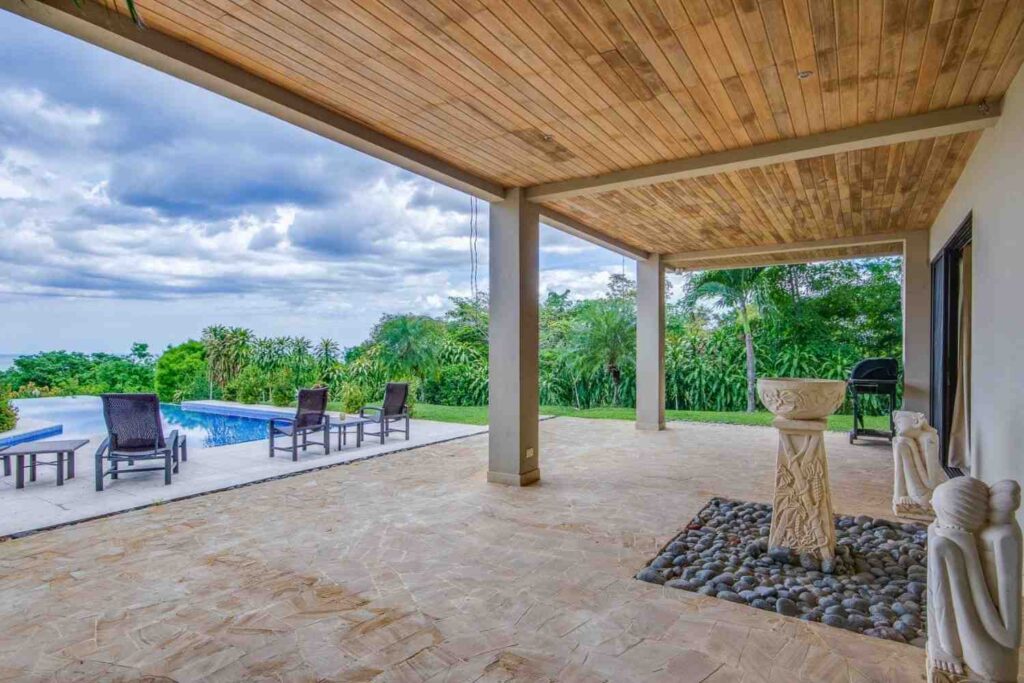
What Is the Zona Marítimo Terrestre, and How Does It Affect Beachfront Purchases?
The Zona Marítimo Terrestre, or ZMT, is a legally defined coastal zone running 200 meters inland from the high-tide line along all of Costa Rica’s coastline. The first 50 meters are public domain, meaning no private ownership of any kind is permitted there. The next 150 meters can be used under a concession granted by the municipal government, but traditional title does not exist within that zone.
Concessions can be valid, well-documented, and commercially productive. Many of Samara’s most desirable beach-adjacent properties operate under exactly this structure. But they require specific due diligence: confirming the concession is properly registered, that it has been renewed on schedule, that the municipality has an approved coastal development plan (a prerequisite for any concession to be legally granted to a foreigner), and that no competing claims exist. A property that looks ideal on a listing can have concession complications that only a qualified local attorney will find.
Legal Requirements for Foreign Property Ownership in Costa Rica
The requirements are minimal by international standards:
- No residency status is required. Tourists and non-residents can own property.
- No mandatory use of a local partner or nominee shareholder.
- Property is registered in your legal name, or in a corporation you control, in the National Registry.
- Purchase requires a notary public, who is a licensed Costa Rican attorney in notarial capacity, to formalize the transfer deed.
Foreign buyers can also hold property through a Costa Rican corporation, known as a Sociedad Anónima or S.A. Some buyers prefer this structure for liability insulation, estate planning simplicity, or ease of future transfer. This is a strategic decision worth discussing with your attorney. It is not a legal requirement, but it has clear advantages in specific circumstances.
Do You Need a Lawyer to Buy Property in Costa Rica?
You need a lawyer, and the lawyer should be chosen by you, not handed to you by the seller. In Costa Rica, the notary public who executes the transfer deed is by law an attorney, but their role in a standard transaction is largely procedural. What you need alongside that is independent legal counsel representing your interests specifically.
Your attorney should conduct a title search and lien verification in the National Registry, review the survey map against the physical property, confirm zoning and permitted land use, verify that no outstanding tax obligations or municipal debts are attached to the property, and if the property is in the ZMT, conduct full concession due diligence. Budget approximately $1,500 to $3,000 for qualified independent legal representation, depending on transaction complexity. It is not optional, and it is not the place to economize.
Common Legal Pitfalls and How to Avoid Them
The mistakes that cost foreign buyers the most are not usually dramatic fraud. They are quiet due diligence gaps that compound over time. The most common include:
- Purchasing concession property in a municipality without an approved coastal development plan, which makes the concession legally invalid for foreign ownership
- Relying on a survey map that does not match the actual registered boundaries, leaving the buyer with less land than purchased
- Failing to verify that property taxes and municipal service fees are current, since these obligations transfer with the property
- Skipping environmental review on land with watercourse, wetland, or forest features, which carry restrictions that can significantly limit what can be built
- Using an attorney referred by the seller or the seller’s agent, creating a conflict of interest that may not surface until after closing
The pattern behind all of these is the same: cutting corners on independent verification in a system that does not have the standardized protections most North American buyers are accustomed to. The solution is not paranoia. It is qualified, independent counsel and a real estate partner with enough local history to know which questions to ask before a problem surfaces.
—
The Full Cost of Buying: Taxes, Fees, and the Closing Process
Transfer Taxes, Legal Fees, and Closing Costs: What Foreign Buyers Actually Pay
Closing costs in Costa Rica are lower than most foreign buyers expect, and they are largely standardized. Budget approximately 3.5% to 4% of the purchase price to cover everything, including transfer taxes, legal fees, stamp duties, and registry filing costs. Here is how that breaks down in practice:
- Transfer tax: 1.5% of the registered property value
- Notary and legal fees: 1% to 1.5%, split between buyer and seller by convention, though negotiable
- Documentary stamps and registry fees: roughly 0.5% to 1% combined
- Independent legal counsel: $1,500 to $3,000 as a flat fee, not a percentage
One nuance worth knowing: Costa Rica calculates transfer taxes on the registered fiscal value of the property, which is often lower than the actual sale price. This gap has narrowed in recent years as the tax authority has updated valuations, but it can still reduce the effective tax burden slightly. Your attorney will clarify the applicable figure for any specific property.
The Role of Escrow in a Costa Rican Transaction
Escrow is not legally required in Costa Rica, but for foreign buyers it should be treated as non-negotiable. Without escrow, your deposit and purchase funds transfer directly to the seller or a local attorney’s trust account, with no independent third party controlling the release conditions. In a foreign legal system with limited consumer protections, that exposure is unnecessary and easily avoided.
A properly structured escrow arrangement holds your funds with a neutral third party and releases them only when all agreed conditions are met: clean title, lien clearance, resolution of any due diligence findings, and confirmation that the transfer deed has been recorded in the National Registry. Some buyers use Costa Rican escrow companies, others use U.S.-based escrow services with international wire capabilities. Either can work. What matters is that the release conditions are written into the escrow agreement, not left to informal understanding.
Financing Options for Foreign Buyers: What Is Realistic
The straightforward answer is that conventional mortgage financing for foreign nationals is limited in Costa Rica. Local banks do offer mortgages, but qualifying as a non-resident requires significant documentation, local credit history you probably do not have, and patience for a process that moves slowly by North American standards. Interest rates on local mortgages also run higher than U.S. rates.
Most foreign buyers in Samara pay cash, whether that means liquidating investments, using a home equity line on a U.S. property, or financing through a private lender. Seller financing occasionally appears in the market, particularly on higher-priced properties where sellers have equity to work with. If financing is essential to making a purchase viable, that is a conversation to have early, not after you have identified a property.
Total Cost of Ownership: Budgeting Beyond the Purchase Price
The purchase price is the beginning of the financial picture, not the whole frame. Annual ownership costs vary by property type, but a realistic budget for a mid-range Samara home should account for:
- Property tax (impuesto sobre bienes inmuebles): 0.25% of the registered fiscal value annually, which is low by any standard
- Municipal services fee: modest, typically under $200 per year depending on the municipality
- HOA or condo fees, if applicable: $200 to $600 per month for established developments
- Property management fees: 10% to 20% of gross rental income if you rent, or a flat monthly fee for caretaking services if you do not
- Maintenance reserve: budget 1% to 1.5% of property value annually for tropical wear, covering roof, pool, air conditioning, pest management, and the ongoing effects of humidity and salt air on finishes and fixtures
For a retiree owning a $400,000 home and renting it part of the year, total annual carrying costs outside of mortgage payments typically run $8,000 to $15,000 depending on management intensity. That number is not a deterrent. It is the planning input that separates comfortable ownership from a property that quietly bleeds.
—
Where to Buy Samara Costa Rica Real Estate: Neighborhoods and Micro-Markets
Playa Samara Town Center, Carrillo, and Hillside Communities: A Micro-Market Breakdown
The right neighborhood depends on what you are actually buying for. Samara’s micro-markets each serve a different buyer profile, and the difference between them is not just price. It is lifestyle character, rental demand, and long-term appreciation dynamics.
Playa Samara Town Center
This is the most walkable and most rentable part of the market. Properties here sit within walking distance of the beach, restaurants, and services. Rental occupancy is strongest in this zone because guests can arrive without a car and access everything on foot. The trade-off is density. Lots are smaller, privacy is limited, and the social energy of a beach town means it is livelier than quiet.
Carrillo
Located roughly four kilometers south of Samara’s center, Carrillo is a dramatically different experience. The beach curves into a quieter, more secluded arc lined with palms. There are fewer restaurants and no real tourist infrastructure, which is exactly the point for the buyer who wants distance from activity. Rental demand in Carrillo is lower but consistent among guests who specifically seek privacy. Properties here tend to offer more land and more space at prices comparable to Samara town.
Hillside Communities
Properties set above the coastal plain with ocean views offer the best visual experience in the market and the lowest ambient noise, but they require a vehicle for everything. These are lifestyle properties first and rental properties second. The views command a premium on listing prices, though that premium does not always translate proportionally into rental rates because many vacation guests prefer beach-flat convenience.
Reading a Neighborhood for Long-Term Value, Not Just Curb Appeal
The indicators that actually predict appreciation are not always visible on a property tour. Road access improvements, new commercial openings along a quiet corridor, municipal investment in water and electrical infrastructure, and the arrival of anchor businesses, such as a quality restaurant, a small hotel, or a wellness studio, all signal that a neighborhood is moving. Properties that look a bit rough around the edges but sit in the path of that movement often outperform polished properties in already-priced neighborhoods. A local partner who has watched Samara develop over years can tell you which areas are in motion. That knowledge is genuinely difficult to replicate from a listing search.
—
Samara Costa Rica Real Estate Rental Income: A Planning Framework for Investors
Can I Rent Out My Property in Samara, and What Are the Tax Implications?
Yes. Foreign owners can legally rent their Samara Costa Rica real estate property on a short-term or long-term basis. Costa Rica does require rental income to be declared, and if you cross the threshold for a habitually rented property, you will register with the tax authority (Hacienda), charge and remit 13% VAT on short-term stays, and pay income tax on net rental profit. The rates and thresholds are manageable, and the compliance process is straightforward with a local accountant. This is a functioning system that most active rental owners navigate routinely.
Seasonal Demand, Occupancy Patterns, and Realistic Yield Ranges on the Gold Coast
Samara’s rental season follows Guanacaste’s dry season. December through April is peak, with the highest nightly rates and occupancy. May through November is the green season, bringing lower volume and softer rates, but not zero demand. Buyers who budget only for peak-season income consistently underestimate the gap.
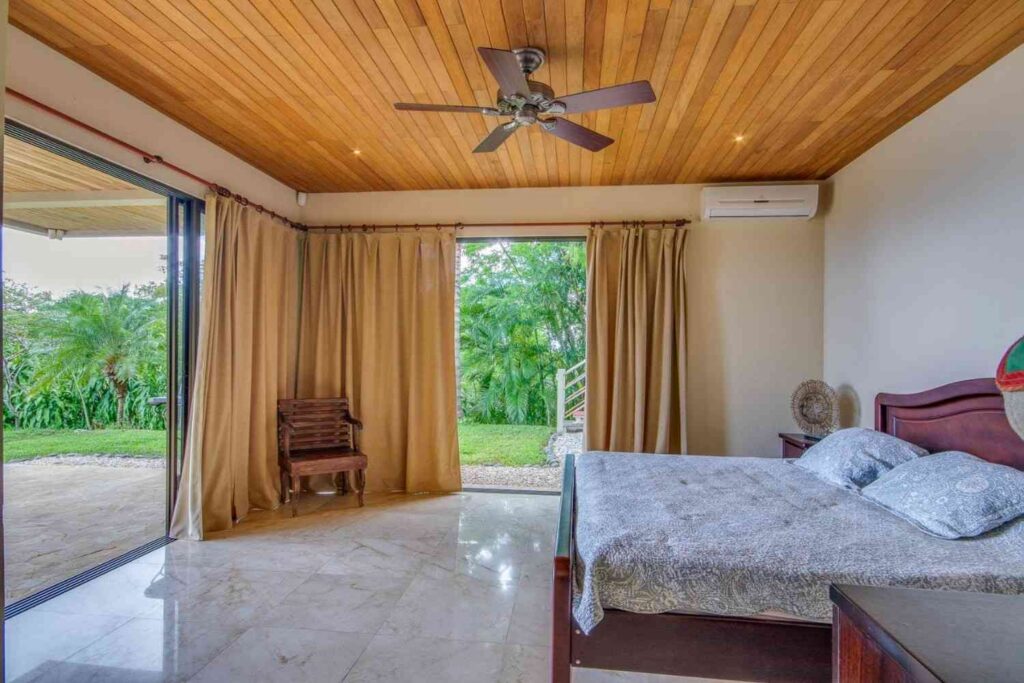
A realistic occupancy model for a well-positioned Samara vacation rental property in the current market looks something like this:
- Peak season (December through April): 70% to 85% occupancy at $150 to $350 per night depending on property size and amenities
- Shoulder season (May and November): 40% to 55% occupancy with modest rate discounts
- Green season (June through October): 25% to 40% occupancy with promotional pricing
On a $400,000 property earning gross annual rental revenue in the $35,000 to $55,000 range, net yield after management fees, taxes, and maintenance runs roughly 5% to 8%. That is not a cash flow bonanza, but for a buyer using the property personally for six to eight weeks per year and offsetting carrying costs the rest of the time, it represents a meaningful financial cushion.
What Drives Rental Performance: Location, Amenities, and Marketing Reach
Two properties at the same price point in Samara can generate dramatically different rental income based on three variables. Location relative to the beach is the most consistent predictor. Walkability commands a premium that remote booking platforms amplify. Amenities, particularly a private pool, are close behind. Properties with pools consistently outperform pool-free comparables at every price tier in the Samara Costa Rica real estate market. Marketing reach is the third variable and the one most within an owner’s control. A property listed on a single platform with low-quality photography and minimal reviews will underperform the same property marketed through multiple channels with professional assets and active guest response.
How Vacation Rental Income Fits a Retirement or Semi-Retirement Financial Strategy
For the buyer who is not trying to build a rental business but wants income to partially fund a Costa Rican lifestyle, Samara’s rental market offers a workable model. A property that covers its own carrying costs through rental income during the months you are not using it effectively lowers the net cost of ownership to the value of your personal enjoyment. That reframing changes the financial calculus significantly. Instead of asking whether a $400,000 property is a good investment in isolation, the question becomes whether $10,000 to $20,000 in annual net carrying costs is a fair price for three months of personal use in a place you love. For most buyers in this profile, the answer is obvious.
—
Property Management and Post-Purchase Support: The Services Most Foreign Owners Overlook
How to Manage a Rental Property in Costa Rica from the United States
You cannot do it effectively without local representation. That is not a pessimistic view; it is a practical one. A guest calls at 11 p.m. because the air conditioning failed. The pool turns green mid-week because the service provider skipped a visit. A pipe leaks and the caretaker needs authorization and a plumber within the hour. These are not edge cases. They are the routine events of property ownership in a tropical climate. Managing them from a different time zone, in a foreign language, with no vetted vendor network is a formula for guest complaints, property damage, and the kind of stress that makes the whole investment feel like a burden.
What actually works is a local property manager with a responsive communication protocol, a vetted list of reliable vendors, and the authority to make small decisions without waiting for transatlantic email chains.
What Full-Service Property Management Actually Covers
A complete property management package in Samara should include:
- Routine maintenance scheduling: pool, landscaping, pest control, and HVAC service
- Vendor coordination and payment management on your behalf
- Guest communication from inquiry through departure, including 24-hour emergency response
- Property inspection before and after each rental stay with damage documentation
- Accounting and monthly reporting so you can see income, expenses, and reserves clearly
- Tax filing support for VAT and income tax obligations
The management fee, typically 10% to 20% of gross rental income, covers all of this. An owner who attempts to hire individual vendors, coordinate guest logistics, and handle accounting separately almost always ends up spending more in time and error costs than the management fee would have represented.
HOA and COA Oversight: Why Absentee Owners Need a Local Advocate
If your property sits within a homeowners association or condo owners association, you have a third layer of oversight that most buyers do not think about until something goes wrong. HOAs in Costa Rica can impose maintenance assessments, enforce property standards, hold votes on shared-expense items, and levy fines for rule violations, and they do so whether you are present or not.
An absentee owner without local representation at HOA meetings can find themselves assessed for a new road, a shared pool upgrade, or a security system after the vote has already passed. A local advocate who attends those meetings, reviews the minutes, and flags decisions that affect your property value or costs is not a luxury service. It is basic protection for anyone who owns within a governed community and does not live there full time.
The Moment That Defines Your Ownership Experience
Most buyers spend months focused on the purchase process: finding the property, negotiating the price, clearing due diligence, getting through closing. Then the deed records, the keys transfer, and the attention of everyone involved turns to the next deal.
What happens next is the part that most agencies never plan for and most buyers never anticipate. The pool needs to be opened. The utilities need to transfer to your name. The cleaning crew needs to be hired and scheduled. The guest platform listings need to be built. The local plumber, electrician, and landscaper need to be identified before you need them urgently. All of that infrastructure-building lands on you, unless you have a partner who was already thinking about day two while helping you close on day one.
That continuity, from finding the right property to operating it well for years afterward, is what separates an ownership experience that delivers what you came to Samara for from one that slowly erodes it.
—
Why a Boutique Local Partner Outperforms a Volume-Driven Brokerage for Foreign Buyers
What a High-Volume Brokerage Cannot Offer
Volume-driven brokerages are built for throughput. Their model works for sellers who need reach and buyers who need listings. What it cannot deliver is the thing foreign buyers in Samara actually need most: someone who is still paying attention six months after the deed transfers.
A high-volume operation moves to the next transaction when yours closes. Your file is complete. The commission is earned. The agent who showed you properties and negotiated your contract is now working with someone new. That is not a criticism of the model; it is simply what the model is designed to do. The problem is that your real ownership challenges begin exactly where their involvement ends.
Foreign buyers purchasing Samara Costa Rica real estate are not simply completing a transaction. They are establishing a long-distance operating relationship with a property in a country where they may not speak the primary language, do not yet know the vendors, and cannot show up in person when something goes wrong. That requires a different kind of partner than a transactional brokerage is structured to provide.
The Case for Deep Local Roots: Why Nearly Two Decades on the Gold Coast Changes Everything
Nearly two decades in a small coastal town is not just a credential. It is an asset base. It means the relationships that matter most in this market were built before they were needed: the municipal official who knows the concession files, the attorney who has seen the specific boundary dispute patterns in this area, the contractor who shows up when called because there is a decade of work history behind the call.
Those relationships cannot be imported or replicated quickly. They accumulate through years of showing up at HOA meetings, at permit offices, at vendor negotiations, in a market small enough that everyone eventually knows who is reliable and who is not.
For a foreign buyer, that network is not a nice-to-have. It is the infrastructure your ownership depends on. When a title question surfaces during due diligence, or a guest reports a water issue at a rental property, or an HOA vote is called on a capital expenditure that will affect your budget, the response time and quality of outcome depend entirely on whether your local partner has the right relationships to resolve it quickly.
Lifecycle Partnership vs. Single Transaction: Reframing What Buying a Property Actually Means
Buying property in Samara is not an event. It is a decision that starts a relationship with a place, with a legal system, and with a financial commitment that will evolve over years. The purchase itself is the first chapter, not the whole story.
A lifecycle partner thinks about your ownership in stages: acquisition, activation to get the property operational and income-producing, ongoing stewardship through management and compliance, and eventually exit, whether that means selling in five years or passing the property to your family. Each stage has different needs, different risks, and different decisions to make.
A firm structured around single transactions will be excellent at the acquisition stage. After that, you are largely on your own, assembling a patchwork of vendors, accountants, and property managers who have no shared context about your property, your goals, or each other. The coordination burden falls on you, usually at 11 p.m. when something has gone wrong.
How Integrated Sales and Management Under One Roof Eliminates the Coordination Gap
The coordination gap is the space between who sold you the property and who manages it. In most foreign real estate purchases, that gap is real and costly. The sales agent recommended the property for its rental potential. The property management company you found separately has no relationship with that agent and no knowledge of what was promised. The accountant who handles your rental tax filings has never spoken to either of them.
When sales and management operate under the same roof, that gap closes. The team that helped you evaluate a property for its rental income potential is the same team that builds and manages the rental program. The expectations set during the purchase process carry forward into operations because the same people are accountable for both. Your monthly management report is not a surprise. It reflects the projections you discussed before you closed.
For absentee owners, that integration is not a convenience. It is the structural difference between a real estate investment in Costa Rica that performs as expected and one that quietly underperforms while nobody connects the dots.
—
Quick-Pick Buyer Profile Guide
Retiree: Best fit is a turnkey condo or mid-range home with an HOA structure. Fee simple title, low management complexity, and a partial rental program to offset carrying costs. A full-service management package is essential for absentee periods.
Remote Professional: Prioritize town-center location for walkability and connectivity. A condo or small villa with a private workspace works well. Consider a flexible rental program for periods away, with light management oversight and a responsive local point of contact.
Pure Investor: Target a pool-equipped villa or oceanfront property with strong seasonal demand. Accept higher management complexity in exchange for yield, and prioritize an integrated sales-and-management team, full rental optimization, and regular performance reporting.
—
Your Long-Term Life on the Gold Coast Starts with the Right First Conversation
Recapping the Framework: Legal Clarity, True Cost Transparency, and Post-Purchase Partnership
This guide has covered a lot of ground because buying property in Costa Rica as a foreigner requires it. The legal framework is genuinely accessible. Foreigners own property here with the same rights as citizens. But the distinctions that matter, fee simple versus concession title, ZMT compliance, independent versus seller-referred counsel, require guidance to navigate without error.
The financial picture is clearer than most buyers expect once you assemble it honestly: closing costs around 3.5% to 4%, low annual property taxes, predictable maintenance reserves, and a rental income model that can meaningfully offset carrying costs if the property is well-positioned and well-managed. None of it is complicated in isolation. The complexity comes from managing all of it from a distance, in a foreign system, without a local team that actually knows your property.
Post-purchase partnership is not the finishing touch on a real estate transaction. It is the operating system for your investment. The buyers who consistently have good experiences with Samara ownership are the ones who treated the management relationship as seriously as they treated the purchase decision.
The Single Most Important Decision a Foreign Buyer in Samara Will Make
It is not which neighborhood to buy in. It is not whether to hold in your own name or through a corporation. It is not even which property to choose, though all of those decisions matter.
The single decision that most determines whether your Samara Costa Rica real estate property delivers what you came for is who you trust to help you buy it and operate it. A partner with deep local roots, integrated services, and a genuine stake in your long-term satisfaction changes the risk profile of the entire investment. The alternative, assembling the transaction with one party and the operations with another while managing the gap yourself, is where foreign real estate ownership breaks down for people who had every other piece right.
Your Next Step: A Low-Pressure Conversation with a Gold Coast Partner Who Has Been Here Since 2006
You do not need to have a property picked out to have a useful first conversation. Most buyers who work with us start by asking whether Samara is the right fit for their specific situation, and that question is worth answering carefully before any listing search begins.
We have been on the Gold Coast since 2006. We have helped buyers find properties that turned into homes, into retirement anchors, into income-producing assets that fund a lifestyle they love. We have also helped buyers who came close to costly mistakes and needed someone with enough local history to spot the problem before it became irreversible.
If you are seriously evaluating Samara Costa Rica real estate, the most useful next step is a conversation with someone who has seen this market through multiple cycles and manages properties here every day. Reach out when you are ready. We will be here.
—
Frequently Asked Questions
Is Samara, Costa Rica a good place to live?
For the right person, Samara is an excellent place to live. The town offers reliable internet, a bilingual school, medical clinics, a walkable center, and one of the calmest swimming beaches on the Pacific Coast. It suits retirees and remote professionals who want a simpler, warmer life at a fraction of the cost of comparable U.S. beach towns. That said, it is not a replica of suburban American life. Roads outside town can be rough, the nearest major hospital is roughly ninety minutes away, and some services require a trip to a larger city.
What are the legal requirements for foreign property ownership in Costa Rica?
The requirements are minimal and welcoming. Foreigners have the same property ownership rights as Costa Rican citizens and do not need residency, a local partner, or a corporate structure to buy. The purchase must be formalized by a licensed Costa Rican notary attorney, and the property is registered in your name in the National Registry. Many buyers also choose to hold property through a Costa Rican corporation for estate planning or liability purposes, though this is a strategic choice rather than a legal requirement.
How much does it cost to buy property in Samara, Costa Rica?
Entry-level condominiums start around $150,000, mid-range turnkey homes fall between $250,000 and $500,000, and luxury villas or oceanfront properties range from $500,000 to well over $1 million. Beyond the purchase price, budget an additional 3.5% to 4% for closing costs, plus annual property taxes of 0.25% of the registered fiscal value, HOA fees if applicable, and a maintenance reserve of roughly 1% to 1.5% of property value per year.
Can I rent out my property in Samara, and what are the tax implications?
Yes, foreign owners can legally rent their property on either a short-term or long-term basis. Rental income must be declared with Costa Rica’s tax authority. If you rent habitually, you are required to register, charge and remit 13% VAT on short-term stays, and pay income tax on net rental profit. The compliance process is straightforward with a local accountant and is a standard part of how most active rental owners operate.
What is the cost of living in Samara, Costa Rica for retirees?
A comfortable lifestyle in Samara typically costs significantly less than comparable beach living in Florida or coastal California. A household that spends $5,000 per month in the U.S. can often live well in Samara for $2,500 to $3,500, depending on housing. Property taxes are among the lowest in the region, groceries and dining are affordable, and the cost of services and utilities is modest by North American standards.
How do I manage a rental property in Costa Rica from the United States?
Effective remote management requires a trusted local representative. The routine realities of tropical property ownership, including maintenance needs, guest emergencies, vendor coordination, and HOA oversight, cannot be managed reliably from a different time zone without a professional on the ground. A full-service property management firm handles guest communication, inspections, maintenance scheduling, vendor payments, and monthly reporting on your behalf. For absentee owners, this is not optional; it is the foundation of a well-functioning investment.
What are the best neighborhoods in Samara for foreign buyers?
It depends on your priorities. Playa Samara town center is the best choice for walkability and rental occupancy, since guests can access the beach and amenities without a car. Carrillo, about four kilometers south, offers a quieter, more private setting with more land at comparable prices, appealing to buyers who want distance from activity. Hillside communities above the coastal plain offer dramatic ocean views and are ideal lifestyle properties, though they require a vehicle for all errands and tend to attract a more selective rental audience.
Do I need a lawyer to buy property in Costa Rica, and what should they handle?
Yes, and the lawyer should be chosen by you independently, not referred by the seller. Beyond the notary who formalizes the deed, you need independent legal counsel to conduct a title search, verify there are no liens or unpaid taxes, confirm survey boundaries, review zoning and land use, and if the property is near the coast, perform full concession due diligence under the Zona Marítimo Terrestre regulations. Budget $1,500 to $3,000 for qualified representation. It is one of the most important investments you will make in the entire purchase process.