
Why Costa Rica Keeps Calling — and Why the Gold Coast Answers Loudest
The Lifestyle Magnet: What Draws Foreign Buyers to Costa Rica Year After Year
Costa Rica earns its reputation honestly. The country offers something genuinely rare: a politically stable democracy with no standing army, a healthcare system ranked among the best in Latin America, and a coastline that spans two oceans. Foreign buyers don’t just come for the beaches. They come for the infrastructure, the safety, the English-speaking professional class in the major tourist corridors, and a cost of living that stretches a retirement dollar in ways that simply aren’t possible in Florida or California anymore.
The “pura vida” phrase gets overused in marketing copy, but the lifestyle it points to is real. Year-round warmth, world-class surf, wildlife visible from your back porch, and a welcoming community of expats who arrived before you and are genuinely happy to share what they’ve learned. That combination has drawn tens of thousands of North Americans and Europeans to own property here, and the flow hasn’t slowed.
Why Guanacaste’s Gold Coast Stands Apart From Every Other Region
Guanacaste’s Pacific coastline, what locals and real estate professionals call the Gold Coast, is not simply the most popular place to find property for sale in Costa Rica. It’s the most practical. The Daniel Oduber International Airport in Liberia puts direct flights from dozens of US cities within a few hours of your front door. The dry season runs from December through April, which means the most reliable weather lines up exactly with the months North American buyers want to use or rent their property. The tourism infrastructure here is mature: paved roads, reliable internet, full-service hospitals, and international grocery stores are the norm, not the exception.
Tamarindo: The Established Expat Hub With Resort-Town Energy
Tamarindo is where most foreign buyers start their search, and for good reason. It has the deepest inventory of Tamarindo real estate available to foreign buyers, a walkable beach town center, and a social scene built around surf culture, yoga, and good restaurants. Prices reflect the demand. Entry-level condos start around $150,000, and oceanview homes can push well past $500,000. The rental income potential, however, is the strongest on the coast. The town draws consistent tourism year-round, which matters if you plan to offset ownership costs with short-term rentals.
Playas del Coco and Papagayo: Marina Life, Golf, and Luxury Resort Infrastructure
Playas del Coco sits closer to the Liberia airport and attracts a different buyer: someone who wants convenience alongside lifestyle. The area around the Gulf of Papagayo is home to some of Central America’s most ambitious resort development, including a Four Seasons, an Andaz, and a marina capable of handling serious offshore fishing vessels. Luxury condo and villa inventory here is significant, and the buyer profile tends toward people who want resort-quality amenities within reach without paying resort-hotel prices to stay.
Smaller Pockets Worth Knowing: Nosara, Flamingo, and the Quieter Northern Stretches
Nosara has developed a devoted following among yoga practitioners, health-focused buyers, and surfers who want Tamarindo’s energy with more breathing room. Road infrastructure has historically been its biggest limitation, but investment has improved access considerably. Flamingo offers one of the most beautiful white-sand beaches on the coast and has seen increasing luxury development over the past several years. Both areas command premium prices relative to their size, precisely because the buyers who find them rarely want to leave.
A Word on the Other Regions: Dominical, Uvita, Manuel Antonio, and the Caribbean Coast
The Gold Coast isn’t the only place to find property for sale in Costa Rica, and it would be dishonest to suggest it is. Manuel Antonio real estate, on the central Pacific coast, represents a long-established destination with genuine charm and strong rental demand. Dominical property and Uvita homes for sale attract a younger, more adventurous buyer looking for jungle-meets-ocean settings at prices that can be noticeably lower than Guanacaste. The Caribbean Coast, particularly the areas around Puerto Viejo, offers a completely different energy: lush, biodiverse, and culturally distinct.
The tradeoffs are real. Infrastructure outside Guanacaste is less consistent. Drive times to international airports are longer. Rainy seasons on the south Pacific and Caribbean coasts are more intense and last longer. None of these factors make those regions wrong choices. They make them different choices, and the right fit depends entirely on how you plan to use your property.
Can a Foreign Buyer Actually Own Property Here? Setting the Record Straight
Yes, with very few exceptions, foreigners have the same property ownership rights as Costa Rican citizens. You do not need residency. You do not need a local partner or co-signer. You can purchase titled property directly in your own name, or through a Costa Rican corporation, and your ownership is protected under the same legal framework that protects every citizen’s title.
The one significant exception involves properties within the Maritime Zone, the first 200 meters from the high-tide line along public beaches. That coastal strip is managed under specific concession law and cannot be privately owned by anyone, Costa Rican or foreign. We’ll cover this in detail in the due diligence section, because understanding this distinction before you fall in love with a listing is essential.
Gold Coast at a Glance: Matching Your Lifestyle to the Right Neighborhood
The Spectrum of Buyers Who Thrive on the Gold Coast
The Gold Coast attracts a wide range of foreign buyers, but a few profiles appear consistently. The most common is the pre-retiree or recent retiree who wants a warm-weather second home they can use three to four months a year and rent out the rest of the time. Close behind is the remote professional who has realized that a good internet connection and a passport are the only tools needed to live somewhere beautiful. Then there are the investors who aren’t personally relocating at all. They want a well-managed vacation rental property in a high-demand destination with a proven track record.
Each of these buyers has genuinely different needs. The retiree cares deeply about medical access and community. The remote worker needs reliable power and connectivity. The investor needs honest occupancy projections and a trustworthy management team. The Gold Coast can serve all three, but the right neighborhood depends on which of these priorities sits at the top of your list.
A Side-by-Side Look at What Each Area Offers the Foreign Buyer
Use this guide to quickly match your lifestyle priorities to the right area before you start browsing listings.
| Area | Best For | Property Types | Price Range (Entry) | Rental Income Potential | Airport Distance |
|---|---|---|---|---|---|
| Tamarindo | Walkable beach lifestyle, strong rentals | Condos, oceanview homes, beach villas | $150K+ | High (strong year-round tourism) | ~45 min to Liberia |
| Playas del Coco | Convenience, marina access, family-friendly | Condos, homes, luxury villas | $120K+ | Moderate to High | ~30 min to Liberia |
| Papagayo/Gulf Area | Luxury resort lifestyle, golf, privacy | Luxury condos, estates, resort residences | $400K+ | High (premium nightly rates) | ~25 min to Liberia |
| Flamingo | Quiet luxury, boating, white-sand beaches | Beachfront homes, villas, condos | $200K+ | Moderate (seasonal peaks) | ~50 min to Liberia |
| Nosara | Wellness lifestyle, surf, boutique community | Homes, small villas, jungle properties | $250K+ | Moderate to High (loyal niche market) | ~75 min to Liberia |
What the table doesn’t capture is community character, which matters as much as the numbers. Tamarindo on a Saturday night feels like a resort town at full volume. Nosara on a Tuesday morning feels like a private retreat. Both are wonderful for different people. A site visit, even a short one, changes how you read a listing.
Quick guidance by priority:
- If rental income is your primary goal, Tamarindo and Papagayo offer the deepest tourist demand.
- If lifestyle and personal use drive the decision, Nosara and Flamingo reward buyers who want a quieter pace.
- If convenience to the airport and a lower entry price appeal to you, Playas del Coco offers the most accessible starting point on the coast.
Every Property Type You’ll Encounter — and How to Think About Each One
Beachfront and Oceanview Homes: What the Labels Really Mean
“Beachfront” and “oceanview” mean very different things in this market, and listings don’t always draw the distinction clearly. A true beachfront property in Costa Rica sits on titled land that borders the beach directly. These are relatively rare, and when they do exist, they often adjoin the Maritime Zone, which requires careful legal review before any offer. “Oceanview” covers an enormous range, from properties with sweeping panoramic views to homes where you can glimpse the water from a second-floor balcony on a clear day. Neither label tells you how the view will hold up as neighboring lots develop. Your attorney and agent both need to flag this before you move forward.
Condos and Gated Communities: The Low-Maintenance Entry Point
For many foreign buyers, especially those who won’t be on-site year-round, a condo within a gated community is the most sensible starting point. Professional HOA management handles security, grounds, and common areas. The property is harder to neglect or leave vulnerable when you’re away. And the rental market for well-located, well-managed condos in Tamarindo or Coco is genuinely strong.
The tradeoff is HOA fees that run anywhere from $200 to $800 per month depending on amenities, and less flexibility to customize or expand. For buyers focused on income generation, this structure often works in their favor: the consistency and curb appeal of a managed community keeps nightly rates competitive.
Villas and Luxury Estates: When Privacy and Amenities Both Matter
Luxury properties on the Gold Coast have matured considerably. Purpose-built villas with private pools, smart-home systems, and professional kitchens are common in the Papagayo corridor and upper Flamingo. These properties attract premium rental rates, but they also carry higher carrying costs and require serious property management to perform well over time.
Single-Family Homes in Residential Neighborhoods: The Everyday Expat Life
The most underappreciated category for buyers who plan to spend significant time in Costa Rica is the standard residential home in an established expat neighborhood. These properties don’t carry beach premiums, but they offer space, privacy, and the genuine texture of daily life in a real community. Grocery stores, hardware stores, and local restaurants are walkable or a short drive away. For buyers who want to actually live here rather than just visit, these neighborhoods are where the most satisfying daily routines take root.
What Does Property for Sale in Costa Rica Actually Cost Right Now?
Can You Buy a House in Costa Rica for $50,000?
You can, but not on the Gold Coast, and not without accepting significant limitations. Properties in this price range exist in rural interior areas or in communities with limited infrastructure, resale markets, and rental demand. If your goal is a lifestyle property or a rental investment near the beaches that international travelers actually visit, $50,000 won’t get you there. The Gold Coast entry point sits closer to $120,000 for a small condo in a good location.
The $150K to $400K Tier: Where Most Foreign Buyers Land
This is the working range for the majority of foreign buyers on the Gold Coast. At $150,000 to $200,000, you’re looking at one-bedroom condos in established communities near Tamarindo or Coco, or modest homes a little further from the beach with solid fundamentals. The $250,000 to $400,000 range opens up two- and three-bedroom options, better views, more desirable locations, and properties with meaningful rental income potential. Most buyers who do serious research end up making their first purchase somewhere in this tier.
Luxury and Beachfront: What the Upper End of the Market Looks Like
Above $500,000, the Gold Coast offers properties that genuinely compete with anything in comparable international beach markets. Four-bedroom villas with infinity pools and Pacific views, penthouse condos in resort communities, and full beachfront estates all exist here at prices that remain significantly lower than equivalent properties in Hawaii or the south of France. The $1M-plus tier is active and growing, particularly in the Papagayo area where resort-adjacent infrastructure continues to improve.
What Foreign Buyers Must Understand Before Making Any Offer
Your Legal Rights as a Non-Citizen Property Owner in Costa Rica
The legal framework here actually works in your favor. Costa Rica’s constitution explicitly grants foreigners equal property rights, and the country’s property registration system is one of the most transparent in Latin America. This isn’t a market where foreigners buy through local nominees or depend on handshake agreements. You can hold clean title in your own name, protected by national law.
Do You Need to Be a Resident to Own Property Here?
No. Residency and ownership are completely separate legal matters in Costa Rica. You can purchase, hold, sell, and inherit property on a tourist visa. Many owners live here for extended periods under the 90-day tourist allowance and simply renew. If you eventually want residency for other reasons, such as access to the public healthcare system, the Rentista or Pensionado programs are well-established pathways. But your ability to own property doesn’t depend on either.
How Costa Rica’s Registro Nacional Protects Your Title
Every titled property in Costa Rica is registered in the Registro Nacional, a public database that records ownership, liens, encumbrances, and legal restrictions. Anyone can query this system, which is exactly what your attorney will do during due diligence. A clean title search confirms that the seller actually owns what they’re selling, that there are no unpaid debts attached to the property, and that no construction restrictions or pending legal claims exist. This system isn’t perfect, and gaps exist, particularly with older properties or irregular boundary records. But it provides a meaningful layer of protection that buyers in many other developing-market destinations simply don’t have access to.
Why You Absolutely Need a Real Estate Attorney — and What They Actually Do
Working without a qualified local attorney is the single biggest mistake foreign buyers make in Costa Rica. A Costa Rica real estate attorney, known locally as an abogado, does far more than review paperwork. They run the title search, verify the property’s legal status in the Maritime Zone database where applicable, confirm that HOA obligations and utility connections are current, draft or review the purchase agreement, hold escrow funds during the transaction, and handle the deed transfer and registration at closing. This is not a role you want a generalist performing. You want someone who spends a significant portion of their practice on Costa Rica real estate transactions.
How to Find and Vet a Qualified Abogado
The Costa Rica Bar Association (Colegio de Abogados) is the official regulatory body for attorneys here, and you can verify any attorney’s registration through their public directory. Beyond credentials, ask specifically how many real estate transactions involving foreign buyers they close each year, and ask for references from past clients. A competent real estate attorney will answer these questions directly and won’t be offended by them.
Your real estate agent can recommend attorneys they’ve worked with, which is often a practical starting point. Just confirm the relationship is a professional referral rather than a financial arrangement. Independent verification always matters.
Red Flags That Signal a Broker or Seller Is Not Acting in Your Interest
A few patterns should stop any deal immediately:
- Pressure to waive a title search or skip the attorney step to speed up closing.
- A seller or agent who discourages you from using independent escrow and insists you wire funds directly.
- Property documentation that can’t be verified in the Registro Nacional.
- Verbal assurances about Maritime Zone status that aren’t backed by written concession documentation.
- Prices that seem implausibly low for the location, which can indicate title defects or legal disputes the seller isn’t disclosing.
None of these are hypothetical. Every one of them has cost a foreign buyer money. The due diligence process exists to protect you, and no one acting in your interest will ever ask you to shortcut it.
The Step-by-Step Buying Process: From First Inquiry to Closing Day
The process is more logical than most first-time buyers expect, and the timeline from accepted offer to closing typically runs 30 to 90 days depending on due diligence complexity and financing.
Phase One: Property Search, Offers, and the Purchase Agreement
Once you’ve identified a property you want to pursue, your agent will help you draft a Letter of Intent or a formal Purchase and Sale Agreement. This document outlines the agreed price, an earnest money deposit (typically 10% of the purchase price), conditions for the sale, and the due diligence timeline. Your attorney should review this document before you sign, even at this early stage.
Phase Two: Due Diligence — Title Searches, Maritime Zone Checks, and Encumbrances
This is the most critical phase of any Costa Rica real estate transaction. Your attorney will conduct a full title search in the Registro Nacional, verify that the property’s boundaries match what’s being sold, check for any liens or court orders attached to the title, and confirm the property’s exact position relative to the Maritime Zone for coastal properties. Properties within 50 meters of the high-tide line cannot be privately owned. Properties between 50 and 200 meters exist under government concession, a different legal status that requires specific additional review. A competent attorney catches these issues before your money moves.
Phase Three: Closing, Transfer Tax, and Registration
Closing in Costa Rica involves a public notary (who is typically also your attorney) formalizing the deed transfer through a legal instrument called an escritura. The property transfer tax is 1.5% of the registered property value, paid at closing. Legal fees are regulated by law and typically run 1% to 1.5% of the purchase price. Registration of the new deed in the Registro Nacional follows closing and is typically completed within a few weeks, at which point you are the official, publicly recorded owner.
What Happens If Costa Rica Changes Its Foreign Ownership Laws?
This question comes up regularly, and the honest answer is that no law anywhere is unchangeable. The practical reality, however, is that foreign investment in real estate has been a cornerstone of Costa Rica’s economy for decades, and the country’s legal framework has consistently protected it. The government actively courts foreign buyers through programs like the Rentista and Pensionado visas. A legal reversal of foreign ownership rights would represent a fundamental break with the economic policy that has underpinned Costa Rica’s development, and there is no credible legislative movement in that direction.
The more realistic version of this risk involves future adjustments to Maritime Zone concession rules, HOA regulations, or rental income tax policy. A good local attorney and a trusted property manager keep you informed of anything that affects your specific property, which is one more reason the relationships you build on the ground matter as much as the transaction itself.
Financing as a Non-Resident: What Is Realistic in 2025
Why Traditional Mortgages Are Limited for Foreign Buyers in Costa Rica
Most foreign buyers are surprised to learn that conventional mortgage financing is harder to access here than in their home country, and easier to work around than they expected. Costa Rican banks are cautious about lending to non-residents primarily because enforcing a foreign judgment against a defaulting borrower is legally complex. Without residency and a documented local income history, most institutional lenders won’t take that risk. This isn’t a sign that the market is unfriendly to foreign buyers. It’s a structural reality that shapes how most transactions are financed, and knowing it upfront prevents a lot of frustration.
SUGEF-Regulated Local Bank Financing: Who Qualifies and What to Expect
The Superintendencia General de Entidades Financieras (SUGEF) regulates Costa Rica’s banking sector, and a handful of local banks do extend mortgage financing to foreign buyers under specific conditions. Banco Nacional, BCR, and some private banks have programs that can work for non-residents, but the qualification criteria are strict: documented income, a strong credit history, and often a loan-to-value ratio capped at 50% to 70% of the appraised property value. Interest rates on local mortgages typically run higher than US rates, and loan terms tend to be shorter. For buyers who qualify, local financing is a viable option. For the majority of foreign purchasers, it’s a path worth exploring but not counting on.
Seller Financing: How It Works and When It Makes Strategic Sense
Seller financing is more common in the Costa Rica market than most buyers realize, and for the right transaction, it works well for everyone involved. A seller carries part of the purchase price directly, typically at a negotiated interest rate and a term of three to seven years, secured by a lien on the property. The buyer gets access to a property they couldn’t otherwise finance through traditional channels. The seller earns interest income and often moves a property more quickly than they could on an all-cash basis.
This structure works best when the seller is motivated, when the buyer has a clear plan to refinance or pay off the balance within the agreed term, and when both parties use qualified attorneys to draft the agreement properly. A poorly structured seller financing arrangement can create real legal exposure, so having your attorney review every clause is non-negotiable.
Using Home Equity or Retirement Assets From Your Home Country
The most common financing path for foreign buyers is the one they bring with them. A home equity line of credit against a US or Canadian property, a cash-out refinance, or a distribution from a self-directed IRA are the tools most buyers actually use. Each has different tax implications in your home country, which is worth working through with a tax advisor before you wire funds. The practical advantage of this approach is speed and simplicity: you arrive at closing as a cash buyer, which strengthens your negotiating position and eliminates the financing contingency delay entirely.
Turning Your Property Into a Performing Asset: Vacation Rental Income and Management
The Vacation Rental Opportunity on the Gold Coast: Demand Drivers and Income Context
The Gold Coast’s rental market has structural advantages that most beach destinations can’t replicate. The Liberia airport connects directly to dozens of US and Canadian cities, which shortens the traveler decision considerably. The dry season lines up with the exact months North American families most want to escape winter, generating predictable peak demand. And the Gold Coast has name recognition among international travelers in a way that newer or more remote destinations simply don’t yet.
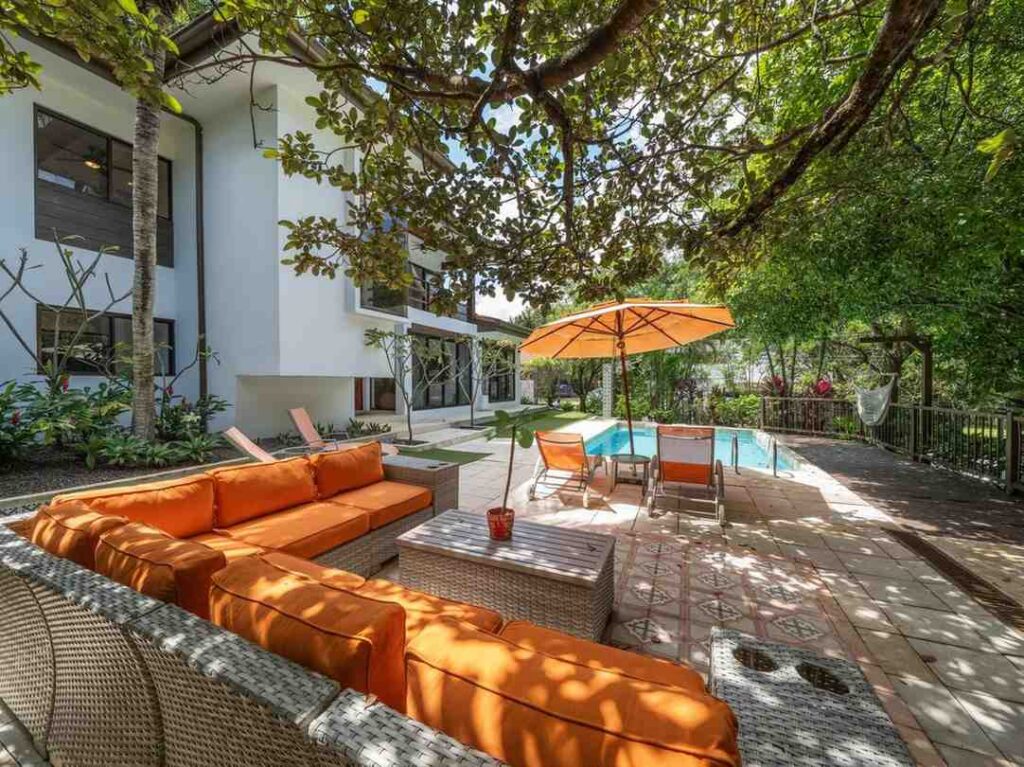
A well-positioned two-bedroom condo in Tamarindo can generate meaningful annual gross rental income when professionally managed and marketed. A four-bedroom villa in the Papagayo corridor can perform strongly in high season alone. These aren’t guaranteed figures. Occupancy rates, platform positioning, and management quality all move the needle significantly. But the demand base that makes strong performance achievable is real and consistent.
What Professional Property Management Actually Looks Like — and Why It Matters From Abroad
Managing a vacation rental from thousands of miles away without professional support on the ground is how well-intentioned investments turn into ongoing headaches. Property management in Costa Rica covers a lot of ground: guest check-in and check-out, housekeeping coordination, maintenance response, owner accounting, and making sure your property isn’t sitting empty between bookings because nobody updated the calendar.
A good property management firm does all of this proactively, not reactively. They have vetted cleaning and maintenance crews. They know when to escalate a repair before it becomes a bigger problem. They produce monthly income statements you can read without decoding local accounting conventions. The management fee, typically 20% to 30% of gross rental revenue, is not a cost to minimize. It’s the difference between a property that runs well and one that quietly drains you.
Airbnb and Short-Term Rental Marketing: Positioning Your Property for Occupancy
Listing your property on Airbnb or VRBO is table stakes. What separates the top-performing rentals from the average ones is positioning: professional photography, a listing description that speaks to the specific traveler who wants what your property offers, and a pricing strategy that maximizes revenue across the full calendar rather than just peak weeks.
Your property management team should handle this as a core service, not an afterthought. Dynamic pricing tools, response time management, and review cultivation all compound over time. A property with a strong review history and a Superhost designation commands meaningfully higher nightly rates than an equivalent property with a thin record. Building that track record takes 12 to 18 months of consistent, attentive management, and it’s nearly impossible to replicate from abroad without a local partner doing the daily work.
HOA Management and Community Association Oversight: The Layer Most Buyers Overlook
Buyers in gated communities and condominium developments have an additional layer of property governance to understand: the homeowners’ association. HOAs in Costa Rica operate under their own bylaws and collect monthly fees that fund shared maintenance, security, and reserves. The quality of HOA management varies considerably, and a poorly run HOA is one of the most common sources of buyer regret on the Gold Coast.
Before purchasing in any managed community, review the HOA’s reserve fund status, meeting minutes from the past two years, and any pending assessments or legal disputes. An underfunded HOA defers maintenance, which degrades the appeal and value of every property in the community. A well-run HOA does the opposite: it protects your investment by maintaining the standards that attracted buyers in the first place.
How to Manage a Costa Rican Property Remotely Without Losing Sleep Over It
The short answer is that with the right local team, remote ownership is genuinely manageable. The longer answer involves being honest about what “hands-off” actually requires. You need a property manager who sends you monthly reports without being asked. You need a trusted local contact who can walk a property after a storm and send you photos the same day. You need an attorney who keeps your corporate filings current and your tax obligations met. And you need a banking relationship that makes moving funds across borders straightforward.
None of this happens automatically. It happens because you built relationships with competent, communicative people on the ground before you needed them. The owners who call us in a panic are almost always the ones who tried to patch together these services piecemeal after closing. The ones who sleep soundly are the ones who had everything in place before the keys were in their hand.
The Ownership Lifecycle: Why the Right Partner Matters From Day One Through Eventual Resale
From Purchase to Settled: The Post-Closing Transition That Most Brokers Disappear After
The weeks immediately after closing are where most transaction-focused brokers go quiet. The deal is done, the commission is paid, and the follow-up calls stop. For a foreign buyer who now owns a property in a country they don’t yet fully know, this is precisely the moment when support matters most.
The post-closing transition involves utility transfers, HOA onboarding, setting up local bank accounts for rental income, coordinating any renovation or furnishing work, and establishing the property management relationship if you haven’t already. None of these are complicated with the right guidance, but each one can create friction if you’re navigating it alone from abroad. A true lifecycle partner walks you through this phase as a natural continuation of the buying process, not as an afterthought.
Protecting and Growing Your Asset During the Ownership Years
Property in Costa Rica doesn’t maintain or appreciate automatically. The physical environment here is demanding: humidity, salt air, and seasonal rainfall accelerate wear on roofs, paint, plumbing, and mechanical systems. A property that isn’t regularly inspected and maintained loses its rental appeal and its resale value faster than owners in temperate climates typically expect.
The upside is that well-maintained properties in high-demand Gold Coast locations have appreciated meaningfully over the past decade, and the fundamentals that drive that appreciation, including international airport access, limited developable beachfront land, and growing tourism infrastructure, are not going away. Protecting that upside requires active stewardship, not passive holding.
Residency Through Investment: What Property Ownership Does and Does Not Provide
Owning property in Costa Rica does not automatically confer residency. These are separate legal tracks. However, property ownership can support a residency application under programs like the Rentista or Pensionado visa, where demonstrated financial stability is part of the qualification criteria. For buyers who eventually want to spend more than 90 days per year in Costa Rica or access the Caja Costarricense de Seguro Social, the national health system, formal residency is the pathway to explore. Your attorney can advise on current thresholds and application requirements, which have evolved in recent years.
When You’re Ready to Sell: How Local Market Expertise Shapes Your Exit
Resale is where the value of a long-term local relationship becomes unmistakable. A broker who managed your property, knows its rental history, has maintained its condition, and has relationships with the buyer community coming into the Gold Coast is positioned to sell it far more effectively than an agent who sees the listing for the first time when you call.
Pricing a Gold Coast property accurately requires current, comparable transaction data, not just asking prices, which can be aspirational. Marketing it effectively means reaching the right international buyer audience through the right channels. And negotiating the sale with full knowledge of the property’s strengths and any issues that arose over the ownership years is something only a partner with deep institutional knowledge of your specific asset can do well.
Which Stage of the Buyer Journey Are You In?
Use this to find your most useful next step:
- Just starting your research? Focus on neighborhood fit first. Review the Gold Coast comparison above, then request our area guide to understand what daily life actually looks like in Tamarindo, Coco, and Papagayo before you evaluate a single listing.
- Ready to evaluate properties? Connect with our team for a curated shortlist based on your budget, lifestyle priorities, and income goals. Every recommendation comes with honest context, not just a link to a listing.
- Working through the legal and financial side? Ask us to refer you to a qualified local attorney and walk you through the financing options that make sense for your situation.
- Already own property and need management support? Our rental and property management team is the conversation to start today.
Wherever you are in the process, the right next step is a real conversation. [Schedule your personal consultation with the Coastal Realty team.]
Why a Boutique Local Partner Changes Everything for Foreign Buyers
What Nearly Two Decades on the Gold Coast Looks Like in Practice
Almost two decades on the Gold Coast means we’ve seen every market cycle, every neighborhood shift, and every category of buyer mistake. We know which developments have HOAs that actually function. We know which road conditions change with the rainy season. We know the local attorneys who answer their phones and the ones who don’t. None of that knowledge lives in a database. It lives in relationships and experience that compound over time, and it’s the single most valuable thing we offer a buyer who is new to this market.
The Difference Between a Transaction Broker and a Lifecycle Partner
A transaction broker’s job ends at closing. A lifecycle partner’s job begins there. The distinction sounds like marketing language until you’ve experienced what it actually means in practice: a property that generates consistent rental income because someone is actively managing it, an HOA assessment you knew about three months before it hit because someone was paying attention, and a resale process that moved quickly because the agent already knew every detail of what you owned.
Most foreign buyers don’t realize they’re choosing between these two models until they’ve already had the transaction broker experience. We’d rather you understand the difference before you make your first offer.
How an Integrated Model Protects Your Investment End to End
Our model combines real estate sales, property management, vacation rental operations, and HOA management under one roof. This isn’t simply a convenience feature. It’s a structural advantage for buyers who want their investment protected over the full ownership lifecycle.
When the same team that sold you the property also manages it, they have every incentive to keep it performing well. When your rental manager is in daily contact with the HOA management team, problems get caught and resolved before they affect your income. When you decide to sell, the listing agent already knows your property’s rental history, maintenance record, and the buyer profile most likely to value what you’ve built. Integration eliminates the gaps where problems hide.
What the First Conversation With Our Team Actually Looks Like
There’s no script and no sales pitch. You tell us where you are in your thinking, what you want, what you’re unsure about, and what’s holding you back, and we respond honestly. If the Gold Coast is right for you, we’ll tell you why and what the realistic path looks like. If something in your priorities suggests a different approach or a different timeline, we’ll say that too. We’ve been doing this long enough to know that the buyers who feel genuinely guided through the process become the owners who stay, refer their friends, and come back when they’re ready for a second property.
Conclusion: Your Costa Rica Chapter Starts With the Right Conversation
The Buyers Who Thrive Are the Ones Who Asked for Help Early
The foreign buyers who look back on their Costa Rica purchase with genuine satisfaction share one common thread: they stopped trying to research their way to certainty and started talking to people who already lived the answers. The research phase matters, and this guide is part of it. But there’s a point where more reading produces diminishing returns and a 20-minute conversation with a trusted local expert produces more clarity than 20 more articles.
What You Now Know — and What Only Local Expertise Can Fill In
You now understand the legal framework that protects foreign buyers, the neighborhoods that match different lifestyle and investment priorities, the financing paths that are actually available to non-residents, and the management infrastructure that separates a performing asset from a passive headache. That foundation puts you well ahead of most buyers who start this process.
What you can’t get from any article is the current state of a specific listing, the real history of a particular development, the local attorney whose judgment we trust completely, or an honest read on whether a property’s rental income projections are realistic or optimistic. That’s the conversation that moves you from research to decision.
Begin Your Personal Consultation With the Coastal Realty Team
If you’re serious about finding property for sale in Costa Rica that genuinely fits your life, we’d like to be the team that helps you find it. Reach out through our consultation page, describe where you are in your thinking, and we’ll respond with specifics, not a form letter. The Gold Coast is a remarkable place to own property, and we’ve spent nearly two decades helping foreign buyers do exactly that with confidence. Your chapter here starts whenever you’re ready.
Frequently Asked Questions
Can a foreigner buy property in Costa Rica?
Yes, and the legal framework is genuinely welcoming. Costa Rica’s constitution grants foreigners the same property ownership rights as citizens. You can purchase titled property directly in your own name, hold it, sell it, and pass it to heirs, all without needing residency, a local co-signer, or a nominee arrangement. The main exception is property within the Maritime Zone, the first 200 meters from the high-tide line, which is subject to separate concession law and cannot be privately owned by anyone.
What are the hidden costs of buying property in Costa Rica beyond the purchase price?
The costs most buyers underestimate include the property transfer tax (1.5% of the registered property value), legal fees regulated by law at roughly 1% to 1.5% of the purchase price, and registration fees. Ongoing costs include the annual Costa Rica property tax (impuesto sobre bienes inmuebles), which is assessed at 0.25% of the registered value, HOA fees if you’re in a managed community (ranging from a few hundred to several hundred dollars per month), and property management fees if you plan to rent. Budgeting an additional 3% to 4% of the purchase price for closing costs is a reasonable starting point.
How do you avoid scams and fraud when buying Costa Rican real estate remotely?
The most effective protection is a qualified, independently selected Costa Rica real estate attorney who is registered with the Colegio de Abogados. Your attorney runs the title search in the Registro Nacional, verifies the seller’s ownership, checks for liens and encumbrances, and holds your escrow funds through a proper escrow arrangement rather than a direct wire to the seller. Never skip the due diligence phase, no matter how motivated the seller seems or how straightforward the deal appears. A trusted boutique real estate firm with verifiable local history adds another layer of protection by ensuring you’re working with professionals who have a reputation on the line.
What is the typical timeline from offer to closing when buying property in Costa Rica?
Once a purchase agreement is signed and the earnest money deposit is in escrow, the due diligence and closing process typically takes 30 to 90 days. Simpler transactions with clean titles and no financing contingencies can close on the shorter end. Properties near the coast that require Maritime Zone verification, or deals involving seller financing, tend to take longer. Your attorney will give you a realistic timeline once the due diligence scope is defined.
Do you need to live in Costa Rica to own property there?
Not at all. Many foreign buyers own property in Costa Rica for years while visiting only a few months annually. You can purchase, hold, and manage a property entirely on a tourist visa. Formal residency is a separate legal matter, and while programs like the Rentista and Pensionado visas offer pathways for those who want to stay longer or access the public health system, residency is never a requirement for property ownership.
What are the tax implications for US owners of Costa Rican real estate?
Costa Rica levies an annual property tax of 0.25% of the registered property value, paid to the local municipality. Rental income generated in Costa Rica is subject to local income tax, and the rate depends on how the income is structured and whether you operate through a Costa Rican corporation. US citizens are also required to report foreign income and assets to the IRS, including rental income from Costa Rican properties and certain foreign financial accounts. Capital gains tax in Costa Rica applies to property sales under current law at a rate that your attorney can confirm based on your specific situation. We strongly recommend working with both a local Costa Rican attorney and a US tax advisor familiar with expat real estate to ensure you’re fully compliant on both sides of the border.