
The Beach Most Visitors Walk Past — and Why That’s Changing
First Impressions: What Makes Potrero Bay Feel Different From Its Neighbors
Pull into Playa Potrero on a Tuesday afternoon and you will notice something that has become genuinely rare on Costa Rica’s Gold Coast: space. There are no souvenir vendors working the waterline, no jet ski operators flagging you down from the shore. The bay curves wide and calm, a few fishing boats sit at anchor, and the people on the beach are mostly people who live here.
That feeling has a name, even if most visitors can’t quite place it. Potrero Bay still operates on a human scale. The village sits at the back of the beach rather than on top of it. The restaurants face the water but don’t compete for your attention. Arriving here after a stop at one of the more developed Gold Coast beaches feels like exhaling.
That contrast is not accidental, and it is not going to last forever. Which is exactly why the buyers who have been quietly purchasing here for the past decade understood something the casual visitor did not.
The Quiet Advantage: How Being Overlooked Has Preserved What Buyers Actually Want
Playa Potrero sits two kilometers north of the marina and resort development at Playa Flamingo, but in character it sits considerably further away. Flamingo’s growth absorbed much of the developer attention and tourist traffic that might otherwise have reshaped Potrero. The result is a community where property values have appreciated steadily without the infrastructure strain or loss of character that often accompanies rapid coastal development.
For a buyer, being overlooked has concrete benefits. Lot prices and home prices in Potrero remain lower per square meter than in Flamingo or Conchal, while the beach, the bay, the sunsets, and the proximity to services are essentially identical. The community still has room to grow, which means buyers entering now are positioned ahead of the appreciation curve rather than chasing it.
Where Playa Potrero Sits on the Gold Coast Map
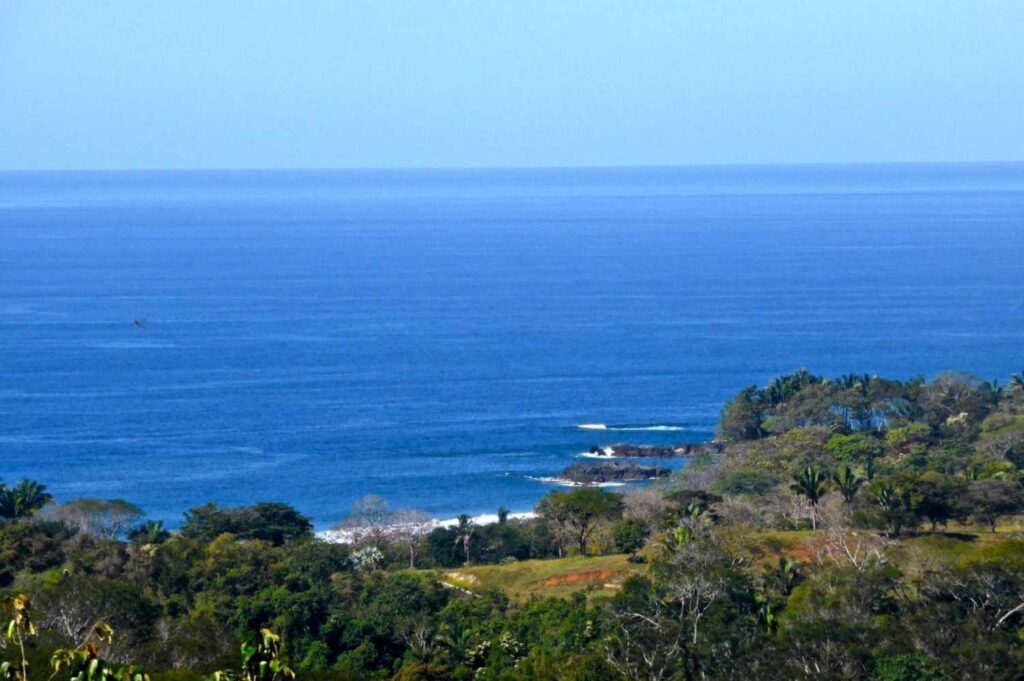
Playa Potrero sits in Guanacaste Province in northwestern Costa Rica, tucked inside a protected bay on the Pacific coast roughly midway along what locals call the Gold Coast. Understanding its position on the map matters, because the beaches in this corridor are distinct from one another in ways that directly affect property values, rental demand, and daily quality of life.
Proximity to Playa Flamingo, Brasilito, and Conchal
The Potrero-Flamingo-Brasilito-Conchal cluster is one of the most desirable coastal zones in Central America, and Playa Potrero is its northern anchor. Flamingo is two kilometers south and offers the region’s primary marina, a growing commercial strip, and the Gold Coast’s most recognizable real estate market. Brasilito is a small Tico fishing village just before Conchal that serves as a local commercial hub with a farmers market and everyday services. Playa Conchal, three kilometers south of Potrero, is famous for its crushed-shell beach and hosts one of the largest all-inclusive resorts in the country.
Living in Potrero means you have immediate access to all of it without living inside any of it. You can walk the Conchal shells, eat at the Flamingo marina restaurants, and shop the Brasilito market, then return to a bay that feels like it belongs to the people who actually live there.
Getting Here: Liberia International Airport and Regional Access
Liberia’s Daniel Oduber International Airport is the gateway for the Gold Coast and sits roughly 75 kilometers from Playa Potrero, a drive of about 75 to 90 minutes on paved road. Multiple airlines fly direct from major U.S. cities including Miami, Houston, Dallas, and Atlanta, with seasonal service from additional hubs. This is not a destination that requires a connection through San José, which matters both for your own visits and for the vacation rental guests who will eventually book your property.
The road into Potrero from the main coastal highway is paved and accessible in a standard vehicle year-round. A four-wheel-drive vehicle is useful for exploring properties on hillside lots, but daily life in the village does not require one.
—
What Playa Potrero Actually Looks Like: Beach, Bay, and Natural Setting
The Dark Sand Question: Understanding the Beach
Yes, the sand at Playa Potrero is dark. Compared to the white-powder beaches that dominate Costa Rica’s travel imagery, it reads as grey or sometimes dark gold depending on the light. Visitors who arrive expecting Conchal occasionally need a moment to recalibrate.
Most of them come around quickly. The darker sand retains heat in the mornings and cools faster in the evenings than white sand, which many people genuinely prefer. The texture is firm and smooth. The bay’s protected shape keeps the water calm, and the absence of bright reflected light gives the beach a quieter, more natural atmosphere. By sunset, the dark sand against the orange sky produces something that photographers specifically come to capture.
Can You Swim in Playa Potrero?
The bay is calm and safe for swimming. The protected cove geometry buffers most wave action, and there are no strong shore breaks or rip currents under normal conditions. Families with children swim here regularly, and paddleboards and kayaks are common sights on the water. Visibility is reasonable, though it is not a snorkeling destination in the way that the rockier points further along the coast can be.
Conditions can change during the rainy season when rivers and runoff affect water clarity, but for most of the year Potrero Bay offers reliable, gentle swimming that suits everyone from young children to seniors.
Are There Crocodiles in Playa Potrero?
Crocodiles are present in the rivers and estuaries of Guanacaste Province, and this question comes up often enough to deserve a direct answer. Potrero Bay itself, as an open ocean beach, is not a habitat where crocodiles are found. The risk that exists on the Pacific coast is associated with river mouths and tidal estuaries, not open bay beaches.
The standard guidance throughout Costa Rica applies here: avoid swimming near river mouths, especially at dawn and dusk. Swimming in the main bay away from any stream outflows is considered safe, and residents and visitors do so without incident throughout the year.
Wildlife, Tropical Dry Forest, and the Natural Ecosystem That Surrounds the Bay
The hills behind Playa Potrero are covered in tropical dry forest, one of the most biologically distinct ecosystems in the Americas and increasingly rare globally. This forest transitions through dramatic seasonal cycles, turning dry and golden during the dry months and then explosively green when the rains return. Living at its edge means watching that transformation happen around your home.
Howler Monkeys, Shorebirds, and What Living Next to Nature Really Means
Howler monkeys are present throughout the area and audible most mornings. Their call carries across the hillsides and into the village, a sound that initially surprises newcomers and eventually becomes a kind of alarm clock they describe with affection. White-faced capuchin monkeys are also common. Migrating shorebirds use the bay seasonally, and the nearby mangrove systems support herons, egrets, and roseate spoonbills.
Living next to functioning wildlife habitat is one of the things people describe years after moving here as something they did not fully anticipate loving. It also has a practical implication for property buyers: undeveloped forest adjacent to a community acts as a natural buffer and view protection. Properties with forest or hillside views behind them tend to hold their character over time in ways that densely built-up areas simply cannot guarantee.
Sunsets, Calm Water, and the Sensory Experience That Keeps People Coming Back
The bay faces west. That single geographic fact drives a disproportionate amount of what makes Playa Potrero memorable. The sunsets here are not incidental. They are a nightly event that locals and visitors alike treat as social. By late afternoon the beach fills with people who have timed their evening around the light. The colors come fast in the tropics, moving from yellow to orange to red in a compressed window that makes each sunset feel like something you almost missed.
The calm water doubles this effect. A flat bay at sunset reflects the sky across its surface and creates the kind of scene that looks like a photo filter but is simply what happens every evening here for most of the year.
—
The Playa Potrero Lifestyle: Community, Culture, and Daily Life
The Rhythm of a Fishing Village That Never Fully Became a Resort Town
The fishing boats leave the bay early and return mid-morning. The fruit vendor makes his rounds. The pulpería opens at the same time it always has. These rhythms have persisted through years of increasing foreign interest because Potrero’s growth has been incremental rather than transformative. The Tico families who have lived here for generations still anchor the community’s identity, and the services that exist here exist primarily because residents need them, not because a developer decided they would improve foot traffic.
For someone transitioning from a fast-paced life elsewhere, this is either a significant adjustment or the entire point. The people who thrive here are not the ones who want resort amenities delivered to their door. They are the ones who wanted out of the noise and found a place where the day’s structure comes from the tides and the light rather than from a calendar.

The Expat-Tico Mix: What the Community Actually Feels Like Day to Day
Playa Potrero has a well-established expat community, predominantly North American and European, that has integrated into village life without replacing it. Spanish is the first language of the community even though most services are available in English. Expats who take the time to learn basic Spanish find that relationships with local families open doors to the best mechanics, the most honest contractors, and the most reliable housekeepers in the area, none of which show up on a Google search.
The social life among expats is genuinely active for a community this size. There are regular beach gatherings, a culture of restaurant meetups, and the informal networks that form when a small group of people share the unusual experience of having chosen to build a life far from where they started.
Dining, Local Restaurants, and the Beachside Social Scene
The beachfront at Potrero has a consistent lineup of casual restaurants that serve as the community’s living room. Fresh fish and seafood are the obvious local specialty, and several spots have built reputations around consistent quality rather than tourist novelty. Casado plates, the traditional Costa Rican rice-and-beans combinations, are available and genuinely good at the local sodas that serve the village’s daily workers as much as visiting diners.
The dining scene is not sophisticated in a metropolitan sense and is not trying to be. What it offers is food that reflects where you are: fresh, straightforward, affordable by North American and European standards, and eaten almost always with a view of the water.
Is Playa Potrero a Good Place to Vacation Before You Commit to More?
Yes, and staying here specifically rather than in a nearby resort town gives you a fundamentally more accurate preview of what owning property here would actually feel like. Walking to the same coffee spot three mornings in a row, cooking one meal with groceries from Brasilito, experiencing a rainy afternoon with nothing on the agenda: these small experiences tell you more than a week of organized activities ever will.
Most people who buy in Potrero came first as visitors and came back. The second trip is usually the one where the question shifts from “would I enjoy a vacation here” to “could I actually live here.” The answer to the first question almost always comes easily. The second takes a little more time, which is exactly what a reconnaissance visit is designed to provide.
Best Time to Visit Playa Potrero: Seasons and the Case for Shoulder Season
The dry season runs from mid-November through April. These are the months with the least rainfall, the most reliable sunshine, and the highest tourist volume. December through March represents peak season, with full accommodations, higher prices, and the most energetic social scene.
The rainy season runs from May through mid-November, with September and October being the wettest months. Rainfall comes mostly in the afternoons and evenings, leaving mornings reliably clear. The landscape turns dramatically green, the bay is often quieter, and prices for accommodation and dining drop noticeably.
Shoulder season, roughly May through June and October through November, offers a practical case for prospective buyers specifically. You experience the character of the place without peak-season crowds, you interact with the year-round community rather than its tourist-season version, and you get a more honest look at what infrastructure and services actually look like when they are not performing for visitors.
—
Before You Fall in Love: A First-Visit Checklist for Prospective Buyers
Use this checklist to turn a vacation into a productive research trip. You do not need to complete every item on one visit, but working through as many as possible will give you a realistic foundation before any property conversation begins.
On the Ground
- Drive the area at different times of day, including evening, to understand traffic, noise, and how the community functions after business hours.
- Spend at least one full rainy-season afternoon in the village, or seek out accounts from people who have, to understand what roads, drainage, and lifestyle look like outside of dry season.
- Walk the beach at low tide and high tide and note where the water line reaches, which matters for any beachfront property you evaluate later.
- Eat at local sodas and talk to long-term residents. Ask them what they wish they had known.
Logistics and Infrastructure
- Drive to the Brasilito market, the nearest major grocery store, and back. Note the road quality and time required.
- Test mobile data and ask locally about internet providers and reliability.
- Locate the nearest private clinic and the nearest CAJA public healthcare facility.
- Make a list of services you use weekly at home, then identify which are available locally and which would require a trip to Liberia or Tamarindo.
Property Research
- Identify two or three neighborhoods or micro-locations that appeal to you and walk them on foot, not just by car.
- Note whether properties sit above or below the road, which affects both views and flooding risk.
- Ask a local real estate professional to walk you through one or two listings even if you are not ready to buy. The conversation will sharpen your questions considerably.
- Research the Maritime Zone designation for any beachfront property that interests you. This is the single most important legal distinction in coastal Costa Rica real estate and is worth understanding before you fall in love with a specific lot.
Community and Lifestyle
- Attend one informal gathering, market morning, or community event if your timing allows.
- Talk to at least three expat homeowners about what surprised them most after they moved. Ask specifically about what they underestimated.
- Spend a morning doing nothing. The ability to do this comfortably, without restlessness, is one of the more honest indicators of whether this pace of life will sustain your happiness long term.
—
Is Playa Potrero a Good Place to Live? Expat Realities and Cost of Living
What Does Daily Life Cost in Playa Potrero, Costa Rica?
Living costs in Playa Potrero are meaningfully lower than in comparable coastal communities in the United States, Canada, or Western Europe, but the gap is narrowing as the area develops and as more foreign residents raise the price floor. Your cost of living here will depend heavily on how closely you adopt local habits versus how aggressively you try to replicate a North American lifestyle.
Housing, Utilities, Groceries, and Transportation: A Realistic Monthly Picture
A comfortable two-bedroom rental in the Potrero area runs roughly $900 to $1,500 per month depending on proximity to the beach and the quality of finishes. Purchasing eliminates that expense over time, but even renters find their housing costs substantially lower than comparable coastal properties back home.
Utilities for a two-bedroom home, including electricity, water, and internet, typically run $150 to $250 per month. Air conditioning is the primary driver of electricity costs. Homes with good cross-ventilation and ceiling fans can dramatically reduce that number.
Groceries from local markets and the Brasilito farmers market cost roughly 40 to 50 percent less than equivalent items at imported-goods supermarkets. A household that cooks regularly using local produce, fresh fish from the dock, and Costa Rican staples can eat well for $400 to $600 per month for two people. Adding imported wines, specialty foods, or frequent restaurant meals pushes that figure considerably higher.
A used vehicle appropriate for local roads costs $8,000 to $15,000. Fuel, maintenance, and insurance add roughly $200 to $350 per month for a household with one car. Many residents find that a scooter or bicycle handles daily village errands adequately and reserve the car for longer trips.
A realistic monthly budget for a couple living comfortably without extravagance falls in the range of $2,500 to $3,500, covering housing, utilities, food, transportation, and basic entertainment. That figure can go lower with discipline and local habits, or considerably higher with imported luxuries and frequent travel.
Healthcare Access: What’s Nearby and What Requires Planning
The nearest private clinic with English-speaking staff is in Playa Flamingo, two kilometers south. It handles routine care, minor procedures, and urgent needs that do not require hospitalization. More complex care and specialists are available in Liberia, about 75 minutes away, where several private clinics offer higher-end facilities alongside public hospital services.
For serious medical situations or complex surgeries, most long-term foreign residents either travel to San José, where Costa Rica’s private hospital infrastructure is genuinely world-class, or return to their home country if they maintain insurance there. Medical costs in Costa Rica, even at private facilities, remain a fraction of U.S. prices. A specialist consultation that might cost several hundred dollars in the United States typically runs $60 to $100 here.
Foreign residents who qualify for Costa Rica’s residency programs gain access to the CAJA, the national public health system, through monthly contributions scaled to income. The CAJA is not a substitute for private care in emergencies, but it covers routine care and prescription medications at minimal cost and is a meaningful long-term financial benefit of establishing legal residency.
Practical Infrastructure: Banking, Groceries, Internet, and Getting Things Done
The day-to-day infrastructure of Playa Potrero is sufficient for comfortable living without being abundant. Here is the core practical picture:
- Banking: There are no bank branches in Potrero itself. ATMs are available in Flamingo and Brasilito. Most residents maintain a local Costa Rican bank account for daily transactions and keep a home-country account for larger transfers.
- Groceries: The Brasilito market handles daily staples adequately. A larger Auto Mercado stocking a broader range of imported goods is in Tamarindo, about 25 minutes south. Most residents do one larger shopping trip weekly and fill in locally as needed.
- Internet: Fiber and cable internet are available throughout the Potrero village area, with speeds sufficient for remote work, video calls, and streaming. Coverage on hillside or more rural lots varies and is worth verifying for any specific property.
- Hardware and services: Liberia serves as the regional hub for anything the local area does not carry, from appliance repairs to vehicle parts to specialty building materials.
The rhythm of getting things done here requires more patience than most newcomers initially budget. Contractors run on Tico time, bureaucratic processes move slowly, and supply chains for specific items can require planning ahead. Residents who adapt to this reality quickly tend to enjoy life here considerably more than those who spend energy fighting it.
What Expats Consistently Say They Got Right — and What They Wish They Had Known
The things people consistently say they got right: choosing a location where they felt a genuine community connection rather than just a beautiful view, buying property rather than renting long-term, and building relationships with Tico neighbors early. These themes appear in nearly every conversation with long-term residents.
The things they wish they had known: the true cost and timeline of construction and renovation projects (most advise budgeting generously on both), the importance of having a trusted local attorney before the first purchase contract rather than after, and the reality that some services they assumed they could live without turned out to matter more than expected.
Almost no one says they wish they had waited longer to make the move.
Is Playa Potrero a Good Place to Retire?
For the right person, it is close to ideal. The combination of lower cost of living, accessible healthcare, a warm and genuinely welcoming community of fellow expats and Tico residents, and a physical environment that makes outdoor living pleasant for most of the year creates conditions that many retirees describe as better than they imagined.
The honest caveats are worth naming. If you need urban cultural amenities, a wide specialist medical network within twenty minutes, or the kind of social infrastructure that comes with a large city, Playa Potrero will feel limiting. If what you want is a slower pace, financial breathing room, mornings on the water, and a community where people actually know your name, this bay delivers those things with a consistency that is hard to find at this price point anywhere in the Americas.
—
Playa Potrero Real Estate: Market Overview and Investment Potential
Why the Potrero Bay Market Has Been Quietly Appreciating
Playa Potrero real estate has grown steadily without the volatility that tends to follow rapid resort development. The mechanism is straightforward: demand for the Gold Coast lifestyle has increased while Potrero’s inventory has remained constrained by geography and the absence of large-scale developer activity. A protected bay with a finite shoreline, surrounded by hills that limit flat buildable land, cannot simply absorb unlimited supply. The result has been consistent price appreciation without the correction risk that comes when a market overbuilds.
Buyers who cannot afford Flamingo or Conchal prices increasingly look one bay north and find essentially the same sunset, the same calm water, and the same airport access at a meaningful discount. That price gap has been closing gradually, and buyers who entered Potrero in recent years have watched it close in their favor.
Property Types Available: Beachfront, Hillside, Condos, and Lots
The Potrero market offers a wider range of property types than its quiet reputation might suggest.
- Beachfront homes and lots sit directly on or adjacent to the bay and represent the highest-price tier. True titled beachfront is rare, and when it comes to market it moves quickly.
- Hillside homes and lots offer elevated views of the bay and often capture better breezes than beach-level properties. Many buyers find hillside living more comfortable day to day, with natural ventilation reducing reliance on air conditioning.
- Condominiums and gated communities have emerged in the area over the past decade, typically offering pools, security, and property management infrastructure that makes absentee ownership more practical.
- Titled lots allow buyers to build to their own specifications and remain one of the more accessible entry points into the market for buyers who are not yet ready for a fully finished home.
What Drives Value Here vs. More Developed Neighboring Beaches
Three things drive comparative value in Potrero relative to Flamingo and Conchal: lower price per square meter, community character, and available inventory. Flamingo properties command a premium partly because of the marina and commercial infrastructure, but also because of name recognition. Conchal’s values are anchored by the large resort development and the famous shell beach, which functions as a permanent marketing asset. Potrero has neither of those external anchors, which is precisely why its prices remain lower even as the underlying lifestyle quality is comparable.
For an investor, that gap represents opportunity. For a future resident, it means your housing budget goes further here than a mile south.
General Price Ranges and What Your Budget Can Realistically Buy
Price ranges shift with the market, but as a working framework for buying property on Costa Rica’s Gold Coast:
- Titled lots in the hills behind Potrero start around $80,000 to $150,000 for well-positioned parcels with views, with prices rising sharply as you approach beach level.
- Finished homes in established neighborhoods generally range from $250,000 to $600,000, with well-appointed hillside homes with bay views sitting in the $350,000 to $500,000 range.
- Beachfront or ocean-view condominiums in gated developments range from $200,000 to $450,000 depending on size, amenities, and proximity to the water.
- True beachfront titled homes, when they appear, typically price above $600,000 and can reach well into seven figures for large parcels.
These are broad ranges, not guarantees. Working with a local agent who tracks active listings, days on market, and recent comparable sales gives you a much sharper picture than any published range can provide.
Neighborhoods and Developments Worth Understanding for Long-Term Residents
The Potrero area includes the village itself, the hillside communities above the bay, and several established residential developments that have formed distinct micro-neighborhoods over the years. The village center and beachfront area offer walkability and community proximity. The hills above provide views and privacy at the cost of needing a vehicle for daily errands.
Gated communities in the area typically offer paved internal roads, shared pools, and HOA management, which simplifies life for part-time owners. Understanding which developments have active and financially healthy HOAs is one of the due diligence questions worth asking specifically before making an offer.
—
How to Buy Property in Playa Potrero as a Foreigner
The Most Important Thing to Know First: Foreigners Have Equal Ownership Rights
Costa Rica grants foreigners the same legal right to own titled property as Costa Rican citizens. You do not need residency, a local partner, or a special visa to purchase and hold real estate here. This is not universally true in Latin America, and it is the foundational fact that makes Costa Rica one of the most accessible markets in the region for foreign buyers. Your name goes on the title. Your rights are protected under Costa Rican law. The process is transparent and well-established.
Titled Property, Maritime Zone Land, and Why the Distinction Matters
The single most important legal concept for any coastal buyer in Costa Rica is the Maritime Zone law. A strip of land measuring 200 meters from the mean high-tide line on every ocean coast in the country is designated the Maritime Zone. The first 50 meters of that strip is public land that cannot be owned by anyone. The remaining 150 meters is concession land, which can be leased from the government through a municipal concession but cannot be privately owned outright.
This means that what looks like a beachfront property listing might be titled land sitting just outside the Maritime Zone, or it might be a concession lease with a limited term and renewal conditions. These are very different things from a legal and financial perspective. Foreign nationals cannot hold a concession directly for their first five years of residency, which adds a layer of complexity for newer arrivals.
Hillside and village properties are typically fully titled and sit well outside the Maritime Zone. The distinction matters most when evaluating properties close to the water. A licensed Costa Rican attorney will clarify the status of any specific property during due diligence, which is exactly why that step is not optional.
The Purchase Process from First Offer to Closing
Finding the Right Property and Making an Offer
Work with a local real estate professional who knows the Potrero and Gold Coast market specifically, not just the general Guanacaste region. When you identify a property you want to pursue, the process typically begins with a letter of intent or offer document that outlines the proposed price, conditions, and timeline. Unlike in some markets, there is no standardized offer form mandated by law in Costa Rica, so having your attorney review any offer document before you sign is a worthwhile step.
Due Diligence: Title Search, Survey, and Corporate Structure Review
Due diligence in Costa Rica is thorough when done correctly. Your attorney will conduct a title search through the National Registry to confirm the property’s legal status, check for liens or encumbrances, and verify that the seller has the legal authority to sell. A licensed surveyor should verify that the physical boundaries of the property match the registered survey on file. If the property is held in a Costa Rican corporation, which is common, the corporate structure requires its own review to confirm there are no hidden liabilities attached to the company.
This stage takes time. Budget two to four weeks for a thorough review, and do not allow a seller to pressure you into shortening it.
The Escrow Process and Why It Protects Both Parties
Real estate transactions in Costa Rica typically use an escrow account managed by a title company or attorney to hold the buyer’s deposit and eventual purchase funds until all conditions are satisfied and the transfer is complete. Escrow protects the buyer by ensuring funds are only released when the title transfer is properly recorded. It protects the seller by demonstrating that the buyer’s funds are secured. Use a reputable escrow provider and confirm that your attorney and the escrow company are separate entities with no conflict of interest.
Closing Costs, Transfer Taxes, and What to Budget Beyond the Purchase Price
Budget approximately 3.5 to 4.5 percent of the purchase price in closing costs, which typically include:
- Transfer tax: 1.5 percent of the registered property value
- Documentary stamps and recording fees: approximately 0.5 to 1 percent
- Attorney fees: typically 1 to 1.5 percent, though this varies
- Title insurance (optional but increasingly recommended): additional cost depending on provider
Closing in Costa Rica does not involve the kind of table-closing ceremony common in the United States. The final transfer is executed through a deed signed before a notary-attorney, who then registers the transfer with the National Registry. The process is handled by your legal team and typically takes two to four weeks after all conditions are met for the registration to complete.
Why a Registered Costa Rican Attorney Is Non-Negotiable
In Costa Rica, real estate attorneys double as notaries, and only a licensed notary can execute the deed transfer that legally conveys ownership. This means your attorney is not just an advisor but an active participant in the transaction. Hire your own attorney independently, not one recommended exclusively by the seller or selling agent. Costs are modest by North American standards, and the protection they provide against Maritime Zone issues, undisclosed liens, or corporate liabilities is worth multiples of their fee.
Common Pitfalls Foreign Buyers Encounter — and How to Avoid Them
- Skipping due diligence to move faster. The National Registry search exists because property disputes, boundary errors, and title defects do exist. There is no shortcut worth the risk.
- Falling in love with a concession property without understanding the lease terms. Concessions can be valuable, but they require specific legal handling and have renewal conditions that a buyer must understand before committing.
- Underestimating construction timelines and costs. If you are buying a lot to build, add 30 to 50 percent to contractor estimates for both budget and timeline. This is the consistent experience of people who have done it.
- Not establishing a local bank account early. Wire transfers into Costa Rica require a local account, and opening one takes time. Start this process before you need it.
—
Vacation Rental Income: Turning Your Playa Potrero Property Into a Revenue Stream
Why Guanacaste’s Short-Term Rental Market Is Strong and Growing
Guanacaste receives a significant share of Costa Rica’s international tourist arrivals, and that volume has been rising consistently over the past decade. Direct flights to Liberia from major North American cities have made the Gold Coast more accessible than ever, and the region’s reputation for reliable dry-season weather, outdoor activities, and natural beauty continues to attract first-time visitors who return as repeat guests. The short-term rental market here is supported by a deep and growing base of visitor demand.
What Rental Demand Looks Like in Playa Potrero Specifically
Playa Potrero captures rental guests who are specifically looking for an alternative to the larger, more commercial Gold Coast beaches. Families, couples, and digital nomads who have done their research often prefer Potrero’s quieter bay over the higher-traffic options nearby. The community’s increasing visibility on travel platforms has expanded its renter base without turning it into an overtouristed market.
Peak season bookings from December through April fill quickly for well-presented properties. Shoulder and rainy-season occupancy is lower but has been improving year over year as more travelers discover that the Green Season offers a genuine experience at lower prices. A well-managed property marketed across multiple platforms does not rely on a single peak season to generate meaningful annual income.
An Illustrative Income Scenario: What a Well-Managed Rental Property Might Generate
Consider a two-bedroom, two-bathroom home or condo with ocean or bay views, a pool, and air conditioning, priced around $350,000. At a nightly rate of $200 to $250 during peak season and $130 to $170 during shoulder months, a property achieving solid annual occupancy could generate meaningful gross rental income before management fees and operating expenses.
After a professional management fee of 20 to 25 percent and property operating costs, net income on a well-positioned Playa Potrero rental can represent a competitive yield relative to what comparable vacation properties produce in saturated U.S. coastal markets. These figures will vary based on the specific property, marketing quality, and management execution, and we are happy to walk through realistic projections based on current market data for any property you are considering.
Professional Property Management: How to Own From Abroad Without the Stress
Owning a rental property from another country is entirely workable with the right local management partner. A full-service property manager handles guest bookings, check-in and check-out, cleaning and maintenance coordination, and owner reporting. For an absentee owner, this infrastructure is the difference between a passive income asset and a full-time remote job.
The key is finding a manager whose incentives align with yours. A management company paid on a percentage of rental income is motivated to keep your occupancy high and your guests satisfied. One paid a flat fee regardless of bookings has a different relationship with your results.
What to Look for in a Local Property Management Partner
- Verifiable local presence, meaning staff who are physically in the Potrero or Flamingo area, not managing remotely from San José or abroad
- Transparent owner reporting with booking records, income statements, and maintenance logs accessible to you on a regular basis
- Established relationships with cleaning crews, licensed contractors, and maintenance personnel who can respond quickly when something breaks
- Active presence on major rental booking platforms with a demonstrated track record of reviews and occupancy rates
- Honest communication about realistic income expectations rather than inflated projections designed to win your business
A good property manager is not just a booking agent. They are your eyes, ears, and hands on the ground, and in a market like Potrero, where relationships and reputation matter, their knowledge of the local community is a core part of what they bring to the table.
—
Playa Potrero at a Glance: 7 Things Every Serious Buyer Should Know
- Foreigners own titled property in Costa Rica with the same rights as citizens. No local partner required, no residency prerequisite.
- The Maritime Zone law governs the 200 meters from the high-tide line. Beachfront does not automatically mean titled. Verify status before you fall in love with a specific lot.
- A licensed Costa Rican attorney is not optional. They execute the deed, conduct the title search, and protect you from the risks you do not know to ask about.
- Closing costs run 3.5 to 4.5 percent of the purchase price. Budget for them from the start, not as a surprise at the end.
- Property values in Potrero remain below Flamingo and Conchal for equivalent lifestyle quality. That gap has been closing, and buyers entering now are buying ahead of it.
- Well-managed vacation rentals in the area can generate competitive net annual yields. This is a real income asset, not just a lifestyle purchase.
- Due diligence takes two to four weeks when done properly. Do not let timeline pressure compress it.
—
Conclusion: From Curious Visitor to Confident Owner — Your Next Step on the Gold Coast
What the Overlooked Beach Offers the Patient Buyer
Playa Potrero’s defining quality, the one that serious buyers keep coming back to, is that it offers everything the Gold Coast is known for without the price premium or the density of development that comes from being famous. The bay is protected and swimmable. The sunsets are the same ones that sell properties two kilometers south at significantly higher prices. The community is genuinely mixed, genuinely friendly, and genuinely invested in staying the way it is.
The buyers who have done well here are not the ones who found a secret. They are the ones who were patient enough to look one bay past the obvious answer and willing to trust what they found. That window is still open, but the gap between Potrero’s prices and its neighbors’ has been narrowing for years and will continue to do so.
What Coastal Realty Costa Rica’s Local Expertise Means for Your Search
Coastal Realty & Property Management has been working the Gold Coast market since 2006. That tenure means something specific in a market like this: we have watched neighborhoods develop, seen which developments delivered on their promises, and built the local relationships that give our clients access to listings before they reach public platforms and to contractors, attorneys, and managers who are accountable to us because we have worked with them for years.
We know Playa Potrero not as a line item in a regional portfolio but as a community where we have helped buyers find homes, navigate the purchase process, and set up rental programs that have been generating income for a decade or more. That depth of local knowledge is what turns a property search from a stressful leap into a structured process with clear next steps at every stage.
How to Start the Conversation Without Pressure or Commitment
If you are at the stage of asking questions rather than ready to make decisions, that is exactly the right place to start. A first conversation with our team is not a sales call. It is a chance to get honest, specific answers to whatever questions you have been building as you research living in Playa Potrero, Costa Rica: which neighborhoods to look at first, what your budget can realistically buy, what the rental income potential looks like for the type of property you have in mind, and what the purchase process will actually involve from first offer to closing.
Reach out through our website, call us directly, or send us an email before your next trip. If you are planning a visit to Playa Potrero, we are glad to meet you on the ground, walk you through the area, and show you what this bay looks like when you are standing in it rather than reading about it. That conversation costs you nothing. What it might give you is a much clearer picture of whether this is the place you have been looking for.
—
Frequently Asked Questions
Can you swim in Playa Potrero?
Yes, Playa Potrero is a safe and enjoyable swimming destination. The protected bay geometry keeps the water calm and largely free of strong shore breaks or rip currents under normal conditions. Families with children, paddleboarders, and kayakers all use the bay regularly throughout the year.
Are there crocodiles in Playa Potrero?
Crocodiles inhabit rivers and tidal estuaries throughout Guanacaste Province, but they are not found in the open bay at Playa Potrero. The standard precaution across all of Costa Rica’s Pacific coast applies: avoid swimming near river mouths, especially at dawn and dusk. The main bay at Playa Potrero, away from any stream outflows, is considered safe for swimming.
Is Playa Potrero a good place to vacation?
Playa Potrero is an excellent choice for travelers who want an authentic coastal experience away from the crowds. The protected bay, consistent sunsets, fresh seafood, and genuine Tico-expat community atmosphere offer something fundamentally different from the larger resort beaches nearby. It is also an ideal base for day trips to Conchal, Flamingo, and the surrounding Gold Coast.
What is the cost of living in Playa Potrero, Costa Rica?
A couple living comfortably without extravagance can expect a monthly budget in the range of $2,500 to $3,500, covering housing, utilities, food, transportation, and basic entertainment. Housing costs, groceries from local markets, and medical care are all substantially lower than comparable expenses in the United States, Canada, or Western Europe, though costs rise if you prioritize imported goods or a fully North American lifestyle.
Is Playa Potrero a good place to retire or invest in property?
For the right person, Playa Potrero is a genuinely compelling retirement and investment destination. The lower cost of living, accessible healthcare in nearby Flamingo and Liberia, a welcoming expat and Tico community, and a physical environment that supports outdoor living for most of the year combine to create conditions that many retirees describe as better than they anticipated. On the investment side, property values have appreciated steadily, and well-managed vacation rentals in the area generate competitive returns relative to saturated coastal markets in the United States.
How do foreign buyers purchase property in Playa Potrero?
Foreign buyers have the same legal right to own titled property in Costa Rica as citizens, with no residency or local partner required. The purchase process involves working with a local real estate agent to identify properties, engaging a licensed Costa Rican attorney to conduct due diligence including a title search and survey review, using an escrow account to secure funds during the transaction, and completing the transfer through a notarized deed registered with the National Registry. Budget approximately 3.5 to 4.5 percent of the purchase price for closing costs, and allow two to four weeks for thorough due diligence.
What are real estate prices and market trends in Playa Potrero?
Playa Potrero real estate has appreciated steadily over many years, driven by constrained supply and growing demand from buyers who find comparable lifestyle quality at lower prices than in neighboring Flamingo and Conchal. As a general guide, titled hillside lots start around $80,000 to $150,000, finished homes range from $250,000 to $600,000, and ocean-view condominiums in gated developments fall between $200,000 and $450,000. True beachfront titled properties are rare and typically priced above $600,000. The price gap between Potrero and its better-known neighbors has been narrowing, making the current market an attractive entry point for long-term buyers.