
First Impressions That Tend to Stick: What Makes Playa Flamingo Genuinely Different
The Crescent, the Color, and the Calm
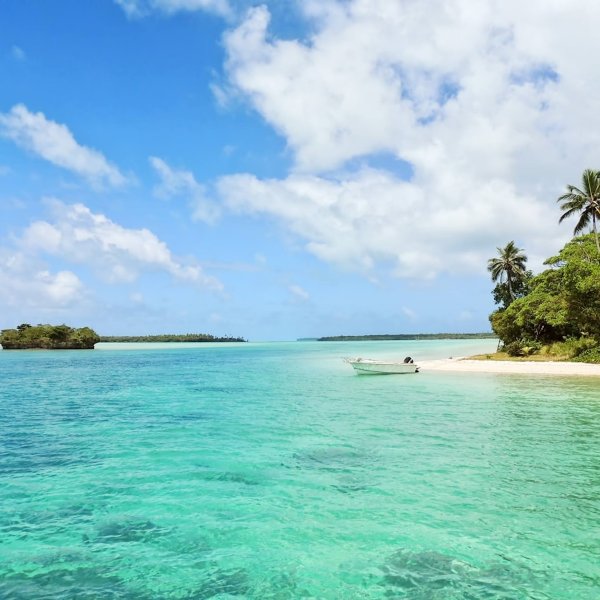
Playa Flamingo earns its reputation the old-fashioned way: it actually delivers. The beach curves in a clean crescent shape, sheltered by rocky headlands on both sides, with water calm enough to wade into without reading the surf report first. Most mornings, you can see clearly to the bottom. The pace on shore matches the water.
Clearing Up the Pink Sand Myth Once and For All
First-time visitors occasionally arrive expecting rose-tinted sand, and that expectation deserves a direct answer: the sand at Playa Flamingo is white. Bright, fine, and genuinely photogenic white. There is no pink sand here, and there never has been. The confusion likely stems from the name itself, which some people assume must describe the beach’s color. It doesn’t.
The “Flamingo” name traces back to a yacht that anchored in this bay decades ago during the early days of coastal development. The boat’s name stuck to the place, the way these things do in small communities. What you will actually find at Playa Flamingo, Costa Rica, is a stretch of white sand, clear Pacific water, and the kind of quiet that thoughtful development here has managed to preserve.
—
Where Playa Flamingo Fits in the Gold Coast Story
Guanacaste Province and the Northern Pacific Coast
Guanacaste Province occupies the northwestern corner of Costa Rica, bordering Nicaragua to the north and the Pacific Ocean to the west. The dry tropical climate here is distinct from the rainforest-heavy images most people associate with Costa Rica. From December through April, the sky stays reliably blue. The terrain is rolling hills and cattle country inland, with a string of beach communities scattered along a coastline the tourism industry has long called the Gold Coast.
Flamingo sits roughly in the middle of that coastline, about 80 kilometers south of the Nicaraguan border and within an hour’s drive of most of the Gold Coast’s other key communities. That central position matters for residents who want access to a range of services and neighboring beaches without being tethered to any single town.
How Flamingo Compares to Tamarindo and Its Neighbors
Tamarindo is the obvious comparison, and it’s a useful one. Tamarindo has more bars, more surf schools, more backpackers, more noise, and more of everything that comes with being a well-established tourist hub. That is not a criticism. For some buyers, that energy is exactly what they want.
Flamingo offers something different: a quieter residential character, a functioning marina, and a buyer profile that skews toward people who want to settle in rather than pass through. Neighboring Brasilito and Potrero are even quieter and more local in feel, while Playa Grande and Conchal each draw their own crowd. Flamingo threads the needle between those extremes. It has real amenities without the crowds, and a community that has existed long enough to feel genuinely established.
—
Can You Swim Here? Conditions, Safety, and What to Expect
Seasonal Water Conditions and the Trade-Offs Between Dry and Green Season
Yes, you can swim at Playa Flamingo, and for most of the year, conditions are genuinely good for it. The bay’s protected shape keeps wave energy low compared to more exposed beaches nearby. During the dry season, roughly December through April, the water is calm, visibility is excellent, and conditions for snorkeling and swimming are as good as they get. During the green season, May through November, afternoon swells can push in more forcefully, and rain occasionally muddies the water. Flamingo handles the green season better than many beaches on this coast because of that sheltering geography, but it’s worth knowing before you plan a trip.
The Best Time of Year to Visit
If your priority is beach and water time, December through April is your window. If your priority is value, fewer crowds, and lush green hillsides, May through November delivers all of that at lower accommodation rates and with less competition for tables at local restaurants. For someone considering a purchase, visiting during the green season offers a more honest picture of what year-round life actually looks like here.
—
Getting Here and Getting Oriented: Location, Access, and Arrival Reality
Liberia Airport as Your Gateway to the Gold Coast
Liberia Airport, officially Aeropuerto Internacional Daniel Oduber Quirós, is the reason the Gold Coast works as a real estate market for foreign buyers. It receives direct international flights from the United States and Canada, which means most North American visitors land here without a connection through San José. That single fact changes the calculus of ownership considerably.
Drive Time, Road Conditions, and the Journey Into Flamingo
The drive from Liberia Airport to Playa Flamingo takes about 75 to 90 minutes under normal conditions. The first half runs on the Pan-American Highway, which is paved and well-maintained. The second half involves smaller roads through Belén and down toward the coast, with some stretches that require attention but nothing that demands a four-wheel-drive vehicle in the dry season. During the green season, one short unpaved section can get muddy. Most rental cars handle it without issue, but a higher-clearance vehicle removes any doubt. The drive itself is beautiful. Dry tropical forest and rolling hills open up to ocean views as you descend toward the coast.
Domestic Connections and Shuttle Options
If you prefer not to drive, shuttle services operate between Liberia and Flamingo and can be arranged in advance. Small domestic flights from San José’s Juan Santamaría Airport to Liberia also connect the capital to the coast for travelers routing through San José. Taxis from Liberia are available but expensive for the full distance. For most buyers visiting on a research trip, a rental car gives the most flexibility and makes neighborhood exploration far easier once you arrive.
—
A Practical Arrival Checklist for First-Time Visitors
From Landing to Land-Shopping: Your First 72 Hours in Playa Flamingo
This is a step-by-step orientation for the visitor who is starting to ask whether they could actually live here.
Before You Land
- Book accommodation in or near Flamingo proper, not in Tamarindo, so your first impression is anchored to the right community.
- Arrange a rental car in advance, preferably with full insurance coverage.
- Identify two or three real estate professionals to speak with and schedule those conversations for Day 2 or Day 3, after you’ve had time to walk the area yourself.
Day 1: Arrival and Orientation
- Drive the coast road from Potrero through Flamingo to Brasilito so you understand where Flamingo sits relative to its neighbors.
- Walk the beach at least twice. Morning and late afternoon reveal two different experiences of the place.
- Have dinner somewhere local, ask your server or host how long they’ve been here, and listen carefully to what they say.
Day 2: Go Deeper
- Visit Marina Flamingo in the morning, when the fishing boats are coming and going, and spend time watching how the community actually uses the space.
- Drive the residential streets above the beach to understand the hillside property situation and what views exist at different elevations.
- Check your phone and laptop connectivity at your accommodation and at a café, noting both speed and reliability.
Day 3: Start the Real Conversations
- Meet with the real estate professional you identified and tell them your actual budget, your intended use (retirement, rental, or part-time), and your timeline.
- Ask specifically about the difference between titled properties and concession properties near the water. This distinction matters significantly and is explained in detail later in this guide.
- Drive to the nearest supermarket, pharmacy, and clinic so you understand what day-to-day logistics look like on the ground.
Before You Leave
- Write down three things that surprised you, positively or negatively, about the place.
- Ask yourself whether the quiet pace felt peaceful or boring, and whether that answer held steady across the full three days.
—
Life at Playa Flamingo Year-Round: Beyond the Beach Postcard
The Rhythm of a Day, a Week, a Season
Life at Playa Flamingo moves slowly in the way that anyone burned out on a city schedule would find immediately appealing, and quietly in the way that only works long-term if you genuinely like your own company and know how to build community from scratch. People who thrive here describe their days as structured around the water, the light, and each other, rather than around work schedules or social obligations.
Marina Flamingo and the Social Gravity It Creates
The marina is the center of community life in a way that isn’t obvious until you spend a few days here. It’s where fishing boats depart before dawn and return mid-morning, where boat owners congregate in the afternoon, and where a rotating cast of sailors, sportfishers, and long-term liveaboards create a social fabric that extends well beyond the water. Resident owners regularly describe Marina Flamingo as the place they go when they want to run into someone they know. For a community this size, that kind of organic social infrastructure matters more than most buyers expect.
The Monday Moonlight Market, the Casino, and the Texture of Local Evenings
Monday evenings bring a small open-air market that draws both residents and visitors, with local vendors, food, and the kind of casual social mixing that doesn’t happen in more transient beach towns. The Flamingo Casino provides a more traditional evening option for those who want it. Neither is a major destination on its own, but together they illustrate something important: Flamingo has enough going on that residents aren’t driving to Tamarindo every time they want an evening out.
—
Activities That Keep Residents Here, Not Just Visitors
Sportfishing, Sailing, Snorkeling, and Water Sports as a Lifestyle
The Gulf of Papagayo and the waters off Guanacaste are among the most productive sportfishing grounds in Central America. Sailfish, marlin, dorado, and yellowfin tuna are all realistic targets depending on the season. For residents, this isn’t a once-a-trip excursion. It’s Tuesday. Many full-time owners here own or co-own boats, split charter costs with friends, or go out regularly as crew. Snorkeling at Playa Flamingo and on nearby reefs is accessible without a boat, and the calmness of the bay makes it viable for much of the year.
Family Life: Schools, Safety, and Day-to-Day Practicalities
Families with children do live in Flamingo year-round, though the local educational infrastructure requires planning. There is no large international school within the immediate community. Families typically enroll children in schools in nearby communities or opt for homeschooling, which a segment of the expat community actively practices. The beach-centered lifestyle, the safety of the area, and the tight-knit community make it an appealing place to raise children for parents willing to navigate the school question. If education is a priority, a direct conversation with a local agent about which specific setups other families are using is worth having early in the process.
—
The Expat Community and What It Means to Belong Here Long-Term
Who Actually Lives Here
The full-time expat population at Playa Flamingo skews toward retirees from the United States and Canada, with a growing contingent of remote workers who discovered over recent years that they could do their jobs from anywhere. Part-time owners who visit for weeks or months at a time and rent their properties when they’re away make up a third significant group. These three profiles coexist comfortably because their needs overlap enough to support shared amenities and services without significant friction.
The community is genuinely welcoming to newcomers, partly because almost everyone here was a newcomer at some point. Friendships tend to form quickly when you’re all showing up to the same Monday Moonlight Market and the same marina dock.
Cost of Living in Playa Flamingo: An Honest Overview
Flamingo is not a budget destination, and pretending otherwise would waste your time. Compared to other parts of Costa Rica, the Gold Coast commands a premium. Compared to most of North America, it is still meaningfully more affordable, particularly for domestic help, dining out, and basic services.
A rough monthly budget for a couple living comfortably in Flamingo runs somewhere between $3,000 and $5,000 USD, depending on lifestyle. That figure covers groceries (a mix of local markets and imported goods), utilities, transportation, dining out several times a week, and occasional activities. Property taxes in Costa Rica are low by North American standards, typically around 0.25% of the registered property value annually. Healthcare is another variable worth researching. Many expats use a combination of the Costa Rican public health system, available to legal residents, and private clinics for anything requiring faster access.
—
Is Playa Flamingo Right for Your Lifestyle?
The Profile of Someone Who Thrives Here vs. Someone Who Doesn’t
People who do well at Playa Flamingo share a few consistent traits. They find satisfaction in physical activities, outdoor time, and social connection within a small, familiar community. They’re comfortable with the occasional power outage, the slower pace of service, and the fact that a hardware store run requires a 45-minute drive. They don’t need a cosmopolitan city nearby to feel stimulated.
People who struggle here tend to want more: more nightlife, more cultural programming, more anonymity, more convenience. They find the quiet a little too quiet after the novelty wears off, and they spend more time than they expected driving somewhere else for things they assumed would be local. Neither profile is wrong. Flamingo is simply specific, and specificity is a feature, not a flaw, for the right person.
Remote Work Infrastructure: Connectivity and Practical Realities
Internet connectivity at Playa Flamingo has improved considerably and continues to improve. Fiber optic service is available in parts of the community, and most residential properties have access to service fast enough for video calls, file transfers, and standard remote work tasks. Reliability does vary by location, however. Properties on hillside lots sometimes rely on wireless point-to-point connections rather than fiber, and green season storms can occasionally interrupt service for short periods.
There is no formal co-working space within Flamingo itself, though several cafés provide reliable enough connectivity for working hours. Serious remote workers typically set up a proper home office and treat café work as supplemental. For someone whose livelihood depends on consistent connectivity, the right question before any purchase is which specific service providers cover the property you’re considering and what backup options exist if the primary connection goes down.
—
The Real Estate Landscape: What the Flamingo Market Actually Looks Like
Why Flamingo Is One of Costa Rica’s Most Mature Coastal Markets
Flamingo has been attracting serious foreign buyers since the late 1980s, which makes it old by Costa Rican coastal real estate standards. That history matters. Markets that have been through multiple economic cycles, currency shifts, and development waves develop a kind of institutional memory. Prices in Flamingo have held up through downturns that rattled newer, more speculative markets along this coast, and that’s not an accident.
What Years of Market Observation Reveal About Price Stability
Watching this market since 2006, the clearest signal is that Flamingo properties don’t spike wildly or crater dramatically. What you see instead is steady, modest appreciation with more liquidity than most comparable Costa Rican beach communities. Well-priced properties here find buyers. That’s not universally true on the Gold Coast, where some newer or more remote communities have seen listings sit unsold for years. Flamingo’s maturity translates to real-world exit options, which matters enormously if you’re thinking about this as anything other than a permanent move.
Property Types Available: Condos, Villas, Beachfront, and Hillside Lots
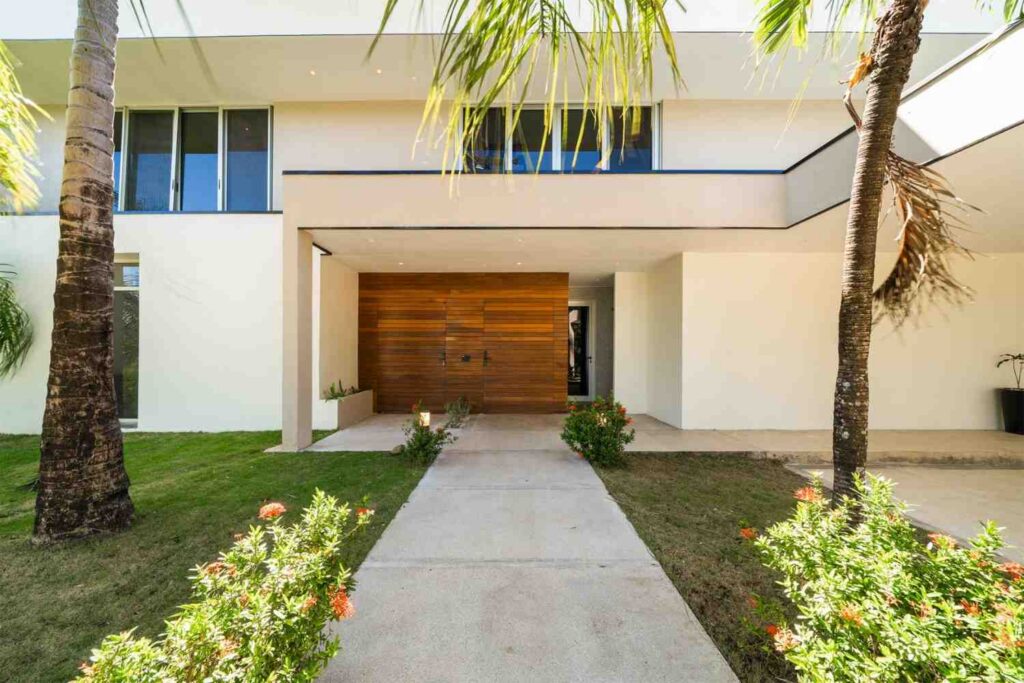
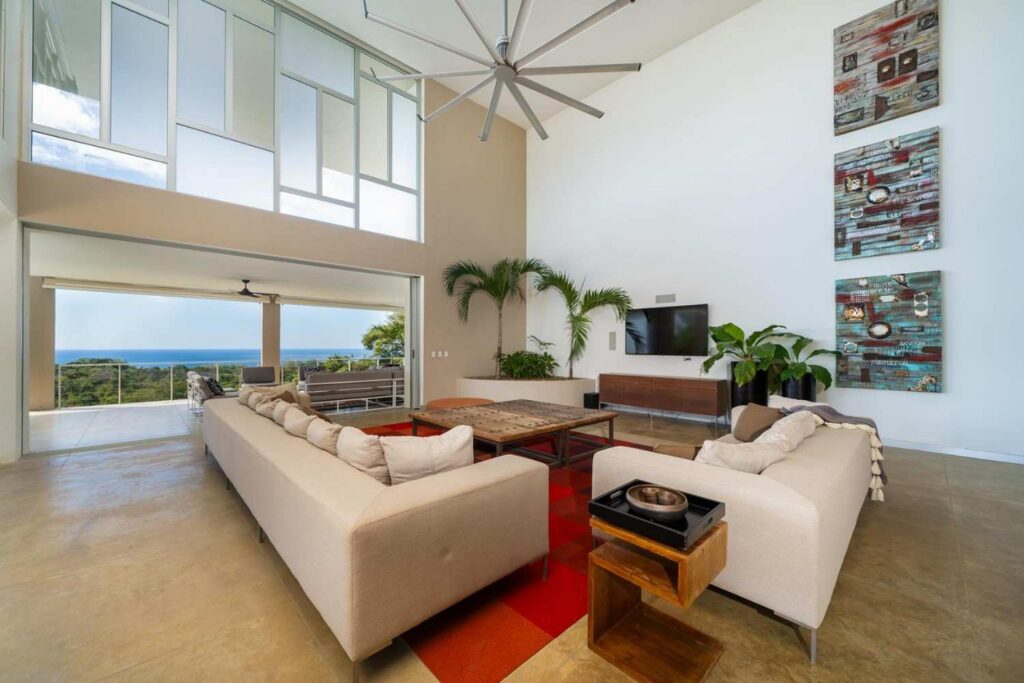
The Flamingo real estate market covers a wider range of property types than most buyers expect. Condominiums in managed communities offer a lower-maintenance entry point, typically starting in the $300,000 to $500,000 USD range for a well-located two-bedroom unit. Single-family villas with pools range from $500,000 into the multi-millions depending on views and finishes. Beachfront lots exist but are rare and subject to maritime zone regulations covered in detail below. Hillside lots above the bay offer some of the most compelling views in Guanacaste and remain available at prices that still make sense for buyers willing to build. Each category carries different ownership structures, maintenance obligations, and rental income profiles.
—
Typical Buyer Profiles and What They’re Purchasing For
The Retirement Relocation Buyer
This buyer typically arrives after two or three visits to Playa Flamingo and has already decided the lifestyle fits. The decision is primarily emotional and practical rather than financial. They want a place that feels safe, welcoming, and genuinely livable. They ask about healthcare proximity, community size, and whether the social infrastructure exists to build a real life here rather than just a vacation identity. For this buyer, the right property serves daily life first and holds value second.
The Part-Time Owner Seeking Rental Income
This is the most common buyer profile in Flamingo today. They plan to use the property for four to ten weeks annually and rent it through the remaining months. The financial model works when the property is professionally managed, appropriately priced, and positioned in a community where renters actually want to stay. Flamingo’s established reputation as a destination helps here. Renters searching for a week or two in Guanacaste know the name, and that awareness shortens the vacancy window compared to newer communities still trying to build a rental identity from scratch.
The Long-Horizon Investor Focused on Appreciation and Resale
A smaller but consistent buyer segment arrives with a ten-plus year view and cares primarily about where values go over time. Flamingo’s track record speaks directly to this buyer. The combination of limited buildable land near the water, improving infrastructure, growing air access through Liberia Airport, and consistent demand from North American buyers creates a reasonable basis for continued appreciation. This buyer typically purchases in the $400,000 to $800,000 range, examines comparable sales history carefully, and wants to understand resale liquidity before anything else.
—
Vacation Rental Income Potential: An Honest Framework
Rental income in Flamingo is real, but projecting it requires honesty about the variables. A well-managed two-bedroom condo in a desirable community might generate $2,500 to $4,000 per week during peak dry season. The same unit might rent for $1,500 to $2,200 during green season months. Annualized, a realistic gross rental income for a property renting 20 to 25 weeks per year lands in the $45,000 to $70,000 range before management fees and expenses. Those numbers don’t apply to every property. Location, finishes, pool access, and management quality all create meaningful variation.
Dry Season vs. Green Season Occupancy Patterns
December through April fills first and commands the highest rates. Thanksgiving week, Christmas, New Year’s, and Easter are typically booked months in advance. May and June see occupancy drop before picking back up slightly in July and August when North American families take summer vacations. September and October are the slowest months on the rental calendar. Buyers who model their income projections exclusively on dry season rates regularly overshoot their expectations. A conservative model weights October and November at near-zero occupancy and builds from there.
HOA and COA Structures: What They Govern, What They Cost, and Why They Matter
Most condominiums and gated villa communities in Flamingo operate under a Homeowners Association (HOA) or Condominium Owners Association (COA). These entities govern shared amenities, exterior maintenance, security, and common area standards. Monthly fees in Flamingo communities typically run from $300 to $800 USD depending on what’s included. Higher fees usually mean the community has a pool maintenance team, landscaping staff, on-site security, and reserve funds for major repairs. Lower fees generally mean more owner responsibility and potentially deferred maintenance issues down the line.
Before purchasing inside any managed community, ask for the last two years of financial statements, the current reserve fund balance, and the minutes from recent HOA meetings. A financially healthy HOA is one of the clearest signals that a community is well-run and that your investment is protected.
—
What Foreign Buyers Need to Know Before Falling in Love With a Listing
The Single Most Reassuring Fact About Buying Property in Costa Rica
Costa Rica extends the same property ownership rights to foreign nationals as to its own citizens. You do not need residency, a local partner, or a Costa Rican corporation to own property here. A foreign buyer can hold fee-simple title in their own name, with the same legal protections and the same recourse through the courts as any Costa Rican national. For many buyers, this comes as a genuine surprise.
Equal Ownership Rights for Foreigners: Fee-Simple Title and the National Registry
Fee-simple title means you own the property outright, with full legal rights to use, rent, sell, or pass it to heirs. Every titled property in Costa Rica is recorded in the National Registry, known as the Registro Nacional, a public database that tracks ownership, liens, easements, and encumbrances. Your attorney can search the registry for any property before you purchase and verify that the title is clean, the seller is the legal owner, and there are no outstanding claims against it. This is not a complex process. It is the standard first step in every legitimate transaction here.
What “Titled Property” Means and Why It Is the First Question to Ask
Not every property near the water in Costa Rica carries fee-simple title. Some properties in the maritime zone operate under a concession granted by the government, which is a different legal instrument with different protections and different transferability rules. The distinction matters enormously for foreign buyers. Titled property is the standard you’re looking for, and confirming it should be the first thing you ask any agent about any property you’re seriously considering.
—
How the Purchase Process Works, Step by Step
Finding the Property, Engaging a Local Expert, and the Due Diligence Phase
The process starts with identifying what you’re actually looking for. Before touring properties, be explicit with your agent about your intended use, your budget, your timeline, and your tolerance for construction or renovation. A good local agent narrows your search based on those criteria rather than showing you everything available and hoping something sticks.
Once you identify a property, due diligence runs in parallel with negotiation. Your attorney searches the National Registry, confirms the survey matches the legal description, checks for unpaid property taxes or utility bills, and verifies that all permits are in order for any structures on the land.
The Role of a Costa Rican Attorney and How to Vet One From Abroad
In Costa Rica, real estate closings are handled by notary attorneys, called notarios, who are licensed to execute public deeds and record them with the National Registry. Your attorney represents you exclusively, not the seller. To vet an attorney from abroad, ask for references from other foreign buyers they have represented, confirm they are registered with the Costa Rican Bar Association, and verify that they communicate clearly in English if that’s your primary language. Your agent should be able to provide referrals, but the relationship with your attorney should be yours independently.
Closing Costs, Transfer Taxes, and What to Budget Beyond the Purchase Price
Plan for closing costs of approximately 3.5% to 4% of the purchase price, covering:
- Transfer tax (1.5% of the registered value)
- Documentary stamps and registry fees (roughly 0.5%)
- Legal fees, typically 1% to 1.5% of the purchase price
- Miscellaneous notary costs
Costa Rican law allocates some closing costs to the seller and some to the buyer, but in practice, terms are often negotiated. Your attorney will provide a specific cost estimate once the purchase price is agreed.
—
Common Mistakes Foreign Buyers Make — and How Local Expertise Prevents Them
Buying Without Local, Ground-Level Knowledge
Properties look different on paper than they do in person, and they look different in person than they do after six months of living near them. A listing might be accurately described, accurately priced, and still be wrong for you because of road noise, drainage issues during the green season, or a neighboring development that changes the view from a specific terrace. These are things a local agent learns over years of walking properties and hearing feedback from buyers who did and didn’t adapt to what they purchased. There is no substitute for this knowledge, and it cannot be acquired remotely.
Misunderstanding Maritime Zone Law and Concession Properties
Costa Rica’s Maritime Zone Law establishes a 200-meter buffer from the high-tide line along most coastal areas. The first 50 meters are public and cannot be owned by anyone. The next 150 meters are concession territory, meaning the land may be occupied under a government-issued concession rather than owned outright. Foreign nationals cannot hold a concession in their own name, though they may participate through a Costa Rican corporation. Concession properties can represent good value, but they require a different due diligence approach and a clear understanding of the concession’s terms, renewal history, and any restrictions on transfer. Buyers who confuse a concession with fee-simple title have made expensive mistakes.
Underestimating Ongoing Ownership Costs
Costa Rica’s annual property tax is approximately 0.25% of the registered property value, which is low by any standard. But property tax is not the complete picture of ownership costs. Add HOA fees, professional property management (typically 15% to 25% of gross rental income), utilities during occupancy periods, and a maintenance reserve for repairs, and the annual cost of ownership in Flamingo for an absent owner often runs $8,000 to $15,000 before mortgage service. That number is manageable when offset by rental income, but buyers who ignore it in their financial modeling are consistently surprised in year two.
—
Owning From Abroad: Property Management and Rental Operations
What a Professional Property Manager Actually Does
Property management in Flamingo is not passive. A professional manager handles rental listings and bookings across multiple platforms, guest communication and coordination, check-in and check-out logistics, housekeeping scheduling and quality control, routine maintenance and contractor coordination, owner reporting, and local vendor relationships. They are your eyes and hands on the ground when you’re not there. The quality difference between a good manager and a mediocre one shows up in occupancy rates, guest reviews, and the condition of the property at the end of each rental year.
Vetting Service Providers When You’re Not on the Ground
The common thread across attorneys, property managers, and contractors is references from people who are in your same position: foreign owners who don’t live here full time. Ask specifically for references from owners based in North America who have used the service for at least two years. Call those references and ask direct questions about communication responsiveness, financial transparency, and how the provider handled a problem when it arose. Everyone performs well when everything goes smoothly. What you’re trying to learn is how they perform when it doesn’t.
—
Playa Flamingo vs. the Gold Coast: How It Stacks Up as a Residential Investment
The Tamarindo Comparison: Busier, Cheaper, or Simply Different?
Tamarindo’s real estate market is larger than Flamingo’s, more liquid at the lower end, and more tourist-facing in character. Entry-level condos in Tamarindo can be found below $200,000. Flamingo’s floor is higher. What Tamarindo delivers in price accessibility, it trades against in residential character. Tamarindo functions as a tourist town with a residential population inside it. Flamingo functions as a residential community that happens to welcome visitors.
For rental income, Tamarindo’s name recognition generates strong short-term booking volumes. For quality of life as a resident, Flamingo’s quieter, more curated environment consistently wins among the buyers who stay long-term.
What Flamingo Offers That Its Neighbors Don’t
Marina Flamingo is a meaningful differentiator. No other community in immediate proximity has a fully functional marina of this scale, and that infrastructure shapes both the community’s social character and its appeal to a specific buyer profile: people who want boat access, a water-focused lifestyle, and proximity to one of the best sportfishing grounds in the region.
Potrero and Brasilito, immediately adjacent, offer lower price points and a more local, less expat-centric feel. Playa Grande draws surfers and those attracted to leatherback nesting season and national park proximity. Conchal is resort-dominated, with the Reserva Conchal development anchoring the market at the high end.
Flamingo threads the gap between resort isolation and tourist-town congestion in a way that no neighbor quite replicates.
A Framework for Deciding Which Community Fits Your Goals
Choose Flamingo if you want established infrastructure, a marina-centered community, and a residential character that has held up over decades. Choose Tamarindo if price accessibility or surf culture is a priority. Choose Potrero or Brasilito if you want lower price points and a quieter, more local environment. Choose Conchal if high-end resort amenities and managed security matter more than community character.
The framework is straightforward: define what you’re optimizing for, whether that’s lifestyle, price, rental income, or resale liquidity, and then test each community against that priority. Flamingo wins on most dimensions for buyers who value maturity, stability, and livability over absolute price minimization.
—
> Playa Flamingo at a Glance: What Serious Buyers Should Remember
> Foreign ownership rights: Full fee-simple title is available to foreign nationals, with the same legal protections as Costa Rican citizens. No residency or local partner required.
> Market maturity: Flamingo has maintained consistent buyer demand and price stability through multiple economic cycles. Comparable sales history is available, and properties here find buyers.
> Lifestyle fit: Flamingo is right for you if you value physical activity, small-community connection, and a pace anchored to the water rather than the calendar. It is not the right fit if you need urban energy, anonymity, or significant commercial convenience within walking distance.
> The one question to ask before any purchase: Is this property held under fee-simple title or under a maritime zone concession? The answer changes the legal framework of your ownership, your financing options, and your long-term rights. Ask it first, before you fall in love with the view.
—
Conclusion: Your Questions Deserve Answers From Someone Who Actually Knows This Market
What This Guide Has — and Hasn’t — Been Able to Tell You
A guide like this can give you framework, context, and enough fluency to ask the right questions. What it cannot do is tell you whether a specific hillside lot above the marina sits in a drainage path during October rains, or whether the HOA for a particular community has been collecting adequate reserves for the pool resurfacing coming due next year. Those answers live in the local knowledge of people who have been inside these communities and alongside these processes for a long time.
The Difference Local Knowledge Makes
The gap between a well-informed buyer and a local-expert-guided buyer shows up most clearly in due diligence, not in the listing search. Anyone can browse listings. Knowing which questions to ask about a specific property, which attorneys have a track record of clean closings, which communities have resident-friendly HOA boards versus chronically underfunded ones, and which neighborhoods are gaining value versus standing still: that’s the layer that protects you and positions you well. It’s also the layer that’s hardest to acquire from a distance.
How to Start a Real Conversation With Coastal Realty Costa Rica
We’ve been working this market since 2006. We’ve watched it through downturns and upswings, through the infrastructure improvements that changed what was possible here, and through the steady arrival of buyers who came for a week and stayed for a decade. If you’re moving from “this is a beautiful place” to “I wonder what it would actually take,” that’s exactly the right moment to talk.
Not a sales pitch. A conversation. Tell us your timeline, your budget, your intended use, and what you’re worried about. We’ll tell you what we see honestly, including the things that don’t favor a purchase if they apply to your situation. That’s how good decisions get made, and that’s how we’ve built relationships with buyers who are still here, still happy, and still calling us when they have questions.
Reach out and let’s start.
—
Frequently Asked Questions
Can you swim at Playa Flamingo?
Yes, and for most of the year, conditions are genuinely good for it. The bay’s crescent shape and rocky headlands shelter the water from heavy wave energy, making it one of the calmest swimming beaches on the Northern Pacific Coast. Conditions are best from December through April during the dry season, when visibility is excellent and swells are minimal. During the green season, afternoon swells can increase and rain occasionally reduces water clarity, though Flamingo handles this better than many nearby beaches.
Does Playa Flamingo have pink sand?
No. The sand at Playa Flamingo is white, bright, and genuinely photogenic. The “Flamingo” name comes from a yacht that anchored in the bay during the early days of coastal development, not from the beach’s color or any local wildlife. First-time visitors are sometimes surprised, but pleasantly so.
Can foreigners own property in Playa Flamingo, Costa Rica?
Yes, and the legal framework here is more straightforward than many buyers expect. Costa Rica grants foreign nationals the same property ownership rights as its own citizens. You can hold fee-simple title in your own name without needing residency, a local partner, or a Costa Rican corporation. Every titled property is recorded in the National Registry, which your attorney can search to verify a clean title before you purchase.
What is the cost of living in Playa Flamingo for retirees and remote workers?
Flamingo is not the cheapest corner of Costa Rica, but it remains meaningfully more affordable than most of North America, particularly for dining out, domestic help, and everyday services. A couple living comfortably here typically spends somewhere between $3,000 and $5,000 USD per month, covering groceries, utilities, transportation, and regular dining out. Property taxes are low, around 0.25% of the registered value annually, and healthcare costs depend on whether you use the public system available to legal residents, private clinics, or a combination of both.
What is the best time of year to visit or live in Playa Flamingo?
For beach time, water sports, and peak conditions, December through April is ideal. The sky is reliably clear, the water is calm, and the community is at its most active. If you prefer fewer crowds, lower accommodation rates, and lush green hillsides, the green season from May through November has its own appeal. For anyone seriously researching a purchase, we’d actually encourage a green season visit. It gives you the most honest picture of what year-round life here actually looks like.
Is Playa Flamingo a good place to retire or work remotely long-term?
For the right person, it’s an excellent choice. The community is established, genuinely welcoming, and centered around an active, water-focused lifestyle that suits retirees and remote workers alike. Marina Flamingo provides a natural social hub, and the Monday Moonlight Market, local restaurants, and tight-knit expat community create real day-to-day connection. The important question is whether the pace fits you. People who thrive here value outdoor activity, small-community life, and a slower rhythm. Those who need urban energy or significant commercial convenience nearby tend to find the quiet harder to sustain over time.
What are the HOA fees and ongoing costs of owning property in Playa Flamingo?
HOA or COA fees in Flamingo communities typically run from $300 to $800 USD per month, depending on what the community includes, such as pool maintenance, landscaping, security, and reserve funds. Beyond HOA fees, absent owners should budget for professional property management (typically 15% to 25% of gross rental income), utilities, and a maintenance reserve. All in, the annual cost of ownership for a part-time or remote owner commonly runs between $8,000 and $15,000 before mortgage service. That figure is most manageable, and often offset, when the property generates consistent rental income.