
Why Playa Flamingo Commands Attention on Costa Rica’s Gold Coast
The Dream Made Real: What Sets Flamingo Apart
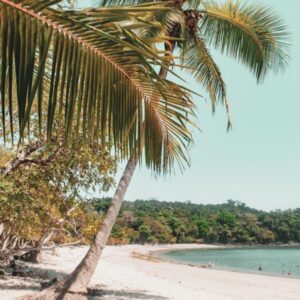
Playa Flamingo is one of the few places on Costa Rica’s Pacific coast where the lifestyle image and the on-the-ground reality actually match. The beach is genuine white sand, the water runs clear blue-green, and the hillsides above town frame ocean views that photographs genuinely cannot exaggerate. What separates Flamingo from every other pretty beach town in Guanacaste, though, is the combination of natural beauty with functional infrastructure, a maturing expat community, and a location that continues to attract serious investment. Playa flamingo costa rica real estate is one of the most searched topics among foreign buyers exploring this part of Central America.
This is not a fishing village in transition or a boom-and-bust surf town. Flamingo has developed steadily over two decades into a full-service coastal community with quality restaurants, medical access, international schools within driving distance, and a buyer base that skews toward people who want to stay, not just visit. That mix of genuine lifestyle appeal and practical livability is what makes playa flamingo costa rica real estate a fundamentally different conversation from most coastal markets in the region.
Location as a Long-Term Asset
Liberia’s Daniel Oduber Quirós International Airport sits roughly 80 kilometers from Flamingo, translating to a 75 to 90-minute drive on well-maintained roads. For a foreign buyer, that proximity changes everything. Direct flights from major U.S. and Canadian cities mean you can leave home on a Friday and be on your terrace with a sundowner the same evening. For a rental property, it means guests arrive refreshed rather than exhausted, which matters for occupancy and reviews. This is a key dynamic shaping the playa flamingo costa rica real estate market in 2026.
The road infrastructure connecting Flamingo to the broader Guanacaste region has improved significantly and continues to develop. The town itself offers a grocery store, pharmacy, fuel, banking services, and reliable high-speed internet, the latter being non-negotiable for the growing population of remote professionals who have chosen Flamingo as a permanent or semi-permanent base. Buyers researching playa flamingo costa rica real estate will find this pattern consistent across the region.
The Flamingo Marina Development and What It Signals About Future Appreciation
The redevelopment of Flamingo Marina is the single most significant capital project in the local market right now. The marina, which offers one of the few deepwater berths on Costa Rica’s Pacific coast, is undergoing a substantial expansion that adds slip capacity, commercial facilities, and a marine services hub. Projects of this scale do not happen without institutional capital and multi-year regulatory commitments behind them. It is one of the factors that distinguishes playa flamingo costa rica real estate from comparable markets.
For buyers, the signal is straightforward. Infrastructure investment at this level both attracts higher-end buyers and locks in the area’s positioning as a premium destination. Properties within view of or in proximity to the marina have already responded in value. Buyers who enter the market before the project reaches completion are buying ahead of the appreciation curve, not chasing it.
A Community That Chose Flamingo: Expat Life and Day-to-Day Reality
What Living Here Actually Feels Like Week to Week
The Flamingo expat community is active, welcoming, and largely made up of people who did their research before moving. You will find retired professionals from the U.S. and Canada, remote workers who kept their careers and traded their commutes for a Pacific view, and small business owners who identified the opportunity early. The social infrastructure that has grown around this community, including regular gatherings, shared recommendations for contractors and attorneys, and informal knowledge networks, is genuinely useful to new arrivals. This context is essential for anyone seriously researching playa flamingo costa rica real estate.
Day-to-day life is comfortable without being sanitized. You still navigate a foreign country with its own pace, bureaucracy, and occasional frustrations. But within Flamingo itself, the essentials are close, Spanish fluency is helpful rather than required, and the rhythm of life rewards those who came looking for something different. The playa flamingo costa rica real estate sector has been defined by exactly these dynamics in recent years.
High-Profile Market Signals and What They Mean for Buyers
When high-net-worth buyers from major markets choose Flamingo over other Gold Coast destinations, the reason is almost always the same: they want a place that functions as well as it looks. The continued entry of luxury residential development, combined with a buyer profile that has shifted increasingly toward full-time and semi-permanent residents rather than pure vacation home owners, has created a market that is more resilient and more liquid than most comparable coastal markets in Central America. For those active in playa flamingo costa rica real estate, this distinction is well understood.
Playa Flamingo Costa Rica Real Estate in 2026: Property Types, Price Ranges, and Micro-Markets
Beachfront Homes, Ocean-View Villas, and Luxury Estates: Understanding the Property Spectrum
The Flamingo market spans a wide range but clusters into three meaningful tiers. True beachfront homes, meaning direct beach access with minimal separation from the sand, start in the $800,000 range and move well past $3 million for larger parcels or newer construction. Ocean-view villas and luxury estates on the hillsides above town represent the largest segment of the high-end market, typically ranging from $500,000 to $2 million depending on lot size, build quality, pool and amenity package, and the quality of the view. These properties often combine dramatic panoramas with privacy and cooler temperatures, and they perform well both as primary residences and vacation rentals. This is central to understanding what playa flamingo costa rica real estate offers right now.
Condominiums and Lock-and-Leave Living: Who This Option Suits Best
Condominiums occupy a different position in the market and serve a specific buyer profile well. Entry points in established condo developments begin around $250,000 to $350,000, with newer or amenity-rich projects running higher. The core advantage is management simplicity. HOA services cover exterior maintenance, grounds, pools, and security, which significantly reduces the complexity of remote ownership. For a buyer whose primary goal is a personal retreat with predictable overhead and minimal management involvement, a well-run condo development in Flamingo or neighboring Potrero delivers exactly that. Anyone navigating playa flamingo costa rica real estate should keep this consideration in mind.

Micro-Market Breakdown: Which Pockets of Flamingo Match Which Buyer Profiles
Flamingo Beach and the Beachfront Corridor
The beachfront corridor is the market’s prestige address. Properties here command a premium justified by scarcity. There is a finite amount of direct beach access, and almost none of it comes to market. When it does, it moves. Buyers in this pocket are typically acquiring a primary lifestyle asset and price accordingly.
Hillside Ocean-View Estates and Gated Communities
The hillsides above Flamingo represent the market’s strongest combination of value, views, and rental appeal. Gated communities here offer security and shared infrastructure, which matters both for resident quality of life and for a property’s attractiveness to vacation rental guests. This is where most buyers with a $600,000 to $1.5 million budget find their best options. The trajectory of playa flamingo costa rica real estate reflects these trends directly.
Potrero and the Surrounding Village Expansion Zone
Potrero, a short drive from central Flamingo, has evolved from a secondary alternative into a legitimate market in its own right. Values remain somewhat lower than Flamingo proper, which attracts buyers who want proximity to the lifestyle hub without paying the Flamingo address premium. The village expansion zone along Potrero’s perimeter is also where most new construction activity is currently concentrated, giving buyers access to newer builds with modern specifications at accessible price points. This is what separates playa flamingo costa rica real estate from comparable opportunities elsewhere.
How Flamingo Compares to Nearby Markets Like Tamarindo
Tamarindo sits about 30 minutes south and operates as a genuinely different market: higher density, more commercial development, a younger demographic, and a more tourist-oriented character. It offers more inventory and more entry-level price points, but less of the residential quiet and community cohesion that define Flamingo. Buyers who prioritize a walkable town scene with nightlife and surf culture often choose Tamarindo. Buyers who prioritize privacy, prestige, and a residential community of like-minded long-term residents consistently choose Flamingo. Smart buyers in the playa flamingo costa rica real estate market factor this in from the start.
The distinction matters because the two markets have different appreciation drivers, different rental demand profiles, and different buyer communities. Choosing between them based on price alone misses the more important question of which environment you actually want to live in and which property type best matches your financial goals.
Property Type vs. Buyer Profile: A Quick Reference
Use this to identify your best-fit property category before you browse a single listing.
| Property Type | Primary Goal | Typical Budget | Management Intensity | Title Complexity |
|---|---|---|---|---|
| Beachfront Home | Lifestyle / Legacy | $800K+ | High | Low to Moderate (verify carefully) |
| Ocean-View Villa | Lifestyle + Rental Yield | $500K to $2M | Moderate | Low (fee simple typical) |
| Hillside Estate (Gated) | Appreciation + Rental | $600K to $1.5M | Moderate | Low |
| Condominium | Lock-and-Leave / Entry | $250K to $600K | Low (HOA-managed) | Low |
| Potrero Village Build | Value + New Construction | $350K to $700K | Moderate | Low to Moderate |
A few points worth noting beyond the table. Beachfront properties near the maritime zone, the first 200 meters from the high-tide line, may carry concession title rather than fee simple, which requires specific legal review covered in the next section. Higher rental yield and lower management intensity rarely coexist. The properties that generate the strongest vacation rental income typically require active management, so if that is your goal, budget for professional property management from day one. And appreciation is least predictable in the short term but most reliable over a seven-to-ten-year hold. Buyers chasing short-term gains should calibrate expectations accordingly.
Can Foreigners Buy Real Estate in Costa Rica? Legal Rights, Title Types, and Due Diligence Explained
The Foundational Answer: Equal Ownership Rights for Foreign Buyers
Costa Rica’s constitution grants foreign nationals the same property ownership rights as citizens. You do not need residency. You do not need a local partner. You do not need to form a corporation to hold title, though there are tax and estate planning reasons why some buyers choose to. As a U.S. or Canadian buyer, you can purchase, hold, sell, and inherit property in your own name with the same legal standing as any Costa Rican.
This is not a technicality buried in the fine print. It is the foundation of Costa Rica’s decades-long relationship with foreign investment, and it is meaningfully different from other Latin American markets where foreign ownership comes with restrictions, mandatory local partnerships, or bureaucratic carve-outs.
Fee Simple Title vs. Concession Property: The Single Most Important Distinction to Understand
What Fee Simple Title Means and Why It Matters
Fee simple title, called plena propiedad in Costa Rica, means you own the property outright. It is registered in the National Public Registry, it can be searched and verified, and it transfers clearly upon sale or inheritance. The vast majority of residential properties in Flamingo, including hillside estates, gated community homes, and most condominiums, carry fee simple title. This is what you want, and it is what most buyers in this market will find. This dynamic continues to influence pricing and availability across playa flamingo costa rica real estate.
Maritime Zone Law and the Risks of Concession Property
The complication enters within 200 meters of the mean high-tide line. Under Costa Rica’s Maritime Zone Law (Zona Marítimo Terrestre), the first 50 meters from the high-tide line is public land and cannot be privately owned by anyone. The next 150 meters, called the restricted zone, can be occupied under a government concession rather than outright ownership. Concession property is leased from the municipality, typically in five to 20-year increments, and requires a complex set of conditions, including that the holder have legal residency in Costa Rica.
A concession property can be a legitimate and valuable asset, but it requires a fundamentally different kind of due diligence. Buyers need to verify the concession status, expiration date, renewal terms, and whether the current holder even qualifies to hold it. Do not assume that because a property sits on the beach, its title is clean.
What Residency Is Required For — and What It Has Nothing to Do With
Residency is not required to buy property, open a bank account for real estate transactions, or generate rental income. Where residency does matter is if you want to work legally in Costa Rica, access the public health system, or qualify to hold a concession property. Many foreign buyers live in Flamingo part of the year on tourist visas, which is common and legal. Residency is a separate legal process worth pursuing if you plan to stay six months or more annually, but it has no bearing on your ability to buy and own real estate. Understanding playa flamingo costa rica real estate means engaging with nuances like this one.
The Due Diligence Process: What a Responsible Transaction Actually Looks Like
Title Verification Through the Public Registry
Every fee simple property in Costa Rica has a folio real, a unique registration number in the National Public Registry. Your attorney runs a title search on that number to confirm ownership, verify there are no liens or encumbrances, check for any easements or restrictions, and confirm the registered boundaries match the physical property. This search is the non-negotiable starting point of any transaction.
Environmental Permits and Road Access Checks
For newer construction or undeveloped land, SETENA environmental permits confirm that the project received required environmental approvals. CONAVI access checks confirm that legal road access to the property exists and is not dependent on a private arrangement that could be revoked. Buyers purchasing raw land or new development should specifically request confirmation of both.
The Role of a Costa Rican Attorney
Real estate transactions in Costa Rica are formalized before a notary public, who in Costa Rica must also be a licensed attorney. Hire your own, independent of the seller and the seller’s agent. Your attorney’s job is to run the title search, draft or review the purchase agreement, structure the closing documents, and register the transfer. Attorney fees are typically 1 to 1.5 percent of the purchase price, which is an exceptionally low cost for the protection it provides.
Escrow in Costa Rica: How Your Funds Are Protected
Regulated escrow services operate in Costa Rica and are used in most international transactions. Your deposit and purchase funds are held by a neutral third party and released only when the conditions of the purchase agreement are met. This structure protects you from scenarios where funds transfer but title does not. Reputable local firms will only work with established escrow providers.
Is It Safe to Invest in Costa Rica Real Estate as a Foreigner?
Costa Rica has a well-functioning property registry and a legitimate legal system. Risk in real estate transactions here comes not from the system itself but from bypassing it. The red flags that precede most buyer regrets follow a consistent pattern:
- A seller or agent who discourages you from hiring your own attorney
- A property without a clear folio real or with title held by a chain of shell companies
- Pressure to skip escrow or wire funds directly to the seller
- Beachfront property presented without disclosure of its maritime zone status
- Verbal assurances about permits, road access, or rental income that are not in writing
None of these are unique to Costa Rica. They are the same warning signs that apply in any market where a buyer is operating with less information than the seller. The difference here is that a knowledgeable local partner knows where these situations tend to arise and can identify them before they become your problem.
The True Cost of Buying Playa Flamingo Costa Rica Real Estate
A Realistic Closing Cost Framework
Budget 3.5 to 4.5 percent of the purchase price for total closing costs on a standard residential transaction. Understanding each component prevents the surprise that hits buyers who planned only for the purchase price.
Transfer Taxes, Stamp Duties, and Legal Fees
The transfer tax (impuesto de traspaso) runs 1.5 percent of the registered property value. Stamp duties, covering national registry, municipal, agrarian, and education stamps, add roughly another 0.5 to 0.65 percent. Attorney fees typically run 1 to 1.5 percent. Combined, these three categories account for most of the closing cost budget on a standard transaction.
The Luxury Transfer Tax: When It Applies and What It Adds
Properties registered above a certain fiscal value threshold are subject to an additional luxury transfer tax under the Ley del Impuesto Solidario. The rate structure is progressive, starting at 0.25 percent and rising based on the declared value. On a high-value hillside estate, this adds meaningful cost. Your attorney should model the total closing cost on your specific property before you finalize the purchase agreement.
Annual Property Tax: Costa Rica’s Straightforward Structure
Annual property tax in Costa Rica (Impuesto sobre Bienes Inmuebles) is 0.25 percent of the registered fiscal value. On a property with a registered value of $500,000, that is $1,250 per year, paid quarterly to the local municipality. One practical nuance worth knowing: fiscal values in Costa Rica are often assessed below market value, which means actual tax bills frequently run lower than the 0.25 percent of market value calculation would suggest. Compared to U.S. property tax rates, Costa Rica’s annual carrying cost is minimal.
HOA Fees and Community Maintenance Costs
In Flamingo’s gated communities and condo developments, HOA fees typically run between $200 and $600 per month depending on the community’s amenities and the scope of services covered. Higher-end communities with staffed entry, pool maintenance, landscaping, and road upkeep run toward the higher end of that range. These fees are a real ownership cost, but they also reduce the management burden significantly, particularly for remote owners. Budget for them explicitly rather than treating them as an afterthought. The playa flamingo costa rica real estate market has built its reputation on exactly this kind of resilience.
Financing as a Foreign Buyer: What Local Lending Looks Like and When Cash Makes More Sense
Foreign buyers can access financing through Costa Rican banks regulated by SUGEF, the country’s banking superintendent. The practical reality is that local bank financing for non-residents involves longer timelines, more documentation, and interest rates that typically run 6 to 9 percent on USD-denominated loans. For buyers with the capital to purchase outright, cash transactions close faster and avoid the complexity. Developer financing is available on some new construction projects and occasionally offers more favorable terms than local bank lending.
For buyers who need financing, private lenders and seller-financing arrangements exist, particularly in the mid-market range. These require the same legal scrutiny as any other transaction component.
Ongoing Costs That Catch Buyers Off Guard
Beyond taxes and HOA fees, a few recurring costs are worth knowing in advance:
- Utilities: Electric bills in Flamingo run higher than many buyers expect, primarily due to air conditioning in a tropical climate. Budget $200 to $400 per month for a mid-size home.
- Caretaking and property management: An unmanaged property in a humid tropical environment deteriorates. Even a part-time owner needs some level of local oversight.
- Corporation maintenance: If you hold property through a Costa Rican corporation (S.A. or S.R.L.), annual legal fees and the corporate tax on active corporations add several hundred dollars per year.
- Vacation rental licensing: Properties rented commercially require a tourism license from ICT, which involves an inspection and annual renewal.
None of these costs are prohibitive. Together, they amount to a full picture of what ownership actually costs, which is what responsible planning requires.
Rental Yield and Investment Return: A Realistic Framework for Vacation Rental Income in Playa Flamingo
Can You Generate Rental Income from a Vacation Property in Playa Flamingo?
Yes, and many owners do. Guanacaste is one of Costa Rica’s top tourism destinations, Flamingo’s proximity to Liberia airport gives it an access advantage over southern Pacific markets, and nightly rates for well-presented properties are competitive. But vacation rental income is a business with real operating costs and meaningful seasonality, and buyers who model it honestly make better decisions than those who anchor to gross revenue projections.
The legal framework is straightforward. Register the property with ICT for tourism rental, collect and remit the 13 percent VAT on rental income, and file annual income tax returns. Most property management firms handle this compliance as part of their service, but the obligation belongs to the owner.

What Drives Occupancy and Nightly Rates in Guanacaste
High season in Guanacaste runs from mid-November through April, driven by dry weather and the influx of North American and European visitors escaping winter. Peak weeks around Christmas and New Year’s command the highest rates. Shoulder season in May, early June, and November can generate solid occupancy with strategic pricing. Low season from July through October sees reduced demand, though Flamingo’s mix of permanent residents and long-term rentals provides more stability than purely tourist-dependent markets.
Nightly rates in Flamingo for a three-bedroom ocean-view villa with a pool run roughly $350 to $700 per night depending on season, finishes, and online reputation. Beachfront or premium-positioned properties command more.
An Illustrative Investment Scenario: Honest Numbers
Gross Rental Revenue Assumptions
A three-bedroom hillside villa purchased at $750,000, rented at an average of $450 per night, could realistically achieve 120 to 150 occupied nights annually across the full year. That produces gross rental revenue in the range of $54,000 to $67,500. Reaching 120 to 150 nights requires active marketing, competitive pricing, and responsive management. It does not happen passively.
Operating Costs and What Net Yield Actually Looks Like
Subtract from gross revenue:
- Property management fee (typically 20 to 30 percent of gross): $13,500 to $20,000
- Platform fees (Airbnb, VRBO, etc., approximately 3 percent): $1,600 to $2,000
- Utilities, consumables, and guest supplies: $4,000 to $6,000
- Maintenance and repairs: $3,000 to $5,000 annually for a well-maintained property
- Insurance, property tax, and HOA: $5,000 to $8,000
Net operating income on this scenario lands approximately in the $20,000 to $30,000 range, producing a net yield of roughly 2.7 to 4 percent on a $750,000 asset. That is a realistic number, not a promotional one.
Using Cap Rate Without Over-Relying on It
Cap rate (net operating income divided by purchase price) gives you a standardized way to compare properties. A 3 to 4 percent cap rate on a Flamingo villa is consistent with comparable leisure real estate markets in premium coastal destinations. It is not the yield of a commercial apartment building, nor should it be. Buyers in this market are typically pricing in appreciation and personal use value alongside rental income, not treating the property as a pure yield vehicle. Use cap rate to compare options and stress-test assumptions, not as a standalone justification for purchase.
Property Types That Perform Best as Vacation Rentals
Three-bedroom ocean-view villas with private pools consistently outperform other property types as vacation rentals. The pool is effectively non-negotiable for guests booking a tropical retreat, and the three-bedroom configuration serves both families and groups while commanding a meaningful rate premium over two-bedroom units.
Beachfront properties generate the strongest rate premiums but also carry the highest acquisition cost and, in some cases, title complexity. Condominiums with HOA restrictions on short-term rentals are not always viable as vacation rental investments, and buyers should verify rental permissions before purchase.
Long-term rental demand in Flamingo is real but thinner relative to vacation rental demand. A property optimized for vacation rental and occasionally shifted to long-term during slower periods is generally a more flexible and higher-yielding structure than the reverse.
What Happens When You Sell
Costa Rica imposes no capital gains tax on the sale of real property held as a personal asset rather than as inventory of a business. For most foreign buyers holding a single residence or vacation home, gains on sale are not taxed at the national level. Properties held through corporations or sold as part of a commercial real estate business are treated differently and require specific legal and tax advice.
The sale process mirrors the purchase: transfer of title before a notary, registration of the transfer, and payment of applicable transfer taxes by the buyer. A realistic sale timeline for a well-priced property in good condition runs three to nine months. Liquidity in the Flamingo market is reasonable relative to most comparable coastal markets, though it is not as immediate as urban real estate.
Life After the Purchase: Property Management, Rental Operations, and Long-Term Partnership
Why the Transaction Is Only the Beginning
Closing day is the moment most buyers have been working toward, but it is also the moment when a different kind of work begins. A property in Flamingo does not manage itself. In a tropical coastal environment, deferred maintenance accelerates, guest expectations are high, and the logistics of coordinating vendors, utilities, and rental channels from another country require either your full attention or someone who can give it that attention on your behalf. The buyers who thrive long-term are almost always those who thought past the closing table before they reached it.
How a Remote Professional Navigated the First Two Years: An Illustrative Scenario
Consider a buyer who purchases a three-bedroom ocean-view villa in a gated community above Flamingo Beach. She works remotely from the Pacific Northwest, plans to visit six to eight weeks per year, and wants the property generating income during her absence. Her attorney handled the title and closing. Her bank wire cleared. She owns the property.
Then reality arrives. The pool pump fails two weeks before her first guests check in. A cleaning vendor cancels. Her listing has no reviews and no bookings for the first two months. A water bill she did not know existed goes unpaid. None of these problems are unusual or catastrophic, but each one requires a local contact who can act quickly. A buyer without that contact spends her first year managing problems rather than enjoying her investment.
The buyers who navigate this period smoothly are those who engaged a full-service property management firm before their first guest arrived, not after the first problem surfaced.
What Full-Service Property Management Covers and What It Protects You From
Maintenance, Vendor Coordination, and Keeping a Property Guest-Ready From Abroad
A full-service management firm handles the physical operation of your property: routine maintenance inspections, pool and landscaping service coordination, appliance repairs, pre-arrival checks, and post-departure assessments. In a humid tropical climate, a property that goes unchecked for three months can develop mold, pest issues, or mechanical failures that cost far more to fix than the management fee that would have caught them early.
The vendor network matters as much as the oversight. A firm with years in the Flamingo market has established relationships with reliable plumbers, electricians, and contractors. A new owner starting from scratch will spend months building that network, mostly by learning through bad experiences.
Vacation Rental Marketing, Channel Management, and Guest Experience
Rental income does not follow automatically from owning a nice property. It follows from consistent listing quality, strategic pricing, platform expertise, and guest communication that converts inquiries into bookings and bookings into five-star reviews. A management firm handles all of this: professional photography, listing creation and optimization across Airbnb, VRBO, and direct booking platforms, dynamic pricing calibration across seasons, and guest communication from inquiry through checkout.
The review ecosystem on vacation rental platforms compounds over time. A property with many strong reviews outperforms a comparable property with just a few, regardless of physical quality. Getting there requires volume and consistency, which requires someone managing it actively.
Financial Reporting and Owner Communication
You should receive monthly statements that clearly show gross rental revenue, management fees, operating expenses, and net owner distributions. A good management firm does not require you to chase information. Your monthly report tells you what came in, what went out, and what transferred to your account. Quarterly check-ins give you a view on property condition, market trends, and any decisions that need your input.
What you should not need to do is field late-night messages from guests, track down receipts, or wonder whether your property was rented last week.
The Difference Between a Transactional Agent and a Long-Term Ownership Partner
Most real estate agents earn their commission at closing and move to the next transaction. That model is not dishonest, but it is not structured to support you after you own the property. A transactional agent may have done excellent work finding your home and negotiating the deal, but they have no operational stake in what happens to your asset over the next decade.
A boutique local firm that integrates sales, legal referrals, and ongoing property management operates differently. Your agent already knows your property, your goals, and your risk tolerance. When the vacation rental market shifts, when you want to renovate before relisting, or when you eventually decide to sell, you are not starting the relationship over. You are continuing one.
That continuity has real financial value. Decisions made with full context outperform decisions made in isolation. A partner who watched your property perform across multiple rental seasons can tell you whether a rate adjustment or a renovation investment makes more sense. A transactional agent cannot.
How to Find a Trustworthy Real Estate Partner in Playa Flamingo
Vetting for Local Tenure, Market Depth, and Post-Sale Service
Ask any prospective firm how long they have operated specifically in the Flamingo and Gold Coast market. Ask for examples of properties they currently manage, not just transactions they have closed. Ask how they handle a maintenance emergency when the owner is abroad and what their response time expectation is. Ask who specifically manages your property and how many properties that person oversees.
The answers reveal whether you are talking to a firm with deep local roots or one that lists properties in Flamingo alongside dozens of other markets it does not know as well.
Why Nearly Two Decades of Gold Coast Specialization Changes What Is Possible
A firm that has operated exclusively on the Gold Coast for close to twenty years has navigated market cycles, regulatory changes, and the evolution of the vacation rental landscape through direct experience. They know which micro-markets in Flamingo have appreciated and which have stalled. They know which concession properties have clean renewal histories and which to avoid. They know the attorneys, inspectors, and escrow agents who perform and those who do not.
That institutional knowledge cannot be replicated by a newer entrant or a national listing platform. It is exactly the kind of local depth that converts a complicated international purchase into a confident, well-managed ownership experience.
Is a Boutique Local Firm Right for You?
Five signals your situation calls for relationship-based representation over a high-volume listing platform:
- You are buying from abroad and cannot be on the ground for every step of the process
- You plan to rent the property and need management support from day one, not as an afterthought
- You want a single point of contact who knows your property, your goals, and your history as a client
- You value access to off-market inventory and local market intelligence over the widest possible listing catalog
- You intend to hold the property for five or more years and want a partner who will still know your name when you decide to sell
If three or more of these apply, the transactional model is not built for your needs.
Conclusion: Your Playa Flamingo Costa Rica Real Estate Journey
From Dream to Decision: What You Now Know That Most Buyers Don’t
You came into this guide with a vision and a set of fears. The vision was real: Flamingo’s white sand beach, Pacific sunsets, a community of people who chose this place deliberately, and a property that works for you financially while you are not there to enjoy it in person. The fears were also real: unfamiliar legal systems, title risk, costs you cannot see coming, and the prospect of managing a property from thousands of miles away.
What you know now is that the vision is achievable and the fears are manageable. Foreign buyers own property in Costa Rica with the same legal standing as citizens. Fee simple title is verifiable, closing costs are predictable, and the tax structure is straightforward. The rental income model can generate real returns when it is built on honest assumptions and active management. And the risks that trip up buyers are not mysterious. They follow predictable patterns that an experienced local partner recognizes before they become your problem.
Thriving Here Is About Partnership, Not Just Purchase
The buyers who build wealth and genuine enjoyment from playa flamingo costa rica real estate are not necessarily the ones who found the best listing. They are the ones who found the right partner. The legal framework, the market fundamentals, and the lifestyle opportunity are all in place. What separates a smooth ownership experience from a stressful one is the quality of the people guiding you through it, before the closing, at the closing, and across the years that follow.
A boutique firm with deep Gold Coast roots does not just show you properties. It helps you buy the right one, structure it correctly, manage it profitably, and eventually sell it from a position of strength.
Your Next Step with Coastal Realty & Property Management
If Flamingo is the right market for you and you are ready to move from research to conversation, the next step is straightforward. Talk to a local expert who can review your goals, your timeline, and your budget and tell you honestly where your best options lie. Not a contact form that routes to a call center, but a conversation with someone who has been working this market for nearly two decades and can answer specific questions about specific properties.
Coastal Realty & Property Management has guided foreign buyers through every step of the ownership journey on Costa Rica’s Gold Coast since the early days of the market’s development. Reach out directly to start that conversation. The best time to buy in Flamingo was ten years ago. The second best time is before the marina project reaches completion.
Frequently Asked Questions
What are the legal requirements for foreign buyers purchasing real estate in Costa Rica?
Costa Rica grants foreign nationals the same property ownership rights as its own citizens, with no residency requirement and no need for a local partner. The primary requirement is completing a properly structured transaction: hiring an independent Costa Rican attorney who is also a licensed notary, conducting a title search through the National Public Registry, using regulated escrow to hold funds, and registering the transfer officially. These steps protect your investment and are standard practice in any legitimate transaction.
How much does it cost to buy property in Playa Flamingo, and what are typical closing costs?
Beyond the purchase price, budget approximately 3.5 to 4.5 percent of the property value for closing costs. This covers the transfer tax (1.5 percent of registered value), stamp duties (roughly 0.5 to 0.65 percent), and attorney fees (typically 1 to 1.5 percent). Higher-value properties may also be subject to a progressive luxury transfer tax. Your attorney should produce a detailed closing cost estimate for your specific property before you sign a purchase agreement.
Can I generate rental income from a vacation property in Playa Flamingo, and how does it work?
Yes. Many foreign owners generate income by placing their Flamingo properties on short-term rental platforms like Airbnb and VRBO. To do so legally, you register the property with Costa Rica’s tourism institute (ICT), collect the applicable VAT on rental income, and file annual tax returns. Most full-service property management firms handle this compliance on the owner’s behalf. Realistic net yields on a well-managed villa typically fall in the 2.7 to 4 percent range after management fees, platform costs, and operating expenses.
What is the process for buying beachfront property in Costa Rica as a non-resident?
The process begins with understanding title type. Properties within 200 meters of the high-tide line may be subject to Costa Rica’s Maritime Zone Law (Zona Marítimo Terrestre), which means the land could be held under a municipal concession rather than fee simple ownership. Concession properties require additional due diligence, including verification of the concession’s status, renewal terms, and eligibility requirements. Your attorney should conduct this review before any offer is made. For properties outside the maritime zone, the standard purchase process applies: title search, escrow, notarized transfer, and registration.
What ongoing costs and taxes should I expect as a foreign property owner in Playa Flamingo?
Annual property tax in Costa Rica (Impuesto sobre Bienes Inmuebles) is 0.25 percent of the registered fiscal value, one of the lowest rates in the Americas. Beyond that, expect monthly HOA fees of $200 to $600 in gated or condo communities, utility costs of roughly $200 to $400 per month depending on property size, and caretaking or property management fees if you are not present year-round. If you hold the property through a Costa Rican corporation, add annual legal maintenance fees. None of these costs are prohibitive, but budgeting for all of them upfront gives you an accurate picture of total ownership cost.
How do I find a trustworthy real estate agent in Costa Rica who will work in my interest?
The most reliable signal is tenure and specialization. Ask how long the firm has operated specifically in the Flamingo and Guanacaste market, not just in Costa Rica generally. Ask for references from current management clients, not just past buyers. Confirm that they will support you after closing, through property management, vendor coordination, and eventual resale, not just through the transaction. A firm that integrates sales and long-term property management has a direct stake in your property performing well, which aligns their incentives with yours in a way that a transaction-only agent does not.
Is Playa Flamingo Costa Rica Real Estate Right for You?
Buyers exploring playa flamingo costa rica real estate consistently find that this northern Pacific community offers an exceptional combination of infrastructure, lifestyle quality, and long-term appreciation potential. Whether you are looking for a beachfront villa, a vacation rental investment, or a retirement home, playa flamingo costa rica real estate delivers options that few other coastal markets can match.