
Limón Costa Rica Real Estate: Why the Caribbean Gold Coast Is Winning Foreign Buyers Away from the Pacific
What Nearly Two Decades on the Ground Reveals
When exploring Limón costa rica real estate, it helps to have guidance from those who know the market. Foreign buyers who discovered Costa Rica a decade ago went almost exclusively to the Pacific. Guanacaste, Manuel Antonio, the Nicoya Peninsula: these names became shorthand for the Costa Rica dream. That story is not over, but it has changed in ways that are now impossible to ignore from where we sit on the Caribbean coast.
Since 2006, we have watched a quiet but accelerating migration of buyers arrive in Limón Province not as an afterthought, but as a first choice. They arrive having already researched the Pacific, and they arrive having already done the math. What they find here consistently surprises them: more land for their budget, a coastline that still has breathing room, and a community culture that feels like what the Pacific used to be before the resort corridors took over. The buyers who made that discovery five years ago are now sitting on properties that have appreciated meaningfully. The buyers making it today are still early enough to benefit from similar dynamics.
How Limón Province Compares to Pacific Coast Price Points and Saturation
The price differential between Limón and comparable Pacific markets remains one of the most compelling arguments for the Caribbean coast. A beachfront lot near Puerto Viejo that would list today in the $300,000 to $600,000 range would carry a price tag well above $1 million in a comparable Pacific location like Tamarindo or Dominical. Interior lots and jungle properties show an even wider spread.
The Pacific coast’s inventory problem compounds the price issue. Well-located properties in established Pacific markets move quickly and often arrive to foreign buyers already optioned by developers or domestic investors. In Limón, qualified buyers still find genuine choice. That is a window, not a permanent condition, which is exactly why the timing of this conversation matters. This dynamic makes limón costa rica real estate one of the most exciting opportunities in Central America.
What “Caribbean Gold Coast” Actually Means for Long-Term Property Value
The term “Caribbean Gold Coast” refers to the stretch of Limón Province running roughly from Cahuita south through Puerto Viejo, Playa Chiquita, and Punta Uva to Manzanillo. This corridor sits inside one of the most biodiverse coastal environments on the planet, borders the Gandoca-Manzanillo Wildlife Refuge, and benefits from infrastructure improvements that have steadily reduced the friction of accessing this part of Costa Rica.
Long-term value along this corridor rests on a foundation that does not shift easily: protected land that prevents overdevelopment, a globally recognized ecological brand, and a tourism demand base that draws visitors who spend more and stay longer than average. Properties here are not appreciating because of speculation. They are appreciating because supply is structurally constrained and demand is structurally growing.
Is the Limón Real Estate Market Stable Enough for a Long-Term Investment?
The honest answer is yes, with context. Limón is not a liquid market where you flip a property in eighteen months and exit cleanly. Buyers who treat it that way will be frustrated. Buyers who enter with a five-to-ten year horizon, or who plan to use the property personally while generating rental income, find the market to be steady and rewarding. For buyers focused on limón costa rica real estate, this point deserves careful attention.
Limón real estate has not experienced the boom-and-bust cycles that have periodically rattled coastal markets elsewhere in Latin America. Transactions move at a pace that filters out purely speculative capital. The buyers who thrive here are the ones who come for the right reasons: lifestyle, sustainability, genuine long-term investment. Those buyers tend to hold, which keeps the market stable.
Which Neighborhood Actually Fits Your Vision? A Sub-Market Guide for Real Buyers
Choosing where to buy on the Caribbean Gold Coast is, first and foremost, a lifestyle decision. The right sub-market for you depends on how you plan to live in, visit, and use your property. Here is an honest look at each area. This is a critical factor when evaluating limón costa rica real estate options.
Puerto Viejo de Talamanca: The Established Expat Hub With Village Energy
Puerto Viejo is where most foreign buyers start, and for good reason. It offers the highest concentration of English-speaking services, established restaurants and shops, medical access, and a well-developed expat community network. Properties here carry a premium relative to the rest of the corridor, and for buyers who want to minimize logistical friction, that premium is often worth it. Expect more activity, more culture, and more connection per square block than anywhere else in the province. If your retirement vision involves walking to a café and knowing your neighbors by name, Puerto Viejo delivers.
Playa Chiquita: Quiet Rainforest Proximity With Walkable Beach Access
Five kilometers south of Puerto Viejo, the pace changes completely. Playa Chiquita is a residential corridor rather than a town: a series of properties set back from or fronting a quieter stretch of coast, with jungle on one side and the Caribbean on the other. Buyers here get walkable beach access without living inside a village. The expat community exists but is less dense, which suits buyers who want privacy without full isolation. Rental performance in this area is strong because guests seek exactly the experience that permanent residents value: seclusion with proximity to services.
Manzanillo: Eco-Conscious Living at the Edge of the Wildlife Refuge
Manzanillo sits at the southern end of the Gold Coast, bordered by the Gandoca-Manzanillo Wildlife Refuge. Development here is intentionally limited, which means property inventory is smaller and opportunities move fast when they appear. The buyers drawn to Manzanillo are typically committed to low-impact living, value refuge access deeply, and understand they are buying into a community rather than just a property. If ecological integrity is central to your vision, this is where it is most protected. Savvy investors in limón costa rica real estate often cite this as a decisive advantage.
Talamanca and Pococí: Land Banking, Agriculture, and Development-Focused Buyers
Not every buyer arrives looking for a beach home. Limón Province extends well inland through the Talamanca mountains and into the Pococí canton, where buyers focused on agricultural land, larger holdings, or long-horizon development plays find a genuinely different opportunity set. Land prices drop significantly here, parcels run larger, and the investment thesis shifts from lifestyle appreciation to productive asset building. These purchases require deeper due diligence and stronger local connections to navigate well, but the upside for patient, development-oriented buyers is real.
Is Limón Safe? An Honest, Neighborhood-by-Neighborhood Answer
Safety is the question almost every buyer asks and few sources answer directly. The honest picture: the Caribbean Gold Coast communities, including Puerto Viejo, Playa Chiquita, Punta Uva, and Manzanillo, have established resident populations, active community watch culture, and property crime rates that compare favorably with coastal tourist communities throughout Central America. Petty theft exists, as it does in any tourist area. Serious violent crime targeting foreign residents is rare.
The city of Limón itself, the provincial capital, operates differently and functions primarily as a transit point rather than a destination for most foreign buyers. First-time visitors sometimes conflate the city’s urban challenges with the coastal communities, and that is a significant mistake. The communities where foreigners buy and live operate under very different conditions. A trusted local advisor will walk you through exactly which areas and access routes to understand before you commit to any property. This is why demand for limón costa rica real estate continues to grow year on year.
Sub-Market Fit at a Glance
This matrix matches the most common buyer profiles to each Gold Coast sub-market across the criteria that actually drive long-term satisfaction. Each cell reflects relative strength on that criterion, rated Low, Moderate, or High.
| Sub-Market | Tranquility | Expat Community | Rental Income Potential | Land Availability | Proximity to Amenities |
|---|---|---|---|---|---|
| Puerto Viejo | Moderate | High | High | Low | High |
| Playa Chiquita | High | Moderate | High | Moderate | Moderate |
| Manzanillo | High | Low-Moderate | Moderate | Low | Low |
| Talamanca/Pococí | High | Low | Low | High | Low |
Anyone serious about limón costa rica real estate should factor this into their decision.
For the retirement dreamer: Puerto Viejo or Playa Chiquita. If you want walkable community life with services nearby, Puerto Viejo fits first. If you want quiet mornings and a beach five minutes away, Playa Chiquita is the better match. Both offer the expat infrastructure that makes daily life manageable without fluent Spanish.
For the vacation rental investor: Playa Chiquita leads on the blend of strong rental demand and moderate entry price. Puerto Viejo generates high occupancy but carries higher acquisition costs that compress yield. The sweet spot for investors looking to maximize return on capital is typically Playa Chiquita or Punta Uva, where the guest experience is strong and purchase prices have not yet fully reflected rental performance.
For the development-focused buyer: Talamanca and Pococí are the clear answer. Larger parcels, lower per-hectare pricing, and genuine development potential make these cantons the logical choice for buyers with a five-to-fifteen year land banking or agricultural investment horizon.
What Your Budget Actually Gets You on the Caribbean Coast
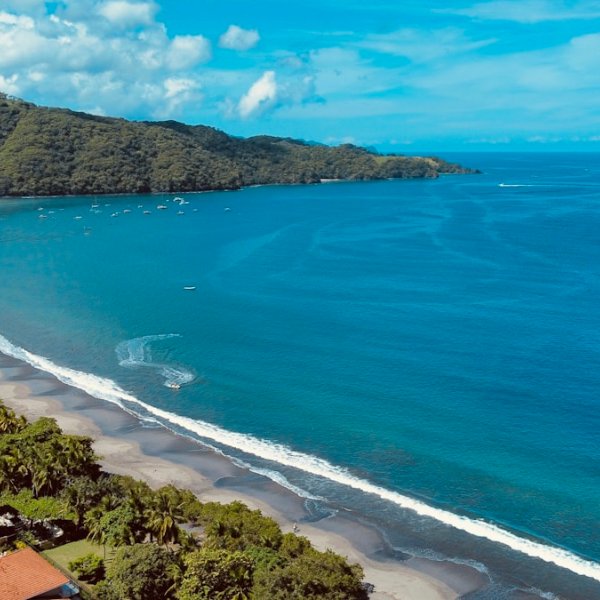
Beachfront and Oceanfront Property: Price Ranges and What Drives the Premium
True beachfront property on the Caribbean Gold Coast sits in a narrow price band that reflects both scarcity and legal complexity. Direct oceanfront lots with titled land, the safest legal status, typically list between $300,000 and $700,000 depending on size, location within the corridor, and whether improvements exist. Developed beachfront homes with established rental history push higher, often into the $600,000 to $1.2 million range for well-maintained properties in Puerto Viejo or Playa Chiquita.
Three factors drive the premium above raw square footage: legal title clarity, road access, and existing infrastructure. A beachfront parcel with a clear registered title, reliable road access, and utilities already connected commands significantly more than a comparably sized lot where any of those three factors is uncertain. Buyers who do not yet understand the distinction between titled land and concession land sometimes wonder why two seemingly similar beachfront properties carry such different prices. The legal section below explains exactly why.
Homes, Casitas, and Condos: Realistic Entry Points for Foreign Buyers
The Caribbean Coast does not have a dense condo market the way Pacific resort corridors do. What it has instead is a range of single-family homes, casitas (small standalone cottages), and occasionally small multi-unit rental properties that foreign buyers have built or acquired over the past two decades.
Entry-level homes set back from the beach, typically one or two bedrooms with functional but modest finishes, start around $120,000 to $180,000. Mid-range residential homes with quality construction, established landscaping, and proximity to amenities typically fall between $200,000 and $450,000. Architecturally designed properties with premium finishes, pool infrastructure, and direct beach proximity sit at $500,000 and above.
Casitas deserve specific mention because they represent one of the most practical entry strategies for buyers who want both personal use and rental income. A well-located casita in Playa Chiquita can be acquired for $150,000 to $250,000 and generate meaningful short-term rental revenue during peak season while remaining available for the owner’s use during slower months. The math works, and the management requirements are simpler than for larger multi-unit properties.
Vacant Land and Lots: Opportunity, Complexity, and Due Diligence Priorities
Land purchases on the Caribbean Coast offer the widest range of price points and the widest range of risk. Interior jungle lots start below $50,000. Titled lots with ocean views and reasonable beach proximity range from $80,000 to $300,000. The land itself is often genuinely beautiful and priced well below comparable Pacific inventory.
The complexity lives in the due diligence, not the price negotiation. Land purchases require a thorough review of property boundaries (which in rural Costa Rica do not always match what appears on paper), land-use zoning classifications, access rights, and legal title status. Buyers who purchase land based on a seller’s verbal description of the title status, without independent registry verification, take on risks that can take years and significant legal fees to resolve. This is the category of purchase where local expertise pays for itself most clearly.
How Much Does Real Estate Cost in Limón Versus Other Costa Rica Provinces?
Across equivalent property types, Limón generally runs meaningfully below Pacific markets. A beachfront property near Tamarindo or Manuel Antonio that lists at $1.2 million will often have a comparable in Puerto Viejo at $500,000 to $700,000. The gap narrows somewhat at the luxury end, where exceptional properties in any market command premium pricing, but across the broad middle of the market, the differential remains substantial.
Compared to the Central Valley around San José, Limón coastal properties carry a premium tied to their lifestyle and rental income potential. Compared to the Southern Pacific zone around Uvita and Ojochal, Limón offers similar ecological character at lower entry prices, though Pacific infrastructure has advanced further.
Hidden Costs Every Foreign Buyer Must Factor Into Their Budget
The purchase price is the starting point of your budget calculation, not the end point. Foreign buyers who plan only around the listed price consistently arrive at closing surprised.
Closing Costs, Transfer Taxes, and Notary Fees Explained
Costa Rica real estate transactions carry a total closing cost burden that typically runs between 3.5 and 4.5 percent of the registered property value. This includes a property transfer tax of 1.5 percent, document stamps and registry fees of approximately 0.65 percent, and notary attorney fees, which are set by law on a sliding scale and generally fall between 1 and 1.5 percent of the transaction value. Both buyer and seller commonly share some of these costs, but the specific split is negotiable and should be defined in the purchase agreement before closing.
Property Taxes, HOA Fees, and Ongoing Ownership Expenses
Costa Rica’s annual property tax is 0.25 percent of the registered property value, among the lowest in the Americas. On a $300,000 property, that is $750 per year, which routinely surprises buyers accustomed to US property tax rates. HOA fees vary by community but are typically modest by North American standards, often running $100 to $300 per month in organized developments. Additional ownership costs include property insurance, routine maintenance, and utility connections. Budgeting $5,000 to $10,000 annually for ongoing ownership costs on a mid-range property is a reasonable planning baseline.
Currency Risk and Banking Considerations for Overseas Buyers
Real estate in Costa Rica is almost universally priced and transacted in US dollars, which eliminates direct currency conversion risk on the purchase itself. The ongoing concern for US-based buyers is the mechanics of transferring funds internationally and maintaining a local account. Costa Rican banks are accessible to foreign property owners, though the account-opening process requires documentation and patience. Many buyers use escrow services for the transaction itself and establish a local colones account for ongoing expenses. Working with a local advisor who can refer you to experienced banking contacts shortens this process considerably.
The Legal Roadmap: How Foreign Buyers Actually Purchase Property in Costa Rica
Equal Rights, Real Complexity: What the Law Grants You and What It Does Not Protect You From
Costa Rica’s constitution grants foreign nationals the same property ownership rights as citizens. You do not need to be a resident, you do not need a local partner, and there is no foreign ownership cap. This is genuinely good news and one of the key reasons Costa Rica continues to attract international buyers.
What the law does not do is protect buyers who skip proper due diligence. The registry system is reliable when verified correctly, but the verification must actually happen. A property can carry outstanding liens, boundary disputes, or encumbrances that a competent notary attorney will catch through a proper title study, and that an unprepared buyer will inherit with the deed.
Titled Property Versus Concession Land: The Single Most Important Distinction on the Caribbean Coast
No concept in Caribbean Coast real estate matters more to a foreign buyer than understanding the difference between these two categories of land. Getting this wrong is not a paperwork inconvenience. It is a financial mistake that can take years to untangle.
What Titled Property Means and Why It Matters
Titled property, meaning property with a registered escritura in the Registro Nacional, means you hold fee-simple ownership recorded in a national database. You can sell it, mortgage it, will it to heirs, and hold it indefinitely. Title can be held individually, in a corporation known as a sociedad anónima, or in joint ownership. This is the most secure form of ownership and the benchmark all buyers should understand before evaluating any other structure.
How Maritime Zone Law Governs Beachfront Concessions
Costa Rica’s Maritime Zone Law, known locally as the Zona Marítimo Terrestre, defines a 200-meter band from the high tide line along the entire coastline. The first 50 meters are permanently public and cannot be owned by anyone. The next 150 meters, where many of the most desirable beachfront properties sit, are government land that can be granted as a concession (a long-term lease) but cannot be privately owned in the traditional sense.
Concession holders pay annual fees to the relevant municipality, operate under terms set in the concession agreement, and can transfer their concession rights, but the underlying land always belongs to the Costa Rican state. Concessions can be renewed and are commercially valuable, but they carry restrictions that titled land does not, including limitations on who can hold a concession and the risk, though historically uncommon, of non-renewal.
Why This Distinction Trips Up Buyers Who Skip Local Counsel
The practical problem is that beachfront properties are often described and marketed in terms of their improvements and location without clearly distinguishing whether the land beneath them is titled or on concession. A buyer who crosses this distinction casually may find that the asset they believed they owned outright operates under a fundamentally different legal framework. The financial stakes of this misunderstanding are significant. A single conversation with a qualified local attorney before you make an offer costs far less than the alternative.
The Role of the Notary Attorney and the Property Registry
In Costa Rica, real estate transactions are executed through a notary attorney, called a notario público: a licensed professional who holds simultaneous status as both notary and attorney, with authority to authenticate documents and record transactions in the Registro Nacional. This is not the same role a US closing agent plays. The notario drafts the transfer deed, confirms identity, verifies registry status, and submits the transaction for official recording.
The Registro Nacional is the national property registry, a public database where all titled property ownership, mortgages, liens, and encumbrances are recorded. A proper title study pulls the full chain of ownership and encumbrance history directly from the registry. If a notary attorney does not perform this study before closing, the buyer has no protection against what that history may contain.
What Are the Legal Steps for a Foreigner to Buy Property in Limón, Costa Rica?
The transaction follows a straightforward sequence once the right professionals are in place.
- Make an offer and negotiate a purchase agreement that defines price, conditions, timeline, and deposit terms.
- Retain an independent notary attorney to conduct a full title study through the Registro Nacional, verifying ownership chain, boundary status, and any liens or encumbrances.
- Complete due diligence on zoning, municipal permits, land use classification, and, for concession land, the status and terms of the concession grant.
- Transfer the agreed deposit into a licensed escrow account held by an independent escrow company or attorney.
- Execute the transfer deed before the notary, with both parties present or represented by power of attorney.
- Pay applicable transfer taxes and fees as the notary records the transaction with the Registro Nacional.
- Receive confirmation of registered ownership, typically within several weeks of submission.
The timeline from signed offer to registered ownership varies, but 60 to 90 days is a reasonable working expectation for a clean transaction with no title complications.
How to Avoid Real Estate Scams and Title Fraud When Buying in Costa Rica
Title fraud and misrepresentation exist in Costa Rica, as they do in any property market. The protections are available but must be actively used. Insist on an independent title study, not a study arranged or summarized by the seller’s attorney. Verify that escrow is held by a licensed independent party, not transferred directly to an individual seller or agent before closing. Confirm that the person signing as seller actually appears as the registered owner in the Registro Nacional at the time of signing.
The buyers most vulnerable to fraud are those who rely on verbal assurances, skip independent counsel because the seller “already has an attorney,” or rush a transaction because they feel urgency from the seller’s side. A genuine seller with a clean property will not object to a buyer conducting proper due diligence.
Can Property Investment Qualify You for Costa Rica Residency?
Yes. Under Costa Rica’s Investor Residency category, known as the residencia de inversionista, a foreign national who invests a qualifying minimum amount in real property can apply for legal residency. This status requires maintaining the investment and renewing periodically. It does not automatically confer the right to work in Costa Rica, but it does provide legal resident status, access to the public health system, and a pathway toward permanent residency over time. For buyers whose investment meets this threshold, which covers a substantial portion of the Limón market, residency by investment is a meaningful parallel benefit worth discussing with your attorney early in the process. Specific investment minimums are set by law and subject to change, so confirm current requirements with a qualified Costa Rican attorney.
What Does a Rigorous Due Diligence Process Actually Look Like?
Beyond the title study, a complete due diligence review for Caribbean Coast property covers several distinct areas. A qualified local team will examine municipal use permits and any existing construction legality (many older properties in Limón carry unpermitted structures), confirm that property tax payments are current, verify that utility connections are legal and documented, and, for properties near the maritime zone, obtain a certified survey confirming the property’s actual distance from the high tide line.
For vacant land, due diligence extends to soil suitability for intended construction, access road legality, and any environmental restrictions tied to proximity to protected areas or waterways. The Gandoca-Manzanillo Wildlife Refuge creates buffer zones that affect development rights on nearby parcels. Knowing exactly where those boundaries fall before signing a purchase agreement is the difference between a viable investment and a parcel you legally cannot develop.
Vacation Rental Income and Investment Returns on the Caribbean Coast
Short-Term Rental Demand in Puerto Viejo and Playa Chiquita: Seasonal Patterns and Occupancy Context
Caribbean Coast tourism operates on a seasonal rhythm that differs from the Pacific. The Caribbean’s high season runs from July through September and from December through April, periods that align well with North American and European travel patterns. The region also sees a notable surge during Easter week that produces some of the highest occupancy of the year.
The green season, running roughly from May through June and October through November, brings more rainfall and lower occupancy, but the Caribbean coast’s relationship with rain differs from the Pacific’s. Short tropical showers are common year-round, while extended grey periods that deter visitors are less pronounced. Experienced rental owners price their green-season rates to maintain occupancy rather than holding rates flat and accepting empty calendars.
What Rental Income Can Realistically Look Like on the Gold Coast
A well-positioned casita in Playa Chiquita generating consistent bookings can produce gross rental income in the range of $18,000 to $30,000 annually. A larger home with a pool and strong online reviews in Puerto Viejo or Punta Uva can reach $40,000 to $65,000 gross in a well-managed year. These figures are realistic for properties that are properly set up, professionally photographed, listed on major platforms, and actively managed.
Net income after management fees, platform commissions, maintenance reserves, and ownership costs typically runs 50 to 65 percent of gross, depending on management structure. Buyers running their own projections should use the lower end of gross income estimates and build in a realistic maintenance reserve, especially for properties in a tropical coastal environment where salt air and humidity accelerate wear.
Airbnb and the Costa Rica MLS: How Listing Exposure Is Managed Locally
The Caribbean Coast rental market is driven primarily by Airbnb and VRBO, supplemented by direct booking channels that experienced property managers build over time. The Costa Rica MLS functions as the primary tool for inter-agent property sales listings rather than short-term rental booking, though it does inform buyers about active inventory and pricing trends.
For properties in active rental programs, the combination of platform presence and a dedicated local manager who handles guest communication, check-in logistics, and maintenance response is what separates top-performing rentals from underperforming ones. A property listed on Airbnb with no local management infrastructure behind it will accumulate negative reviews and occupancy gaps. The listing is the window. The management is what the guest actually experiences.
The Best Time to Buy: Market Timing Without False Urgency
The honest answer is that the best time to buy is when your financial position is solid, your due diligence is complete, and you have found a property that genuinely fits your criteria. Market timing in a low-liquidity, relationship-driven market like the Caribbean Coast is less precise than buyers accustomed to liquid equity markets expect.
What is accurate is that the price advantage the Caribbean Coast currently holds relative to Pacific markets is a window, not a permanent condition. Properties that represented genuine value five years ago now represent the market baseline. There is no artificial urgency here, only the honest observation that this market rewards buyers who act on solid preparation rather than those who wait for a perfect moment that does not exist.
Managing Your Property From Thousands of Miles Away: The Post-Purchase Reality
The Foreign Owner’s Central Challenge: Distance, Trust, and the Stakes of Getting It Wrong
Closing on a property in Limón is a milestone, not a finish line. The harder work for most foreign owners begins the morning after the deed is recorded, when they board a plane back to the US and hand over the physical reality of their investment to whoever they trust on the ground. That transition, from buyer to remote owner, is where deals that looked perfect on paper start to unravel for people who did not plan for it.
The core problem is not distance alone. It is the combination of distance, language, unfamiliar vendor networks, and a local market where relationships move faster than formal contracts. A leaking roof handled by the wrong contractor can cost three times what it should. A property left without active management during peak season loses rental income that cannot be recovered. A guest dispute handled poorly on Airbnb produces a review that follows the listing for years. None of these are catastrophic in isolation. Together, compounded over twelve months of absentee ownership, they add up to a significantly underperforming asset.
Can You Realistically Manage a Rental Property Remotely from the US?
Technically, yes. Practically, not well. Foreign owners who attempt self-management typically underestimate two things: the volume of small decisions that require same-day local response, and the degree to which the guest experience is shaped by physical presence and personal relationships rather than app-based tools.
Coordinating with a neighbor who “keeps an eye on things” is not property management. The Caribbean Coast’s tropical environment means maintenance issues appear quickly and escalate faster than in drier climates. Guests booking a premium casita expect responsiveness measured in hours, not days. Remote management without a dedicated local operation backing it up produces occupancy gaps, deferred maintenance, and the slow erosion of a property’s condition and market position.
What Full-Service Property Management in Limón Actually Covers
A genuine full-service property management arrangement handles the complete operational lifecycle of your investment, not just booking coordination.
Vacation Rental Marketing, Booking, and Guest Management
This layer includes platform listing optimization across Airbnb and VRBO, professional photography, pricing strategy tied to local seasonal demand, and direct booking channel development over time. Day-to-day, it means handling all guest communication from inquiry through checkout, coordinating check-in, managing cleaning and linen turnover between stays, and responding to guest issues in real time. Review management, meaning the discipline of actively soliciting positive reviews and addressing negative ones, is part of this function and directly affects long-term occupancy rates.
HOA and Community Administration for Absentee Owners
Properties within organized communities carry administrative obligations that do not pause because the owner is abroad. Full-service management covers HOA fee payments, attendance at community meetings when relevant, and communication with community boards on the owner’s behalf. Failing to stay current with community obligations can create legal complications and service interruptions that are far more disruptive when you are managing from six time zones away.
Maintenance Coordination, Vendor Relationships, and Emergency Response
A local property manager’s vendor network is one of the most undervalued assets in this business. Established relationships with reliable electricians, plumbers, landscapers, and general contractors mean that routine work gets done at fair prices by people who show up on schedule. Emergency response, whether a fallen tree, a failed water pump, or storm damage during the rainy season, requires someone who can be on-site within hours, not someone who fields a panicked message from abroad and starts calling around.
How Much Does Property Management Cost in Costa Rica?
Full-service vacation rental management on the Caribbean Coast typically runs 20 to 30 percent of gross rental revenue. Some managers operate on flat monthly retainers for properties not in active rental programs, typically ranging from $200 to $500 per month depending on property size and included services.
That range sounds significant until you compare it to the cost of a single major maintenance error, a lost high-season booking block, or a guest complaint that drops a listing’s visibility on Airbnb’s algorithm. Professional management is not an expense that competes with your rental income. It is the operating infrastructure that makes rental income possible and protects the underlying asset.
Why the Choice of Local Partner Matters More Than the Choice of Property
A well-located property with poor management will underperform a modestly located property with excellent management. This plays out consistently on the Caribbean Coast, where two comparable casitas on the same road can show meaningful occupancy gaps based entirely on how they are operated and presented.
The property itself is fixed. The management relationship is what you can control, and it compounds over time in both directions. An owner who invests in the right local partner from day one builds a property with an improving track record, a growing direct booking base, and a maintained physical condition. An owner who patches together informal arrangements often discovers, around year two or three, that their asset has quietly degraded while they were managing from a distance.
Which Service Model Fits Your Situation?
Hands-off retiree: You want personal use several weeks per year and passive rental income the rest of the time. Full-service management is the right structure. Hand over the keys, set your blocked dates, and receive monthly statements. Your job is to enjoy the asset.
Active investor: You are focused on maximizing net yield and you have capacity to stay engaged. A co-management model where you handle platform strategy and pricing while local staff handles on-the-ground operations may reduce fees and increase your control.
Part-time resident: You plan to spend two to four months per year in the property. You need a manager who can activate rental mode when you leave and prepare the property for your return. Look for flexible arrangements that transition cleanly between personal-use and rental-mode operations.
How to Vet and Choose a Trusted Local Real Estate Partner in Limón
What to Look for Beyond a License: Experience, Longevity, and Local Roots
Costa Rica does not require a formal real estate license, which means the barrier to calling yourself an agent is low. What separates a genuine advisory partner from someone selling listings is verifiable, specific experience on the Caribbean Coast. Ask how long they have operated in Limón Province specifically. Ask how many transactions they have closed in the last twelve months. Ask for references from foreign buyers whose situations resemble yours.
Longevity matters because the Caribbean Coast is a relationship market. An advisor with deep local roots knows which attorneys are reliable, which vendors deliver, which neighborhoods are changing, and which properties have hidden histories that do not show up on a listing sheet. That institutional knowledge cannot be transferred from a weekend course or a new market entry.
Red Flags That Signal a Transactional Brokerage Over a Genuine Advisory Partner
The clearest signal is how quickly an agent moves from your goals to their inventory. An agent who responds to your first inquiry with a list of available properties before asking meaningful questions about your timeline, budget structure, use intentions, and risk tolerance is optimizing for transaction speed, not outcome quality.
Other flags worth noting:
- Pressure to make decisions quickly based on invented scarcity
- Reluctance to recommend an independent attorney for the title study
- Vague answers about the specific differences between titled land and concession properties
- No demonstrated familiarity with the post-purchase ownership lifecycle
A real advisory partner welcomes your questions about properties they are not currently listing, because they understand that placing you in the wrong property damages the relationship far more than losing a commission.
Questions to Ask Any Agent Before You Sign an Agreement
These five questions separate the conversation quickly.
- How many years have you worked exclusively on the Caribbean Coast, and can you provide references from foreign buyers?
- If you identify a property that fits my criteria but it is not in your current listings, will you represent me in that transaction?
- Who will conduct the title study, and how do you ensure the reviewing attorney is independent from the seller?
- What is your direct involvement after closing? Do you have a property management operation, and what does it cover?
- Can you walk me through a transaction where something went wrong in due diligence, and how it was resolved?
The answers to that last question are particularly telling. An advisor who has never encountered a complicated transaction has either not done enough deals or is not being candid with you.
Why a Boutique Firm With Deep Caribbean Coast Expertise Changes the Entire Equation
A boutique firm with genuine Caribbean Coast focus brings something a large national brokerage or listing aggregator structurally cannot: continuity across the full ownership lifecycle. The advisor who helps you identify the right property in Playa Chiquita is the same team managing your rental program, coordinating your maintenance, and calling you when they identify a better opportunity nearby.
That continuity is not a convenience feature. It is the operating model that makes remote ownership work. The alternative, stitching together a transactional agent, an independent property manager, and a separate maintenance coordinator, creates coordination gaps that compound over years. A single trusted team with integrated services closes those gaps before they become problems.
Your Roadmap Forward: Why You Should Not Navigate This Alone
The Full Ownership Lifecycle in One Clear Picture
Buying Limón Costa Rica real estate as a foreign buyer moves through five distinct phases: market education and sub-market selection, property identification and due diligence, legal transaction and closing, activation of the property for personal use or rental income, and ongoing management and asset protection. Most buyers focus almost exclusively on phases two and three. The buyers who build genuinely rewarding ownership experiences treat all five phases as a connected sequence rather than isolated events.
The Caribbean Coast rewards preparation and punishes shortcuts. But the preparation required is not overwhelming when you have the right local team walking each phase with you.
The Advisor Is the Most Consequential Decision You Will Make
Everything covered in this guide points toward a single conclusion: the quality of your local partner shapes your experience more than the property itself. The legal complexity of foreign ownership, the nuance of the titled-versus-concession distinction, the sub-market fit analysis that prevents buying the wrong property in the right region, the management infrastructure that protects your asset while you are abroad. None of these are problems you solve with a search algorithm or a listing platform.
A trusted local partner who has navigated this market for nearly two decades brings judgment that no amount of independent research fully replicates. That judgment is the difference between a stressful ownership experience and a seamless one. When it comes to Costa Rica Caribbean coast property for sale, the choice of advisor is genuinely more consequential than the choice of property.
Start With a Conversation: Coastal Realty and Property Management’s Caribbean Coast Team
The Coastal Realty and Property Management team has guided foreign buyers through every stage of Caribbean Coast ownership since 2006. We are not here to show you a list of available properties and move to the next inquiry. We are here to understand your specific vision, answer the questions this guide raised for you, and walk you through what the right path looks like for your situation.
If you are researching Limón Costa Rica real estate and want a straightforward conversation with people who live and work on this coast every day, we would love to hear from you. There is no pressure, no sales pitch, and no obligation. Just an honest conversation about whether the Caribbean Gold Coast is the right fit for you, and what the path forward actually looks like.
Frequently Asked Questions
What are the legal steps for a foreigner to buy property in Limón, Costa Rica?
The process begins with a signed purchase agreement, followed by a full title study conducted by an independent notary attorney through the Registro Nacional. Once due diligence is complete, the buyer deposits funds into a licensed escrow account, and both parties execute the transfer deed before the notary. The notary then records the transaction with the national registry, with registered ownership typically confirmed within a few weeks. Working with a local advisor who coordinates each step is the most reliable way to ensure nothing is missed.
How much does real estate cost in Limón versus other Costa Rica provinces?
Across comparable property types, Limón generally runs meaningfully below Pacific markets such as Guanacaste or the Manuel Antonio area. A beachfront home in Puerto Viejo that lists in the $500,000 to $700,000 range would often carry a price above $1 million in a comparable Pacific location. Entry-level homes start around $120,000 to $180,000, while casitas suited for personal use and vacation rental income typically fall between $150,000 and $250,000 in areas like Playa Chiquita.
Which neighborhoods in Limón are best for retirement?
Puerto Viejo de Talamanca and Playa Chiquita are the two strongest matches for most retirees. Puerto Viejo offers walkable village life, a well-established expat community, English-speaking services, and easy access to restaurants and medical care. Playa Chiquita, just five kilometers south, offers a quieter residential setting with beach access and privacy while remaining close enough to Puerto Viejo’s amenities. The right choice depends on whether you prefer community energy or peaceful seclusion.
What are the hidden costs of buying property in Costa Rica?
Beyond the purchase price, buyers should budget for total closing costs of roughly 3.5 to 4.5 percent of the registered property value, covering transfer taxes, registry fees, and notary attorney fees. Ongoing costs include annual property tax at 0.25 percent of registered value, property insurance, HOA fees where applicable, and routine maintenance. In a tropical coastal environment, a maintenance reserve is especially important. Budgeting $5,000 to $10,000 per year for ongoing ownership costs on a mid-range property is a reasonable planning baseline.
Can I manage a rental property remotely from the US if I buy in Limón?
Technically yes, but remote self-management rarely performs well in practice. The Caribbean Coast’s tropical environment generates maintenance needs that require fast local response, and guest expectations on short-term rental platforms demand same-day communication. Owners who rely on informal arrangements typically see higher vacancy rates, deferred maintenance, and declining guest reviews over time. Full-service local property management, which typically runs 20 to 30 percent of gross rental revenue, is the structure that makes remote ownership genuinely passive and protects the underlying asset.
How do I avoid real estate scams when buying property in Costa Rica as a foreigner?
The most important protections are straightforward: always commission an independent title study through the Registro Nacional, never transfer funds directly to a seller or agent before closing, and confirm that the person signing as seller is the registered owner at the time of signing. Avoid any agent or seller who discourages independent legal counsel or creates pressure to move quickly. A clean property and a genuine seller will hold up to proper due diligence without objection. Engaging a reputable local advisor from the start significantly reduces your exposure to fraud.
How stable is the Limón real estate market for long-term investment?
Limón is a stable, low-volatility market best suited to buyers with a five-to-ten year or longer investment horizon. It has not experienced the speculative bubble-and-correction cycles seen in some other Latin American coastal markets. Property values are underpinned by structurally constrained supply (due to protected lands and limited developable coastline) and growing tourism demand. Buyers seeking a quick flip will find this market frustrating. Buyers seeking steady appreciation, rental income, and lifestyle value consistently find it rewarding.