
Why Jaco Costa Rica Real Estate and the Gold Coast Are Capturing Foreign Buyers’ Attention
A Destination That Rewards Both Lifestyle and Investment
The Gold Coast, Costa Rica’s Central Pacific shoreline stretching from Tárcoles south through Jaco to Playa Hermosa and beyond, is one of the few places in the Americas where a foreign buyer can own deeded beachfront property, generate meaningful rental income, and actually enjoy the lifestyle they invested in. That combination is rarer than most real estate markets admit. Jaco costa rica real estate is one of the most searched topics among foreign buyers exploring this part of Central America.
Jaco Costa Rica real estate benefits from a concentrated, proven market. You have a walkable beach town with full amenities, a surf culture that generates consistent short-term rental demand, and a surrounding natural landscape of rainforest canopy, waterfalls, and wildlife that draws international visitors year-round. The tourism infrastructure here is established, not speculative.
What Sets the Gold Coast Apart from Other Costa Rican Markets
Most buyers who research Costa Rica eventually compare the Gold Coast against the Guanacaste beach towns in the northwest or the Caribbean coast in the southeast. Both have genuine appeal. But neither matches the Central Pacific’s balance of accessibility, infrastructure, and mature rental demand.
Proximity to San José and International Access
San José’s Juan Santamaría International Airport sits roughly 90 minutes north of Jaco by road, a drive most buyers find surprisingly easy after their first trip. No internal flights, no ferry crossing, no secondary airport. You land, rent a car, and you’re at your property before lunch. This is a key dynamic shaping the jaco costa rica real estate market in 2026.
That access matters enormously for rental yield. Weekend visitors from San José fill properties on a Friday-through-Sunday cycle that simply doesn’t exist for more remote Costa Rican destinations. International visitors arriving through San José can reach Jaco the same afternoon. For an investor calculating occupancy rates, geography is not a minor detail. Buyers researching jaco costa rica real estate will find this pattern consistent across the region.
Is Jaco a Good Place to Live? An Honest Local Answer
Jaco is a real town, not a resort village built around a gated community. That’s its greatest strength, and the thing that occasionally surprises buyers who expected a quieter arrival. It is one of the factors that distinguishes jaco costa rica real estate from comparable markets.
Culture, Community, and the Pura Vida Reality
The pura vida ethos in Jaco is genuine. Locals and expats mix in ways that don’t always happen in more segregated resort markets. The main street has sodas (family-run Costa Rican restaurants) next to surf shops next to international restaurants. The weekly farmer’s market draws both long-term residents and tourists. Life here has real texture. This context is essential for anyone seriously researching jaco costa rica real estate.
That said, Jaco moves faster than most of the country. It has nightlife, surf competitions, and enough foot traffic to feel genuinely lively on weekends. Buyers who want peace and a slower rhythm often find it by stepping just a few kilometers south to Playa Hermosa, which offers much of the same access with a fraction of the activity. The jaco costa rica real estate sector has been defined by exactly these dynamics over recent years.
Expat Community, Healthcare Access, and Long-Term Livability
The expat community in and around Jaco is one of the most established on the Pacific coast. You’ll find North American and European retirees, remote workers, and long-term residents who have built real social networks here. English is widely spoken in businesses, and there are organized community groups, sports leagues, and regular social events. For those active in jaco costa rica real estate, this distinction is well understood.
Healthcare access is practical rather than premium at the local level. Jaco has clinics and pharmacies for routine needs. For more complex care, Puntarenas city is nearby, and San José’s private hospital system is within easy reach for anything serious. Most long-term expats carry private international health insurance and use the public CAJA system as a secondary option once they qualify through residency. This is central to understanding what jaco costa rica real estate offers right now.
Who Thrives in Jaco, and Who Might Prefer a Quieter Sub-Market
Buyers who thrive in Jaco tend to want engagement: surf culture, dining variety, a social scene, and the energy of a place that feels alive. Retirees who want to walk to restaurants and have neighbors nearby do very well here. Anyone navigating jaco costa rica real estate should keep this consideration in mind.
If you’re seeking total seclusion, a jungle retreat outside the town center or a property in Playa Hermosa will serve you better. Neither compromises on natural beauty or rental potential. They simply trade activity for quiet, and that’s a personal preference worth exploring before you fall in love with a specific listing.
Mapping the Gold Coast: Choosing the Right Micro-Market for Your Vision
The Gold Coast is not a single market. It’s a corridor of distinct sub-markets, each with its own price dynamics, buyer profile, and lifestyle character.
Jaco Beach: Energy, Amenities, and Rental Demand
Jaco Beach is the hub. It has the highest concentration of short-term rental demand, the most developed commercial infrastructure, and the widest range of property types at varying price points. Condo inventory is strong, walkability is excellent, and properties in well-managed complexes here generate some of the most consistent rental occupancy on the coast. The trajectory of jaco costa rica real estate reflects these trends directly.
Playa Hermosa: Surf Culture, Seclusion, and Value Upside
Playa Hermosa sits eight kilometers south of Jaco and operates at a noticeably different pace. It’s a world-class surf break, consistently ranked among Costa Rica’s best, with a loyal international surf community. Properties here tend to offer more space, more privacy, and lower entry prices than comparable Jaco Beach units. The tradeoff is a smaller commercial scene and lower walk-in tourist foot traffic. For buyers seeking long-term value appreciation and a genuine escape from the bustle, Playa Hermosa is one of the Gold Coast’s most compelling options. This is what separates jaco costa rica real estate from comparable opportunities elsewhere.
The Broader Central Pacific Corridor: Manuel Antonio and Beyond
Manuel Antonio, roughly 80 kilometers south of Jaco, is a premium market in its own right, driven by its national park status, dramatic landscape, and established luxury rental segment. Properties there command higher price points. Buyers considering Manuel Antonio often hold a different investment thesis: higher nightly rates, lower volume, and a destination that attracts a more affluent traveler profile. Smart buyers in the jaco costa rica real estate market factor this in from the start.
Understanding the Jaco Costa Rica Real Estate Market: Property Types and Price Ranges
What Can You Actually Buy, and What Does It Cost?
The Jaco Costa Rica real estate market offers more entry points than most buyers expect, and more ceiling than most listings show.
Oceanfront Condos and Beachfront Properties
Condominiums in established beachfront complexes start in the $150,000 to $250,000 range for one-bedroom units. Two-bedroom oceanview condos typically fall in the $250,000 to $450,000 range depending on complex quality, finishes, and distance to the water. True oceanfront units with direct beach access in premium developments push into the $500,000-plus tier.

These properties represent the core of the short-term rental market. Well-managed condos in the right complexes generate strong occupancy from both international visitors and San José weekenders.
Villas, Jungle Retreats, and Luxury Estates
Above the condo tier, the Gold Coast offers a range of private villas, hillside jungle retreats, and luxury estates that compete with Caribbean or Riviera Maya equivalents at a fraction of the price. A four-bedroom private pool villa with ocean views can be acquired in the $600,000 to $900,000 range in many parts of the corridor. Fully appointed luxury estates with panoramic views and resort-quality amenities exist at the $1 million-plus level.
This segment appeals to buyers seeking a primary residence, a high-end vacation home, or a property positioned for premium nightly rental rates.
Inland Homes and Land
Inland properties and raw land give buyers the most flexibility. Residential lots within a short drive of the beach start well below the beachfront entry point, and titled land parcels offer the option to build to specification. This path requires more patience and a reliable local network to execute well, but for buyers with a longer horizon, the cost basis can be significantly lower.
Can You Buy a House in Costa Rica for $50,000? A Transparent Reality Check
This question comes up constantly, and it deserves a direct answer.
What Honest Entry-Level Pricing Looks Like
Yes, properties listed below $100,000 exist in Costa Rica. A small number are even below $50,000. In the Jaco and Gold Coast area specifically, that price range will not buy you a habitable home with clear title in a location with rental potential. What it might buy is a very small inland lot, a property with significant deferred maintenance, or a structure in a rural area far from the beach. This dynamic continues to influence pricing and availability across jaco costa rica real estate.
For the Gold Coast, a realistic entry point for a move-in-ready property with rental viability is around $150,000. That’s not meant to discourage. It’s meant to protect you from pursuing listings that look like deals and turn out to be problems.
What to Watch For at the Lower End of the Market
The risks at the low end are specific: unclear or encumbered title, deferred maintenance that exceeds the apparent discount, properties in the Maritime Zone with concession complications rather than fee simple title, and sellers who price low because they know a buyer hasn’t done proper due diligence.
None of these issues are unique to Costa Rica. They exist in every real estate market. The difference here is that navigating them from abroad, without a trusted local attorney and a knowledgeable agent, leaves you genuinely exposed.
Which Neighborhood in Jaco Is Best for Retirees and Expats?
The honest answer is that “best” depends on what you’re optimizing for, and that’s exactly the right question to be asking before you look at a single listing.
Matching Property Type to Lifestyle and Ownership Goals
Retirees who want social engagement, walkable amenities, and proven rental income while they’re traveling tend to anchor in the Jaco Beach area, in a managed condo complex with an HOA that handles external maintenance. Retirees who prioritize quiet, space, and a slower pace consistently prefer Playa Hermosa or the hillside properties above Jaco. Understanding jaco costa rica real estate means engaging with nuances like this one.
Remote workers and younger expats often split the difference. They want Jaco’s energy during active periods and the option to retreat. For them, a two-bedroom unit that doubles as a short-term rental when they travel is often the smartest structural choice. The jaco costa rica real estate market has built its reputation on exactly this kind of resilience.
Gold Coast Sub-Market and Property Type Selector
Use this reference to match your lifestyle priorities and investment goals to the right starting point on the Gold Coast.
| Dimension | Jaco Beach | Playa Hermosa | Broader Corridor (Manuel Antonio area) |
|---|---|---|---|
| Price range (entry) | $150K to $250K (condos) | $120K to $220K (condos, homes) | $250K to $400K+ |
| Rental demand | High, year-round | Moderate to high, surf-driven | High, premium traveler |
| Expat community | Dense, active | Small, tight-knit | Established, dispersed |
| Lifestyle pace | Active, social | Relaxed, surf-focused | Quiet, nature-forward |
| Walk score | High (beach, shops, dining) | Low to moderate | Low |
| Ideal buyer profile | First-time foreign buyer, rental investor, social retiree | Value-focused buyer, surfer, privacy-seeker | Luxury buyer, nature enthusiast, long-term appreciation investor |
| Rental profile | Short-term, high volume, weekend market | Short-term, surf and nature traveler | Short-term, higher nightly rate, lower volume |
| Long-term livability | Strong infrastructure, expat services | Quiet, requires car, limited services | Premium setting, San José access via Quepos |
A few practical notes on how to use this:
- If rental income in the first 24 months is a priority, Jaco Beach gives you the fastest path to occupancy because the tourism infrastructure is already working.
- If you plan to spend three or more months per year at the property and want quiet as your baseline, Playa Hermosa will serve you better, and your cost basis will be lower.
- If your investment horizon is five or more years and you’re buying for appreciation alongside a premium rental strategy, the broader corridor toward Manuel Antonio deserves serious evaluation.
- No sub-market is objectively superior. The right answer is the one that aligns with how you actually intend to use and hold the property.
The most common mistake buyers make is choosing a neighborhood based on where they had the best vacation, not where their ownership model will thrive. Those two things sometimes align. When they don’t, the mismatch becomes obvious in year two.
The Legal Roadmap for Buying Property in Jaco Costa Rica as a Foreigner
The Most Important Thing to Know About Foreign Ownership
Costa Rica’s constitution grants foreigners the same property rights as nationals. That sentence deserves to stand on its own, because it changes the entire emotional frame of this conversation. You are not navigating a system designed to limit your ownership. You are operating under the same legal protections as a Costa Rican citizen.
Constitutional Property Rights: Equal Footing for Foreign Buyers
Article 45 of Costa Rica’s Constitution guarantees property rights without distinction of nationality. A foreign buyer can hold title in their own name, in a corporation, or through a trust structure. There are no foreign ownership quotas, no required local partners, and no restrictions on repatriating sale proceeds. This is not a loophole or a workaround. It is the law.
Fee Simple Title and the Public Registry
Fee simple title in Costa Rica is registered in the National Public Registry, a government database that records every titled property in the country. A registered title documents your ownership, any liens against the property, and any encumbrances. A proper title search pulls the full history. What the registry protects is clear ownership that cannot be quietly transferred away from you, provided the due diligence was done correctly before you signed.
What Are the Legal Requirements for Foreign Property Ownership in Costa Rica?
The Role of a Local Attorney, and Why It’s Non-Negotiable
You need a Costa Rican attorney who works independently from your seller and your agent. This is not optional. Your attorney conducts the title search, reviews the purchase agreement, confirms there are no liens or back taxes, and represents your legal interests through closing. The attorney fee is typically 1 to 1.5% of the purchase price, a small cost relative to what they protect.
The Notary-Attorney System: How Closing Works
Costa Rica uses a notary-attorney system where a licensed notary (who is also an attorney) must execute the transfer deed, called an escritura. This notary registers the transfer in the Public Registry, making your ownership legally official. The buyer typically selects the closing notary, giving you meaningful control over that step. Unlike in some countries, there is no title insurance industry here. The Public Registry and your attorney’s due diligence are the protection.
Escrow, Due Diligence, and the Title Search Process in Plain Language
The sequence is straightforward:
- An offer is made and accepted, with a purchase agreement (contrato de compraventa) drafted and reviewed by your attorney.
- Your deposit goes into an escrow account held by your attorney or a licensed escrow company, never directly to the seller at this stage.
- Your attorney conducts the title search, confirms tax status, verifies no liens or legal disputes exist, and checks municipal records.
- If due diligence clears, closing proceeds. The escritura is signed before the notary, the balance is transferred, and the deed is registered in your name.
The full process typically takes 30 to 60 days from signed offer to registration.
Do I Need to Live in Costa Rica to Own Property There?
Ownership Rights vs. Residency Status: They Are Not the Same Thing
You can own property in Costa Rica on a tourist visa. Residency is not required for ownership. Many foreign owners visit several times a year, spend weeks or months at their property, and return home without ever pursuing formal residency. Ownership and residency are entirely separate legal questions.
Pensionado, Rentista, and Investor Residency Pathways Worth Knowing
If you plan to spend significant time in Costa Rica or qualify through income, three pathways are most relevant.
- The Pensionado program requires proof of at least $1,000 per month in lifetime pension income.
- The Rentista program requires proof of $2,500 per month in stable income for a minimum of two years.
- The Inversionista (investor) pathway requires a documented investment of at least $150,000 in Costa Rican real estate or business.
Residency opens access to the public CAJA healthcare system and simplifies daily banking. It does not affect your property rights either way.
Special Considerations: Maritime Zone Law and Beachfront Property
Understanding the Zona Marítimo Terrestre Before You Fall in Love with a Listing
The Maritime Zone Law (Ley de la Zona Marítimo Terrestre) establishes a 200-meter band from the mean high-tide line along Costa Rica’s coastline. The first 50 meters is public land, meaning no private ownership is possible. The next 150 meters is concession land, not fee simple titled land. Properties in this zone are held under a government concession granted by the local municipality, not a deed registered in the Public Registry.
A concession can be a legitimate and valuable holding, but it requires specific due diligence: confirming the concession is current, properly registered, legally transferable, and that the municipality has an approved coastal management plan. Foreigners who have not held Costa Rican residency for at least five years cannot hold a maritime zone concession in their own name and typically hold it through a Costa Rican corporation.
This is the single most common area where buyers run into complications on beachfront purchases. The fix is straightforward: have your attorney verify the property’s legal category before you fall in love with the ocean view.
How Do I Avoid Being Scammed When Buying Real Estate in Costa Rica Remotely?
Most problems in foreign real estate purchases trace back to one of two things: the wrong attorney, or no attorney at all.
Vetting Your Agent and Attorney: The Accountability Questions to Ask
For your agent, ask how long they have operated specifically in this market, whether they can provide verifiable references from past foreign buyers, and whether they maintain an ongoing relationship with their clients post-closing or disappear at the deed signing. For your attorney, confirm they are registered with the Colegio de Abogados (Costa Rica’s Bar Association), and insist that your attorney is independent from the seller’s representation.
Red Flags to Watch For
- Any request to send a deposit before a signed purchase agreement is in place.
- Pressure to waive or rush the due diligence period.
- Properties where the listed owner does not match the Public Registry record.
- Agents who resist introducing you to an independent attorney.
A lifecycle partner, an agent or firm with ongoing management operations in the market, has structural accountability that a transaction-only broker does not. Their reputation depends on what happens to your investment after closing, not just whether the deal closes.
Can Foreigners Get a Mortgage or Financing in Costa Rica?
Local bank financing for foreign nationals is possible but challenging. Costa Rican banks require substantial documentation, a local credit history, and will typically lend at higher interest rates than buyers from the US or Canada are accustomed to, often in the 7 to 10% range in US dollars. The process is slow and approval is not guaranteed.
Most international buyers use one of three alternatives: cash purchase, seller financing (which is more common here than in North American markets), or a home equity line or refinance against a property in their home country. Seller financing can be negotiated directly in the purchase agreement, with terms that vary by seller motivation and property type. It is worth exploring before assuming a cash-only requirement.
Beyond the Purchase: The True Total Cost of Owning Property on the Gold Coast
Understanding what you pay to acquire a property is only half the financial picture. The costs that follow, including taxes, maintenance, management, and insurance, determine what the investment actually returns over time.
Property Taxes on Real Estate in Costa Rica
The 0.25% Annual Rate Explained
Costa Rica’s annual property tax (impuesto sobre bienes inmuebles) is 0.25% of the registered property value. On a $250,000 condo, that is $625 per year. On a $600,000 villa, $1,500 per year. By most international comparisons, this is an exceptionally low carrying cost. The tax is assessed based on the value declared in the municipal registry, which property owners update every five years, and is paid quarterly to the local municipality.
Luxury Tax Thresholds and When They Apply
Properties with a construction value above a certain threshold (adjusted periodically by the government) are subject to an additional luxury tax called the Impuesto Solidario. The rate is progressive, starting at 0.25% and increasing on a tiered scale for higher-value properties. This applies to the construction value, not the land, so a high-land/moderate-structure property may fall below the threshold. Your attorney or a local accountant can confirm whether a specific property qualifies.
Closing Costs, Transfer Taxes, and What to Budget Before Day One
A Transparent Breakdown of the Full Cost to Close
Budget 3.5 to 4.5% of the purchase price in total closing costs. The components break down roughly as follows:
- Transfer tax: 1.5% of the registered value.
- Documentary stamps and registration fees: approximately 0.5 to 0.6%.
- Notary-attorney fees: 1 to 1.5%, often split between buyer and seller by negotiation.
- Your independent attorney: 1 to 1.5%.
- Escrow fees: typically $500 to $1,500 depending on provider.
These costs are paid at closing and are separate from your down payment or purchase price. On a $300,000 property, plan for approximately $10,500 to $13,500 in closing costs. That number should appear in your financial model before you make an offer.
Ongoing Costs That Rarely Appear in Listing Descriptions
HOA and COA Fees: What They Cover and How to Evaluate Them
Condo complexes and gated communities charge monthly HOA or COA fees that cover shared amenities, pool maintenance, security, common area landscaping, and sometimes water and basic utilities. Fees in Jaco-area managed complexes typically run $200 to $600 per month depending on complex size and amenity level. Before purchasing in any complex, request the last 12 months of HOA financial statements and meeting minutes. You want to know whether reserves are funded and whether any special assessments are pending. For international investors, jaco costa rica real estate presents this profile consistently.
Maintenance, Insurance, and Utility Realities for an Absent Owner
The tropical climate accelerates wear on everything. A property that sits vacant and unmanaged for several months will show it. Budget 1 to 2% of property value annually for routine maintenance, covering paint, appliances, HVAC, pest control, and exterior upkeep. Homeowner’s insurance typically runs $800 to $2,000 per year for a standard property. Utilities for an occupied property (electricity, water, internet) generally run $150 to $350 per month depending on usage and AC habits.
Property Management Fees: What the Market Charges and What You Get for It
Professional property management in the Jaco and Gold Coast market typically costs 20 to 30% of gross rental revenue for full-service short-term rental management. That covers listing management, guest communication, check-in and check-out coordination, housekeeping, and basic maintenance oversight. What it should also cover, but often does not with volume-focused operators, is proactive communication with the owner, local compliance management, and a genuine point of accountability when something goes wrong at midnight on a Saturday. This underlying reality is what makes jaco costa rica real estate compelling for long-term buyers.
The difference between a low-fee manager and a high-accountability manager is not always visible in the fee percentage. It becomes visible in year-two occupancy rates and in how quickly problems get resolved when you are not there to manage them yourself.
Jaco Costa Rica Real Estate: Vacation Rental ROI and Investment Numbers
The Gold Coast Rental Market: Demand Drivers and Seasonal Patterns
Why the Central Pacific Attracts Year-Round Rental Interest
The Central Pacific generates rental demand from two distinct sources that, combined, smooth out the seasonal volatility that affects more remote Costa Rican destinations. International visitors peak during the dry season (December through April), when North American and European travelers fill the beach corridor. The secondary market, weekend visitors from San José, Costa Rican domestic tourism, and surf travelers, runs throughout the year, including the green season (May through November), when international arrivals dip but do not disappear.
The result is a rental calendar that can achieve meaningful occupancy in every month, with rates naturally highest during peak season. Properties that capture both demand streams, marketed to international travelers during peak and positioned for the domestic weekend market during shoulder months, consistently outperform those targeting only one audience.
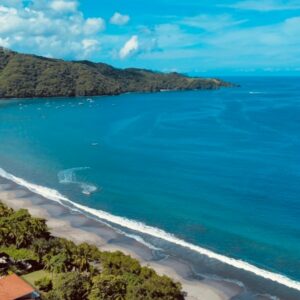
Illustrative ROI Benchmarks for Jaco and Playa Hermosa Properties
Occupancy Ranges, Nightly Rate Tiers, and the Variables That Move the Needle
These are illustrative figures based on general Gold Coast market conditions, not guarantees. Individual property performance varies significantly based on location, condition, and management quality.
A well-managed one-bedroom condo in a Jaco Beach complex with beach access might achieve:
- 55 to 70% annual occupancy.
- Nightly rates of $100 to $175 in peak season, $75 to $120 in shoulder months.
- Gross annual rental revenue in the $18,000 to $30,000 range.
A two-bedroom pool villa in Playa Hermosa, marketed to surf and nature travelers, might achieve:
- 45 to 60% annual occupancy.
- Nightly rates of $150 to $250 peak, $100 to $175 shoulder.
- Gross annual revenue in the $25,000 to $45,000 range.
After management fees, HOA, maintenance, insurance, and taxes, net returns on a well-selected and well-managed property can be meaningful. That yield comes alongside a hard asset you can use personally and that has demonstrated appreciation over time in this corridor.
Why Realistic Projections Beat Inflated Promises Every Time
An agent who shows you a projected ROI built on maximum occupancy and minimal operating costs is either being optimistic or telling you what you want to hear. The honest conversation about rental income starts with conservative occupancy assumptions, full operating cost accounting, and a clear-eyed view of the property’s competitive position in the local rental market. A modest yield built on honest numbers is a foundation. An inflated projection is a disappointment waiting to materialize.
What Determines Whether Your Property Outperforms the Market
Location, Property Condition, and Management Quality
Three factors consistently separate the top-performing rentals from average performers: proximity to the water, property condition and presentation, and the quality of management execution. The first two you control at acquisition. The third you control through who you choose to run the property.
A dated interior in a great location will underperform a well-designed interior in the same location. A great property with inconsistent management, slow responses, deferred maintenance, poor photos, and weak listing copy, will underperform a comparable property with attentive, professional oversight.
The Difference Between a Listed Property and an Optimized Rental Asset
Listing a property on a short-term rental platform is the minimum. Optimizing it means dynamic pricing that responds to local demand patterns, proactive maintenance that keeps the property review-worthy, photography and copy that communicate the experience clearly, and guest communication that generates five-star reviews consistently. The gap between a property that is simply listed and one that is actively optimized can represent a significant difference in annual gross revenue on the same unit. That gap is managed. It does not close itself.
How a Boutique Property Management Partner Transforms Overseas Ownership
The Problem With Buying From a Brokerage That Disappears at Closing
What Volume-Driven Agencies Are Optimized For, and What That Costs You Later
A high-volume brokerage measures success by closed transactions. That is not a criticism. It is simply what their business model rewards. The agent who sells you a condo in Jaco on a Tuesday has another showing Thursday and another offer to negotiate Friday. Your closing is a milestone for them. For you, it is a starting line.
The gap between those two realities is where most foreign buyers discover what they actually signed up for. Property management inquiries go to a general inbox. Maintenance issues get triaged by someone who has never been inside your unit. Owner reporting is a quarterly PDF with occupancy numbers and no context. You are thousands of miles away, and the person you bought from is working the next deal.
This is not a hypothetical scenario. It is the default structure of transaction-focused real estate in most markets, including Jaco. A brokerage optimized for volume has no structural incentive to stay accountable to your investment once the commission is earned. A lifecycle partner does, because their ongoing management revenue depends on your property performing and your trust remaining intact.
What Full-Service Lifecycle Management Actually Looks Like
Guest Experience, Maintenance Coordination, and Local Accountability
Full-service management means your property operates as a well-run hospitality business whether you are visiting or not. That covers guest communication from the first inquiry through checkout, professional housekeeping between stays, a reliable local team for maintenance and minor repairs, and a property condition standard that earns five-star reviews consistently.
The guest experience piece matters more than most owners realize before year one. A single negative review about a slow response or a broken AC unit can cost you bookings in the weeks that follow. The management team answering guest messages on a Sunday evening is not a luxury. It is what keeps your occupancy rate where it belongs.
Local accountability is what separates a genuine management partner from a listing service. When a pipe bursts, someone who knows your property, knows your preferred contractors, and has the authority to act without a 48-hour email chain gets the problem resolved. That person is on the ground in Jaco. They are not a call center.
Compliance, Reporting, and Keeping You Informed From Thousands of Miles Away
Costa Rica’s short-term rental environment involves municipal licensing, tourism registration, and tax obligations on rental income that can catch absent owners off guard. A lifecycle management partner tracks those requirements, keeps your property compliant, and flags any regulatory changes before they become problems.
Reporting should tell you what is actually happening, not just confirm that revenue arrived. Monthly owner statements that break down occupancy, nightly rates, operating expenses, and upcoming maintenance needs give you real visibility into your investment. Clear communication when something needs attention, before it escalates, is the standard a good management partner holds themselves to.
Why 18-Plus Years in a Niche Micro-Market Is a Structural Advantage
Local Relationships, Regulatory Familiarity, and the Network That Protects Your Asset
Eighteen years in the Jaco and Gold Coast market means something specific. It means knowing which municipal contact to call when a permit question comes up. It means having a plumber who shows up the same day because the relationship is longstanding, not because the job was posted on an app. It means having watched enough property cycles to know which developments age well and which ones don’t.
The network that protects your asset is invisible until you need it: the contractor who does quality work at a fair price because they value the ongoing relationship, the property inspector who flags a foundation issue before it becomes a structural problem, the attorney who returns calls the same day because they have worked together for years.
A new entrant to the market does not have that network. They are building it. You don’t want to be the investment that funds someone else’s learning curve.
An Illustrative Ownership Scenario: From Closing Day to Passive Income
The Lifecycle Model in Practice Across Years One Through Five
Consider a buyer who closes on a two-bedroom condo in a managed Jaco Beach complex at $285,000. She lives in the Pacific Northwest, visits Costa Rica twice a year, and wants the property to generate rental income in her absence.
In year one, the management team photographs the property professionally, lists it across multiple short-term rental platforms with optimized pricing, and handles all guest communication. Occupancy runs at 58% for the year. After management fees, HOA, maintenance, insurance, and taxes, net income is meaningful. The property requires a minor appliance replacement and a fresh coat of exterior paint, both handled locally without requiring her involvement beyond an approval email.
In year two, the property now has a review base. Dynamic pricing captures higher nightly rates during peak season. Occupancy climbs. The owner receives monthly statements, a mid-year rental strategy review, and a recommendation to upgrade the kitchen fixtures ahead of the competitive high season. Net income rises accordingly.
By years three through five, consistent management, maintained condition, and a growing review profile compound. The property stabilizes as a reliable income asset. When the owner considers adding a second property, her lifecycle partner already knows her ownership goals, her preferences, and the local inventory. The second purchase takes weeks, not months, to evaluate and execute.
That is the lifecycle model. Not a transaction followed by silence, but an ongoing partnership where every year builds on the last.
Your Long-Term Partnership: From First Purchase to Exit Strategy
Thinking About Resale Before You Buy
Market Liquidity on the Gold Coast and What Drives Appreciation
The Gold Coast has demonstrated steady appreciation over time, driven by infrastructure improvement, growing international tourism, and constrained beachfront supply. Properties in well-managed complexes with strong rental histories sell faster and at better prices than comparable units with inconsistent occupancy records and deferred maintenance.
Buying with exit in mind means choosing properties with characteristics that hold appeal across buyer profiles: proximity to the water, quality construction, a functional HOA, and a rental history that a future buyer can evaluate. A property that has been actively managed and well-maintained for five years commands a very different conversation at resale than one that has been left to operate on its own.
Staying Aligned With Your Investment as Life Evolves
Annual Portfolio Reviews, Rental Strategy Adjustments, and Proactive Communication
Your ownership goals in year one may not match your goals in year five. A lifecycle partner reviews your rental strategy, market positioning, and property condition on a regular basis, not because something is wrong, but because the market evolves and your priorities may too. A buyer who purchased primarily for rental income may later decide to use the property more personally. A retiree who planned to move to Jaco full-time may decide to hold the property as a rental asset instead. Those transitions require strategic adjustments, not just operational continuity.
Proactive communication from your management partner means you are never the last to know about a market shift, a regulatory change, or a condition issue at the property. The relationship should feel less like a vendor contract and more like having a trusted local representative who happens to manage your investment.
Which Ownership Path Fits You?
Lifestyle buyer: You want a property you use personally several weeks or months per year and rent the remainder. Your first step is a consultation focused on micro-market selection and property type, so the property serves both your personal use and your rental calendar effectively.
Passive investor: You want a fully managed rental asset with predictable income and minimal personal involvement. Your first step is a rental performance review of available properties and a realistic income projection based on current market data.
Future retiree: You are buying now, planning to transition into full-time or part-time residence within three to seven years. Your first step is a lifestyle-matching conversation combined with a long-term ownership cost analysis, so the property you buy today is the one you will genuinely want to live in later.
Your Confident First Step Toward Gold Coast Ownership
The Central Truth This Guide Has Built Toward
Every section of this guide points toward the same conclusion: the legal framework for buying Jaco Costa Rica real estate as a foreigner is sound, the market fundamentals are real, and the lifestyle upside is genuine. The variable that separates a successful foreign ownership experience from a frustrating one is not the property itself. It is who manages, protects, and grows that investment once the deed is signed.
What a Lifecycle Partnership Offers That a Transaction Cannot
Coastal Realty and Property Management has operated on the Gold Coast for over 18 years. The team knows this market at the street level, the regulatory level, and the relationship level. They represent buyers through acquisition and remain present through management, rental optimization, compliance, and resale. That continuity is not a sales point. It is the structure that makes overseas ownership genuinely workable.
How to Start a Conversation, Not a Sales Process
If this guide has done its job, you have a clearer picture of the Gold Coast market, the legal framework, the real costs, and the management realities than most buyers arrive with after months of independent research. The next step is a conversation with someone who knows the specific inventory, can match your goals to the right sub-market, and will be accountable to your investment long after that conversation ends.
Reach out to Coastal Realty and Property Management to start that conversation. Bring your questions, your timeline, and your ownership vision. That is exactly what the first call is for.
Frequently Asked Questions
Is Jaco a good place to live?
Jaco is a genuine, full-service beach town with a thriving expat community, walkable amenities, diverse dining, and a lively social scene. It suits buyers who want engagement, activity, and easy access to services. Those who prefer a quieter pace often find it just a few kilometers south in Playa Hermosa, which offers the same natural beauty and rental appeal with a much slower rhythm. The honest answer is that Jaco is an excellent place to live for the right person, and identifying whether you are that person is the first conversation worth having.
What are the legal requirements for foreign property ownership in Costa Rica?
Costa Rica’s constitution grants foreigners the same property rights as nationals, with no quotas, no local partners required, and no restrictions on repatriating sale proceeds. To purchase property, you need a qualified Costa Rican attorney (abogado) who is independent from your seller to conduct the title search, review the purchase agreement, and represent your interests through closing. The transfer deed (escritura) must be executed by a licensed notary-attorney and registered in the National Public Registry. Beyond that, the process is straightforward and well-established.
How do I avoid being scammed when buying real estate in Costa Rica remotely?
The most reliable protection is a simple two-part formula: hire an independent Costa Rican attorney registered with the Colegio de Abogados, and work with an agent who has verifiable local experience and ongoing client relationships beyond the closing date. Specific red flags to avoid include any request for a deposit before a signed purchase agreement is in place, pressure to skip or rush the due diligence period, and listings where the named owner does not match the Public Registry record. A trusted lifecycle partner with a track record in the local market provides structural accountability that a one-transaction broker simply cannot.
What is the property buying process in Costa Rica for foreigners?
The process follows a clear sequence. First, you identify a property and make an offer, which your attorney formalizes in a purchase agreement. Your deposit then goes into escrow, never directly to the seller. Your attorney conducts a full title search, verifies tax status, and confirms no liens or legal encumbrances exist. If due diligence clears, you proceed to closing, where the transfer deed is signed before a notary-attorney and registered in your name in the National Public Registry. From signed offer to registered ownership, the process typically takes 30 to 60 days.
How much does it cost to buy property in Jaco, Costa Rica?
Entry-level condos in managed Jaco Beach complexes start in the $150,000 to $250,000 range for one-bedroom units. Two-bedroom oceanview condos typically run $250,000 to $450,000, while true beachfront units and private villas push into the $500,000-plus tier. Beyond the purchase price, budget 3.5 to 4.5% of the purchase price for closing costs, which include the transfer tax, registration fees, notary fees, your independent attorney, and escrow. Ongoing costs include annual property tax at 0.25% of registered value, HOA fees of $200 to $600 per month in most managed complexes, and routine maintenance and insurance.
Do I need to live in Costa Rica to own property there?
No. You can own property in Costa Rica on a tourist visa, and many foreign owners do exactly that, visiting several times a year without ever pursuing formal residency. Residency and property ownership are entirely separate legal questions. If you do plan to spend significant time in the country, formal residency pathways, including the Pensionado program for retirees with pension income, the Rentista visa for those with stable income, and the Inversionista pathway for qualifying property investors, can open additional benefits such as access to the public healthcare system and simplified banking. None of these are required to own or profit from your property.