
Why Costa Rica’s Gold Coast Is Where Foreign Renters Are Landing
The Gap Between What Aggregators Show You and What You Actually Need to Know
Search “houses for rent in Costa Rica” and within thirty seconds you’re staring at thousands of listings spread across three time zones, four provinces, and a price range that runs from $800 to $18,000 a month. The aggregators have done their job: they’ve given you inventory. What they haven’t given you is any way to know which properties are legitimately available, which neighborhoods suit your actual lifestyle, what a fair price looks like in the current market, or which landlords will still answer the phone six months into your lease.
That gap between raw data and usable guidance is exactly where foreign renters get into trouble. A property that photographs beautifully from a drone can sit on an unpaved road that becomes impassable in rainy season. A price that looks competitive might not include HOA fees, water, or the mandatory maintenance deposit required under Costa Rican law. And a listing that’s been live for three months may have already been rented twice, or may never have been available at all.
This guide exists to close that gap. It’s built specifically around Guanacaste’s Gold Coast, the stretch of Pacific coastline that draws more foreign renters than any other region in the country, and it covers everything the listing portals skip: legal protections, true cost structures, neighborhood realities, and the rental-to-ownership pathway that turns a short stay into a permanent chapter.
What Makes Guanacaste’s Gold Coast Different from Every Other Region
Costa Rica is not one rental market. The Central Valley, the Caribbean coast, the Southern Zone, and the Pacific Northwest each operate differently in terms of pricing, infrastructure, legal environment, and expat density. The Gold Coast, running roughly from Tamarindo north through Flamingo, Potrero, and Conchal, is the one region where all the factors foreign renters care most about converge in one place.
The infrastructure here is more reliable than almost anywhere else in the country. The Daniel Oduber International Airport in Liberia puts you within a 45-minute drive of most Gold Coast communities, a practical advantage that matters enormously when you’re flying in for a two-week trial stay or coordinating a move from North America. The dry season, December through April, delivers consistent sunshine, which is why the region draws the highest concentration of short-term visitors. The rainy season brings something the south and east coasts can’t match: lush landscape, emptier beaches, and significantly lower rental rates.
The expat community here is also established enough to be genuinely useful. There are English-speaking doctors, pharmacies, grocery stores stocked with imported goods, and a social infrastructure that makes the transition from your home country manageable rather than a daily adventure.
The Lifestyle Case: Remote Work, Early Retirement, and the Slow-Travel Decision
Three distinct groups are driving Gold Coast rental demand right now, and understanding which one you belong to shapes every decision that follows.
Remote workers are drawn by the combination of reliable fiber internet, now available in most Tamarindo and Flamingo properties, a time zone that overlaps comfortably with US business hours, and a cost of living that stretches a North American salary further than it goes at home. For this group, a furnished house with a fast connection and a pool typically costs less per month than a one-bedroom apartment in a mid-tier US city.
Pre-retirees and recent retirees are making a different calculation. Costa Rica’s pensionado residency program, relatively accessible healthcare, and the lower cost of a high-quality lifestyle make it a practical choice, not just a romantic one. Many in this group rent first for six to twelve months specifically to test a neighborhood before committing to a purchase.
Slow travelers occupy the middle ground: people who have moved beyond one-week vacations but aren’t yet ready to commit to a relocation. A three-month rental on the Gold Coast gives this group enough time to build local knowledge, develop routines, and make an honest assessment of whether the lifestyle fits.
Why Now Is a Meaningful Moment to Rent Before You Commit
Coastal property values on the Gold Coast have appreciated steadily over the past decade, and that trend hasn’t reversed. The current dynamic, however, creates a specific advantage for renters who are evaluating a potential purchase. Rental inventory has expanded as more owners have entered the market, which means renters have more leverage on pricing and terms than they did a few years ago. At the same time, developers are completing several new gated community projects, and early renters in those communities often get the first look at purchase opportunities before units hit the open market.
Renting now, in other words, is not a way of waiting. It’s a way of positioning.
Vacation Rental or Long-Term Lease: Choosing the Right Entry Point
How Costa Rica Defines the Difference, and Why It Matters Legally
Costa Rica draws a legal distinction between vacation rentals and long-term leases that affects your rights, your costs, and your landlord’s obligations in ways most foreign renters don’t realize until after they’ve signed something.
A vacation rental is typically a furnished property rented for 30 days or fewer, governed primarily by the terms of the rental agreement itself rather than by national tenancy law. A long-term lease, meaning any agreement for more than 90 days, falls under the Ley General de Arrendamientos Urbanos y Suburbanos, a formal legal framework that provides tenants with specific protections around deposits, rent increases, and termination rights. That legal shift is significant, and it cuts both ways: you gain protections, but you also take on obligations.
Short-Term Stays: What Vacation Rental Homes on the Gold Coast Actually Deliver
A well-appointed vacation rental on the Gold Coast gives you something a hotel fundamentally cannot: the experience of actually living somewhere. You cook in a kitchen, you establish a rhythm, you learn which grocery store is worth the drive and which beach is a ten-minute walk versus a twenty-minute one. For anyone testing a potential relocation, this experiential layer is the entire point.
Quality vacation rental homes in the region typically include:
- Private pools and outdoor living spaces designed for the climate
- Fully equipped kitchens and reliable air conditioning
- Weekly housekeeping and responsive property management
- Internet capable of supporting video calls and remote work
The tradeoff is cost. Nightly rates for a quality Gold Coast house run $150 to $500 depending on size, location, and season. A month-long vacation rental in a solid three-bedroom property can run $4,500 to $10,000, meaningfully more than a comparable long-term lease.
Long-Term Leases: What Changes After 90 Days
Once you cross the 90-day threshold, the rental relationship changes in concrete ways. The law sets a minimum initial lease term of three years unless both parties agree otherwise in writing. Your landlord can’t simply raise the rent mid-lease without following a legally defined process. The deposit structure also changes: landlords may collect up to one month’s deposit, plus a separate month for advance rent, at the time of signing.
For renters, this structure creates real security. You can build a life, enroll in local services, and budget with confidence. But the commitment is genuine. Exiting a long-term lease early requires negotiation, and a landlord who knows the law may not be quick to release you without compensation.
This is precisely where having a local advisor changes everything. A vetted rental agreement, negotiated by someone who knows what’s standard in Guanacaste versus what’s a liability buried in the fine print, is worth far more than the time it takes to arrange.
Which Path Fits Your Timeline, Risk Tolerance, and Budget
Most foreign renters on the Gold Coast benefit from a staged approach: a one-to-four-week vacation rental to confirm the neighborhood, followed by a long-term lease once they’ve committed to a location. If that’s not feasible, a three-month furnished rental in a flexible arrangement gives you the time to make a more confident long-term decision.
Vacation Rental vs. Long-Term Lease: A Quick Comparison
Use this to match your situation to the right rental type before you start searching.
| Variable | Vacation Rental | Long-Term Lease |
|---|---|---|
| Ideal length of stay | 1 night to 30 days | 3 months to 3 years |
| Legal framework | Contract terms govern | Costa Rican tenancy law applies |
| Furnished status | Always furnished | Usually unfurnished at lower price points |
| Average monthly cost (3BR Gold Coast) | $4,500 to $10,000 | $1,500 to $3,000 |
| Flexibility | High — exit at end of stay | Lower — early exit requires negotiation |
| Tenant legal protections | Minimal | Strong (deposit limits, rent control, notice rights) |
| Best for | Testing a location, slow travel, seasonal stays | Relocation, extended remote work, pre-purchase reconnaissance |
If you’re arriving for the first time and haven’t yet decided on a neighborhood, start with a vacation rental in your top-choice area and treat it as a paid fact-finding mission. If you’re already certain you’re relocating and have visited at least once, moving directly into a long-term lease in an area you know saves you thousands in the first year. If you’re somewhere in the middle, a furnished three-to-six-month arrangement, negotiated with clear terms, often threads the needle.
What Houses for Rent in Costa Rica Actually Cost: A Realistic Budget Breakdown
Entry-Level to Mid-Range: What $1,000 to $2,500 Per Month Gets You
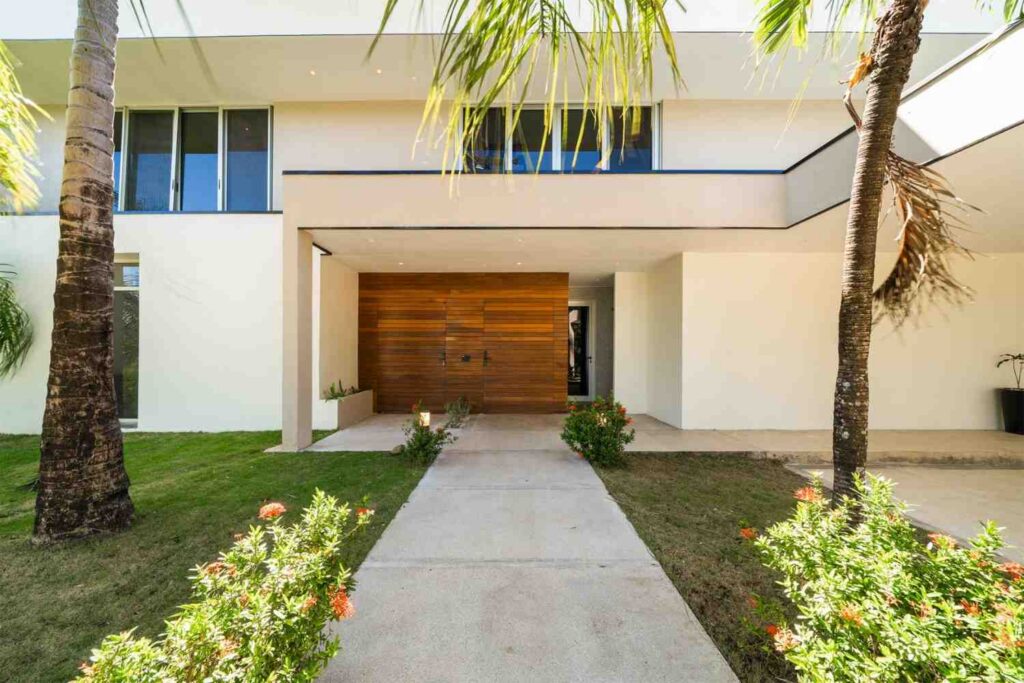
The $1,000 to $1,500 range exists in Guanacaste, but it requires realistic expectations. At this price point on a long-term lease, you’re typically looking at a two-bedroom house or casita in a residential neighborhood a few kilometers from the beach, likely unfurnished and possibly without a private pool. The properties are livable and sometimes genuinely charming, but they require you to be locally present to evaluate them properly. What photographs well at this price tier is not always what it appears to be.
From $1,500 to $2,500 per month, the picture improves considerably. This range gets you a well-maintained three-bedroom house in a residential area near Tamarindo or Brasilito, sometimes with a shared pool or small private garden. Some properties in this range include basic furnishings. For a family relocating or a couple making a permanent move, this tier represents the most practical entry point for a quality Gold Coast lifestyle.
Upper Mid-Range and Luxury: Beachfront Villas and Gated Communities from $2,500 to $6,000+
Above $2,500 per month, options expand rapidly. You’re looking at turnkey furnished homes in gated communities with pools, security, and fitness facilities, or standalone houses within walking distance of Flamingo or Conchal with private pools and ocean views.
The $3,500 to $6,000 range covers most of what foreign renters at this level are looking for: four-bedroom homes in established gated communities, beachfront casas on quieter stretches of coast, or luxury villas that would rent as vacation properties at two to three times the monthly rate. Above $6,000, you’re in full beachfront villa and ultra-luxury territory, with properties that often include staff, professional landscaping, and resort-quality amenities.
The Hidden Cost Layer Aggregators Never Show
The listed rent is never the full number. On the Gold Coast, a renter’s realistic monthly overhead includes:
- Electricity: $80 to $250 depending on air conditioning use (electric bills in tropical climates are not trivial)
- Water: $15 to $40 for municipal service
- Internet and cable: $50 to $100 for reliable fiber service
- HOA fees: $150 to $600 per month in gated communities, sometimes bundled into rent and sometimes not
- Propane gas: $20 to $40 monthly for cooking and water heating
In a gated community, HOA fees fund security, common area maintenance, pool upkeep, and road maintenance. They’re not optional, and a landlord who fails to disclose them upfront is either careless or deliberately obscuring the true cost. Always ask for the current HOA fee schedule before signing anything.
Furnished vs. Unfurnished Rentals: How It Affects Your True Monthly Number
The furnished/unfurnished distinction matters more than most foreign renters initially realize. A furnished long-term rental typically costs 20% to 40% more per month than a comparable unfurnished property. That premium sounds significant until you price out the alternative: outfitting a three-bedroom house with beds, appliances, kitchen equipment, and living room furniture in Costa Rica runs $8,000 to $15,000 if you’re buying locally, and imported furniture carries substantial duties.
For a one-year stay, paying the furnished premium almost always wins financially. For a three-to-five-year commitment where you plan to stay, buying your own furnishings makes more sense and gives you the comfort of a home you’ve actually curated. A local advisor can help you think through this based on your specific timeline.
Gold Coast Neighborhoods Compared: Finding Your Right Fit
Tamarindo: The Bustling Hub for Remote Workers and First-Time Expat Renters
Tamarindo is the Gold Coast’s most connected town, and that connectivity is both its greatest asset and its most honest limitation. You can walk to a grocery store, a co-working space, a dozen restaurants, and a world-class surf break from most rental properties inside town. The expat community is large enough that making friends takes days, not months. English is spoken widely. The infrastructure for a modern, mobile lifestyle is simply better here than anywhere else in the region.
The tradeoff is that Tamarindo is also the most crowded, noisiest, and highest-traffic area on the Gold Coast. High season brings significant congestion, and properties close to the beach or town center reflect the premium demand. For first-time renters testing a relocation, Tamarindo’s density is actually an advantage: if you can thrive here, you know the lifestyle works. If the bustle bothers you, the quieter communities to the north will feel like a relief.
Long-term rental prices in Tamarindo run 10% to 20% higher than comparable properties in Potrero or Brasilito for equivalent quality, driven purely by location demand.
Flamingo Beach and Playa Conchal: Quiet Luxury and Established Community
Flamingo and Conchal occupy a different register entirely. These are the communities where established expats who have been in Costa Rica for years tend to settle, and the rental market reflects a more mature, less transient demographic.
Flamingo’s marina area is seeing new development that’s attracting younger buyers and renters, while the residential areas above the beach offer some of the Gold Coast’s best ocean-view properties at long-term lease rates that would surprise anyone accustomed to beachfront pricing in the US or Canada. Playa Conchal, anchored by the Westin resort complex, offers proximity to one of the most genuinely beautiful beaches in Central America alongside a residential rental market that’s quieter and more private than Tamarindo without sacrificing quality.
For renters in the $2,500 to $5,000 range who value privacy, beauty, and a more settled community over nightlife and foot traffic, Flamingo and Conchal consistently deliver the best value per dollar on the Gold Coast.
Nosara: The Wellness and Surf Community for Long-Term Lifestyle Renters
Nosara sits slightly south of the core Gold Coast corridor but deserves serious attention from any renter whose priorities include wellness, nature, and a community built around intentional living rather than convenience. The yoga studios, organic restaurants, and surf culture here attract a specific kind of long-term renter: people who have done the research, know what they want, and are willing to accept slightly rougher roads and fewer urban amenities in exchange for a community that genuinely matches their values.
The rental market in Nosara has tightened significantly over the past few years as the community’s reputation has spread. Quality long-term rentals are available but require early action and often local connections to find before they’re publicly listed.
Smaller Communities Worth Knowing: Potrero, Brasilito, and the Less-Obvious Gems
Potrero is the Gold Coast’s quiet achiever. Located ten minutes north of Flamingo, it offers a genuinely local town character alongside a rental market that prices below its neighbors without any meaningful quality disadvantage. Families and longer-term renters who don’t need the social buzz of Tamarindo find Potrero’s pace and pricing genuinely attractive.
Brasilito, a small fishing village adjacent to Conchal, combines local character with proximity to one of the coast’s best beaches at rental prices that reflect its lower profile rather than any shortage of quality. Properties here rarely appear on major listing sites and are usually found through local real estate contacts.
These smaller communities reward renters who are willing to do their homework rather than simply searching what’s most visible online.
Where Is the Safest Place to Rent in Costa Rica, and What Safety Really Means Here
Costa Rica is one of the safest countries in Central America, and the Gold Coast’s established expat communities are among the safest environments in the country. That said, “safe” in a Costa Rican context deserves a more specific answer than a simple yes or no.
Gated communities with 24-hour security and controlled access are the most secure rental environments available. Most of Flamingo, Conchal, and the newer Tamarindo developments offer this structure. Outside gated communities, standard security practices apply: good locks, window bars, alarm systems, and the social infrastructure of knowing your neighbors.
Petty theft, primarily of valuables left visible in cars or homes with easy access points, is the most common security concern for renters. It is manageable with basic precautions and does not define daily life for the vast majority of Gold Coast residents.
The most meaningful safety question a foreign renter should ask is not about crime statistics but about property vetting. Is this rental managed by someone accountable, in a community with maintained common areas, with a landlord who has a verifiable track record? A well-managed property in a well-maintained community answers most safety questions before you even ask them.
The Foreigner’s Legal Checklist: What You Must Know Before You Sign
Costa Rica’s rental law is genuinely protective of tenants, but only if you know it exists and understand how to invoke it. Most foreign renters who run into trouble don’t get burned because the law failed them. They get burned because they signed agreements that bypassed the law entirely, or because they didn’t recognize a problematic clause until they were already in a dispute.
How Costa Rica’s Rental Law Protects You, and Where It Does Not
Key Provisions of the Ley General de Arrendamientos Urbanos y Suburbanos
The Ley General de Arrendamientos Urbanos y Suburbanos is the national law governing residential rental relationships in Costa Rica. It applies to any lease over 90 days and covers both citizens and foreigners equally. Your nationality is not a factor in your rights as a tenant.
The law establishes several baseline protections that cannot be contractually waived, even if a landlord tries to include language to that effect:
- Rent increases are capped annually at the rate set by the Central Bank, typically tied to inflation
- Landlords must provide adequate notice before entering a property
- Tenants cannot be evicted without due legal process, even if rent falls into arrears
- Security deposits are limited and must be returned within specific timeframes after the lease ends
Minimum Lease Terms, Deposit Rules, and Termination Rights for Foreign Renters
The default minimum lease term under Costa Rican law is three years. A landlord who offers a one-year lease isn’t breaking the law, but that shorter term must be explicitly agreed to in writing, and it affects your renewal rights. If you’re planning to stay for two to three years, a standard three-year lease actually works in your favor: it locks in your rent increase structure and gives you stable tenure.
On deposits, the law allows a landlord to collect one month’s rent as a security deposit plus one month’s advance rent at signing. A landlord asking for three or four months upfront is operating outside legal norms, which is either a red flag or a sign they’re unfamiliar with their own obligations.
Early termination rights run in both directions. You can exit with proper written notice, but you may owe compensation if you leave before the term ends. The law provides a formula for this calculation, so it’s not arbitrary, but it is real. Make sure your lease reflects the legal standard rather than a landlord-invented penalty.
What a Properly Drafted Rental Agreement Actually Includes
A properly drafted Costa Rican lease is a bilingual document. Spanish is the legally operative language, but reputable landlords working with foreign tenants will provide an English translation. If you’re handed an agreement only in Spanish and your landlord can’t explain each clause in a language you understand, pause the process until that changes.
Standard lease terms cover the property’s condition at move-in (ideally documented with a written inventory and photos), maintenance responsibilities split between landlord and tenant, HOA obligations if the property is in a gated community, and the process for requesting repairs. The lease should also specify whether utilities are included, who pays them, and how they’re transferred to your name if needed.
One clause worth scrutinizing is the “use of property” restriction. Many leases in gated communities prohibit short-term subletting, which matters if you plan to spend part of the year away and want to recoup costs through vacation rental income. Know what you’re agreeing to before you agree to it.
Visa Status, Tax Implications, and What Overseas Tenants Need to Know
You do not need residency to rent a house in Costa Rica. Foreigners can sign leases and occupy rental properties on a tourist visa, which allows stays of up to 90 days at a time. Many long-term renters in the early phase of their Costa Rica journey operate on repeated tourist entries while pursuing residency. This is a common and legally acceptable approach, though one worth discussing with a local immigration attorney if you’re planning a multi-year stay.
Rental payments made by foreign tenants to Costa Rican landlords may involve withholding tax considerations for the landlord, but this is generally their obligation to manage, not yours. Where it becomes your concern is if you’re renting a property you also own and generating income from it, a topic addressed in the ownership section below.
If your employer pays your Costa Rica rent as part of a remote work arrangement, be aware that this may have tax reporting implications in your home country. Check with your home-country accountant before signing a lease that involves employer-paid housing.
How to Avoid Rental Scams in Costa Rica: Red Flags Every Foreign Renter Should Recognize
Rental fraud targeting foreign renters exists in Costa Rica, as it does in any desirable international market. The mechanics are predictable enough that you can protect yourself with a clear checklist of warning signs.
The most common scam involves a property listed on a major portal at an unusually competitive price, with a landlord who requests a wire transfer deposit before you’ve seen the property or verified ownership. If a listing seems significantly below market for its location and quality, treat that gap as a question, not a deal.
Additional red flags to watch for:
- A landlord who refuses to provide a formal written lease and prefers a verbal or WhatsApp-based agreement
- No verifiable physical address or business presence for a “property management company”
- Pressure to transfer funds quickly before another applicant claims the property
- A lease provided only digitally with no mechanism for wet signatures or notarization
- Inability or unwillingness to arrange a video walkthrough or in-person showing through a verified local contact
The most effective protection isn’t a checklist. It’s working through a local advisor or property management company with verifiable references and a physical office. Scammers target renters who are searching independently from abroad. A vetted intermediary eliminates that exposure almost entirely.
How to Find and Vet a Rental Property You Can Trust from Thousands of Miles Away
Why Volume-Based Portal Searching Creates Anxiety Instead of Confidence
Searching for houses for rent in Costa Rica on a major portal gives you the same problem a search engine gives you: a ranked list of whoever paid for visibility, not a curated selection of what’s actually right for you. You’ll see properties that are already rented, properties with photos from three owners ago, and listings by landlords who haven’t updated availability in months. The volume itself becomes the obstacle.
This isn’t a criticism of any particular platform. It’s a structural limitation of how aggregator marketplaces work. They solve the discovery problem without solving the judgment problem. And when you’re making a decision about where to live from thousands of miles away, judgment is everything.
What a Properly Vetted Rental Property Actually Looks Like
A vetted rental property has been physically inspected within a reasonable timeframe. Someone who knows the Gold Coast market has walked through it, assessed the condition of appliances, checked the water pressure, confirmed the internet speed, verified the HOA fee schedule, and reviewed the lease terms. The listing you receive reflects that inspection, not just the landlord’s description.
Vetting also includes ownership verification: confirming through the National Registry that the person renting the property is authorized to do so. Title fraud is rare on the Gold Coast but not impossible, and a straightforward registry check eliminates the risk.
A curated rental recommendation also comes with honest context: what the neighbors are like, whether the road floods in rainy season, how far the walk to the beach actually is on foot (not as the crow flies), and what the landlord’s track record has been with previous tenants.
How Property Management Services Work for Foreign Renters
A property management relationship gives you a local point of contact who handles the landlord relationship on your behalf. This matters most when something goes wrong, when the AC stops working in July, when a landlord is slow to respond to a repair request, or when a utility bill arrives in a language you’re still learning.
For renters who aren’t yet physically present, a property manager can execute the move-in inspection, photograph the property’s condition against the lease inventory, and flag any discrepancies before they become disputes. They can also handle rent payments, coordinate cleaning and maintenance, and serve as your functional presence in the community until you arrive.
The fee structure for active management typically runs 8% to 12% of monthly rent. For most foreign renters, this is not an optional expense. It’s the cost of removing the operational risk of managing a rental relationship from abroad.
The On-the-Ground Questions Only a Local Partner Can Answer
Before you sign anything, get answers to these questions from someone who has actually been inside the property recently:
- What is the actual drive time to the nearest full-service grocery store, and does that road flood in rainy season?
- What has the electricity bill averaged over the last six months?
- Is the HOA current on its fees, and are the common areas well maintained?
- What is the landlord’s standard response time for maintenance issues?
- Have previous tenants renewed, and if not, why did they leave?
- Is there reliable fiber internet, and who is the provider?
None of these questions can be answered by a listing. All of them can be answered by someone who knows the property, the landlord, and the neighborhood.
A Guided Gold Coast Rental Search: What It Looks Like in Practice
Consider a remote professional relocating from Vancouver with a budget of $2,500 per month, a preference for Flamingo or Potrero, and a planned arrival in four months. Working through a local advisor, she shares her priorities: reliable internet, a private pool, walkable to at least a small beach, and a landlord with a track record of professional management.
The advisor narrows the active inventory to three properties matching those criteria, all physically inspected within the past 90 days. She reviews the curated profiles, schedules video walkthroughs of two properties, and asks the questions above through her advisor. She selects one, receives a bilingual lease reviewed for legal compliance, pays the first month plus deposit through a verified account, and arrives to a move-in inventory her advisor has already completed.
That process takes two to three weeks. Doing it alone through a portal takes the same time but removes every layer of verification, leaving her exposed to every risk this section has described.
From Renter to Owner: How Your Rental Stay Becomes Your Investment Roadmap
Why Renting First Is the Smartest Due Diligence a Foreign Buyer Can Do
No amount of research from home replaces the knowledge you gain from actually living somewhere. Renters who transition to ownership on the Gold Coast consistently find that their rental period shifted their purchase target. The neighborhood they thought they wanted at month one was often different from the one they chose at month twelve. That shift is valuable. A wrong purchase costs far more to unwind than a month’s rent.
Renting first also gives you time to build relationships with the people who matter in a real estate transaction: attorneys, builders, inspectors, and neighbors who know which properties have hidden problems and which owners are motivated. This network doesn’t develop from abroad. It develops from proximity.
How Neighborhoods Reveal Themselves Over Time
A neighborhood’s character in December looks nothing like its character in September. Rainy season changes roads, noise levels, vegetation, and the composition of the community as seasonal visitors leave. If you’ve only seen a neighborhood in high season, you’ve only seen its best-marketed version. Renting through both seasons gives you the honest picture.
This is particularly relevant for purchase decisions involving vacation rental income projections. A property that rents well from December through April may sit empty for months if its location or amenities don’t attract off-season tenants. Renters who live through that cycle firsthand make far more accurate income projections than buyers who rely on landlord-supplied estimates.
What Foreign Ownership in Costa Rica Actually Allows
Costa Rica allows foreigners to own property on exactly the same terms as citizens. There is no residency requirement, no restriction on property type, and no limit on the number of properties you can hold. Ownership is recorded through the National Registry, and title is guaranteed through a system of public notarization that has protected foreign owners for decades.
The purchase process involves a licensed attorney who conducts title searches, prepares the transfer deed, and registers the transaction. Transfer taxes and notary fees run approximately 3.5% to 4% of the purchase price, paid at closing. There is no capital gains tax on primary residences in Costa Rica, though properties held as investment vehicles may have different tax considerations worth discussing with a local attorney.
Financing for foreigners through Costa Rican banks is possible but involves more documentation than domestic buyers typically face. Many foreign buyers use home equity from their country of origin or purchase outright, avoiding the local financing complexity.
How to Transition from Renting to Buying Without Starting Over
The transition from renter to owner works best when your rental relationship and your buying search run through the same local network. An advisor who managed your rental knows your priorities, knows the properties you toured and rejected, and understands what changed between month one and month twelve of your stay. That continuity means your purchase search starts at a far more informed baseline than it would if you hired a separate buyer’s agent.
The practical mechanics are straightforward: your rental experience informs your property income projections, your neighborhood knowledge guides your search criteria, and your local legal contacts are already engaged. Nothing you’ve built during your rental period goes to waste.
What Full-Service Property Management Means Once You Own
Ownership creates a new set of management needs, especially if you plan to spend part of the year outside Costa Rica. A full-service property management company handles tenant sourcing and screening, lease execution, maintenance coordination, utility management, HOA compliance, and financial reporting. For an owner operating from North America, this infrastructure makes remote ownership genuinely viable rather than stressful.
The best management relationships also include proactive property care: regular inspections that catch minor issues before they become expensive repairs, seasonal preparation for rainy season, and honest communication about what’s happening with your asset between your visits. This level of service turns your Gold Coast property from a passive investment into a managed one, a meaningful distinction when you’re protecting a purchase that likely represents a significant portion of your net worth.
Which Path Is Right for You Right Now?
| Your Profile | Your Recommended Next Step |
|---|---|
| First-time visitor, haven’t been to Costa Rica yet | Book a 2 to 4 week vacation rental in your top-choice neighborhood. Treat it as a paid reconnaissance trip before committing to anything longer. |
| Remote worker ready to relocate | Start a 6 to 12 month furnished long-term lease in Tamarindo or Flamingo. Confirm your lifestyle fit before locking into a property purchase. |
| Pre-retiree evaluating a permanent move | Rent for one full year through both seasons, in the neighborhood where you’d realistically buy. Let the rental period do your due diligence for you. |
| Serious investor already committed to buying | Connect with a local advisor now to align your rental search with your purchase criteria. The right rental puts you inside the community where your target property sits. |
Your Gold Coast Rental Journey Starts With the Right Local Partner
What This Guide Has Covered, and What It Cannot Replace
This guide has walked through the legal framework that protects you as a foreign renter, the true cost structure behind the listed price, the neighborhood differences that no portal map communicates, the scam patterns worth recognizing, and the pathway from a first rental to a confident purchase. That’s substantial ground, and it’s still not the same as local knowledge applied to your specific situation.
The variables that matter most in your rental decision are the ones unique to you: your timeline, your budget flexibility, your work schedule, your tolerance for unpaved roads, and what you actually want your daily life to look like. No guide can weigh those for you. A good local advisor can.
Why Coastal Realty’s Experience on the Gold Coast Makes the Difference
Coastal Realty and Property Management has been working with foreign renters and buyers on the Gold Coast for nearly two decades. That tenure means something concrete: relationships with landlords whose track records we know personally, familiarity with every neighborhood’s seasonal character, and a property management infrastructure built specifically for owners and renters who are managing their Costa Rica lives from another country.
We don’t list every property available in Guanacaste. We list properties we’ve vetted, in communities we know, with landlords we trust. That selectivity is the service.
Your Next Step: A Conversation, Not Another Search
If you’re at the research stage, the best next step is a direct conversation, not another search. Bring your timeline, your budget range, and your honest list of priorities. We’ll tell you what’s realistic, what’s available, and what we’d recommend based on your specific situation rather than what’s easiest to show you.
The Gold Coast rental market moves quickly at the quality tier most foreign renters are targeting. The right property for your needs won’t wait for another month of portal browsing. Reach out to our team, and let’s start with the questions that actually matter.
Frequently Asked Questions
What should I know about renting property in Costa Rica as a foreigner?
Foreigners have the same rental rights as Costa Rican citizens under national tenancy law. Any lease exceeding 90 days is governed by the Ley General de Arrendamientos Urbanos y Suburbanos, which sets limits on deposits, regulates rent increases, and requires due legal process before any eviction. The most important step you can take is ensuring your lease is properly drafted, bilingual, and reviewed by someone who knows local law before you sign.
Do I need residency to rent a house in Costa Rica?
No. Foreigners can sign a lease and legally occupy a rental property on a tourist visa. Many expats rent for a year or more while pursuing formal residency, entering on repeated tourist visas in the meantime. If you’re planning a multi-year stay, it’s worth consulting a local immigration attorney to understand your options, but residency is not a prerequisite for renting.
What are typical rental agreements and lease terms in Costa Rica?
The default minimum lease term under Costa Rican law is three years, though shorter terms can be agreed to in writing. A standard agreement covers the property’s condition at move-in, maintenance responsibilities, utility arrangements, HOA obligations, and the process for repairs. The legally operative language is Spanish, but reputable landlords working with foreign tenants will provide an English translation. Always request one.
How do I avoid rental scams in Costa Rica?
The most effective protection is working through a local advisor or property management company with a verifiable physical office and references from past clients. On your own, watch for listings priced significantly below market, landlords who request wire transfers before you’ve verified ownership, and any agreement offered without a formal written lease. If a deal feels rushed or too good to be true, treat it as a warning sign and verify before transferring any funds.
Where is the safest place to rent in Costa Rica?
The Gold Coast, particularly Flamingo, Conchal, and the established communities around Tamarindo, is among the safest rental environments in the country. Gated communities with 24-hour security offer the most controlled setting. Outside of gated communities, standard precautions (good locks, alarm systems, avoiding visible valuables in vehicles) address the most common risks. The single most meaningful safety factor, however, is choosing a well-managed property with an accountable landlord in a maintained community.
How do property management services work for foreign renters?
A property management company acts as your local representative, handling the landlord relationship, move-in inspections, maintenance requests, rent payments, and any issues that arise during your tenancy. For renters who aren’t yet on the ground, a manager can complete the move-in inventory on your behalf and flag any discrepancies before they become disputes. Fees typically run 8% to 12% of monthly rent. For most foreign renters managing a lease from abroad, this service removes the operational risk that comes with being thousands of miles from your rental property.
How do I transition from renting to buying a home in Costa Rica?
The transition works most smoothly when your rental and purchase searches run through the same local network. An advisor who managed your rental already knows your priorities, the properties you considered, and how your preferences evolved over time. That continuity gives your purchase search a far more informed starting point. Costa Rica allows foreigners to own property on the same terms as citizens, with no residency requirement, and the purchase process is handled through a licensed local attorney who conducts title searches and registers the transaction.