
Why Tamarindo Is Costa Rica’s Gold Coast Real Estate Sweet Spot
Tamarindo earns its Gold Coast reputation not through marketing, but through a combination of factors that almost no other beach town in the Americas replicates: reliable international access, a mature expat infrastructure, year-round surf, and a real estate market that has proven its staying power through multiple global economic cycles.
For foreign buyers searching for homes for sale in Tamarindo, Costa Rica, the question is rarely whether the market is worth entering. The question is how to enter it wisely, with the right guidance, the right legal protections, and a partner who will still be answering your calls five years after closing.
The Lifestyle Case: What Makes Tamarindo Different
Surf Culture, Expat Community, and Year-Round Accessibility
Tamarindo sits on the Pacific coast of Guanacaste Province, where a consistent northwest swell makes it one of the few beach towns in Central America with genuinely surfable waves 365 days a year. That single fact shapes everything: the energy, the demographics, the calendar of events, and the kind of buyer who chooses to plant roots here rather than simply visit.
The expat community that has built up around this lifestyle is large enough to feel like a real social network, but not so large that Tamarindo has lost its small-town character. You will find neighbors from the United States, Canada, Europe, and across Latin America. The community organizes itself around surf clubs, volunteer networks, farmers markets, and a restaurant scene that punches well above its size. For buyers considering retirement in Costa Rica, that social infrastructure matters enormously.
Access is one of Tamarindo’s most underrated advantages. The Daniel Oduber Quirós International Airport in Liberia, about 75 minutes north, serves direct flights from dozens of North American cities, including Atlanta, Dallas, Houston, Miami, New York, and Toronto. You can leave your home in the morning and walk into a property tour the same afternoon.
Infrastructure, Healthcare, and International Schools
The infrastructure conversation often surprises buyers who picture a remote beach village. Tamarindo has reliable high-speed internet, paved main roads, an established banking presence, and a commercial center with pharmacies, grocery stores, and specialty shops. Serious medical care is available at the Hospital Metropolitano in Liberia, roughly an hour away, and the CIMA and Clínica Bíblica hospital networks in San José are reachable by a short domestic flight or a four-hour drive.
For families or buyers planning extended stays, the Liberia corridor has several international and bilingual schools serving the Guanacaste expat community. This makes Tamarindo viable not just for retirees, but for remote workers and families seeking a longer-term relocation.
The Investment Case: Why Guanacaste Province Keeps Attracting Foreign Capital
Guanacaste has been Costa Rica’s fastest-growing tourism destination for more than a decade, and that growth is structural, not cyclical. The Costa Rican government has invested heavily in the region’s infrastructure, including the expansion of Liberia’s international airport, road improvements connecting coastal communities, and Special Economic Zone designations that attract business development.
Foreign direct investment in the province has followed tourism in a predictable pattern: hospitality projects anchor an area, short-term rental demand builds, and residential real estate values rise. Tamarindo is now well past its early-growth phase, which means buyers enter a proven market rather than a speculative one. The risk profile is materially different from emerging beach towns with less track record.
Is It Safe to Buy Property in Tamarindo?
Costa Rica gives foreign nationals exactly the same property ownership rights as its citizens. There is no restriction on foreign ownership of titled property, no required waiting period, and no upper limit on the number of properties you can own. This is not a workaround or a gray area. It is the law.
The legal protection that matters most is the Costa Rican Public Registry. Every titled property in the country is registered in this centralized national database, and your attorney can pull a full legal and encumbrance report on any property before you commit a single dollar. This report reveals the chain of title, any mortgages or liens, easements, restrictions, and the precise registered boundaries. Buyers who work with a qualified Costa Rican attorney almost never encounter title surprises at closing, because those surprises surface during due diligence, not after.
The one category of property that requires extra scrutiny is land adjacent to the ocean. Costa Rica’s Maritime Zone Law reserves the first 50 meters from the high tide line as public domain, and the next 150 meters as a concession zone managed by local municipalities. Concession property is not fee simple ownership, and the rules governing its transfer and duration are specific. Any experienced Tamarindo real estate attorney knows this distinction immediately. As a buyer, simply ask your agent whether a given property falls within the maritime zone before proceeding.
The Best Time to Buy in Tamarindo
Tamarindo does not follow a traditional seasonal dip in the way that markets driven by domestic buyers might. Inventory lists year-round, and serious sellers do not pull properties during the rainy season. What changes seasonally is buyer competition. The dry season, roughly December through April, brings peak tourism and peak buyer traffic. The rainy season, May through November, is when motivated buyers often find sellers more willing to negotiate, simply because fewer competing offers exist.
The more useful timing question is not about the calendar. It is about your own readiness. Buyers who arrive with pre-arranged financing, a clear sense of their priorities, and a trusted local agent in place consistently outperform those who show up and figure it out on the ground.
Neighborhood Breakdown: Finding Your Exact Fit Within Tamarindo
Playa Tamarindo: Walkability, Energy, and the Tradeoffs of Being at the Center
The beachfront village of Playa Tamarindo is where most newcomers picture themselves when they search for homes for sale in Tamarindo, Costa Rica, and for good reason. Properties here place you within walking distance of the beach, restaurants, surf shops, yoga studios, and the evening social scene. Rental demand is the strongest in the entire market, and nightly rates reflect that.
The tradeoff is density and noise. The center of town has grown considerably, and peak season brings crowds, traffic congestion near the main strip, and the ambient energy of a working tourist destination. Buyers who want maximum convenience and rental yield generally accept those conditions. Buyers who prioritize quiet mornings and space tend to look elsewhere.
Tamarindo Hills: Elevation, Ocean Views, and Privacy
Tamarindo Hills occupies the ridgeline above the village, offering panoramic Pacific views without the foot traffic below. Homes here are typically more spacious, sit on larger lots, and take advantage of prevailing breezes that make the Guanacaste dry season comfortable without constant air conditioning. The neighborhood has attracted buyers who want a full-time residence or a premium vacation property with genuine separation from the tourist corridor.
The practical consideration is that you will drive to the beach rather than walk. For buyers prioritizing lifestyle over nightly rental optimization, Tamarindo Hills consistently delivers better value per square foot than the beachfront zones.
Surrounding Communities: When the Best Value Is Just Five Minutes Away
Langosta
Langosta sits directly south of Playa Tamarindo and is, in the opinion of most long-time locals, the most desirable residential address in the area. The beach at Langosta is quieter, the streets are calmer, and the community has maintained a character that the main village lost to tourism years ago. Properties in Langosta command premium prices for good reason, particularly those on or near the estuary with its protected wildlife corridor.
Playa Avellanas
Playa Avellanas, about 15 minutes south, has emerged as an increasingly serious option for buyers who want Tamarindo’s proximity without its price. Avellanas is a world-class surf break with a small but growing residential community, direct beach access, and a fraction of the development density. Buyers here tend to be younger retirees or remote workers who prioritize the natural environment and are comfortable with fewer commercial amenities in exchange for lower entry prices and higher long-term appreciation potential.
Neighborhood vs. Buyer Profile: An Honest Comparison
Use the matrix below to match your priorities to the right sub-market before you start scheduling showings.
| Priority | Playa Tamarindo | Tamarindo Hills | Langosta | Avellanas |
|---|---|---|---|---|
| Walk to beach | Best | No | Yes | Yes |
| Peace and quiet | Lowest | High | Highest | High |
| Rental yield potential | Highest | Moderate | High | Emerging |
| Community feel | Tourist-forward | Residential mix | Intimate local | Small, surf-focused |
| Price per sq ft | High | Moderate-High | Premium | Lower |
| Views | Street-level | Panoramic ocean | Estuary/ocean | Ocean/natural |
| Ideal buyer profile | Rental investor, social retiree | View-seeker, privacy buyer | Discerning full-timer | Adventure-oriented, value buyer |
Start with your non-negotiables. If walking to the beach every morning is essential, Playa Tamarindo or Langosta are your candidates. If passive rental income is your primary goal, Playa Tamarindo’s inventory and tourist traffic make it the obvious choice. If you plan to live in the property full-time and value quiet over convenience, Langosta or Tamarindo Hills will suit you better. Avellanas rewards buyers who think in five-to-ten year horizons: less developed today, with more upside tomorrow.
One honest note: buyers who have not spent time in each area often overestimate how much they want the action of the village center and underestimate how much they will come to value quiet. If you are unsure, we strongly recommend renting in multiple neighborhoods before committing to a purchase.
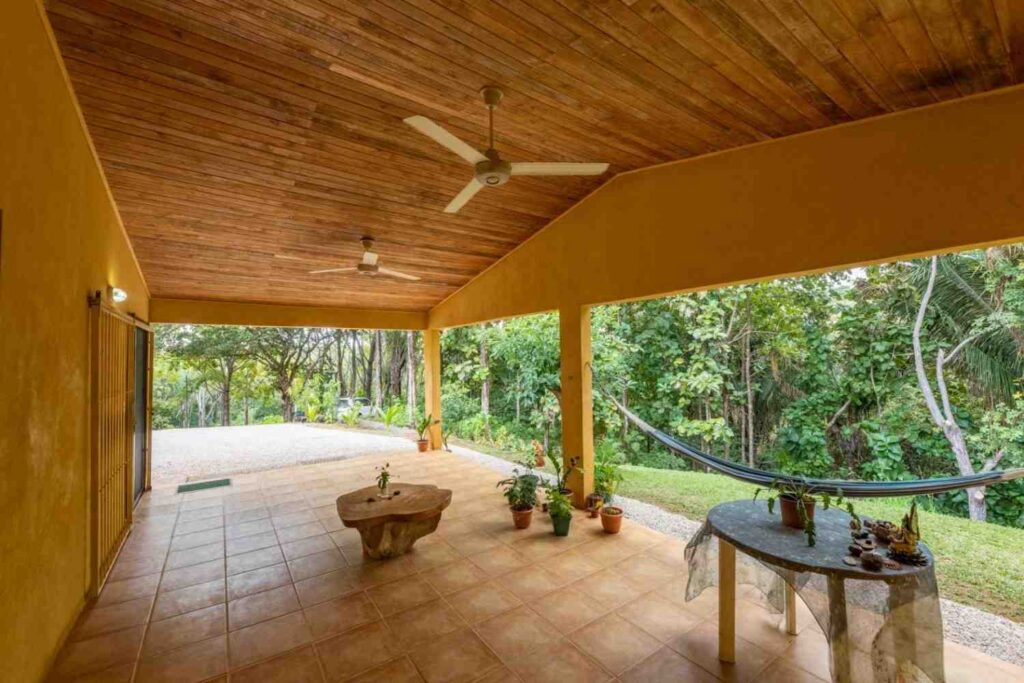
What Homes for Sale in Tamarindo Actually Look Like: Property Types and Price Ranges
How Much Does It Cost to Buy a Home in Tamarindo, Costa Rica?
Price ranges in Tamarindo span a wider band than most buyers expect, from turnkey condos under $200,000 to oceanfront estates above $3 million. Understanding what drives that spread is more useful than focusing on any single number.
Entry-Level Condos and Lock-and-Leave Options
The lower end of the Tamarindo market, roughly $150,000 to $280,000, is primarily condominiums in established complexes. These properties appeal to buyers who want a low-maintenance foothold in the market: HOA-managed grounds and pools, secure access, and easy rental management when the owner is abroad. Finishes vary, but the best buildings in this range are well-constructed, have proven rental histories, and carry reasonable monthly HOA fees.
Mid-Range Single-Family Homes and Gated Community Villas
The $280,000 to $750,000 range is where Tamarindo’s market is most active. This tier includes detached homes, gated community villas, and larger condos with private pools. Gated developments in this range typically offer shared amenities, professional security, and HOA structures that handle common area maintenance. Many buyers here are purchasing a property that serves dual duty: personal use during visits and short-term rental income when they are home.
Luxury Oceanview Estates and Beachfront Properties
Above $750,000, the market shifts toward custom-built homes on larger lots, often with infinity pools, professional-grade kitchens, and significant architectural investment. True beachfront properties and Langosta estuary-fronting homes sit at the top of this tier and above. These properties are rarely discounted, because demand consistently exceeds supply for genuinely irreplaceable locations.
What You Get at Each Price Point
Costa Rican construction quality has improved significantly over the past decade, particularly within established gated communities where developers compete on finishes. At the entry level, expect solid concrete construction, tile floors, and functional kitchens. Moving into the mid-range, you will find higher ceilings, better appliances, private outdoor spaces, and pools. At the luxury tier, expect imported stone, hardwood accents, smart home systems, and professional landscaping.
HOA fees in gated communities typically run $200 to $600 per month depending on amenities, covering security, common area maintenance, landscaping, and pool upkeep. For absentee owners, that structure is a genuine asset rather than a cost. It keeps the property in rentable condition without requiring active oversight.
Beachfront vs. Oceanview vs. Inland: How Location Affects Value
The premium for direct beach access is real and consistent. Beachfront properties in Tamarindo command meaningfully higher per-square-foot prices than comparable inland homes, and they hold that premium through market cycles because supply is genuinely finite. Oceanview properties, particularly those on the Tamarindo Hills ridgeline, trade at a meaningful premium over inland homes but below beachfront pricing. They appeal to buyers who want the visual reward of the ocean without the sand, salt, and maintenance intensity of beachfront living.
Inland properties within walking or short driving distance of the beach offer the best price-to-space ratio. For buyers prioritizing livability over rental optimization, this is often where the most value lives.
The Step-by-Step Process for Foreigners Buying Property in Costa Rica
Can American Citizens Buy a Home in Costa Rica?
Yes, fully and directly. American citizens, Canadian citizens, and nationals of most countries can purchase titled property in Costa Rica under exactly the same legal framework as a Costa Rican citizen. There is no foreign buyer tax, no residency prerequisite, and no special permit required. You can own property in your personal name, through a Costa Rican corporation (Sociedad Anónima), or through a trust structure, depending on your estate planning and tax situation. Your attorney will help you choose the right structure before closing.
Residency vs. Ownership: Do You Need to Live There to Own?
Property ownership and residency are entirely separate in Costa Rica. You can own real estate as a tourist, as a non-resident, or as a legal resident. Owning property does not automatically grant residency, but it can qualify you for a specific residency pathway covered below. Many foreign owners visit Tamarindo for weeks or months each year on tourist status and maintain their property as a rental or second home without ever applying for residency. Both approaches are legal and common.
The Purchase Timeline: From First Showing to Recorded Title
A standard Tamarindo transaction takes 30 to 90 days from accepted offer to recorded title, depending on financing complexity and due diligence findings.
Due Diligence, Offer, and Escrow
After identifying a property, your attorney pulls a certified report from the Costa Rican Public Registry covering title history, liens, encumbrances, and registered dimensions. If the report is clean, your agent submits a formal offer. Upon acceptance, a deposit of typically 5 to 10 percent of the purchase price goes into an escrow account held by a licensed escrow company. Costa Rica has a well-established escrow industry specifically serving foreign real estate transactions, and your funds are protected from the moment they leave your account.
The Role of the Notary Public in Costa Rican Closings
In Costa Rica, the closing document (escritura) is drafted and executed by a licensed notary public, who is also a practicing attorney. This is a critical distinction from the U.S. system. The notary verifies the legal identity of all parties, confirms the property’s registry status, calculates and collects transfer taxes, and submits the signed deed for registration. Using a qualified notary is not optional. It is legally required, and their work is what makes your title legally binding.
How the Título de Propiedad Protects You
Once the deed is executed and submitted, the Costa Rican Public Registry processes the transfer and issues a new título de propiedad in your name. This registered title is the gold standard of property ownership in Costa Rica. It is a matter of public record, searchable by anyone, and legally enforceable. A title search conducted at any point in the future will show your ownership unambiguously. This system is transparent and has functioned effectively for decades.
Fee Simple Ownership Explained
Fee simple ownership means you own the property outright, with full rights to sell, rent, inherit, or transfer it without requiring government approval. The vast majority of residential properties in established Tamarindo neighborhoods are fee simple titled, and this is what you should expect when buying. The exception is maritime zone concession land, which operates under different rules. Your agent and attorney will flag any property that does not carry a fee simple title before you make an offer.
Closing Costs in Costa Rica: The Complete Breakdown
Total closing costs in Costa Rica typically run 3.5 to 4.5 percent of the registered purchase price, split roughly equally between buyer and seller by convention, though this is negotiable. The main components are:
- Property transfer tax: 1.5 percent of the registered value
- National Registry stamps and legal stamps: approximately 0.5 percent
- Notary and legal fees: typically 1 to 1.5 percent of the purchase price
- Escrow fees: usually $500 to $1,500 for standard transactions
These figures are calculated on the registered value of the property, which in some cases differs from the actual sales price. Your attorney will walk you through the precise calculation for any specific transaction. Budget for four percent and you will not be surprised.
Legal and Financial Essentials Every Foreign Buyer Must Understand
How Property Taxes Work for Foreign Owners in Costa Rica
Costa Rica’s annual property tax (impuesto sobre bienes inmuebles) is 0.25 percent of the registered value, paid quarterly to the local municipality. On a $400,000 property, your annual property tax is approximately $1,000. That figure is not a typo. Compared to property tax obligations in most U.S. states, it is almost startlingly low, and it is one of the genuine structural advantages of ownership here.
A separate luxury property tax, the impuesto solidario, applies to properties with a registered construction value above a government-set threshold (currently around $280,000 USD). The rate is graduated, starting at 0.25 percent and rising on the highest-value properties. Importantly, it applies to the construction value, not the land value, so many properties that sell at premium prices due to location are not affected at all. Your attorney will confirm the applicable rate for any property you are considering.
HOA and COA Fees: What to Expect Inside Gated Communities
Monthly HOA fees inside Tamarindo’s gated communities typically run $200 to $600 and cover security, common area landscaping, pool maintenance, and sometimes water and trash services. Higher-amenity developments with gyms, tennis courts, and resort-style pools land at the upper end of that range.
Before purchasing inside any gated development, ask for three things: the current HOA budget, the reserve fund balance, and the last 12 months of meeting minutes. An underfunded reserve means a special assessment is likely. Meeting minutes reveal disputes, deferred maintenance, and whether the board is functioning. A healthy COA is an asset to your ownership experience. A troubled one becomes a recurring source of stress and unexpected expense.
Can Foreigners Get Financing? Mortgage and Funding Options Explained
Financing a Tamarindo property purchase as a foreign national is possible but requires realistic expectations. The market is primarily cash-driven among foreign buyers, and for good reason.
SUGEF Regulations and Local Bank Financing
Costa Rican banks operate under SUGEF (the Superintendency of Financial Entities), which mandates strict documentation requirements for all borrowers, including foreigners. Expect to provide two years of tax returns, proof of income, bank statements, a credit history report from your home country, and locally certified document translations. Interest rates on dollar-denominated loans generally run higher than current U.S. market rates, and loan-to-value ratios for foreign buyers typically cap at 50 to 70 percent. The process often takes 60 to 90 days.
Developer Financing and Home-Country Equity Options
Developer financing on new construction projects often comes with more flexible terms and faster approval but at higher rates. For most U.S. and Canadian buyers, the most practical option is using a home equity line of credit or refinancing an existing property back home. The rates are lower, the process is familiar, and you arrive in Tamarindo as a cash buyer, which strengthens your negotiating position considerably.
Residency Through Investment: When Your Property Purchase Opens a Second Door
Costa Rica’s Investor Residency category allows foreign nationals who invest a minimum of $150,000 in titled real estate to apply for temporary legal residency. Residency provides the right to live in Costa Rica indefinitely, work legally, open bank accounts with fewer restrictions, and eventually apply for permanent residency after three years. The property must remain in your ownership for the residency to remain valid.
This pathway is not automatic. It requires a formal application, legal documentation, and approval from Costa Rica’s General Directorate of Immigration. But for buyers already committed to purchasing property at or above the threshold, the residency option is worth evaluating with an immigration attorney before closing, since the timing and documentation sequence matters.
The True Annual Cost of Ownership: What No One Tells You Upfront
Most foreign buyers walk into a Tamarindo property search focused entirely on purchase price. The buyers who feel genuinely prepared after closing are the ones who modeled the full cost of ownership before they made an offer.
Insurance, Maintenance, and the Tropical Environment
The tropical environment is genuinely beautiful and also genuinely hard on buildings. Salt air, humidity, and intense UV exposure accelerate wear on paint, hardware, roofing, and mechanical systems in ways that buyers from drier climates routinely underestimate. Budget for annual exterior maintenance, more frequent appliance servicing, and periodic pool resurfacing if your property has one.
Homeowner’s insurance in Costa Rica runs roughly 0.3 to 0.6 percent of insured value annually, depending on construction type and location. If you plan to rent the property, confirm that your policy covers short-term rental activity, as standard policies sometimes exclude commercial use.
Building Your Full Ownership Budget
A realistic annual ownership cost model for a $400,000 Tamarindo property looks something like this:
- Property tax: approximately $1,000
- HOA fees in a mid-range community: $3,600 to $6,000
- Insurance: $1,500 to $2,000
- Maintenance and repairs: $2,000 to $4,000
- Property management if renting: 20 to 25 percent of gross rental revenue
- Utilities if owner-occupied or partially occupied: $1,200 to $2,400
Total annual carrying costs before rental income typically fall between $9,000 and $15,000 for a well-maintained mid-range property. That figure should appear in your underwriting before you make an offer, not after you receive your first quarterly bill.
Vacation Rental Investment in Tamarindo: What the Numbers Realistically Show
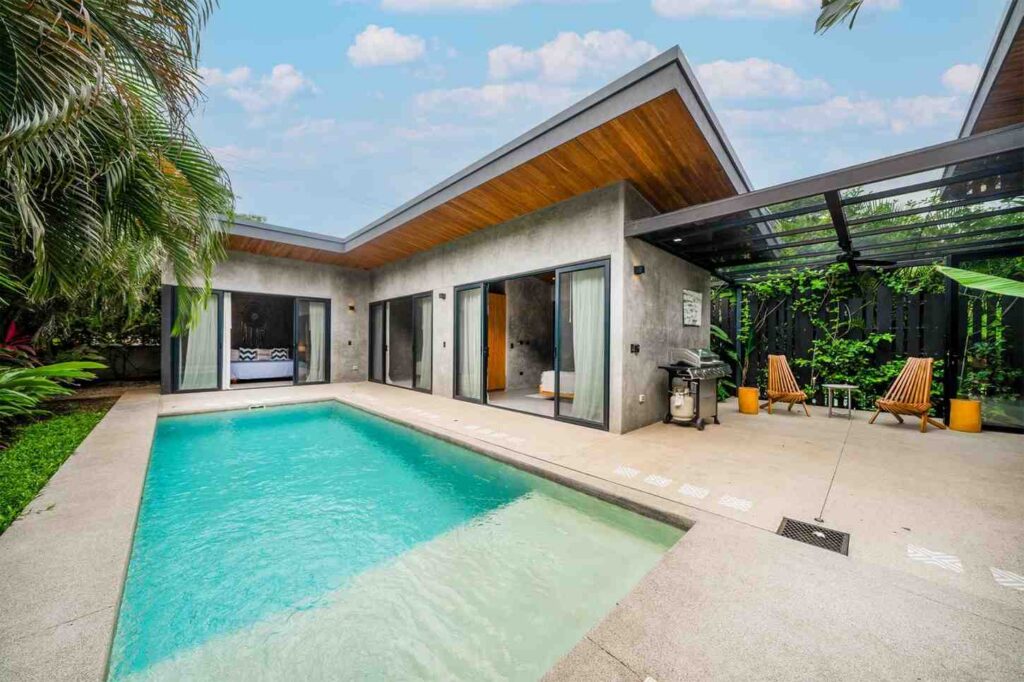
Why Tamarindo’s Tourism Profile Creates Genuine Rental Demand
Tamarindo draws visitors differently than most Costa Rican destinations. The combination of direct international flights into Liberia, consistent surf conditions, a walkable village center, and a well-established hospitality infrastructure means the market draws both first-time visitors and returning guests who have made Tamarindo a regular stop. That repeat visitor dynamic matters for rental investors: properties with strong reviews accumulate bookings across seasons, not just during peak weeks.
The Guanacaste coast has also benefited from a sustained shift in North American travel preferences toward longer, slower trips. Travelers increasingly book vacation rentals over hotels, particularly for stays of a week or more. Tamarindo’s inventory of well-appointed villas and condos is precisely what that traveler is searching for.
Occupancy Realities, Seasonal Patterns, and Honest Yield Framing
The high season runs roughly December through April, when dry weather, school breaks, and holiday travel combine to create peak demand. Nightly rates during this window can run significantly higher than the low-season floor. The shoulder months of May and November offer moderate demand and moderate rates. The core rainy season, June through October, is the slowest period, though Tamarindo’s surf consistency keeps a steady base of guests even then.
Well-located, professionally managed properties in Tamarindo typically achieve solid annual occupancy rates. Gross rental yields on mid-range properties can be meaningful relative to purchase price, though net yield after management fees, maintenance, and vacancy will be lower. Frame rental income as a meaningful offset to carrying costs and a potential return accelerator, not a guaranteed profit engine. Buyers who purchase primarily for lifestyle and treat rental income as a bonus tend to be more satisfied than those who buy primarily for yield.
What Makes a Rental Property Perform
Three factors consistently separate high-performing rentals from average ones. Location determines your guest pool: proximity to the beach, walkability, and neighborhood character all affect which guests book and at what rate. Amenities determine your nightly rate ceiling: a private pool, air conditioning in every bedroom, fast internet, and a well-equipped kitchen are non-negotiable for upper-tier Tamarindo rentals. Management quality determines how consistently those advantages translate into bookings, reviews, and repeat guests.
Properties that check all three boxes outperform their neighborhood average. Properties that compromise on one, typically management, underperform despite strong underlying fundamentals.
How Professional Property Management Changes the Equation
Self-managing a Tamarindo rental from abroad is technically possible and, for most absentee owners, genuinely impractical. Guest communication, check-in logistics, cleaning coordination, maintenance response, and platform management require local presence and time that most owners simply do not have. Professional management fees of 20 to 25 percent of gross revenue are real costs, but they buy something tangible: occupancy rates that typically exceed self-managed properties, because professional managers maintain reviews, respond to inquiries quickly, and keep properties in guest-ready condition between stays.
The math usually favors professional management. A property generating strong net revenue under professional oversight is a better outcome than slightly higher gross revenue under self-management that consumes your time and creates liability exposure when something goes wrong at 2 a.m.
Life After Closing: Property Management and Long-Term Stewardship
What Absentee Ownership Actually Requires
Closing day feels like an ending. In practice, it is the beginning of an ongoing ownership relationship that requires active attention, particularly for absentee owners managing a property from abroad. The Tamarindo buyers who report the highest satisfaction five years after purchase are not those who found the best listing. They are those who had the right support structure in place before they needed it.
What a Full-Service Property Management Partner Handles
A full-service property management partner handles the operational layer of ownership that most buyers do not fully anticipate when they close. That includes guest relations and booking platform management for rental properties, vendor coordination for maintenance and repairs, bill payment, utility monitoring, security checks during vacant periods, and local representation when issues arise. For buyers who visit Tamarindo several weeks a year, this coverage is what makes the ownership experience feel seamless rather than stressful.
The quality of that partner matters more than the cost of the service. A management company that responds slowly to maintenance calls, under-reports rental income, or defers communication with the owner creates problems that compound over time and are difficult to unwind.
HOA and COA Management: Where Unrepresented Owners Get Burned
HOA and COA governance is the area where foreign owners most commonly encounter unexpected costs and conflicts. Boards change. Rules are amended. Special assessments are levied. Disputes between neighbors escalate. Without a local advocate who attends meetings, reads correspondence in Spanish, and flags issues before they become legal matters, absentee owners find out about problems after the window to address them has already closed.
This is not a theoretical risk. It is the most common post-closing complaint we hear from buyers who purchased without ongoing local representation. The solution is straightforward: ensure your property management partner has explicit responsibility for HOA monitoring as part of their service scope, not as an optional add-on.
Long-Term Stewardship vs. Transaction Brokerage
A transaction broker’s job ends at closing. Their incentive is to complete the sale. A long-term stewardship partner’s value compounds over years. They help you respond to market shifts, evaluate when to upgrade a property, advise on rental rate adjustments, flag legal or regulatory changes affecting ownership, and guide you through an eventual resale. For foreign buyers without a local network, this ongoing relationship is not a luxury. It is the infrastructure that makes ownership viable and genuinely rewarding.
Why a Boutique Local Partner Outperforms a Volume Brokerage for Foreign Buyers
What Listing Aggregators and National Franchises Cannot See
Listing aggregators show you inventory. They cannot tell you that the corner unit in a specific building has a noise issue during peak season, that a particular neighborhood’s COA has been in a fee dispute for two years, or that a seller’s urgency creates room for a more favorable price. That contextual knowledge only exists inside the market, built over years of transactions, relationships, and follow-through.
National franchise brands like Sotheby’s or Coldwell Banker offer recognizable names and wide geographic reach. Those strengths serve buyers purchasing across multiple markets. In a single, specific market like Tamarindo, deep local knowledge outperforms broad brand coverage on every dimension that actually affects your outcome: property selection, negotiation, due diligence, vendor relationships, and post-closing support.
Where Foreign Buyers Most Commonly Go Wrong
The most expensive mistakes in Tamarindo real estate are not made during negotiation. They are made during property selection and due diligence. Buyers who choose a property that does not match their actual lifestyle needs, who skip a qualified attorney’s title review, who miss red flags in HOA financials, or who close without a management plan in place pay for those decisions not once, but repeatedly over years of ownership.
The pattern is consistent: buyers represented by advisors without deep local roots tend to make decisions based on what looks good in photographs and what the seller’s agent presents. Buyers with a genuine local advocate make decisions based on what the market actually knows about a given property, neighborhood, and development.
What Longevity in a Single Market Actually Signals
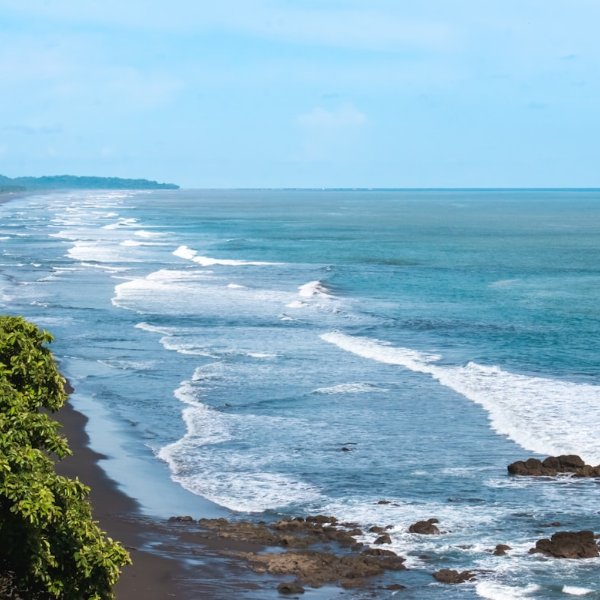
Nearly two decades on Costa Rica’s Gold Coast is not simply a tenure claim. It represents a specific kind of institutional knowledge: hundreds of completed transactions, relationships with every major developer and attorney in the region, firsthand experience with how specific communities have performed through market cycles, and a track record of buyers who came back years later to say the experience exceeded their expectations.
Longevity in one market signals something important to a buyer: this advisor did not move on when the market got difficult. They built a practice worth staying for.
First-Name-Basis Service and the Full Property Lifecycle Partnership
The boutique model operates on a simple premise: your advisor knows your name, your goals, your timeline, and your property, and that relationship does not reset with each transaction. When you call with a question two years after closing, you reach someone who remembers the details of your purchase and can answer from context, not from a file. That continuity is what transforms a real estate transaction into a genuine long-term investment in your future.
Quick-Reference Checklist: What to Ask Any Agent Before You Sign Anything
Before committing to representation, ask these five questions directly:
- How many transactions have you personally closed in Tamarindo in the last 24 months?
- Do you have relationships with qualified local attorneys you recommend, and why those attorneys specifically?
- What does your service look like after closing, and do you offer property management or refer to a partner who does?
- Can you provide references from foreign buyers who purchased more than three years ago?
- How do you handle situations where the right property for my needs is not currently in your inventory?
An advisor who answers these questions with specificity and without hesitation is worth your time. An advisor who deflects, generalizes, or pivots to their listings without engaging the question is telling you something important.
How Coastal Realty Works With You From Day One
The No-Pressure Consultation
The first conversation with Coastal Realty & Property Management is a listening conversation, not a sales presentation. We want to understand your timeline, your lifestyle priorities, your financial parameters, and your level of familiarity with Costa Rica before we recommend a single property. Buyers who have not yet visited Tamarindo will get an honest assessment of whether a discovery trip makes sense before committing to a search. Buyers who have visited and are ready to move will get a curated shortlist based on actual fit, not available inventory.
To get the most from an initial consultation, come prepared with a few specifics: your approximate budget, whether you plan to rent the property when you are not using it, your ideal timeline for purchasing, and any neighborhoods or property types you have already researched. The more specific you are, the more useful we can be in return.
From Discovery Call to Keys in Hand
From your first call through property search, offer, due diligence, closing, and the years of ownership that follow, our role does not diminish. We coordinate with your attorney, your notary, and your property manager. We attend inspections, review HOA documents, and help you interpret what you are seeing in the Costa Rican Public Registry. After closing, we remain available as your local point of contact for everything from vendor recommendations to market updates.
This is not a transaction. It is a partnership, and we build it to last as long as you own your Tamarindo property.
Your Next Step Toward Owning in Tamarindo
If you have read this far, you are not casually browsing. You are working toward a decision, and you deserve a conversation with someone who can speak to your specific situation with honesty and detail. Reach out to Coastal Realty to schedule a consultation. There is no obligation and no pressure, only the information you need to move forward with confidence.
Conclusion: Your Tamarindo Future Starts With the Right Partnership
The Foreign Buyer’s Roadmap From Dream to Deed
Buying a home in Tamarindo as a foreign national is legally straightforward, financially accessible, and genuinely rewarding, provided you approach it with the right preparation. You have the same ownership rights as a Costa Rican citizen. The Public Registry protects your title. Closing costs are predictable. Annual taxes are low. The rental market is real and supported by structural tourism demand. The lifestyle delivers what it promises.
The roadmap is clear: understand the legal framework, choose the right neighborhood for your actual goals, model the full cost of ownership honestly, plan for life after closing before you close, and partner with an advisor who will be there for all of it.
The Central Truth About Buying Property in Tamarindo
Every concern that keeps foreign buyers awake before a Costa Rica purchase, from title risk to legal complexity to hidden costs to post-purchase abandonment, has a straightforward solution: qualified local representation from the beginning. The buyers who regret their Tamarindo purchases almost universally skipped one of those elements. The buyers who thrive did not necessarily buy the most expensive property or the most obvious one. They bought with guidance, due diligence, and a plan.
The risk is not Tamarindo. The risk is going it alone.
An Invitation to Begin the Conversation
Coastal Realty & Property Management has spent nearly two decades on Costa Rica’s Gold Coast doing one thing: helping foreign buyers find the right property, close with confidence, and own with peace of mind for the long term. If you are ready to move from searching listings to having a real conversation about what is right for you, we are here. Reach out today, and let’s start with what you actually need to know.
Frequently Asked Questions
Can American citizens buy a home in Costa Rica?
Yes, absolutely. American citizens have exactly the same property ownership rights as Costa Rican citizens. There is no foreign buyer tax, no residency requirement, and no special permit needed. You can own property in your personal name, through a Costa Rican corporation, or through a trust structure depending on your estate planning needs. Working with a qualified local attorney before closing will help you choose the right ownership structure for your situation.
Is it safe to buy property in Tamarindo?
Buying property in Tamarindo is very safe when you follow the proper legal process. The Costa Rican Public Registry provides complete transparency: your attorney can pull a certified title report on any property before you commit, revealing the full chain of ownership, any liens, and registered boundaries. Fee simple ownership is legally protected and enforceable. The buyers who encounter problems are almost always those who skipped qualified legal representation, not those who followed the standard due diligence process.
What is the process for a foreigner to buy property in Costa Rica?
The process follows a clear sequence: your attorney pulls a title report from the Costa Rican Public Registry, you submit a formal offer, an agreed deposit goes into a licensed escrow account, and a licensed notary public (who is also an attorney) drafts and executes the closing deed. The notary collects transfer taxes and submits the deed for registration. Once processed, the Public Registry issues a título de propiedad in your name. The full process typically takes 30 to 90 days from accepted offer to recorded title.
How much does it cost to buy a home in Tamarindo, Costa Rica?
Prices range from roughly $150,000 for entry-level condos to over $3 million for luxury beachfront properties, with the most active market segment sitting between $280,000 and $750,000. Beyond the purchase price, budget for closing costs of approximately 3.5 to 4.5 percent of the registered purchase price. Annual carrying costs for a mid-range property, including taxes, HOA fees, insurance, and maintenance, typically run $9,000 to $15,000 before any rental income. Modeling those figures before you make an offer is one of the most important things we help buyers do.
Do I need to live in Costa Rica to own property there?
No. Property ownership and residency are entirely separate under Costa Rican law. You can own real estate as a tourist, as a non-resident, or as a legal resident. Many foreign owners visit Tamarindo for weeks or months each year on tourist status while their property earns rental income the rest of the year. Owning property does not automatically grant residency, but investing a minimum of $150,000 in titled real estate can qualify you to apply for Costa Rica’s Investor Residency category if that path interests you.
What are the best neighborhoods in Tamarindo for retirees?
The right neighborhood depends on what kind of retirement you are envisioning. Langosta is widely considered the most desirable full-time residential address: quieter, more intimate, and close to a protected natural estuary. Tamarindo Hills suits buyers who want panoramic ocean views, space, and privacy without the buzz of the tourist corridor. Playa Tamarindo itself is ideal for socially oriented retirees who want walkability and the energy of a lively community. We always recommend renting in at least two areas before committing to a purchase, because what feels appealing on a visit often shifts after a longer stay.
How do property taxes and HOA fees work for foreign owners?
Costa Rica’s annual property tax is 0.25 percent of the registered property value, paid quarterly to the local municipality. It is one of the lowest property tax rates in the Western Hemisphere. A separate luxury surcharge applies to properties with a high registered construction value, but many premium-priced Tamarindo homes are not subject to it due to how the threshold is calculated. HOA fees inside gated communities typically run $200 to $600 per month and cover security, landscaping, pool maintenance, and common area upkeep. Before buying in any gated development, always review the HOA’s reserve fund and recent meeting minutes to assess its financial health.