
Why Your Community Choice Is a Property Decision First — and a Lifestyle Decision Second
Most people approach this decision backwards. They fall in love with a place on a two-week vacation, then work backwards to justify buying property there. The problem is that a beautiful location and a sound property investment are two different things, and in Costa Rica, they only occasionally overlap in the ways that matter for long-term owners. Costa rica expat communities is one of the most searched topics among foreign buyers exploring this part of Central America.
Your community choice sets the ceiling on your rental income, the floor on your resale liquidity, the quality of your daily infrastructure, and the reliability of whoever manages your asset when you’re not on the ground. Get the community right, and the lifestyle follows. Get it wrong, and no amount of ocean view compensates for a dysfunctional HOA, a property manager who’s hard to reach, or a market too thin to sell out of when your circumstances change.
The Instagram Problem: When Beautiful Locations Become Costly Regrets
The feed makes everywhere look equally viable. A remote hillside property with a sweeping Pacific view photographs identically whether the road washes out every rainy season or holds up year-round. A beachfront condo looks immaculate in a listing photo whether the development has a professional property management company on-site or a part-time caretaker juggling a dozen other properties.
We’ve worked with clients who bought in stunning locations that checked every visual box and then struggled for years with the reality: gravel roads that destroyed rental cars, inconsistent water pressure, internet speeds too slow for remote work, and HOA reserves so underfunded that major repairs became owner assessments. None of that shows up in the listing. It shows up after closing.
The communities that generate the most buyer regret in Costa Rica aren’t the ones that looked bad on paper. They’re the ones that looked incredible online and delivered something much harder to live with day to day. This is a key dynamic shaping the costa rica expat communities market in 2026.
What Thriving Expats Have in Common (It’s Not the View)
After 18 years of working with expat buyers and watching some thrive while others quietly plan their exit, a clear pattern emerges. The expats who genuinely love where they landed share a few specific characteristics in how they chose their community, and none of those characteristics involve the view.
They visited during the rainy season, not just the dry season. They asked about water and internet before they asked about square footage. They met the property manager before they closed. They understood what the HOA fee actually covered and reviewed the reserve fund before signing. And most importantly, they chose a community whose social infrastructure matched their personality, not just their aesthetic preferences.
The expats who thrive tend to be the ones who treated the community evaluation as rigorously as they treated the property inspection. The ones who struggle usually did the opposite.
How Our 18-Plus Years on the Gold Coast Shapes This Guide
We are not a relocation directory or a rankings aggregator. We are a real estate brokerage that has represented buyers, sellers, and property owners on Costa Rica’s Pacific coast for over 18 years, with deep roots in the Guanacaste Gold Coast, the stretch of coastline that includes Tamarindo, Playa Flamingo, Conchal, and surrounding communities. Buyers researching costa rica expat communities will find this pattern consistent across the region.
That concentration means we know this region at a granular level: which developments have well-funded HOA reserves and which are perpetually scrambling, which property management companies actually respond to guests at 11pm, and which communities have the rental demand history to support the income projections sellers love to quote.
We’ll give you an honest picture of the communities we know best, and an honest map of the regions we know less intimately. You deserve both.
Where Do Most US Expats Live in Costa Rica?
The largest concentration of US expats in Costa Rica lives in the Central Valley, specifically the greater San José metro and satellite towns like Atenas, Grecia, and Alajuela. This makes sense for practical reasons: proximity to the international airport, access to private hospitals, established expat social networks, and year-round mild weather without the intensity of coastal heat or humidity. It is one of the factors that distinguishes costa rica expat communities from comparable markets.
The second major concentration sits along the Pacific coast, with Guanacaste’s Gold Coast (Tamarindo, Flamingo, Nosara) and the Central Pacific (Manuel Antonio, Quepos) drawing the bulk of beach-oriented expats and vacation rental investors. The Southern Pacific and Northern Zone attract a smaller, self-selecting group who prioritize wilderness and solitude over amenities.
Understanding this distribution matters before you fall for any single community’s marketing, because popular doesn’t always mean right for you, and the communities with the thinnest expat populations often have the thinnest resale markets to match.
—
Costa Rica Expat Communities: A Guide to the Major Regions at a Glance
Costa Rica is smaller than West Virginia, but its geography creates dramatically different living environments within short driving distances. A two-hour drive can take you from beach heat and surf culture to cool mountain towns with farmers’ markets and coffee farms. That range is the appeal, and the complexity. This context is essential for anyone seriously researching costa rica expat communities.
The Gold Coast and Pacific Coast: Sun, Surf, and High Rental Demand
The Guanacaste Gold Coast runs roughly from the Papagayo Peninsula south through Tamarindo and Sámara. This is the driest and sunniest region in Costa Rica, with a pronounced dry season from November through April that aligns almost perfectly with North American winter escape patterns. That alignment is the engine of vacation rental demand here. The costa rica expat communities sector has been defined by exactly these dynamics over recent years.
The Central Pacific, anchored by Manuel Antonio and Quepos, receives more rainfall year-round, which sustains the lush rainforest environment but compresses the peak rental season. Infrastructure maturity varies considerably between specific developments, and property management quality ranges from excellent to unreliable depending on which community you’re evaluating.
The Central Valley and Highland Communities: Year-Round Spring and Urban Proximity
The Central Valley is where a large share of long-term residents ultimately land, not because it’s the most dramatic landscape, but because it’s the most livable at scale. Atenas is frequently cited for its climate, which sits at a pleasant elevation that avoids coastal heat without the cooler temperatures of higher-altitude towns. Escazú and Santa Ana offer urban convenience, international schools, and hospital proximity at a price premium.
This region suits retirees who want the infrastructure of a developed area and expats who travel frequently and need reliable airport access. Vacation rental demand exists but runs lower than coastal markets, which affects the investment calculus for buyers who need rental income to offset ownership costs.
The Northern Zone and Southern Pacific: Wilderness, Solitude, and Trade-Offs
The Northern Zone (Arenal, La Fortuna, Nuevo Arenal) and the Southern Pacific (Uvita, Dominical, the Osa Peninsula) attract a specific buyer: someone who explicitly wants to trade amenity depth for natural intensity. Both regions are genuinely beautiful. Both come with infrastructure limitations that are easy to underestimate on a short visit.
Road conditions, internet reliability, medical facility proximity, and property management depth are all thinner here than in the Gold Coast or Central Valley. That doesn’t make these regions wrong choices. It makes them right choices for a narrower profile of buyer.
—
The Community Pre-Selection Checklist: Evaluating Any Costa Rica Expat Community Before You Commit
Use this checklist before you tour any property. Each question surfaces a real ownership risk.
Infrastructure
- Can you confirm reliable municipal or well water with consistent pressure year-round?
- What are the actual internet speeds available, and from which providers?
- What is the road condition to and from the property during rainy season (May through November)?
- How far is the nearest well-equipped private hospital or emergency clinic?
HOA and Governance
- Does the community have a professional management company or a volunteer board?
- Can you review the last 12 months of HOA meeting minutes and the current reserve fund balance?
- What does the monthly HOA fee cover, and what does it exclude?
- Has the community had any special assessments in the past five years?
Rental Viability
- What are the occupancy rates for comparable properties in this community over the past two years?
- Is on-site property management available, or will you manage rentals remotely?
- Are there HOA restrictions on short-term rentals?
Resale Liquidity
- How many comparable properties sold in this community or immediate area in the past 24 months?
- What was the average days-on-market for those sales?
- Is there a price history that shows appreciation or at minimum price stability?
Lifestyle Fit
- Visit during both dry season and rainy season before committing.
- Spend at least one full week, not a long weekend, in the community you’re considering.
- Talk to at least three current residents who are not affiliated with the development or selling agent.
—
Pacific Coast Costa Rica Expat Communities: The Regions We Know Best
These are the communities where we work every day. Our assessments are based on transactions, property management relationships, HOA involvement, and direct client feedback, not research from a distance.
Tamarindo and the Guanacaste Gold Coast: The Expat Epicenter
Who Actually Lives Here and Why They Stayed
Tamarindo draws a wide range of expats precisely because it offers what most coastal communities in Costa Rica cannot: real town infrastructure. There’s a grocery store you can actually live out of, a hospital within reasonable driving distance, multiple restaurants that stay open year-round, an active surf scene, and an expat social network deep enough that new arrivals meet people within their first week. For those active in costa rica expat communities, this distinction is well understood.
The long-term residents who stayed tend to cite the social infrastructure as the deciding factor, not the beach. The beach is why they came. The community is why they didn’t leave.

Property Types, Price Ranges, and Vacation Rental Viability
The Gold Coast market spans a wide range, from entry-level condos in established developments starting around $200,000 to oceanfront villas north of $2 million. The sweet spot for investors combining personal use with rental income tends to be two-bedroom condos in professionally managed developments in the $300,000 to $500,000 range.
Vacation rental demand is strong and well-documented in this region. Occupancy rates in well-run properties average solidly through peak season and remain meaningful during green season. Those numbers depend heavily on community management quality and marketing, which is why development selection matters as much as location.
Infrastructure Maturity, HOA Quality, and the Watch-Outs Long-Term Residents Mention
Tamarindo’s infrastructure is the most mature of any beach town on the Gold Coast. That said, not all developments within the region are equal. HOA governance quality varies significantly between communities. Some maintain well-funded reserves and professional management; others operate on thin budgets with inconsistent maintenance.
The watch-outs long-term residents mention most: water pressure inconsistencies in older developments, road conditions on secondary access routes during rainy season, and the occasional HOA that looks functional on the surface but struggles to enforce community rules. Due diligence on the specific development, not just the town, is non-negotiable here.
—
Quepos and Manuel Antonio: Rainforest Meets Resort Town
The Lifestyle Reality Beyond the National Park Brochure
Manuel Antonio’s national park is one of the most visited in Costa Rica, which creates a dual reality for residents. High tourist traffic supports rental demand and keeps restaurants and services open year-round. It also means the town of Quepos, a short drive from the park, has a working-class Tico character that some expats find charming and others find less polished than expected. This is central to understanding what costa rica expat communities offers right now.
The lifestyle here is genuinely beautiful, lush, green, surrounded by wildlife, but it runs hotter and wetter than the Gold Coast. Many buyers underestimate the humidity until they’ve experienced it through a full rainy season.
Rental Income Potential and Property Management in Manuel Antonio
Rental demand is strong around the national park, and properties with ocean or jungle views command premium rates. Competent property management companies operate in the area, though the market is smaller and options fewer than in Tamarindo. Buyers who plan to rely on rental income should identify their property manager before they close, not after.
Honest Watch-Outs: Humidity, Seasonality, and Market Liquidity
Humidity is the primary quality-of-life variable that surprises people. Properties require more maintenance than in drier climates. Mold management, air conditioning costs, and faster wear on furniture and finishes are real ownership costs here. The resale market is thinner than the Gold Coast, which means longer average days-on-market when you want to sell. These aren’t disqualifying factors, but they’re numbers to model before you buy.
—
Uvita and the Southern Pacific: The Road Less Traveled
The Expat Profile Drawn to the Whale Tail Region
Uvita attracts buyers who have usually already lived somewhere more developed in Costa Rica and consciously decided to trade amenities for space, privacy, and natural intensity. The Marino Ballena National Park and whale-watching season draw visitors, and a small but passionate expat community has formed around the area’s yoga retreats, organic farms, and off-grid lifestyle ethos. Anyone navigating costa rica expat communities should keep this consideration in mind.
This is not a starter community for first-time expats. It rewards people who already know what they need and who have confirmed they can live without what Uvita doesn’t yet offer.
Infrastructure Gaps and Why They Matter for Property Owners
The infrastructure picture in Uvita is improving but genuinely incomplete by Gold Coast standards. Roads to many properties remain unpaved and challenging during heavy rain. Internet access varies widely by exact location. Medical care requires a significant drive to a well-equipped facility. Property management options are limited, and the short-term rental market, while growing, lacks the depth of documentation that makes income projections reliable.
For a property owner who plans to rent their asset and manage it remotely, these gaps translate directly into operational complexity and potential income shortfall.
Is the Southern Pacific Right for You or Just for a Long Weekend?
The honest question every Uvita buyer should answer: do I want to live here, or do I want to visit here? Many people who love Uvita on a long weekend find the infrastructure limitations genuinely challenging as a primary or even secondary residence. There’s no right answer, but there is a wrong assumption: that the same experience that makes a vacation magical automatically makes a property investment sound.
—
Nosara, Flamingo, and Dominical: Distinct Communities with Real Trade-Offs
Nosara has built one of the most distinctive expat communities in Costa Rica around its surf, yoga, and wellness culture. Property values are high relative to infrastructure depth, and the community has actively resisted development in ways that preserve character but limit rental inventory and service options. It suits buyers who share that specific cultural orientation. The trajectory of costa rica expat communities reflects these trends directly.
Playa Flamingo sits north of Tamarindo on the Gold Coast and offers a quieter, more upscale residential character. The marina development has added infrastructure, and the community appeals to buyers who want Gold Coast access with less of Tamarindo’s tourist energy. Service infrastructure is thinner than Tamarindo, and the rental market, while active, is smaller.
Dominical sits between Manuel Antonio and Uvita and shares characteristics with both, lush and wet like the Central Pacific, developing and remote like the Southern Pacific. It has a loyal following and a real surf culture, but infrastructure limitations and a thin resale market make it a considered choice rather than a default one.
—
Central Valley and Highland Community Spotlights
The Central Valley doesn’t photograph as dramatically as the coast, and that’s precisely why the expats who choose it tend to stay longer. They came for livability, not aesthetics, and livability delivers consistently in ways that ocean views sometimes don’t.
Atenas: The Climate Capital and Its Appeal to Retirees
Atenas has been described as having one of the best climates in the world, and while that claim is often repeated to the point of cliché, the underlying reality is accurate. Sitting at roughly 2,300 feet elevation, the town avoids coastal heat and humidity while staying warm enough to skip the heating costs of higher-altitude towns like Grecia or Zarcero. The result is genuinely pleasant year-round weather, mid-70s most days, cooler evenings, and no air conditioning required.
Cost of Living, Community Vibe, and the Honest Infrastructure Picture
Atenas runs meaningfully cheaper than coastal expat communities. Grocery costs, restaurant prices, and rentals all run lower than Tamarindo or Escazú. A comfortable monthly budget for a couple, including rent, food, transportation, and utilities, typically falls between $2,000 and $2,800, compared to $3,500 or more in beach or urban markets. Property purchase prices reflect this as well, with residential homes and small lots available well below coastal equivalents.
The expat community is established, active, and skewed older. There are weekly English-language gatherings, active online groups, and enough fellow retirees that social integration happens naturally if you want it. The town itself is a working Tico community first, which most long-term residents describe as a feature rather than a limitation.
Infrastructure is solid but not exceptional. The road from San José is paved and manageable. There’s a reliable local medical clinic, and Hospital CIMA in Escazú is roughly 40 minutes away. Internet access through the major providers is generally adequate for streaming and video calls, though not universally fast.
Why Atenas Works for Some Expats and Frustrates Others
Atenas works for retirees who want community stability, mild weather, and a slower pace without the isolation of a rural mountain town. It frustrates people who expected more: more dining options, more nightlife, more cultural variety, and more convenient airport access than the roughly 45-minute drive to Juan Santamaría suggests.
It also frustrates buyers focused on vacation rental income. Atenas doesn’t draw the tourist volume that coastal markets do, so short-term rental yields are modest. If your ownership model depends on rental income to cover carrying costs, Atenas is a harder case to make than Tamarindo or Manuel Antonio.
The buyers who thrive here are the ones who came specifically for the life Atenas offers, not the ones who settled for it after missing out somewhere else.
—
Escazú and the San José Metro: Urban Convenience at a Premium Price
Escazú is Costa Rica’s closest approximation of an international suburb. It has high-end grocery stores, a multilevel mall, multiple private hospitals within minutes, international schools, dozens of restaurants, and a density of other expats and professional Ticos that makes daily life feel familiar to North American arrivals. For buyers who need urban infrastructure, whether for medical reasons, school-age children, or frequent international travel, Escazú removes most of the friction that other Costa Rica expat communities require you to tolerate.
Who Chooses Escazú and What They Give Up
The buyers who choose Escazú are often corporate relocation cases, families with school-age children, or retirees with active medical needs who aren’t willing to trade hospital proximity for scenery. They give up, plainly, the natural environment that draws most people to Costa Rica in the first place. There’s no beach, no jungle backdrop, no wildlife in the yard. The view from most properties is urban, and traffic in the greater San José metro is a genuine daily friction point. This is what separates costa rica expat communities from comparable opportunities elsewhere.
They also give up affordability. Escazú commands a premium over comparable square footage anywhere else in the country. A two-bedroom apartment in a modern Escazú building can run $250,000 to $400,000 or more, with condominium fees and urban maintenance costs to match.
Property Ownership Realities in an Urban Setting
Urban property in Costa Rica behaves differently than resort or coastal property. Appreciation is steadier but less dramatic. Short-term rental demand exists but competes with hotel inventory in ways that beach properties don’t. The tenant pool for long-term rentals is strong: corporate professionals, embassy staff, and returning Costa Rican nationals all rent in this market, which gives Escazú a reliable long-term rental income profile that many coastal properties can’t match. Smart buyers in the costa rica expat communities market factor this in from the start.
The due diligence requirements are no less rigorous than elsewhere. Condominium governance quality varies, title searches are equally non-negotiable, and property management for absent owners is a real operational need even in an urban setting.
—
The Honest Cost Breakdown: What Expat Property Ownership Actually Costs by Region
The listing price is the beginning of the math, not the end of it. Most buyers underestimate total ownership cost by a significant margin because the costs that don’t appear in marketing materials are the ones that accumulate.
Property Taxes, Closing Costs, and What Costa Rica’s Low Rates Really Mean
Costa Rica’s annual property tax rate is 0.25 percent of the registered property value, among the lowest in the Western Hemisphere. On a $400,000 property, that’s $1,000 per year, which is a genuine advantage over US markets. Closing costs run between 3.5 and 4.5 percent of the purchase price, split between transfer taxes, legal fees, notary fees, and registration costs. Budget 4 percent as your planning figure. This dynamic continues to influence pricing and availability across costa rica expat communities.
One important note: registered property values in Costa Rica are often set below market value, which means the tax calculation may feel favorable until a reassessment catches up. This isn’t a risk to lose sleep over, but it’s not a permanent arbitrage either. Understanding costa rica expat communities means engaging with nuances like this one.
HOA and COA Fees: How to Evaluate Governance Quality Before You Buy
HOA fees in Costa Rica’s gated communities and condominiums typically range from $150 to $600 per month, depending on community size, amenities, and management sophistication. The fee itself matters less than what it covers and whether the reserve fund is adequately capitalized. The costa rica expat communities market has built its reputation on exactly this kind of resilience.
A community with a $300 monthly HOA fee and a well-funded reserve is a better ownership proposition than one charging $200 with deferred maintenance and no reserve. Ask for the reserve study, the last 12 months of financials, and any pending special assessments before you make an offer. Developments that resist sharing this information during due diligence are telling you something important.
Property Management Fees, Vacation Rental Income, and the Net Ownership Math
Professional property management in Costa Rica runs 20 to 30 percent of gross rental revenue. That is the realistic cost of having someone handle guest communication, check-ins, maintenance coordination, and platform management from thousands of miles away. On a property generating $30,000 annually in gross rental income, management fees alone consume $6,000 to $9,000. For international investors, costa rica expat communities presents this profile consistently.
Net that against mortgage or opportunity cost, HOA fees, utilities, maintenance, and taxes, and the actual cash flow picture looks quite different from the gross income projections sellers and developers quote. Model the full cost stack before you buy, not after.
Utilities, Maintenance Reserves, and the Costs Nobody Puts in the Brochure
Electricity in Costa Rica runs higher than many buyers expect, particularly for coastal properties running air conditioning. A two-bedroom condo in a coastal community can generate $150 to $300 monthly in electricity costs during warm months. Water, internet, and basic services add another $100 to $150. This underlying reality is what makes costa rica expat communities compelling for long-term buyers.
Properties in humid environments like Manuel Antonio require meaningful maintenance budgets. Mold prevention, shorter paint refresh cycles, and faster appliance replacement are real costs. Budget a minimum of 1 percent of property value annually for maintenance reserves, and 1.5 percent for coastal properties in high-humidity zones.
What Is the True Cost of Living in a Costa Rica Expat Community?
A realistic monthly budget for a couple in Costa Rica, owning rather than renting, in a mid-tier coastal expat community breaks down roughly as follows: Anyone serious about costa rica expat communities will encounter this consideration early on.
- HOA fees: $200 to $400
- Utilities (electric, water, internet): $250 to $450
- Groceries and household: $600 to $900
- Transportation: $200 to $350
- Healthcare (private insurance plus routine costs): $300 to $600
- Dining, entertainment, and incidentals: $400 to $700
That’s a realistic range of $1,950 to $3,400 per month, excluding mortgage or property carrying costs. The Central Valley skews lower across most categories. The Pacific coast skews higher on utilities and lifestyle spend. The Southern Pacific can appear cheaper until infrastructure gaps create their own costs: driving farther for groceries, unreliable internet requiring workarounds, and medical travel adding up over time.
—
Infrastructure, Governance, and Management: The Due Diligence Most Buyers Skip
Most buyers spend significant time evaluating the property and almost no time evaluating the community that surrounds it. This is where the expensive mistakes happen.
How to Evaluate an HOA or Community Management Company Before Buying
A functioning HOA is a property asset. A dysfunctional one is a liability that follows you to closing and doesn’t leave. The difference is usually visible in the documents if you know what to look for.
Request the reserve fund balance and compare it to the estimated replacement cost of major shared infrastructure, including roads, pools, roofs, and water systems. A reserve fund below 30 percent of estimated replacement cost signals deferred maintenance risk. Review meeting minutes for the past year to identify recurring unresolved issues, contentious votes, or patterns of owner non-compliance. Talk to current residents, not just the sales team.
If the community uses a professional management company rather than a volunteer board, verify that the company has other managed properties you can call for references. Ask how quickly they respond to maintenance requests and whether they have 24-hour emergency protocols.
Roads, Water, Internet, and the Questions to Ask on Your Site Visit
Visit during rainy season if at all possible. The road that felt like a mild inconvenience on a dry February day may be impassable or damaging to vehicles by September. Ask the property manager directly whether the road ever floods or washes out, and how long access gets disrupted when it does.
Water reliability is a persistent issue in parts of the country. Ask whether the community draws from municipal water, a shared well, or individual wells. Ask about backup storage capacity and how often water pressure drops. Internet speeds are testable on-site. Run a speed test at the property itself, not just at the developer’s sales office, which may have a dedicated business line.
Medical facility proximity is a question worth answering in minutes, not miles. Traffic patterns and road conditions matter more than straight-line distance.
Should I Rent First or Buy Immediately in an Expat Community?
Renting first is almost always the better strategy, with one exception: if you’re a rental-income investor buying in a documented high-demand market with verified occupancy history, delayed purchase has real opportunity costs. For everyone else, renting for three to six months in the community you’re considering protects you from the single most common and expensive mistake in expat property buying, which is choosing based on a short visit during peak season.
Renting gives you rainy season experience, which is the honest test of infrastructure. It gives you a real social sample of the community rather than the curated version that developer tours provide. And it gives you time to identify the specific developments and property types that actually perform, as opposed to those that simply market well.
What Happens If I Choose the Wrong Community and Want to Relocate or Sell?
The resale liquidity question is one buyers rarely ask and often regret skipping. In established Gold Coast communities, a well-priced property in good condition typically sells within 90 to 180 days. In thinner markets like the Southern Pacific or Northern Zone, that timeline can stretch to a year or longer, and price reductions may be necessary to generate interest.
This doesn’t mean you’re trapped. It means the exit has a cost, and that cost varies by community. Factoring resale liquidity into your purchase decision is not pessimism. It’s the same prudence you’d apply to any major asset purchase.
—
Safety, Security, and the Honest Regional Picture
Safety is the question that generates the most anxiety among prospective expats and the most distorted answers online. The honest picture is more nuanced than either the fear-driven headlines or the “pura vida, everything is fine” reassurances that some relocation sites offer.
Where Is the Safest Place to Live in Costa Rica for Expats?
Costa Rica is significantly safer than most of Central America and has a long-standing reputation as a stable, democratic country. Violent crime against tourists and expats is uncommon. Property crime, including opportunistic theft, vehicle break-ins, and occasional home burglaries, is a real and present concern in some areas. The best opportunities within costa rica expat communities come to buyers who understand this well.

The safest communities for expats tend to be gated developments with professional security, in regions with active law enforcement presence and established expat populations. The Gold Coast’s established communities, Escazú and Santa Ana in the Central Valley, and well-managed condominiums in areas like Manuel Antonio consistently show lower incident rates than more remote or less-developed areas.
Urban San José has higher general crime rates than most of the communities in this guide, which is one reason expats who need urban proximity tend to choose suburban enclaves like Escazú and Santa Ana rather than the city center itself.
How Community Design and HOA Governance Affect Day-to-Day Security
Gated communities with 24-hour staffed security and controlled access points provide a baseline level of protection that standalone residential properties don’t. But gate quality varies. Some developments employ trained security professionals with proper protocols. Others employ a single overnight guard whose reliability may be inconsistent.
HOA governance connects directly to security quality. Communities with well-funded reserves and professional management maintain their security infrastructure. Communities with underfunded HOAs often cut security staffing first when budgets get tight, which creates exactly the kind of gap that opportunistic crime exploits. Reviewing security protocols and staffing levels is part of the same HOA due diligence process that covers reserves and maintenance.
What Our Clients Actually Say After Two Years on the Ground
The clients who report the highest satisfaction after two or more years in Costa Rica share a consistent pattern: they chose their community deliberately, not reactively. They did a trial period before buying, or they did enough on-the-ground research to understand exactly what they were trading and what they were gaining.
The concerns that come up most consistently after two years are not the dramatic ones. Safety incidents are rare in well-chosen communities. The recurring friction points are the manageable-but-real ones: internet reliability during rainy season outages, HOA disputes over maintenance priorities, property management responsiveness when something breaks during a guest stay, and the occasional mismatch between the social scene someone expected and the one that actually exists in their community.
None of these are reasons not to make the move. They’re reasons to make it with clear eyes, a verified property management relationship in place before you close, and a community that you’ve evaluated on the fundamentals rather than the brochure.
—
Residency Visas and Legal Foundations for Expat Property Owners
Costa Rica’s legal framework for foreign property owners is genuinely foreigner-friendly, but navigating it well requires understanding which tools apply to your situation before you start the process, not after.
Pensionado, Rentista, and Investor Visas: Which Path Fits Your Situation
Three residency categories cover the majority of expat property owners. The pensionado visa requires proof of a lifetime pension income of at least $1,000 per month from a government or private source. Social Security qualifies, as do most defined-benefit pensions. This is the most straightforward path for retirees with guaranteed monthly income.
The rentista visa targets people without a pension who can demonstrate stable passive income, such as investment distributions or rental income, deposited into a Costa Rican bank account for a minimum of five years. The income requirement is higher, but the path is accessible to early retirees or those living off investment portfolios.
The investor visa requires a minimum investment in qualifying Costa Rican assets, which can include real estate. For buyers in that price range, this path offers a direct connection between property purchase and legal residency status. A qualified Costa Rican immigration attorney is essential for all three categories, as documentation requirements are specific and errors cause significant delays.
One clarification that surprises many buyers: you do not need residency to own property in Costa Rica. Foreign nationals have the same property ownership rights as citizens. Residency and property ownership are separate legal tracks that can proceed independently or in parallel.
Foreign Property Ownership Rights and the Title Search Process
Costa Rica’s constitution grants foreigners full property ownership rights. You can hold title directly in your name, through a Costa Rican corporation (sociedad anónima), or through a limited liability company structure. Each has tax and liability implications worth discussing with a local attorney before you close.
The title search process, conducted through Costa Rica’s National Registry, is non-negotiable and should be performed by an independent attorney who represents you, not the seller or developer. A proper search confirms clean title, identifies any liens or encumbrances, verifies the registered property boundaries match what you’re being sold, and checks for any concession land issues.
Maritime zone law is the area where buyers most frequently encounter unexpected complications. Properties within 200 meters of the mean high-tide line fall under the Maritime Terrestrial Zone law, which means the first 50 meters are public and cannot be owned privately, and the next 150 meters require a concession from the municipal government rather than fee-simple title. Understanding exactly what you’re buying, and what legal structure governs it, is foundational due diligence, not optional.
How Do Expats Find and Purchase Property in Costa Rica?
Most expats start their search online and arrive with a mental shortlist. The search typically narrows through on-the-ground visits, referrals from other expats, and eventually a working relationship with a local agent who knows the specific communities on their list.
The purchase process follows a recognizable structure: offer letter, due diligence period (title search, property inspection, HOA review), escrow deposit with a reputable escrow company, and closing through a Costa Rican notary public. The full process from accepted offer to closing typically runs 30 to 60 days for straightforward transactions.
What separates smooth transactions from difficult ones is almost always representation quality. Buyer’s agents who work exclusively for the buyer, not dual agents representing both parties, provide the advocacy that catches problems before they become post-closing regrets.
—
Matching Your Lifestyle, Budget, and Ownership Goals to the Right Region
The communities covered in this guide aren’t interchangeable. Each attracts a specific ownership profile, and the buyers who thrive are the ones who matched their actual situation to the right community rather than the most appealing one.
If You Are a Retiree Seeking Low Maintenance and Stable Income
Your priorities, including predictable costs, good healthcare access, a social community that doesn’t require constant effort to maintain, and a property that doesn’t demand intensive management, point toward Atenas in the Central Valley or an established, professionally managed condo development on the Gold Coast.
Atenas delivers the lowest total cost of ownership and the most stable day-to-day livability. The Gold Coast option suits retirees who want beach proximity and are willing to pay more for it, provided they choose a development with a proven HOA and on-site management. Avoid remote or rural properties unless you genuinely want the independence that comes with them, because maintenance demands and infrastructure gaps add friction that erodes quality of life over time.
If You Are a Remote Professional Wanting a Vibrant Social Scene
Tamarindo is the clearest answer. It has the social infrastructure: active expat networks, year-round restaurants, coworking options, surf culture, and enough population density that you’re not manufacturing social connection from scratch. Nosara serves a narrower but equally committed community for those whose identity aligns with its wellness and surf orientation.
The Central Valley offers social depth of a different kind, with established expat groups in Escazú and Atenas, more cultural programming, and a professional class that includes other remote workers and international residents. The tradeoff is the beach, which is a significant tradeoff for people who moved to Costa Rica specifically for coast access.
Internet reliability should be a filter, not an afterthought. Test speeds at the property itself before committing. This applies to every community, but it matters most when your income depends on consistent connectivity.
If You Are a Rental-Income Investor Prioritizing Yield and Liquidity
Gold Coast communities, specifically Tamarindo and the broader Guanacaste corridor, offer the strongest combination of documented occupancy history, professional property management depth, and resale liquidity. Manuel Antonio performs well on rental demand but comes with higher maintenance costs and a thinner resale market.
Avoid projecting rental income in emerging markets without verified comparable data. Uvita and the Southern Pacific have growth potential, but potential and documented performance are different inputs for a financial model. Buy where the numbers are real, not where the upside story is compelling.
If You Are Unsure: The Trial-Period Strategy Before You Commit
Renting before buying in any community you’re seriously considering is the single highest-value risk-reduction strategy available to you. Three to six months of renting in your target community gives you rainy season infrastructure data, a real social sample, and time to identify which specific developments perform versus which ones simply market well.
The opportunity cost of renting for six months is measurable. The cost of buying in the wrong community and spending years working through a thin resale market is substantially higher. If budget constraints make a full trial period difficult, prioritize a rainy-season visit of at least two weeks in the specific community, not just the broader region.
What Are the Best Communities for Retirees Versus Investors?
Retirees optimizing for livability tend to land in Atenas, established Gold Coast condominiums with professional HOA management, or Escazú for those with medical or family priorities.
Investors optimizing for yield and liquidity tend to do best in Tamarindo and the Guanacaste Gold Coast corridor, Manuel Antonio for buyers who understand the higher maintenance costs, and Flamingo for buyers wanting quieter Gold Coast access with a proven rental market.
The overlap category, buyers who want personal use and meaningful rental income, performs best in professionally managed Gold Coast developments where the rental management infrastructure already exists and occupancy data is verifiable before purchase.
—
The Full Property Lifecycle: From the Right Community to Long-Term Ownership Success
Choosing the right community is the foundation. What happens after closing determines whether that foundation produces a good outcome.
Purchase: Why Representation and Due Diligence Are Non-Negotiable
Buyer representation by an agent working exclusively for your interests is the structural protection that makes everything else in the purchase process work correctly. Your agent should be identifying problems with the deal, not smoothing them over to reach closing. Due diligence, including title search, property inspection, HOA financial review, and water and utility verification, is not optional paperwork. It’s the process by which you confirm that what you’re buying matches what you’ve been told.
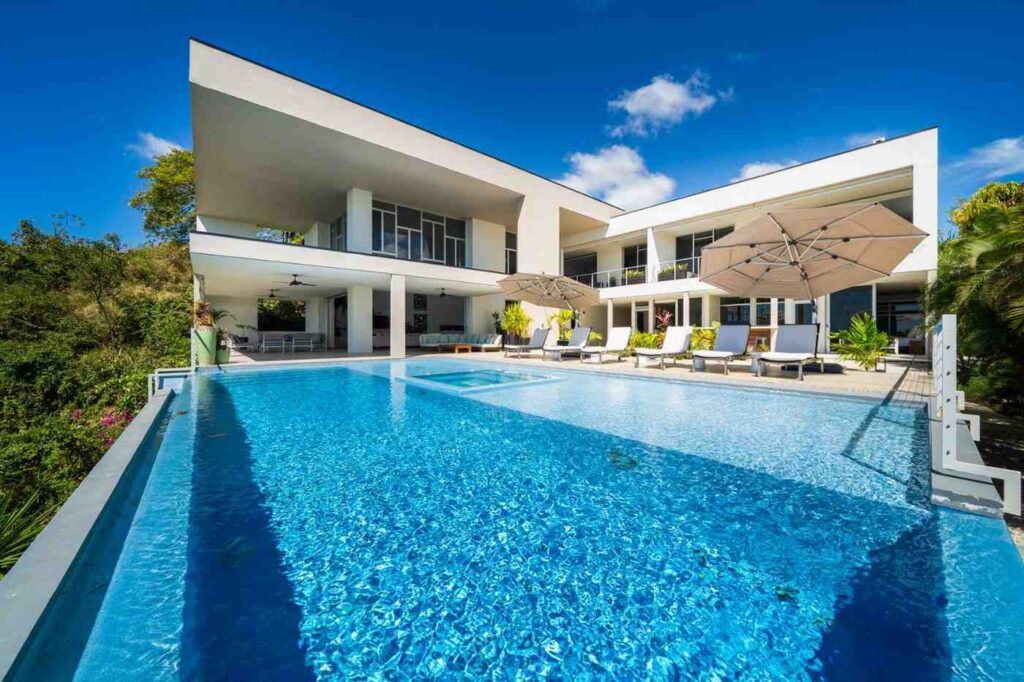
The buyers who skip or rush due diligence in Costa Rica almost always have a reason that feels legitimate in the moment: the deal might fall through, the seller is impatient, the market is moving. Those pressures are real and frequently manufactured. A clean property with a clean HOA and a motivated seller survives due diligence without drama.
Property Management and Vacation Rental Optimization After Closing
If rental income is part of your ownership model, identify your property manager before you close, not after. A good property management company in Costa Rica handles platform listings, guest communication, check-ins, maintenance coordination, and revenue optimization. They are not interchangeable, and the best ones in high-demand communities maintain waitlists.
Rental performance depends on photography quality, platform presence, pricing strategy, and guest review history. Properties in identical locations managed by different companies show measurable occupancy differences. Ask for occupancy data on comparable properties under management before you select your manager.
HOA Advocacy, Maintenance Oversight, and Protecting Your Asset Remotely
Owning property remotely means your HOA and your property manager are your eyes and hands on the ground. Staying actively engaged, reviewing monthly reports, attending virtual HOA meetings, and asking specific questions about reserve fund usage and maintenance schedules, is the difference between an asset that holds its value and one that deteriorates quietly while you’re not watching.
Communities with professional management companies rather than volunteer boards tend to provide more consistent reporting and more reliable maintenance execution. This is worth paying a premium for, and it’s worth verifying before you buy.
Resale Readiness: How Community Choice Affects Your Exit Options
The resale market for your property is shaped more by community selection than by anything you do to the property itself. Established Gold Coast developments with active sales histories, professional management, and strong rental records attract the widest buyer pool. Properties in thin markets require longer hold periods and more price flexibility to exit.
Maintain your property to rental-ready standards even if you don’t actively rent it. Properties that show well sell faster and command better prices. Keep HOA dues current and document your maintenance history, because buyers doing proper due diligence will ask.
—
Six Property Ownership Fundamentals That Determine Whether Your Expat Community Choice Succeeds
1. Community selection drives every downstream outcome. Your rental income ceiling, resale liquidity, infrastructure reliability, and daily quality of life are all set at the moment you choose your community, not at closing.
2. HOA governance quality is a financial variable, not an amenity. A well-funded, professionally managed HOA protects your asset value. An underfunded or dysfunctional one creates maintenance surprises, security gaps, and resale complications.
3. Property management must be secured before closing. In high-demand rental markets, the best management companies fill their rosters quickly. Identifying and confirming your manager before you close ensures your rental income starts without delay and your property is protected from day one.
4. Due diligence is the transaction, not a formality attached to it. Title search, HOA financial review, property inspection, and water and internet verification are the actual substance of a sound purchase. Rushing or skipping any element creates the exact post-closing surprises this guide is designed to help you avoid.
5. Resale liquidity is a purchase-day decision. Buying in a community with thin transaction history doesn’t trap you, but it lengthens and complicates your exit. Factor liquidity into your purchase decision with the same seriousness you give to purchase price.
6. The trial period is the highest-return research investment available. Three to six months renting in your target community before buying costs less than a single year of carrying a property that doesn’t fit your life.
—
Choosing Your Costa Rica Expat Communities: The Beginning of the Journey
From Overwhelmed to Informed: What This Guide Has Given You
You came to this guide, most likely, with a mental image of Costa Rica and a real anxiety about whether that image would survive contact with the actual decision. By now you have a framework that replaces the anxiety with a process: evaluate infrastructure before aesthetics, verify HOA governance before listing price, confirm management depth before projecting rental income, and match community character to your actual lifestyle rather than your aspirational one.
The communities in this guide, from Tamarindo’s mature Gold Coast infrastructure to Atenas’s climate and affordability to Uvita’s natural intensity and real trade-offs, each make sense for a specific kind of owner. None of them make sense for everyone. That’s the honest map.
The One Question to Ask Before You Commit to Any Community
Before you make an offer on any property in any Costa Rica expat community, ask this: if I needed to sell this property in 18 months, what would that process look like?
If you can answer that question concretely, with comparable sales data, realistic days-on-market estimates, and a clear picture of who the buyer pool is, you’ve done enough due diligence to proceed with confidence. If the answer is vague, or if nobody in the transaction can give you a straight answer, that’s the signal to pause.
The best property purchases in Costa Rica are ones that work across multiple scenarios. They deliver the lifestyle you came for, they generate income when you’re not there, and they have a clear exit path if your circumstances change. Communities and properties that meet all three criteria exist. Finding them is the work.
Your Next Step: A Personalized Community Consultation
We built this guide because the questions our clients ask most often deserve more than a generic listicle answer. But a guide, however detailed, cannot replace a conversation about your specific timeline, budget, lifestyle priorities, and ownership goals.
We’ve represented buyers and property owners on Costa Rica’s Pacific coast for over 18 years. We know which developments have the HOA reserves, management quality, and rental track records to support the decisions you’re making from thousands of miles away. We know which ones don’t.
If you’re ready to move from research to a shortlist, or if you have a specific community or property in mind and want an honest on-the-ground assessment, reach out for a personalized consultation. We’re not here to sell you on Costa Rica. You’ve already made that decision. We’re here to help you make it well.
—
Frequently Asked Questions
Where do most US expats live in Costa Rica?
The largest concentration of US expats lives in the Central Valley, particularly in and around San José and nearby towns like Atenas, Grecia, and Alajuela, drawn by mild year-round weather, airport proximity, and established medical infrastructure. The second major concentration is along the Pacific coast, with the Guanacaste Gold Coast (Tamarindo, Flamingo, Nosara) and the Central Pacific (Manuel Antonio, Quepos) attracting beach-oriented expats and vacation rental investors. Understanding this distribution is useful context before you fall in love with any single community’s marketing.
Where is the safest place to live in Costa Rica for expats?
Costa Rica is considerably safer than most of Central America, and violent crime against expats is uncommon. The safest communities tend to be professionally managed, gated developments with 24-hour security in regions with established expat populations, such as the Gold Coast corridor, Escazú, Santa Ana, and well-managed condominiums near Manuel Antonio. Property crime (opportunistic theft and vehicle break-ins) is the more common concern, and HOA governance quality plays a direct role in how well a community’s security infrastructure is maintained over time.
Should I rent first or buy immediately in an expat community?
For most buyers, renting for three to six months before purchasing is the highest-value risk-reduction strategy available. It gives you real rainy-season infrastructure data, an honest social sample of the community, and time to identify which specific developments perform versus which ones simply photograph well. The one exception is a rental-income investor purchasing in a documented high-demand market with verified occupancy history, where delayed purchase carries measurable opportunity costs.
What are the hidden costs of living in a popular Costa Rica expat community?
The costs that don’t appear in marketing materials are the ones that accumulate fastest. These include HOA fees (typically $150 to $600 per month), property management fees of 20 to 30 percent of gross rental revenue, electricity bills that run higher than most buyers expect in coastal climates, and maintenance reserves that should be budgeted at 1 to 1.5 percent of property value annually. Closing costs run 3.5 to 4.5 percent of the purchase price and are often underestimated. Model the full cost stack before you buy, not after.
How reliable is property management in Costa Rica expat communities?
Quality varies significantly and is one of the most important variables to verify before closing. In established Gold Coast communities like Tamarindo, reputable property management companies with full-service offerings, documented occupancy records, and 24-hour guest response protocols exist and compete for listings. In emerging or rural markets, options are fewer and reliability less consistent. The best practice is to identify and confirm your property manager before you close, ask for occupancy data on comparable properties they currently manage, and verify they have emergency response protocols in place.
How do I evaluate an HOA or community management company before buying?
Request the reserve fund balance and compare it to the estimated replacement cost of major shared infrastructure. A reserve fund below 30 percent of estimated replacement cost signals deferred maintenance risk. Review the past 12 months of HOA meeting minutes for recurring unresolved issues or patterns of owner non-compliance. Ask the management company for references from other properties they manage and verify their maintenance response times and emergency protocols. Any development that resists sharing financials during due diligence is communicating something important about how it’s run.
What happens if I choose the wrong community and want to relocate or sell?
In established Gold Coast communities, a well-priced property in good condition typically sells within 90 to 180 days. In thinner markets like the Southern Pacific or Northern Zone, that timeline can stretch considerably longer, and price reductions are often necessary to generate interest. You’re not trapped, but the exit has a real cost that varies by community. Factoring resale liquidity into your purchase decision from day one is simply prudent asset management, and it’s one of the questions this guide is specifically designed to help you answer before you commit.