
Central Valley Costa Rica Real Estate: Your Complete Buyer’s Guide
Prices in Central Valley Costa Rica real estate vary substantially by neighborhood, finishes, and proximity to amenities — figures below are indicative for 2026 only. For verified current pricing, reach out to Coastal Realty directly.
Morning mist rolls across coffee plantations as howler monkeys call from the treeline. Below, the lights of San José flicker awake while Poás and Irazú volcanoes catch the first orange glow of sunrise. This is Costa Rica’s Central Valley—not the beach postcard you expected, but the place where most serious foreign buyers begin building their Costa Rican life. If you’re researching central valley costa rica real estate with genuine intent to purchase, this guide walks you through what matters: micro-markets, realistic prices, ownership mechanics, and how valley properties compare to coastal holdings in Guanacaste.
Fast Answers: Is Central Valley Costa Rica Real Estate Right for You?
The Central Valley fits a specific buyer profile. If you’re a remote professional needing reliable high-speed internet and international airport access, a family prioritizing bilingual schools and world-class hospitals, or a semi-retiree who wants urban conveniences without tropical humidity, this region deserves serious consideration. The market has seen a shift toward 80% American buyers, including families relocating for 4-20 years and retirees seeking stability over vacation-rental speculation.
How does it compare to beach areas like Guanacaste? The valley offers cooler temperatures, better infrastructure, and proximity to corporate offices and medical centers. The Gold Coast offers ocean lifestyle, stronger short-term rental yields, and that vacation rhythm many buyers crave. Many US and Canadian buyers split time between both—primary residence in the valley, vacation or income property on the coast.
The advantages are tangible. Spring-like temperatures year-round with daytime highs in the mid-70s to low-80s Fahrenheit. The country’s best private hospitals, including CIMA in Escazú. Prestigious international schools that sustain long-term rental demand. Proximity to Juan Santamaría International Airport is a major advantage for expats and investors who travel frequently.
The honest trade-offs matter too. Traffic congestion during rush hours is real—expect 30-90 minute commutes in the Greater Metropolitan Area. Urban density means smaller lots in core Escazú and Santa Ana. The atmosphere feels more professional than vacation-oriented. And cooler evenings, while pleasant for many, won’t satisfy buyers seeking warm-weather beach living.
Median list prices in the Central Valley were approximately $618,147 as of early 2026, reflecting a 6.9% year-over-year increase. That said, the Central Valley offers more stable, consistent growth and better value for long-term living compared to coastal areas, with prices generally ranging from $150,000 to $500,000 for typical properties. Condos in Escazú start in the mid-$200,000s. Family homes in Santa Ana or Lindora typically run $350,000–$800,000. Estate homes in the Atenas area or Grecia often can exceed $600,000. Properties in the Central Valley are taking an average of 343 days on the market before selling, so negotiation room exists.
Coastal Realty is a Gold Coast-focused boutique brokerage, but we regularly help clients compare Central Valley properties with Guanacaste holdings when planning a two-location lifestyle. Investors in the Central Valley typically see annual appreciation rates of 5–7%, with premium districts reaching 7–9%—the market is mature and less prone to rapid price swings seen in tourism-heavy beachfront areas. A 5% decrease in available inventory has been reported, signaling sustained demand for primary residences and long-term rentals.
Central Valley Costa Rica Real Estate: What and Where to Look
Picture morning mist settling over terraced coffee plantations, city lights of San José spreading across the basin below, and the silhouettes of Poás and Irazú volcanoes framing the horizon. Costa Rica’s Central Valley is a highland basin of roughly 11,366 square kilometers—more than a fifth of the country’s total area—and home to three quarters of the country’s residents. This geographic concentration makes it the undisputed center for commerce, government, healthcare, and education.
The valley sits ringed by mountains and four major volcanoes at elevations ranging from 900 to 1,500 meters above sea level. The region is known for its perfect weather, with 85% of the area enjoying year-round spring-like conditions, low humidity, and pleasant breezes due to its altitude. The Central Valley has distinct climate variations though—higher elevations can be cold and windy, and volcanic activity or flood risks should be evaluated for specific properties.

Infrastructure anchors include San José as the capital, Juan Santamaría International Airport in Alajuela, and major highway corridors like Route 1 and Route 27 linking directly to the Pacific coast. The region is favored for agriculture and farming due to its fertile volcanic soils and the many rivers that run through the valley, making it a preferred place for settlement and development since colonial times. Today, this historical concentration means banks, law firms, multinational corporations, and universities cluster here—creating a professional ecosystem that supports property values.
Central Valley Lifestyle vs. Coastal Living
Your morning commute passes glass office towers in Escazú, a quick stop at a café near Avenida Escazú for coffee, then fifteen minutes to your home office in a gated community with a swimming pool and gym. Contrast that with barefoot walks to the beach in Playas del Coco, salt air drying on your skin by 8 AM, and the slower rhythm of a tourism-driven town. These are fundamentally different lives, and choosing property based on lifestyle needs versus rental potential in the Central Valley matters.
Central Valley living centers on urban amenities: the upscale shopping at Multiplaza Mall, country clubs and golf at Cariari, cultural events in San José, fitness centers with high end finishes, and year-round professional networking. The valley hosts some of the country’s best private hospitals and prestigious international schools, which sustain long-term rental demand from corporate expats and relocating families. The community feels established—less transient than beach towns.
Guanacaste’s Gold Coast offers a different proposition: surfing, boating, beach-town nightlife, warmer and drier weather, and a vacation-rental economy that peaks during dry season. The coast attracts those seeking escape velocity from professional life, while the valley attracts those building professional life in a new country.
Many Coastal Realty clients choose blended lifestyles: a primary residence near Escazú or Santa Ana for daily convenience, schools, and medical access, plus a vacation or income-generating property on the Gold Coast. Route 27 makes weekend drives to Pacific beaches manageable—typically 2.5 to 3.5 hours depending on your coastal destination. This two-location strategy offers both the upscale amenities and budget-friendly options of valley living alongside the ocean lifestyle many families ultimately want.
Key Central Valley Micro-Markets You Should Know
The Central Valley is not one market but many micro-markets, each with distinct character, pricing, and buyer profiles. Understanding these differences prevents expensive mistakes and helps you target properties aligned with your actual lifestyle.
Escazú functions as Costa Rica’s equivalent of Beverly Hills. Gated communities in neighborhoods like Guachipelín offer city and valley views, proximity to CIMA Hospital for medical appointments, and walking distance to Multiplaza Mall and Avenida Escazú’s dining room and entertainment options. Executive condominiums and townhouses with private tennis court access, club house amenities, and 24/7 security dominate inventory. Pricing runs highest here—approximately $1,000 to $1,500 per square meter. Escazú and Santa Ana are popular for their modern infrastructure and sustainable development, attracting foreign professionals and high-net-worth expats.
Santa Ana and Lindora sit immediately west at slightly lower elevation, resulting in slightly warmer weather. Modern gated communities and townhouse developments have emerged over the past decade, with excellent Route 27 access and proximity to business centers like FORUM I and FORUM II. The community feels more Costa Rican than Escazú while maintaining international schools nearby. A beautiful home here typically runs $350,000 to $800,000 depending on size and finishes, with apartment options starting lower.
Cariari and Belén developed around golf-course communities near the airport. Larger single-family homes on substantial lots from the 1970s–1990s appeal to corporate executives and golfers wanting country-club living with quick airport and free-zone access. Properties often include features like a guest house, fireplace for cooler evenings, and generous garage and parking. Prices range $300,000 to $700,000 depending on lot size and condition.
Heredia and La Garita toward Alajuela represent more traditional Costa Rican towns with emerging gated communities on their outskirts. Mountain property here features rivers, coffee-plantation vistas, and slightly better value per square meter. A beautiful terrace overlooking waterfalls or surrounded by trees is achievable in this area at prices that would only buy a condo in central Escazú.
The valley-edge markets of Atenas, Grecia, Naranjo, and San Ramon deserve special attention. These towns sit at higher elevations with expansive panoramic views over the valley toward the Central Pacific. The location feels more rural—larger lots of 1 to 5 acres, cooler climates, space for fruit trees and gardens, sometimes even a bbq area and outdoor shower for that finca lifestyle. San Rafael de Heredia and similar communities attract retirees seeking the perfect balance of access and privacy. High demand for eco-friendly homes and modern, secure, suburban-style gated communities is observed throughout these areas. Residential property prices in San José have shown significant annual growth, with apartment prices rising over 20% and house prices by roughly 10%, making the more affordable valley-edge markets increasingly attractive.
Semi-rural hills like San Antonio de Escazú, Ciudad Colón, and Brasil de Mora offer beautiful mountain views, significant privacy, and access to Route 27 for those willing to trade daily convenience for space. A mountain property located here might include multiple bedrooms, an open kitchen, laundry room, and views that justify the winding road access.
Property Types and Typical Price Ranges in the Central Valley
Central Valley inventory is more diverse than most coastal markets. You’ll find urban condos, golf-course homes, country estates, agricultural land, and commercial assets—each serving different buyers and investment strategies.
Urban and suburban condominiums dominate Rohrmoser, Nunciatura, and central Escazú. Tower units typically include pools, a gym, 24/7 security, and gated parking. Mid-rise buildings in Santa Ana and Belén offer similar amenities at slightly lower price points. Vacation rentals in Costa Rica’s Central Valley often include a variety of property types such as apartments, townhouses, and luxury homes, catering to different preferences and budgets. Expect 2025 prices from the mid-$200,000s for smaller units to $600,000 or more for luxury penthouses with jacuzzi and terrace features.
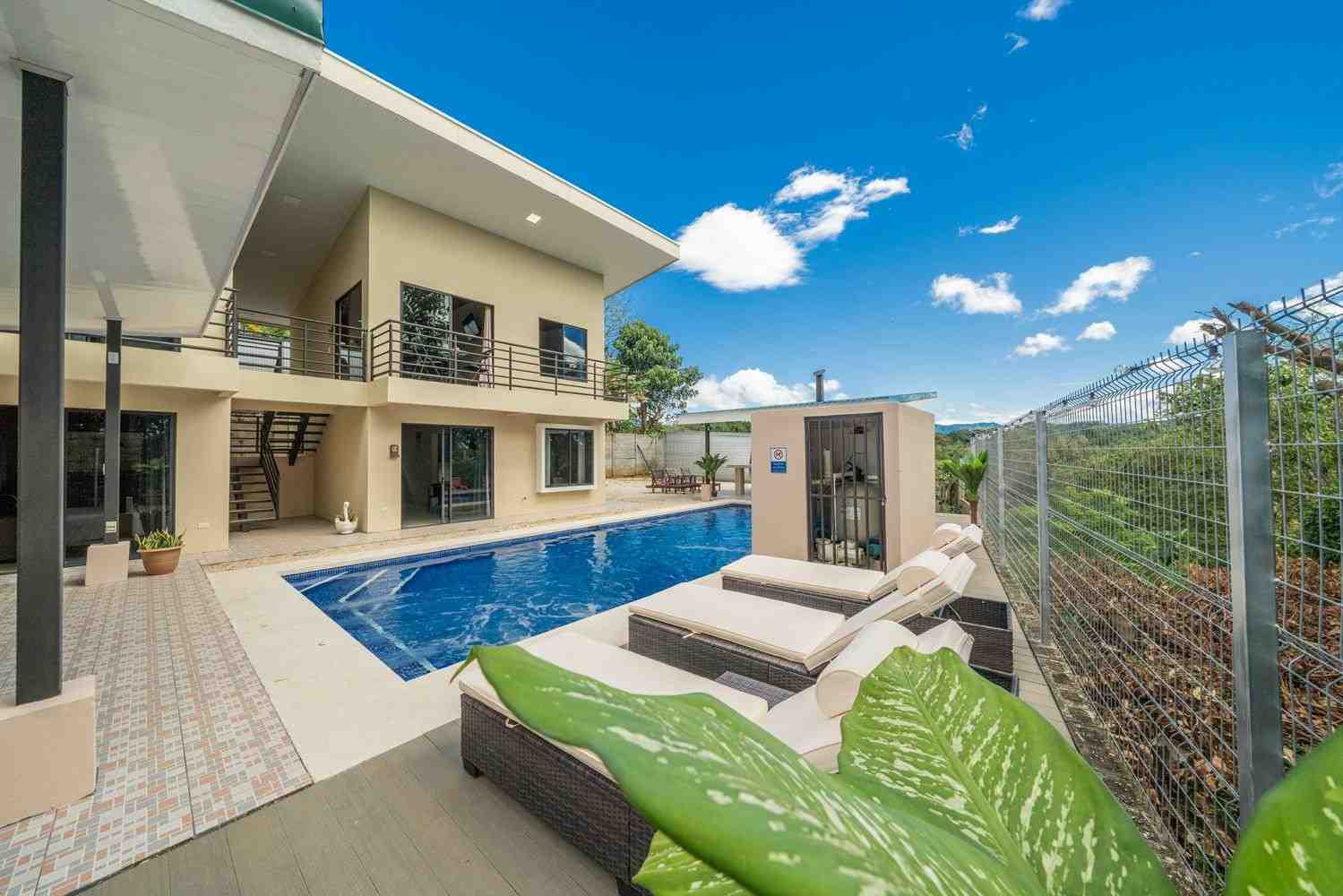
Gated community homes and townhouses represent the most common property type for family relocations. Three to five bedroom houses in Escazú, Santa Ana, Guachipelín, and Laureles typically offer 2,000 to 4,000 square feet with small private gardens, community swimming pool, and security gates. Many vacation rentals in the Central Valley are strategically located near amenities such as shopping centers, restaurants, and recreational activities, enhancing the overall experience for visitors and tenants. Common price bands run $350,000 to just over $1 million depending on finishes and ideal location.
Country estates, fincas, and edge-of-valley properties in Atenas, Grecia, San Ramón, La Garita, and Turrubares offer the dream home experience for buyers wanting land and privacy. Larger lots—often 1 to 5 acres or more—with pools, fruit trees, and panoramic views characterize these holdings. Typical ranges run $400,000 to $1.2 million or more for luxury estates with building improvements, while raw land or simpler homes start lower. The Central Valley is known for its pleasant climate, making it an attractive destination for vacation rentals year-round, with many properties offering stunning views and easy access to nature.
Agricultural and development land appeals to different investors: coffee farms near Grecia, multi-river properties in Cartago or the Orosi Valley, and subdivision-ready lots in Santa Ana or Escazú. Values depend heavily on zoning, water rights, access roads, and view corridors rather than just acreage. Centro de Pérez Zeledón and similar areas offer opportunities for those seeking working farms or eco-tourism development.
Commercial and mixed-use properties—offices and retail in Guachipelín Escazú, hotels between the airport and San José, restaurant sites in Atenas—appeal to investors seeking rental income rather than lifestyle. Verify road access, utilities, and high-speed internet reliability when considering any property, especially in rural or mountainous areas.
Prices mentioned are guidance only as markets evolve through 2025-2026. Costa Rica properties require individual assessment, and Coastal Realty helps you benchmark Central Valley prices against comparable assets in Guanacaste before you commit capital.
Costs, Ownership, and the Buying Process for Foreigners
Foreigners can purchase property in Costa Rica without restrictions, and the process is generally straightforward, involving a few key steps such as selecting a property, making an offer, and signing a purchase agreement. In the Central Valley, you enjoy essentially the same ownership rights as Costa Rican nationals—the maritime zone restrictions that complicate some coastal purchases don’t apply here.
The standard purchase process flows predictably. You agree on price in US dollars, sign a purchase and sale agreement with typically 10 to 30 percent deposit held in escrow, then enter a due diligence period of 30 to 60 days. The purchase process typically includes due diligence, which involves verifying property titles, checking for liens, and ensuring that the property is free of legal issues before finalizing the sale. In Costa Rica, property ownership is typically registered in the National Registry, which provides legal security and transparency for property transactions. Closing occurs before a notary public who also functions as a registrar, with title formally recorded.
It is advisable for foreign buyers to work with a local real estate agent who understands the market and can guide them through the legal and financial aspects of the purchase process. Having a local expert in buyer representation can significantly enhance the property buying experience in Costa Rica, as they provide valuable insights into the local market and help navigate the complexities of real estate transactions. A buyer’s representative in Costa Rica can assist with legal representation and due diligence, ensuring that all aspects of the property purchase are handled correctly and efficiently. Utilizing a buyer representation service can help foreign investors understand local property laws and regulations, which is crucial for a successful purchase in Costa Rica’s real estate market.
Transaction costs include notary and legal fees of roughly 1 to 2 percent of declared value, plus transfer taxes and stamps totaling approximately 2 to 3 percent combined. Budget roughly 4 to 5 percent on top of purchase price for closing costs. Foreigners in Costa Rica must comply with local laws and regulations, including obtaining a legal representative to assist with the purchase process. Costa Rican law allows for the establishment of corporations to facilitate property ownership for foreigners, which can provide tax benefits and liability protection.
Ongoing holding costs include annual property tax at 0.25% of municipal assessed value—often lower than market value in practice. Homeowners Associations in Costa Rica play a crucial role in maintaining property values and ensuring community standards within residential developments. HOAs are responsible for enforcing community rules and regulations, which can include guidelines on property appearance, noise levels, and the use of common areas. In Costa Rica, HOAs typically collect monthly fees from homeowners to fund maintenance, landscaping, and other community services—expect $150 to $800 or more monthly depending on amenities like a pool, gym, office facilities, or full-time security.
Property management services in Costa Rica often include marketing, maintenance, and tenant management for both vacation and long-term rentals. Effective property management in Costa Rica requires knowledge of local laws and regulations, which can vary significantly by region. Many property management companies in Costa Rica offer services that include legal representation and due diligence to ensure compliance with local regulations. Properties in areas like Escazú can yield rental returns of 7 to 8 percent annually, with high year-round occupancy rates maintained in the Central Valley properties—85 to 95 percent—due to demand from local professionals and expats rather than seasonal tourists.

How to Decide Between Central Valley and Gold Coast (or Buy in Both)
Picture yourself working remotely from a condo in Escazú during the week, then driving three to four hours to your coastal home around Playas del Coco for long weekends when you need salt air and ocean sunsets. This split lifestyle isn’t hypothetical—it’s how many of our clients structure their Costa Rican lives.
A clear mental framework helps with decision-making. Consider your daily life needs: schools, hospitals, corporate offices, professional services, reliable internet for remote work. Then weigh your lifestyle goals: surfing, sailing, beach community, warm weather, the slower coastal rhythm. How much time will you realistically spend in the country each year? Families with school-age children often need the valley’s educational infrastructure most of the year but crave coastal escapes during breaks.
The case for Central Valley primary plus coastal secondary is compelling for many buyers: city-level convenience, medical access at facilities like CIMA, and established community for most of the year, with strong vacation-rental income potential on the Gold Coast when you’re away. The current owner of a valley property enjoys stability while building equity in both markets.
When does a pure coastal base make more sense? Full-time retirees who rarely need San José services, investors focused purely on vacation-rental yields, or buyers most motivated by warm weather and daily ocean access should consider Guanacaste as primary. The world opens differently when you wake to surf rather than traffic.
Logistics matter practically. Drive times from Escazú or Santa Ana to Pacific coast communities via Route 27 are manageable for regular trips. Juan Santamaría International Airport handles your international flights efficiently—medical appointments in San José combine naturally with weekend beach stays when you plan ahead. Coastal Realty helps you weigh Central Valley options against our Gold Coast expertise, compare total cost of ownership across both regions, and build a long-term investment plan rather than a one-off purchase. Think in 5 to 10 year terms, not just the next vacation season.
Work With Coastal Realty on a Central Valley + Coast Strategy
Picture the rhythm of your year: cool mornings in the Central Valley with coffee on the terrace, dry-season sunsets over the Gulf of Papagayo, family or friends visiting to experience both the professional convenience of your city base and the living luxury of your beach escape. This dual-residence life isn’t just possible—it’s how many North American buyers create their ideal Costa Rican existence.
Coastal Realty has served Costa Rica’s Gold Coast since 2006 as a boutique brokerage rooted in ethics, thorough due diligence, and long-term relationships. While our core listings are coastal, many clients actively compare Central Valley homes in Escazú, Santa Ana, Atenas, or Grecia as part of a two-location lifestyle or investment portfolio. A first conversation typically clarifies your budget, timing, work situation, school or medical needs—then maps which mix of valley and coastal properties might fit.
When you’re ready to move on Central Valley Costa Rica real estate, reach out to Coastal Realty. We can discuss whether valley costa rica real estate, Gold Coast property, or a strategic combination of both best supports the life you want to build here. That conversation costs nothing but could clarify your next decade.