
Your Dream Is More Achievable Than You Think
Most people who contact us have been sitting on their Costa Rica dream for two or three years longer than they needed to. Not because the market wasn’t right, not because the numbers didn’t work, but because a handful of specific fears had calcified into assumed truths. This guide exists to replace assumptions with facts, and fear with a workable plan. Buying property in costa rica is one of the most searched topics among foreign buyers exploring this part of Central America.
The Three Fears That Keep Foreign Buyers Stuck
Fear One: Being Taken Advantage of in an Unfamiliar Legal System
This fear is reasonable. You’re considering one of the largest financial decisions of your life in a country where the laws are written in a language you may not speak, and where you don’t yet know who to trust. The antidote isn’t blind faith. It’s understanding exactly how the legal system works and knowing which protections already exist in your favor. Costa Rica’s property registry, the Registro Nacional, is a public, searchable record. Title fraud of the kind common in some markets is almost impossible here when proper due diligence is done. We’ll walk you through exactly what that looks like.
Fear Two: Making an Irreversible Financial Mistake from Afar
Buying property remotely, across a currency border, in a market you can’t watch daily is a legitimate source of anxiety. What dissolves this fear is process: a structured sequence of steps with defined verification points, independent legal review, and properly structured escrow so your funds are never at risk before title transfers. We cover every step and every cost in this guide so there are no surprises waiting on closing day. This is a key dynamic shaping the buying property in costa rica market in 2026.
Fear Three: Choosing the Wrong Neighborhood for Your Actual Life
This one is underestimated. Buyers research title and taxes carefully, then choose a location based on a photo or a price point, and end up somewhere that doesn’t fit the life they actually want to live. The Gold Coast of Guanacaste is not one market. It’s a collection of distinct communities with different personalities, infrastructure levels, and daily realities. We’ll give you a framework for choosing based on your life, not just the listing.
The Contrarian Truth About Buying Property in Costa Rica as a Foreigner
Here’s what most guides don’t lead with: buying property in Costa Rica as a foreigner is not dramatically more complicated than buying in the United States or Canada. The legal framework is clear, the protections are real, and thousands of foreign buyers complete successful purchases every year. The complications that do exist are specific and knowable. They cluster around beachfront concession properties, title irregularities in rural areas, and the selection of advisors who don’t have your interests at heart. Avoid those specific traps, and the process is straightforward. This guide tells you exactly where those traps are and how to walk around them.
How to Use This Guide as Your Roadmap
Think of this as your pre-purchase education in one sitting. We start with legal rights, covering what you can own and how securely. Then we move through the full buying process step by step, break down every cost you’ll encounter, map out the Gold Coast’s neighborhoods against real lifestyle criteria, flag the pitfalls that catch foreign buyers off guard, and address something most guides skip entirely: what happens after you buy. Use the section headings to jump directly to whatever is most urgent for you today, and return to fill in the rest as your process develops. This is a key dynamic shaping the buying property in costa rica market in 2026.
—
Can Foreigners Really Begin Buying Property in Costa Rica? Your Legal Rights Explained
The legal foundation here is simpler and more protective than most foreign buyers expect.
Foreigners Have the Same Ownership Rights as Costa Rican Citizens
Costa Rica’s constitution gives foreign nationals the same property ownership rights as citizens. You don’t need residency. You don’t need a local partner. You don’t need to set up a corporation, though there are sometimes tax and liability reasons to do so. You sign, the title transfers to your name, and the Registro Nacional records you as the legal owner. That’s it.
What “Fee Simple” Ownership Means and Why It Matters
Fee simple ownership means you hold the title outright. The property is yours to sell, rent, renovate, or pass to your heirs without ongoing permission from any government authority. This is the same ownership structure you’d have buying a house in any North American state or province. When a property in Costa Rica is fee simple titled and registered in the Registro Nacional, your ownership interest is protected by law and fully transferable. This is the structure you want, and it’s what the majority of residential properties on the Gold Coast offer.
The One Critical Exception: Concession Property in the Maritime Zone
Not every property near the ocean is fee simple. Costa Rica’s Maritime Zone Law, known as the Ley de la Zona Marítimo Terrestre, governs a strip of land along the entire coastline, and properties within it operate under a completely different legal framework. Understanding this distinction before you browse listings protects you from one of the most common and costly surprises in this market.
What Is the Zona Marítima Terrestre and How Does It Work?
The Zona Marítima Terrestre (ZMT) is a 200-meter-wide strip measured from the mean high-tide line along Costa Rica’s coastline. The first 50 meters is public domain; no one can own it. The remaining 150 meters is managed by the local municipality, which can grant concessions to private parties for use and development. You don’t own concession land in the traditional sense. You hold a government-issued concession, essentially a long-term lease, which must be renewed periodically and can, under specific circumstances, be revoked.
Foreigners can hold concession property, but with one significant constraint: a foreign national who has not held Costa Rican residency for at least five years cannot hold more than 49% of a concession directly. Most buyers who want concession property structure their ownership through a Costa Rican corporation with appropriate local participation. This is manageable with proper legal setup, but it is a different animal than fee simple ownership.
How to Tell the Difference Before You Fall in Love with a Listing
Ask your attorney to check the property’s folio real number in the Registro Nacional before you get emotionally attached to any listing. Fee simple properties appear as registered titles under private ownership. Concession properties will reference the municipal concession file rather than a standard title. A good real estate attorney can pull this information in under an hour. The distinction should be disclosed upfront by any reputable listing agent, but verify independently regardless.
What Concession Property Can Still Offer
Some of the most spectacular properties on the Gold Coast sit within the ZMT, and concession ownership isn’t inherently a problem if the concession is clean, current, and properly structured. What matters is due diligence: confirming the concession is actively maintained, that all municipal fees are paid, that the use rights match what’s being sold to you, and that the renewal history is solid. For buyers who understand what they’re acquiring and have structured it correctly, concession property can be a rewarding ownership experience. The risk is in buying it without understanding what you’re actually getting.
Do You Need Residency to Buy Property in Costa Rica?
No. You can purchase property as a tourist, as a temporary resident, or as a permanent resident. Your immigration status has no bearing on your right to own titled real estate. Many buyers purchase before applying for residency. In fact, the investment can sometimes support a residency application, which we address next. Buyers researching buying property in costa rica will find this pattern consistent across the region.
How the Registro Nacional Protects Your Title
Costa Rica’s Registro Nacional is a centralized, government-operated public registry that records all property titles, liens, mortgages, easements, and ownership transfers. Every registered property has a folio real, a unique identification number that tracks its complete legal history. Any attorney can access this system and pull the full title chain, flagging any encumbrances or irregularities before you commit a dollar. This transparency is a genuine structural protection for buyers. Title fraud requires a registered falsification that leaves a paper trail, which is why it’s rare when proper verification is done.
Does Owning Property Help You Get Residency?
Owning property alone doesn’t automatically grant residency, but it intersects with the process in a meaningful way. Costa Rica’s Inversionista (Investor) residency category requires a minimum real estate investment, and a completed, registered property purchase can qualify as the basis for that application. For buyers whose primary goal is lifestyle relocation, the more common path is the Pensionado visa, which requires provable monthly pension income of at least $1,000, or the Rentista category. Your immigration attorney and real estate attorney should coordinate on this if residency is part of your plan. It is one of the factors that distinguishes buying property in costa rica from comparable markets.
—
The Step-by-Step Process for Buying Property in Costa Rica
The process has seven distinct stages. Each one has a specific purpose, and skipping any of them is where problems originate. Here’s the full sequence, followed by what each step actually involves.
Your Costa Rica Property Purchase Checklist
- Step 1: Define your search criteria, including budget, lifestyle priorities, ownership timeline, and fee simple versus concession tolerance.
- Step 2: Engage a local specialist with access to off-market and pre-market inventory.
- Step 3: Conduct full due diligence, covering title search, attorney review, lien check, and permit verification.
- Step 4: Sign the purchase agreement (Carta de Intención) with agreed price, terms, and contingencies.
- Step 5: Open escrow with a licensed provider to hold your deposit and purchase funds.
- Step 6: Attend or authorize closing with the Notario Público and sign the escritura.
- Step 7: Confirm title registration in the Registro Nacional under your name.
Step One: Define Your Search Before You Browse a Single Listing
Before you look at a single property, get clear on four things: your maximum budget including closing costs and reserves, your lifestyle requirements such as ocean view versus walkability versus community infrastructure, whether you want fee simple only or are open to concession property, and whether the property needs to generate rental income or is purely for personal use. Buyers who skip this step spend months looking at properties that aren’t right for them, then make rushed decisions when something emotionally compelling appears.
Step Two: Working with a Local Specialist
The Gold Coast has an active inventory of unlisted, pre-market, and word-of-mouth properties that never appear on national aggregator sites. A local specialist with long-standing relationships in specific communities knows about seller situations, upcoming listings, and off-market opportunities that simply aren’t visible from a laptop in another country. This access is one of the most practical and undervalued advantages of working with an embedded local partner rather than a national search platform.
Step Three: The Due Diligence Phase
Due diligence is where your purchase is protected or where it falls apart. This phase should happen before you sign anything binding or transfer any funds. This context is essential for anyone seriously researching buying property in costa rica.
Title Verification Through the Registro Nacional
Your attorney pulls the property’s folio real from the Registro Nacional and traces its ownership history. They’re looking for a clean chain of title, no unresolved ownership disputes, and no gaps or anomalies in how the property has transferred between owners. This search also reveals any registered liens or mortgages. In most cases this takes a few business days. If the title is clean, you’ll receive a written report confirming it.
What a Costa Rican Attorney Does and Why You Need One Independent of the Seller
Your attorney is not the Notario Público, who is a neutral official who formalizes the transaction. Your personal abogado represents only your interests. They review the purchase contract, advise you on any title risks, verify that the seller actually has the right to sell, and catch problems that aren’t visible to a non-specialist. Never share an attorney with the seller, and never rely solely on the Notario to protect your interests. The Notario is a legal officer of the transaction, not your advocate. The buying property in costa rica sector has been defined by exactly these dynamics in recent years.
Checking for Liens, Encumbrances, Easements, and Boundary Issues
The title search reveals registered liens and mortgages, but your attorney should also investigate easements, boundary markers, and whether the physical boundaries match what’s registered. Discrepancies between the registered survey (plano catastrado) and the physical property are one of the most common due diligence findings on the Gold Coast, particularly with older properties. These aren’t always dealbreakers, but they need to be resolved before closing.
Environmental and Municipal Permit Verification
If you’re buying a developed property, your attorney verifies that all construction was done with proper permits and that no municipal or environmental violations are attached to the property. Unpermitted construction can become your liability the moment title transfers. This check includes reviewing permits with the local municipality and, for properties near water or in environmentally sensitive zones, confirming compliance with SETENA, the environmental regulatory agency.
Step Four: Making an Offer and Signing the Purchase Agreement
Once due diligence confirms the property is clean, you formalize your offer in a Carta de Intención or Option to Purchase. This document sets the agreed price, payment terms, closing timeline, any conditions or contingencies, and the deposit amount, typically 10% of the purchase price held in escrow. Both parties sign, and the property is effectively taken off the market. Your attorney drafts or reviews this document. Do not sign a seller-prepared agreement without your own legal review.
Step Five: Opening Escrow
Escrow in Costa Rica functions similarly to North American escrow: a licensed, neutral third party holds your funds and releases them only when all closing conditions are met. Using a reputable escrow service is non-negotiable for foreign buyers. Your funds should never be wired directly to a seller or a seller’s attorney. Legitimate sellers expect escrow. If a seller resists it, that’s your signal to walk away.
Step Six: Closing Day and the Role of the Notario Público
The Notario Público is a licensed Costa Rican attorney with special government authority to formalize legal documents. At closing, the Notario prepares and witnesses the signing of the escritura pública, the official deed of transfer. Both buyer and seller sign, or authorized representatives with power of attorney, closing costs are paid, and the Notario submits the escritura to the Registro Nacional. You don’t need to be physically present if you’ve granted a power of attorney to your local attorney in advance.
Step Seven: Title Registration and What Comes After
After the Notario submits the escritura, the Registro Nacional processes the transfer and updates the folio real to reflect your ownership. This typically takes two to six weeks. Once registered, your attorney provides you with a certified copy of the registered title. At this point, you are the legal owner of record. Your next practical steps are setting up utilities, establishing property tax payments with the municipality, and if applicable, engaging a property manager.
How Long Does the Full Process Take?
From initial offer to registered title, plan for 60 to 90 days in a straightforward transaction. Due diligence alone typically takes two to four weeks. Complex properties, those with boundary issues, permit questions, or concession components, can extend this timeline. International fund transfers and banking compliance requirements can add time if not managed proactively. Budget for 90 days and consider anything faster a bonus.
Can You Get Financing or a Mortgage as a Foreigner in Costa Rica?
Local bank financing is technically available to foreigners, but in practice it’s difficult. Costa Rican banks require substantial documentation, have conservative loan-to-value ratios, and the approval process can be slow and uncertain. Interest rates on local mortgages in U.S. dollars are typically higher than what North American buyers are accustomed to. Most foreign buyers purchase with cash or use home equity financing secured against assets in their home country. If financing is essential to your purchase, discuss it with your advisor early, before you’re under contract on a property with a closing deadline.
—
Understanding Every Cost: What to Budget Beyond the Purchase Price
Closing costs in Costa Rica catch foreign buyers off guard not because they’re excessive, but because they’re unfamiliar. Budget roughly 3.5% to 4.5% of the purchase price on top of your agreed price, and you’ll be close. Here’s exactly what makes up that number.
The Full Closing Cost Breakdown
Transfer Tax (Impuesto de Traspaso)
The transfer tax is 1.5% of the registered property value, which in Costa Rica is typically the higher of the declared sale price or the municipality’s assessed value. By convention, buyers and sellers often split this cost, though it’s negotiable and should be specified in your purchase agreement. On a $350,000 property, expect roughly $5,250 in transfer tax, split or covered in full depending on your negotiated terms.
Documentary Stamps and Registry Fees
Several stamp duties layer on top of the transfer tax. These include the fiscal stamp, the National Archive stamp, the Bar Association stamp, and the Registro Nacional recording fee. Collectively these add roughly 0.6% to 0.9% of the property value. They’re small individually but add up, and buyers who didn’t know to expect them often feel blindsided at closing.
Legal Fees for the Notario and Your Independent Attorney
The Notario Público’s fee for preparing the escritura is set by law on a sliding scale, typically around 1% to 1.5% of the transaction value. Your independent attorney’s fee for due diligence review, contract negotiation, and closing support is separate and typically ranges from $1,500 to $3,000 depending on complexity. Do not try to combine these roles to save money. The cost of independent legal counsel is the best money you spend in this transaction.
Escrow Fees
A reputable escrow service typically charges 0.25% to 1% of the transaction value, with a minimum fee that often ranges from $500 to $1,500. International wire transfer fees from your home bank add to this. Ask for the provider’s full fee schedule upfront, and confirm they hold funds in a segregated account. Your attorney can recommend established providers with a clean track record on the Gold Coast.
Ongoing Ownership Costs: What You’ll Pay After Closing
The purchase is a one-time event. The ongoing costs are what determine whether your budget actually works over time.
Property Tax in Costa Rica (Impuesto Sobre Bienes Inmuebles)
Costa Rica’s annual property tax is 0.25% of the registered property value, paid quarterly to the local municipality. On a $350,000 property, that’s approximately $875 per year. North American buyers who are accustomed to property tax rates of 1% to 2.5% or higher often do a double-take at this number. It’s not a typo. Property taxes in Costa Rica are genuinely low, and this is one of the structural advantages of ownership here that doesn’t get enough attention.
HOA and COA Fees
If you buy within a gated community or condominium development, HOA or COA fees apply. On the Gold Coast, these typically range from $200 to $600 per month for mid-range communities, and higher for resort-adjacent developments with extensive amenities. What you get for that fee varies considerably: some communities include security, pool maintenance, common area landscaping, and road upkeep, while others include little beyond shared road access. Ask for the last 12 months of HOA financial statements before you buy, and verify that the reserve fund is adequately funded.
Utility Costs, Maintenance, and the True Cost of Leaving a Property Empty
Electricity in Costa Rica runs higher than many buyers expect, particularly for air-conditioned homes during the dry season. Budget $150 to $400 per month depending on the size of the home and your usage habits. Water and internet are modest by comparison. The less obvious cost is maintenance: tropical climates accelerate wear on roofs, paint, and mechanical systems. A home that sits unoccupied for months without oversight will show it. If you’re not living in the property full-time, a property management arrangement is not a luxury. It’s what protects the value of your investment.
An Illustrative Cost Model for a $350,000 Gold Coast Property
This is a realistic cost picture for a $350,000 fee simple residential property, purchased all-cash, in a gated community on the Gold Coast.
One-time closing costs paid at closing:
- Transfer tax (buyer’s share, 50%): approximately $2,625
- Documentary stamps and registry fees: approximately $2,100
- Notario fee: approximately $3,500
- Independent attorney: approximately $2,000
- Escrow fee: approximately $875
- Total closing costs: approximately $11,100, roughly 3.2% of purchase price
Annual ongoing costs:
- Property tax: approximately $875
- HOA fees in a mid-range community: approximately $3,600
- Utilities for part-time occupancy: approximately $2,400
- Basic maintenance reserve: approximately $2,500
- Total annual carrying cost: approximately $9,375
These figures will shift based on your specific property, community, and usage pattern, but they give you a working baseline to test your budget before you fall in love with a listing.
What Taxes Do You Pay When Buying Property in Costa Rica?
At purchase, you’ll pay the transfer tax at 1.5%, documentary stamps at approximately 0.65%, and Registro Nacional recording fees. Annually, property tax is 0.25% of registered value. If you generate rental income, that income is subject to Costa Rica’s rental income tax, currently 15% on gross rental revenue with some allowable deductions. Capital gains on property held for investment purposes became taxable in 2019 at a flat 15% rate on the gain. Your tax obligations in your home country for foreign property income are separate and require consultation with a tax advisor familiar with both jurisdictions.
Setting Honest Expectations by Price Band
You can find rural properties and inland lots listed below $100,000, but on the Gold Coast, modest budgets don’t stretch as far as buyers sometimes hope. Here’s an honest breakdown by price band for this specific market:
- Under $150,000: Primarily lots, rural properties, or significant fixer-uppers well outside prime coastal areas.
- $150,000 to $250,000: Entry-level condos and smaller homes in established communities, often without ocean views, sometimes with deferred maintenance.
- $250,000 to $450,000: The active mid-market on the Gold Coast, including comfortable condos with amenities, homes in gated communities, and some ocean view properties.
- $450,000 to $800,000: Larger homes, better views, resort-adjacent communities, stronger rental income potential.
- $800,000 and above: Custom homes, beachfront or Papagayo Peninsula properties, and luxury resort community inventory.
If your budget is under $200,000, be honest with yourself about what that buys in the specific communities you’re drawn to. A good local advisor will tell you this before you spend months looking at properties that don’t match your expectations.
—
The Gold Coast Decoded: Choosing the Right Neighborhood for Your Actual Life
Why “Guanacaste” Is Too Broad a Category to Be Useful
“Guanacaste” describes a province the size of a small state. The Gold Coast is a more useful label, referring loosely to the Pacific coastal strip from the Papagayo Gulf in the north down through Tamarindo to the south, a stretch of about 60 miles that contains the highest concentration of foreign buyer activity in the country. Within that corridor, you have communities that feel nothing alike. Choosing based on the region rather than the specific community is how buyers end up somewhere that doesn’t fit their life.
A Lifestyle-First Framework for Choosing Where to Buy
The question isn’t which community is “best.” It’s which community is best for how you actually want to spend your days. These five communities are the primary reference points on the Gold Coast.
Playa del Coco: The Social Hub with Full Infrastructure
Coco is the most developed and socially active community on the northern Gold Coast. It has the densest concentration of restaurants, bars, grocery stores, dive shops, and expat social infrastructure of any community in the area. If you want to walk to dinner, meet people at the marina, and have access to services without a car, Coco delivers that. The tradeoff is that it’s busy, the beach itself is not the prettiest on the coast, and the character is more town than retreat. For buyers who want community and convenience over seclusion, this is often the right answer.
The Papagayo Peninsula: Luxury, Privacy, and Resort-Grade Amenities
Papagayo is a different category entirely. The peninsula hosts four- and five-star resort developments alongside private residential communities with access to resort amenities. Infrastructure is private and immaculate. Beaches are protected, uncrowded, and stunning. The cost of entry reflects all of this. This market suits buyers who want a luxury lifestyle with full amenity access and privacy, and who are less interested in integrating into a local community than in having a well-managed, resort-quality ownership experience.
Flamingo Beach: The Balance Point Between Amenity Access and Tranquility
Flamingo sits between the social energy of Coco and the full retreat of more southern communities. It has a proper marina, a growing restaurant scene, a well-regarded international school, and proximity to some of the best beaches on the coast, including Conchal and Brasilito, within a short drive. It’s calm enough to feel residential but developed enough to meet daily needs without a long drive. Many buyers who have done their research end up here because it threads a needle that’s hard to find elsewhere on the coast.
Tamarindo: The Surf Town That Grew Up
Tamarindo is the most internationally recognizable community on the Gold Coast, and that recognition cuts both ways. It has full infrastructure, a strong rental market, walkable access to a surf beach, and a cosmopolitan restaurant and nightlife scene. It also has traffic, more tourist density than it used to, and prices that reflect its profile. Buyers who want proven rental income potential and don’t mind a busier environment often find Tamarindo’s market fundamentals compelling. Buyers who prioritize quiet should look elsewhere.
Emerging Communities Worth Watching on the Northern Gold Coast
Several smaller communities between Coco and the Nicaraguan border are attracting buyer attention as the northern Gold Coast develops. Areas like Ocotal, Playa Hermosa in Guanacaste, and communities around the Nacascolo area offer quieter alternatives to Coco’s pace with proximity to the same airport and infrastructure. These markets have less established resale liquidity than the primary communities, but entry prices reflect that. For buyers with a longer horizon and higher risk tolerance, these areas represent where the market was in Flamingo or Conchal a decade ago.
The Neighborhood Matching Framework: How to Choose Based on Your Daily Life Vision
Investment potential matters, but it’s a poor primary filter for choosing where to live or spend significant time. The right question is: what does a typical Tuesday look like in this community, and do I want that Tuesday?
Questions to Ask Yourself Before Choosing a Location
Before you commit to a neighborhood, answer these honestly:
- Do you want to walk to things, or are you comfortable driving for most errands?
- Do you want an active expat social scene, or do you prefer to integrate into a quieter local environment?
- Is beach quality a priority, or is beach access sufficient?
- Do you need a marina for boating? A surf break? A pool at a resort?
- Are you planning to rent the property short-term? If so, which communities have the strongest rental track records?
- How often will you fly in and out, and how important is minimizing drive time from the airport?
The answers point to specific communities. A good local advisor asks these questions before showing you a single property.
Proximity to Liberia International Airport: Why It Matters More Than You Think
Liberia’s Daniel Oduber International Airport has direct flights from major North American hubs, and its proximity to the Gold Coast is a defining advantage of this market over the Central Valley or southern Pacific coast. But the difference in drive time between communities is meaningful. Coco and Papagayo are 30 to 40 minutes from the airport. Tamarindo is closer to 75 to 90 minutes. If you’re flying in four or six times a year, or managing a rental property that needs fast owner response, that distance compounds over time. Part-time owners consistently underweight this factor until they’ve made the drive at 11pm after a connecting flight.
Healthcare Access, Grocery Infrastructure, and the Realities of Daily Life
The northern Gold Coast has seen significant infrastructure development over the past decade. There are private clinics in Coco and Liberia, with the CIMA Hospital in Liberia providing a higher level of care. For major procedures, buyers typically travel to San José, which has world-class private hospitals with English-speaking staff. Grocery access has improved considerably, with major supermarket chains present in Coco and Liberia. Specialty and imported goods require some planning. These aren’t dealbreakers, but if you’re moving from a major metro where everything is 10 minutes away, recalibrate your expectations honestly before you buy.
Is Buying Property in Costa Rica a Good Investment?
The honest answer is: it depends on which return you’re measuring. The Gold Coast has delivered solid appreciation in well-located fee simple residential properties over the past 15 years, with some communities outperforming others significantly. Short-term rental income is real and meaningful for well-managed properties in high-demand areas. Financial ROI is achievable, but it requires the right property in the right location managed correctly, not just any purchase.
Lifestyle ROI is a different calculation. For buyers who spend two to four months per year in a property they love, in a place that genuinely fits how they want to live, the quality-of-life return is the primary driver of the decision. That return doesn’t show up in a spreadsheet, but it’s the reason most buyers are glad they did it when you ask them five years later. The risk of optimizing purely for financial return is ending up in the “best investment” property in a neighborhood that doesn’t fit your life. A local advisor who understands both sides helps you find a property that doesn’t force you to choose.
—
The Pitfalls That Catch Foreign Buyers Off Guard
Pitfall One: Trusting a Title Without Independently Verifying It
A listing agent’s confirmation that a property has “clean title” is not due diligence. It’s a representation, not a verification. Your attorney must pull the folio real directly from the Registro Nacional and trace the full ownership chain. This step costs a few hundred dollars and a few days. Skipping it to save time has cost buyers far more when problems surface after closing.
Pitfall Two: Confusing Possession Rights with Legal Title
In some rural and peri-urban areas of Costa Rica, people occupy and improve land without ever registering a formal title. This is called tenencia de tierra, or possessory rights. A possessory claim is not the same as a registered title, and what looks like an occupied, developed property with a motivated seller may not be legally yours to buy in any conventional sense. If you encounter an unlisted or below-market property without a clear folio real, proceed with exceptional caution and seek independent legal review before you go further.

Pitfall Three: Buying Concession Property Without Understanding the Renewal Risk
Buyers who purchase concession property without reviewing the current concession status, fee payment history, and renewal timeline may be acquiring an ownership structure that is technically out of compliance with the municipality. An expired or unpaid concession creates real legal exposure. Always verify concession status with the relevant municipality directly, not just through the seller’s documentation.
Pitfall Four: Skipping an Independent Attorney in Favor of the Seller’s Legal Team
This is the most common mistake we see, and the most preventable. Some transactions are presented as “simple,” with a friendly seller who offers to use their own attorney to handle everything for efficiency. The Notario is neutral, but they are not your advocate. The seller’s attorney represents the seller. You need your own counsel, period. The cost is modest. The protection is substantial.
Pitfall Five: Underestimating the Complexity of Beachfront and Off-Grid Properties
Beachfront properties often sit within or adjacent to the ZMT, creating concession issues. Off-grid properties with water wells, septic systems, and solar infrastructure require technical inspection beyond standard due diligence. Properties on steep terrain or with private road access have boundary and easement dimensions that standard title searches may not fully capture. These property types aren’t off-limits, but they require more thorough expert review than a standard residential transaction.
Pitfall Six: Wiring Funds Without a Properly Structured Escrow Agreement
Wire fraud is a global problem, and Costa Rica is not immune. Before you send any money, confirm the escrow provider’s account details through a phone call to a verified number, not through email instructions. Ensure the escrow agreement is signed and in place before any wire transfer occurs. Confirm that funds are held in a segregated account and released only against specific closing conditions. If you receive last-minute wire instructions by email, stop and verify before acting.
Pitfall Seven: Not Accounting for Currency, Banking, and SUGEF Compliance Requirements
Costa Rica’s financial regulator, SUGEF, requires banks to perform due diligence on large incoming transfers, particularly from foreign sources. If your purchase funds arrive without proper documentation of their source, a Costa Rican bank may freeze or delay the funds. Prepare documentation of the source of your funds in advance: sale proceeds from another property, investment account statements, or salary records. Your escrow provider and attorney can advise you on what documentation is typically requested. This isn’t bureaucratic obstruction. It’s anti-money laundering compliance, and managing it proactively prevents delays at the worst possible moment.
The Pattern Behind Most Costly Mistakes
The common thread running through nearly every costly mistake is the same: moving too fast, trusting too readily, or trying to minimize professional fees at points where professional judgment is the actual product. The buyers who encounter serious problems are almost universally the ones who skipped independent legal review, used the seller’s team, wired funds outside of escrow, or bought concession property without understanding what they were acquiring. None of these are obscure risks. They are well-documented, specific, and entirely avoidable with the right team structure from the start.
An Illustrative Scenario: How the Right Team Avoided a Costly Title Problem
A couple from California came to us after finding a property online that seemed underpriced for its location and views. The seller’s agent explained the price by saying the previous owner had recently died and the family wanted a fast sale.
Their independent attorney pulled the folio real within 48 hours. It revealed an unresolved lien from a construction contractor that had never been satisfied, and one of three heirs from the estate had not yet signed off on the transfer. The property legally could not be sold without that heir’s consent and the lien being discharged.
Neither issue was disclosed by the seller’s agent. Neither was visible from the listing. The attorney’s search cost $300 and two days. Walking away saved the buyers from a title dispute that could have taken years to resolve and tens of thousands of dollars in legal fees. They bought a different property three months later, through the same process, with a clean title.
—
Why the Advisor You Choose Changes Everything
What a Transactional Broker Gives You vs. What a Long-Term Local Partner Provides
A transactional broker’s job ends at closing. Their incentive is to get the deal done. That’s not a criticism; it’s just the structure of the relationship. A long-term local partner’s relationship with you starts at closing, because their reputation in a small market depends on how your ownership experience goes, not just whether the escrow cleared. That difference in incentive structure shapes everything: which properties they show you, what they tell you about a community’s downsides, whether they flag a permit issue that might slow the deal, and whether they’re available when something goes wrong two years later.
Why Deep, Niche-Specific Market Knowledge Cannot Be Found on a National Platform
National real estate platforms aggregate listings across an entire country. They cannot tell you which developer in Flamingo has a history of HOA underfunding, which community road is technically private and whose responsibility it is to maintain, or which seller in a specific development has been overpriced for 18 months and is likely to move on price. That kind of knowledge is earned through years of transactions in a specific market, relationships with local attorneys and municipal officials, and conversations that happen in person rather than through a search filter.
The Value of a Firm That Has Been Operating on the Gold Coast Since 2006
What Nearly Two Decades of Market Presence Looks Like in Practice
The Gold Coast of 2006 was a materially different place. Papagayo was still developing. Flamingo’s marina was newer. Tamarindo was smaller. A firm that has been operating continuously through that period has watched communities develop, tracked which areas appreciated and which stagnated, seen developers come and go, and accumulated a transaction history that serves as a living data set for current buyers. That history cannot be replicated by a newer entrant, regardless of their marketing.
Why Local Relationships with Attorneys, Inspectors, and Municipal Officials Matter
When a permit question comes up during due diligence, the relevant municipal official is a phone call away, not a form submission. When a title issue needs expedited review, the right attorney already knows the property history and the relevant parties. When a property inspection requires a specialist, the right inspector is one who has worked in tropical construction for many years, not one who is learning on your property. These relationships are not peripheral. They are the infrastructure that makes a smooth transaction possible.
What the Right Advisor Actually Changes About Your Decision
The answer to whether buying property in Costa Rica is the right move for you is almost entirely determined by the quality of the process, the suitability of the specific property, and the match between the community and your actual life. For buyers who work with a knowledgeable local partner who matches them to the right property in the right community and structures the transaction correctly, the answer is almost always yes. For buyers who navigate this market alone, or with a partner whose knowledge is broad but shallow, the risk-reward profile looks quite different.
The advisor doesn’t change the market. They change what you see in it, how you access it, and what your ownership experience looks like afterward. That’s a more meaningful variable than most buyers account for when they’re focused on price per square foot.
—
What Happens After Buying Property in Costa Rica: Protecting and Growing Your Investment
Most guides on buying property in Costa Rica end at closing. That’s a problem, because closing day is the beginning of your ownership experience, not the conclusion of it. What you do in the first 90 days after the escritura is signed, and how your property is managed in the years that follow, determines whether your investment holds its value, generates income, and actually delivers the life you bought it for.
The Mistake Most Foreign Buyers Make the Moment Closing Is Done
They go home. They celebrate. They put the folder with the title documents somewhere safe, and they assume the property will take care of itself until their next visit. Six months later, they return to find a roof with a slow leak that’s been feeding a mold problem, a pool pump that failed two months ago, and a caretaker arrangement that existed more on paper than in practice.
Tropical environments are beautiful and aggressive in equal measure. Heat, humidity, and seasonal rain accelerate wear on roofing materials, exterior paint, mechanical systems, and wooden finishes at a rate that surprises buyers from temperate climates. A property that sits unattended for even a few months without qualified oversight loses value quietly and steadily. The mistake isn’t buying in Costa Rica. It’s treating a tropical property like a house you can lock and leave.
Property Management on the Gold Coast: What Full-Service Actually Means
Full-service property management is not a caretaker who drives by once a week. It’s a structured system of oversight that covers maintenance, vendor coordination, financial tracking, and owner communication, so you have accurate visibility into your property’s condition and costs without being there.
Routine Maintenance and Keeping a Property Healthy from Afar
A professional property manager on the Gold Coast maintains active relationships with licensed plumbers, electricians, pool technicians, pest control services, landscapers, and construction contractors. When your AC unit develops a problem or a tropical storm damages the roof, the call goes to someone who shows up, not someone who needs to be found. That network is built over years and it’s not something you can replicate by searching online from another country.
Routine checks cover the obvious and the non-obvious: roof integrity before and after rainy season, pool chemistry, appliance function, exterior drainage, and anything that looks like it’s trending toward a larger problem. Monthly reports with photos give you a clear picture, so you’re making informed decisions about the property rather than receiving surprise invoices.
How a Property Manager Pays for Itself Before the First Rental Guest Arrives
Owners who try to self-manage from abroad consistently underestimate two things: the time they spend coordinating vendors remotely, and the cost of deferred maintenance that accumulates when no one is monitoring conditions on the ground. A property manager who catches a water intrusion problem early saves you a remediation bill that can run several times the annual management fee. That’s not a marketing claim. It’s a straightforward math problem, and it resolves clearly in favor of professional oversight for anyone who isn’t living in the property full-time.
Vacation Rental Income on the Gold Coast: An Illustrative Income Scenario
A well-managed, well-located property on the Gold Coast can generate meaningful rental income. The numbers vary by community, property type, and management quality, but the general picture is worth understanding before you decide whether income is part of your ownership thesis.
Short-Term Rental Market Dynamics in Guanacaste
Guanacaste’s high season runs roughly December through April, coinciding with Costa Rica’s dry season and peak North American travel demand. Occupancy during this window is consistently strong for quality properties in established communities. Shoulder season in May, June, and November is softer but not dead, particularly for properties with strong online profiles and good management. The rainy season from July through October has a slower core, but the market has become less binary over the past several years as the region’s appeal has broadened beyond beach tourism.
A realistic illustration: for a two-bedroom, two-bathroom condo in a gated Flamingo-area community priced at approximately $350,000, high-season nightly rates might fall between $200 and $280, with occupancy of 75% to 85% during peak months and shoulder-season occupancy of 40% to 55%. Gross annual rental revenue in that scenario might fall between $28,000 and $38,000. After platform fees, management fees typically ranging from 20% to 30% of gross, and operating costs, net income to the owner might be $16,000 to $22,000 annually. That’s not passive income that replaces a salary, but it’s a meaningful offset against carrying costs and, in a well-performing year, a return that compares favorably with other asset classes.
The Operational Difference Between Self-Managing and Having a Local Team
Self-managing a short-term rental from another country means you are personally responsible for guest inquiries at all hours, cleaning coordination between stays, key logistics, emergency response, and review management. Owners who try this for one or two high seasons typically conclude that the management fee they saved was not worth the operational load they absorbed. A local team handles all of this, and critically, they handle it with the local knowledge and relationships that determine whether a guest experience is good or mediocre. Review scores drive occupancy. Occupancy drives income. Local management drives review scores.
HOA and COA Management: Who Handles It When You’re Not There?
If your property sits in a gated community or condominium, the HOA or COA doesn’t pause because you’re in another country. Fee payments continue on schedule, community meetings happen, maintenance decisions get made, and occasionally assessments get levied for capital improvements. A property manager who attends meetings on your behalf, pays fees on time, and alerts you to any significant community decisions is the difference between being an informed owner and being the absentee who learns about a special assessment after the deadline to contest it has passed.
Tax Planning and Ongoing Compliance for Foreign Property Owners
Two ongoing tax obligations follow you after closing: property tax paid quarterly to the local municipality at 0.25% of registered value, and rental income tax if your property generates short-term or long-term rental revenue. Costa Rica taxes rental income at 15% on gross revenue, with allowable deductions for certain operating expenses. Your obligations in your home country for foreign property income and capital gains are separate and depend on your tax residency and whether your country has a tax treaty with Costa Rica.
The compliance piece that trips up foreign owners is failing to keep their property’s registered value updated with the municipality. Registered values should be declared every five years, and owners who don’t file updated declarations can face penalties. Your attorney or property manager can handle this filing. It takes minimal effort to stay current and creates real exposure if ignored.
For owners who hold their property in a Costa Rican corporation (sociedad anónima), annual corporate reporting requirements apply. These are modest but non-negotiable, and missing them results in the corporation being struck from the active registry, which creates complications for property ownership and resale. A local attorney handles this for a small annual fee. The error is in not having the relationship in place to ensure it gets done.
What a Lifecycle Partnership Actually Feels Like
When something goes wrong with your property at 8pm on a Saturday, you want to call someone who knows your name, knows your property, and has the relationships to get it handled. That’s not something you get from a national platform or a transactional broker whose job ended at closing. It’s what a boutique local firm with nearly two decades of Gold Coast relationships actually provides.
This kind of partnership means your property manager knows your preferences. Your attorney knows your ownership structure. The vendors who service your property have worked in it before. And when you’re ready to sell, the same team that helped you buy has years of ownership history and market knowledge that positions the property accurately and gets it in front of the right buyers. The value of that continuity is hard to quantify upfront and obvious in hindsight.
Putting It All Together: An Illustrative Owner Journey from First Inquiry to Year Five
A couple from Vancouver contacted us with a clear picture in mind: a place near the ocean in Guanacaste, somewhere quieter than Tamarindo but with enough infrastructure that a week-long visit doesn’t require military logistics. Budget: $380,000. Timeline: purchase within 12 months.
We spent two calls understanding how they actually wanted to use the property before showing them a single listing. They wanted morning walks to coffee, easy airport access, and a pool. They were open to renting during peak season but didn’t want to feel like they were running a business. Based on that, we focused on three communities, and ultimately they purchased a three-bedroom home in a Flamingo-area gated community for $365,000. Due diligence ran four weeks. Closing followed two weeks after that. Total time from first call to registered title: eleven weeks.
Year one: the property manager set up the rental profile, handled one guest issue during high season, a hot water heater replacement caught before it became an emergency, and deposited roughly $19,000 in net rental income to the owners. The couple visited twice, each time for three weeks.
Year three: the HOA proposed a road repaving assessment. The property manager attended the community meeting, provided input on the proposal, and the owners voted by email. The assessment was $2,200, within budget, and the road was notably better on their next visit.
Year five: the couple considered whether to upgrade to a larger home further up the coast or sell and bank the appreciation. We pulled the current market data, walked them through what the property would likely sell for given recent comparable sales, and helped them weigh the rental income against a trade-up scenario. They decided to hold for two more years and revisit. That conversation happened because the relationship didn’t end in Year One.
That’s what lifecycle partnership looks like in practice. Not a transaction, but a continuous thread of informed decisions made with a team that knows you, knows your property, and knows the market.
—
Key Truths Every Foreign Buyer Should Know Before Moving Forward
- Foreigners have the same property ownership rights as Costa Rican citizens. No residency is required, and no local partner is required for fee simple titled property.
- Fee simple title registered in the Registro Nacional gives you the strongest form of ownership. Concession property in the maritime zone is a different structure with different risks and requires additional due diligence.
- The full buying process from offer to registered title takes 60 to 90 days in a clean transaction. Budget time for international banking compliance.
- Closing costs run approximately 3.5% to 4.5% of the purchase price. Annual property tax is 0.25% of registered value, one of the lowest rates in the hemisphere.
- Independent legal representation is not optional. The Notario is neutral, the seller’s attorney represents the seller. You need your own abogado.
- Due diligence must include a direct Registro Nacional title search, lien and encumbrance review, survey verification, and permit confirmation for any developed property.
- Never wire funds outside of a properly structured escrow agreement with a licensed provider. Legitimate sellers expect escrow.
- Local bank financing for foreigners is technically available but difficult in practice. Most foreign buyers purchase with cash or home-country financing.
- The Gold Coast is not one market. Coco, Papagayo, Flamingo, and Tamarindo have distinct characters, infrastructure levels, and rental dynamics. Choose based on your daily life vision, not only appreciation potential.
- What happens after closing matters as much as getting the deal right. A property manager, an ongoing legal relationship, and a local partner who stays engaged protect the value of your investment over time.
—
Conclusion: Your Dream Has a Clear Path
The Three Fears Revisited
You started this guide with three specific fears. The legal system felt opaque and foreign. The risk of a catastrophic financial mistake from afar felt real. And the worry about choosing the wrong neighborhood for your actual life kept the dream from becoming a plan.
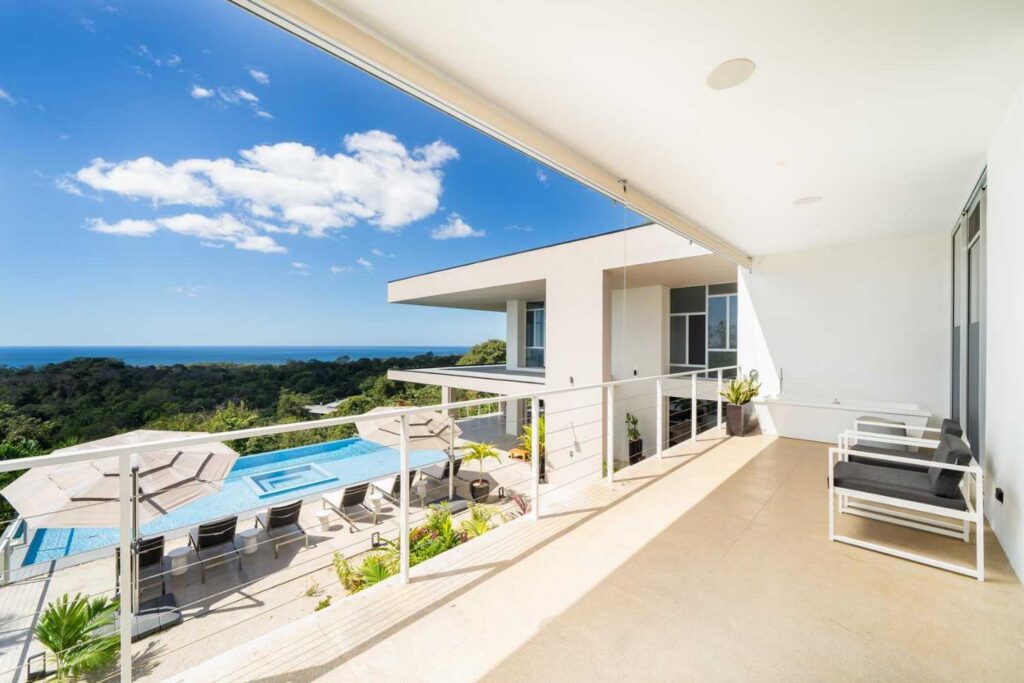
None of those fears were irrational. But at this point in the guide, you can see exactly what addresses each one. The Registro Nacional makes title verification concrete and accessible. A properly structured process with independent legal review and escrow removes the financial exposure that remote buying otherwise carries. And a lifestyle-first neighborhood framework, applied by a local advisor who has matched buyers to communities for nearly two decades, replaces guesswork with informed fit.
The fears don’t disappear, but they change shape. They become specific. And specific problems have specific solutions.
What the Right Process, the Right Location, and the Right Partner Actually Deliver
The right process gets you a clean title, a fair price, and no surprises at closing. The right location gives you a property that you’re genuinely glad to return to, that supports the life you came here to build, and that holds its value because it’s in a community with real demand. The right partner gives you access to inventory that isn’t publicly listed, legal and financial coordination you don’t have to orchestrate yourself, and an ongoing relationship that keeps your investment healthy and well-managed long after closing day.
None of these three elements work well in isolation. A clean title on the wrong property in the wrong community is still a mistake. A beautiful property purchased without proper due diligence is still a liability. The full picture only comes together when process, location, and partnership are all working in your favor at the same time.
The Real Competitive Advantage Isn’t Avoiding Mistakes. It’s What Comes After.
The buyers who get the most out of buying property in Costa Rica are not necessarily the ones who negotiated the sharpest price or closed the fastest. They’re the ones whose ownership experience over the following five to ten years confirmed the decision. Their property was maintained. Their rental income arrived. Their HOA was managed. When a problem came up, it was handled by someone they trusted before it became expensive. And when the time came to decide whether to hold, upgrade, or sell, they had a partner with full context ready to help them think it through.
That’s the standard worth holding the decision to.
Your Next Step
You don’t need to have everything figured out before making contact. The best first conversations happen when a buyer knows what they want their life to look like in Costa Rica, has a general sense of budget, and has enough questions to make the conversation useful. That’s exactly where you are after reading this guide.
A first conversation with our team costs nothing and commits you to nothing. What it gives you is a direct line to nearly two decades of Gold Coast market knowledge, honest feedback on whether your goals and budget are aligned with what this market actually offers, and a clear picture of what your path from here to ownership looks like. We’ve been helping foreign buyers navigate this process since 2006, and the buyers who reach out early in their process consistently have better outcomes than the ones who wait until they’ve already made commitments.
The dream you’ve been sitting on doesn’t need more research. It needs the right conversation.
—
Frequently Asked Questions
Can foreigners legally own property in Costa Rica without restrictions?
Yes. Costa Rica’s constitution grants foreign nationals the same property ownership rights as citizens. You do not need residency, a local partner, or a corporation to purchase fee simple titled real estate. Your name goes directly on the title, which is recorded in the Registro Nacional, and that ownership is fully protected by law. The one meaningful exception involves concession properties in the coastal maritime zone, which carry additional requirements for foreign buyers.
What are the most common mistakes foreigners make when buying property in Costa Rica?
The most costly mistakes almost always involve skipping independent legal review, relying on the seller’s attorney instead of hiring your own, wiring funds outside of a properly structured escrow account, or purchasing concession property without understanding its legal framework. Choosing a location based on price or photos rather than lifestyle fit is another mistake that buyers often don’t recognize until they’re already in the property. All of these risks are entirely avoidable with the right team in place from the beginning.
How do I verify a property title and avoid scams in Costa Rica?
Your Costa Rican attorney pulls the property’s folio real directly from the Registro Nacional, the government’s public property registry, and traces the full chain of ownership. This search confirms clean title, reveals any registered liens, mortgages, or easements, and flags any irregularities in how the property has changed hands. This process typically takes a few business days and costs a few hundred dollars. It is the single most important step in protecting yourself as a foreign buyer.
What are the total costs and hidden fees when buying property in Costa Rica?
Budget approximately 3.5% to 4.5% of the purchase price on top of your agreed price to cover all closing costs. The main components are the transfer tax at 1.5% of registered value, documentary stamps and registry fees totaling roughly 0.65%, the Notario’s fee at approximately 1% to 1.5%, your independent attorney’s fee typically ranging from $1,500 to $3,000, and an escrow fee. After closing, ongoing costs include annual property tax at just 0.25% of registered value, HOA fees if applicable, utilities, and a maintenance reserve for the property itself.
Which neighborhoods in Costa Rica are best for expats and retirees?
On the Gold Coast of Guanacaste, the answer depends on how you want to spend your days. Playa del Coco offers the most social infrastructure and walkability. The Papagayo Peninsula suits buyers seeking resort-quality luxury and privacy. Flamingo Beach threads a comfortable middle ground between amenity access and residential calm. Tamarindo has proven rental income potential and a vibrant atmosphere, though it comes with more tourist density. The most important step is defining your lifestyle priorities before choosing a community, not after.
Do I need a lawyer or local advisor to buy property in Costa Rica safely?
Yes to both, and they serve different purposes. A licensed Costa Rican attorney who represents only you is essential for protecting your legal interests: verifying title, reviewing contracts, flagging risks, and ensuring the transaction closes correctly. A local real estate advisor with deep knowledge of the specific community where you’re buying protects your market interests by shaping which properties you see, what you pay, and how the transaction is structured. These professionals are complementary, not interchangeable, and having both in place is the clearest predictor of a smooth purchase.
Is it worth buying property in Costa Rica?
For buyers who approach it with the right process, the right location, and the right local partner, the answer is almost always yes. Financially, well-located fee simple properties on the Gold Coast have appreciated steadily over time, and short-term rental income can meaningfully offset carrying costs. From a lifestyle perspective, the quality-of-life return for buyers who spend extended time in a property that genuinely fits how they want to live is consistently the factor they value most when reflecting on the decision years later. The key is matching the specific property and community to your actual life, not just the investment thesis.