
Beach towns in costa rica: Why Most Beach Town Guides Fail the Foreign Buyer
The Tourist Lens vs. The Investor Lens: A Fundamental Mismatch in Costa Rica — Beach Towns In Costa Rica
Every guide you’ve read about beach towns in Costa Rica was probably written for someone with a suitcase and a return ticket. The criteria are straightforward: Is the beach beautiful? Are the restaurants good? Is it lively enough on a Friday night? Those questions are fine if you’re booking a week at a rental. They are nearly useless if you’re deciding where to put $300,000 and the next chapter of your life.
The tourist lens optimizes for peak-season impressions. The investor lens asks entirely different questions: What does this town look like in October, when the tourists leave and the roads flood? Is the title on that hillside property clean, or does it sit inside the Maritime Zone with a concession that expires in eight years? What’s the actual net yield after property management, HOA fees, and a 90-day low season with zero bookings?
This mismatch is why so many foreign buyers make decisions they later regret. They visited Tamarindo in February, fell in love with the surf and the restaurant scene, and bought without asking whether the property was titled or what the rental market actually looks like in September. The postcard version of a town and the livable, investable version are sometimes the same place. Often, they are not.
What Due Diligence Actually Means When You’re Choosing a Place to Live and Invest in Costa Rica
Due diligence in Costa Rica is not just a title search and a building inspection. For a foreign buyer choosing a beach town, it starts before you look at a single listing. It means understanding whether the ownership structure in a given area allows foreigners to hold fee-simple title, whether the local infrastructure can support a full-time resident lifestyle, and whether the rental market has real depth or is propped up by a handful of peak weeks.
It also means visiting at the right time. A town that looks perfect in dry season can feel isolated and waterlogged in September. A property that sounds affordable becomes expensive when you account for the cost of maintaining it remotely, managing it as a rental, and absorbing a municipal tax structure you didn’t know existed.
Due diligence, in short, is the process of stress-testing your enthusiasm with reality. This guide is designed to help you do exactly that.
How to Use This Guide to Move from Research to a Decision You Can Defend in Costa Rica
This is not a ranking of Costa Rica’s prettiest beaches. It’s a structured evaluation of the major coastal markets where foreign buyers actually buy, what each one offers, and what each one costs in ways that don’t show up in a listing price. Read each town section with your own priorities in mind. If rental yield is your primary driver, the calculus looks different than if you’re planning to live full-time and want reliable healthcare within 20 minutes. This is particularly relevant when considering beach towns in costa rica.
Use the checklist below as your personal filter. Before you book a flight to walk properties, you should be able to answer every question on it for your top two or three candidate towns.
—
The Foreign Buyer’s Beach Town Evaluation Checklist: 7 Dimensions to Assess Before You Choose a Location
1. Ownership Structure and Title Status
- Is titled (fee-simple) property available in this area, or is most inventory concession land within the Maritime Zone?
- Have you confirmed the property sits outside the restricted 50-meter public zone and the 150-meter concession zone?
2. Access and Infrastructure
- How long is the drive from the nearest international airport, and is the road paved year-round?
- Is municipal water and electricity service reliable, or do most properties rely on wells and generators?
3. Healthcare and Emergency Services
- How far is the nearest CAJA (public healthcare) clinic and private hospital or specialist facility?
- Is medical evacuation a realistic concern for the property’s location?
4. Internet Reliability
- Is fiber optic or high-speed cable service available at the property address, or is internet dependent on mobile signal?
- Have you tested speeds during peak hours, not just a vendor’s advertised rate?
5. Rental Market Depth
- What is the actual annual occupancy rate for comparable properties, not just peak-season performance?
- Is there a professional property management infrastructure in the area, or will you be self-managing remotely?
6. Appreciation Fundamentals
- What major infrastructure investments, including airports, marinas, and road improvements, have been made or are planned nearby?
- Is the buyer pool for resale broad and active, or are you counting on a small niche of foreign buyers?
7. Lifestyle Fit and Community
- Is there an established expat community with organized social infrastructure, or is this a town where you’d be building your social life from scratch?
- Does the town’s year-round pace, not its high-season energy, match how you actually want to live?
—
The Gold Coast Advantage: Why Guanacaste Dominates the Foreign Buyer Conversation in Costa Rica — Beach Towns In Costa Rica
What Makes Guanacaste the Gold Coast: Infrastructure, Access, and Investment Gravity in Costa Rica
Guanacaste earns its nickname not because of marketing, but because of fundamentals. This province on Costa Rica’s northwestern Pacific coast has the highest concentration of foreign real estate investment in the country, and the reasons stack up: a major international airport, Costa Rica’s most reliable dry-season climate, established expat communities, and a decade of infrastructure investment that has made it progressively easier to live here full-time without sacrificing modern conveniences. Most serious conversations about Gold Coast Costa Rica real estate, for buyers with genuine investment objectives, start here.
Liberia International Airport and the Accessibility Premium
Daniel Oduber International Airport in Liberia accepts direct flights from major North American cities including Miami, Houston, Atlanta, Dallas, New York, and Toronto. That direct access is not a convenience. It is an investment premium. Properties within 30 to 45 minutes of Liberia command higher rental occupancy because guests fly in and drive directly to the beach without a San José layover. For owners living abroad who plan to visit frequently, that same convenience dramatically lowers the friction of ownership. Every mile you add between a property and this airport costs you something in rental demand and personal utility.
Dry Season Climate and Year-Round Livability — Beach Towns In Costa Rica
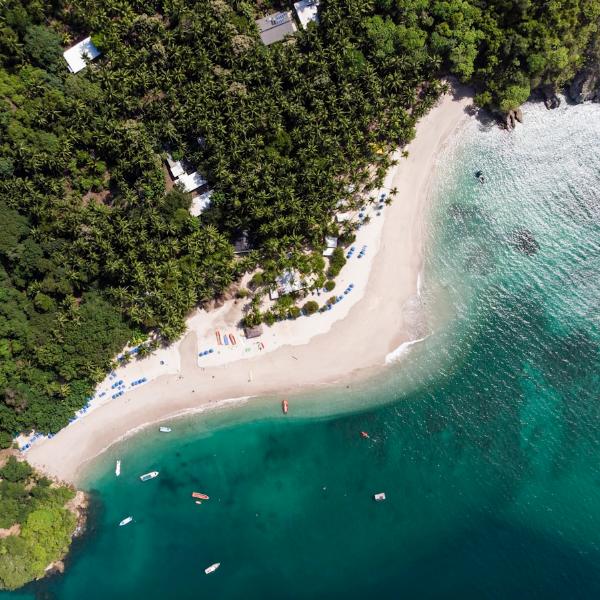
Guanacaste’s dry season runs roughly from November through April, with almost no rainfall across most of the region. This is the climate profile that drives international tourism and supports rental income peaks during the Northern Hemisphere winter. The trade-off is a more pronounced wet season than the Caribbean or Central Valley, with August and September being notably slow for tourism. Even the rainy season here is predictable: mornings are typically sunny, afternoons bring rain, and the landscape turns an extraordinary green. Water supply infrastructure has improved significantly over the past decade, though buyers in rural areas should still verify whether properties have reliable municipal water or depend on wells. For anyone exploring beach towns in costa rica, this matters.
Tamarindo: The Cosmopolitan Hub with a Maturing Real Estate Market in Costa Rica
Lifestyle, Vibe, and Expat Community Depth
Tamarindo is where the Gold Coast’s social life concentrates. It has a full commercial strip, a farmers market, yoga studios, international restaurants, surf schools, and an expat population large enough to sustain an active social calendar year-round. This is not a quiet escape town. If you want dinner options on a Tuesday night, neighbors who speak English, and a real estate market with enough transaction volume to feel liquid, Tamarindo delivers. If you want seclusion, you will find it overwhelming.
The expat community here is multigenerational, spanning retirees, remote workers, young families, and seasonal residents. That depth means better social infrastructure, organized activities, and enough critical mass that full-time residents don’t feel stranded during the off-season.
Property Types, Price Ranges, and What Your Budget Actually Buys — Beach Towns In Costa Rica
Entry-level condos in Tamarindo start around $150,000 to $200,000 for a studio or one-bedroom in an established complex with a pool. A two-bedroom condo in a well-managed building with rental history runs $250,000 to $375,000. Single-family homes and villas range broadly depending on proximity to the beach and lot size, with quality properties in the $400,000 to $700,000 range and oceanview homes pushing well past $1 million.
The good news for buyers is that most Tamarindo inventory is titled property. The Maritime Zone boundary in this area is well-documented, and properties with clean fee-simple title are the norm rather than the exception in established neighborhoods.
Vacation Rental Yield Potential and the Short-Term Rental Landscape
Tamarindo has one of the most developed short-term rental markets on the Gold Coast. Professional property management companies operate here with established systems, and the sheer volume of tourists creates genuine demand from November through April. A well-positioned two-bedroom condo managed professionally can generate meaningful gross rental revenue annually, though net yield after management fees (typically 20 to 25%), HOA fees, utilities, and maintenance will be considerably lower. Many people researching beach towns in costa rica find this helpful.
The honest caveat: the market is competitive. With hundreds of rentals available at any time, properties that are not well-maintained, well-photographed, and well-managed get lost. Amateur management and outdated interiors are a real drag on yield in a town where guests have many options.
Long-Term Appreciation Indicators and Who This Town Is Best Suited For
Tamarindo property values have appreciated steadily over the past decade, with the most reliable gains in well-maintained condos in established complexes and beachfront or close-to-beach homes. The appreciation story here is driven by sustained demand from a broad international buyer pool, ongoing commercial development, and Liberia airport accessibility. It is not a speculation play. It is a mature market with measured, consistent growth.
Tamarindo suits buyers who want community, lifestyle amenities, and a rental market that can absorb a property without requiring heroic management. It is not the right choice for buyers seeking tranquility or a sense of discovery.
Nosara: The Wellness Capital and Its Premium Property Paradox in Costa Rica — Beach Towns In Costa Rica
Lifestyle, Vibe, and the Intentional Community Ethos
Nosara attracts a specific kind of buyer, and that specificity is both its greatest asset and its most important filter. The town has cultivated an identity around yoga, surf, wellness, and environmental consciousness that draws an internationally minded, high-income community. The vibe is intentional and unhurried. There are no high-rises, no chain restaurants, and a long-standing community effort to limit the kind of commercial development that has changed the character of other towns.
If that ethos resonates with how you want to live, Nosara will feel like exactly the right place. If you want a bustling town center or easy access to urban amenities, the 45-minute drive to the nearest large town will wear on you quickly. When evaluating beach towns in costa rica, keep this in mind.
Property Types, Price Ranges, and Micro-Neighborhood Distinctions
Nosara’s real estate market divides into distinct micro-neighborhoods. Playa Guiones is the surfing beach with the highest property values and most international demand. Playa Pelada offers a quieter, village atmosphere with slightly lower prices. Nosara town is the local community hub where land prices are lower and the feel is more authentically Costa Rican.
Entry-level lots start around $100,000 in less-trafficked areas, while oceanview or beachfront lots near Guiones can exceed $500,000 before construction. Quality homes near the beach range from $500,000 to well over $1.5 million. This is not an affordable market.
Rental Yield Reality vs. the Nosara Brand Premium — Beach Towns In Costa Rica
The Nosara brand commands premium nightly rates, particularly for higher-end rental homes. A luxury villa near Playa Guiones can generate substantial weekly rates during peak season. The challenge is that the total inventory of desirable rentals is limited, the market is seasonal, and the infrastructure for professional property management is less developed than in Tamarindo. Buyers counting on rental income to service a significant investment should model their projections conservatively.
Long-Term Appreciation Trajectory and the Ideal Nosara Buyer Profile
Nosara has shown strong appreciation over the past ten years, fueled by a controlled development ethos, wellness-influencer visibility, and a buyer pool willing to pay a premium for a curated environment. The ideal Nosara buyer has a high entry budget, a genuine alignment with the lifestyle rather than just the brand, and a long time horizon. This is a hold-and-appreciate market more than a yield-focused one.
Flamingo Beach and Playa Potrero: The Quiet Sophistication of the Northern Gold Coast in Costa Rica
Flamingo’s Marina Development and Beachfront Property Dynamics — Beach Towns In Costa Rica
Playa Flamingo anchors the northern Gold Coast with one of Costa Rica’s few proper white-sand beaches and a marina that has attracted investment and an affluent buyer demographic. The marina development has added yacht services, a commercial center, and the kind of amenity infrastructure that supports full-time residency at a higher standard than many coastal towns. Beachfront and ocean-view properties in Flamingo carry premium prices, with quality homes typically starting around $500,000 and climbing steeply for direct beach access. This is a key factor for anyone looking at beach towns in costa rica.
Playa Potrero’s Emerging Value Case and Lower Entry Points
Playa Potrero sits just south of Flamingo, sharing the same bay and the same calm water, but offering notably lower entry prices and a quieter character. Condos and smaller homes start in the $200,000 to $300,000 range, making it one of the more accessible markets in the northern Gold Coast for buyers who want proximity to Flamingo’s amenities without paying Flamingo’s premiums. The trade-off is less established rental demand and fewer walkable amenities.
Who Thrives in Flamingo vs. Potrero: An Honest Comparison
Flamingo suits buyers who prioritize beach quality, boating access, and an established community with good services. Potrero suits buyers looking for value, calm-water swimming, and a lower-key environment who are comfortable being five minutes from a town center rather than inside one. If your priority is rental yield, Flamingo’s stronger name recognition and beach quality give it a consistent advantage. If your priority is a primary or secondary residence at a lower price point with room to appreciate, Potrero is worth a serious look.
Papagayo Gulf: Luxury Resort Living and Its Trade-Offs for Private Buyers in Costa Rica — Beach Towns In Costa Rica
The Gated Resort Model: What Ownership Inside Papagayo Actually Looks Like
The Papagayo Peninsula operates under a government concession granted to a master developer, which means the ownership structure here is fundamentally different from standard titled property in other Gold Coast towns. Buyers acquire the right to occupy and develop within the master concession, not fee-simple title in the traditional sense. This is a legally valid and well-established structure, but it is not equivalent to outright property ownership, and buyers should understand that distinction before signing anything.
Accessibility, HOA Structures, and the Cost of Convenience
The Papagayo projects sit 15 to 25 minutes from Liberia airport, which is one of the best access stories in Costa Rica. Convenience here comes with cost. HOA fees inside resort communities can run $1,000 to $3,000 per month or more for high-end properties, and owners are bound by resort rules on rentals, design, and use. The resort infrastructure, security, and amenities are world-class. The carrying costs reflect that.
Is Papagayo Right for You, or Are You Paying for a Brand Name? — Beach Towns In Costa Rica
For buyers who want a turnkey luxury experience, strong resort management, and the security of a branded hotel program that can generate rental income through the hotel’s own channels, Papagayo delivers. For buyers who want true ownership flexibility, lower carrying costs, and the ability to rent independently, the Gold Coast’s titled markets offer better value. Papagayo is right for a specific buyer with a specific set of priorities. Know which one you are before you walk the property. Understanding beach towns in costa rica means knowing these details.
—
Pacific Coast Contenders: Honest Assessments of Manuel Antonio and Santa Teresa in Costa Rica
Manuel Antonio and Quepos: Established Tourism vs. Long-Term Livability in Costa Rica
Lifestyle, Infrastructure, and the Accessibility Cost from San José — Beach Towns In Costa Rica
Manuel Antonio is Costa Rica’s most visited national park corridor, and the tourism infrastructure around Quepos reflects that status. The road from San José takes roughly three hours in good traffic and longer on weekends and holidays, which is a meaningful friction point for buyers planning regular visits from abroad. Most international travelers connect through San José’s Juan Santamaría Airport, which adds a full travel day compared to landing at Liberia and driving directly to the Gold Coast.
The town of Quepos handles the practical needs of daily life, and Manuel Antonio itself is a strip of hotels, restaurants, and rental homes built into a stunning jungle ridge above the ocean. The lifestyle is lush and visually dramatic.
Real Estate Price Ranges and the Rental Income Reality for Foreign Owners
Entry-level properties in the Manuel Antonio corridor start around $200,000 for a small condo. Well-positioned homes with jungle and ocean views range from $400,000 to over $1 million. Rental income is real here, driven by strong park visitation, but the market is seasonally concentrated, and the road access friction limits the type of repeat visitor who generates consistent bookings year-round. Property management infrastructure exists but is less mature than on the Gold Coast.
Who Should and Should Not Buy in the Manuel Antonio Corridor
The right buyer for Manuel Antonio values dramatic natural beauty above all, is genuinely comfortable with the drive from San José, and either plans to use the property primarily themselves or has realistic expectations about rental performance in a market that lives and dies by park tourism. The buyer who should look elsewhere is anyone prioritizing Liberia airport access, a large expat community, or a rental market with consistent year-round depth.
Santa Teresa and the Nicoya Peninsula: The Surf Bohemia Investment Case in Costa Rica — Beach Towns In Costa Rica
Lifestyle and Vibe: What Off-Grid Chic Costs in Practical Terms
Santa Teresa has become one of the most-discussed beach towns in Costa Rica among younger buyers and wellness-focused expats. The surf is world-class, the aesthetic is sun-bleached and beautiful, and the community has attracted a creative, international crowd. What the Instagram version of Santa Teresa doesn’t show is the road: a long, sometimes brutal drive down the Nicoya Peninsula, with the final stretch on unpaved surfaces that wash out in the rainy season.
Living here full-time means planning your life around that road, or around the ferry crossing from Puntarenas, which adds its own schedule constraints. The off-grid chic is genuine, and for the right buyer, it’s exactly the point. But it’s a lifestyle that requires genuine enthusiasm, not just tolerance. People considering beach towns in costa rica often ask about this.
Infrastructure Gaps, Road Reality, and Healthcare Access
Power outages are more frequent here than in Guanacaste. Internet quality has improved but remains inconsistent compared to Gold Coast towns. The nearest significant hospital is in Nicoya or Puntarenas, and neither is a quick trip. Buyers with serious healthcare needs or older family members who may need medical access should think carefully about what that distance means in a real emergency.
Property Prices, Appreciation Trends, and the Speculation Factor — Beach Towns In Costa Rica
Santa Teresa has seen significant price appreciation, fueled by international media attention and a wave of high-profile buyers. Good homes with ocean views now start around $500,000, and quality properties push well past $1 million. The appreciation has been real, but a meaningful portion of recent gains reflects speculation in a market with limited transaction volume. Low liquidity means that if you need to sell quickly, your buyer pool is narrow and heavily weighted toward a specific type of international purchaser.
Samara and Montezuma: The Quieter Nicoya Alternatives Worth Knowing
Samara offers the Nicoya Peninsula lifestyle with a gentler entry point, a calmer beach, and a slightly more developed local town. It attracts families and retirees who want a slower pace than Santa Teresa without giving up the peninsula’s character. Property prices are lower, and the community infrastructure is more stable. Montezuma, further south, is smaller and more bohemian, with limited real estate inventory and even more pronounced access challenges. Both towns reward patient buyers looking for value over visibility.
Dominical and the Southern Pacific: Seclusion, Nature, and Lower Yield Potential in Costa Rica
The Trade-Off Between Wilderness Access and Investment Fundamentals — Beach Towns In Costa Rica
Dominical and the surrounding Southern Pacific coast offer something genuinely rare: massive jungle-covered mountains running to the sea, world-class surf, and a scale of natural landscape that feels untouched. The investment fundamentals tell a more complicated story. The area is remote by Costa Rica standards, with limited healthcare infrastructure, internet quality that varies by neighborhood, and a real estate market with thin transaction volume and a narrow buyer pool.
Properties here are typically priced below comparable oceanview homes on the Gold Coast, but lower price does not mean better value when you account for the challenges of remote property management, seasonal access issues, and the time it will take to resell to a buyer who specifically wants this kind of seclusion. This plays a big role in the conversation around beach towns in costa rica.
Who the Southern Pacific Is Actually Right For
The Southern Pacific rewards buyers who have done their research and genuinely want what it offers: solitude, nature immersion, and distance from tourist infrastructure. It is the right market for someone buying with a long time horizon, who can be physically present for property oversight, and who values lifestyle over investment return. It is not the right market for someone whose primary objective is rental yield or who needs a liquid asset they can exit cleanly within a few years.
—
Caribbean Coast Beach Towns: What Foreign Buyers Must Understand Before Investing
Caribbean vs. Pacific: Why the Comparison Is More Than Geography — Beach Towns In Costa Rica
The Caribbean coast is not simply the Pacific coast with different weather. The two sides of Costa Rica differ in legal framework, infrastructure investment, cultural character, real estate market depth, and the profile of buyer they attract. Foreign buyers who compare them as equivalent options and then choose based on vibe alone frequently encounter surprises that a more careful analysis would have prevented.
The Pacific coast, particularly Guanacaste Province, has received the lion’s share of foreign real estate investment, government infrastructure spending, and international tourism development over the past two decades. The Caribbean has received far less of all three. That gap produces real consequences for buyers evaluating where to put money.
Puerto Viejo de Talamanca and Cahuita: Lifestyle, Limitations, and Legal Nuances
Vibe, Culture, and What Makes the Caribbean Side Distinct
Puerto Viejo de Talamanca and Cahuita offer something genuinely different from every Pacific town in this guide. The culture here is Afro-Caribbean, the food is distinct, the pace is slower, and the natural environment, dense jungle meeting a turquoise sea, is stunning in a way that feels entirely removed from Guanacaste. The beaches at Punta Uva and Playa Cocles rank among the most beautiful in Central America. For the right buyer, that combination of culture, nature, and quietness is irreplaceable.
The community includes a mix of long-term expats, backpacker-culture transplants, and local families. It is not a polished expat enclave in the way Tamarindo or Flamingo are. Social infrastructure is informal rather than organized. It’s one of the reasons beach towns in costa rica comes up so often in expat forums.
Infrastructure, Internet, Healthcare, and the Honest Reliability Picture — Beach Towns In Costa Rica
Power reliability on the Caribbean coast is lower than in Guanacaste. Internet service has improved in recent years but remains inconsistent across neighborhoods, with fiber unavailable in many areas and mobile data quality dependent on your exact location. The rainy season here is longer and more intense than on the Pacific, with two distinct wet periods and no reliable dry season comparable to Guanacaste’s November-to-April window.
Healthcare access is a serious concern. The nearest significant hospital is in Limon, roughly an hour from Puerto Viejo, with limited specialist services. For buyers with ongoing health needs or older family members, this distance carries real weight. Medical evacuation logistics from the Caribbean coast are more complicated than from towns near Liberia.
Real Estate Market Depth and Liquidity Concerns for Foreign Buyers
The Caribbean real estate market is thin. Transaction volume is a fraction of what moves on the Gold Coast annually, which creates two problems for foreign buyers: limited comparable sales data makes pricing difficult to validate, and when you want to sell, your buyer pool is narrow and heavily weighted toward a specific niche of international purchaser who specifically seeks this lifestyle.
There is also a higher concentration of Maritime Zone and concession-based properties along the Caribbean coast, and title clarity on some properties requires especially rigorous review. Some land in this region carries indigenous territory restrictions or unresolved boundary issues that a thorough attorney review should catch, but that represent real risk if skipped.
What Coastal Realty Does Not Specialize In, and Why That Honesty Matters
Coastal Realty & Property Management’s 18-plus years of expertise is grounded in the Gold Coast, specifically the Guanacaste region including Tamarindo, Flamingo, Potrero, Nosara, and the surrounding communities. We know these markets at the neighborhood level, in a way that genuinely serves buyers. If beach towns in costa rica is on your radar, this is worth noting.
The Caribbean coast is not our market. We don’t have the transaction history, the vendor networks, or the on-the-ground relationships there that we do on the Gold Coast, and we won’t pretend otherwise. If the Caribbean is calling you, you need an agent who operates there with the same depth of local knowledge we bring to Guanacaste. A generalist agent representing both coasts is not the same thing.
That honesty is worth something. An agent who claims to know every corner of Costa Rica equally well is overselling. Real estate expertise is local, and the decisions you’re making are too consequential for a generalist’s approximation.
Is the Caribbean Coast Right for Your Investment Goals? — Beach Towns In Costa Rica
For a buyer whose primary goal is rental yield, market liquidity, and long-term appreciation supported by infrastructure investment, the answer is almost always no. The fundamentals that drive investment performance on the Gold Coast, airport access, infrastructure depth, professional rental management, and broad buyer pools, simply don’t exist on the Caribbean side at comparable scale.
For a buyer who has visited Puerto Viejo, understands the lifestyle with eyes open, has lower yield expectations, and values the culture and environment above investment performance metrics, it may be the right fit. The key word is “understands.” Go in with clear expectations, hire an attorney who specializes in Caribbean coast property, and do not assume the legal and infrastructure assumptions that apply in Guanacaste will transfer.
—
Matching Your Lifestyle Goals to the Right Beach Town: A Decision Framework
What Is the Best Beach Town in Costa Rica for Retirees and Remote Workers?
There is no single best answer, because the question contains two meaningfully different buyer profiles. Retirees prioritizing healthcare access, social community, and manageable daily life logistics will consistently find the Gold Coast, specifically Tamarindo, Flamingo, and the greater Guanacaste corridor, outperforming other regions. Remote workers who need reliable high-speed internet, a workspace outside their home on some days, and a social scene that includes people under 50 also tend to land in Tamarindo or, at a quieter frequency, Nosara and Samara. This is particularly relevant when considering beach towns in costa rica.
The clearest recommendation we can make for buyers who want to reduce risk: choose a town that has already solved the problems you’re going to have, rather than one you’ll need to build the lifestyle around from scratch.

Which Costa Rica Beach Towns Have the Most Reliable Internet and Healthcare? — Beach Towns In Costa Rica
Tamarindo and the Flamingo-Potrero corridor lead on both measures. Fiber optic and high-speed cable internet are available throughout Tamarindo and in most established neighborhoods along the northern Gold Coast. Multiple private clinics operate in the area, with a modern private hospital in Liberia within 45 to 60 minutes of most Gold Coast communities. San José’s full hospital infrastructure is a three-to-four hour drive.
Nosara has improved significantly on internet but still lags behind Tamarindo for consistency. Santa Teresa and the Nicoya Peninsula have made progress but remain variable. The Caribbean coast and the Southern Pacific have the most significant internet and healthcare gaps in the country.
Is It Safe to Retire in Costa Rica Beach Towns, and Which Are the Safest?
Costa Rica is one of the safer countries in Latin America for foreign residents, but safety is not uniform across all beach towns. The Gold Coast communities, including Tamarindo, Flamingo, and Nosara, benefit from established expat communities, active neighborhood associations, private security presence in residential areas, and the general social stability that comes with sustained foreign investment and tourism. Petty theft is the most common concern, as in most tourist areas globally, and sensible precautions address most of the risk: quality locks, not leaving valuables in vehicles, and using managed properties.
Towns with more transient populations, limited lighting, or looser community organization present higher petty crime exposure. The due diligence question is not “Is Costa Rica safe?” but “What is the security situation in this specific neighborhood, and what does the community do about it?” Your real estate agent should answer that question with specifics, not generalities. For anyone exploring beach towns in costa rica, this matters.
The Lifestyle Spectrum: Matching Your Non-Negotiables to the Right Market
The Active Social Retiree Profile — Beach Towns In Costa Rica
You want dinner options, organized activities, English-speaking neighbors, and a social calendar that fills itself. Tamarindo is your market. The expat community is large enough and diverse enough to sustain genuine social infrastructure year-round. Flamingo is a quieter version of this profile, with a slightly more affluent and less transient community. This is especially important when considering beach towns in costa rica.
The Remote-Work Professional Profile
You need fast, reliable internet, a workspace outside your home on some days, and proximity to an airport for quarterly travel. Tamarindo checks all three boxes. Nosara works if the lifestyle genuinely aligns and you can tolerate occasional connectivity issues. Santa Teresa works if you’re prepared to manage around its infrastructure limitations and genuinely want that trade-off. This is especially important when considering beach towns in costa rica.
The Yield-First Investor Profile
Your primary metric is net rental yield and property liquidity. Tamarindo outperforms most markets in Costa Rica on both counts. Flamingo delivers strong yield on well-positioned beachfront properties. Nosara generates high nightly rates but lower annual occupancy, which requires careful modeling. Markets outside the Gold Coast carry meaningfully higher execution risk for this profile. This is especially important when considering beach towns in costa rica.
The Privacy and Nature Seeker Profile — Beach Towns In Costa Rica
You want space, quiet, natural surroundings, and distance from tourist infrastructure. The Southern Pacific, parts of the Nicoya Peninsula, and Nosara’s more residential neighborhoods serve this profile. Accept lower liquidity and longer hold horizons as part of the trade-off, not as surprises.
Beach Town Comparison: Investment Grade, Lifestyle Fit, and Buyer Type
| Town | Investment Grade | Rental Yield Band | Infrastructure Quality | Ideal Buyer Type | Many people researching beach towns in costa rica find this helpful.
|——|—————–|——————-|———————-|——————|
| Tamarindo | A | 5–8% gross | High | Social retiree, remote worker, yield investor |
| Flamingo Beach | A- | 5–7% gross | High | Affluent retiree, boating lifestyle, yield investor |
| Playa Potrero | B+ | 4–6% gross | Moderate-High | Value buyer, primary/secondary residence |
| Nosara | A- | 4–6% gross | Moderate | Wellness lifestyle buyer, long-horizon appreciation | When evaluating beach towns in costa rica, keep this in mind.
| Papagayo Gulf | B+ | Varies by resort program | Very High | Turnkey luxury buyer, hands-off ownership |
| Samara | B | 3–5% gross | Moderate | Family buyer, slow-paced retiree |
| Santa Teresa | B | 4–6% gross | Moderate-Low | Surf lifestyle buyer, speculation-tolerant |
| Manuel Antonio | B | 4–6% gross | Moderate | Nature buyer, park-tourism-dependent rental |
| Dominical / S. Pacific | C+ | 2–4% gross | Low-Moderate | Seclusion buyer, very long horizon |
| Puerto Viejo de Talamanca | C | 2–4% gross | Low | Culture-first buyer, niche lifestyle fit | This is a key factor for anyone looking at beach towns in costa rica.
Yield bands are gross estimates for well-managed, well-positioned properties. Net yields after fees and carrying costs are typically 30–40% lower.
—
The Legal and Financial Lifecycle of Buying in a Costa Rica Beach Town
How Foreign Property Ownership in Costa Rica Actually Works — Beach Towns In Costa Rica
Costa Rica explicitly allows foreigners to own property with the same rights as citizens. There are no residency requirements, no restrictions on the number of properties you can own, and no foreign buyer surcharges on titled land. This openness is a genuine competitive advantage Costa Rica holds over many other international markets, and it has made the country one of the most active foreign buyer markets in Latin America.
Titled Property vs. Maritime Zone Concession: The Distinction That Can Make or Break a Purchase
Titled property, technically referred to as fee-simple or registered title in the National Registry, gives you full ownership rights equivalent to owning real estate in the United States or Canada. You can sell, mortgage, inherit, and transfer the property without special government permission.
Concession property within the Maritime Zone operates under a fundamentally different framework. The government owns the land, and you hold the right to use and develop it for a defined term, typically 20 years, subject to renewal. That right can be bought, sold, and inherited, but it is not equivalent to ownership, and renewal is never guaranteed.
Understanding the Maritime Zone Law: The 50-to-200-Meter Rule
Costa Rica’s Maritime Terrestrial Zone Law establishes that the first 50 meters inland from the high tide line are permanently restricted public zone. No private ownership is possible there, period. The next 150 meters, from 50 to 200 meters from the high tide line, make up the concession zone, where private use is allowed only through a government-granted concession. Understanding beach towns in costa rica means knowing these details.
Any property within 200 meters of the ocean requires careful verification of its exact position and legal status. This is not a step you can skip or approximate.
What Concession Property Means for Your Ownership Rights and Resale Options — Beach Towns In Costa Rica
Concession properties can be attractive and legally sound when structured properly, but they come with constraints. You cannot mortgage concession land through a standard bank mortgage. The concession can be revoked if you violate its terms. Resale requires a buyer who understands and accepts the concession structure, which narrows your exit pool compared to titled property. Factor all of this into your pricing analysis and your financing plan.
The Legal Requirements for Foreign Buyers Purchasing Property in Costa Rica Beach Towns
The process for a foreign buyer is more straightforward than most people expect. You need a valid passport, a Costa Rican attorney to conduct due diligence and draft the purchase-sale agreement, a notary public (who is typically your attorney) to execute the transfer deed before the National Registry, and a funding mechanism, either wire transfer or escrow. You do not need a local bank account to complete a purchase, though having one simplifies ongoing ownership management.
Corporations (Sociedades Anónimas or SRLs) are commonly used to hold title, both for liability management and for simplified future transfer. Your attorney will advise on whether holding through a corporation makes sense for your situation.
How to Avoid Common Mistakes When Buying Property in Costa Rica as a Foreigner
The most expensive mistakes in Costa Rica real estate come from skipping steps, not from complex legal traps. The process is well-established and works reliably when followed correctly. People considering beach towns in costa rica often ask about this.
The Due Diligence Non-Negotiables: Title Search, SETENA Review, and Survey Verification — Beach Towns In Costa Rica
A title search through the National Registry confirms the property is registered correctly, identifies any liens or encumbrances, and traces ownership history. A SETENA review confirms the property complies with environmental regulations, an important check in coastal areas with wetlands or protected zones nearby. A survey verification by a licensed topographer confirms that physical property boundaries match what the registry shows. All three are non-optional.
The Escrow Requirement and Why It Protects You
Escrow is standard practice in Costa Rican real estate transactions for foreign buyers, and for good reason. It holds your deposit and purchase funds with a neutral third party until all due diligence conditions are met and the transfer deed is registered. Never wire funds directly to a seller or an agent without escrow. This single step protects you from the most common forms of fraud in international real estate.
Working with a Qualified Costa Rican Attorney: What to Expect and What to Insist On
Your attorney should be independent of the seller and the listing agent. Their job is to protect you. A good attorney will conduct the full title search, review all contracts before you sign, verify SETENA compliance, explain any legal nuance in the property’s status, and execute the transfer at the National Registry. Expect to pay $1,500 to $3,000 for attorney services on a typical transaction, depending on complexity.
What It Actually Costs to Own a Beach Town Property: Carrying Costs Demystified
Property Taxes, Municipal Fees, and the Luxury Tax Threshold
Costa Rica’s annual property tax is 0.25% of the registered value, which is low by almost any international standard. An additional luxury home tax (Impuesto Solidario) applies to properties registered above a value threshold that adjusts periodically. Rates on the luxury tax are graduated, starting at 0.25% and rising for very high-value properties. Municipal fees covering garbage and public lighting add a modest annual cost that varies by municipality.
HOA Structures, Property Management Fees, and Realistic Net Yield Modeling
HOA fees vary widely, from a few hundred dollars per year in a simple gated community to $1,000 or more monthly in full-service resort developments. Property management fees for vacation rentals typically run 20 to 25% of gross rental revenue. Add utilities, maintenance reserves (budget 1 to 2% of property value annually), platform fees, and occasional vacancy, and a gross yield of 7% can realistically net 4 to 5%. Model conservatively, and make sure the math works at 60% annual occupancy, not 90%. This plays a big role in the conversation around beach towns in costa rica.
Costa Rica Residency Through Real Estate: Pensioner, Rentista, and Investor Visa Pathways
Owning property in Costa Rica does not automatically grant residency, but the country offers three pathways relevant to buyers.
- Pensionado (Pensioner): Requires proof of at least $1,000 per month in permanent pension income. This is the most common path for retirees.
- Rentista: Requires proof of at least $2,500 per month in stable income from outside Costa Rica, or a five-year deposit with a Costa Rican bank. Suited for remote workers and passive income earners.
- Inversionista (Investor): Requires a minimum investment of $150,000 in Costa Rican real estate or a qualified business. A direct property-investment pathway to residency.
All three pathways require working with an immigration attorney and submitting documentation through Costa Rica’s immigration authority. The process typically takes 12 to 24 months from application to approval.
How Much Does Property Cost in Costa Rica Beach Towns, and Where Is the Best Value?
Price ranges vary considerably by town and property type. Studio or one-bedroom condos in established Gold Coast communities start around $150,000 to $200,000. A quality two-bedroom home in a good neighborhood runs $300,000 to $500,000. Beachfront or close-to-beach homes in premium markets begin around $600,000 and climb steeply. Nosara and Santa Teresa have both seen their entry points push above $500,000 for quality homes.
Value is not simply the lowest price. It is the price relative to rental income potential, liquidity, appreciation trajectory, and the real carrying costs of ownership. On those combined measures, the Flamingo-Potrero corridor and Tamarindo consistently offer the most defensible value for foreign buyers entering the Gold Coast market at mid-range budgets.
What Is the Cost of Living in Costa Rica Beach Towns Compared to the United States?
A full-time resident couple living in a Gold Coast beach town can live comfortably, including rent or mortgage, groceries, dining out several times a week, utilities, transportation, and private health insurance, for $2,500 to $4,000 per month. That figure rises in Nosara or Papagayo, where imported goods and premium services dominate, and can drop in smaller towns like Samara or Potrero, where local markets serve more of daily needs. It’s one of the reasons beach towns in costa rica comes up so often in expat forums.
Healthcare is one of the clearest savings. CAJA (public system) access costs under $100 per month for most residents, and quality private consultations run $50 to $100 per visit without insurance. Dining out is roughly half to two-thirds of comparable U.S. costs. Housing is the most variable line, depending entirely on whether you rent, own outright, or carry a mortgage.
Which Beach Towns Appreciate in Value and Offer Good Rental Income?
Over the past decade, the markets with the most consistent combination of appreciation and rental performance on the Gold Coast have been Tamarindo, Flamingo, and, at the higher end, Nosara. All three benefit from international buyer recognition, improving infrastructure, and sustained tourism demand. Potrero has shown steady appreciation from a lower base. Markets outside Guanacaste have appreciated in some cases, but with higher volatility and thinner data.
The pattern that holds across all of these markets: appreciation follows infrastructure. Towns where roads improved, where airports stayed accessible, and where professional management services matured have consistently outperformed those where the logistics of ownership stayed difficult.
—
> Gold Coast Foreign Buyer: 8 Things to Know Before You Make a Move
>
> 1. Direct flights to Liberia are not a convenience. They are an investment premium. Properties within 45 minutes of Daniel Oduber International Airport command higher rental occupancy and easier owner access. If beach towns in costa rica is on your radar, this is worth noting.
> 2. Titled property and concession property are not the same thing. Confirm title status before you fall in love with a listing. A property inside the Maritime Zone’s 200-meter concession zone requires an entirely different evaluation.
> 3. Gross rental yield and net rental yield are different numbers. After management fees, HOA, utilities, platform costs, and vacancy, reduce your gross estimate by 30 to 40%.
> 4. Due diligence has three non-negotiable components: title search through the National Registry, SETENA environmental review, and physical survey verification by a licensed topographer.
> 5. Always use escrow. Never wire funds directly to a seller or agent. This is the single step that protects you from the most common forms of transaction fraud.
> 6. Property ownership does not grant automatic residency. Apply through the Pensionado, Rentista, or Inversionista pathway, and work with an immigration attorney. This is particularly relevant when considering beach towns in costa rica.
> 7. Carrying costs matter more than the purchase price. Property tax, municipal fees, luxury tax, HOA, and property management together can add $5,000 to $25,000 annually to your cost of ownership, depending on the property.
> 8. Local expertise is not optional. An agent who knows one Gold Coast market deeply will serve you better than a generalist who covers all of Costa Rica from a distance.
—
Conclusion: From Dreaming to Owning, Your Next Step on the Gold Coast
What the Right Beach Town Decision Actually Comes Down To
Every buyer who gets this decision right shares one common characteristic: they stopped optimizing for the peak-season version of a town and started evaluating the year-round version of a life. The beach towns in Costa Rica that perform best for foreign buyers, across ownership satisfaction, rental performance, and long-term value, are the ones where the infrastructure holds up in October, where the title is clean, where professional services exist to support your ownership when you’re not there, and where the lifestyle fits your actual priorities rather than your vacation personality.
That alignment is not complicated to achieve. But it does require asking the right questions before you walk a single property, and being honest with yourself about the answers.
Why Local Expertise at the Neighborhood Level Is Not Optional
Costa Rica’s real estate market does not reward generalist research. The difference between a titled property and a concession property two blocks apart, the difference between a rental management company that fills 75% occupancy annually and one that fills 45%, the difference between a neighborhood where property values have been steady for a decade and one that looks attractive but lacks resale liquidity: none of these distinctions show up in a listing description or a travel article.
They show up in the knowledge of someone who has been working a specific market, on the ground, long enough to have watched properties appreciate and stagnate, seen buyers thrive and struggle, and built the vendor and legal networks that make a transaction go cleanly. For anyone exploring beach towns in costa rica, this matters.
How Coastal Realty & Property Management’s 18+ Years on the Gold Coast Serves Your Search
We’ve been operating in Guanacaste’s Gold Coast communities since before Tamarindo had a traffic light. That depth of presence means we know not just what properties are listed, but what comparable properties sold for, which complexes have strong HOA management and which have deferred maintenance problems, which neighborhoods are attracting the next wave of buyers, and which are at a price ceiling.
Our property management operation gives us a specific edge that pure sales agencies don’t have: we see actual rental performance data across dozens of Gold Coast properties every month. When we give you a yield estimate, it’s based on what properties like yours are actually earning, not what a seller’s optimistic projection says.
Your Invitation: Start the Conversation Before You Make Any Commitment
The single best thing you can do before you book a property tour is have an honest conversation about what you’re trying to accomplish and whether the market you’re considering can actually deliver it. Not a sales call, not a listing presentation. Just a direct conversation about your goals, your budget, your timeline, and what the Gold Coast market looks like right now for a buyer in your position.
We’ve had that conversation with hundreds of foreign buyers over 18 years. Some were ready to move quickly. Some needed another year of research. Some came in thinking they wanted Nosara and ended up in Flamingo. In every case, starting with an honest assessment saved time, money, and the specific kind of regret that comes from making a $400,000 decision on incomplete information.
Reach out to the Coastal Realty team when you’re ready for that conversation. There’s no obligation, no pressure, and no pretense that every buyer needs to act immediately. The Gold Coast will still be here when you’re ready. We’ll make sure you understand it clearly when you are.
—
Frequently Asked Questions
What is the best beach town in Costa Rica for retirees and remote workers?
For most buyers, Tamarindo offers the strongest all-around combination of expat community, reliable infrastructure, healthcare access, and Liberia airport convenience. Flamingo is a quieter alternative for retirees who prefer a more relaxed pace, while Nosara appeals to remote workers drawn to the wellness lifestyle and willing to accept occasional connectivity trade-offs. The honest answer depends on your personal priorities, but towns with existing infrastructure and community depth will almost always outperform ones where you’d be building your lifestyle from scratch.
How much does property cost in Costa Rica beach towns, and where is the best value?
Entry-level condos in established Gold Coast communities start around $150,000 to $200,000 for a studio or one-bedroom. A quality two-bedroom home in a good neighborhood runs $300,000 to $500,000, and beachfront properties in premium markets begin around $600,000. On a value basis combining rental yield potential, liquidity, and appreciation trajectory, the Flamingo-Potrero corridor and Tamarindo consistently offer the most defensible entry points for foreign buyers at mid-range budgets.
What are the legal requirements for foreign buyers purchasing property in Costa Rica beach towns?
Foreigners can own Costa Rican property with the same rights as citizens, with no residency requirement and no foreign buyer surcharges on titled land. You will need a valid passport, an independent Costa Rican attorney to conduct due diligence and draft the purchase agreement, a notary to execute the transfer deed, and a secure funding mechanism through escrow. Your attorney will also advise on whether holding title through a local corporation (Sociedad Anónima or SRL) makes sense for your situation.
Which beach towns in Costa Rica have the most reliable internet and healthcare?
Tamarindo and the Flamingo-Potrero corridor lead on both counts. Fiber optic and high-speed cable internet are widely available throughout Tamarindo and most established northern Gold Coast neighborhoods, and a modern private hospital in Liberia is within 45 to 60 minutes of most Gold Coast communities. Nosara has improved significantly but remains less consistent. The Caribbean coast and Southern Pacific have the most significant gaps in both internet reliability and healthcare access.
What is the cost of living in Costa Rica beach towns compared to the United States?
A couple living full-time in a Gold Coast beach town can expect to spend roughly $2,500 to $4,000 per month covering housing, groceries, utilities, transportation, dining out, and private health insurance. Healthcare costs are a standout savings: CAJA public system access runs under $100 per month for most residents, and private specialist consultations typically cost $50 to $100 without insurance. Dining and everyday expenses run roughly half to two-thirds of comparable U.S. costs, though imported goods and premium services in higher-end communities like Nosara or Papagayo can push costs closer to North American levels.
How do I avoid common mistakes when buying property in Costa Rica as a foreigner?
The most costly mistakes come from skipping due diligence steps, not from obscure legal traps. The three non-negotiables are: a title search through the National Registry, a SETENA environmental compliance review, and a physical survey verification by a licensed topographer. Always use escrow to hold funds, never wire money directly to a seller or agent. Hire an attorney who is fully independent of the seller and the listing agent. And verify whether any property you’re considering sits within the Maritime Zone’s 200-meter concession area, as that status fundamentally changes what you own and how you can finance it.
Which Costa Rica beach towns appreciate in value and offer good rental income?
Over the past decade, Tamarindo, Flamingo, and Nosara have delivered the most consistent combination of property appreciation and rental demand on the Gold Coast. All three benefit from international buyer recognition, Liberia airport accessibility, and improving infrastructure. Potrero has shown steady appreciation from a lower price base, making it an interesting entry point for value-focused buyers. The broader pattern across all markets is clear: appreciation follows infrastructure investment, and towns where roads, services, and professional management have matured have reliably outperformed those where ownership logistics remain difficult.