
Why the Gold Coast Is Calling, and Why Now Is the Moment to Answer
The Dream Is Real: What Makes Costa Rica’s Gold Coast Different
Costa Rica’s Gold Coast, the Pacific shoreline stretching from Guanacaste south through the Nicoya Peninsula, delivers something most tropical destinations promise but rarely sustain: a life that actually works. The sunsets over Tamarindo are real. So is the fresh produce at the Saturday market, the wildlife refuge twenty minutes from your front door, and the neighbor who became your closest friend six months after you arrived.
What separates this coastline from competitors in Mexico, Panama, or Southeast Asia is not just the scenery. It is the combination of political stability, a functioning democratic government, a no-standing-army peace tradition, and an established foreign buyer community that has already stress-tested the legal framework so you do not have to start from scratch.
The climate along the Gold Coast follows a dry season from December through April, perfect for peak rental income, and a green season from May through November that makes the hillsides luminous and drives property prices down for buyers who know when to move. Year-round temperatures hover between 75 and 90 degrees Fahrenheit. Internet infrastructure in established beach towns is reliable enough to support remote work. Healthcare is accessible and affordable. These are not abstract lifestyle promises. They are the specific, measurable conditions that explain why people who visit once tend to come back with a realtor.
How the Market Has Matured: Stability, Infrastructure, and Buyer Protections
The Costa Rica beach property market today looks meaningfully different from what it was even a decade ago. Title registration through the National Registry has become more transparent and searchable. The Condominium Law and foreign ownership statutes have been tested through enough transactions that reputable attorneys have well-worn playbooks for protecting buyers. International escrow services now handle the majority of transactions above $100,000, providing the kind of deposit protection that gives buyers genuine recourse if a deal falls apart.
Road infrastructure along the Gold Coast has improved substantially. Upgrades to the coastal roads connecting Liberia’s Daniel Oduber International Airport to beach communities have cut drive times and opened previously inaccessible parcels to practical development. Reliable electricity, improved water systems, and expanding fiber internet have moved beach towns like Tamarindo, Nosara, and Uvita from rustic outposts to functional communities. Buyers arriving today are not pioneering. They are entering a market that rewards preparation and punishes shortcuts.
Who Is Actually Buying Here: Pre-Retirees, Remote Professionals, and the Lifestyle-First Investor
The buyer profile on the Gold Coast has shifted. The traditional retiree, late 60s, fully retired, cash buyer, is still present, but today they share the market with a second category that has grown substantially: the remote professional in their 40s who can work from anywhere and has decided that anywhere should have an ocean view. These buyers are not waiting for retirement. They are buying now, splitting time between Costa Rica and a home country, and treating the property as both a lifestyle asset and a rental income vehicle during months they are away.
A third group rounds out the picture: the lifestyle-first investor. This buyer is less concerned with traditional investment metrics and more focused on finding a property that will serve multiple purposes over a 15 to 20-year horizon, a vacation base now, a primary residence later, a rental asset in the years between. They are planners, and they approach this purchase with the same rigor they would apply to any significant financial decision.
The Blind Spot Most Buyers Miss Before They Browse a Single Listing
Most foreign buyers begin their search the same way: they open a listing portal, filter by price, and start scrolling through photos of infinity pools. The problem is not the enthusiasm. It is the sequence. Browsing listings before you understand Costa Rica’s two fundamentally different forms of property ownership is a bit like signing an employment contract before reading it. You might end up fine. Or you might commit to something with restrictions you never anticipated.
The distinction between fee simple titled property and concession property under the Maritime Zone Law changes everything about what you own, what you can do with it, and whether you can legally own it at all as a foreigner. Understanding that distinction before you fall in love with a specific listing is not bureaucratic caution. It is the single most important preparation step a foreign buyer can take, and the next section covers it in full.
What Foreign Buyers Must Understand Before Searching for Beach Homes for Sale in Costa Rica
Do You Need Residency to Buy Beach Property in Costa Rica?
No. Costa Rica does not require residency to purchase property. A foreign national with a valid passport can own titled real estate in Costa Rica with the same rights as a Costa Rican citizen, with one significant exception covered below. You can buy, sell, rent, develop, and inherit Costa Rican property as a non-resident tourist. Many foreign owners maintain their properties for years, even decades, without ever pursuing formal residency. Residency can offer other practical benefits, including easier banking, certain tax advantages, and the ability to work legally in the country, but it is not a prerequisite for property ownership.
Can Foreigners Own Property in Costa Rica, and What Rights Do They Actually Have?
For fee simple titled property, foreign ownership rights in Costa Rica are genuinely strong. The Costa Rican constitution explicitly guarantees private property rights and applies them equally to nationals and foreigners. You can hold title in your personal name, in a Costa Rican corporation (Sociedad Anónima or Limitada), or through a trust structure, each with different estate planning and liability implications that your attorney will walk you through.
Once your name or your corporation’s name appears in the National Registry as the titled owner of a fee simple property, your claim is legally protected, publicly verifiable, and enforceable in Costa Rican courts. The registry is a public database that anyone can check. That transparency is a buyer protection, not a bureaucratic formality.
The One Question That Changes Everything: Fee Simple or Concession?
This question should be the first thing you ask about any listing that interests you. The answer determines your ownership rights, your legal exposure, and, critically, whether you can own it at all as a non-Costa Rican national.
Fee Simple Ownership and the National Registry in Plain English
Fee simple property carries a registered title recorded in Costa Rica’s National Registry. You own it outright, the same way you would own a home in the United States, Canada, or Europe. The title shows the property’s boundaries, any recorded encumbrances like mortgages or liens, and the current registered owner. A clean title search on a fee simple property is one of the most reliable protections available to a foreign buyer.
Most residential properties set back from the beach, including condominiums, hillside homes, village lots, and most gated communities, are fee simple. Many properties marketed as ocean view or even close to the beach carry full fee simple title. This is the ownership type most foreign buyers should be targeting.
Concession Property Under the Zona Marítimo-Terrestre: What It Means for You
Concession property is a fundamentally different category. Under the Maritime Zone Law, the first 200 meters from the mean high tide line is divided into a public zone (the first 50 meters, which no one can own) and a restricted zone (the next 150 meters). Property within that restricted zone is owned by the Costa Rican state and can only be used through a municipal concession, essentially a long-term lease granted by the local municipality.
Concession rights can be transferred, improved upon, and in some cases rented out, but they are not the same as outright ownership. They have expiration dates. They can be revoked under certain conditions. And here is the restriction that catches many foreign buyers off guard: foreigners who are not Costa Rican residents cannot hold a concession directly in their personal name. Only Costa Rican citizens or companies with at least 50% Costa Rican ownership can hold a concession. This is not a technicality to work around. It is a hard legal boundary.
The Maritime Zone Law: The Most Misunderstood Rule in Costa Rica Real Estate
The Maritime Zone Law (Ley de Zona Marítimo-Terrestre, Law No. 6043), enacted in 1977, governs the entire 200-meter coastal strip around Costa Rica’s coastline. It is the source of more buyer confusion, and more costly mistakes, than any other aspect of Costa Rican real estate law.
The confusion usually stems from how beachfront properties are marketed. A listing may describe a property as beachfront, use words like title or ownership, and show stunning photos of waves practically lapping at a terrace. What the listing may not clearly state is whether the property sits within the Maritime Zone, and if so, whether the current concession is valid, municipal-plan approved, up to date, and transferable. Some properties within the restricted zone have had functioning concessions for decades with good legal standing. Others have murky histories, irregular permits, or concessions that were never properly established. The photos look identical. The legal situation is not.
Can You Buy Beachfront Property in Costa Rica as a Foreigner? The Honest Answer
Yes, with important qualifications. True oceanfront property within the Maritime Zone’s restricted 150-meter band can be used and improved under a concession, but as a foreign non-resident, you cannot hold that concession directly. You can, however, own a Costa Rican corporation that holds the concession, provided that corporation has at least 50% Costa Rican shareholder ownership. This structure exists and is used legitimately, but it introduces complexity, ongoing corporate compliance requirements, and dependency on co-ownership arrangements that require careful legal drafting.
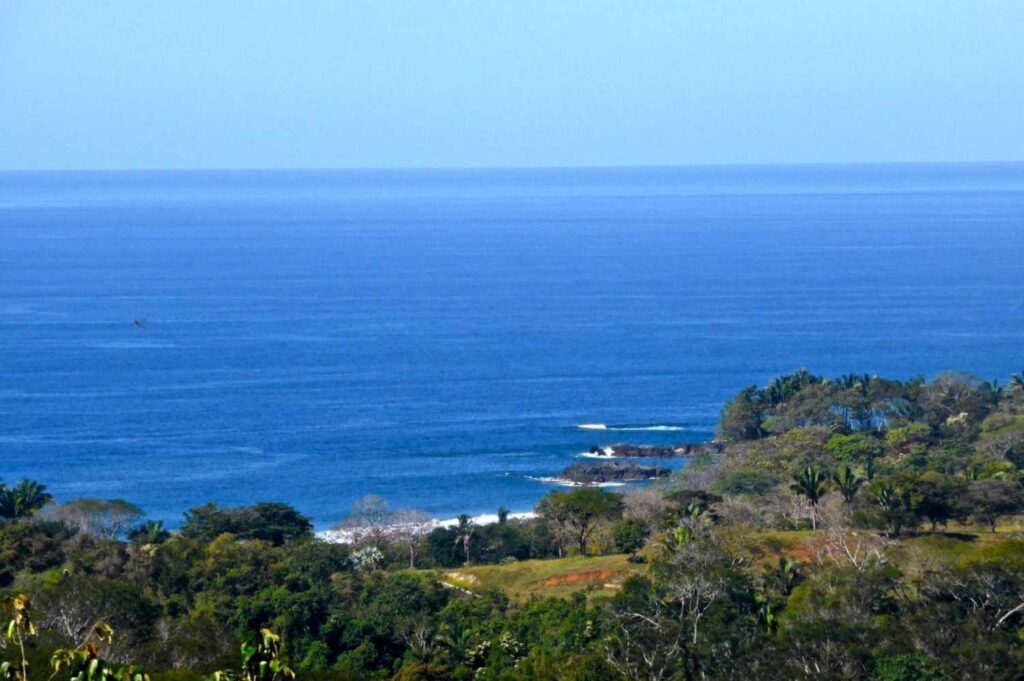
The practical takeaway: many foreign buyers choose properties just above the Maritime Zone, where fee simple title is available, the views and access to the beach remain exceptional, and the ownership structure is straightforward. Properties at 200 meters elevation with unobstructed Pacific views often deliver the lifestyle of beachfront living without the legal complexity of Maritime Zone concession ownership. A knowledgeable local advisor will show you both categories and help you understand exactly what you are buying in each case.
How to Verify a Property’s Legal Standing Before You Fall in Love With It
Verification requires three specific checks, performed by a qualified Costa Rican attorney before you make any offer.
First, a National Registry title search (estudio de registro) to confirm the registered owner, boundaries, and any recorded liens or encumbrances on fee simple properties. Second, a cadastral survey review to confirm the physical boundaries match the registered plat. Third, a municipal concession status check for any property near the coast, confirming whether the property falls within the Maritime Zone, whether a valid concession exists, and whether the local municipal coastal development plan (Plan Regulador Costero) has formally classified the area.
That last check matters more than most buyers realize. Municipalities with approved coastal plans can grant and transfer concessions. Municipalities without approved plans are legally restricted from granting new concessions, meaning some properties near the beach exist in a regulatory gray area that only a local attorney with municipal-level knowledge can navigate.
Fee Simple vs. Concession Property: A Decision Guide for Foreign Buyers
| Factor | Fee Simple | Maritime Zone Concession |
|---|---|---|
| Foreign ownership in personal name | Yes, fully permitted | No, requires Costa Rican resident or 50%+ CR-owned corporation |
| Title registered in National Registry | Yes | No, state owns the land |
| Can be mortgaged or financed | Yes | Limited, harder to finance |
| Inheritance and estate planning | Straightforward | Complex, requires legal structuring |
| Typical location | Inland, hillside, or 200m+ from beach | Within 200m of mean high tide |
| Best use for non-resident foreign buyer | Primary purchase target | Only with expert legal structuring and clear concession status |
| Key due diligence step | Title search and cadastral review | All of the above, plus municipal plan verification |
Mapping the Gold Coast: Which Region Actually Fits Your Life?
Tamarindo and Guanacaste: The Established Expat Hub With Turnkey Infrastructure
Tamarindo is where the Gold Coast’s infrastructure story is most complete. You will find a full English-speaking community, international schools, specialty grocery stores, surf schools, restaurants covering every cuisine, and a real estate market with enough transaction volume that pricing is transparent and comparable sales data is available. Liberia International Airport is roughly 75 minutes away with direct flights from multiple U.S. cities, which matters enormously if you plan to visit frequently or manage a vacation rental Costa Rica investment from abroad.
The tradeoff is that Tamarindo’s popularity means pricing reflects demand. Entry-level condos start around $150,000 to $200,000. Quality homes in established communities are largely in the $300,000 to $600,000 range. True oceanfront or prime ocean-view estates can climb well above $1 million. Buyers who want the easiest transition into Costa Rican life and the strongest short-term rental demand should take Tamarindo seriously. Buyers who prioritize tranquility or a lower price point should look further down the coast.
The Nicoya Peninsula: Pura Vida Lifestyle With Blue Zone Wellness Appeal
Nosara, Sámara, and the broader Nicoya Peninsula attract a specific kind of buyer: one who values wellness, intention, and a community that has retained its authentic character even as it has grown. Nosara in particular has developed a global reputation as a yoga and surf destination with a fiercely protective local community that has resisted the overdevelopment that erodes the charm of more commercial beach towns.
The Blue Zone designation, Nicoya is one of a small number of regions in the world where people statistically live longer and healthier lives, is not just a marketing angle. It draws buyers who are thinking about the quality of their next 20 to 30 years, not just the quality of their next vacation. Properties here skew toward residential use rather than high-volume vacation rental, though well-placed homes in Nosara can still achieve strong occupancy. Road conditions to some inland and hillside properties can be rough in the green season, which factors into both the access experience and long-term maintenance costs.
Uvita and the Southern Pacific: Lush, Uncrowded, and Rising in Value
Uvita sits at the center of the Whale Tail, where a distinctive sand formation at Marino Ballena National Park creates one of the most photographed coastlines in the country. The Southern Pacific, stretching from Dominical through Uvita to Ojochal, is the Gold Coast’s most talked-about growth corridor. Infrastructure improvements over the past several years have brought the region from adventurous choice to accessible destination without erasing the lush, relatively uncrowded character that drew early buyers.
Prices in Uvita and Dominical remain meaningfully lower than in Guanacaste for comparable property quality. A $250,000 budget that buys a modest condo in Tamarindo can yield a well-appointed home with mountain and ocean views here. The buyer profile tends toward nature-oriented, often younger than the Tamarindo average, and frequently interested in longer stays rather than quick vacation visits. Vacation rental demand is growing, particularly for properties with unique natural settings, but it has not yet reached the saturation point of the northern Gold Coast.
The Osa Peninsula and Puntarenas: For the Buyer Who Wants Untouched Beauty Over Convenience
The Osa Peninsula is in a category of its own. Home to Corcovado National Park, one of the most biologically diverse places on the planet, the Osa offers an ownership experience defined by genuine remoteness. This is not a quiet beach town in the way Sámara is quiet. Access requires a combination of small aircraft or a long drive on roads that test vehicles and resolve equally. Services are limited. Reliable internet exists in some communities but not all.
The buyer drawn to the Osa has already made peace with those tradeoffs. What they get in return is a property position unlike anything available in more developed regions: primary rainforest, wildlife corridors, near-empty beaches, and values that reflect the current scarcity of buyers willing to embrace the infrastructure realities. Puntarenas, the provincial hub to the north, offers ferry access to the Nicoya Peninsula and serves buyers looking for a more connected base while still staying outside the tourist-saturated northern corridor.
Matching a Region to Your Lifestyle
The instinct to rank regions from best to worst misses the point. The right region is the one that fits how you will actually use the property. A working remote professional who needs fast, reliable internet and easy international flight access has different criteria than a retired couple who want to walk to the beach, eat at a handful of restaurants, and mostly disappear. Neither profile is wrong. They just point to different places on the map.
Ask yourself four specific questions before you search a single listing.
- How often will you visit, and how long will each stay be?
- Will you rent the property while you are away?
- Do you need English-speaking services and infrastructure nearby, or are you comfortable operating in Spanish?
- What is your tolerance for inconvenience in exchange for lower prices or greater solitude?
Your honest answers will narrow the map faster than any comparison of square footage or listing photos.
Understanding Beach Home Price Ranges and Property Types on the Gold Coast
What Can You Realistically Buy for $50,000 to $150,000?
A budget under $150,000 is workable in Costa Rica, but it requires honest expectations. In the $50,000 to $100,000 range, you are primarily looking at vacant lots in inland or transitional coastal areas, small studio or one-bedroom condos in older buildings, or properties in early-stage developments where you are betting on future infrastructure. Raw land in emerging areas of the Southern Pacific can be found in this range, but emerging means services and access are incomplete.
At $100,000 to $150,000, the picture improves. You can find one-bedroom condos in established communities in Tamarindo or Sámara, modest homes in inland villages within 20 to 30 minutes of the beach, and some two-bedroom options in less-trafficked parts of the coast. These are real ownership opportunities, but they are not oceanfront, and they are not turnkey. Budget for repairs, upgrades, and ongoing maintenance from day one.
The Mid-Range Sweet Spot: $150,000 to $400,000 and What It Delivers by Region
This price range is where most Gold Coast buyers find their home. At the lower end, $150,000 to $250,000, you get solid two-bedroom condos or homes in established beach communities, often with community amenities like a pool and security. In the Southern Pacific, this budget reaches into quality three-bedroom homes with ocean or mountain views. In Guanacaste and Tamarindo, it covers well-maintained condos in proven rental communities.
From $250,000 to $400,000, the quality jump is significant. You enter the territory of purpose-built homes in gated communities, larger condos in newer buildings with resort-style amenities, and some standalone homes with genuine ocean views and short walks to the beach. These properties perform well as both lifestyle assets and vacation rentals. They carry fee simple title in the large majority of cases, finance more readily, and hold their value in ways that entry-level properties do not.
Luxury Villas, Oceanfront Condos, and Premium Estates: The $400,000 and Above Segment
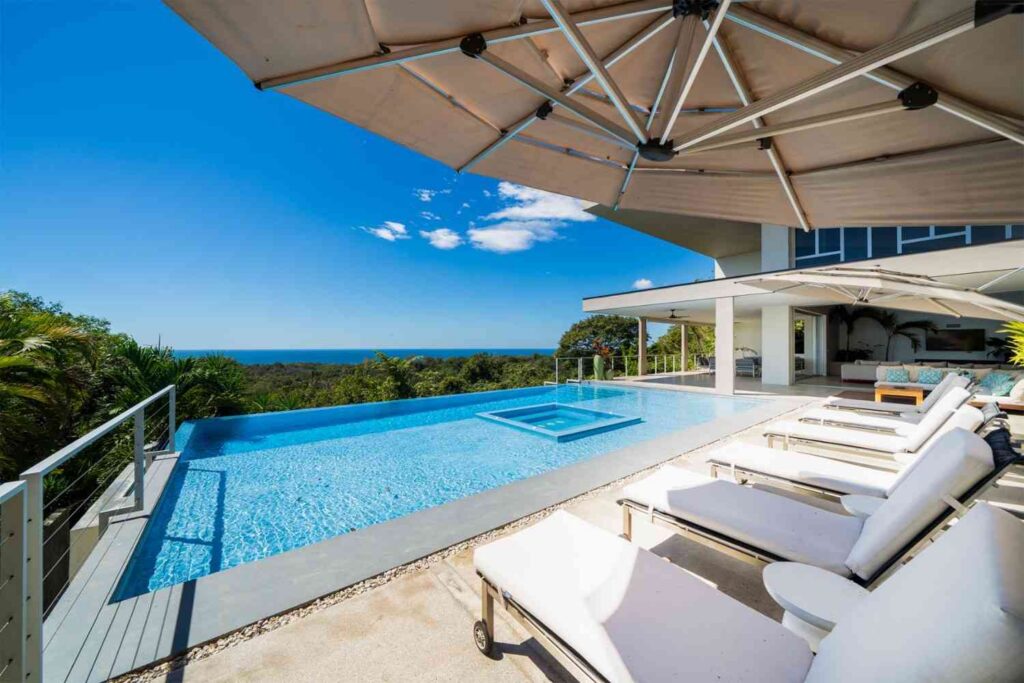
Above $400,000, the Costa Rica beach home market delivers properties that compete seriously with luxury vacation real estate anywhere in Latin America. Infinity pools, open-plan architecture designed around the view, high-specification kitchens, and professional-grade furnishings are standard features at this level. Gated communities with 24-hour security, concierge services, and on-site rental management programs serve buyers who want a fully turnkey ownership experience.
True oceanfront estates, meaning direct beach access with unobstructed first-row views, typically start around $700,000 and climb steeply based on location, lot size, and build quality. The top end of the Tamarindo and Peninsula Papagayo markets produces transactions well into the millions. These represent a mature, internationally active luxury segment with a distinct buyer profile.
Property Types Decoded: Homes, Condos, Lots, Villas, and the Ocean-View Distinction
These terms carry specific meaning that affects both value and use.
- Condos are individually owned units within a multi-unit building or development, subject to HOA governance and shared maintenance. Generally lower-maintenance for absentee owners.
- Single-family homes are standalone structures on their own titled lot, offering more privacy but more maintenance responsibility, and typically stronger rental income potential for larger groups.
- Lots are vacant land, either raw or serviced with utilities. They require construction planning, permitting, and a contractor relationship, with higher potential return and higher complexity.
- Villas is a marketing term that usually refers to a higher-end standalone home, sometimes within a resort development with shared amenities.
- Ocean view describes a property from which the ocean is visible, often from an elevated position, ranging from a glimpse between rooftops to a panoramic 180-degree horizon.
- True oceanfront means direct adjacency to the beach with no road, structure, or public right-of-way between the property and the sand. It is the rarest category and the one most likely to involve Maritime Zone considerations.
Why the Same Listing Price Means Something Very Different Depending on Region and Property Type
A $300,000 condo in Tamarindo and a $300,000 home in Uvita are not the same investment in any meaningful sense. The Tamarindo condo likely sits in a community with professional rental management, strong vacation rental demand, established comparable sales, and proximity to international travelers who book directly. The Uvita home may offer superior living quality, stronger long-term appreciation potential, and a deeper sense of place, but it operates in a thinner rental market and a less liquid resale environment.
Neither is a better purchase in the abstract. They serve different buyers with different goals. The number on the listing is a starting point, not a conclusion. What matters is what that property will cost you to own each year, what income it can realistically generate, and whether it fits the life you are building in Costa Rica.
The True Cost of Owning a Costa Rica Beach Home: The Full Picture Before You Commit
The Purchase Transaction: Transfer Taxes, Closing Costs, and Escrow
The purchase price is not your total acquisition cost. Costa Rica charges a transfer tax of 1.5% of the registered property value, which may differ from the purchase price, though attorneys generally recommend registering at market value to avoid complications. Documentary stamps and registration fees add approximately 0.6% to 0.85%. Legal fees for the notary-attorney who handles the transaction typically run 1% to 1.5% of the transaction value. Adding a title search, survey review, and escrow fees, total closing costs for a buyer commonly land between 3% and 4% of the purchase price.
One nuance worth flagging: properties are sometimes registered at a value below the actual purchase price, a historical practice that reduced tax exposure. Reputable attorneys now recommend registering at or near market value, both to avoid complications with tax authorities and to protect your ownership position if you ever sell or need to establish value in a dispute.
Escrow is now standard practice on Gold Coast transactions and provides genuine protection. A qualified escrow agent holds the buyer’s deposit until all conditions are satisfied, then releases funds to the seller only at closing. Established escrow providers maintain accounts in U.S. dollars, issue detailed wire transfer instructions, and provide written confirmation at each stage of the process. Escrow fees typically run 0.25% to 0.5% of the transaction value, paid at closing. That cost buys you a protected transaction and a clear paper trail from deposit to deed.
The Role of the Attorney and Notario in Your Transaction
In Costa Rica, the attorney who handles a property transfer must also be a licensed notary (notario), because the transfer deed is a public document requiring notarization as part of the registration process. The notario-attorney drafts the transfer deed, handles the National Registry filing, and serves as your legal representative through closing.
Standard attorney fees run 1% to 1.5% of the transaction value. Fees below 1% can indicate a high-volume practice cutting corners on due diligence. Fees significantly above 1.5% require a clear explanation. Ask any attorney you are considering to provide a written fee estimate before engaging them, and confirm that their scope includes the title search, cadastral review, and Maritime Zone verification discussed earlier in this guide.
Annual Property Tax in Costa Rica: What Foreign Buyers Actually Pay
Costa Rica’s annual property tax (impuesto sobre bienes inmuebles) is 0.25% of the registered property value, among the lowest rates in Latin America. On a property registered at $300,000, annual tax is $750. Property values are self-declared and updated every five years, though municipalities conduct periodic revaluations that buyers should anticipate over time.
An additional solidarity tax (Impuesto Solidario) applies to residential properties registered above approximately $258,000, a threshold adjusted periodically. This tax ranges from 0.25% to 0.55% of the property value above the threshold. A qualified local attorney will calculate both taxes accurately as part of your ownership cost analysis.
HOA Fees, Maintenance Reserves, and the Real Cost of Tropical Property Upkeep
HOA fees in Gold Coast communities range from roughly $100 per month in smaller communities to $800 or more per month in full-service developments with pools, security, landscaping, and amenity staff. Before buying in any HOA-governed development, request the current fee schedule, the reserve fund balance, and the minutes from the last two annual meetings. A reserve fund below 30% to 40% of the estimated replacement cost for shared infrastructure is a warning sign. Special assessments, one-time charges to all owners to cover deferred maintenance, are common in underfunded developments and can run several thousand dollars with little notice.
Tropical climates are hard on properties. Salt air corrodes metal and degrades paint. Humidity promotes mold in poorly ventilated spaces. Heavy rainy seasons stress roofs, drainage systems, and foundations. Realistic annual maintenance budgets, excluding major capital repairs, look something like this.
- Condo in an HOA-managed building: $1,500 to $3,000, as the HOA handles exterior and common areas.
- Standalone home without pool: $3,500 to $6,000.
- Standalone home with pool and garden: $6,000 to $10,000.
- Older home with wood construction or ocean-exposed finishes: $8,000 to $14,000.
Hidden Ownership Costs That Listing Descriptions Never Mention
Several costs appear after closing that buyers rarely anticipate.
- Utility connections and deposits: water and electricity deposits for new registrations can run $200 to $500.
- Internet and cable setup: installation fees plus monthly service, typically $60 to $120 per month for reliable fiber where available.
- Property management fees: professional management typically charges 20% to 30% of gross rental revenue, plus coordination fees for maintenance, if you rent or simply need someone to check on the property.
- Insurance: annual premiums for a $300,000 coastal home typically range from $1,200 to $2,500 depending on construction type, location, and coverage level. Coastal exposure matters for underwriting. Properties close to the ocean face higher salt-air corrosion risk, and some policies limit coverage for wind and water damage unless specific riders are purchased.
- Currency exchange costs: if you hold income in colones and pay expenses in dollars, or vice versa, exchange rate friction adds up over time.
Building a Realistic Annual Budget: An Illustrative Ownership Cost Model
The following model illustrates annual ownership costs for a $300,000 fee simple beach home used personally for two months per year and rented short-term for four additional months. All figures are illustrative and will vary by property.
| Cost Category | Annual Estimate (USD) |
|---|---|
| Property tax (0.25% of $300,000) | $750 |
| Solidarity tax (estimated) | $400 |
| HOA fees ($250/month) | $3,000 |
| Insurance | $1,800 |
| Routine maintenance and repairs | $4,500 |
| Property management (20% of $18,000 gross rental) | $3,600 |
| Utilities, non-stay months | $1,200 |
| Total estimated annual cost | $15,250 |
| Estimated gross rental income (4 months, 70% occupancy) | $16,800 |
| Net annual cost after rental income | approximately $1,550 |
That net figure, roughly $130 per month out of pocket to own and maintain a $300,000 beach property, is not a marketing promise. It is an illustration of why a well-chosen, well-managed Gold Coast property can be genuinely close to cost-neutral for a part-time owner, and sometimes better than that in high-demand areas with consistent rental performance. The variables that determine where your property lands on that spectrum, location, rental strategy, management quality, and property type, are exactly what the right local partner helps you optimize from the very beginning.
The Six Most Common (and Expensive) Mistakes Foreign Buyers Make
Most mistakes made by foreign buyers of beach homes for sale in Costa Rica are not unique to any one person. They follow predictable patterns that experienced local advisors have seen play out many times.
The first is skipping independent legal due diligence on concession status. A property can be listed as beachfront, photographed with waves in the background, and priced at market rate for direct ocean access, while sitting in a Maritime Zone concession with irregular municipal standing. Hiring the seller’s recommended attorney to handle your due diligence is a related mistake. Independent legal counsel means counsel whose professional obligation runs to you alone.
The second is underestimating annual operating costs before purchase. Buyers who model their property as basically free to own based on rental income projections without accurately accounting for HOA fees, management, maintenance, insurance, and taxes regularly find their first-year costs significantly higher than expected. Run a full annual cost model before you make an offer, not after you close.
The third is choosing a brokerage based on listing volume rather than local depth. A large listing inventory signals market coverage, not market knowledge. The questions that protect a foreign buyer on the Gold Coast, including which communities have underfunded HOAs, which coastal zones have irregular concession histories, and which developers have a track record of delivering on promises, are not answered by a database. They are answered by years of transactions in a specific place.
The remaining common mistakes, failing to establish a property management plan before closing, neglecting to structure title correctly for estate planning, and buying in a region that does not match actual usage patterns, are addressed in the sections that follow.
How Rental Income and Property Appreciation Stack Up Across the Gold Coast
Framing the Income Conversation Honestly: Investment vs. Lifestyle Asset
Most buyers searching for beach homes for sale in Costa Rica arrive with a version of the same mental model: “I will buy a beautiful place, enjoy it when I visit, and rent it out the rest of the time to cover my costs.” That model is achievable. But treating a lifestyle property and a rental investment as interchangeable leads to decisions that serve neither goal particularly well.
A property optimized for vacation rental sits in a high-traffic location, is furnished to a specific guest standard, and is actively managed to maximize occupancy. A property optimized for personal lifestyle may be more secluded, more personally appointed, and less suited to the booking expectations of transient guests. Deciding which goal is primary before you choose a property will shape nearly every decision that follows.

Vacation Rental Income on the Gold Coast: An Illustrative Scenario
Imagine a buyer who closes on a two-bedroom, two-bathroom condo in a well-managed Tamarindo development in September. The property is fee simple titled, priced at $280,000, and comes partially furnished. The buyer allocates $15,000 for furnishings, photography, and listing setup. By November, the property is live on major short-term rental platforms.
The first rental season runs December through April, coinciding with Costa Rica’s dry season and peak tourist demand. Pricing the property at $185 per night with a four-night minimum, the owner attracts bookings from North American and European travelers. By the end of April, the property has completed 14 separate bookings over 22 occupied weeks, generating approximately $22,000 in gross revenue.
After the management company’s 25% fee, platform costs, and a light-maintenance reserve, net rental income for the first season comes to approximately $14,500 to $15,500. That covers most of the annual carrying costs and confirms the cost-neutral model is accessible with the right property in the right location.
Occupancy Rate Realities, Seasonal Patterns, and Gross Revenue Expectations
Dry season (December through April) drives the majority of Costa Rica rental income, typically accounting for 60% to 70% of a property’s annual revenue. The shoulder months of November and May can perform reasonably well. The deep green season (June through October) sees materially lower occupancy in most markets, though Nicoya Peninsula properties benefit from surfing demand that extends the productive calendar.
Realistic annual occupancy rates for well-managed, well-located Gold Coast properties look like this.
- Tamarindo and northern Guanacaste: 55% to 70% annually.
- Nosara and the Nicoya Peninsula: 45% to 60% annually.
- Uvita and the Southern Pacific: 40% to 55% annually.
These are market-wide averages. Individual properties outperform based on location within the community, quality of listing presentation, pricing strategy, and responsiveness to guest inquiries, all of which a competent management partner actively optimizes.
Short-Term Rental Dynamics in Tamarindo, Uvita, and the Nicoya Peninsula
Tamarindo has the deepest short-term rental market on the Gold Coast, with enough inventory and demand to support professional revenue management and year-round marketing. Competition is genuine, which means properties that are not well-presented or actively managed underperform.
Uvita attracts a different guest profile: nature-oriented, often staying longer, and drawn by the Whale Tail and Marino Ballena National Park. Longer average stays translate to lower turnover costs and simpler management, which partially offsets the lower occupancy ceiling.
Nosara and the Nicoya Peninsula support a wellness and surf traveler segment willing to pay premium nightly rates for the right property. A well-positioned three-bedroom home near Playa Guiones can command strong nightly rates in peak season, outperforming comparable square footage in Tamarindo on a per-night basis while operating in a market with lower overall inventory. Costa Rica does not impose restrictive short-term rental regulations at the national level, though local municipalities can regulate licensing and operation. A local advisor will confirm current requirements in your specific community.
Property Appreciation Patterns by Region: How to Think About Long-Term Value
Appreciation in Gold Coast real estate has historically tracked infrastructure improvement and international access. When road quality improves, flight options expand, or a region gains wider recognition, property values follow. Tamarindo has delivered steady appreciation over two decades, though as a mature market, buyers entering now are looking at steady, inflation-plus appreciation rather than speculative gains.
The Southern Pacific, including Uvita, Dominical, and Ojochal, is the current appreciation story on the Gold Coast. Infrastructure improvements have reduced the friction of access without erasing the character that attracts buyers in the first place. The region’s relative affordability compared to Guanacaste suggests continued room for movement as buyer awareness grows.
The Osa Peninsula remains a longer time-horizon consideration. The infrastructure gap is real, and appreciation depends on whether that gap narrows in the coming decade.
Rental ROI vs. Appreciation: Matching the Right Strategy to Your Goals
If rental income is your priority, Tamarindo wins on volume and market depth. If long-term appreciation potential is the primary goal, the Southern Pacific corridor offers the strongest current thesis. If you want a reasonable balance of both, Nosara and the northern Nicoya Peninsula offer above-average nightly rates and steady demand within a market that has appreciated consistently over many years.
What matters most is matching the strategy to how you will actually use and hold the property. A buyer who visits for three months per year and rents aggressively the rest of the time needs different things from their advisor, their manager, and their property than a buyer who visits rarely and prioritizes hassle-free appreciation. Be clear about your actual goal before the search begins, because the right property for each of these strategies is a different property.
Why Post-Purchase Support Is the Differentiator That Protects Your Investment
The Moment Most Buyers Discover Their Brokerage Has Moved On
The closing is warm. Everyone congratulates you. The keys change hands. And then, for many foreign buyers, a slow and disorienting realization sets in: the people who helped them find the property have no particular interest in what happens next. The transaction is complete. The commission has been paid. The relationship, as far as the brokerage is concerned, has run its course.
This is the moment when buyers who chose their advisor based on listing volume or brand recognition discover that those criteria answered the wrong question. The question that matters most is not who can show me the most listings. It is who will still be answering my calls two years after I close.
What Full-Service Property Management Actually Covers for a Foreign Owner
Rental Listing Optimization, Guest Vetting, and Revenue Management
Professional management starts before the first guest arrives. Listing optimization means more than uploading photos to a booking platform. It means writing descriptions that convert browsers into bookings, pricing the property dynamically against market demand, adjusting minimum stay requirements by season, and managing guest reviews to protect the property’s rating. Guest vetting reduces damage risk and neighbor disputes. Revenue management, meaning proactive pricing adjustments based on booking pace and local events, can meaningfully increase annual gross rental income compared to set-and-forget flat pricing.
Maintenance Coordination, Vendor Relationships, and Emergency Response
A management team with established vendor relationships gets faster service and better pricing than a foreign owner calling around on their own from abroad. When a water heater fails the night before a guest arrival, the question is not whether someone can fix it, but whether the right person answers the phone and knows where your property is. That kind of relationship is built over years of repeat work, not assembled on demand.
Emergency response capacity, including after-hours coverage, physical property access, and the authority to approve emergency repairs up to an agreed limit, is what separates a true management service from an answering service. It also determines whether your guest leaves a five-star review or a one-star warning.
HOA Liaison, Tax Filing Support, and Annual Compliance Management
Foreign owners managing properties remotely face a steady stream of administrative obligations that are easy to miss from thousands of miles away: HOA meeting notices, annual property tax filings, insurance renewals, corporate maintenance filings if your property is held in a Costa Rican entity, and periodic updates to the National Registry if anything in your ownership structure changes.
A full-service management partner handles these not as extras but as core responsibilities. Missed HOA meetings produce uninformed decisions about assessments. Lapsed corporate filings create title complications. Unpaid property taxes generate liens. These are preventable problems, and preventing them is part of what you are paying for.
The Boutique Advantage: What a First-Name-Basis Partnership Means in Practice
A boutique management company knows your property by name, not by unit number. When the caretaker notices that the back fence is deteriorating before the rainy season, they flag it because they know the property well enough to recognize what is out of place. That kind of familiarity does not exist in a portfolio managed by rotating staff.
The practical value of a boutique relationship shows up most clearly in the moments that require judgment: when to approve a repair versus source a quote, when a guest situation requires flexibility versus firmness, when a market shift suggests repricing rather than waiting. Judgment comes from experience with a specific property in a specific community, not from a standard operating procedure applied uniformly across a large portfolio.
Lifecycle Ownership Support vs. Volume-Based Transactions: Two Very Different Models
Volume-based service models are optimized for throughput. The incentive is to close transactions and move on, because revenue is generated at closing. Lifecycle ownership models are optimized for long-term client retention. The incentive is for your property to perform well over time, because the relationship and the management contract depend on it.
These models produce different behaviors at every stage of the process. A volume-based advisor may recommend a property that moves quickly rather than one that fits your goals precisely. A lifecycle advisor takes the time to understand whether you are buying a retirement home, an income vehicle, or something in between, because that distinction changes which properties they show you, which due diligence they prioritize, and what management plan they recommend at closing.
Nearly Two Decades on the Gold Coast: Why Local Longevity Cannot Be Replicated
Coastal Realty and Property Management has operated on the Gold Coast for nearly twenty years. That tenure is not a marketing claim. It is the accumulated answer to thousands of buyer questions, hundreds of transactions, and the kind of market-specific pattern recognition that only comes from being present through multiple economic cycles, infrastructure changes, and shifts in buyer behavior.
Long-term local presence means knowing which developments have strong reserve funds and which are perennially underfunded. It means having relationships with the municipal officials who administer concession registrations. It means knowing which contractors show up and which do not. That knowledge is not available on a listing platform. It lives entirely in the quality of the advisor you choose.
How to Start Your Gold Coast Beach Home Search with Confidence
Your First Step Based on Where You Are in the Journey
Where you should start depends on where you actually are in the process.
If you are an early dreamer, drawn to the idea of owning a beach home in Costa Rica but not yet committed to any region, budget, or timeline, your most useful next step is a 30-minute consultation with a Gold Coast advisor who can help you map your lifestyle priorities to specific regions and realistic price ranges. Do this before you browse listings.
If you are an active researcher who has done your homework on regions and price ranges and is now comparing properties, your most useful next step is a due diligence checklist review with a local attorney and a candid conversation about annual ownership costs for the specific property types you are considering.
If you are ready to act and know your region, budget, and ownership goals, your next step is engaging a full-service local partner who can run title searches, coordinate escrow, and introduce you to the right management structure before you close, not after.
What the First Conversation with a Trusted Local Partner Looks Like
The first conversation should not feel like a sales call. It should feel like a discovery session where a knowledgeable advisor asks more questions than they answer. What lifestyle are you building? How will you use the property across a year? What is your comfort level with maritime zone properties? Do you have a Costa Rican attorney, and if not, would you like an introduction to one with specific experience in your target region?
A trustworthy advisor listens to your answers before making recommendations. If the first conversation is mostly a monologue about available inventory, that is useful information about how the relationship will proceed.
The Documents and Decisions to Prepare Before You Search Listings
Arriving to a property search prepared moves your transaction forward faster and reduces the risk of a deal falling apart on logistics. Before you browse listings seriously, have the following in order.
- Proof of funds or a financing pre-qualification letter if you plan to borrow.
- A clear statement of your budget, including closing costs and first-year carrying costs.
- A decision on your preferred ownership structure, personal name versus Costa Rican corporation, discussed with an attorney.
- A working relationship with a licensed Costa Rican attorney who specializes in real estate.
- A basic understanding of your residency intentions, because they affect both the concession rules and your long-term tax planning.
Residency, the Pensionado Visa, and How Real Estate Fits Your Broader Costa Rica Transition
Buying property does not grant residency in Costa Rica, and residency is not required to buy property. These two processes are independent, but they are worth planning in parallel if a longer-term transition is part of your vision.
The Pensionado visa is the most accessible residency pathway for retirees, requiring proof of a lifetime pension income of at least $1,000 per month from a government or private source. The Rentista visa applies to buyers who cannot qualify on pension income but can demonstrate a guaranteed income stream of at least $2,500 per month or deposit a qualifying amount into a Costa Rican bank. Neither visa requires property ownership, but holding property in Costa Rica often strengthens the residency application by demonstrating a genuine connection to the country.
A local advisor who has helped many buyers navigate both the property purchase and the residency process can introduce you to an immigration attorney at the right moment and help you sequence the decisions correctly.
Why Your Choice of Advisor Is More Consequential Than Your Choice of Listing
Every listing on the Gold Coast can be found by anyone with an internet connection. The right listing for your specific goals, properly vetted, legally secure, managed to perform well over time, and supported through every complication that arises in the years after closing, that version of a listing only exists in the context of the right advisory relationship.
The listing is a starting point. The advisor is the through-line. Foreign buyers who invest as much energy in choosing their partner as they do in choosing their property consistently have better outcomes, fewer surprises, and more enjoyment from what they have built.
Your Path from Dream to Deed on Costa Rica’s Gold Coast
Recapping the Lifecycle Framework: From Discovery to Long-Term Ownership
This guide has moved deliberately through every stage of the foreign buyer’s journey: understanding the legal framework before browsing, matching regions to lifestyle rather than ranking them by popularity, building an accurate cost model before making an offer, evaluating income potential honestly, and recognizing that closing day is the beginning of an ownership story rather than the end of a transaction.
That sequence is not arbitrary. It reflects how the buyers who are happiest with their Gold Coast properties actually made their decisions. They did not start with a listing. They started with a clear picture of what they were trying to build and found advisors who helped them build it.
The Core Truth This Guide Was Built Around
Buying a beach home in Costa Rica as a foreign national is legally straightforward, financially achievable, and genuinely life-changing when done correctly. The legal protections are real. The lifestyle is real. The income potential is real. And the mistakes are also real, predictable, and almost entirely avoidable with the right guidance in place from the beginning.
The gap between a dream outcome and a costly lesson is not the market, the region, or even the specific property. It is the quality of the team around you, from the first conversation through the tenth year of ownership. That is the core truth this guide was built to make clear.
An Invitation to Begin the Conversation with Coastal Realty and Property Management
Coastal Realty and Property Management has spent nearly two decades helping buyers find, purchase, and build fulfilling ownership experiences on the Gold Coast. We are not a listing platform. We are a full-service local partner: a team that answers the phone after closing, manages properties the way we would want our own managed, and takes the long view on every relationship we build.
If you are ready to move from research to real conversation, we are ready to listen. Tell us about your vision, your timeline, and your questions. We will tell you honestly what the market looks like right now, what we think fits your goals, and what we would caution you against. That is the conversation we have been having with buyers for twenty years, and there is nothing we would rather be doing.
Your Gold Coast story is ready to begin. We would be glad to help you write it.
Frequently Asked Questions
Can you buy beachfront property in Costa Rica as a foreigner, and what legal restrictions apply?
Yes, with important qualifications. Foreigners can own fee simple titled property in Costa Rica with the same rights as citizens. However, true beachfront properties within the Maritime Zone’s restricted 150-meter band are held by the Costa Rican state and can only be used through a municipal concession. As a non-resident foreigner, you cannot hold a concession in your personal name. You can own a Costa Rican corporation that holds the concession, provided it has at least 50% Costa Rican ownership. Many experienced foreign buyers choose fee simple properties just above the Maritime Zone boundary, where ownership is straightforward and beach access remains excellent.
What is the Maritime Zone Law and how does it affect beachfront property ownership?
The Maritime Zone Law (Law No. 6043) governs the 200-meter coastal strip along all of Costa Rica’s coastline. The first 50 meters from the mean high tide line is a public zone that no one can own. The next 150 meters is a restricted zone owned by the state, where use rights are granted through municipal concessions rather than outright title. This law is the most misunderstood aspect of Costa Rica real estate, largely because properties within the restricted zone are often marketed with language that implies conventional ownership. Before purchasing any coastal property, your attorney must verify whether it falls within the Maritime Zone and whether any existing concession has valid municipal standing.
What is the difference between fee simple property and a concession in the Maritime Zone?
Fee simple property carries a registered title in Costa Rica’s National Registry, meaning you own it outright, just as you would in the United States or Canada. A concession is not ownership. It is a long-term use right granted by the local municipality over land that remains state property within the Maritime Zone. Fee simple properties can be held in your personal name, mortgaged, inherited straightforwardly, and sold without special restrictions. Concessions have expiration dates, can be revoked under certain conditions, cannot be held directly by non-resident foreigners, and are significantly harder to finance. For most foreign buyers, fee simple property is the clear and simpler target.
How do foreign buyers take title to property in Costa Rica safely?
The most important steps are hiring an independent Costa Rican attorney (not the seller’s attorney) to conduct a thorough title search in the National Registry, a cadastral survey review, and a Maritime Zone verification if the property is near the coast. Using a recognized escrow service to hold your deposit until all conditions are met is equally essential. Title can be held in your personal name, in a Costa Rican corporation, or through a trust structure, each with different implications for estate planning and liability. Your attorney will walk you through the structure that best fits your situation.
What are the hidden costs of owning beach property in Costa Rica beyond the purchase price?
Closing costs alone, including transfer taxes, documentary stamps, legal fees, and escrow, typically add 3% to 4% to the purchase price. Ongoing annual costs include property tax (0.25% of registered value), a solidarity tax on higher-value properties, HOA fees ranging from $100 to $800 per month depending on the community, homeowner’s insurance, routine maintenance (which runs higher than in temperate climates due to salt air, humidity, and heavy rains), and property management fees of 20% to 30% of gross rental revenue if you rent while away. Buyers who build a realistic annual cost model before making an offer are consistently better prepared than those who focus solely on the listing price.
Do I need a lawyer to buy property in Costa Rica, and what should they do?
Yes, hiring your own independent attorney is not optional. It is the single most important protective step a foreign buyer can take. In Costa Rica, the attorney handling a transfer must also be a licensed notary (notario), as the deed is a public document. Your attorney should conduct a full title search in the National Registry, review the cadastral survey, verify Maritime Zone status for any coastal property, confirm there are no liens or encumbrances, draft the purchase agreement, handle the National Registry filing, and guide you on the appropriate ownership structure for your circumstances. Standard legal fees run 1% to 1.5% of the transaction value. Always engage counsel whose professional obligation runs solely to you, not to the seller or the listing agent.