
Homes For Sale In Limon Costa Rica: Caribbean Coast Listings
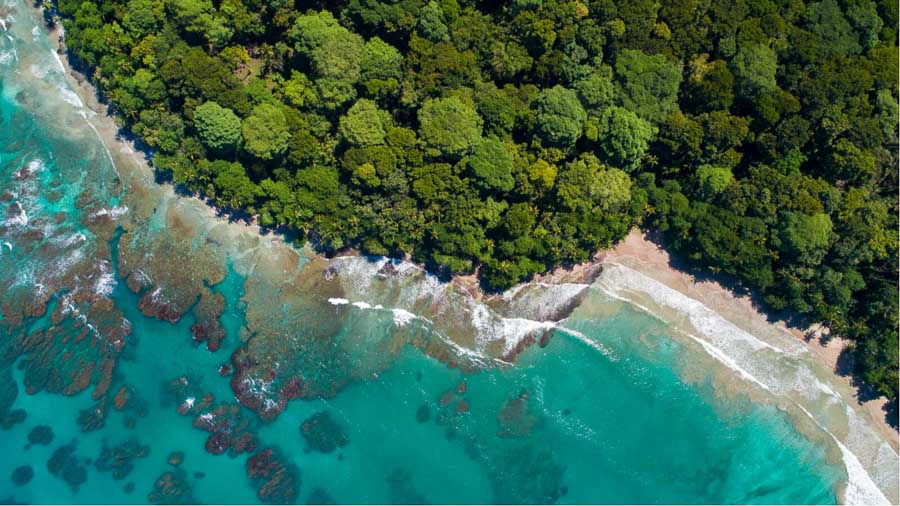
Homes for sale in Limon Costa Rica occupy a completely different world from the Pacific coast market. The Caribbean province of Limon stretches 125 miles down Costa Rica’s eastern shoreline. It is wetter, greener, and far less developed than Guanacaste. It draws a different type of buyer entirely. What this coast offers is not luxury resort infrastructure — it is something rarer. Intact rainforest meets white sand beach. Afro-Caribbean culture shapes every town. Wildlife is visible from your doorstep. Prices remain well below Pacific equivalents. For buyers who want that, Limon is exceptional.
This guide comes from Coastal Realty & Property Management, based on Costa Rica’s Gold Coast in Playas del Coco, Guanacaste. Our core market is the Pacific. However, we regularly help buyers compare Limon with western coastal alternatives. The Caribbean is not for everyone. Trade-offs in infrastructure, access, and legal complexity are real. Understanding them clearly before you search saves significant time and money.
Understanding the Limon Province
What Limon Is and Where It Sits
Limon is Costa Rica’s only Caribbean-facing province. It covers the entire eastern coastline, from the Nicaraguan border in the north to the Panamanian border in the south. San Jose is roughly 2.5 hours by road from Puerto Limon city — the provincial capital. The southern section, known as Caribe Sur or the South Caribbean, is where most foreign buyers focus. This area runs from Puerto Viejo de Talamanca south through Cahuita, Cocles, Playa Chiquita, Punta Uva, and Manzanillo.
The northern Caribbean is a different market entirely. Tortuguero National Park dominates the north — accessible only by boat or plane. Cahuita National Park anchors the southern zone. Gandoca-Manzanillo Wildlife Refuge protects the area below Punta Uva. These protected areas define both the appeal and the legal complexity of buying in Limon.
How Limon Differs from Pacific Markets
Rain falls year-round in Limon. This is not the dry-season paradise of Guanacaste. The Caribbean trade winds bring consistent moisture. Everything stays lush and green. Visitors who fall in love with the area often do so precisely because of this — the rainforest is alive in a way that dry-season Guanacaste is not. Daily rain is normal. Infrastructure, however, reflects that remoteness. Roads improve but remain below Pacific standards in many areas. Power and water reliability vary by location. Fiber internet exists in Puerto Viejo but coverage thins out quickly toward Manzanillo.
The Key Communities for Property Buyers
Puerto Viejo de Talamanca
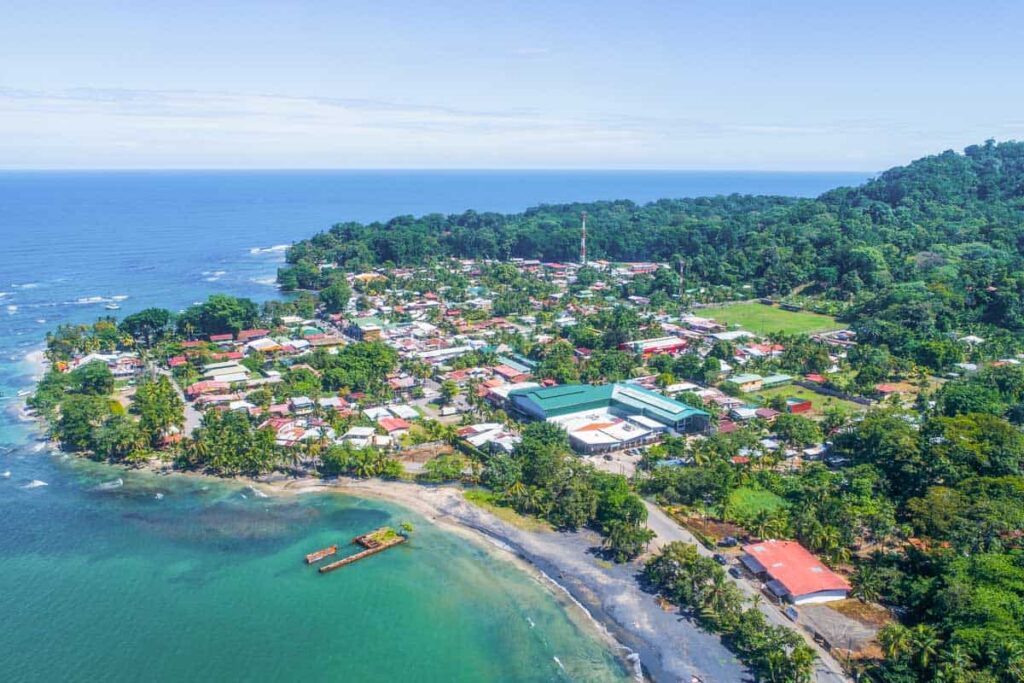
Puerto Viejo is the main hub of the South Caribbean. It has restaurants, bars, grocery stores, pharmacies, a clinic, and a vibrant international expat community. Surf culture defines the town’s identity — Salsa Brava, one of Costa Rica’s most powerful reef breaks, is directly offshore. The main road runs south from town through Cocles, Playa Chiquita, and Punta Uva toward Manzanillo. Most property activity in the region is concentrated along this corridor.
Town-center properties in Puerto Viejo offer strong short-term rental performance. Villa Nectar, a 2-bedroom villa operating as an established vacation rental near the town, illustrates what the top of this market produces: modern construction, private pool, indoor-outdoor courtyard design, and walking distance to the beach and town. Properties like this generate consistent rental income year-round from the surf and eco-tourism visitor base.
Cocles and Playa Chiquita
Heading south from Puerto Viejo, Cocles is the first community. The famous Cocles surf beach — a consistent beach break popular with intermediate surfers — sits here. Properties along this stretch include jungle homes, small guesthouses, and beach-adjacent residential lots. Playa Chiquita, a few minutes further south, is quieter. Large lots with mature trees are common here. The buyer profile shifts toward people seeking space, privacy, and a slower pace than Puerto Viejo’s town energy provides.
Punta Uva and Manzanillo
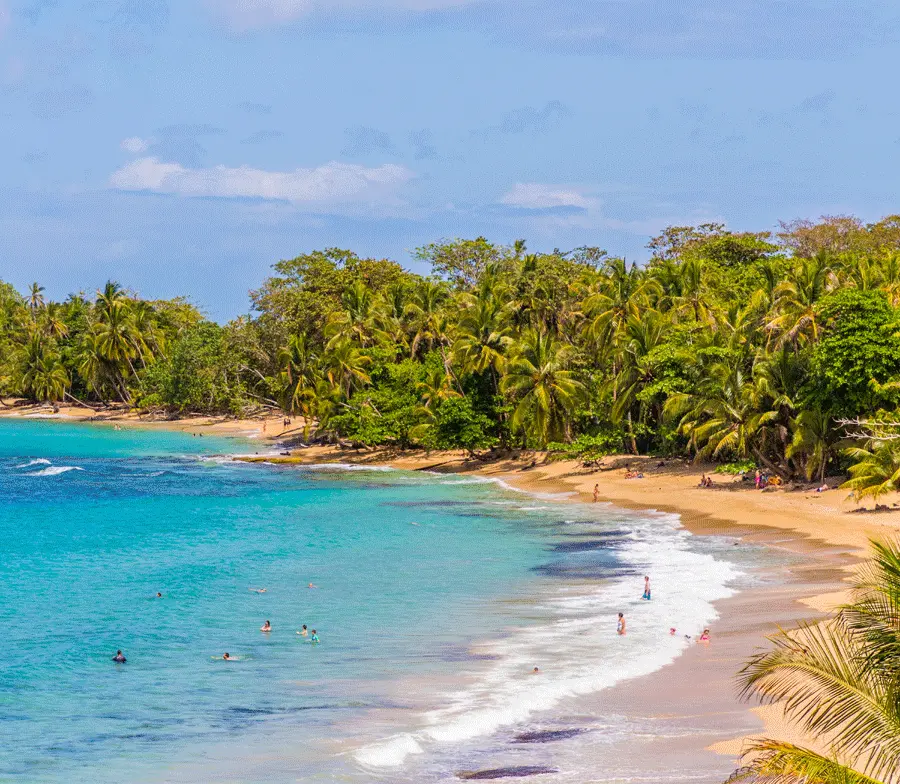
Punta Uva is widely considered the most beautiful beach on the South Caribbean coast. The water is calm, turquoise, and lined with palm trees. Properties here are among the most sought after in the province. A hilltop 3-bedroom estate on 21,000 square meters of titled land in Punta Uva — with an infinity pool, solar power, and wraparound terrace — represents the kind of property that defines the upper tier of this market. Manzanillo, at the end of the road, sits inside the Gandoca-Manzanillo Wildlife Refuge. Development restrictions here are strict. What exists is a small village with a devoted following among buyers who want true end-of-the-road remoteness.
Cahuita
Northwest of Puerto Viejo, Cahuita is a quieter alternative with a distinct character. The town borders Cahuita National Park — one of Costa Rica’s most accessible coral reef snorkeling destinations. Properties range from modest local homes to furnished 4-bedroom houses on large titled lots just minutes from the park entrance. Cahuita attracts buyers who want a genuine Tico-Caribbean town feel rather than the more internationally oriented vibe of Puerto Viejo.
Property Types and Price Ranges
Homes and Residential Properties — $150,000 to $800,000+
Entry-level homes near Puerto Viejo start around $150,000 to $250,000. These are typically modest two-bedroom properties a short walk from the beach. Mid-range homes — three bedrooms, a pool, good construction — run $300,000 to $500,000 on titled land. The upper end of the residential market includes larger estates on significant land parcels. A 3-bed, 2-bath hilltop estate on 21,000 square meters in Punta Uva with an infinity pool and solar power is a benchmark for what $600,000 to $800,000 delivers in this market.
Boutique Hotels and Income Properties — $400,000 to $1.5M+
The South Caribbean has an active boutique hospitality market. Small hotels, guesthouses, and income-producing multi-unit properties are well-represented in the listings. One established beachfront hotel in Puerto Viejo generates over $10,000 per month in revenues with 70% low-season occupancy and 90% to 100% in high season. Cahuita has similar properties — hotels and restaurants directly facing the Caribbean in strategic locations near the national park. For experienced hospitality investors, this segment offers returns that are difficult to replicate in more developed Pacific markets.
Land and Jungle Parcels — From $20,000
Land is where Limon diverges most sharply from the Pacific. Large jungle parcels at affordable prices are still available here. A small lot near Puerto Viejo can start from $20,000. Larger titled parcels of 1 to 10 hectares range from $50,000 to $500,000 depending on location, beach proximity, and infrastructure access. However, buyers must navigate Maritime Zone restrictions carefully. Land within 200 meters of the high-tide line falls under the Maritime Terrestrial Zone law. Only Costa Rican citizens or corporations with majority Costa Rican ownership can hold concession rights in this zone. Titled land outside the Maritime Zone is fee-simple and available to foreigners on the same terms as any other Costa Rican property.
Eco-Retreats and Off-Grid Properties
A category unique to Limon: fully off-grid properties with solar power, rainwater collection, and private water sources set in intact rainforest. Finca Ananda — 31 hectares of pristine jungle with solar power, dual water systems, and Starlink internet — represents what this category produces at the larger end. Smaller off-grid homes and jungle retreats exist at much lower price points. This category appeals specifically to buyers who want a sustainable, low-footprint lifestyle in one of the world’s most biodiverse environments.
Investment Perspective: How This Market Performs
Rental Demand and Seasonality
The South Caribbean attracts a distinct visitor base. Surfers, eco-tourists, yoga practitioners, and adventure travelers form the core demographic. High season runs from roughly December through April and July through August — the Caribbean’s dry windows. However, the market differs from Guanacaste in one important way: Limon has no high-volume direct international airport. Most visitors fly into San Jose and drive two to three hours. That adds friction to the visitor journey. Well-managed properties near Puerto Viejo with good online presence still achieve strong occupancy. Occupancy falls faster in this market than in Guanacaste when management quality is low.
Price Trajectory and Appreciation
Property values in the South Caribbean have risen meaningfully over the past several years. Growing international recognition, improving road infrastructure between San Jose and Puerto Viejo, and rising eco-tourism demand have all driven price increases. Values here remain well below Pacific coastal equivalents for comparable properties. That gap is a feature for buyers who believe the Caribbean’s appreciation cycle is earlier stage than Guanacaste’s. The risk is that the gap reflects real differences in liquidity, infrastructure, and buyer pool depth — not just undiscovered value.
Resale Liquidity
Limon is a thinner market than Guanacaste. Fewer transactions occur. Comparable sales data is limited. Pricing is inconsistently documented across the province. Resale timelines are typically longer. Buyers should plan for a minimum five-year hold to allow adequate time for the right buyer to find the property. Working with an experienced local agent — not a general Costa Rica agent unfamiliar with Caribbean-specific legal nuances — is essential for both acquisition and eventual exit.
Critical Legal Considerations for Buyers
The Maritime Zone — Understand This Before Anything Else
The Maritime Terrestrial Zone law governs the first 200 meters from the high-tide line across all of Costa Rica. In Limon, this is particularly important. The first 50 meters from the water is public land — nobody can own it. The next 150 meters is concession territory, managed by local municipalities. Foreigners cannot hold concession rights directly. A Costa Rican corporation with majority Costa Rican ownership is required. This is not a barrier that makes investment impossible. However, it is a structure that requires proper legal guidance from the start. Many properties marketed to buyers in Limon are on concession land. Know what you are buying before you make an offer.
Indigenous Reserve Boundaries
Parts of the South Caribbean — particularly areas near Manzanillo and inland from the coast — fall within or adjacent to indigenous reserves belonging to the Bribri and Cabécar peoples. Land within these reserves cannot be legally owned by non-indigenous buyers. The Gandoca-Manzanillo Wildlife Refuge also imposes strict development restrictions on land within its boundaries. A full title search and zoning verification by a qualified Costa Rican attorney is essential. This is not optional in Limon. It is the most important step in the due diligence process.
Title Verification and Due Diligence
Fee-simple titled land outside Maritime Zone and indigenous reserve areas is available throughout Limon and is fully accessible to foreign buyers. These properties carry the same legal protections as titled properties anywhere in Costa Rica. Verify title through Costa Rica’s National Registry. Confirm zoning, reserve boundaries, and any environmental restrictions with a local attorney. Closing costs typically run 3% to 4% of the purchase price. Annual property taxes are 0.25% of registered value — among the lowest in the Americas.
Lifestyle: What Living on the Caribbean Coast Actually Looks Like
The Culture and Community
Limon’s culture is unlike anywhere else in Costa Rica. Afro-Caribbean heritage shapes the music, food, language, and social rhythm of the province. Calypso and reggae are the soundtrack. Jerk chicken and rice with beans replace the arroz con pollo of the Pacific. English is widely spoken — a legacy of the Jamaican workers who built the Atlantic railroad in the 19th century. Indigenous Bribri and Cabécar communities maintain distinct cultural traditions in the Talamanca highlands. Living in Limon means engaging genuinely with this cultural richness, not observing it from behind a resort fence.
Nature and Wildlife
Biodiversity in Limon is exceptional. Howler monkeys, white-faced capuchins, sloths, toucans, poison dart frogs, and green sea turtles are part of daily life. Cahuita National Park offers snorkeling over living coral reef directly from the beach. Tortuguero National Park to the north is one of the world’s most important sea turtle nesting sites. The Talamanca Mountain Range, rising behind the coast, hosts cloud forest, jaguar habitat, and some of Costa Rica’s most remote wilderness. Buyers who choose Limon are choosing to live inside this environment — not next to it.
Practical Day-to-Day Life
Puerto Viejo has the services most expats require. Grocery stores, pharmacies, a clinic, banks, and restaurants cover daily needs. The road from San Jose is paved and improving. San Jose’s international airport is 2.5 hours away. Schools in the area include local public schools and small private options. For specialized medical care, San Jose is the practical destination. Internet connectivity has improved significantly — fiber is available in Puerto Viejo and surrounding communities. Many properties now offer Starlink as a backup or primary connection. Power is generally reliable in established communities. Remote properties carry more variability.
More Resources from Coastal Realty
If you are comparing Limon with Pacific coast alternatives, these guides cover the markets we know best.
→ Property For Sale In Guanacaste Costa Rica: Best Picks for 2026
→ Potrero Costa Rica Real Estate: Listings & Area Guide
→ Golfito Costa Rica Real Estate: What Buyers Should Know
→ Puerto Jimenez Costa Rica Real Estate: Quick Answers for Buyers
→ Playa Hermosa Costa Rica Homes for Sale
Frequently Asked Questions
What is the price range for homes for sale in Limon Costa Rica?
Entry-level homes near Puerto Viejo start around $150,000 to $250,000. Mid-range three-bedroom homes with pools on titled land run $300,000 to $500,000. Larger estates and hilltop properties on significant parcels range from $600,000 to $800,000 and above. Boutique hotels and income properties start from $400,000. Land parcels begin as low as $20,000 for small jungle lots away from the coast.
Can foreigners buy homes in Limon Costa Rica?
Yes — with important conditions. Titled fee-simple land outside the Maritime Zone and indigenous reserves is fully available to foreign buyers on the same terms as any Costa Rican property. However, properties within the Maritime Zone (first 200 meters from the water) require concession rights that foreigners cannot hold directly. A Costa Rican corporation with majority local ownership is required for concession properties. A qualified local attorney is essential for navigating this distinction correctly.
How is Limon different from the Pacific coast?
The differences are fundamental. Limon has rain year-round — everything stays lush and green. Guanacaste has 300 dry-season days. Limon has no direct international airport — visitors fly into San Jose and drive 2.5 hours. Pacific markets have the Liberia airport nearby. Limon’s culture is Afro-Caribbean and indigenous — deeply distinct from the Spanish-colonial Pacific coast. Property prices in Limon are lower. Resale liquidity is thinner. The lifestyle is slower, more remote, and more nature-immersed.
What are the best towns for buying property in Limon?
Most foreign buyers focus on the South Caribbean corridor. Puerto Viejo is the main hub — most services, strongest rental market, widest property choice. Cocles and Playa Chiquita suit buyers wanting quieter surroundings with beach access. Punta Uva has the most beautiful beach and some of the most sought-after properties. Cahuita appeals to buyers wanting a smaller, more authentic Caribbean town adjacent to a national park.
What is the Maritime Terrestrial Zone and why does it matter?
The Maritime Terrestrial Zone (ZMT) is Costa Rican law governing the first 200 meters from the high-tide line along all coastlines. The first 50 meters is permanently public. The next 150 meters is concession land — manageable but not fee-simple ownable by foreigners directly. In Limon, a significant proportion of coastal properties are in the ZMT. Buyers must verify legal status before any offer. Fee-simple titled properties outside the ZMT carry standard Costa Rican ownership rights.
The Caribbean Coast Is a Different Costa Rica — And That Is the Point
Homes for sale in Limon Costa Rica attract buyers who want something fundamentally different from the Pacific coast. The lifestyle is rawer. The nature is denser. The culture is richer. The prices are lower. The trade-offs in infrastructure, legal complexity, and resale liquidity are real — and buyers who understand them clearly before committing are the ones who thrive here.
At Coastal Realty, we help buyers evaluate all of Costa Rica’s coastal markets with the same honesty — including the markets where we think the Pacific is the better fit and the ones where the Caribbean is genuinely the right answer. Every buyer’s situation is different. Our job is to help you find the one that actually matches yours.