
Your Dream Is Valid — and More Achievable Than You Think
Costa Rica consistently ranks among the top destinations in the world for foreign retirees and lifestyle buyers, and that didn’t happen by accident. The country offers something genuinely rare: a stable democracy with over 75 years of uninterrupted civilian rule, a constitutional guarantee of equal property rights for foreigners, a functioning public registry system, and a climate and culture that make the dream of waking up near the Pacific feel less like fantasy and more like a reasonable Tuesday.
Why Pre-Retirees and Lifestyle Investors Are Choosing Costa Rica
American and Canadian buyers represent the largest share of foreign property purchasers in Costa Rica, and the Guanacaste region, home to the Gold Coast, has seen sustained demand even during periods when other international markets softened. Buyers cite predictable factors: year-round warm weather, world-class healthcare at a fraction of U.S. costs, a well-established expat community, and a cost of living that stretches retirement savings considerably further than most North American cities.
There’s also a less-discussed reason: Costa Rica’s legal framework for foreign ownership is one of the most straightforward in Latin America. Unlike some neighboring countries where foreigners face restrictions on the type or location of property they can buy, Costa Rica’s constitution extends the same ownership rights to foreign nationals as to its own citizens. That’s not marketing language. It’s a constitutional provision, and it changes the risk calculus entirely.
The Fear Is Real, and So Is the Solution
Understanding the legal framework is one thing. Trusting it from thousands of miles away, in a country you may have visited only once or twice, is another. Most buyers who hesitate aren’t hesitating because Costa Rica isn’t appealing. They’re hesitating because they don’t yet have a framework for navigating the unfamiliar.
After working with hundreds of foreign buyers on the Gold Coast, three fears come up in nearly every early conversation.
The first is fear of legal exposure: buying a property with a clouded title, an encumbrance, or a maritime zone issue that voids the purchase or invites a legal dispute years later. The second is fear of financial exploitation: paying above market value, missing hidden costs, or misreading a contract written in Spanish with no trusted advisor in the room. The third is fear of being abandoned after closing: buying a property in a country where you don’t live full-time and having no reliable eyes on the ground when something goes wrong.
These fears are valid. They’re based on real stories that circulate in expat forums and Facebook groups. But they’re fears about process failures, not about Costa Rica itself. Every one of them is addressable with the right team in place before you make an offer.
Legal exposure is neutralized by independent title verification through the Registro Nacional and a thorough due diligence period, both of which this guide covers in detail. Financial risk is managed through transparent cost disclosure, a licensed local agent with fiduciary accountability, and escrow protection for your funds before closing. The post-purchase gap is closed by a property management partner who treats your asset like their own — not a call center, but a named person who knows your property, your neighbors, and your tenants.
None of this requires you to become a Costa Rican real estate expert. It requires you to work with people who already are.
Can Foreigners Own Property in Costa Rica Without Residency?
Yes, completely. Costa Rica does not require residency, a visa, or any special government approval for a foreigner to purchase and hold titled property. You can buy as an individual under your foreign passport, or through a Costa Rican corporation (Sociedad Anónima, or S.A.), which many buyers prefer for liability protection and estate planning flexibility. Your attorney will help you determine the right ownership structure before closing.
Residency is a separate path entirely, one that some buyers pursue after purchasing, but it has no bearing on your legal right to own property.
How Long Can I Stay in Costa Rica If I Own Property?
Property ownership does not automatically grant extended visa rights. As a tourist, most foreign nationals (including U.S. and Canadian citizens) can stay 90 days per entry without a visa. After 90 days, you exit the country briefly — a quick trip to Nicaragua or Panama is common — and re-enter. Many non-resident owners cycle through this arrangement for years without issue.
If you plan to spend more than 180 days per year in Costa Rica, applying for one of the residency categories makes sense. The Rentista and Pensionado (retiree) programs are the most common routes for buyers in this demographic and carry income threshold requirements that are achievable for most people at or near retirement. Your attorney can outline current requirements during the purchase process.
Yes, Foreigners Can Legally Own Property in Costa Rica — Here’s Exactly How It Works
The Constitutional Guarantee: Same Rights as Costa Rican Nationals
Article 19 of Costa Rica’s constitution establishes that foreign nationals enjoy the same civil rights as citizens. Applied to real property, this means a buyer from Ohio and a buyer from San José have identical legal standing when purchasing titled land. There are no foreign ownership caps, no restricted zones for non-citizens (with the maritime zone exception discussed below), and no required local partner or nominee structure for standard titled properties.
This isn’t common across Latin America. It’s one of the concrete, structural reasons that Costa Rica attracts serious buyers rather than just curious ones.
Fee Simple (Titled) Property: The Gold Standard of Ownership
The vast majority of residential properties bought by foreign buyers are fee simple, also called titled or deeded property. This is the same concept as a warranty deed in the United States: you own the land and any improvements on it outright, your name (or your corporation’s name) is recorded in the public registry, and the title can be searched, verified, and transferred. Banks, courts, and the Costa Rican government recognize it as the strongest form of property right available.
When an experienced agent or attorney says a property has a “clean title,” they mean the fee simple title has been verified against the Registro Nacional with no encumbrances, liens, or competing claims. That verification process is non-negotiable before any offer becomes binding.
Maritime Zone and Concession Property: The Critical Distinction Most Guides Gloss Over
Here is where buying real estate in Costa Rica becomes meaningfully different from buying in a U.S. coastal market, and where skipping independent legal review can cost you everything.
What the 50-Meter Public Zone Means for Beachfront Buyers
Costa Rica’s Maritime Zone Law (Law 6043) designates the first 200 meters inland from the mean high tide line as the Maritime Zone. The first 50 meters of that zone is classified as public domain. No one can own it — not Costa Rican nationals, not corporations, not foreign buyers. Any structure built within that 50-meter band is legally exposed regardless of what any seller tells you.
How Concession Titles Work, and Why Independent Legal Review Is Non-Negotiable
The next 150 meters (meters 50 to 200) can be occupied under a concession, a government-issued right to use the land rather than outright ownership of it. Concessions are granted by municipal governments with ITAN (Instituto Nacional de Vivienda y Urbanismo) oversight, are time-limited, and must be renewed. Critically, foreigners who have not held Costa Rican residency for at least five years cannot hold a concession in their own name. They can hold one through a Costa Rican corporation, provided Costa Rican nationals hold at least 50% of that corporation’s shares.
This structure is not inherently a dealbreaker. Plenty of legitimate and valuable beachfront properties operate under concession. But it requires a specialist attorney reviewing the concession status, renewal history, municipal relationship, and corporate structure before you commit. An agent who glosses over this distinction, or who assures you it’s “fine” without documentation, is a red flag.
Understanding Property Types: Homes, Condos, Beachfront Lots, and Vacation Rental-Ready Properties
Foreign buyers on the Gold Coast typically encounter four property categories.
Single-family homes (casas) are free-standing titled properties, often inside gated communities with shared amenities, and carry HOA obligations. Condominiums are governed by Costa Rica’s Condominium Law (Law 7933), which creates a horizontal property regime similar to U.S. condo structures, with each unit carrying an individual title and shared common areas. Beachfront lots are either titled (outside the maritime zone) or concession-based, and the distinction between the two is fundamental. Vacation rental-ready properties aren’t a legal category but a market description: properties already permitted, furnished, and listed on rental platforms. They command a premium but reduce your setup timeline significantly.
The Registro Nacional: Costa Rica’s Public Title Registry
The Registro Nacional is Costa Rica’s centralized public database for all titled real property. Every fee simple transaction is recorded there. Anyone — buyer, attorney, or curious neighbor — can search a property’s folio real number and pull the full title history: ownership chain, recorded liens, mortgages, easements, and legal annotations.
This is your first line of defense. A title search through the Registro Nacional isn’t optional or advisory. It’s the foundational step that tells you whether what you’re being offered actually exists as described. Your attorney runs this search, and you should receive a written title opinion before your due diligence period closes.
The Foreign Buyer’s Property Ownership Readiness Checklist
Use this checklist before you submit any offer or pay any deposit. If you can’t answer yes to every item, you need more information or a stronger team in place first.
- Has an independent attorney (not the seller’s attorney) confirmed the property has a clean title in the Registro Nacional?
- Is the property fee simple titled, or is it concession-based? If it’s a concession, have you reviewed the concession terms, renewal date, and corporate ownership structure?
- Does the property sit entirely outside the 50-meter public maritime zone? Has this been verified by survey, not just by the seller’s representation?
- Has a Plano Catastro (official cadastral survey) been compared against the registered title to confirm boundaries match?
- Are there any recorded liens, mortgages, or legal annotations on the title?
- Have municipal permits been verified for any structures on the property?
- Has SETENA (environmental permitting authority) clearance been confirmed for properties near protected zones or wetlands?
- Do you have a written breakdown of all closing costs, including transfer tax, notary fees, stamp duties, and any agent commissions?
- Is an escrow account with a reputable escrow company or law firm holding your deposit funds?
- Do you have a licensed, local real estate agent representing your interests, separate from the listing agent?
The Step-by-Step Process for Buying Real Estate in Costa Rica
The purchase process in Costa Rica is logical and well-structured once you understand each stage. What makes it different from buying in the U.S. or Canada isn’t complexity. It’s the role of certain professionals, the sequence of certain checks, and the specific documents that carry legal weight.
Step 1: Letter of Intent and Offer
Most transactions begin with a Letter of Intent (LOI) or a formal Offer to Purchase. This document sets the agreed price, the earnest money deposit amount (typically 5 to 10% of the purchase price), the due diligence period length (usually 30 to 60 days), and the target closing date. It’s signed by both parties and triggers the buyer’s deposit into escrow.
The LOI is not the final contract — that’s the Escritura (deed) — but it creates enforceable obligations. Have your attorney review it before you sign.
Step 2: The Due Diligence Period
This is the stage where deals either get confirmed or unwound. Use every day of it.
Title Search Through the Registro Nacional
Your attorney pulls the full title history from the Registro Nacional and delivers a written opinion. You’re looking for a clean chain of ownership, no recorded liens or mortgages, no annotations indicating legal disputes, and confirmation that the seller has the legal authority to sell.
Environmental Permits and SETENA Checks
SETENA (Secretaría Técnica Nacional Ambiental) governs environmental permitting for development in Costa Rica. If the property was developed after 1995, it should have SETENA approval on file. Properties near beaches, rivers, wetlands, or protected biological corridors require additional scrutiny. An environmental flag doesn’t always kill a deal, but discovering one after closing does.
Municipal Permit Verification and Zoning Confirmation
Every structure — house, fence, pool, guest casita — should have a corresponding municipal building permit. Your attorney requests these from the relevant municipality. Unpermitted construction transfers with the property, meaning its problems become yours. Zoning verification confirms the property’s legal use aligns with how you intend to use it, particularly if you plan to operate a vacation rental.
Plano Catastro: Why the Survey Review Matters
The Plano Catastro is the official cadastral survey filed with the Registro Nacional. It defines the property’s boundaries, measurements, and shape. Discrepancies between the survey on file and the physical boundaries on the ground are more common than you’d expect, particularly on older properties. If the registered survey shows 1,200 square meters but the physical lot is 900, you need to know that before you close, not after.
Step 3: Escrow — How Your Funds Are Protected Before Closing
Costa Rica has a functioning escrow industry. Reputable escrow companies and law firms hold buyer deposits in segregated trust accounts until closing conditions are met. Your deposit is not released to the seller until the Escritura is signed and registered. Insist on escrow for any deposit you make. Walking away from a deal is far less painful than trying to recover funds from a private account.
Step 4: The Notary Public (Notario)
In Costa Rica, a Notario is a licensed attorney with specific state-delegated authority to authenticate legal documents and record public instruments. The Notario who prepares your Escritura is not a neutral document stamper. They are a legal professional who certifies the transaction’s validity and submits it for registration. Typically, the buyer’s attorney acts as the Notario, which is why selecting an independent, experienced real estate attorney matters so much.
Step 5: Signing the Escritura
The Escritura Pública is the public deed that transfers title from seller to buyer. It’s drafted by the Notario, reviewed by both parties’ attorneys, and signed in person (or via power of attorney if you’re abroad). Once signed, it goes to the Registro Nacional for registration. The property is legally yours at the moment of signing, but registration — which creates the public record — follows within a few weeks.
Step 6: Registration and What Happens After You Sign
After signing, the Notario submits the Escritura to the Registro Nacional. Registration typically takes two to four weeks. During this window, the transaction is pending registration but legally valid. Once registered, you receive your new folio real number confirming recorded ownership. Your attorney should provide a copy of the registered title as final confirmation.
Do I Need a Lawyer to Buy Property in Costa Rica?
Yes. This isn’t a precautionary recommendation — it reflects how the system works. The Escritura must be prepared and submitted by a licensed Costa Rican Notario/attorney. Beyond that structural requirement, an independent attorney reviewing title, permits, concession status, and contracts before you commit is the single most important risk management step you can take. Budget for it. The cost is modest relative to any property purchase, and the protection is substantial.
How Long Does the Purchase Process Take?
From accepted offer to registered title, the typical timeline runs 60 to 90 days. Due diligence accounts for 30 to 60 days of that window. New construction or developer projects follow a different timeline tied to construction milestones. Transactions involving concession properties or complex corporate structures can run longer due to additional legal review layers.
The True Costs of Buying Property in Costa Rica: No Surprises
Buyers often budget for the purchase price and forget everything else. The total acquisition cost on a Costa Rica property runs roughly 3.5 to 5% above the purchase price in closing costs and fees. Here’s what that actually breaks down to.
Breaking Down Closing Costs: Transfer Tax, Notary Fees, and Stamp Duties
Transfer Tax (Approximately 1.5% of Registered Value)
Costa Rica levies a transfer tax on every titled property sale. The rate is approximately 1.5% of the registered value (the value declared in the Escritura), not necessarily the full purchase price. By custom, the buyer and seller often split closing costs, but this is negotiable and should be specified in your offer. Confirm the arrangement in writing before the LOI is signed.
Notary and Legal Fees (Approximately 1 to 2%)
Notary fees in Costa Rica are regulated by the Colegio de Abogados (Bar Association) and are calculated as a percentage of the transaction value. Combined attorney and notary fees typically run 1 to 2% of the purchase price. If your attorney is also acting as Notario, these fees may be combined. Get a written fee agreement before engagement.
Stamp Duties and Registration Fees
Several smaller fees apply at closing: fiscal stamps, the National Archive stamp, the Registry of Costa Rica fee, and the municipal transfer tax. Individually they’re modest, but collectively they add another 0.5 to 0.75% to your closing cost total. Your attorney’s closing cost statement should itemize all of these. No line item should be a surprise.
What Are the Hidden Costs When Buying Property in Costa Rica?
The word “hidden” usually means “nobody explained this before closing.” Here’s what catches buyers off guard most often.
Currency conversion fees can add up quickly if you’re wiring U.S. dollars from a foreign bank. Use a currency broker or confirm your bank’s international wire costs in advance. Many communities charge a one-time HOA transfer or setup fee when a property changes hands, separate from monthly dues. If you’re buying for vacation rental, a fully furnished property “ready for guests” is rarely as complete as the listing suggests, so budget for outfitting gaps. Finally, bringing a container of household goods to Costa Rica triggers import duties, which surprises many buyers who relocate after purchasing.
Ongoing Ownership Costs: Property Tax, HOA Dues, and CAJA Obligations
Costa Rica’s Annual Property Tax
Costa Rica’s annual property tax (impuesto sobre bienes inmuebles) is 0.25% of the registered property value, one of the lowest in the hemisphere. You pay this to the municipality where the property is located, and it’s due quarterly or annually depending on the municipality.
CAJA: What Rental Income Triggers for Owners
If you earn rental income in Costa Rica, you become subject to CAJA (Caja de Seguro Social) obligations. For property owners operating a rental business, this means registering as a business, filing quarterly income tax returns through the Ministerio de Hacienda, and potentially contributing to CAJA based on declared income. The specifics depend on your ownership structure and the scale of your rental activity. An accountant familiar with foreign-owned rental properties is worth the annual fee.
Utilities, Maintenance Reserves, and the Real Cost of Absentee Ownership
Utilities in Costa Rica — electricity, water, internet — run roughly $150 to $300 per month for a mid-size home depending on air conditioning usage. HOA dues in gated communities on the Gold Coast range from $200 to $600 per month depending on amenities. Maintenance reserves — the fund you build for repairs, landscaping, pest control, and appliance replacement — should account for 1 to 1.5% of property value annually. If you’re not on the ground to manage vendors, a property manager handles this for a monthly fee, typically 8 to 12% of rental income or a flat monthly retainer.
Can You Live on $3,000 a Month in Costa Rica?
The honest answer: yes, but the quality of that life depends heavily on location and expectations. A couple living modestly in a smaller Guanacaste town, with a paid-off property, can live comfortably on $2,500 to $3,000 per month covering food, transportation, utilities, health insurance, and entertainment. Healthcare costs are a genuine advantage: CAJA is accessible to residents, and private hospitals in Liberia and San José offer high-quality care at a fraction of U.S. costs.
The Gold Coast adds a lifestyle premium. Dining out regularly at nice restaurants, maintaining a car, and traveling regionally will push a couple’s monthly spend to $3,500 to $5,000. That’s still materially less than most U.S. coastal cities — and it comes with year-round sun and a 20-minute drive to world-class beaches.
Due Diligence and Title Verification: How to Protect Your Investment
Why Title Issues in Costa Rica Require a Different Kind of Scrutiny
Title problems in the U.S. are usually financial — a lien a seller forgot to disclose, or a clerical error in the chain. In Costa Rica, the risk profile is broader. Boundary disputes stemming from outdated cadastral surveys, properties whose improvements were built without permits, maritime zone encroachments on properties marketed as beachfront, and informal occupancy claims (known as posesión décima, or adverse possession) all require a different kind of scrutiny than a standard U.S. title search provides.
The good news is that all of these are discoverable. The Registro Nacional, SETENA records, municipal permit files, and a physical site survey collectively paint a complete picture of a property’s legal standing. The issue isn’t that Costa Rica’s system lacks transparency. It’s that buyers who skip any one of these layers can miss something the others would have caught.
The Independent Title Search: What It Covers and Why “Independent” Is the Key Word
Your attorney searches the Registro Nacional’s folio real for the property and delivers a written title opinion covering the current registered owner, the full chain of prior ownership, all recorded liens and mortgages, any legal annotations or court orders affecting the property, and confirmation that the registered boundaries and survey match. “Independent” means your attorney — not the seller’s, not the developer’s, and not an attorney recommended by the listing agent. The independence is structural: their duty runs to you alone.
Environmental and Municipal Checks: The Layer Most Buyers Skip
SETENA clearance and municipal permit verification aren’t glamorous, but they’re where costly surprises live. An unpermitted addition or an environmental flag from SETENA can’t simply be ignored once you own the property; they follow the title. Municipal permit reviews involve contacting the relevant local government office (cantón) and requesting the expediente (permit file) for the property. It’s time-consuming but straightforward with a local attorney who knows the process.
What Is the Resale Market Like for Costa Rica Property?
The Gold Coast resale market is active and relatively liquid compared to other parts of Central America, but it rewards patience over urgency. Well-priced, well-maintained properties in established communities — particularly in the Playas del Coco corridor and Flamingo area — typically sell within six to eighteen months. Properties priced at or above market, or those with title complications, can sit considerably longer.
Appreciation on the Gold Coast has been steady rather than spectacular over the past decade. Buyers who purchased in established communities in the mid-2010s have generally seen meaningful appreciation on titled properties in desirable corridors, with beachfront and ocean-view lots tending toward the higher end. If you’re buying primarily for lifestyle with investment as a secondary consideration, that trajectory supports the math. If you’re expecting rapid appreciation comparable to a peak U.S. market cycle, recalibrate those expectations.
How to Assemble the Right Professional Team Before You Make an Offer
The professionals you engage before making an offer determine the quality of information you have when it matters most. This isn’t a team you assemble after things go sideways. It’s the team that prevents things from going sideways.
Your Real Estate Attorney: Independent Advocate First
Your attorney is your most important hire. They should specialize in real estate transactions with foreign buyers, have demonstrable familiarity with the Gold Coast or your target region, and have no financial relationship with the seller or listing agent. Expect to pay a retainer and receive a clear engagement letter outlining their scope before any documents are reviewed.
A Licensed, Local Real Estate Agent: Your Market Intelligence
Costa Rica does not yet have mandatory licensing for all real estate agents, though professional designations and membership in CCCBR (Cámara Costarricense de Corredores de Bienes Raíces) signal professional accountability. Beyond credentials, local knowledge is what separates a useful agent from a liability: neighborhood-level pricing context, development pipeline awareness, HOA reputation intelligence, and a network of vetted professionals. A local agent who operates in a specific corridor every day brings market intelligence that no online listing portal can replicate.
Inspector and Surveyor: The Boots-on-the-Ground Verification Layer
A physical inspection by a licensed building inspector — checking structural integrity, electrical systems, plumbing, roof condition, and pest (particularly termite) evidence — is standard practice and should be non-negotiable. A licensed surveyor compares the physical property boundaries against the Plano Catastro and flags any discrepancies before closing. These two professionals are your ground-truth layer: they verify what the documents say against what actually exists.
Common Risks and How to Navigate Them Confidently
Most risk in Costa Rica real estate isn’t the result of bad luck. It’s the result of skipped steps, misplaced trust, and the very human tendency to want to believe a good story. The situations that cost foreign buyers the most money share a common thread: they exploited a gap in the buyer’s due diligence process that a thorough team would have closed.
How to Avoid Real Estate Scams When Buying Property in Costa Rica From Abroad
The most effective protection isn’t skepticism — it’s process. Buyers who follow the due diligence steps covered earlier in this guide are largely insulated from the scenarios below. What follows isn’t meant to frighten you. It’s meant to show you exactly where the gaps are so you can seal them before they matter.
Maritime Zone Misrepresentation: The Most Costly Mistake in Beachfront Buying
This category generates the most heartbreaking stories in expat forums, and the mechanics are almost always the same. A buyer sees a beautiful property steps from the ocean. The seller represents it as titled. The price feels right. The buyer skips independent legal review, or uses the seller’s recommended attorney, and closes. Years later — triggered by a neighbor dispute, a permit application, or a title search for resale — it emerges that the structure sits inside the 50-meter public zone, or that the concession was never properly renewed, or that the corporate structure required for foreign concession ownership was never correctly set up.
None of this is recoverable after closing. The solution is straightforward: verify maritime zone status through an independent attorney and a licensed surveyor before your due diligence period closes. Not after. Not during escrow. Before.
Unclear or Fragmented Title Chains
A fragmented title chain typically involves one or more transfers that weren’t properly recorded, an estate that was never formally settled, or a property that passed informally between family members over decades with no Registro Nacional updates. The current seller may be acting in complete good faith and still not hold clean legal authority to sell.
Your attorney’s title opinion will surface these issues. What you’re looking for in the report: a clear, unbroken chain from each prior owner to the next, with each transfer recorded in the Registro Nacional. Any gap — a transfer from a deceased owner with no probate record, a corporate shareholder dispute, a recorded annotation from a creditor — requires resolution before closing. A competent attorney can often facilitate title curative work, but it takes time and should be reflected in your due diligence timeline.
Unlicensed Agents and Unverified Listings
Because Costa Rica does not yet require mandatory licensing for all real estate agents, anyone with a phone and a social media account can list properties and call themselves a realtor. This is a genuine structural gap in the market, and it disproportionately affects buyers working entirely from abroad.
The solution is straightforward. Look for agents who hold membership in CCCBR or carry NAR membership through the international affiliate network. More telling than credentials, though, is track record: verifiable transaction history in your target corridor, references from past foreign buyers, and a clear explanation of how their fee is structured and who pays it. An agent who pressures you to skip legal review, discourages an independent attorney, or can’t answer specific questions about the title or concession status of a listing is not the right agent.
Myth-Busting: The Fears That Are Overstated (and the Ones That Aren’t)
Some fears circulating in online forums deserve to be taken seriously. Others have grown larger than the actual risk warrants.
Overstated: the idea that the Costa Rican government can seize your property without compensation. Expropriation is constitutionally permitted only for public use with fair market compensation, the same standard as eminent domain in the U.S. It is exceptionally rare and has never been applied selectively against foreign buyers.
Also overstated: the concern that foreigners are routinely overcharged relative to local buyers. The Registro Nacional records public transaction prices, and an agent with local market intelligence can tell you whether a listing price is reasonable. Overpaying is a risk in any market. It’s not a structural feature of buying in Costa Rica.
Not overstated: the risk of buying a concession property without fully understanding the renewal process and corporate structure requirements. This is a real, recurring issue. Also not overstated: the risk of relying on an attorney with a conflict of interest. The cost of independent legal representation is trivial compared to the exposure of using the seller’s preferred counsel.
The Boutique vs. Transactional Broker Model: Why Relationship Depth Is a Risk Management Tool
A transactional broker processes deals. They know the paperwork, they know the general process, and they move on to the next listing after closing. There’s nothing dishonest about that model, but it has a specific limitation for foreign buyers: when something unusual surfaces during due diligence, you need someone who knows the local landscape well enough to read it accurately.
A boutique, regionally specialized firm knows which communities have HOA governance issues, which developers have a track record of delivering on pre-sale promises, which areas are attracting infrastructure investment, and which listings have been on the market for 18 months because of an undisclosed title problem. That knowledge is not available on any listing portal. It lives in relationships built over years of working the same market.
That depth of local knowledge also protects you post-purchase — when a permit question comes up, when a tenant dispute needs navigating, or when you need a trusted vendor for an emergency repair at a property you’re not physically present to manage. Risk management doesn’t end at closing. It requires a partner who’s still engaged afterward.
The Best Locations for Foreign Buyers: Why the Gold Coast Stands Apart
What Makes the Gold Coast a Considered Choice, Not Just a Popular One
The Guanacaste Gold Coast — running roughly from the Papagayo Peninsula south through Flamingo and toward Tamarindo — is not simply Costa Rica’s most popular foreign buyer destination. It’s popular for reasons that hold up under scrutiny: direct international flight access through Daniel Oduber International Airport (LIR) in Liberia, dry season weather that runs from November through April, established expat and medical infrastructure, and a range of communities that accommodate different lifestyle profiles and price points.
The other major foreign buyer region, the Central Pacific coast around Manuel Antonio, is wetter, more remote from international flights, and less commercially developed at the community level. The South Zone has appeal for nature-focused buyers but lacks the infrastructure that most pre-retirees and lifestyle investors require. The Gold Coast offers a specific combination: accessible, developed, and still with room for appreciation.
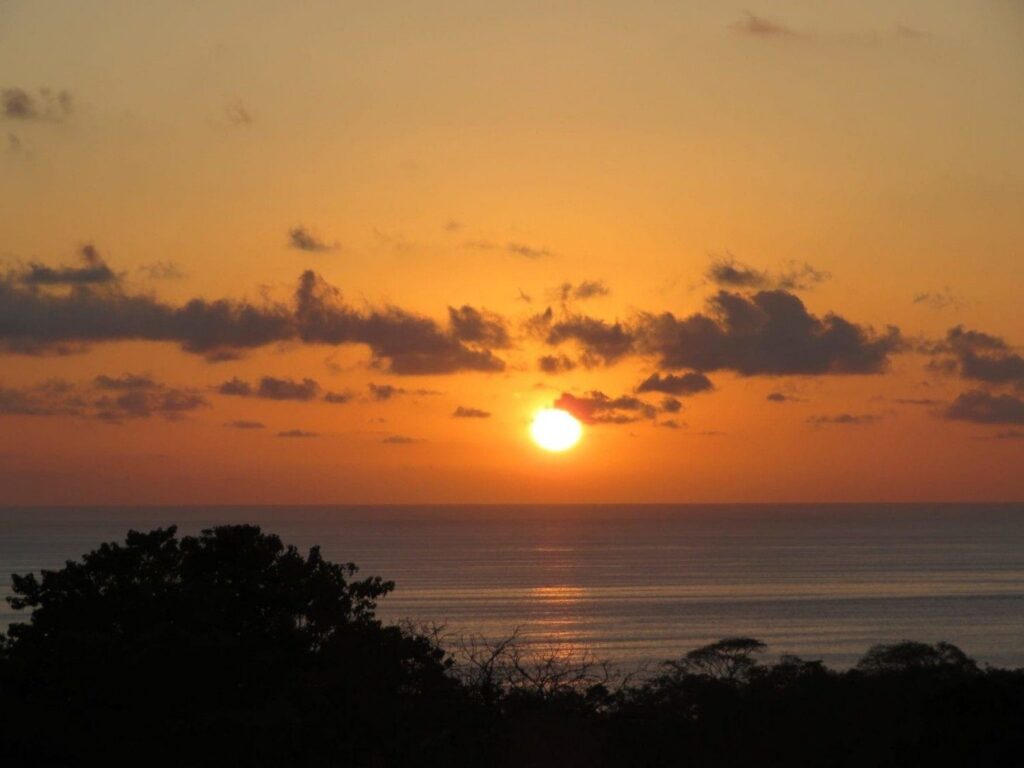
Playa del Coco and the Playas del Coco Corridor: Infrastructure, Community, and Accessibility
Playa del Coco is the Gold Coast’s most accessible town for new arrivals. It’s 35 minutes from Liberia Airport, has a functioning commercial center with grocery stores, pharmacies, hospitals, and a well-established expat social network. The surrounding corridor — including Ocotal, Hermosa, and the inland residential communities — offers a range of price points from entry-level condos to ocean-view estates.
For buyers who want proximity to services, a ready-made community, and strong long-term rental demand, this corridor consistently performs. It also has the deepest inventory of established resale properties, which means more comparables, more price transparency, and shorter timelines from search to offer.
The Papagayo Peninsula: Luxury, Privacy, and Long-Term Value
The Papagayo Peninsula is in a different category from the rest of the Gold Coast, by design. Its master-planned resort development model, anchored by major hotel brands, has created a luxury ecosystem with security, marina access, and high-end residential communities that attract buyers with budgets typically starting in the higher range. Entry-level here is not entry-level for the broader market.
What the Peninsula offers that no other Gold Coast location replicates: marina proximity, a consistently maintained physical environment, and a level of privacy and community management that appeals to buyers who want as little friction as possible. Resale values here have been among the most resilient on the Gold Coast, partly because supply is structurally constrained by the master plan.
Flamingo Beach: Established Expat Community with Boutique Appeal
Flamingo has the feel of a town that’s been discovered but not overrun — a balance that longtime residents protect fiercely. The marina development here has added infrastructure that makes Flamingo increasingly attractive to buyers who want walkability, a social community, and access to ocean activities without the scale of a larger resort corridor.
Properties in Flamingo and the immediate surrounding area — Potrero, Brasilito, Sugar Beach — skew toward mid-range and upper-mid-range pricing. The buyer profile trends older and community-oriented, which makes it one of the Gold Coast’s strongest environments for retirees seeking genuine integration rather than resort isolation.
The Tamarindo Corridor: Lifestyle Diversity and Rental Market Depth
Tamarindo attracts the widest demographic range of any Gold Coast market: surfers and digital nomads at one end, retirees and families at the other, with a restaurant and nightlife scene that makes it viable for year-round living in a way that more resort-oriented communities aren’t. The trade-off is density and energy — Tamarindo proper moves fast, and the atmosphere can feel more like a beach town than a retirement enclave.
The surrounding corridor — Langosta, Playa Grande, Avellanas — offers quieter residential alternatives while keeping Tamarindo’s amenities within reach. Vacation rental yields in this corridor are consistently strong because the demand base is so diverse: surf travelers in the shoulder seasons fill gaps that would otherwise lower occupancy for a purely retiree-facing market.
Matching Your Lifestyle Profile to the Right Gold Coast Community
The Gold Coast generally has lower crime rates than San José and other urban centers, and established gated communities add another layer of security. The relevant question for retirees isn’t which area is safest in absolute terms — all of the communities above meet a reasonable safety threshold. It’s which community matches your specific lifestyle profile.
Start with your non-negotiables. If airport proximity matters — for regular return trips or for visiting family — prioritize the Coco corridor. If you want a walkable town center with a social scene, Flamingo or Tamarindo. If you want complete privacy and world-class amenities with minimal maintenance burden, Papagayo. If you want the best combination of rental yield and lifestyle variety, the Tamarindo corridor.
Retirees seeking quiet integration tend to land in Flamingo, Potrero, or the residential communities behind Coco — places with established neighbors, a slower pace, and easy access to services without being in the middle of resort traffic. Remote workers prioritizing connectivity need to verify fiber internet availability by property address before committing, as coverage is uneven across the coast. Investors prioritizing rental yield should focus on Tamarindo corridor and Coco corridor properties with proven occupancy histories, proximity to the beach, and HOA environments that permit short-term rentals without restriction.
Financing Options for Foreign Buyers: An Honest Assessment
Why Traditional Bank Financing Is Limited, and What That Means for Your Strategy
Costa Rican banks do lend to foreign buyers, but the conditions are demanding: large down payments (typically 30 to 50%), high local interest rates, stringent income documentation requirements, and lengthy approval processes. Most foreign buyers who attempt local bank financing find the process more friction than it’s worth relative to alternatives. This is not a barrier — it’s a constraint that shapes your strategy.
The practical implication: most foreign buyers on the Gold Coast purchase with cash, home-country equity, or seller/developer financing. If you need bank financing to make the deal work, budget significantly more time and engage a local mortgage broker before you fall in love with a specific property.
Seller Financing: When and How It Works in Costa Rica
Seller financing is more common here than in most U.S. markets. A seller who owns a property outright can essentially act as the bank: you pay a down payment, and the remaining balance is structured as a loan secured by a first lien on the property recorded in the Registro Nacional. Terms vary widely, typically 5 to 10 years with a balloon payment at term end.
Seller financing is more accessible on properties that have been on the market for some time, on retirement sales where the seller doesn’t need full liquidity immediately, and in slower market segments. It’s not universally available, but it’s worth exploring before assuming cash is the only path.
Developer Financing: Opportunities in New Construction and Pre-Sale Projects
Several Gold Coast developers offer in-house financing on new construction and pre-sale (preventa) projects. The structure typically involves a staged payment schedule tied to construction milestones — a percentage at reservation, phases at foundation, framing, and completion — which spreads your capital outlay over 12 to 24 months rather than requiring full payment at signing.
Pre-sale pricing is generally below projected completion value, which partially compensates for the construction risk you’re absorbing. Developer financing terms vary by project. Vet the developer’s track record carefully before committing: completed prior projects, permit history, and references from past buyers.
Using Home-Country Equity: Leveraging What You Already Own
For buyers with significant equity in a primary residence, a home equity line of credit (HELOC) or cash-out refinance in the U.S. or Canada is often the most practical and cost-effective financing path. You access capital at home-country rates — typically far lower than local Costa Rican lending — and arrive in the market as a cash buyer, which simplifies negotiations and closing.
The risk to manage here is exposure on both ends. If your home-country property value declines while you’re carrying the HELOC, the math changes. Work through this scenario with a financial advisor who understands cross-border asset allocation before drawing on home equity for an international purchase.
Life After Closing: The Ownership Journey Most Guides Never Tell You About
Why What Happens After Closing Determines Whether You Truly Thrive
The purchase process gets 90% of the attention in most real estate guides, but for foreign owners — particularly absentee ones — the post-closing period is where the experience is either made or broken. A beautifully purchased property with no management infrastructure becomes a source of stress, not freedom. A well-supported property, in the right rental market, with the right management partner, generates income, maintains its condition, and delivers the lifestyle you moved toward.
This is the central insight that most guides miss entirely: buying real estate in Costa Rica is the entry point, not the destination. The buyers who truly thrive are those who think beyond closing from the very beginning.
Property Management for Absentee Owners: What “Hands-Off” Actually Requires
“Hands-off” is not a passive state. It’s an active, well-structured arrangement that requires the right partner, clear expectations, and consistent communication. Absentee ownership without that infrastructure can look like this: vendors who don’t show up, repair problems that compound, rental guests with no point of contact, and an HOA that stops informing you of governance decisions because no one is responding.
The Day-to-Day Reality of Managing a Property From Abroad
Even a vacant property requires active management: utility payments, municipal tax filings, security checks, landscaping, and periodic maintenance. A rental property adds a layer of guest coordination, cleaning turnover, platform management, income reporting, and vendor dispatch. From a timezone away, without local relationships, this is not manageable on your own.
What a Full-Service Property Management Relationship Should Include
A full-service management engagement covers guest coordination and check-in for vacation rentals, regular property inspections with written reports and photos, vendor management for maintenance and repairs, utility and HOA payment processing on your behalf, income collection and monthly financial reporting, and CAJA and tax filing support coordinated with your local accountant.
Management fees on the Gold Coast typically run 8 to 12% of rental income for short-term rental properties, or a flat monthly retainer for non-income properties. The fee is not the main variable — the relationship and the responsiveness are.
Vacation Rental Licensing and Income Optimization
How the Vacation Rental Licensing Process Works in Costa Rica
Operating a vacation rental in Costa Rica requires registration with the Instituto Costarricense de Turismo (ICT), Costa Rica’s tourism authority. The process involves a property inspection confirming compliance with safety, hygiene, and habitability standards, submission of documentation including your property title and municipal permits, and payment of a registration fee. An ICT-registered rental is legally compliant and eligible for promotion through official tourism channels.
This is not optional. Operating an unregistered rental exposes you to fines and, more practically, undermines your ability to register with CAJA and file rental income correctly.
Pricing Strategy, Platform Management, and Maximizing Occupancy
Gold Coast vacation rental demand peaks from December through April (dry season) and drops in the September to October low season. A dynamic pricing strategy — adjusting nightly rates based on demand curves, competitor inventory, and local event calendars — can meaningfully improve annual revenue over a static pricing model.
Effective platform presence requires professional photography, compelling listing copy, rapid response to inquiries, and active review management. Owners who treat their listing as a set-and-forget asset consistently underperform relative to those whose listings are actively managed and updated. Your property manager should own this responsibility if you’re not managing it yourself.
CAJA Compliance for Rental Income: Staying Legal From Day One
Once your rental generates income, you are operating a business in Costa Rica. That means quarterly income tax filings with the Ministerio de Hacienda and CAJA registration. Engage a local accountant familiar with foreign-owned rental operations before your first guest checks in, not after your first tax notice arrives.
HOA and COA Management: Navigating Community Governance as a Foreign Owner
What HOA and COA Structures Look Like in Costa Rican Communities
Costa Rican condominiums and gated communities operate under horizontal property regimes governed by Law 7933. Each community has a Condominium Association (COA) or Homeowners Association (HOA) with an elected board, a fee structure, and a set of community rules (reglamento) that govern everything from short-term rental permissions to architectural modifications. These structures function similarly to U.S. HOAs but operate entirely in Spanish, which creates a participation gap for many foreign owners.
Common HOA Pitfalls for Absentee Owners and How to Avoid Them
The most common problems: missing board meetings and governance votes, accumulating fee arrears because payment instructions weren’t clearly communicated, being unaware of rule changes that affect rental operations, and allowing deferred maintenance on common areas to pass without objection. All of these are manageable with a local representative — either your property manager or a designated proxy — who attends meetings, votes on your behalf, and keeps you informed of material decisions.
Review the reglamento before you buy, particularly the provisions on short-term rentals. Some communities prohibit them entirely, and discovering that after closing is an expensive lesson.
The Long-Term Local Partner Model: What It Means to Have a First-Name-Basis Relationship With Your Real Estate Firm
The firms that serve foreign owners well over the long term are not the ones who close the deal quickly and move on. They’re the ones whose staff knows your property address from memory, who calls you when something unusual appears during an inspection, who tells you when a neighboring lot comes available before it hits the market, and who has the vendor relationships to solve a problem at 9 p.m. before a guest arrives at 10.
That relationship isn’t a bonus feature. For an absentee foreign owner, it’s the infrastructure that makes everything else work.
Why Your Choice of Real Estate Partner Matters More Than You Think
The Difference Between a Transaction Facilitator and a Lifecycle Partner
A transaction facilitator gets you to closing. A lifecycle partner is still engaged five years later — when you want to refinance, when your rental market shifts, when you’re ready to sell, or when an HOA dispute needs navigating. The difference isn’t just service quality. It’s whether the firm’s business model depends on repeat relationships or transaction volume.
Boutique, regionally focused firms have a structural incentive to serve you well over time. Their reputation in a small, interconnected expat community is their most valuable asset. Large transactional operations can absorb a dissatisfied client and move on to the next. On the Gold Coast, where the foreign buyer community is tight-knit and word travels fast, that accountability structure matters.
What to Look for in a Gold Coast Real Estate Specialist
The characteristics that distinguish a genuine Gold Coast specialist from a generalist include a physical presence in the specific corridor where you’re buying, a demonstrated transaction history with foreign buyers in your target area with references available, an in-house or deeply integrated property management operation, transparent disclosure of how their commission is structured, and a network of vetted attorneys, inspectors, and surveyors they actively recommend and trust with their own reputation.
Questions to Ask Any Agent Before You Sign Anything
Ask these directly. The answers — and the comfort level with which they’re delivered — tell you more than any website bio.
- How many properties have you closed in this specific corridor in the past two years?
- Can you provide references from foreign buyers you’ve represented on the buyer’s side?
- Do you offer property management services after closing, and who handles the day-to-day relationship?
- How do you handle a situation where a due diligence issue surfaces that could kill the deal?
- What’s your process for disclosing dual agency if you represent both buyer and seller?
- Who is my specific point of contact throughout the transaction and after closing?
Key Takeaways: What Every Foreign Buyer on the Gold Coast Should Know
- Costa Rica’s constitution gives foreign nationals equal property rights to citizens. Titled (fee simple) property is as secure as ownership gets in Latin America.
- The maritime zone distinction is the most important legal concept in beachfront buying. Verify concession status and the 50-meter boundary independently before any offer becomes binding.
- Your independent attorney is your most important hire. Their fee is modest. Their protection is substantial.
- Total acquisition cost runs 3.5 to 5% above purchase price in closing costs. Budget for it before you calculate what you can spend.
- The Gold Coast offers four distinct community profiles — Coco corridor, Papagayo, Flamingo, and Tamarindo — each suited to a different lifestyle and investment goal. Match your purchase to your actual priorities, not the most popular option.
- Most foreign buyers on the Gold Coast pay cash or use home-country equity. Local bank financing is possible but demanding.
- Closing is the beginning, not the end. Vacation rental licensing, CAJA compliance, HOA participation, and property management are all active ongoing responsibilities that require local support.
- The agent who helps you buy is ideally the same team that manages your property afterward. Continuity of relationship is a practical asset, not just a convenience.
Conclusion: Your Path From Research to Confident Ownership on the Gold Coast
Five Things Every Foreign Buyer Should Walk Away Knowing
First, the legal framework in Costa Rica genuinely supports foreign ownership. This isn’t a sales pitch — it’s a constitutional provision backed by decades of stable democratic governance.
Second, the risks that matter most are process risks, not country risks. Maritime zone misrepresentation, fragmented title chains, and unlicensed agents are all preventable with the right professional team in place before you make an offer.
Third, the total cost of buying is higher than the purchase price. Factor in 3.5 to 5% for closing costs, ongoing property tax, HOA dues, management fees, and CAJA obligations if you’re operating a rental. The math still works, but it works better when you’ve done it accurately.
Fourth, location matching matters more than most buyers realize going in. The Gold Coast’s four primary corridors are meaningfully different from each other, and choosing the right one for your lifestyle profile determines both your daily quality of life and your long-term resale options.
Fifth, the purchase is the entry point. What determines whether you thrive as a foreign property owner in Costa Rica is what happens after closing — the management relationships, the legal compliance, the community integration, and the local partner who is still picking up the phone years later.
The Purchase Is Just the Beginning — Here’s What Comes Next
The buyers who look back on their Costa Rica purchase with satisfaction almost universally share one thing: they built the right team before they needed it. Their attorney was in place before due diligence started. Their property manager was engaged before the first rental guest arrived. Their local agent was still reachable two years later when a neighboring property came to market.
That’s not luck. It’s a deliberate approach to an unfamiliar market, one that treats the purchase as the beginning of a long-term ownership experience rather than a transaction to complete and move on from.
Ready to Move From Research to a Real Conversation?
If you’ve read this far, you’re not casually curious. You’re seriously considering a move that could genuinely improve your quality of life, your financial position, and your sense of what the next chapter looks like. That’s worth a real conversation, not a contact form.
Our team at Coastal Realty has spent years working with foreign buyers across the Gold Coast, from first inquiry through closing and through the ownership journey that follows. We know this market, we know the communities, and we know what it takes to make this work for someone buying from abroad.
When you’re ready to talk specifics — a neighborhood, a budget, a timeline, a question you couldn’t find answered anywhere else — we’re here. No pressure, no pitch. Just an honest conversation with people who know this coast the way you’ll eventually come to know it yourself.
Frequently Asked Questions
Can foreigners own property in Costa Rica without residency?
Yes, completely. Costa Rica does not require residency, a visa, or any special government approval for a foreign national to purchase and hold titled property. You can buy in your own name using a foreign passport, or through a Costa Rican corporation (S.A.) for additional liability and estate planning benefits. Residency is a separate path that some owners pursue later, but it has no bearing on your legal right to own property.
Do I need a lawyer to buy property in Costa Rica?
Yes, and this isn’t just a precautionary recommendation — it’s how the system legally works. The Escritura (deed) that transfers title must be prepared and submitted by a licensed Costa Rican Notario, who is by definition a qualified attorney. Beyond that structural requirement, having an independent attorney review title, permits, and contracts before you commit is the single most important risk management step you can take as a foreign buyer.
What are the hidden costs and fees when buying property in Costa Rica?
The biggest surprises tend to be the costs no one mentions upfront: one-time HOA transfer fees when a property changes hands, currency conversion and international wire fees, outfitting costs if you’re setting up a vacation rental, and import duties if you’re shipping household goods to Costa Rica. Beyond those, budget for ongoing costs including annual property tax (0.25% of registered value), monthly HOA dues, utility bills, maintenance reserves, and property management fees if you won’t be living there full-time.
How long can I stay in Costa Rica if I own property?
Property ownership does not automatically grant extended visa rights. U.S. and Canadian citizens can stay up to 90 days per entry as tourists without a visa. Many non-resident owners renew their stay by briefly exiting to a neighboring country and re-entering. If you plan to spend significantly more time in Costa Rica each year, the Rentista or Pensionado residency programs are the most practical paths forward and carry income requirements that are achievable for most pre-retirees.
What neighborhoods in Costa Rica are safest and best for retirees?
The Gold Coast — covering the Playa del Coco corridor, Papagayo Peninsula, Flamingo Beach, and the Tamarindo area — consistently offers the combination of safety, infrastructure, and lifestyle that retirees prioritize. Established gated communities throughout these corridors add an additional layer of security. The more useful question is which community matches your specific lifestyle: Coco for services and accessibility, Papagayo for luxury and privacy, Flamingo for community feel and integration, and Tamarindo for energy and rental market depth.
How do I avoid real estate scams when buying property in Costa Rica from abroad?
The most effective protection is following a thorough due diligence process, not simply being skeptical. Hire an independent attorney (not one recommended by the seller) to verify the title through the Registro Nacional. Confirm maritime zone boundaries through a licensed surveyor for any beachfront property. Work only with agents who have a verifiable transaction history and professional credentials. Insist on escrow for all deposit funds. The buyers who get hurt are almost always those who skip one of these steps, not those who follow the process carefully with a qualified local team.
Can you live on $3,000 a month in Costa Rica?
Yes, especially in Guanacaste. A couple with a paid-off property living in a smaller Gold Coast town can cover food, transportation, utilities, health insurance, and entertainment comfortably in that range. Healthcare is one of the biggest financial advantages: private hospitals in the region offer high-quality care at a fraction of U.S. costs, and residents can access the public CAJA system as well. Factor in a more active social lifestyle — dining out regularly, maintaining a car, regional travel — and a more realistic budget for the Gold Coast runs $3,500 to $5,000 per month for two people, still well below most U.S. coastal cities.