
Why San José Deserves a Serious Look, Not Just a Layover
The Capital City Misconception Foreign Buyers Need to Unlearn
When exploring San josé costa rica real estate, it helps to have guidance from those who know the market. Most foreign buyers arrive at San José real estate backwards. They research the beaches first, settle on a coastal town, then reconsider when they realize they need reliable hospitals, international schools, year-round infrastructure, and a rental market that actually performs in the off-season. San José was never their first choice. It becomes their best one.
The misconception is that the capital is just a transit hub, somewhere you pass through on the way to Tamarindo or Manuel Antonio. In reality, San José and the broader Central Valley form Costa Rica’s most mature, liquid, and accessible property market. The climate is spring-like every month of the year. The medical infrastructure rivals any major Latin American city. And the expatriate community here isn’t a seasonal crowd. It’s tens of thousands of long-term residents who chose to stay.
A Stable, Accessible Market with Genuine Lifestyle and Investment Appeal
Costa Rica has protected foreign property ownership rights constitutionally for decades. As a non-resident buyer, you hold title in your own name with the same legal standing as any Costa Rican citizen. There are no residency requirements to purchase, no restrictions on repatriating rental income, and no ceiling on how much you can own.
That legal clarity matters enormously when you’re committing six figures from across an ocean. But the market’s appeal goes beyond legal safety. San José sits at the center of a region with expanding corporate investment. Multinational tech, medical device, and financial services companies have established major operations here, driving consistent demand for quality rentals from well-compensated professionals. That demand underpins property values in ways that pure vacation markets simply cannot replicate. This dynamic makes san josé costa rica real estate one of the most exciting opportunities in Central America.
Why Nearly Two Decades on the Ground Changes What We Know About This Market
There is no substitute for having watched a market through multiple cycles. We’ve seen which neighborhoods held value through the 2008 financial crisis, which property types attract genuine long-term tenants versus speculative demand, and where the next pockets of appreciation are already forming. That institutional knowledge isn’t in any listing database.
What it means practically: when a client asks whether a property in Escazú is priced fairly, we’re not running comparables on a national aggregator. We’re drawing on years of closed transactions in that specific submarket, relationships with local attorneys, and a clear understanding of how HOA governance in that community actually functions. That’s the difference between a market opinion and a market insight.
What Full-Lifecycle Ownership Actually Looks Like, and Why It Matters Before You Buy
The purchase is one day. Ownership is every day after it. Foreign buyers who focus exclusively on transaction terms often find themselves unprepared for what follows: coordinating maintenance from abroad, navigating HOA disputes in a second language, optimizing a rental listing without local market intelligence, or simply understanding their annual tax obligations. For buyers focused on san josé costa rica real estate, this point deserves careful attention.
Full-lifecycle ownership means having a partner who handles the purchase process with the same care they bring to year-three property management. Before you sign anything, you should understand not just what you’re buying, but what owning it will require. That framing changes which properties make sense, which neighborhoods fit your goals, and which service model actually protects your investment.
Boutique Full-Service Partner vs. Transactional Listing Platform
| Evaluation Factor | Boutique Full-Service Partner | Transactional Listing Platform | This is a critical factor when evaluating san josé costa rica real estate options.
| Neighborhood expertise | Deep, specific, cycle-tested | Broad, surface-level, aggregated |
| Legal and title guidance | Coordinates with trusted local attorneys | Refers out with no continuity | Savvy investors in san josé costa rica real estate often cite this as a decisive advantage.
| Post-purchase property management | Integrated, same team | Not offered or outsourced |
|---|---|---|
| Rental income optimization | Active, local market-informed strategy | Platform listing only |
| HOA and community navigation | Local representation inside the community | Buyer manages independently | This is why demand for san josé costa rica real estate continues to grow year on year.
| Language and bureaucracy support | Ongoing, in-country | None after closing |
|---|---|---|
| Relationship model | Long-term advisor | Transaction complete at closing |
— Anyone serious about san josé costa rica real estate should factor this into their decision.
San José’s Best Neighborhoods for Foreign Buyers
What Is the Nicest Neighborhood in San José, Costa Rica?
The honest answer is that it depends entirely on what you’re optimizing for. Escazú offers the most polished international experience and strong rental yields. Sabana and Rohrmoser offer urban walkability with a quieter residential character. Curridabat and Sabanilla offer genuine value in established communities that haven’t yet been discovered by the broader foreign buyer market. Each has a legitimate claim to “best,” but only for the right buyer.
Escazú: Luxury Living, International Schools, and High Rental Demand
Escazú is the neighborhood most foreign buyers hear about first, and the reputation is earned. It holds Costa Rica’s highest concentration of international schools, private medical clinics, upscale shopping centers, and English-speaking services. For buyers with families, or those targeting corporate and diplomatic tenants, Escazú consistently delivers.
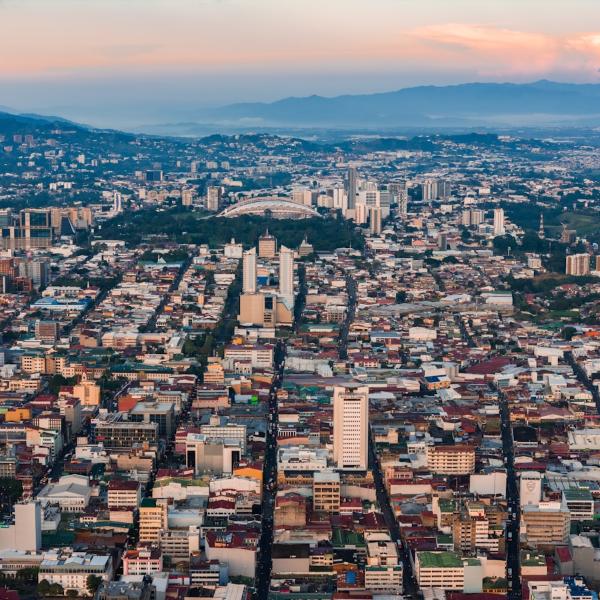
Property here skews toward newer condos, gated communities, and high-spec villas. Entry prices reflect the premium, but rental demand from multinational employees keeps occupancy rates strong. If your strategy requires predictable rental income with a tenant profile that reduces management complexity, Escazú is the most defensible choice.
Sabana and Rohrmoser: Urban Convenience with a Residential Feel
Parque La Sabana anchors one of San José’s most livable urban corridors. Sabana and adjacent Rohrmoser offer walkable access to the park, proximity to financial district employers, and a residential density that supports a genuine neighborhood feel without the suburban sprawl of the western suburbs.
Condos here attract young professionals and established expats who want city access without full immersion. Prices run below Escazú, and the rental market is active, particularly for mid-range units targeting Costa Rican professionals and international residents on long-term assignments.
Curridabat and Sabanilla: Emerging Value in Established Communities
These two eastern districts represent the kind of opportunity that rarely surfaces in the coastal markets. Infrastructure is solid, communities are established, and pricing still reflects local rather than foreign-buyer demand. Sabanilla’s proximity to the University of Costa Rica creates consistent tenant demand, while Curridabat has attracted thoughtful residential development without the price inflation that typically follows heavy foreign investment.
For buyers with a longer horizon and a value orientation, these neighborhoods deserve serious attention.
How Neighborhood Choice Shapes Your Investment Strategy
Choosing between these districts isn’t just a lifestyle preference. It’s a financial architecture decision. Escazú supports a short-term rental premium strategy. Sabana and Rohrmoser support a stable long-term tenant model. Curridabat and Sabanilla support a buy-and-hold appreciation thesis with lower carrying costs.
Each strategy requires different property management intensity, different legal structures, and different ongoing support. Selecting the neighborhood before clarifying the strategy is one of the more common errors we see foreign buyers make.
Matching the Right District to Your Lifestyle and Financial Goals
A pre-retiree who plans to spend three months a year in their San José property and rent it the remaining nine needs a different neighborhood than someone relocating full-time with children in tow. And both differ from the investor who wants a hands-off rental asset they’ll never occupy.
The questions that matter: How often will you be here? Do you need English-language services within walking distance? Are you targeting a specific tenant profile? What is your tolerance for active management? The answers map directly to the district. The wrong neighborhood for your situation doesn’t become the right one just because the property itself is beautiful.
—
San José Real Estate Prices: What to Expect Across Property Types and Districts
How Much Does It Cost to Buy a Home in San José, Costa Rica?
San José real estate spans a wider price range than most foreign buyers expect, from sub-$100,000 condos in established neighborhoods to multi-million-dollar residences in Escazú’s gated communities. The market rewards buyers who know which tier fits their goals before they start touring properties.
Entry-Level Condos and Townhomes
Functional, well-located condos in areas like Curridabat, Sabanilla, and parts of Rohrmoser typically start in the $80,000 to $150,000 range. These aren’t compromise properties. Many are newer construction with security, parking, and communal amenities. For a first-time foreign buyer testing the market or seeking a low-maintenance rental asset, this tier offers a genuine entry point without overextending capital.
Mid-Range Houses and Villas: The Sweet Spot for Expats and Pre-Retirees
The $200,000 to $450,000 range is where most relocating expats and pre-retirees find their fit. This budget buys a detached house or larger villa in Escazú’s western sectors, a well-appointed condo near Parque La Sabana, or a spacious family home in Curridabat with a private garden. Properties in this range typically offer the lifestyle infrastructure, including space, quiet, and proximity to services, that makes San José genuinely livable rather than merely convenient.
Luxury and High-End Properties in Escazú and Sabana
Above $500,000, the inventory shifts toward gated communities with 24-hour security, private pools, high-end finishes, and panoramic Central Valley views. Escazú’s Santa Ana corridor and the Sabana Norte area anchor this segment. Trophy properties in Escazú occasionally exceed $2 million, typically featuring large lots, custom architecture, and proximity to the area’s top international schools. Buyers at this level are often targeting the corporate rental market or planning a primary residence with long-term appreciation as a secondary benefit.
Can You Live on $3,000 a Month in Costa Rica?
Yes, and comfortably, though the quality of that life depends heavily on where you live and what you bring with you. In San José and the Central Valley, $3,000 per month as a single person or couple covers rent on a mid-range apartment or a mortgage on an entry-level property, groceries, private health insurance, utilities, a vehicle, and regular dining out. It does not, however, cover private school tuition for children, frequent international travel, or a household employee alongside a premium rental.
The more useful framing for buyers is this: your monthly cost of living in San José is largely a function of your housing choice. Owning versus renting changes the equation significantly, and owning outright without a mortgage brings monthly fixed costs down to property taxes, HOA fees, utilities, and insurance, often well under $1,000. That math makes San José property ownership one of the more attractive financial structures for retirees living on fixed income or investment returns.
Understanding Market Valuation: Why Listed Prices and Appraised Values Sometimes Diverge
Costa Rica’s property market lacks a centralized MLS system with enforced pricing standards. Sellers set asking prices based on their own cost basis, emotional attachment, or outdated comparables, and those figures don’t always reflect current market reality. Appraised values, conducted by a licensed perito valuador, apply a standardized methodology tied to registered construction costs and land valuations that can lag actual transaction prices in either direction.
The practical consequence: a property listed at $350,000 might appraise at $290,000 for financing purposes. Alternatively, a motivated seller in an underappreciated neighborhood might list at $220,000 when comparable sales support $260,000. Neither the listing price nor the appraisal alone tells the full story. A buyer working with an advisor who tracks actual closed transactions in specific submarkets is in a fundamentally different position than one relying on either figure in isolation.
Land and Commercial Property: What Foreign Buyers Should Know
Raw land and commercial properties attract buyers looking to build custom homes or establish business operations, but both carry due diligence requirements that exceed what residential purchases demand. Zoning classifications in the Central Valley are specific and sometimes counterintuitive. Land that appears buildable may carry agricultural, green zone, or easement restrictions that aren’t visible without a formal use-of-land study (uso de suelo). Before purchasing any land, that study is non-negotiable.
Commercial acquisitions introduce additional layers: business licensing requirements, tenant rights under Costa Rican labor law if the property includes existing operations, and in some cases, municipal permits that operate on their own timelines. These aren’t reasons to avoid land or commercial property, but they are reasons to approach them with a local advisor who has navigated those specific processes before.
San José Costa Rica Real Estate: Navigating the Purchase Process as a Foreign Buyer in Costa Rica
What Is the Legal Process for a Foreigner to Buy Property in Costa Rica?
The process is more straightforward than most foreign buyers expect, and more consequential than some treat it. Costa Rica uses a civil law system with a clear sequence: identify the property, conduct due diligence, negotiate a purchase agreement, place funds in escrow, complete the transfer deed before a notary public, and register the new title with the National Registry. Each step has specific legal requirements, and each one protects you if done correctly.
Equal Ownership Rights for Non-Residents
Costa Rican law grants non-residents identical property ownership rights to citizens. You can hold title in your personal name, through a Costa Rican corporation (S.A. or S.R.L.), or in some cases through a trust structure. There is no requirement to establish residency before purchasing, no foreign ownership surcharge, and no restriction on transferring or selling the property later. This legal equality is constitutional, not a policy that changes with administrations.
How the Public Registry System Works, and Why It Protects You
Every registered property in Costa Rica carries a unique folio real number linked to its history in the Registro Nacional, a publicly searchable database. That record shows the current titleholder, any liens, mortgages, annotations, or encumbrances on the property, and the full chain of title. Unlike some property markets where title status is a matter of private documentation, Costa Rica’s system is centralized and transparent. A property with a clean folio real is a well-protected purchase.
Title Search, Escrow, and the Role of a Qualified Real Estate Attorney
A thorough title search goes beyond confirming ownership. It checks for encumbrances, verifies that property taxes are current, confirms that the physical survey matches the registered boundaries, and identifies any annotations that could affect transfer. This is conducted by your attorney, not the seller’s.
Escrow holds your funds with a neutral third party until all conditions of the purchase agreement are satisfied. Using a licensed escrow provider protects you from wire fraud and ensures funds don’t transfer until the deed is registered in your name. Skipping escrow to expedite closing is one of the more common ways foreign buyers create unnecessary risk for themselves.
Do I Need a Lawyer to Buy Property in Costa Rica?
Technically, Costa Rican law requires a notary public, who must also be a licensed attorney, to execute the transfer deed. So yes, legal representation is required at the point of closing. The more important question is whether you need your own independent attorney, as distinct from the notary who processes the transfer. You do.
The notary’s role is procedural. Your attorney’s role is advisory: reviewing the purchase agreement before you sign, conducting or supervising due diligence, flagging issues that could affect your ownership, and explaining what you’re actually agreeing to. These are not redundant functions. A buyer who arrives at the notary’s office having never had their own counsel review the file has effectively navigated the most consequential financial transaction of their year without a guide.
Financing in Costa Rica: What SUGEF-Regulated Lending Means for Foreign Purchasers
SUGEF is Costa Rica’s banking regulator, and its standards apply to all local lending, including mortgages offered to foreign buyers. Local banks will lend to non-residents, but the requirements are more demanding than what most buyers encounter in their home countries: documented income, credit history translated and validated for Costa Rican standards, and loan-to-value ratios that typically top out at 70 to 75% for foreigners. Interest rates run higher than U.S. or European equivalents.
Many foreign buyers ultimately finance through equity in their home-country assets rather than local lending, whether through a home equity line, portfolio loan, or self-directed retirement funds structured for international real estate. If you’re planning to finance locally, get pre-qualified early in your search, not after you’ve found the property you want.
The Step-by-Step Purchase Timeline: From First Showing to Keys in Hand
A typical transaction in San José moves through the following stages:
- Property tours and neighborhood assessment, which can take days to weeks depending on availability
- Offer and preliminary purchase agreement (carta de intención or formal promise-to-buy contract)
- Due diligence period covering title search, survey verification, property inspection, and tax status confirmation, typically 30 to 45 days
- Escrow funding and final conditions clearance
- Closing before a notary public and execution of the transfer deed (escritura de traspaso)
- National Registry filing and title update, which takes two to six weeks post-closing, during which the buyer holds a certified copy of the deed
From accepted offer to keys, plan for 60 to 90 days on a clean transaction. Complex title issues, financing conditions, or negotiation delays extend that window. Rushing any stage, particularly due diligence, is where transactions that look simple on the surface become expensive later.
Legal and Tax Considerations Every Non-Resident Must Understand
How Taxes and HOA Fees Work for Property Owners in San José
Owning property in Costa Rica carries predictable ongoing costs that are modest by North American or European standards, but only if you’ve budgeted for them in advance. The three categories to understand before closing are the transfer tax at purchase, the annual property tax, and any community association fees tied to your specific property.
Transfer Tax and Closing Costs: What You’ll Pay at the Table
Costa Rica charges a transfer tax of 1.5% of the registered property value at closing. Legal fees, notary fees, and National Registry stamps add roughly 1 to 2% on top of that. Total closing costs for a buyer typically run 3 to 4% of the purchase price. These are paid at the time of transfer and are in addition to any agreed purchase price. Budget for them explicitly, as they don’t appear in the listing price.

Impuesto sobre Bienes Inmuebles: Costa Rica’s Annual Property Tax
The annual property tax, known as the Impuesto sobre Bienes Inmuebles, is assessed at 0.25% of the registered property value. On a property registered at $300,000, that’s $750 per year, a fraction of what property owners pay in most U.S. states. Payments go to the municipal government where the property is located and are due quarterly. Non-payment accrues interest and can result in a lien on the property, so setting up a local payment method or authorizing a property manager to handle this automatically is worth doing early.
HOA and COA Fees: What Community Ownership Associations Cover
Gated communities and condominium developments in San José operate under a Community Ownership Association (COA) or homeowners association structure governed by Costa Rican property law. Monthly fees typically cover security, common area maintenance, landscaping, water systems, and reserve funds for capital improvements. Fees range from roughly $100 to $600 per month depending on the community’s amenities and maintenance standards.
What many foreign buyers underestimate is the governance complexity. Association meetings are conducted in Spanish, budgets require owner votes, and special assessments can arise for capital repairs. A foreign owner who is rarely on-site and lacks local representation inside their community can find themselves consistently behind on decisions that affect their property’s value and condition.
Common Mistakes Foreign Buyers Make When Purchasing Property in Costa Rica
Most mistakes in Costa Rican real estate aren’t the result of bad luck. They’re the result of compressed due diligence, misplaced trust, or assuming the process mirrors what buyers know from home. Three situations come up more than any others, and they’re worth naming directly.
Skipping Independent Legal Representation
Some buyers rely on the seller’s attorney or the notary to look out for their interests. This is a structural conflict of interest that Costa Rican law doesn’t prohibit but that experienced buyers uniformly avoid. Your attorney works for you, reviewing the promise-to-buy before you sign, confirming due diligence is complete, and advising you if something in the file should give you pause. The cost is modest relative to the protection it provides.
Misunderstanding Title Status and Maritime Zone Restrictions
Not all coastal and some Central Valley properties carry the same title protections. The Maritime Zone Law (Zona Marítima Terrestre) restricts private ownership within 200 meters of the high-tide line on Costa Rica’s coasts. This regulation doesn’t apply to most San José properties, but it catches buyers who expand their search toward lakefronts or rural areas without realizing the legal distinction. In Greater San José, the more common title issue involves properties with unregistered improvements, boundary discrepancies, or historical encumbrances that a proper title search resolves before closing.
Underestimating Ongoing Ownership Costs and Management Complexity
The purchase price is the number buyers focus on. The costs that shape the actual return on that investment come afterward: HOA fees, property management, maintenance, insurance, taxes, and periodic capital improvements. A property that looks attractive at a $250,000 acquisition price may require several hundred dollars a month in carrying costs before it generates a dollar of rental income. Modeling those numbers before you buy, not after, is the discipline that separates successful foreign ownership from frustrated foreign ownership.
The Vacation Rental and Investment Opportunity in San José
Can a Foreigner Rent Out Property or Operate a Vacation Rental in Costa Rica?
Foreign owners have full legal authority to rent their property in Costa Rica, whether as a long-term residential lease or a short-term vacation rental. There is no restriction on earning rental income as a non-resident, and rental proceeds can be freely repatriated. Income earned from Costa Rican property is subject to a withholding tax on gross rental revenue for non-residents, collected by your property manager or tenant and remitted to the tax authority. This is a flat, predictable obligation, not a complex filing burden, and it factors cleanly into any income projection you run before purchasing.
San José as a Short-Term Rental Market: Demand, Occupancy Patterns, and Income Potential
San José performs differently as a short-term rental market than the coastal alternatives, and that difference works in its favor for investors who understand it. Where beach markets see dramatic occupancy swings between high season and low season, San José draws a steadier mix of corporate travelers, medical tourists, relocating professionals, and visitors with family in-country. That demand is spread across the calendar rather than concentrated in a few peak months.
Well-located condos in Escazú and Sabana can achieve solid occupancy as short-term rentals, with nightly rates varying based on property quality and location. A furnished two-bedroom unit in Escazú, actively managed and competitively priced, can generate meaningful annual gross revenue before tax and expenses. Net returns on mid-range properties compare favorably with most North American urban rental markets at current acquisition prices, particularly given the lower entry costs.
Long-Term Rental vs. Vacation Rental: Choosing the Right Strategy for Your Property
The right rental strategy depends on the property and the owner, not just the projected income. Long-term rentals in San José attract corporate employees, embassy staff, and established expats who sign 12-month leases and require minimal management. They produce lower per-month revenue than short-term rentals but also lower overhead and turnover costs. For an owner who wants predictable income with minimal involvement, a long-term tenant in a two-bedroom unit in Rohrmoser is a clean, low-friction asset.
Short-term vacation rentals require active management: dynamic pricing, guest communication, cleaning coordination between stays, and ongoing listing optimization. Owners who underestimate that operational load either accept degraded performance or pay a manager to absorb it. The decision should also match your property type. Furnished condos in high-amenity buildings lend themselves to short-term use, while houses in residential neighborhoods typically perform better on long-term leases where families are looking for stability.
What Rental Income Optimization Actually Requires Beyond Listing on a Platform
Posting a property on Airbnb is not a rental strategy. The properties that consistently outperform in San José Costa Rica real estate’s short-term rental market share a few characteristics: professional photography, competitive and dynamically adjusted pricing, responsive guest communication, and a maintenance protocol that keeps the unit in review-worthy condition between stays. None of those happen automatically.
Local market intelligence also matters. A manager who tracks competing inventory in your submarket knows when to raise rates for a corporate conference week and when to lower them to fill a gap. That kind of active management can meaningfully increase annual revenue compared to a static listing left to its own algorithm. It also extends the property’s serviceable life by catching maintenance issues early rather than learning about them in a guest review.
What Happens After the Purchase: The Ownership Stage Most Buyers Don’t Plan For
Why Property Management Is the Decision That Makes or Breaks a Foreign Investment
Most foreign buyers spend weeks comparing properties and hours comparing purchase terms. Few spend equivalent time evaluating who will manage the asset once they own it. That asymmetry is where returns erode.
A property without competent local management accumulates deferred maintenance, generates lower rental income than it should, and creates compliance gaps in tax payments and HOA obligations. The investor who bought well and managed poorly often ends up with a worse outcome than the investor who bought cautiously and managed well.

Full-Service Management vs. Self-Managing from Abroad
The Cost of a Listing-Only Approach: A Hypothetical Scenario
Consider a buyer who purchased a two-bedroom condo in Sabana through a brokerage that offered a listing service but no ongoing management. In the first year, three maintenance issues went unaddressed for two to four months because the owner was coordinating contractors remotely in a second language. One resulted in water damage that cost thousands of dollars to repair, damage a local manager would have caught in a routine quarterly inspection. Occupancy ran low because pricing was static and the listing hadn’t been updated with new photography after the unit was furnished. HOA notices about overdue fees sat unanswered in a Spanish-language email inbox.
The cost difference between a full-service management fee and the absence of one was not the management fee. It was the gap between what the property produced and what it should have.
What a Full-Lifecycle Partnership Changes
The same condo, managed by a full-service local team, operates differently from day one. Pricing adjusts regularly based on local demand signals. Inspections happen on a schedule. Tax and HOA payments are handled automatically. When the hot water heater showed early signs of failure, it was replaced before a guest stay rather than after a guest complaint. Occupancy runs higher. The owner receives a monthly statement in English and a quarterly call to discuss performance.
The management fee is a real cost. The net return still outperforms the unmanaged property by a significant margin, not because the fee is small, but because active management compounds revenue while preventing the costs that self-management allows to accumulate.
HOA and COA Navigation: Why Local Representation Inside the Community Matters
HOA governance in Costa Rican condominium communities requires active participation to protect your interests. Annual assemblies vote on budgets, maintenance priorities, and rule changes. Special assessments can be levied for capital repairs. A foreign owner who misses those meetings, or can’t engage in Spanish when disputes arise, has effectively ceded their voice in decisions that directly affect their property’s condition and value.
Local representation inside the community means someone attends those meetings on your behalf, reviews assessment notices, flags emerging issues before they escalate, and communicates decisions back to you in plain language. For an absentee owner, this isn’t a luxury. It’s the mechanism through which absentee ownership functions properly.
Lifestyle Transition Planning: From Remote Property Owner to Part-Time or Full-Time Resident
Many buyers who start as remote investors eventually shift toward spending more time in their property, first a few weeks a year, then a month, then longer. That transition requires planning that begins before the purchase, not after you’ve decided to move.
The questions worth thinking through early: Does the property work for personal use as well as rental use? Is there a management transition plan if you relocate full-time and no longer need rental income? What residency pathway makes sense for your timeline, whether pensionado, rentista, or investor residency? A partner who understands both the property market and the immigration landscape can help you structure the initial purchase in a way that supports where you’re going, not just where you are now.
Which Service Level Fits Your Situation?
| Your Situation | Recommended Service Level |
|---|---|
| Purchasing only, with local management already arranged | Transaction advisory and legal coordination |
| Purchasing and planning to rent long-term | Full purchase support plus long-term tenant placement and annual oversight |
| Purchasing a furnished condo for short-term rental | Full purchase support plus active short-term rental management covering pricing, guest services, and maintenance |
| Planning to occupy part-time and rent the rest | Full lifecycle partnership covering purchase, rental management, HOA representation, and residency planning |
| Already own a property and need management help | Property management onboarding, no purchase transaction required |
Your San José Property Journey Starts with the Right Partner
What the San José Market Offers Foreign Buyers
San José offers something the coastal markets rarely can: a real estate environment that performs across multiple dimensions at once. The legal framework is clear and protective. The neighborhoods are mature and differentiated. The rental demand is steady rather than seasonal. And the acquisition costs remain accessible relative to comparable markets in Panama, Mexico, or Europe. For a foreign buyer who has done the research, the case for the Central Valley is not a compromise position. It is the considered one.
The Full-Lifecycle Difference: Why the Relationship Matters More Than the Listing
A listing is a starting point. What follows, including due diligence, purchase structuring, closing, rental activation, property management, tax compliance, HOA participation, and eventual sale or transition, is the actual work of owning real estate in another country. The buyers who look back on their San José investment with satisfaction are almost uniformly the ones who chose a partner who stayed engaged through all of it, not just the first ninety days.
That kind of relationship is not the norm in real estate. Most brokerages are structured around the transaction. The closing is the finish line. What distinguishes a full-lifecycle partner is that closing day is simply the point at which the real support begins.
Your Next Step: A Personal Conversation, Not a Sales Pitch
If you’ve read this far, you’re not at the beginning of your research. You’re near a decision point. The most useful thing we can offer you now is not more content but a direct conversation about your specific situation: your timeline, your budget, your goals for the property, and what ownership will actually look like for you given where you live and how you plan to use the asset.
We don’t run scripts. We ask questions. And we give you honest answers, including when San José is the right market for what you’re trying to accomplish and when it isn’t. Reach out when you’re ready, and we’ll start there.
Frequently Asked Questions
What is the legal process for a foreigner to buy property in Costa Rica?
The process follows a clear sequence: identify the property, conduct due diligence, negotiate and sign a purchase agreement, place funds in escrow, execute the transfer deed before a licensed notary public, and register the new title with the National Registry. Costa Rican law grants non-residents the same ownership rights as citizens, so there are no special restrictions or surcharges for foreign buyers. The full process from accepted offer to completed registration typically takes 60 to 90 days on a clean transaction.
How much does it cost to buy a home in San José, Costa Rica?
Prices range widely depending on neighborhood and property type. Entry-level condos in areas like Curridabat and Sabanilla can start around $80,000 to $150,000, while mid-range houses and villas in Escazú or near Parque La Sabana typically fall between $200,000 and $450,000. Luxury properties in Escazú’s gated communities begin around $500,000 and can exceed $2 million. Buyers should also budget 3 to 4% of the purchase price for closing costs, including the transfer tax, legal fees, and National Registry stamps.
What is the nicest neighborhood in San José, Costa Rica?
The best neighborhood depends on what you’re looking for. Escazú is widely regarded as the most international and amenity-rich district, with top-tier schools, private clinics, and strong rental demand from corporate tenants. Sabana and Rohrmoser offer urban walkability and a more residential atmosphere at lower price points. Curridabat and Sabanilla appeal to buyers seeking established communities with solid infrastructure and genuine value before foreign buyer demand has fully priced in. Each is the right answer for a different buyer.
Do I need a lawyer to buy property in Costa Rica?
Yes, and we’d encourage you to think of it as two distinct roles. Costa Rican law requires a notary public, who must also be a licensed attorney, to execute the transfer deed at closing. But you should also retain your own independent attorney before that point to review the purchase agreement, supervise due diligence, and advise you on anything that could affect your ownership. The notary’s role is procedural. Your attorney’s role is to protect your interests, and those are not the same thing.
How do taxes and HOA fees work for property owners in San José?
The annual property tax, the Impuesto sobre Bienes Inmuebles, is assessed at 0.25% of the registered property value and paid quarterly to the local municipality. At purchase, a transfer tax of 1.5% applies. HOA or Community Ownership Association fees for gated communities and condominiums typically range from $100 to $600 per month, covering security, common area maintenance, and reserve funds. These are predictable costs, but non-payment of property taxes can result in a lien, so automating these obligations through a local property manager is worth doing early.
Can a foreigner rent out property or operate a vacation rental in Costa Rica?
Absolutely. Foreign owners have the same legal right to lease their property as Costa Rican citizens, whether as a long-term residential rental or a short-term vacation rental through platforms like Airbnb. Rental income earned by non-residents is subject to a withholding tax on gross revenue, which is collected and remitted by your property manager or tenant. There are no restrictions on repatriating rental proceeds, and the tax obligation is straightforward enough to factor cleanly into any income projection before you purchase.