
Santa ana costa rica real estate: Why Santa Ana Belongs at the Top of Your Central Valley Shortlist
The Geography That Makes Santa Ana Work
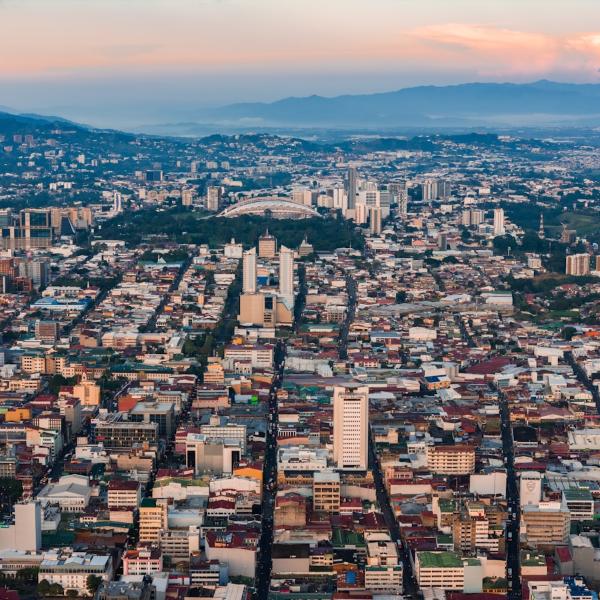
When exploring Santa ana costa rica real estate, it helps to have guidance from those who know the market. Santa Ana sits at roughly 900 to 1,000 meters above sea level on the western edge of Costa Rica’s Central Valley, and that elevation solves a problem that eliminates most of the country for foreign buyers: the heat. Temperatures here stay between 18 and 26 degrees Celsius year-round, which means no air conditioning, no oppressive humidity, and no seasonal retreat to escape the climate. You simply live comfortably, all year long.
The location compounds the advantage. Santa Ana borders Escazú to the east and feeds directly into the Route 27 highway corridor, connecting you to Pacific coast beaches at Jacó in under an hour and to Juan Santamaría International Airport in roughly 25 minutes. For a retiree who wants both a tranquil home base and easy international travel access, or a remote professional who needs to meet clients in San José without a daily commute, the geography does the work for you.
Santa Ana vs. Escazú: Understanding the Distinction Between Costa Rica’s Two Premium Addresses
Most foreign buyers initially conflate Santa Ana and Escazú, treating them as interchangeable luxury neighborhoods. They are not, and confusing them costs buyers both money and lifestyle fit.
Escazú, particularly the upper zones of San Rafael and Bello Horizonte, is Costa Rica’s most established luxury address, and it carries prestige pricing to match. Property values run higher, traffic is denser, and the environment leans urban. Santa Ana offers comparable quality of life at a more accessible price point, with a quieter residential character, newer infrastructure in key zones like Lindora, and more land available for custom builds. Think of Escazú as the established downtown address and Santa Ana as the quieter, newer neighbor that drew buyers who wanted the same amenities with more breathing room. This dynamic makes santa ana costa rica real estate one of the most exciting opportunities in Central America.
For most foreign buyers at the research stage, Santa Ana represents better value per square meter without a meaningful sacrifice in lifestyle quality.
What Listing Platforms Don’t Tell You About the Gold Coast Lifestyle
A search on any major property portal shows you photos, square footage, and a price. What it doesn’t show you is the Saturday morning rhythm at the Santa Ana farmer’s market, the ten-minute drive to the Multiplaza Escazú shopping complex, or the fact that your neighbors in a Guachipelín gated community are likely a mix of Costa Rican professionals, American retirees, and European expat families.
The Gold Coast corridor, a term locals use for the Santa Ana-Escazú belt, supports a genuine international lifestyle without requiring you to give up the things that make daily life comfortable. There are English-speaking medical clinics, international schools, well-stocked supermarkets, reliable broadband, and a restaurant culture that ranges from local sodas to high-end dining. This is not a trade-off destination. It is a full-service lifestyle at a fraction of what it would cost in California, Florida, or the Pacific Northwest. For buyers focused on santa ana costa rica real estate, this point deserves careful attention.
How Much Does It Cost to Live in Santa Ana, Costa Rica?
A couple living comfortably in a mid-range Santa Ana rental, eating out several times a week, covering utilities, and maintaining a car can typically do so on $2,500 to $3,500 per month. Owners who have paid off their property obviously spend less. Those who prefer a more premium lifestyle, with household help, frequent dining out, and regular travel, usually budget closer to $4,500 to $5,500.
A few concrete reference points help frame the numbers:
- Grocery costs run roughly 20 to 30 percent below comparable U.S. levels.
- Utilities (electricity, water, internet) for a mid-size home average $150 to $250 per month.
- Household help, such as a part-time housekeeper or gardener, costs $15 to $20 per day.
- Private health insurance for a healthy adult in their 50s typically runs $150 to $300 per month.
Property ownership costs are covered in detail below, but the bottom line is straightforward: Costa Rica’s cost of living rewards foreign buyers who own their home rather than rent it long-term. This is a critical factor when evaluating santa ana costa rica real estate options.
Who Is Actually Buying in Santa Ana — and What Draws Each Buyer Type Here
The North American Pre-Retiree
The most common buyer profile in Santa Ana right now is not a retiree already on a fixed income. It is a 52-to-65-year-old North American, often still working part-time or consulting, who has spent two or three trips researching Costa Rica and arrived at a clear conclusion: the lifestyle is real, not a brochure fantasy. They want a home that functions at the same quality level they are accustomed to, a community where they won’t feel isolated, and a legal system that won’t trap them in a costly mistake.
Santa Ana delivers on all three. The gated community infrastructure here matches what this buyer left behind, the expat community is active and welcoming, and Costa Rica’s property rights framework, which we cover in detail below, is among the most foreigner-friendly in Latin America. Savvy investors in santa ana costa rica real estate often cite this as a decisive advantage.
The Remote Professional
The remote worker market accelerated sharply after 2020 and has not reversed. Santa Ana specifically benefits because fiber-optic internet infrastructure is well-developed in the Lindora and Forum zones, coworking spaces have multiplied, and the time zone alignment with North American business hours is seamless. The region observes Central Standard Time with no daylight saving shifts, which matters more than most buyers initially realize.
A buyer in this profile typically wants a property that functions as both a home and a productive workspace, ideally with a designated office area, strong backup power options for rainy season outages, and proximity to the kind of services that make daily life efficient. Santa Ana checks each box.
The Investor
Santa Ana’s luxury segment has appreciated steadily rather than dramatically, which is exactly what serious real estate investors prefer. Price spikes attract speculation and correction. Consistent annual appreciation in the premium residential corridors reflects genuine demand from both the local upper-middle class and the sustained influx of foreign residents. Rental demand, particularly for furnished executive properties, remains strong because multinationals based near the Forum Santa Ana business park and Hospital CIMA generate a reliable pool of professional tenants. This is why demand for santa ana costa rica real estate continues to grow year on year.
The investor who performs best here is not looking for a quick flip. They are buying quality property in a stable market, generating rental income in the interim, and building equity in a jurisdiction where foreign ownership is fully protected under Costa Rican law.
—
Buyer Profile Fit Matrix: Matching Your Goals to the Right Santa Ana Neighborhood
Use this as a starting point. A qualified local agent will refine the picture once they understand your specific situation. Anyone serious about santa ana costa rica real estate should factor this into their decision.
Pre-Retiree or Full Retiree
Best neighborhoods: Guachipelín (established, walkable, strong community) and Santa Ana Centro (local character, lower price points). Best property type: gated community condo or single-family home with a managed HOA. Key priorities: low-maintenance living, proximity to Hospital CIMA, and an active social environment.
Remote Professional or Digital Nomad
Best neighborhoods: Lindora (newer builds, tech infrastructure, coworking proximity) and the Forum Zone. Best property type: modern condo or compact villa with dedicated office space and a generator hookup. Key priorities: fiber internet reliability, proximity to services, and easy airport access.
Income-Focused Investor
Best neighborhoods: Lindora and Guachipelín for long-term furnished rentals, Santa Ana Centro for value-add opportunities. Best property type: two-to-three-bedroom furnished condo or single-family home within a managed community. Key priorities: rental yield, property management infrastructure, and an HOA that permits short or long-term rentals.
Lifestyle Buyer or Secondary Home Owner
Best neighborhoods: Guachipelín for social density, the outskirts of Santa Ana for privacy and land. Best property type: villa or estate property with staff quarters and a pool. Key priorities: lock-and-leave capability, a trusted property manager, and rental income to offset carrying costs during absences.
Neighborhood-by-Neighborhood Lifestyle Fit: Guachipelín, Lindora, and Beyond
Who Thrives in Guachipelín
Guachipelín is Santa Ana’s most socially active residential zone. It is walkable by Costa Rican standards, sits close to the commercial strip along the main road, and houses a dense concentration of gated communities that have been established long enough to have functioning HOA cultures and genuine neighbor relationships. Buyers who want to integrate quickly into expat and mixed-nationality social life consistently report that Guachipelín made that possible within weeks of moving in. Its proximity to Hospital CIMA, a private international-standard facility, also matters significantly to health-conscious buyers in the pre-retirement demographic.
Who Thrives in Lindora
Lindora attracts a younger, more professionally oriented buyer. The infrastructure is newer, the roads are better maintained, and the proximity to the Forum Santa Ana business district makes it practical for buyers who work locally or host professional contacts. The aesthetic is cleaner and more contemporary. Buyers who prioritize newer construction, larger floor plans, and a quieter residential environment over social density tend to prefer Lindora. It is also where much of the current new development inventory is concentrated, giving investors a wider selection at varying price points.
What Neighborhood Confusion Costs Foreign Buyers
Buying in the wrong neighborhood is not a catastrophic mistake, but it is an avoidable one that affects both daily quality of life and eventual resale value. A buyer who purchases a family-oriented estate in Lindora when they actually needed walkable community access in Guachipelín will feel that mismatch every day. A buyer who overpays for Guachipelín prestige when their actual use case is a lock-and-leave rental property could have found better yield potential elsewhere.
The solution is straightforward: work with an agent who knows the neighborhoods from lived experience, not from listing data. The right agent asks about your daily routine, your social preferences, your travel frequency, and your timeline before suggesting a single neighborhood. Neighborhood fit is a lifestyle decision dressed up as a real estate decision, and it deserves that level of care.
Property Types and Price Ranges: What Your Budget Gets You in Santa Ana
Luxury Villas and Estates
Santa Ana’s upper tier starts around $600,000 and extends well past $2 million for large estate properties with significant land, pool and staff infrastructure, and premium finishes. At $700,000 to $900,000, a buyer typically finds a four-to-five-bedroom villa within a gated community, with 400 to 600 square meters of construction, modern kitchen and bath renovations, and mature landscaping. Above $1 million, properties begin to offer more land, greater privacy, and custom architectural details that distinguish them from community-built inventory.
These luxury homes for sale in Santa Ana, Costa Rica attract buyers who want a primary residence that functions at the same standard as a comparable home in the U.S. or Canada, with the added benefit of full-time household staff at a genuinely affordable cost.

Condos and Gated Communities
The $200,000 to $450,000 range is where Santa Ana’s condo and gated community market is most active. At $250,000 to $300,000, a buyer can expect a two-to-three-bedroom unit with covered parking, a community pool and gym, 24-hour security, and finishes that range from solid mid-market to genuinely impressive depending on the development.
This property type is the practical choice for buyers who travel frequently, plan to rent the property during absences, or want the simplicity of HOA-managed exterior maintenance. It is also the most liquid segment of the market, meaning resale tends to be more straightforward than for a bespoke estate property. Santa Ana Costa Rica condos and villas at this price point consistently attract both lifestyle buyers and income-focused investors.
Single-Family Homes and Residential Land
Standalone single-family homes outside of managed communities offer a different value proposition. Buyers find more space per dollar, greater privacy, and the freedom to modify the property without HOA approval. The trade-off is that maintenance and security become the owner’s direct responsibility, which matters considerably for buyers who plan to spend extended time abroad.
Residential lots in Santa Ana’s established zones have become scarcer over the past decade, but options still exist in the $80,000 to $200,000 range depending on size and location. Building a custom home here is entirely feasible for a foreign buyer, though it adds complexity around contractor selection, permits, and construction oversight that makes a strong local advisor relationship non-negotiable.
Understanding HOA and COA Fees as a Foreign Buyer
HOA (homeowners association) and COA (condominium owners association) fees in Santa Ana communities typically run between $150 and $600 per month, with the range reflecting the size of the property and the scope of amenities maintained. A smaller condo community might charge $200 monthly to cover security, pool maintenance, and landscaping. A large luxury development with 24-hour guard staff, tennis courts, and a clubhouse might charge $450 to $600.
These fees are paid in U.S. dollars in most premium communities, which simplifies life for foreign buyers. What buyers sometimes overlook is that fee structures vary significantly in what they actually cover. Some HOAs include water and waste services. Others do not. Before purchasing, review the HOA’s reserve fund, the amount set aside for major repairs, and its payment compliance rate among current owners. A community where a significant portion of owners are delinquent on fees has a budget problem that will eventually land on the paying owners.
How Property Taxes Work in Costa Rica
Costa Rica’s property tax is among the lowest in the hemisphere. Owners pay 0.25 percent of the registered property value annually, paid quarterly to the local municipality. On a $400,000 home, that amounts to roughly $1,000 per year.
An additional luxury tax, known as the Impuesto Solidario, applies to properties with a construction value above a certain threshold (the figure adjusts periodically, so confirm the current amount with your attorney). This tax is graduated, starting at 0.25 percent and rising incrementally for higher-value properties, but it remains modest by any international comparison. A $600,000 luxury home might carry a combined annual property tax burden in the range of $2,000 to $3,000, a figure that consistently surprises buyers accustomed to U.S. property tax rates.
Using MLS Costa Rica and Other Search Tools Without Getting Misled
Costa Rica does not have a single unified MLS system the way the U.S. and Canada do. The term MLS Costa Rica refers to a cooperative listing system that a number of agencies participate in, but participation is voluntary and inconsistent. A significant portion of available inventory, particularly in the luxury segment, is never listed publicly. It moves through broker relationships and local networks.
This means a buyer who relies exclusively on online search tools sees an incomplete market. Some listings appear on multiple platforms under different prices because the same property has been listed by multiple agencies at different commission structures. Others appear at inflated prices because the seller added their own margin on top of an agent’s quoted range.
The practical takeaway: use listing platforms to develop market intuition and price awareness, not to build your actual shortlist. Your shortlist should come from a local agent who knows what is actually available, what the real ask-to-close price differential looks like, and which properties have been sitting long enough to create negotiating leverage.
What Foreign Buyers Must Know Before Signing Anything
Can U.S. Citizens and Other Foreigners Legally Own Property in Costa Rica?
Costa Rica grants foreign nationals the same property ownership rights as its own citizens. There is no residency requirement, no minimum stay, and no government approval process. A U.S. citizen, Canadian, European, or national of virtually any country can purchase, title, and hold real property in their own name. This is not a loophole or a special investor visa category. It is standard Costa Rican law, and it has been in place for decades.
Fee Simple Title Explained: Why Costa Rica’s Ownership Model Protects You
Fee simple ownership means you own the property outright, with no expiration date, no government lease, and no restriction on sale or inheritance. When your name appears on the title in Costa Rica’s national registry, you hold the same rights a Costa Rican citizen holds. You can sell, rent, bequeath, or mortgage the property without special permission.
This matters because some countries in the region restrict foreign ownership to long-term leases or require partnership with a local national. Costa Rica does not. Most buyers in Santa Ana hold title individually or through a Sociedad Anónima, roughly equivalent to a limited liability company. Holding through a corporation can simplify estate planning and provide an additional layer of liability separation, but it is not required. Your attorney will advise on which structure fits your situation.
The Costa Rican Public Registry: How Title Verification Actually Works
Every titled property in Costa Rica is registered with the Registro Nacional, the national public registry. Each property has a unique folio real number, and every transaction, lien, mortgage, and encumbrance recorded against that property is visible in the registry. A licensed attorney can pull the full chain of title and confirm exactly who owns the property, what debts or claims attach to it, and whether any legal disputes are pending.
Before any offer hardens into a contract, your attorney runs a complete registry search. That search reveals the current registered owner and ownership history, any mortgages, liens, or attachments on the property, recorded easements that affect use or access, and boundaries as registered versus what the seller represents.
The registry system is not perfect, and some issues require deeper investigation. In Santa Ana’s established residential zones, registry searches are generally clean and straightforward. That said, you never skip the search.
The Closing Process Step by Step: From Offer to Transfer Tax to Keys
The sequence from accepted offer to transfer of title typically runs six to eight weeks in a straightforward transaction.
- Offer and acceptance. The buyer submits a written offer through their agent. The seller accepts, counters, or declines.
- Escrow and deposit. A 10 percent earnest money deposit is typically held in escrow by the closing attorney.
- Due diligence period. The buyer’s attorney conducts the title search, reviews survey maps, confirms HOA documents, and investigates any flags from the registry.
- Purchase and sale agreement. Both parties sign a detailed contract setting the final terms and closing date.
- Closing day. A Costa Rican notary-attorney prepares and reads the escritura, the official transfer deed. Both parties or their legal representatives sign before the notary.
- Transfer taxes and fees. The buyer pays a transfer tax of 1.5 percent of the registered value, plus a stamp tax and notary fees that together typically add another 1 to 1.5 percent. Budget approximately 3 percent of the purchase price for total closing costs in Costa Rica.
- Registration. The signed deed is submitted to the Registro Nacional. Full registration takes two to six weeks, during which the buyer is protected by the signed escritura.
How Currency Exchange and Banking Work When Buying as a Foreigner
Properties in Santa Ana are priced and typically transacted in U.S. dollars. Wire transfers from a U.S. or Canadian bank account to a Costa Rican escrow account are the standard payment method. Costa Rica has no restrictions on foreign capital entering the country for real estate purchases, though the bank will require source-of-funds documentation to comply with anti-money-laundering regulations under SUGEF guidelines. This is a straightforward compliance step, not an obstacle.
Opening a personal Costa Rican bank account as a non-resident is possible but can be slow through the national banks. Most foreign buyers manage the purchase transaction entirely through their home country account and escrow, and open a local account later if they plan to live in or actively manage the property.
Is It Safe to Buy Santa Ana Real Estate Remotely Without Being Present?
Yes, with the right legal structure in place. A buyer can grant a poder especial, a limited power of attorney, to their Costa Rican attorney. That attorney can sign the closing documents and complete the transaction on the buyer’s behalf. Many foreign buyers who have invested in Santa Ana Costa Rica real estate have never been physically present at closing.
The important caveat: remote purchasing works well when you have independently selected a licensed attorney who represents only your interests. It does not work when you rely on the seller’s attorney to handle both sides of the transaction, which is an arrangement that sometimes gets presented to foreign buyers as normal and convenient. It is neither.
The Most Common Mistakes Foreign Buyers Make in Costa Rican Real Estate
Skipping Independent Due Diligence
Some buyers, eager to close quickly or trusting a seller’s verbal assurances, skip or abbreviate the due diligence process. The registry search gets passed over because “the seller has owned the property for 20 years.” The HOA financial review gets skipped because the community looks well-maintained. These shortcuts occasionally cost buyers nothing. Occasionally they cost buyers significantly. Independent due diligence is not optional.
Misunderstanding What Clear Title Actually Requires
Clear title is not simply an absence of liens. It also requires that the property boundaries match the registered survey, that no third-party use rights have been established through long-term occupation, and that the construction on the property has proper permits. A property can pass a lien search and still carry construction violations or boundary discrepancies that create problems at resale. Your attorney checks all of these, not just the obvious ones.
Choosing Representation Based on Listings Rather Than Local Relationships
A common pattern: a buyer finds a listing online, contacts the listing agent, and assumes that agent represents their interests through the transaction. In Costa Rica, as in many markets, the listing agent represents the seller. A buyer who wants independent representation needs to engage their own agent and their own attorney before they fall in love with a specific property. The agent who helped them find the right neighborhood and negotiated on their behalf will serve them far better than the agent who simply had the listing.
Investment Potential: Rental Income, Appreciation, and What the Numbers Can Look Like
Short-Term Rental Viability: Can You Earn Rental Income From a Santa Ana Property?
Santa Ana is not a beach destination, and that distinction matters for short-term rental strategy. Buyers expecting Airbnb-style vacation rental volumes comparable to Manuel Antonio or Tamarindo will be disappointed. The short-term rental market here serves a different demand pool: corporate relocations, medical tourism visitors drawn by Hospital CIMA, and expats in transition who need a furnished home for one to three months while searching for their permanent residence.
That demand is real and consistent, but it requires a furnished property, professional marketing, and a management partner who handles guest communication and turnover. In the right property, short-term furnished rentals can achieve $2,500 to $4,500 per month depending on size and location, with annual occupancy averaging 60 to 75 percent for well-managed properties in desirable neighborhoods.
Long-Term Appreciation Patterns in the Central Valley Luxury Segment
Santa Ana’s premium residential corridor has produced steady appreciation over the past decade, measured against comparable sales in the Guachipelín and Lindora zones. This is not speculative growth driven by tourism booms or infrastructure announcements. It reflects genuine demand from Costa Rica’s growing professional class, continued foreign buyer inflow, and constrained supply in the established residential zones. Buyers who purchased quality properties in the mid-2010s have seen meaningful equity growth, with the most consistent gains concentrated in well-located properties within managed communities.
Foreign buyer property investment in the Central Valley rewards patience. This is not a short-term flip market. It is a market where quality assets in the right corridors build equity steadily while generating rental income along the way.
Structuring Vacation Rental Marketing for an Absentee Owner
An absentee owner generating rental income needs three things working in parallel: a property that photographs well and functions smoothly for guests, a local property manager who handles the operational layer, and marketing placement on the platforms that reach the relevant tenant profile.
For the corporate and medical tourism rental market in Santa Ana, platforms like Airbnb and Furnished Finder supplement direct corporate referrals from relocation companies and Hospital CIMA’s patient services network. A management partner with those relationships fills units that a purely algorithmic marketing approach would miss. The difference in annual occupancy between a self-managed listing and a professionally managed property with direct corporate relationships can easily represent tens of thousands of dollars in annual revenue.
An Illustrative Ownership Scenario: Projecting Income and Costs Over a Five-Year Hold
Consider a buyer who purchases a three-bedroom furnished condo in Guachipelín for $320,000. Here is what a realistic five-year picture might look like:
- Purchase and closing costs: $320,000 plus approximately $9,600 (3 percent closing) = $329,600 all-in.
- HOA fees: $300 per month, totaling roughly $18,000 over five years.
- Property taxes: approximately $800 per year, or $4,000 over five years.
- Property management and maintenance: $6,000 to $8,000 per year, totaling $30,000 to $40,000 over five years.
- Gross rental income at 65 percent occupancy and a $3,000 average monthly rate: approximately $23,400 per year, or $117,000 over five years.
- Net rental income after management and expenses: approximately $70,000 to $80,000 over five years.
- Estimated property value at year five with steady appreciation: approximately $400,000 to $410,000.
Total five-year equity position including net rental income points to a meaningful return on the initial investment. These numbers are illustrative, not guaranteed, but they reflect the kind of outcomes buyers in similar properties have experienced.
The Hidden Challenge That Starts the Day You Close — and How to Solve It
Why the Real Complexity Begins After the Contract Is Signed
Every buyer focuses intensely on the purchase. The legal process, the price negotiation, the closing day. What most foreign buyers underestimate is the operational complexity that follows. Owning property from thousands of miles away is a different challenge than buying it, and it is the challenge that causes regret among buyers who handled the purchase correctly but hadn’t thought through the rest.
What Absentee Ownership Actually Requires
A property left unmanaged in Costa Rica deteriorates faster than in a temperate climate. The rainy season runs May through November, bringing humidity, mold risk, and vegetation growth that requires consistent attention. A pool without regular maintenance turns green within weeks. A garden without a gardener becomes overgrown within a month. A house without someone checking it regularly becomes vulnerable to opportunistic problems, regardless of the neighborhood.
Absentee ownership requires, at minimum:
- A property manager who conducts regular physical inspections and reports back with photos.
- Reliable vendors for routine maintenance covering the pool, garden, and general repairs.
- A local point of contact who can respond to emergencies within hours, not days.
- Someone handling utility payments, insurance renewals, and property tax filings on your behalf.
Buyers who try to manage this remotely through ad hoc coordination with individual vendors quickly discover why a single, integrated management relationship is worth every cent of the fee.
HOA and COA Management for Owners Who Live Abroad
Most Santa Ana gated communities require HOA fee payments by bank transfer or local check. Staying current matters because delinquent owners can lose access to community services, face legal collection actions, and create complications at resale. A property manager handles this payment coordination automatically, but a buyer managing their own finances from abroad needs to establish a reliable payment system before they leave.
HOA boards in Costa Rica also require occasional owner input: votes on special assessments, modifications to community rules, or capital improvement decisions. A local representative who attends HOA meetings on your behalf keeps you informed and protects your interests without requiring you to fly back for a community vote.
The Emotional Cost of Buying Without a Reliable On-the-Ground Advocate
The anxiety that precedes a foreign real estate purchase is manageable. What buyers describe as genuinely stressful is the period after closing when something goes wrong and there is no one locally who treats their problem as a priority. A leak discovered during an inspection visit. A tenant dispute. An HOA special assessment that arrives with two weeks’ notice. A contractor who quoted one price and invoiced another.
Every one of these situations is resolvable. The difference between a minor annoyance and a multi-month ordeal is whether you have a trusted, responsive local partner or whether you are managing it alone across a time zone.
How Integrated Lifecycle Services Transform the Foreign Ownership Experience
From Purchase Representation to Long-Term Asset Management
The buyers who report the best experiences in Santa Ana Costa Rica real estate are not necessarily those who found the best individual property. They are the ones who found a team that stayed engaged after closing day. Purchase representation, property management, rental marketing, maintenance coordination, and resale advisory are not four separate services requiring four separate vendor relationships. When they are integrated under one team that knows your property, your goals, and your tolerance for involvement, the entire ownership experience changes.
You stop being an absentee owner nervously hoping things are fine. You become an investor receiving regular updates, income reports, and proactive recommendations from people who treat your asset the way they would treat their own.
Why Nearly Two Decades of Gold Coast Expertise Cannot Be Replicated by a National Platform
A national listing platform knows how many properties are listed in Santa Ana. It does not know which HOA boards are functional and which are chronically underfunded. It does not know which streets flood during heavy rains in October, which new developments have construction defect histories, or which landlord-tenant attorneys respond quickly when a lease dispute needs resolution. That knowledge accumulates over years of transactions, disputes resolved, and relationships built. It does not appear in any database.
The agents and managers who have worked the Gold Coast corridor for nearly two decades carry institutional knowledge that is genuinely irreplaceable. When they recommend a property, they are drawing on transactions in that community going back fifteen years. When they flag a concern, it is grounded in experience that no algorithm surfaces.
Boutique vs. Transactional: What First-Name-Basis Service Means for Your Investment
A transactional firm completes your purchase and moves to the next client. A boutique partner tracks your property’s performance, checks in before rainy season, flags changes in the HOA that affect you, and calls you when a comparable property sells at a price that reframes your equity position. The difference is not a marketing claim. It shows up in response times, in the granularity of updates you receive, and in whether your property manager knows your property’s quirks or is consulting a file to remember which unit is yours.
For a foreign owner managing a significant asset from thousands of miles away, that difference is the whole value proposition.
The ARCR, CAFI, and Local Networks That a True Local Partner Already Knows
The Association of Residents of Costa Rica (ARCR) and the Costa American Finance Institute (CAFI) are two of the most useful networks for foreign buyers navigating residency, financial planning, and legal structure questions. A local partner already embedded in these networks can introduce you to the right immigration attorney, the right tax advisor, and the right financial planner from a position of established trust, not a cold referral.
The same applies to the informal professional networks that matter just as much: the contractors who show up when they say they will, the property attorneys who return calls the same day, the rental management coordinators who fill vacancies faster because they know the corporate relocation companies by name. These relationships are not listed anywhere. They are built over years, and they become available to you the moment you work with a partner who already has them.
Finding the Right Real Estate Partner in Santa Ana: What to Ask Before You Commit
The Questions Every Foreign Buyer Should Ask a Prospective Agent or Firm

The agent interview is where most foreign buyers make their first correctable mistake: they evaluate agents on listing volume instead of local depth. The questions that actually reveal whether a firm is right for you have nothing to do with how many properties they currently have for sale.
Ask these instead:
- How long have you worked specifically in the Santa Ana and Gold Coast corridor, and what transactions have you closed here in the past 12 months?
- Do you provide property management and post-purchase support, or does your involvement end at closing?
- Who is your recommended closing attorney, and can you explain why you trust them with a foreign buyer’s transaction?
- How do you handle situations where the best property for my goals isn’t one you currently have listed?
That last question is the most revealing. A relationship-driven agent answers it by describing how they access off-market inventory through broker networks and personal relationships. A transactional agent pivots back to their current listings. The difference tells you everything about whose interests they will actually represent through the process.
Red Flags That Signal a Transactional Firm Over a Relationship-Driven Partner
Some signals are obvious. Others are easy to miss when you are excited about a property.
The clearest red flag: an agent who suggests using the seller’s attorney to handle both sides of the closing. It is occasionally framed as a convenience or a cost-saving measure. It is neither. You need independent legal representation, full stop.
Other patterns worth watching for:
- The firm’s conversation focuses almost entirely on listings, never on your lifestyle, goals, or timeline before recommending specific properties.
- Follow-up communication after your initial inquiry is slow, generic, or handled by someone who clearly hasn’t read what you sent.
- The agent cannot name specific HOA fee structures, reserve fund status, or rental policy details for properties they are actively showing you.
- There is no clear answer to what happens after you close. Who manages the property? Who handles emergencies? Who do you call when something breaks?
A boutique firm with deep Gold Coast roots will answer every one of those questions before you ask them. They have answered them hundreds of times, and they understand that your confidence as a buyer is directly connected to their clarity as a partner.
What Integrated Lifecycle Value Looks Like in Practice
Consider two buyers who purchase comparable three-bedroom condos in Guachipelín in the same year, both at $310,000.
The first buyer works with a transactional firm. The purchase closes smoothly. Then they return home, and the real challenge begins. They coordinate pool maintenance, HOA payments, and a minor plumbing repair through a combination of text messages, time zone delays, and vendors who don’t speak English. A tenant inquiry comes in during their off-season window and goes unanswered for four days because they were traveling. The property sits vacant for two months longer than necessary. By year three, they are questioning whether the investment was worth the stress.
The second buyer works with an integrated local team. After closing, property management transitions automatically. Monthly reports arrive with photos and maintenance notes. The HOA payment is handled on schedule. When a prospective tenant inquires about a three-month executive rental, the property manager responds within hours, negotiates the rate, and coordinates the lease. In year one, the property earns strong rental income. In year two, a direct corporate referral from a relocation company the management team knows personally fills the property for six months straight.
Same property. Different partnership. The gap in both financial return and personal peace of mind is substantial, and entirely predictable.
Your 60-Second Fit Test: Three Questions That Reveal Whether Santa Ana Is Right for You
Answer honestly. There are no wrong answers, only useful ones.
- Do you want a comfortable, familiar lifestyle with international amenities, rather than a remote adventure or a beach-focused retirement? Santa Ana delivers exactly that. If you want surf access and sand, a different market fits better.
- Are you prepared to own property for at least three to five years? Santa Ana rewards patient holders. It is not a short-term flip market.
- Do you want a team that handles everything from legal due diligence through ongoing property management? If yes, Santa Ana’s boutique service ecosystem is built for you. If you plan to self-manage remotely, recalibrate your expectations before you commit.
Three yes answers mean Santa Ana is likely a strong match. Start a conversation with a local specialist.
Conclusion: Your Path from Paralyzed to Confident Starts With One Conversation
The Three Fears That Stop Foreign Buyers — and Why None of Them Have to Stop You
Most foreign buyers who hesitate at the edge of a Santa Ana purchase are held back by one of three specific fears. Naming them directly tends to dissolve their power.
The first is the fear of legal exposure: “What if I buy something with a hidden title problem or lose my investment to a foreign ownership restriction?” Costa Rica’s public registry system and fee simple ownership framework have protected foreign buyers for decades. A licensed Costa Rican attorney conducting independent due diligence catches problems before you are bound to a contract. The legal structure here is not a risk to manage around. It is a protection to use.
The second is neighborhood paralysis: “What if I choose the wrong area and regret it?” This fear has a direct antidote. Work with an agent who asks about your daily life before they mention a single property. The right neighborhood match is not a guess. It is the result of a conversation that takes 30 minutes and changes the entire trajectory of your search.
The third is the post-purchase anxiety of distance: “What if something goes wrong and I’m 3,000 miles away?” This is the most legitimate concern of the three, and it has the clearest solution. An integrated local partner who handles property management, maintenance, and tenant relations eliminates the scenario you are imagining. The fear is real. The risk, with the right team in place, is not.
What the Buyers Who Thrive in Santa Ana Have in Common
They did their research, but they didn’t try to do everything alone. They found a local team early in their process, before they fell in love with a specific property, and used that team to stress-test their assumptions about neighborhoods, price ranges, and ownership logistics. They treated the purchase as the beginning of a long-term relationship with a market and a management partner, not a one-time transaction.
They also shared a willingness to have an honest conversation about their goals. The buyers who thrive are not necessarily the ones with the largest budgets. They are the ones who were clear about what they wanted, open about their concerns, and willing to trust local expertise on the details that online research cannot provide.
Your Next Step: Starting a Personal Conversation With a Team That Knows You by Name
You have done the research. You understand the market, the legal framework, the neighborhoods, and the ownership logistics. What you cannot get from an article, no matter how detailed, is a read on your specific situation: your budget, your timeline, your lifestyle priorities, and the particular configuration of goals that makes one property in Lindora the right answer for you and a different property in Guachipelín the right answer for someone else.
That clarity comes from one conversation with someone who has guided buyers through exactly this process for nearly two decades in the Gold Coast corridor. No pressure, no obligation to have made a decision before you pick up the phone. Just a direct, honest discussion about whether Santa Ana is the right fit for your goals and what a path forward actually looks like.
Reach out to the Coastal Realty team to start that conversation. The buyers who are living comfortably in Santa Ana right now all started exactly the same way.
Frequently Asked Questions
How much does it cost to live in Santa Ana, Costa Rica?
A couple living comfortably in Santa Ana, eating out several times a week and maintaining a car, typically spends between $2,500 and $3,500 per month. Those who prefer a more premium lifestyle with household staff, frequent dining, and regular travel usually budget $4,500 to $5,500 monthly. Property owners who have paid off their home spend considerably less, which is one reason buying tends to make more financial sense than long-term renting for serious relocators.
What is the legal process for a foreigner to buy real estate in Costa Rica?
Foreign nationals have the same property ownership rights as Costa Rican citizens, with no residency requirement or government approval needed. The purchase process typically runs six to eight weeks and involves a written offer, a 10 percent escrow deposit, a due diligence period during which your attorney searches the Registro Nacional, and a closing where a notary-attorney executes the official transfer deed. Budget approximately 3 percent of the purchase price for transfer taxes, stamp duties, and notary fees.
What neighborhoods in Santa Ana are best for retirees, remote professionals, and investors?
Retirees tend to thrive in Guachipelín, where the community is established, walkable, and close to Hospital CIMA. Remote professionals often prefer Lindora for its newer construction, reliable fiber-optic infrastructure, and proximity to the Forum Santa Ana business district. Investors looking for long-term furnished rental demand find strong yield potential in both Lindora and Guachipelín, while value-add opportunities exist in Santa Ana Centro.
How do property taxes and HOA fees work for foreign buyers in Costa Rica?
Property tax in Costa Rica is 0.25 percent of the registered property value per year, paid quarterly to the local municipality. An additional graduated luxury tax applies to higher-value properties. HOA and COA fees in Santa Ana communities typically range from $150 to $600 per month depending on the development’s size and amenities. Reviewing the HOA’s reserve fund and owner compliance rate before purchasing is essential, as underfunded associations can create unexpected costs.
Is it safe to buy Santa Ana real estate remotely without being physically present?
Yes, provided you have the right legal structure in place. A buyer can grant a limited power of attorney to their Costa Rican attorney, who can then sign closing documents and complete the transaction on the buyer’s behalf. The key requirement is that your attorney represents only your interests. Relying on the seller’s attorney to handle both sides of the transaction is a common mistake that foreign buyers should avoid regardless of how it is presented.
What are the most common mistakes foreign buyers make in Costa Rican real estate?
The three most frequent mistakes are skipping independent due diligence, misunderstanding what clear title requires, and choosing representation based on listings rather than local relationships. Clear title means more than an absence of liens: it requires that property boundaries match the registered survey, that all construction has proper permits, and that no third-party use rights exist. Engaging your own agent and attorney before identifying a specific property, rather than after, protects you throughout the entire process.
Can I earn rental income from a property in Santa Ana?
Yes, though the rental market here differs from beach destinations. Santa Ana’s short-term rental demand comes primarily from corporate relocations, medical tourism visitors, and transitioning expats, rather than leisure travelers. Well-managed furnished properties in desirable neighborhoods can achieve strong monthly rental rates with healthy annual occupancy. Long-term furnished rentals targeting executives near the Forum Santa Ana business park also provide consistent income. A local property management partner with corporate referral relationships significantly outperforms self-managed listings.
How does currency exchange and banking work when buying Costa Rican property as a foreigner?
Properties in Santa Ana are priced and transacted in U.S. dollars. The standard payment method is a wire transfer from a U.S. or Canadian bank account to a Costa Rican escrow account. Costa Rica imposes no restrictions on foreign capital entering the country for real estate purposes, though source-of-funds documentation is required for anti-money-laundering compliance under SUGEF regulations. Most foreign buyers complete the purchase through their home country account and open a local Costa Rican bank account later if needed for ongoing property management.